
Specs are compiled from manufacturer listings and verified buyer reviews and can change over time — please confirm the key details on the product page before buying.
The fear is real: you spray for dandelions, and the next week your lawn looks like a leopard—brown spots where green should be. The fix isn’t a stronger dose of the same stuff; it’s a different kind of chemistry entirely. A selective herbicide targets the broadleaf weeds (like dandelions, clover, and chickweed) while leaving your turfgrass standing, and this guide compares the formulas that get that balance right.
I’m Rikta — the founder and writer behind Lawn Gear Lab. This guide is built by comparing the manufacturers’ published specifications and the patterns across verified customer reviews, so you get each pick’s real strengths and trade-offs instead of marketing spin.
From concentrated powerhouses to ready-to-use wands, these are the formulas that take out dandelions without wrecking your turf, the dandelion killer that won’t kill grass.
Our Picks at a Glance


How To Choose The Best Dandelion Killer That Won’t Kill Grass
The #1 mistake beginners make is grabbing a “weed killer” and assuming it’s safe for lawns. Most are non-selective, meaning they kill any green plant they touch. You need a product labeled as a selective herbicide for broadleaf weeds—it attacks the dandelion’s wide leaf structure while leaving your grass’s narrow blades alone.
Match the Formula to Your Grass Type
Not every selective herbicide is safe on every lawn. Cool-season grasses (Kentucky bluegrass, fescue, ryegrass) and warm-season grasses (Bermuda, Zoysia, St. Augustine) react differently to the same chemistry. Always check the label’s grass-tolerance list: a product safe for Bermuda may stress your fescue, or vice versa.
Quick Comparison
| Model | Best For | Active Ingredients | Form | Weeds Controlled | Amazon |
|---|---|---|---|---|---|
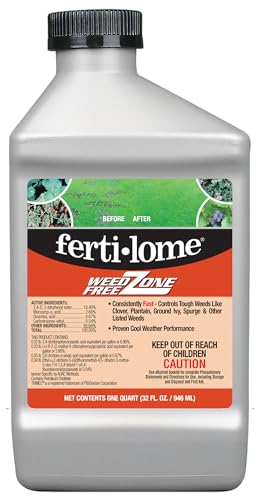
| Fertilome Weed Free Zone★ Best Overall | Killing tough weeds like creeping charlie | Triclopyr + Clopyralid | Concentrate (32 oz) | 80+ broadleaf | Amazon |
| GORDON’S Trimec PlusCrabgrass Control | Crabgrass and 200+ weeds | 3-way herbicide | Concentrate (32 oz) | 200+ broadleaf / grassy | Amazon |
| Ortho WeedClearEasy Spot Treat | Spot-treating without mixing | Not specified | RTU with Comfort Wand | Dandelion, crabgrass, clover | Amazon |
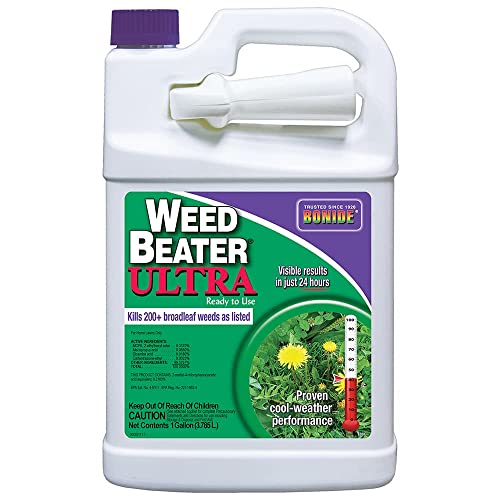
| Bonide Weed Beater Ultra (128 oz) | Large immediate areas | Not specified | RTU Spray | 200+ broadleaf | Amazon |
| Bonide Weed Beater Ultra Concentrate (16 oz) | Large coverage for the money | Not specified | Concentrate (16 oz) | 200+ broadleaf | Amazon |
| Spectracide Large Plot Weed Stop | Maximizing coverage per bottle | Not specified | Concentrate (1 Gal) | 200+ weeds | Amazon |
| SpeedZone EW | Professional-grade speed | 2,4-D, Dicamba, Carfentrazone | Concentrate (20 oz) | 90+ weeds | Amazon |
| Nufarm Change Up | Broad grass-type tolerance | MCPA, fluroxypyr, dicamba | Concentrate (32 oz) | 200+ broadleaf | Amazon |
In‑Depth Reviews
1. Fertilome Weed Free Zone
Our pick — 4.5★ from 999 ratings; the strongest balance of quality and price.
The one that takes down creeping charlie and still spares your flowers
This concentrate’s claim to fame is its ability to kill creeping charlie—a notoriously stubborn weed that laughs at most herbicides—often overnight, thanks to its Triclopyr + Clopyralid blend. The 32 oz bottle is the kind of firepower you bring out when your lawn has surrendered to broadleaf weeds.
You can spray this between your flowers without harming them, while dandelions, spurge, and other broadleaf weeds wither, according to buyer reports. The consensus is that a little goes a long way, but the manual’s suggested dose often needs to be roughly doubled for stubborn clover or thistle, and adding a drop of dish soap helps the spray stick to the leaves.
Its rating is strong; this is a serious liquid investment. The main trade-off is price, which some find high, but for the toughest weeds, nothing else in this lineup matches its reputation.
Powerhouse spray: The most effective formula for hard-to-kill weeds like creeping charlie and ground ivy, with a selective chemistry that spares your grass and nearby flowers.
Potency note: The label’s mixing rate can be too weak for heavy infestations; you may need to experiment with a stronger concentration.
Grab this if: Your lawn is facing weeds that other sprays have failed to control, and you want a selective concentrate that protects your turf.
Think twice if: You’d rather have a ready-to-use bottle; this requires mixing and a separate sprayer.
2. GORDON’S Trimec Plus
The dual-threat formula that hits crabgrass and dandelions in one pass
Most selective herbicides focus only on broadleaf weeds, but this 3-way blend also controls emerged grassy weeds like crabgrass, foxtail, and signalgrass. For a lawn dealing with both dandelions and a crabgrass invasion, this one bottle handles both fronts, treating up to 5,000 square feet.
The concentrated 32 oz quart is a different beast than the ready-to-use Ortho wand, packing far more punch per ounce. Buyers specifically confirm it kills weeds but not their zoysia grass, though a critical reminder is that it only stops the growing weeds, not the seeds waiting in the soil.
The feedback shows it’s a persistent performer: henbit may need two or three applications, and a serious Bermuda crabgrass infestation took a while to clear, but it did the job. It’s a working herbicide that demands a little patience.
Dual-action: Unique among these picks for tackling both grassy weeds and broadleaf types, making it a versatile lawn-saver.
Patience policy: Results are not instant for all weeds; expect to reapply for stubborn species like henbit.
Reach for it if: You’re fighting crabgrass alongside your dandelion problem and want one concentrate for both.
Look elsewhere if: You need quick, one-and-done results; this can require multiple applications.
3. Ortho WeedClear with Comfort Wand
The no-mix, battery-powered wand that takes the work out of spot-treating
The headline here is the battery-powered Comfort Wand—a sprayer that does the pumping for you, letting you precisely target dandelions, clover, and chickweed without the trigger-finger fatigue. The 1.33-gallon container is ready to use straight from the start, and at 12.2 pounds, it’s heavy but complete, with the 170.24 fluid ounces of liquid being roughly 5.3 times the volume of the GORDON’S Trimec quart.
Buyers report that this is a “slow but sure” performer, often taking weeks to kill weeds down to the root and about a month for them to fully vanish. The effectiveness is genuinely mixed—many find it works as advertised, while an occasional batch has reportedly damaged lawns, a quality-control risk you don’t see as often with concentrates.
The pacing is the real story: it’s not a miracle spray but a weekly spot-treatment companion for keeping a lawn clean. Owners recommend digging out the dead weeds after the root kill to prevent reseeding, making it more of a maintenance tool than a one-shot cure.
Effort-saving design
- Battery-powered wand eliminates hand-pumping
- No mixing, spraying, or cleanup required
- Targets specific weeds without broadcast spraying
Pacing caveats
- Slow-acting, takes weeks to see full die-off
- Spotty effectiveness reported on some weeds
- Occasional batch quality concerns from buyers
Perfect if: You hate mixing chemicals and want a convenient, targeted sprayer for spot-treating a small-to-mid yard.
skip it if: You need to clear a large area quickly and want the economy of a concentrate.
4. Bonide Weed Beater Ultra (128 oz)
The ready-to-use spray that’s rainproof in hours for unpredictable weather
The defining trait here is its rainproof claim—once the 128 oz spray dries on the leaf, rain won’t wash it away, a lifesaver for anyone who’s watched a forecast ruin a perfect spraying window. This ready-to-use trigger sprayer covers roughly 492-984 square feet, making it ideal for smaller lawns or targeted border treatments.
Buyers with onion grass report astonishing results—the weed vanished while the grass remained unharmed. Others found it took out creeping charlie the same day, though one owner noted the price had doubled since their first purchase, hurting its value proposition.
Note that effectiveness is mixed: while many see quick kills on sensitive weeds, some report it barely touches major infestations like crabgrass, browning only the outer leaves. It’s a capable spot-treater but not a heavy-duty eradicator for every weed type in your yard.
Weather warrior: The rainproof formula stands out for anyone tired of reapplying after a surprise shower.
Selective success: Highly effective on certain weeds like wild onion, but expect to target it at the right weed or you may be disappointed.
Reach for this if: You need a grab-and-go solution for quick spot treatments and live in a rainy climate.
Look elsewhere if: You have a massive crabgrass invasion or want the lowest cost per square foot for a big lawn.
5. Bonide Weed Beater Ultra Concentrate

The 16-ounce bottle that turns into 16,000 square feet of weed control
This is the economy-of-scale champion: a tiny 16 oz concentrate that mixes with water to cover a claimed 16,000 square feet, dwarfing the 128 oz ready-to-use version’s coverage by a huge margin. For a full-yard treatment, this is where the smart money goes, even if it means pulling out your own sprayer.
The formula is the same Weed Beater Ultra chemistry, and buyers confirm it spares the grass while killing weeds, with many reporting their lawns looking great after treatment. The catch for some is the mixing: the instructions are precise, and getting the ratio wrong can lead to grass browning, so this demands a little more attention than a trigger sprayer.
It excels on dollarweed and chickweed, with one owner calling it the best weed killer they’ve personally used, but it’s partially effective on tougher weeds like Virginia buttonweed. The value is undeniable, but it’s a tool for the gardener who reads the label twice.
Coverage king: The 16,000 sq ft coverage makes it the most economical choice for treating a whole lawn, not just spots.
Mixing math: The precise dilution rates are a hurdle for casual users who prefer ready-to-spray bottles.
Pick it if: You have a large lawn to treat and own a decent pump or backpack sprayer.
Skip if: You want a shake-and-spray solution without any measuring or mixing.
6. Spectracide Large Plot Weed Stop

The gallon jug that treats a massive 32,000 square feet of turf
This is the clear choice for acreage-level treatments: a full 1-gallon concentrate that handles up to 32,000 square feet of Northern grasses (or 42,500 of Southern). It’s the biggest coverage per bottle in this lineup, and its rainfast claim means rainfall 6 hours after application won’t wash away the effectiveness.
Customers note it works fast, with visible wilting occurring quickly while the lawn stays healthy, and it won’t hurt centipede or other turf when used as directed. The formula targets 200+ weed types, with dandelions and clover being easy victims, making it a top-tier choice for picky homeowners.
The honest caveat is that some find it slow-acting, needing a third application for tough weeds like foxtail or fuzzy rosette types, and it’s not a miracle worker on every invasive species. It’s a versatile, high-volume performer that matches its “Large Plot” name, though the biggest value lies in its sheer scale.
Big-yard muscle
- 1-gallon size means fewer refills, with coverage up to 32,000 sq ft
- Rainfast in 6 hours for low-maintenance application
- Kills 200+ weed types down to the root
Scope caveats
- Some weeds require repeated applications for full control
- Mixing and spraying a gallon yourself is a workout
Get it if: You manage a large property and need the lowest cost-per-square-foot for a full lawn treatment.
Pass if: You’re spot-treating a small yard and don’t want to store a gallon of concentrate.
7. SpeedZone EW

The fast-acting, cool-weather formula that pros trust for quick turnarounds
SpeedZone EW is the specialty pick here, engineered for fast-acting, cool-weather performance with visible effects within hours, not weeks. Its active ingredients (2,4-D, Dicamba, and Carfentrazone) are a professional-grade blend that controls 90+ weeds including dandelion, white clover, and ground ivy.
The performance is a standout for larger-scale operations: reviewers point out killing nearly all weeds on a 13,000 sq ft lawn in a week using a boom sprayer, with survivors easily hand-pulled. It’s also rainfast in as little as 3 hours, and you can reseed in just 7 days, a speed advantage over nearly every other pick here.
The 20 oz bottle is smaller than others but highly concentrated, with one owner saying their bottle lasted two seasons. The main caution from experienced users is clear: don’t overspray, as over-application will burn the grass—it’s powerful chemistry that demands respect for the label’s mixing rates.
Speed demon: You see visible weed burn within hours, and you can reseed in 7 days, making it the fastest turnaround in this guide.
Pro-strength caution: “Kills everything but the grass” only if you follow the mixing instructions; overspraying causes turf burn.
Choose it if: You want professional-grade speed, especially in cooler weather, and you’re comfortable with precise mixing.
pass on it if: You’re a casual user who prefers a forgiving, ready-to-use product over a potent concentrate.
8. Nufarm Change Up

The premium formula with the widest grass-type tolerance on this list
Nufarm Change Up is the premium specialist, labeled for an immense range of turfgrass including Bahiagrass, Creeping bentgrass, Bermudagrass, Kentucky bluegrass, Ryegrass, Fescue, and St. Augustinegrass—the broadest safety net here. Its active ingredients (MCPA, fluroxypyr, and dicamba) control 200+ broadleaf weeds, with dandelions, plantain, and thistles firmly in its sights.
The use rate is highly concentrated at.46 oz to 1.1 oz per 1,000 square feet, meaning the 32 oz bottle goes further than most. A Kentucky buyer with a yard full of clover was shocked to find grass underneath it after treatment, proof that the formula spares turf even when the weeds are thick.
Shoppers say it works fast but isn’t a “spray and done” product—it needs to work down to the root through the leaves, and you’ll see green where you missed. It’s a premium tool with premium weed control for those who want the best turf tolerance.
Turf compatibility: It lists the widest range of safe grass types in this guide, so it is the safest bet for mixed or unknown lawns.
Concentrated care: Requires careful measuring, and it’s not a quick fix; you’ll see results over a week, not a day.
Ideal for: Homeowners with specific grass types like St. Augustine or bentgrass who can’t risk a harsh formula.
Not for: Those who want the absolute cheapest option per application; the premium price goes to the formula’s tolerance.
Understanding the Specs
Selective Herbicide Chemistry
The active ingredients—like Triclopyr, Dicamba, 2,4-D, and MCPA—are what make a weed killer “selective” (meaning it targets broadleaf weeds but spares grass). They work by mimicking plant hormones in broadleaf weeds, causing uncontrolled growth that kills them, while turfgrass (a monocot, or grass-type plant) doesn’t respond to these hormones the same way. This is why you can spray dandelions and keep your fescue, but you must always check the label’s grass list, as some formulas stress certain grass types.
Concentrate vs. Ready-to-Use
Concentrates (like the 32 oz Fertilome or the 1-gallon Spectracide) require you to mix the liquid with water in a sprayer, giving you far more coverage per ounce and usually a lower cost per treatment. Ready-to-use (RTU) sprays (like the 128 oz Bonide options) come pre-mixed in a trigger bottle, trading convenience for a much higher price per square foot and often a weaker overall dose, so they are better for small lawns and quick spot checks.
FAQ
What does “selective” mean in a lawn weed killer?
Will this product hurt my specific grass type?
How long does it take to see dandelions die off?
Can I use these on a new lawn or after overseeding?
Do I need to pull the dandelions after spraying?
Why are the reviews mixed on some of these products?
What is the difference between the Bonide 128 oz spray and the 16 oz concentrate?
Can I mix these weed killers with fertilizer or other sprays?
How long should I stay off the grass after spraying?
What’s the most important spec to check for lawn safety?
Final Thoughts: The Verdict
Across the board, the dandelion killer that won’t kill grass winner is the Fertilome Weed Free Zone because its selective Triclopyr formula handles the toughest weeds like creeping charlie while still protecting your turf and flowers. If you want a convenient, no-mix sprayer for quick spot treatments, grab the Ortho WeedClear. And for treating a massive lawn economically, the Spectracide Large Plot is the one to reach for.
How We Picked
We do not accept paid placement. Every pick is matched to a real buyer and a real use-case; we do not hands-on test units.
Sources & Methodology
Specifications: manufacturer listings and product documentation. Review insights: verified customer reviews, as of August 2026. Pricing: not shown on this page (it changes often); check the current price via the retailer link.
As an Amazon Associate, Lawn Gear Lab earns from qualifying purchases. This does not affect which products we feature.