
Specs are compiled from manufacturer listings and verified buyer reviews and can change over time — please confirm the key details on the product page before buying.
If your blueberry bushes are alive but just not producing the fat, sweet clusters you expect, the problem is almost never the plant itself — it is the soil pH and the food you are giving it. Blueberries are acid-loving plants that lock out nutrients in neutral or alkaline soil, so the right plant food is the single biggest lever you can pull for a real harvest.
I’m Rikta — the founder and writer behind Lawn Gear Lab. This guide is built by comparing the manufacturers’ published specifications and the patterns across verified customer reviews, so you get each pick’s real strengths and trade-offs instead of marketing spin.
Whether you are rescuing a struggling bush or pushing for maximum yield, the blueberry plant food you choose needs the right NPK ratio, form, and acidifying power to match your specific planting style.
Our Picks at a Glance

How To Choose The Best Blueberry Plant Food
Blueberries demand acidic soil, so a standard fertilizer won’t cut it. You need a product made to lower pH, often with extra nitrogen and sulfur. Match the fertilizer form to your garden size and feeding routine.
Match the Form to Your Routine
Water-soluble powders give you fast results and are perfect for container plants, since you can control the exact strength with each watering. Granules are slower and feed over months, making them ideal for established garden beds where you want to set and forget. Liquid concentrates are the easiest to measure and often include extra micronutrients for a quick boost during the growing season.
Understand the NPK Numbers
The three numbers on the bag (like 8-4-8) tell you the percentage of nitrogen, phosphorus, and potassium. Blueberries need more nitrogen to push out leafy growth and more potassium for fruit development, while too much phosphorus can actually harm the delicate root system of acid-loving plants. A balanced ratio like 4-3-6 or 8-4-8 is a safe, effective target.
Quick Comparison
| Model | Best For | Form | NPK Ratio | Unit Weight | Amazon |
|---|---|---|---|---|---|
| Miracle-Gro Water Soluble★ Best Overall | Fast, versatile feeding | Powder | Acid-Loving | 5 lb | Amazon |
| HiThrive Blueberry FertilizerPremium Pick | Liquid quick-fix | Liquid | Balanced | 1.3 lb | Amazon |
| GARDENWISE 8-4-8Best Value | Slow-release granules | Granules | 8-4-8 | 16 oz | Amazon |
| Dr. Earth Acid Lovers | Organic, pet-safe | Granules | Organic | 4 lb | Amazon |
| True Organic Berry Food | Organic berry boost | Granules | 5-4-4 | 4 lb | Amazon |
| Jack’s Classic Hydrangea Blue | Hydrangea color + leaves | Powder | 7-3-3 | 1.5 lb | Amazon |
| Espoma Organic Holly-Tone | All acid-loving shrubs | Granules | 4-3-4 | 4 lb (x2) | Amazon |
| TPS Nutrients Blueberry | Container growing | Liquid | Gentle NPK | 32 oz | Amazon |
| Down To Earth Acid Mix | Large beds, long-term | Granules | 4-3-6 | 25 lb | Amazon |
In‑Depth Reviews
1. Miracle-Gro Water Soluble Azalea, Camellia, Rhododendron Plant Food
Our pick — over 4.5★ from 650+ verified ratings; the strongest balance of quality and price.
The crowd-pleasing powder that greens up leaves and blooms across your whole acid-loving garden
This is the plant food people reach for when they want one reliable product for every acid-loving plant they own, from azaleas to hydrangeas to your blueberry bushes. It comes as a powder that dissolves completely, and buyers report it is “Acidic water soluble fertilizer, dissolves completely and easily,” loved by their azaleas, rhododendrons, and blueberries alike.
The mix ratio flexes with your needs: use 1:144 strength for indoor plants on your bookshelf, or 1:18 for the stronger outdoor feeding your garden beds and planters demand. You can apply it every 7-14 days with a watering can or a Miracle-Gro Garden Feeder, and when used as directed it won’t burn foliage or harm other plants nearby. The 5-pound bag carries a 80-ounce unit count, which makes it a solid value for anyone with several bushes.
The only real downside is the Velcro closure, not the formula. The resealable Velcro bag is a hit with some owners who find it better than ziplock bags, but others report the powder coats the Velcro and stops it sealing properly. Keep the closure clean and you will avoid the one recurring gripe.
acid-loving classic
- Dissolves completely and easily for instant feeding
- Safe for indoor and outdoor acid-loving plants
- Flexible 1:144 indoor or 1:18 outdoor mix ratio
needs repeated feeding
- Velcro bag can lose its seal if powder gets on the closure
- Requires feeding every 7-14 days for best results
acid lovers: you want a proven, flexible powder that handles blueberries and every other acid-loving plant in your yard with one purchase.
impatient gardeners: you prefer a “low-maintenance” granular feed — this needs regular mixing and watering.
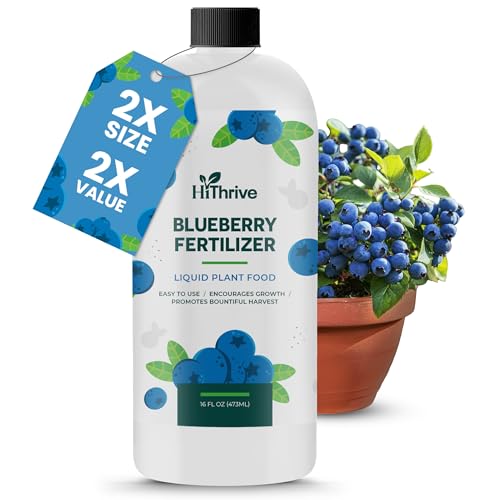
2. HiThrive 16oz Blueberry Fertilizer
A liquid lifeline for bushes that survived a rough winter but come back weak and stingy
This is the targeted rescue formula for blueberry bushes that look tired. The 16 oz bottle makes 16 gallons of fertilizer, which is a 5x value gap compared to a standard 16 oz granular bag that covers far less ground. It is packed with nitrogen for vibrant leaves, phosphorus for stronger roots, and potassium for sweeter, plumper berries, plus calcium, magnesium, and zinc to fix nutrient deficiencies.
Reviewers report bushier growth, greener leaves, and bigger, sweeter berries after applying it weekly as directed. One reviewer noted: “Our Blueberry bushes needed some extra help after the crazy winter we had and this product has been great for them.” It suits Highbush, Rabbiteye, Blueray, and Duke varieties, so it’s a safe bet for most gardens.
Because it is a liquid, you mix it with water and apply — no digging or waiting for granules to break down. The feeding schedule is simple: every 1-2 weeks during the growing season, and every 4 weeks in fall and winter. It weighs just 1.3 pounds, making it the lighter, easier-to-store option compared to the 5-pound Miracle-Gro bag above.
quick nitrogen boost: Liquid nutrients get to work quickly, which is exactly what a stressed bush needs to bounce back.
small bottle size: Because it is concentrated, the bottle is small — you will likely repurchase through the season if you have many bushes.
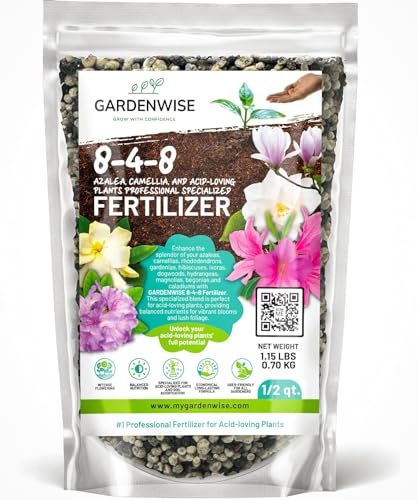
3. GARDENWISE 8-4-8 Acidic Fertilizer
Granules that work while you wait — three feedings a year is all it asks
If you want a fertilizer that does the thinking for you, this is the one. The 8-4-8 formula is enriched with magnesium, iron, and manganese specifically to prevent chlorosis, the yellowing that hits acid-loving plants in neutral or alkaline soil. It is enriched with live bacterial microbes from a bio-solid process, which helps build soil health rather than just feeding the plant.
The slow-release granules mean you only need three feedings per year, which is a fraction of the schedule the liquid and powder options demand. The application is simple: sprinkle around the base, gently mix into the soil, and water. Owners mention incredible results quickly, with one rhododendron looking 75% better within 24 hours of feeding, and another coming back to life with greener leaves and a large number of beautiful blooms after a single application last year.
This bag covers a wide range of acid-loving plants — azaleas, camellias, hydrangeas, magnolia trees, evergreens, and blueberries among them — so one purchase feeds your whole acid-loving bed. The 16-ounce unit count is on the smaller side, but the long-lasting formula makes it economical over the season.
all-purpose acid: the gardener who wants minimal effort and maximum soil improvement across many different acid-loving plants.
specialty needs: you need immediate results for a container plant that is severely struggling — granules work slower than liquid.
4. Dr. Earth Acid Lovers Azalea, Camellia, Rhododendron & Maple Fertilizer

The only Non-GMO Project Verified fertilizer in the U.S.A., handcrafted for pets and people
Choose this if you worry about what goes into your soil. It’s the only Non-GMO Project Verified fertilizer in the U.S.A., and it’s People & Pet Safe, free of synthetic chemicals, GMO-infested chicken manure, and toxic ingredients. The granules are handcrafted from human and feed grade ingredients, enriched with multi-minerals, proteins, carbohydrates, humic acids, and trace elements.
It carries certifications that matter for the organic gardener: OMRI (Organic Material Review Institute), OIM (Organic Input Materials), CCOF (California Certified Organic Farmers), and NOP (National Organic Program). That means you can feed your blueberry bushes and still feel good about the wider ecosystem in your yard. The reviews back up the plant health claims, with gardenias blooming better than ever and azalea bushes saved from decline.
The main drawback is the higher cost per pound. The 4-pound bag costs more per pound than the mainstream options, and some owners feel it is pricey for the size. But for an organic, pet-safe, sustainably made product, that premium is the point — you are paying for the certification and the ingredients.
organic certification: OMRI, CCOF, and Non-GMO Project Verified — a transparency level no other pick here matches.
pricey per pound: The 4 lb bag goes fast if you have many bushes; it is best for a small, focused bed.
5. True Organic Berry Food

An organic blend that rescued a dying bush and tripled strawberry size in one season
This is the organic granular option that shows dramatic, visible results. The 5-4-4 formula contains sulfur to help lower soil pH naturally, improving the availability of essential micronutrients — which is exactly the fix a struggling blueberry bush needs. The ingredient list reads like a soil-rebuilding recipe: seabird guano, shrimp and crab shell meal, and other proven organic inputs.
The reviews tell a rescue story. One owner’s blueberry bush was dying after being transferred into the ground, with all the leaves turning brown, and this fertilizer turned it back around with new growth appearing every day. Another gardener reported their strawberries tripled in size with an abundant harvest. It works for in-ground and container plants, with a monthly application that keeps things simple.
The one honest caveat is the smell. Like all natural fertilizers, it has a distinct odor, and owners mention it as the downside. That odor is the trade-off for natural, organic ingredients. The 4-pound bag covers up to 58 sq. ft., making it easy to know exactly how much ground you can feed.
berry patches: organic gardeners who want soil pH correction and berry production in one granular product.
mixed plantings: you are sensitive to natural fertilizer odors — the smell lingers for a few days after application.
6. Jack’s Classic 7-3-3 Hydrangea Blue Water-Soluble Fertilizer

A targeted micronutrient powder that makes hydrangeas bloom deep blue instead of pink
This one is for the gardener who is obsessed with flower color as much as fruit yield. The 7-3-3 analysis is built to promote lush leaves and enhance or maintain blue color in hydrangeas, which is a different goal than the berry-focused formulas above. It comes with an included measuring spoon, so you get the right concentration every time without guessing.
The powder is water-soluble and goes further than liquid fertilizers — you mix the measured powder with water and get multiple gallons of liquid feed. It can be used as a foliar spray directly onto leaves or as a root drench, giving you flexibility in how you deliver it. Added micronutrients mean additional feeding is not required, and the results speak for themselves: one owner living in alkaline soil got the best deep blue hydrangeas they had ever grown within about a month.
The honest trade-off is that results vary by soil. While many report beautiful blue blooms, others note their hydrangeas did not turn blue despite healthy growth. The product excels at making plants full and healthy, but if your soil is extremely alkaline, you may need to address pH separately for the blue color to appear.
hydrangea color control: The 7-3-3 ratio and micronutrient package are tuned specifically for hydrangea color, not general berry production.
pH dependent: Works beautifully for plant health everywhere, but the blue color payoff depends on your starting soil pH.
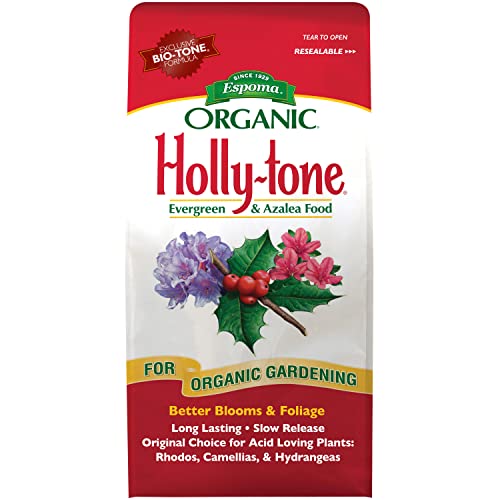
7. Espoma Organic Holly-Tone 4-3-4 Fertilizer (Pack of 2)
The original organic fertilizer for acid lovers, backed by a 1929 heritage and 5% sulfur
This is the product with the longest pedigree in the list, made by Espoma, the leader in natural organics since 1929. The 4-3-4 analysis includes 5% sulfur to help acidify the soil, and it is enhanced with Espoma’s exclusive Bio-tone formula. It is ready to use with no mixing required — just apply to the soil around the drip line and water thoroughly.
You get two 4-pound bags per order, so this pack of 2 gives you 128 ounces of product to spread across your garden. It is approved for organic gardening and registered as an Organic Input Material, meeting all requirements for organic production. Customers note it keeps trees and shrubs healthy throughout the year, with large and beautiful blooms and dark green foliage after treatment.
The recurring complaint is the strong natural odor. The natural organics have a strong odor that lingers for days, especially before watering, and the bag itself can smell terrible. It dissipates after a thorough watering, so it is a minor annoyance rather than a dealbreaker. For berries, the label recommends use in early and late spring, while flowering shrubs get fed in spring and fall.
reliable choice: you want a trusted, no-mixing organic granule that feeds blueberries, hydrangeas, and evergreens all season.
scent sensitive: the natural ingredients carry a strong odor for a few days, so water it in well after applying.
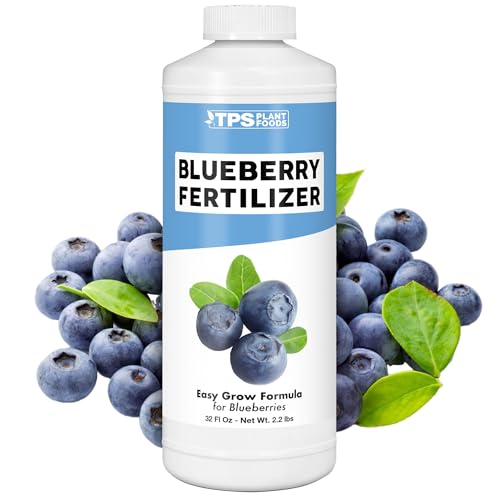
8. TPS Nutrients Blueberry Fertilizer (32 oz)
A gentle, quick-absorbing liquid that turned a cheap grocery-store stem into a thriving bush
If you are starting blueberries from tiny plants or rooted stems, this is the liquid food that gets them established fast. The formula is potassium-rich to support strong roots and new canes, with a gentle NPK profile that is unlikely to shock young plants. It is designed to support flowering, fruit set, and consistent performance across garden beds, raised beds, and container growing.
Reviewers report a cheap Aldi stem grew into a healthy blueberry plant within weeks. Another owner said their dying bush perked up within days and started “growing like crazy again.” Application is simple: mix a few tablespoons per gallon of water, adjusting strength for plant size.
The 32-ounce bottle is the larger option compared to the 16-ounce HiThrive above, so it lasts longer for a similar feeding schedule. It is made in the USA, and owners consistently report their bushes growing great and thriving beautifully. The main consideration is that as a liquid, it needs more frequent application than granules, so it suits gardeners who are already out watering regularly.
mild root-safe: The quick-absorbing formula is forgiving enough for young plants yet strong enough to revive a dying bush.
strict schedule: Requires regular liquid feeding — not the low-maintenance option for forgetful gardeners.
9. Down To Earth Organic Acid Mix (25 lb)
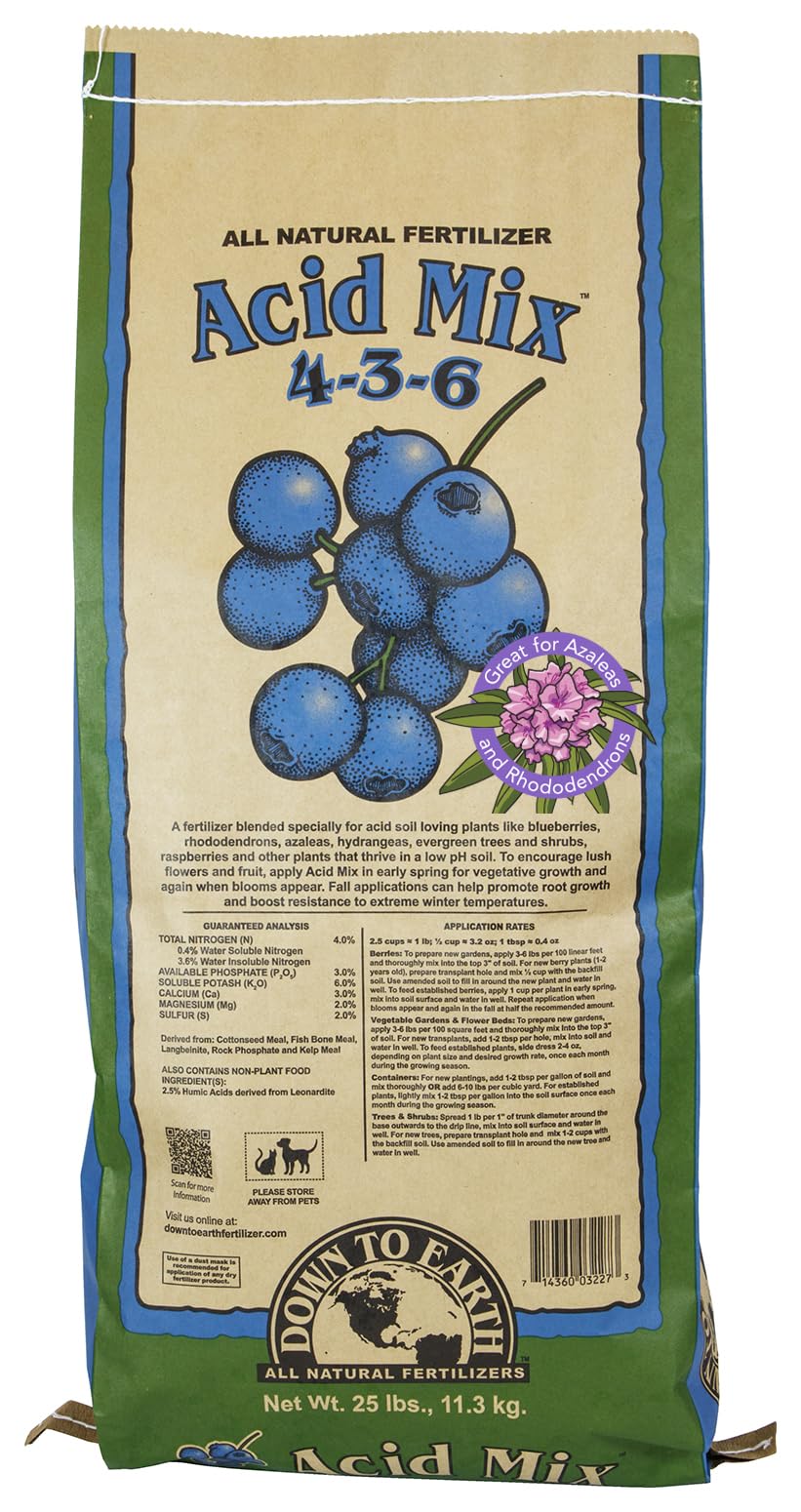
A 25-pound workhorse bag that feeds an entire berry patch for a couple of seasons
For anyone with a serious blueberry patch or multiple acid-loving beds, this is the bulk option that makes the most financial sense. The 25-pound bag carries a 400-ounce unit count, which is a staggering amount compared to the 80-ounce Miracle-Gro bag at the top of this list. It is an all-natural formula with real ingredients you can recognize: Cottonseed Meal, Langbeinite, Fish Bone Meal, Rock Phosphate, Humates, and Kelp Meal.
The 4-3-6 formulation is heavy on potassium, which is exactly what you want for fruit yield. It is blended for rhododendrons, azaleas, camellias, hydrangeas, evergreens, blueberries, raspberries, strawberries, and potatoes — anything that needs a low pH. Owners who use it on their 8 blueberry bushes, raspberries, and rhodies report it lasts for a couple of seasons, making it cheaper in the long run than frequent small-bag purchases.
Apply it in early spring for vegetative growth, again at bloom time, or in fall to boost root growth and winter hardiness. Reviewers point out berry bushes grow better and produce well, with rhododendrons “growing like crazy.” The catch: you need storage space for a 25-pound bag and must use it within a season or two.
large plots: large gardens and serious berry patches where the per-feed cost and bag longevity matter most.
small spaces: you have one or two container bushes — the bag is too large to store and use before it goes stale.
Understanding the Specs
NPK Ratio
The three numbers on the bag (like 8-4-8 or 4-3-6) tell you the percentage of nitrogen, phosphorus, and potassium by weight. For blueberries, you want a formula where nitrogen is prominent for leaf growth and potassium supports fruit development. Too much phosphorus can harm the delicate root system of acid-loving plants, which is why a balanced or potassium-heavy ratio is usually the right call.
Water-Soluble vs. Granular vs. Liquid
Water-soluble powders dissolve in water and feed instantly, making them ideal for containers and quick corrections. Granules release slowly over months, so you apply less often but wait longer for results. Liquid concentrates are the easiest to measure and absorb quickly, but require more frequent feeding. Pick the form that fits your weekly watering schedule.
Sulfur for Soil pH
Blueberries need acidic soil, typically around pH 4.5 to 5.5, to absorb nutrients. Some fertilizers include sulfur specifically to lower soil pH over time. The Espoma Holly-Tone includes 5% sulfur, and the True Organic formula uses sulfur as a key ingredient. If your soil is neutral or alkaline, look for a fertilizer with sulfur to help adjust pH naturally.
Organic vs. Synthetic
Organic fertilizers, like Dr. Earth and Down To Earth, use natural ingredients like fish bone meal and kelp. They build soil health over time and are safe for pets and people. Synthetic options, like Miracle-Gro, deliver nutrients faster and are generally cheaper per pound, but do less for long-term soil structure. Decide between organic soil-building and fast synthetic feeding.
FAQ
How often should I feed my blueberry bushes?
What is the best NPK ratio for blueberry plants?
Can I use hydrangea fertilizer on my blueberries?
Will granular fertilizer lower my soil pH on its own?
How much fertilizer does a full blueberry bush need?
Is organic or synthetic fertilizer better for blueberries?
Why do my blueberry leaves look yellow even after feeding?
Can I use blueberry fertilizer on my strawberries and raspberries?
How long does a bag of granular blueberry fertilizer last?
Do I need to mix granular fertilizer into the soil?
Final Thoughts: The Verdict
For most gardeners, the blueberry plant food winner is the Miracle-Gro Water Soluble because it delivers fast, visible results across every acid-loving plant you own with a flexible mix ratio. If you want a low-maintenance, slow-release option that only needs three feedings a year, grab the GARDENWISE 8-4-8. And for a large berry patch where long-term cost matters most, the Down To Earth 25 lb bag is the one to reach for.
How We Picked
We do not accept paid placement. Every pick is matched to a real buyer and a real use-case; we do not hands-on test units.
Sources & Methodology
Specifications: manufacturer listings and product documentation. Review insights: verified customer reviews, as of August 2026. Pricing: not shown on this page (it changes often); check the current price via the retailer link.
As an Amazon Associate, Lawn Gear Lab earns from qualifying purchases. This does not affect which products we feature.