
Specs are compiled from manufacturer listings and verified buyer reviews and can change over time — please confirm the key details on the product page before buying.
Clematis vines are greedy feeders, and if yours is all leaves and no flowers, the fix is usually a fertilizer with the right nutrient balance. The best choice for most gardeners is a slow-release granular feed that nourishes the roots for months, but the quickest results come from a water-soluble bloom booster applied weekly. The real secret is matching the feed to your vine’s growth stage and your own watering habits.
I’m Rikta — the founder and writer behind Lawn Gear Lab. This guide is built by comparing the manufacturers’ published specifications and the patterns across verified customer reviews, so you get each pick’s real strengths and trade-offs instead of marketing spin.
Clematis bloom best when fed consistently through the season, and this roundup of the best fertilizer for clematis breaks down which formulas deliver flowers without the guesswork.
Our Picks at a Glance

How To Choose The Best Fertilizer For Clematis
Clematis are heavy feeders that flower for months, which means they need steady nutrition rather than one big dose. The right feed keeps the root zone nourished so the vine can push out wave after wave of blooms from early summer into fall.
Understand the NPK ratio first
The three numbers on any fertilizer bag tell you the percentage of nitrogen, phosphorus, and potassium. For clematis, you want a formula where the middle number (phosphorus) is equal to or higher than the first (nitrogen), because phosphorus drives flower production. Too much nitrogen gives you lush leaves at the expense of blooms.
Decide between granular and liquid
Granular fertilizers release their nutrients slowly and need watering in after application, making them ideal for a low-maintenance monthly schedule. Water-soluble liquids require mixing into a watering can but act fast, which suits gardeners who water their clematis regularly and want to see results within a week.
Watch the burn risk
Concentrated fertilizers can damage delicate clematis roots if over-applied. Look for formulas with a “won’t burn” pledge or a low application rate, and always follow the dilution instructions exactly. When in doubt, start with a weaker mix and build up.
Quick Comparison
| Model | Best For | NPK Ratio | Form | Feeding Schedule | Amazon |
|---|---|---|---|---|---|
| Osmocote Smart-Release★ Best Overall | Set-and-forget feeding | 11 essential nutrients | Granules | Up to 6 months | Amazon |
| Farmer’s Secret Bloom BoosterBest Value | Fruit and flower yield | Concentrated liquid | Liquid | Every 2-4 weeks | Amazon |
| Old Farmer’s Almanac Spikes | No-mess container feeding | 5-5-5 | Spikes | Every 6-8 weeks | Amazon |
| Fertilome Garden Cote | Moisture-activated release | 12-12-12 | Granules | Slow-release | Amazon |
| Scotts Super Bloom | Fast, heavy blooming | 12-55-6 | Water-soluble | Every 1-2 weeks | Amazon |
| Espoma Rose-Tone | Organic clematis feeding | 4-3-2 | Granules | Monthly May-Sep | Amazon |
| TPS Clematis Fertilizer | Species-specific liquid feed | Liquid blend | Liquid | Gentle weekly | Amazon |
In‑Depth Reviews
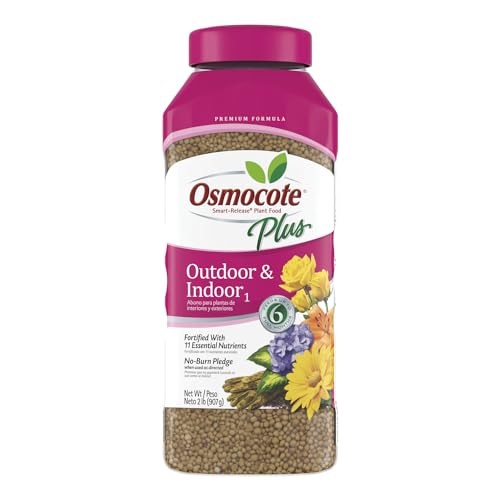
1. Osmocote Smart-Release Plant Food Plus
Our pick — over 4.5★ from 4,500+ verified ratings; the strongest balance of quality and price.
The sprinkle-once feed that keeps clematis blooming for half the year
You can feed your clematis once and not worry about it for half a year. Each granule has a resin coating (a thin plastic-like shell) that slowly releases 11 essential nutrients as soil moisture and temperature trigger it, so your vine gets steady food for up to 6 full months from a single application.
One 2 lb. container covers up to 75 sq. ft., and the label promises it will not burn plants when used as directed — a real concern with clematis’ sensitive roots. Gardeners across climates praise it for replacing a season of liquid feeding with one sprinkle.
Scale down the recommended 1 capful per 2 gallons of soil for small container vines. For in-ground clematis climbing a trellis, this is the lowest-maintenance path to a floriferous vine.
Why owners stick with it
- One application feeds for up to 6 months, no weekly mixing
- Resin coating prevents root burn when used as directed
- The “won’t burn” track record is the thing repeat buyers cite most
- Suitable for containers, raised beds, and in-ground planting
Who should scale it back
- The recommended rate can be strong for small potted vines
- Granules need watering in to activate the resin coating
Reach for it if: you want a single application in spring to carry the whole blooming season without a weekly task.
Adjust it if: your clematis lives in a small container — halve the rate to protect the roots.
2. Farmer’s Secret Fruit & Bloom Booster
A tiny teaspoon that goes a remarkably long way
This liquid booster is the value pick because of its extreme concentration. You dilute just 1 teaspoon into 2 gallons of water, making the 8 fluid ounce bottle last much longer than its physical size suggests — a solid contrast to heavier granular bags that need several scoops per feeding.
It works by strengthening the plant’s roots to improve nutrient uptake, which fuels both flowers and fruit. The manufacturer recommends repeating every 2-4 weeks with your regular watering routine. Gardeners report the 11.2-ounce bottle outperforms expectations for the price.
The one habit to build is shaking the bottle before each use, since the super-concentrated formula can settle and clump. Gardeners who feed weekly report excellent flowering and fruit set across tomatoes, cucumbers, and peppers, so your clematis is well within its comfort zone.
Concentration king: 1 teaspoon per 2 gallons is among the most economical feeding rates in this lineup, which is exactly why the bottle’s modest 8 fluid ounces still feels like a long-term supply.
Choose it if: you already water your clematis regularly and want a cheap, effective liquid feed to add to that routine.
Remember to: shake the bottle first so the concentrated sediment mixes evenly.
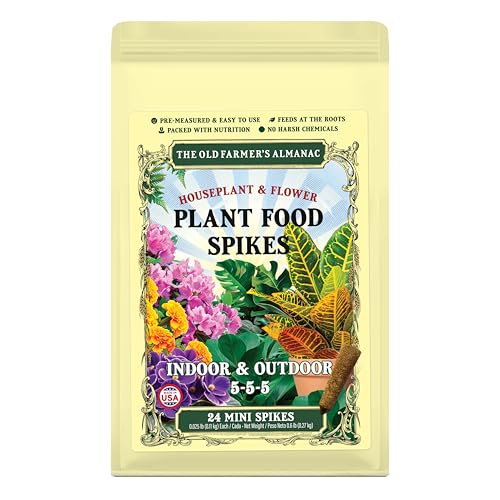
3. The Old Farmer’s Almanac Plant Food Mini Spikes
The press-and-leave feed with no measuring cup required
For a container clematis, this is the most simple to use way to feed. The 24 pre-measured mini spikes carry a balanced 5-5-5 NPK ratio (5% nitrogen for growth, 5% phosphorus for blooms, 5% potassium for roots) and release nutrition directly into the root zone. You simply press one into the soil and reapply every 6-8 weeks.
The patented TruSpike design means the spikes press in without a cap and resist breaking or crumbling. Owners praise the seconds-long application and the 30-day low-maintenance refund guarantee.
The honest trade-off shows up with very tight container soil: the spikes are thick, and some gardeners worry about pushing them into pots for fear of damaging delicate roots. If your clematis shares a pot with shallow-rooted neighbors, this is the one to pair with a gentler hand or a different spot.
Where it shines: container plants and window boxes where a liquid feed would be messy and a granular scoop feels imprecise.
Where it hesitates: dense, root-packed pots where pressing a thick spike down takes real force.
Grab it if: you want a no-mess, pre-measured feed that takes seconds to apply and lasts between 6-8 weeks.
Think twice if: your clematis is in a tight pot filled with roots — the thick spikes need some give in the soil.
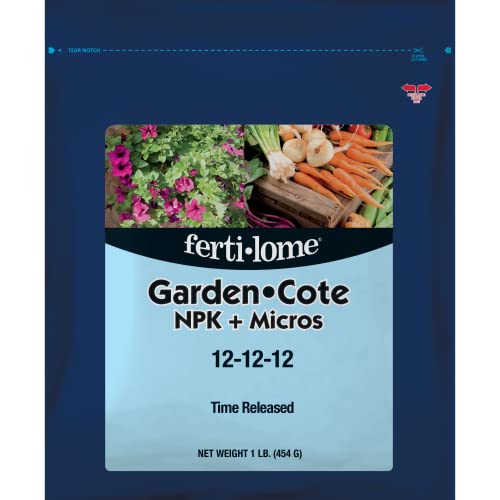
4. Fertilome Garden Cote 12-12-12
A balanced feed that releases on the soil’s own schedule
This granular fertilizer takes the guesswork out of timing because its micronutrients release in response to moisture and soil temperature. When your clematis is actively growing and the soil is warm, the feed activates; when conditions cool down, it eases off — a natural match for the vine’s own growth rhythm.
The 12-12-12 ratio (12% nitrogen, 12% phosphate, 12% soluble potash) delivers a perfectly even balance that suits flowers, vegetables, and citrus alike. You mix it into the top 1-3 inches of soil and water in after application, making it a straightforward addition to a spring planting routine.
Grapevines and roses respond within a week, and even struggling corn turned green and lush. For a clematis, the balanced ratio supports steady growth without pushing leaves over blooms.
The standout behavior: moisture-and-temperature-triggered release means the feed works when the plant works, not on a fixed calendar.
Pick it if: you prefer a balanced, even-ratio feed that syncs with soil warmth for natural timing.
Note that: this 1 lb. bag is best for a small bed or a few containers, not a large in-ground border.
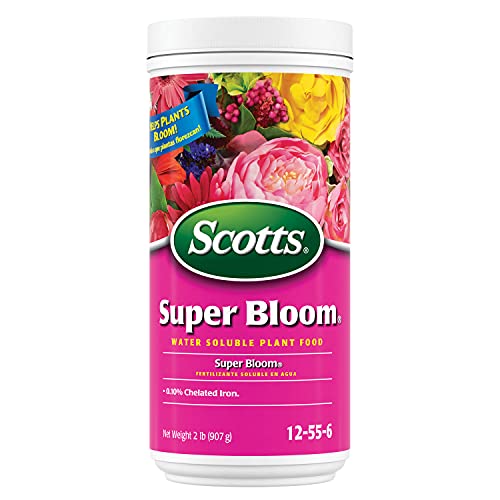
5. Scotts Super Bloom Water Soluble Plant Food
The high-phosphorus kick that pushes clematis into heavy flowering
This is the bloom specialist of the group. The 12-55-6 NPK ratio packs a massive 55% phosphorus — the nutrient that directly drives flower production — which makes it the most bloom-focused feed in this lineup. When your clematis is healthy but stingy with flowers, this is the formula that tips the balance.
It’s water-soluble, meaning it feeds plants instantly when mixed into a watering can, and the recommendation is to feed every 1-2 weeks during the active season. Potted plants bloomed within 3 days, frost-damaged bougainvillea revived in a month, and roses produced tall pink and white blooms within days.
The trade-off is commitment — water-soluble feeding means you’re mixing and applying every week or two, unlike the set-and-forget granules. The most-discussed complaint is the container’s inner seal under the lid, which some owners find isn’t properly sealed on arrival, so check that seal the first time you open it.
The bloom payoff
- 55% phosphorus is the highest bloom-driving number in this roundup
- Feeds instantly — visible results within days, not weeks
- One 2.1 lb. canister can last a whole summer for several plants
- Won’t burn plants when used as directed
The weekly cost
- Requires mixing and feeding every 1-2 weeks, so it’s not a set-and-forget option
- A recurring seal issue under the lid means checking the canister on arrival
Deploy it if: your clematis is healthy but underwhelming on blooms and you’re happy to feed a diluted mix every week.
skip it if: you want a once-in-spring application and won’t keep up a weekly mixing habit.
6. Espoma Organic Rose-Tone 4-3-2

The organic blend that names clematis right on the label
This is the only fertilizer in this roundup whose label explicitly lists clematis among its target plants, alongside roses, viburnum, and bougainvillea. The 4-3-2 analysis is a gentle organic feed with 5% calcium, enriched with Espoma’s proprietary Bio-tone formula, and it’s approved for organic gardening as a registered Organic Input Material.
The 4 lb. bag ships as a pack of 2, giving you 8 total pounds of feed. You apply it monthly through the growing season — generally May through September — by spreading it around the drip line of the plant and watering thoroughly. There’s no mixing required, and the label confirms it’s environmentally safe with no sludges or toxic ingredients.
Rose gardeners report greener plants, faster growth, and earlier blooms after switching. The honest caveats are the odor, which some find pleasant and others call outright vile, and the fact that value for money draws mixed opinions. For clematis, the gentler nitrogen means you feed for overall vine health while the organic base builds soil over time.
Organic authenticity: registered as an Organic Input Material, so it meets all requirements for organic production without toxic ingredients.
Clematis confirmed: the label names clematis directly, which removes the guesswork about compatibility.
Reach for it if: you want an organic, no-mix granular feed that’s explicitly formulated for clematis and other flowering vines.
Prepare for: a strong natural odor after application, and check if your nose tolerates it before committing.
7. TPS Clematis Fertilizer 32 oz
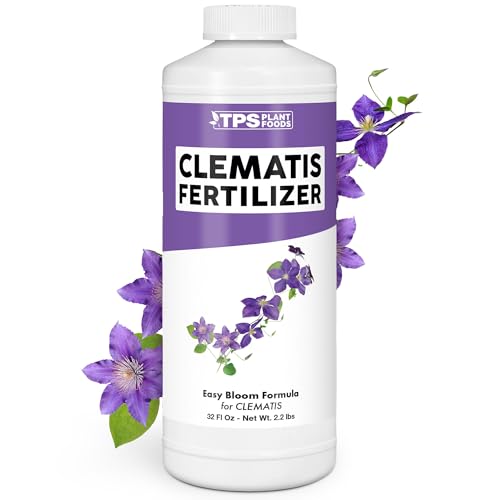
A liquid feed built specifically for clematis vines and their climbing habit
This is the only product in the lineup made specifically for clematis, and it’s designed around the vine’s particular needs. The 32 fluid ounce liquid formula supports strong vine development for healthy climbing and plant structure, while encouraging vibrant flowers and continuous blooming — exactly what a trellis climber needs to perform.
It’s a gentle weekly feed, which suits newly planted clematis that struggle to establish. The general advice is that young clematis are difficult to get going, and this feed is credited with rescuing a small, stagnant vine that “wasn’t doing much” — after a single dose it started growing really well. The bottle is made in the USA and intended for indoor and outdoor use.
Owners wish for a bigger bottle, as 32 oz lasts only 2-3 feedings for multiple plants. If you have a single clematis, that’s a full season; if you’re feeding several vines, plan for a refill sooner than you’d expect.
Built for the vine: formulated around clematis’ climbing structure, not just generic flower feeding.
New-plant friendly: the gentle weekly rate is forgiving on struggling young clematis that other feeds might overwhelm.
Choose it if: you have a newly planted or struggling clematis that needs a gentle, species-specific liquid boost.
Budget for: multiple bottles if you’re feeding several established vines, since 32 oz disappears in a few feedings.
Understanding the Specs
NPK ratio and what it means for blooms
The three numbers on a fertilizer label represent percentages of nitrogen, phosphorus, and potassium, in that order. Nitrogen fuels leaf and stem growth, phosphorus drives flower and fruit production, and potassium strengthens roots and overall plant health. For clematis, you want the phosphorus number to be at least as high as the nitrogen number, so the plant puts its energy into blooms rather than just foliage.
Granular vs. liquid feeding schedules
Granular fertilizers like Osmocote and Fertilome release nutrients slowly over weeks or months, which suits a low-maintenance once-a-season approach. Liquid feeds like Farmer’s Secret and Scotts Super Bloom act fast but require regular mixing, typically every 1-2 weeks. Your choice depends on whether you prefer a set-and-forget application or a hands-on weekly routine, and how much time you spend watering your clematis anyway.
FAQ
What NPK ratio is best for clematis flowers?
How often should I fertilize clematis?
Can I use rose fertilizer on clematis?
Will granular fertilizer burn my clematis roots?
What is the difference between water-soluble and slow-release fertilizer?
How do I apply fertilizer spikes to a container clematis?
Is organic fertilizer as effective as synthetic for clematis?
When should I start feeding clematis in the growing season?
How much liquid fertilizer do I need for multiple clematis vines?
Why are my clematis leaves green but there are no flowers?
Final Thoughts: The Verdict
For most gardeners, the fertilizer for clematis winner is the Osmocote Smart-Release because one spring application feeds your vine for up to 6 months with zero weekly effort. If you want the fastest, heaviest bloom response and don’t mind a weekly mix, the Scotts Super Bloom with its 12-55-6 phosphorus punch is the one to reach for. And for organic gardeners who want clematis named right on the label, the Espoma Rose-Tone delivers a gentle, monthly no-mix feed that builds your soil while it blooms.
How We Picked
We do not accept paid placement. Every pick is matched to a real buyer and a real use-case; we do not hands-on test units.
Sources & Methodology
Specifications: manufacturer listings and product documentation. Review insights: verified customer reviews, as of August 2026. Pricing: not shown on this page (it changes often); check the current price via the retailer link.
As an Amazon Associate, Lawn Gear Lab earns from qualifying purchases. This does not affect which products we feature.