
Specs are compiled from manufacturer listings and verified buyer reviews and can change over time — please confirm the key details on the product page before buying.
Ferns look delicate, but their real demand is underground: they need soil that holds moisture like a sponge yet drains fast enough to avoid suffocating the roots. The biggest mistake is grabbing any old potting mix, which compacts and drowns the fine root systems that ferns rely on. The five blends below are built around that exact balance, and they cover everything from a single potted Boston fern to a whole bed of acid-loving garden plants.
I’m Rikta — the founder and writer behind Lawn Gear Lab. This guide is built by comparing the manufacturers’ published specifications and the patterns across verified customer reviews, so you get each pick’s real strengths and trade-offs instead of marketing spin.
To revive droopy fronds and support steady new growth, you want a mix that keeps roots aerated and consistently damp, not waterlogged. This rundown of the best soil for ferns compares volume, weight, and drainage traits so you can match a bag to your plant collection.
Our Picks at a Glance


How To Choose The Best Soil For Ferns
Ferns evolved on forest floors, where the ground stays moist but never sits in standing water. Recreating that environment in a pot means finding a soil that holds onto water for the humidity-loving roots while letting the excess drain away freely. The wrong soil usually leads to yellowing fronds or root rot.
Moisture Retention vs. Drainage
This is the core tension in every fern mix. Ingredients like sphagnum peat moss and coir act like reservoirs, slowly releasing water to the roots. Meanwhile, chunky materials like perlite and pine bark create air pockets that keep the soil from compacting into a soggy brick. A good fern mix has both working together.
Volume and Pot Size
Bag size matters more than you might think. A 4-quart bag is just right for a single 8-inch pot, while an 8-quart bag generally handles a bigger 12-inch planter or a couple of medium pots. If you are refreshing a large outdoor bed, you will need significantly more volume than a single houseplant repotting.
Quick Comparison
| Model | Best For | Volume | Bag Weight | Key Ingredient | Amazon |
|---|---|---|---|---|---|
| Coast of Maine Acid Loving★ Best Overall | Garden beds & acid lovers | 20 quarts | — | Peat Moss & Compost | Amazon |
| Doter Fern MixTop Performer | Single 8-inch pot | 4 quarts | — | Custom Hand Blend | Amazon |
| Rio Hamza Fern Potting Soil | Re-potting indoor ferns | 8 quarts | 4.5 pounds | Nutrient-enriched blend | Amazon |
| Soil Sunrise Fern Mix | Large 12-inch pots | 8 quarts | 3.1 pounds | Peat, Bark & Perlite | Amazon |
| rePotme All Purpose Mix | Tropical houseplants | 4 quarts | 4 pounds | Peat-free tropical blend | Amazon |
In‑Depth Reviews
1. Coast of Maine Organic & Natural Planting Soil for Acid Loving Plants
Our pick — over 4.5★ from 600+ verified ratings; the strongest balance of quality and price.
The big-bag workhorse that feeds acid-loving plants and ferns alike.
If you manage several beds or planters, this 20-quart bag gives you 5.0x the volume of the Doter 4qt mix — enough to top off blueberry planters and enrich a fern bed without buying a second bag. Its low-pH formula (a measure of acidity) pairs sphagnum peat moss with composted manure and aged bark, keeping the mix lightweight and loose so roots can breathe.
Buyers report the bag sizing feels just right for refreshing tired soil, with one noting “That bag was just the right size” for two blueberry planters whose old soil had worn out. Owners mention healthy growth across gardens and varied plantings after mixing it in. Since it is OMRI-listed for organic use, it suits gardeners who want to avoid synthetic additives altogether.
The one caveat: acidity is a mixed bag in the feedback, with some owners finding it plenty acidic and others not, so it is best suited to plants that tolerate a range rather than those demanding extreme pH. At this scale, the mix is most practical for outdoor containers and beds, not single small pots.
What wins people over
- Massive 20-quart volume stretches across multiple planters and beds
- OMRI-listed organic blend with composted manure and sphagnum peat moss
- Owners see healthy growth across a wide range of plants, not just ferns
The trade-offs
- Acidity level gets mixed feedback from owners
- Heavier investment than a single-pot mix if you only need a little
Reach for it if: you have multiple acid-loving plants or an outdoor bed that needs a generous refresh in one go.
Look elsewhere if: you only need to repot one small fern and want to avoid storing a huge open bag.
2. Doter Potting Soil Mix for Fern 4qt
A custom hand-blended bag that fits a single pot perfectly.
This blend is engineered around moisture retention first — the brand leans into long-lasting moisture so the soil stays consistently damp and you water less often. It pairs that with good permeability and drainage, which is the exact recipe that prevents waterlogged roots and the rot that follows. Owners call it a “nice resealable heavy bag” that arrives moist but not muddy, indicating careful handling.
For a single 8-inch pot, the 4-quart volume is precisely sized; one owner called it “Perfect for 1 8 inch pot.” It arrives labeled specifically for ferns, and customers note split or divided ferns adjusting well and looking healthy after transplant. The resealable closure is a small but real convenience if you use part of the bag and want to keep the rest fresh.
The downside is the 4-quart bag reads smaller than expected, so it is not economical for a large collection. It shines instead as a focused, no-mixing-required solution for that one fern that needs a better home right now.
Owner verdict: A convenient, right-sized fix for a single potted fern, with moisture control that owners say keeps transplants looking healthy.
Who it is not for: Anyone repotting several plants at once — the 4-quart volume runs out fast.
Best for: the indoor gardener with one fern in an 8-inch pot who wants a ready-to-use, balanced blend.
Think twice if: you need volume — the bag is smaller than it looks in photos.
3. Potting Soil for Ferns (8 Quarts) by Rio Hamza Trading

The nutrient-rich 8-quart bag that gives you room to repot several ferns.
This mix is built for the fern owner who is tired of rescuing plants with standard soil. It is tailored specifically to ferns with a combination of moisture retention, aeration, and nutrient support, which is exactly the trio delicate fern roots need. At 4.5 pounds for 8 quarts, it is a denser, richer blend than the lighter Soil Sunrise mix at 3.1 pounds for the same volume — a 45% difference you can feel when you lift the bag.
Reviews show relief — one owner jokes their fern is “still alive which is a miracle in itself,” and another repotted a Staghorn Fern with solid results. The nutrient-enriched formula supports vibrant greenery without needing extra amendments.
The recurring gripe, however, is the packaging: the inner plastic bag is thin and ribbed, and some units arrived with loose soil in the outer bag. The soil itself earns praise, but treat the bag gently in transit and open it over a tray.
Why owners pick it
- 8 quarts gives enough material for multiple pots or a bigger planter
- Nutrient-enriched formula supports lush foliage without extra feeding
- Strong owner track record for keeping ferns alive and thriving
Know before you buy
- Thin inner bag can tear, leaving loose soil in the outer packaging
- Heavier and denser than lighter aeration-first blends
Grab this if: you want maximum repotting coverage per dollar and trust a nutrient-rich blend over a custom mix.
skip it if: flimsy packaging is a dealbreaker for you — open it over a bin just in case.
4. Soil Sunrise Fern Plant Potting Soil Mix (8 Quarts)
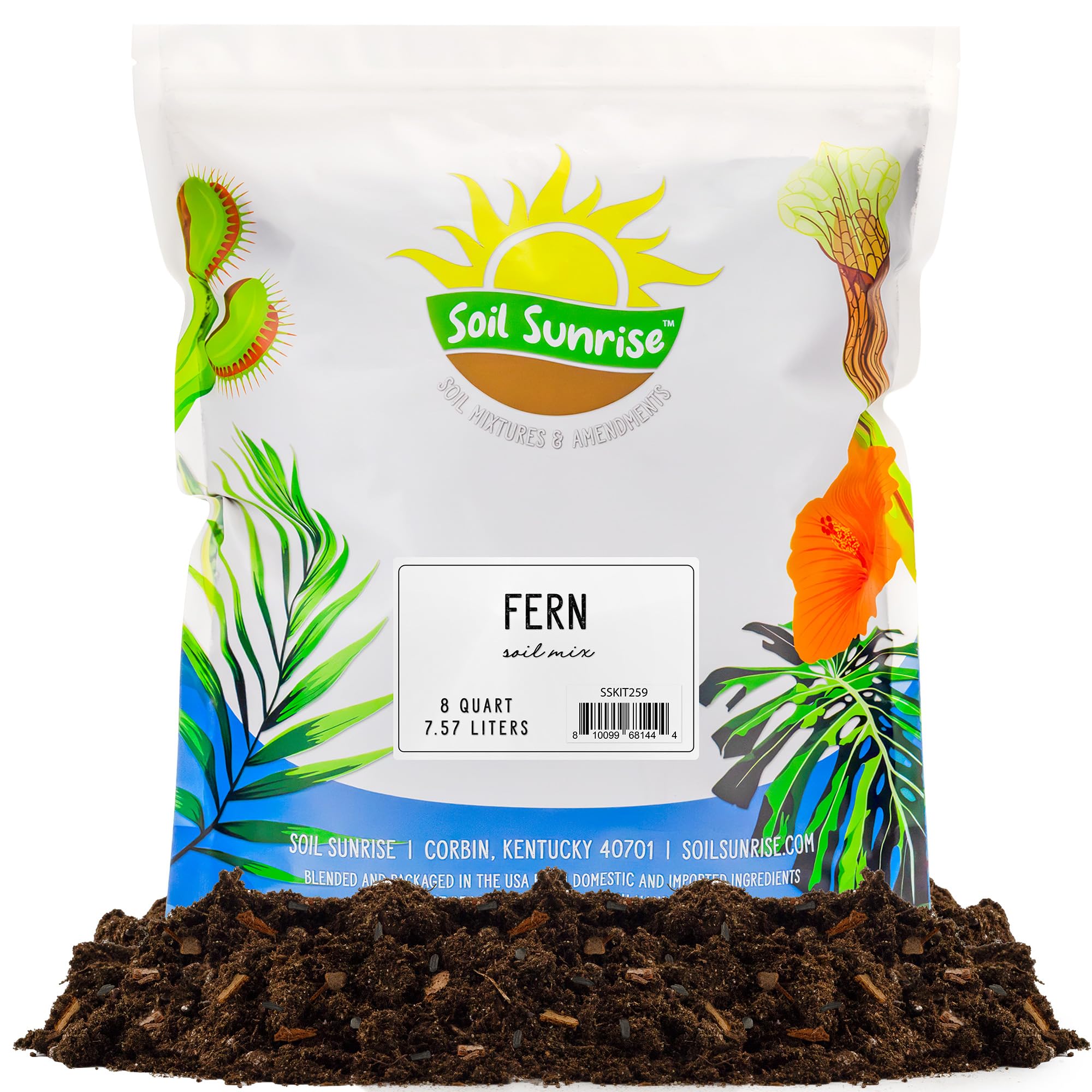
A feather-light hand blend engineered for a big 12-inch pot.
This is the specialists’ mix, hand blended in small batches with no artificial ingredients or fertilizers. The ingredient deck — peat moss, pine bark mulch, perlite, sand, and horticultural charcoal — is the classic fern recipe, giving you good drainage, moisture, aeration, and pH balance all at once. At just 3.1 pounds for the full 8 quarts, it is noticeably lighter than the Rio Hamza bag, which makes it easier to carry and work into a pot.
The positioning is clear: regular houseplant soil is not designed for ferns, and this blend is built for the favorites — Boston fern, tree ferns, painted ferns, maidenhair ferns, and more. One owner finally repotted a fern they had kept for 14 years, trusting this mix after reading that rabbit foot ferns prefer wider, shallow terracotta planters. Another found it worked beautifully for a tropical monstera, which speaks to its versatility beyond just ferns.
The catch is value: it sits at the higher end, and owners note it is pricier than they wanted to pay.
The takeaway: A premium, hand-crafted feel with the exact ingredient mix fern specialists recommend, sized for a big 12-inch pot.
The trade-off: You pay more per quart than the value bags, but you get small-batch quality and a lighter, airier structure.
Best for: treasured, long-lived ferns and collectors who want a hand-blended, no-fertilizer mix.
Not ideal if: you are on a strict budget — the per-quart cost runs higher than commodity blends.
5. rePotme All Purpose Potting Soil (Junior Bag, 4 Quarts)

The peat-free tropical mix that treats ferns, calathea, and alocasia alike.
This blend earns its “all purpose” name by covering a huge range of houseplants — herbs, succulents, cacti, spider plants, snake plants, pothos, peace lilies, aloe, ZZ plants, fiddle leaf figs, and Boston ferns all make the list. The defining feature is that it is peat-free, which matters if you have battled fungus gnats before; reviewers point out switching from peat products and not seeing the same gnat problem return. The mix drains well while retaining moisture, which is the fern-friendly balance you want indoors.
The brand says its mixes are used by major conservatories and botanic gardens worldwide. Owners call it an excellent houseplant mix for ferns, calathea, and alocasia, with one loyal buyer noting an almost instant improvement in their aloe after repotting. It is designed to work with any grow light, planter, or fertilizer, so it slots into an existing indoor setup without fuss.
The catch is quantity: at 4 quarts, this is a Junior Bag, and some owners feel it is small for the price — one said it was not enough for two small plants. The quality earns the premium, but measure your pot sizes before ordering.
What stands out
- Peat-free formula helps avoid the fungus gnat issues tied to peat products
- Versatile across a wide range of tropical houseplants, not just ferns
- Shoppers say strong moisture retention and easy water absorption
What to watch
- 4 quarts is a small bag — not enough for multiple medium plants
- Premium pricing per quart, especially if you are repotting a lot
Reach for it if: you have gnat-sensitive tropical plants and want one quality mix for the whole shelf.
Look elsewhere if: you need to fill a large planter — this Junior Bag goes fast.
Understanding the Specs
Volume (Quarts)
The single most practical number on the bag. A 4-quart mix handles one 8-inch pot, while an 8-quart bag stretches to a big 12-inch planter or a couple of medium pots. Match the volume to your collection so you do not end up with a half-empty bag drying out in storage.
Bag Weight vs. Structure
Heavier bags for the same volume typically mean denser, richer soil, while lighter bags signal more airy, chunky structure. Ferns with delicate roots usually prefer the lighter, more aerated blends. Check the pounds per quart to gauge whether the mix will feel fluffy or heavy in your hands.
FAQ
What is the difference between standard potting soil and fern-specific mix?
How many quarts do I need to repot a single fern?
Why does my fern potting soil arrive already moist?
Is an acid-loving soil mix good for all ferns?
Should I choose a peat-free fern soil?
How long does an 8-quart bag of fern soil last?
Can I use fern soil for other tropical houseplants?
Why is my fern soil bag lighter than another same-size bag?
Final Thoughts: The Verdict
For the majority of shoppers, the soil for ferns winner is the Coast of Maine Acid Loving blend because its 20-quart volume and OMRI-listed organic formula (certified for organic gardening) solve the whole garden at once, and it is the crowd favorite with a deep base of happy owners. If you want a hand-blended, fern-specific mix for a single prized pot, grab the Soil Sunrise for its lightweight 8-quart build. And for value across several pots, the Rio Hamza 8-quart bag is the one to reach for.
How We Picked
We do not accept paid placement. Every pick is matched to a real buyer and a real use-case; we do not hands-on test units.
Sources & Methodology
Specifications: manufacturer listings and product documentation. Review insights: verified customer reviews, as of August 2026. Pricing: not shown on this page (it changes often); check the current price via the retailer link.
As an Amazon Associate, Lawn Gear Lab earns from qualifying purchases. This does not affect which products we feature.