
Specs are compiled from manufacturer listings and verified buyer reviews and can change over time — please confirm the key details on the product page before buying.
Dollarweed is the weed that makes southern lawn owners throw down their sprayers in defeat. Those shiny, coin-shaped leaves pop up overnight in wet spots, shrug off the general-purpose sprays, and spread faster than you can pull them by hand. The right fix isn’t a stronger dose of a random weed killer — it’s a selective herbicide that targets the weed without scorching your St. Augustine, Bermuda, or centipede grass.
I’m Rikta — the founder and writer behind Lawn Gear Lab. This guide is built by comparing the manufacturers’ published specifications and the patterns across verified customer reviews, so you get each pick’s real strengths and trade-offs instead of marketing spin.
Dollarweed laughs at general weed sprays, so here is the research-backed shortlist of the best weed killer for dollar weed that actually targets it while keeping your southern turf healthy.
Our Picks at a Glance
How To Choose The Best Weed Killer For Dollar Weed
Dollarweed thrives in damp, poorly drained soil, which is why it often appears right after heavy rain or overwatering. A contact killer will brown the leaves you spray, but the roots survive and send up new growth within days. You want a systemic herbicide that moves into the plant and kills the root system.
Match the chemistry to your grass type
Warm-season lawns — St. Augustine, Bermuda, centipede, and Zoysia — are sensitive to many broadleaf killers. Some products are formulated specifically for these grass types, while others will cause yellowing or die-back. Always check that the label lists your grass type before buying, and pay attention to temperature warnings during application.
Choose your application method
Ready-to-spray bottles attach to your garden hose and cover large areas quickly, which suits a yard with widespread dollarweed. Concentrates let you mix your own solution in a pump sprayer, giving you precise control for spot-treating patches. If you’re treating a small area, a concentrate is more economical and reduces chemical waste.
Quick Comparison
| Model | Best For | Active Ingredient | Coverage | Form | Amazon |
|---|---|---|---|---|---|
| Bayer Celsius WG★ Best Overall | St. Augustine & Centipede | Thiencarbazone, Dicamba | Selective | Granule | Amazon |
| Ortho Nutsedge KillerEasiest Coverage | Hose-end, Large Yards | Sulfentrazone | 5,000 sq ft | Spray | Amazon |
| Pro Crabgrass & Grassy Weed Killer | Crabgrass & Dollarweed | 18.92% Quinclorac | Residual | Liquid | Amazon |
| Quali-Pro Quinclorac 1.5 L | Spot Treatment | 17.79% Quinclorac | 1,500 sq ft | Liquid | Amazon |
| PBI Gordon SpeedZone Southern EW | Fast Visible Results | Broadleaf Blend | 1 gallon | Liquid | Amazon |
| Celcius WG Herbicide | 150+ Weed Control | Herbicide Blend | 1 Count | Spray | Amazon |
In‑Depth Reviews
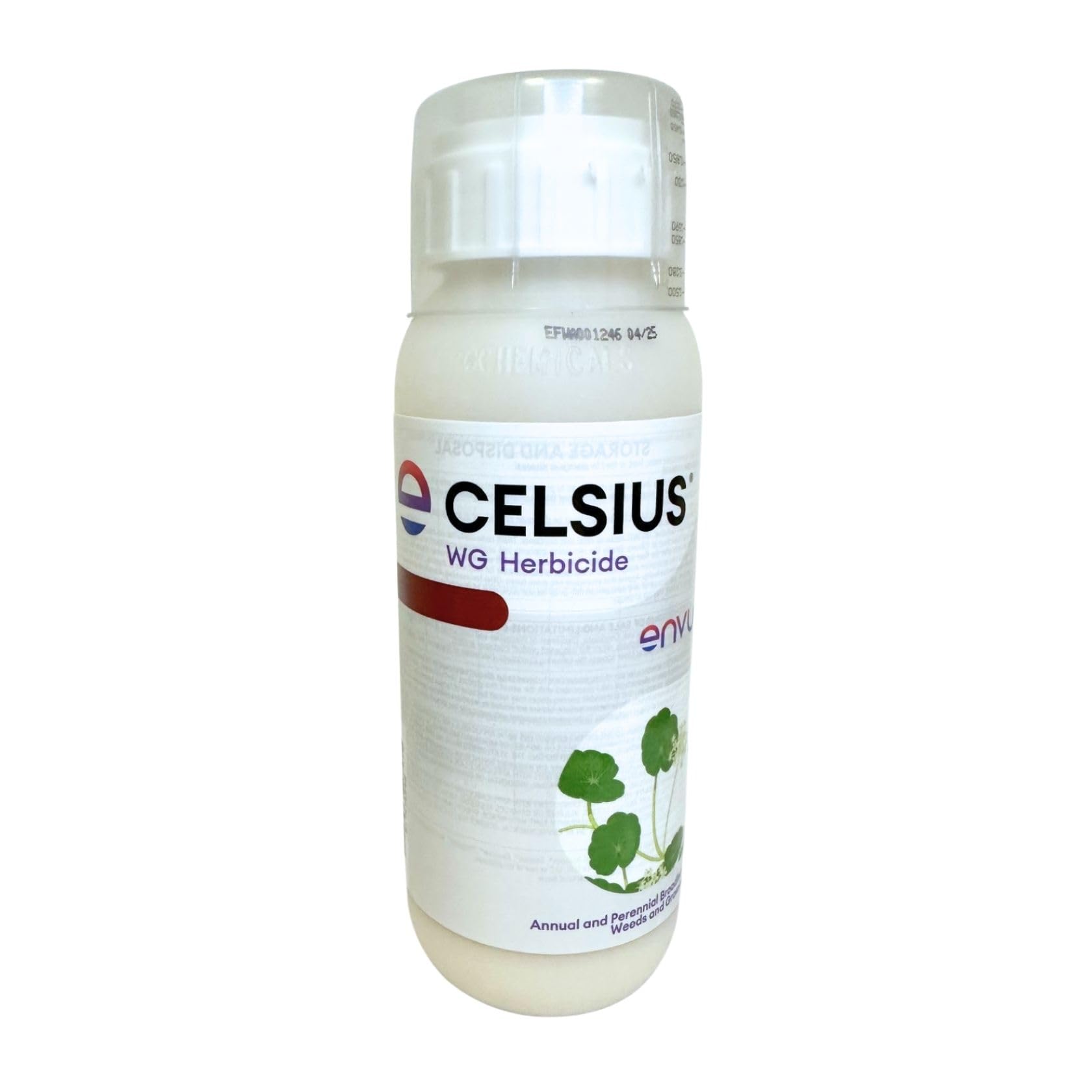
1. Bayer Celsius WG 10 oz
Our pick — over 4.5★ from 450+ verified ratings; the strongest balance of quality and price.
The warm-season specialist that takes down buttonweed and dollarweed without stressing St. Augustine
This is the chemistry that lawn pros reach for when general-purpose sprays fail. The wettable granule formulation mixes with water and delivers a triple active-ingredient punch — Thiencarbazone-methyl, odosulfuron-methyl-sodium, and Dicamba — that targets a long list of stubborn weeds including dollarweed, Virginia buttonweed, chamberbitter, and Florida pusley. On a 1-acre St. Augustine lawn, buyers report Virginia buttonweed was dead after 2 weeks with no yellowing even in 94°F heat.
What wins people over is the safety margin on warm-season turf. It’s listed as safe for centipede, Bermuda, and St. Augustine, which is rare for a product this strong. The trade-off is that it’s a concentrate for a pump or backpack sprayer — there’s no hose-end support on the label, and you’ll need to keep the mixture agitated. It also demands that you know your grass and weed types, because a misapplication on the wrong turf can cause damage.
At just 10 ounces, it’s not cheap, but the math works out for spot treatment since the rate is a tiny 1.6-3.2g per 1,000 sq ft. The crowd favorite sits at 4.6 stars from over 470 verified buyers., and the consensus is clear: it’s the solution for warm-season grasses where other products fail.
The warm-season ace: safe on St. Augustine, centipede, and Bermuda while wiping out dollarweed, buttonweed, and carpetgrass — carpetgrass that Tenacity famously failed to control.
Patience required: some weeds like Dallasgrass can take up to 3 weeks to show effects, so don’t expect instant results on every species.
Reach for this if: you have a warm-season lawn with resistant weeds and want one product that handles dollarweed plus a dozen other tough species.
Look elsewhere if: you want a grab-and-go hose attachment — this needs a pump sprayer and careful mixing.
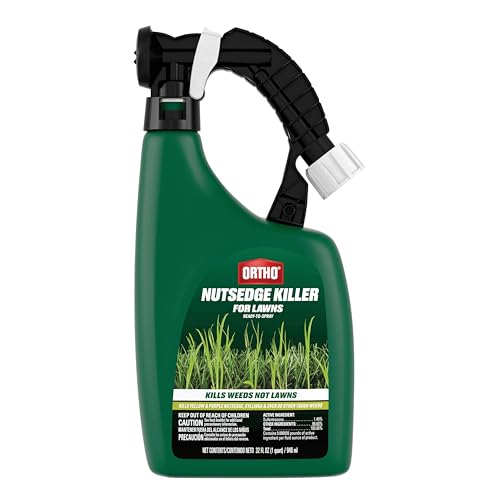
2. Ortho Nutsedge Killer for Lawns Ready-To-Spray
The screw-on-and-go hose sprayer that wipes out dollarweed across 5,000 square feet
If you want the easiest possible way to treat a large lawn, this is it. The 32 fl. oz. container connects straight to your garden hose, and the active ingredient Sulfentrazone goes to work on dollarweed, wild violet, nutsedge, kyllinga, and over 50 other listed weeds. One bottle covers 5,000 sq. ft. of established northern or southern turf, which makes it a genuine one-and-done purchase for a typical suburban yard.
The effectiveness is the thing owners rave about — it’s the #1 thing people mention, with over a thousand buyers weighing in on how well it works.. One owner reports that 72 hours after spraying, all the nutsedge was brown and dying., and a patio owner who had survived vinegar, salt, and even torching finally got results within 2 weeks.. The catch: it works best on young weeds, and it becomes less effective the longer you wait and the taller the weed gets.
At 2.4 pounds, this is a heavier bottle than the Pro Crabgrass option below, but the hose-end design means you never lift it while spraying. The recurring gripes are minor: the nozzle switch between water and chemical modes isn’t clearly marked, and an accidental bump can dilute the mix.
What it does best
- No mixing — attach the hose and spray
- Covers a full 5,000 sq ft per bottle
- Kills dollarweed plus 50+ other weeds
- Works on both northern and southern turf
Know before you spray
- Weak dye makes it hard to track coverage
- Nozzle switch can accidentally dilute the mix
- Best results only on young, small weeds
Grab this if: your dollarweed is widespread and you want to treat it in an afternoon without learning to mix concentrates.
Think twice if: your weeds are already tall and mature — it loses power as they grow.
3. Pro Crabgrass & Grassy Weed Killer – 18.92% Quinclorac

A concentrated Quinclorac formula that hits dollarweed and crabgrass with one spray
This Liquid Harvest concentrate brings a brawny 18.92% Quinclorac concentration — the active ingredient that targets both broadleaf weeds like dollarweed and grassy weeds like crabgrass and foxtail. It’s a fast-acting formula that shows yellowing by day 3 and dead weeds by day 5, according to owner reports.. The residual control is the selling point: it keeps preventing new weeds from reappearing long after application.
At 2 pounds, this bottle is lighter than the Ortho option above, and the concentrate format means you mix only what you need in a pump sprayer. The recommended mix is 1.5 oz per gallon per 1,000 sq ft, and pairing it with a surfactant noticeably improves results. One owner who compared it against other grass-safe sprays called it the best of three options they’d tried..
The honest caveat: effectiveness gets mixed reviews. Some owners with established, widespread crabgrass in Bermuda needed multiple reapplications, and one worried that a stronger dose could harm the grass. This is a product that rewards careful reading of the label — mix it right, use a surfactant, and give it time, and it performs; skip those steps and results fall short.
Fast-acting and residual: visible yellowing by day 3 and full kill by day 5, with residual control preventing regrowth.
Follow the label: results vary sharply based on weed size and surfactant use — established crabgrass may need a second application.
Choose this if: you want one concentrated product for both dollarweed and grassy weeds, and you’ll follow the mixing instructions.
Pass if: you prefer a no-mix hose sprayer or want guaranteed results on mature, widespread weed patches.
4. Quali-Pro Quinclorac 1.5 L

The precise spot sprayer that erases dollarweed while leaving your good grass untouched
This is the choice for careful spot treatment. The 17.79% Quinclorac formula goes after dollarweed, crabgrass, foxtail, Kikuyugrass, and torpedograss, and it’s selective — meaning it spares the surrounding turf while killing the weed. Owners mention crabgrass dying in about 4 days and a 1.5-acre fescue lawn going from tens of thousands of dandelions to roughly 20 over three years of use.. The 64 fl. oz. bottle covers 1,500 square feet when mixed at the labeled rate.
The key to success here is a surfactant like MSO, which prevents the spray from washing off in rain or dew. One owner put it simply: “a little bit goes a long way” when used hand in hand with MSO. A pump sprayer is the recommended tool because it’s more precise than a boom and uses less chemical. This is a professional-grade product also labeled for golf courses and sod farms, so it carries real credentials.
The honest trade-off: it’s not perfect on everything. It’s ineffective on clover, and one owner reported only an 80% kill rate, needing a reapplication. Compared to the Pro Crabgrass option above, this has a slightly lower Quinclorac concentration at 17.79% vs 18.92%, but the higher rating reflects more consistent results. Weigh the larger bottle size against the need to buy a surfactant separately.
Precise and selective: kills crabgrass and dollarweed in days while leaving surrounding grass healthy and green.
Surfactant essential: without MSO, rain and dew will wash it off and blunt its power.
Best for: owners who want professional-grade chemistry and don’t mind mixing their own spot spray.
Skip if: your problem is clover, or you want a broad-spectrum formula that handles every weed in one pass.
5. PBI Gordon SpeedZone Southern EW Herbicide

The fast-acting broadleaf killer that shows visible injury in hours, not days
When you’re tired of waiting a week to see results, this PBI Gordon formula delivers. The label promises visible injury in hours, and owners confirm it — one Zoysia owner saw results in 24 hours on clover, and another reports it “works great on dollar weed and Florida Bethony.” The gallon-sized 128 fl. oz. bottle gives you serious volume for repeated applications across a large southern lawn.
This is advanced broadleaf chemistry developed specifically for southern grasses, which is why it handles the tough weeds like dollarweed, Florida betony, and chickweed that general sprays miss. One owner on St. Augustine noted the first application had “SOME effect” but the second application 4 weeks later killed a lot of weeds, though some dollarweed and clover remained. Expect to reapply — this is a two-pass product for stubborn infestations.
The real warning comes from the reviews: this stuff is potent, and drift is dangerous. One owner’s spray drifted in the wind and “torched her flower beds,” earning him a ban from buying it again. At 9 pounds, this is the heaviest bottle in the lineup, so you’ll want a sturdy sprayer. Weigh the speed against the care required — it’s not for careless spraying.
Blazing speed: visible injury within hours and confirmed results in 24 hours on clover and dollarweed.
Handle with care: drift can damage nearby flower beds, and stubborn patches may need a second application.
Reach for this if: you want the fastest visible results and have a large southern lawn to treat.
skip it if: you’re spraying near delicate gardens or flowers — drift is a real risk.
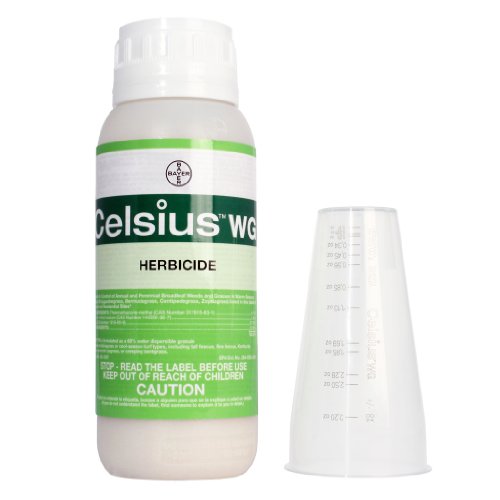
6. Celcius WG Herbicide 6666194
The high-heat warrior that controls 150+ weeds safely on St. Augustine and centipede
This Bayer post-emergent herbicide is built for the hottest southern summers. It controls more than 150 weeds with no high-temperature limitations, meaning you can spray when it’s 90°F+ without worrying about frying your turf. It’s explicitly safe on St. Augustine grass and centipede grass, the two most heat-sensitive lawn types in the South. Owners in Phoenix report clover and broadleaf weeds dying in 3-4 weeks at a rate of 1 oz per 10 gallons, with the Bermuda grass thriving afterward.
The effectiveness is the most-praised aspect, and the concentration is the second — this is a highly concentrated formula that goes a long way. One owner spot-weeding roughly 10,000 sq ft reported the bottle lasted a full season plus, with 30% left over from May through fall. That’s the kind of economy that justifies the upfront cost for larger properties.
The catch is patience. This is not a fast killer — weeds die over 3-4 weeks, not 3-4 days, and multiple summer treatments are recommended for full control. The manufacturer recommends pairing it with Pen-A-Trate II Premium Surfactant for better results, but warns against using any surfactant when temperatures exceed 90 degrees Fahrenheit. Follow that rule, give it time, and the results speak for themselves.
Why it stands out
- Safe on heat-sensitive St. Augustine and centipede
- Controls 150+ weed species
- One bottle lasts a full season of spot treatment
- No high-temperature application limits
What to expect
- Slow action — 3-4 weeks for visible kill
- Needs multiple treatments for full control
- Skip surfactant above 90°F
Pick this if: you have St. Augustine or centipede and need one product that handles a massive variety of weeds.
Pass if: you want fast results or prefer a cheaper entry-point product.
Understanding the Specs
Active Ingredients
The active ingredient is the chemical that actually kills the weed. Quinclorac is the gold standard for dollarweed and crabgrass — it’s systemic, meaning it moves through the plant to the roots. Sulfentrazone targets sedges and broadleaf weeds like dollarweed. Dicamba and Thiencarbazone are broadleaf specialists often blended for stubborn weeds like Virginia buttonweed. Higher concentration percentages, like 18.92% Quinclorac, mean a more potent mix per ounce.
Selectivity and Turf Safety
A selective herbicide kills the weed but spares your grass. This is critical for warm-season lawns because St. Augustine and centipede are easily damaged by non-selective sprays. Look for labels that explicitly list your grass type as safe, and respect temperature warnings — some products shouldn’t be used with surfactant above 90°F, and others have no high-temperature limits at all. When in doubt, spot-test a small area first.
FAQ
What is the best active ingredient for killing dollarweed?
Can I use these products on St. Augustine grass?
How long does it take to see results on dollarweed?
Do I need a surfactant with these herbicides?
What is the difference between ready-to-spray and concentrate formulas?
Why did my dollarweed survive a general-purpose weed killer?
How much area does a bottle cover?
Will these products kill crabgrass too?
How do I prevent dollarweed from coming back?
Is it safe to use these near flower beds and gardens?
Final Thoughts: The Verdict
Across the board, the weed killer for dollar weed winner is the Bayer Celsius WG because it delivers the rare combination of heavy-duty weed control and safety on heat-sensitive St. Augustine, centipede, and Bermuda lawns. If you want easy large-yard coverage without mixing, grab the Ortho Nutsedge Killer. And for fast, precise spot treatment, the Quali-Pro Quinclorac is the one to reach for.
How We Picked
We do not accept paid placement. Every pick is matched to a real buyer and a real use-case; we do not hands-on test units.
Sources & Methodology
Specifications: manufacturer listings and product documentation. Review insights: verified customer reviews, as of August 2026. Pricing: not shown on this page (it changes often); check the current price via the retailer link.
As an Amazon Associate, Lawn Gear Lab earns from qualifying purchases. This does not affect which products we feature.