
Specs are compiled from manufacturer listings and verified buyer reviews and can change over time — please confirm the key details on the product page before buying.
Lavender dies in standard potting soil because it holds too much moisture. The right mix drains fast and stays slightly alkaline to prevent root rot. Here are the three blends that nail that balance for healthy lavender.
I’m Rikta — the founder and writer behind Lawn Gear Lab. This guide is built by comparing the manufacturers’ published specifications and the patterns across verified customer reviews, so you get each pick’s real strengths and trade-offs instead of marketing spin.
You want a mix that keeps roots dry, so this roundup of the best soil for lavender focuses only on blends with proven drainage and the right pH for healthy plants.
Our Picks at a Glance
How To Choose The Best Soil For Lavender
Lavender thrives in conditions that mimic its rocky Mediterranean home. Drainage is the soil’s most critical job—it must never stay soggy. Waterlogged soil suffocates roots and kills the plant regardless of watering habits.
Drainage is your number one priority
Fast-draining blends use coarse ingredients like perlite, sand, or pumice for air pockets. These pockets let water escape and keep oxygen flowing to the roots. Look for a texture that feels gritty and light, not dense and muddy.
pH matters more than you think
Lavender prefers slightly alkaline to neutral soil, typically in a pH range around 6.4 to 8.5. Most standard potting mixes are too acidic for it, which is why your plant might look okay but never really flourish. A mix that mentions a higher pH range or includes lime is on the right track for lavender.
Quick Comparison
| Model | Best For | Volume | Key Drainage Aid | Best Use | Amazon |
|---|---|---|---|---|---|
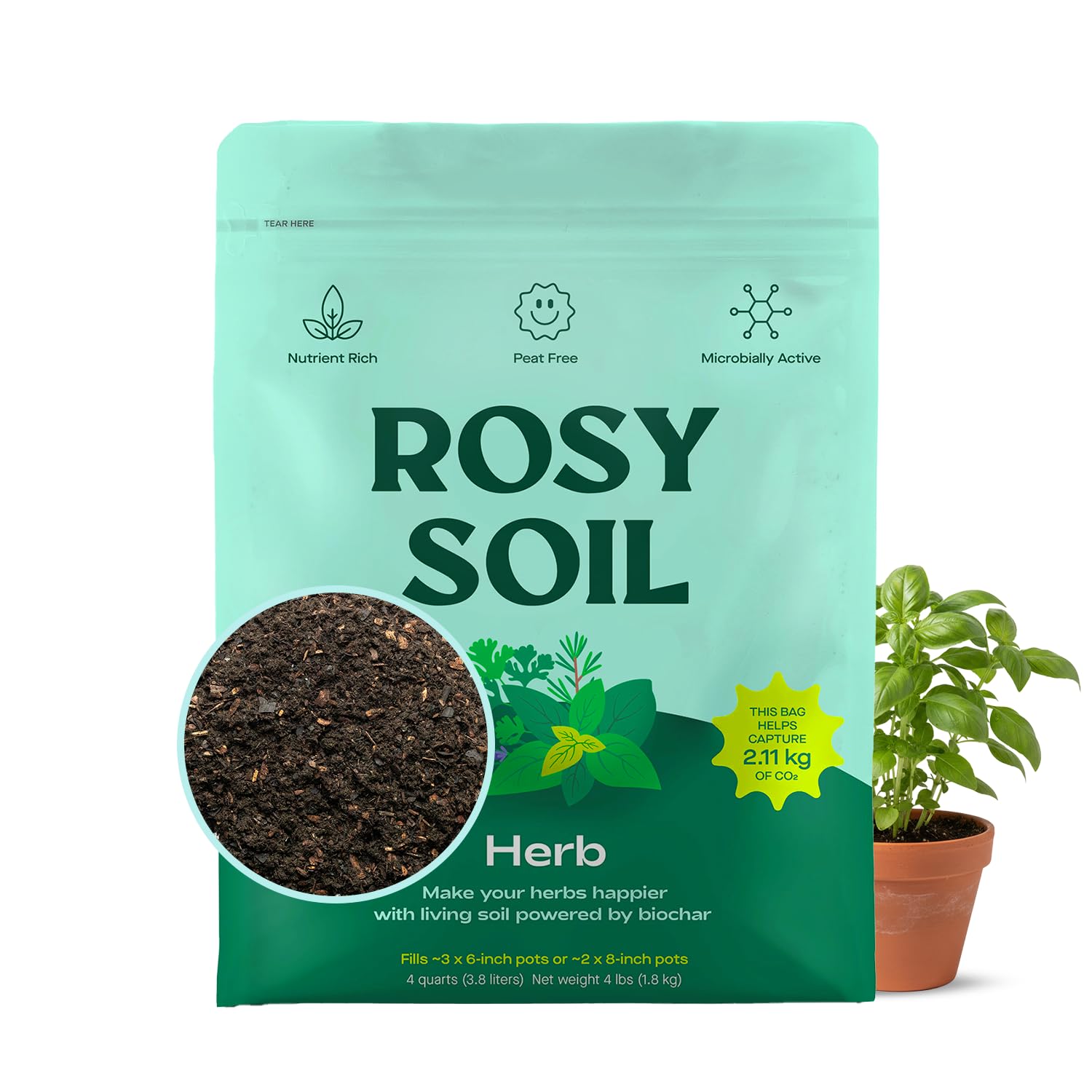
| Rosy Soil Herb Mix★ Best Overall | Eco-conscious growers | 4 quarts | Biochar & perlite | Indoor & outdoor herbs | Amazon |
| Doter Premium Lavender Mix | Seed starting | 4 quarts | Perlite & coir | Containers & raised beds | Amazon |
| Soil Sunrise Lavender Mix | Big pots & quick recovery | 8 quarts | Perlite, pumice & sand | Indoor & outdoor containers | Amazon |
In-depth Reviews
1. Rosy Soil Herb Mix
Our pick — over 4.5★ from 80+ verified ratings; the strongest balance of quality and price.
The peat-free blend that builds a living root zone for happier herbs.
Rosy Soil skips peat moss entirely and builds its mix from upcycled, carbon-negative ingredients, which is a relief if you want to avoid strip-mined wetland material. The airy, fluffy structure drains quickly, so roots stay healthy and there is less standing moisture for soil impurities to thrive in. It comes ready to use straight from the resealable bag, with no mixing required.
The living soil ingredients do the heavy lifting here: wood biochar, compost, worm castings, bark fines, and beneficial mycorrhizae fungi. Biochar acts like a sponge that holds nutrients and water while hosting microbes that help roots access what they need, which is a fancy way of saying your plants get fed more steadily. This 4-quart bag fills 2 to 3 medium 6-inch pots, making it a good fit for a small windowsill setup.
Buyers report that “I know nothing about growing herbs, I’ve gotten 4 out of my 5 pots to bloom,” which says a lot about how forgiving this mix is for beginners. One caveat: the texture is too chunky for delicate seeds, so mix it with a finer seed starter if you are sowing from scratch. For Mediterranean herbs like lavender, adding a bit more sand or perlite improves drainage even further.
What wins people over
- Peat-free and sustainable formula that skips synthetic additives
- Holds water well without attracting fungus gnats, per owner feedback
- Works for seed starting and seedlings thanks to its breathable structure
The trade-offs
- Too chunky for very delicate seeds unless mixed with seed starter
- Some bags arrive underfilled and can be hard to scoop out
- Retains moisture well but may not deter existing bugs already in your pot
Reach for this if: you want a clean, sustainable mix that supports multiple herbs on a kitchen windowsill or balcony.
Look elsewhere if: you are sowing tiny, delicate seeds directly and do not want to blend in a finer medium first.
2. Doter Premium Lavender Mix

A pH-tuned blend that gets lavender seeds sprouting in record time.
Doter tailored this mix specifically for lavender, and the pH is the headline: it lands in the 6.4 to 8.5 range, which matches lavender’s preference for slightly alkaline to neutral conditions. That is exactly the kind of spec sheet detail that keeps you from fighting the soil’s chemistry all season. It is completely natural with no artificial ingredients.
The blend uses perlite and coir to retain just the right amount of moisture while letting excess water drain away, which is your defense against root rot. At 4 quarts, this is a modest bag, and one owner stretched half of it across 9 plants by mixing it with clay, coco coir, and regular soil. Under grow lights, lavender seeds sprouted in under a month, and chamomile grew successfully in the same mix.
One honest caution: a few plants died within a week even with properly proper watering, and one buyer bluntly called it a waste of money. The common thread in those failures seems to be pot drainage issues rather than the soil itself, so check that your container has real holes before blaming the mix. For a beginner, the feedback is more encouraging — lavender plants rooted and grew with no issues so far.
Ideal for seed starters: the fast-sprouting reputation and balanced pH make this a strong pick if you are germinating lavender under lights.
Watch the container: successes and failures both trace back to pot drainage, so pair this with a pot that actually lets water escape.
3. Soil Sunrise Lavender Mix

The double-size bag famous for reviving a sad, sun-beaten lavender plant.
Soil Sunrise gives you double the volume of the other two picks at 8 quarts, which is enough for a big 12-inch pot — no need to buy a second bag for one substantial container. The ingredient list reads like a lavender wish list: peat moss, perlite, horticultural charcoal, pumice, sand, worm castings, and lime. The lime helps nudge pH toward the alkaline side, while the perlite, pumice, and sand all work to keep drainage fast.
The customer stories here are the real selling point. One owner who previously killed many lavender plants in containers and ground now has big, bushy lavender with abundant flowers lasting through the dormant season. Another picked up a grocery-store plant that was not blooming, repotted it into this mix, and saw it respond in 2 days, blooming quickly — even with brutal sun. A few simply praised how satisfying the soil felt when pouring it into a pot.
One honest gap: a plant that was already too far gone did not recover, so this mix helps healthy or struggling plants but cannot resurrect one that is already dead. That is a fair expectation to set. At 3.1 pounds for 8 quarts, the bag is light enough to carry easily but heavy enough that you know there is real substance inside.
The big wins
- Double the volume at 8 quarts fills a 12-inch pot in one go
- Multiple drainage aids — perlite, pumice, and sand — keep roots dry
- Reported to revive non-blooming lavender within days
Keep in mind
- Will not bring back a plant that is already dead
- Peat-based, so less eco-friendly than a peat-free alternative
Best for the single-big-pot grower: if you have one large container and want the most soil for your money, this is the practical pick.
Think twice if: you prioritize a fully peat-free, carbon-negative formula over sheer volume.
Understanding the Specs
Drainage Aids (Perlite, Sand, Pumice)
These coarse, gritty ingredients are what keep water moving out of the pot instead of pooling around the roots. Perlite is the little white popcorn-like bits, while sand and pumice add weight and air space. A mix with several of these is built to mimic lavender’s rocky Mediterranean home.
pH Range
Lavender prefers soil that is slightly alkaline to neutral, usually around a pH of 6.4 to 8.5. Most standard potting mixes run too acidic, so a blend that states a higher range or includes lime is purpose-built for lavender. You can test your own mix with a cheap pH kit to be sure.
FAQ
What kind of soil do lavender plants need?
Is regular potting soil okay for lavender?
How many pots does a 4-quart bag of lavender soil fill?
Should I mix sand into lavender potting soil?
Can I use lavender soil for other herbs?
Why did my lavender die even though I watered it correctly?
Does lavender soil need to be acidic or alkaline?
Is peat-free lavender soil better for the environment?
Final Thoughts: The Verdict
Across the board, the soil for lavender winner is the Rosy Soil Herb Mix because it pairs peat-free sustainability with a living soil structure that supports multiple herbs indoors and out. If you want the fastest path from seed to sprout, the Doter Premium Lavender Mix nails the pH for germination. And if you have one large container that needs a full fill, the Soil Sunrise Lavender Mix is the practical, 8-quart pick (versus the 4-quart bags from Rosy and Doter) to reach for.
How We Picked
We do not accept paid placement. Every pick is matched to a real buyer and a real use-case; we do not hands-on test units.
Sources & Methodology
Specifications: manufacturer listings and product documentation. Review insights: verified customer reviews, as of August 2026. Pricing: not shown on this page (it changes often); check the current price via the retailer link.
As an Amazon Associate, Lawn Gear Lab earns from qualifying purchases. This does not affect which products we feature.