
Specs are compiled from manufacturer listings and verified buyer reviews and can change over time — please confirm the key details on the product page before buying.
If your Bird of Paradise has curling, yellowing leaves or simply refuses to push out new growth, the problem is almost never sunlight — it’s nutrition. A tropical plant that size drains the soil fast, and a generic all-purpose feed won’t give it the palm-style balance it craves. This guide sorts through the feeding options that actually move the needle: granular shake-on formulas, species-specific liquids, and a bloom-focused granular blend.
I’m Rikta — the founder and writer behind Lawn Gear Lab. This guide is built by comparing the manufacturers’ published specifications and the patterns across verified customer reviews, so you get each pick’s real strengths and trade-offs instead of marketing spin.
Whether you’re reviving a frost-damaged palm or pushing for those first blooms, the right bird of paradise fertilizer makes the difference between a struggling plant and a thriving one.
Our Picks at a Glance
How To Choose The Best Bird Of Paradise Fertilizer
Bird of Paradise is a hungry tropical that wants steady, balanced nutrition rather than one big jolt. Choose a feed based on your routine and your plant’s growth stage—leafy growth or blooming.
Match the feeding style to your routine
You can choose between two feeding styles. A slow-release granular feed (a shake-on formula) works on a schedule measured in months, so you sprinkle it and walk away. A liquid feed acts faster, but you’ll be back with the watering can every couple of weeks or even weekly. Pick the one that matches your routine: set-and-forget or hands-on.
Read the N-P-K numbers, not the marketing
The N-P-K ratio indicates the plant’s response: nitrogen for leaves, phosphorus for blooms, potassium for overall health. A higher middle number pushes blooms; a higher first number pushes leaves and stems. For a Bird of Paradise that’s all foliage and no flowers, you want that phosphorus boost to encourage blooming.
Don’t ignore the micronutrients
Yellowing fronds typically signal a deficiency in magnesium, iron, or manganese, not nitrogen. Look for a formula that lists these secondary nutrients, because they are exactly what keeps those big banana-like leaves deep green instead of sickly pale.
Quick Comparison
| Model | Best For | Form | N-P-K Ratio | Feeding Schedule | Amazon |
|---|---|---|---|---|---|
| Miracle-Gro Shake ‘N Feed Palm★ Best Overall | Low-effort, continuous feeding | Powder | 8:2:12 | Up to 3 months | Amazon |
| Bird of Paradise Liquid Feed | Targeted species-specific feeding | Liquid | 1:128 | Weekly to bi-weekly | Amazon |
| Miracle-Gro Indoor Plant Food Tropicals | Quick indoor houseplant pick-me-up | Liquid | 4 pumps per quart | Every 2 weeks | Amazon |
| BloomBiscus 2% Iron Granules | Boosting blooms on flowering tropicals | Granules | 10-4-12 | As needed per pot size | Amazon |
In-Depth Reviews
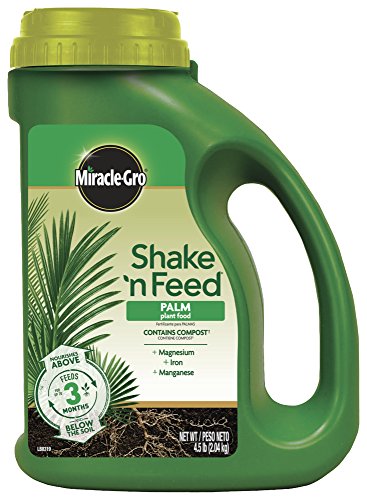
1. Miracle-Gro Shake ‘N Feed Palm Plant Food
Our pick — over 4.5★ from 5,500+ verified ratings; the strongest balance of quality and price.
A slow-release granular feed that nourishes tropicals for up to 3 months per application.
Feeding a Bird of Paradise doesn’t get much simpler than this. You shake the powder onto the soil around the base of the plant, water it in, and the granules keep releasing nutrients for up to 3 months straight — no mixing, no measuring cups, no weekly reminders. For anyone who has killed a plant by forgetting to feed it, that timespan is the whole appeal.
The 8:2:12 formula is built around what palms and tropicals actually need, and it brings along magnesium, iron, and manganese — the exact trio responsible for those lush green fronds. That’s why the thing owners praise most is its effectiveness, with quality close behind. Buyers report it as “easy to use and store,” and one even had their landscaper impressed enough to adopt it for their own jobs. The recurring scene in the reviews is a frost-damaged or struggling palm coming back to life within weeks. It dissolves easily in water for a more concentrated feed if you want to spot-treat a single plant.
Granular feeds release nutrients slowly, so visible results take longer than with liquids. But for a plant that lives outdoors in the ground, that slow release is a feature, not a flaw. It’s also proven on banana trees, per owner reports, so it’s a genuine multi-tropical workhorse rather than a one-species wonder.
What wins people over
- One application feeds for up to 3 months
- Magnesium, iron, and manganese fight yellowing fronds
- Guaranteed not to burn when used as directed
Who should look elsewhere
- Slower visible response than a liquid feed
- Powder form needs soil and water access
Reach for this if: you want continuous, low-effort feeding for outdoor or large container tropicals and don’t mind waiting a few weeks for visible change.
Look elsewhere if: you need a fast foliar or liquid response, or you only have a single small indoor pot.
2. Bird of Paradise Fertilizer – Liquid Plant Food
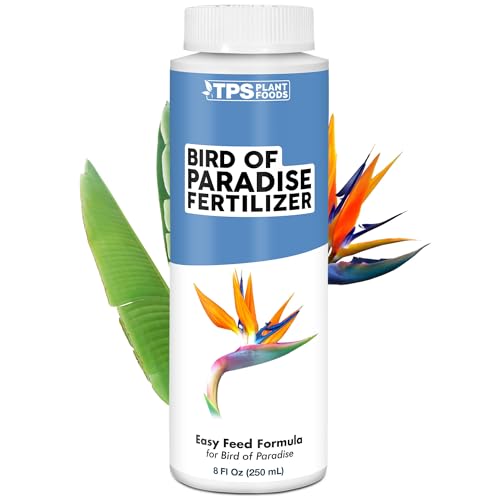
A species-specific liquid fertilizer with kelp and micronutrients for targeted feeding.
Unlike the multi-species products on this list, this one is named for your plant — it’s made specifically for Bird of Paradise and tropicals, with a kelp and micronutrient formula aimed at bigger leaves and steady development. The dosing is a diluted 1:128 ratio, which means a little liquid goes a long way: one 8-ounce bottle covers a few square feet or 1 to 3 plants.
This is the pick for a hands-on gardener who enjoys a weekly or bi-weekly feeding ritual. The reviews reflect exactly that routine: one owner in Zone 9 used it weekly for 3 months on a 4-year-old Bird of Paradise and came away with larger leaves, taller stems, and a healthier look overall. Another kept plants “very happy” on an every-other-week schedule. What owners praise most is its effectiveness, with plant health close behind — and yes, blooming does happen on it, with one report of flowers within a week.
Compared to the Miracle-Gro granular above, this is the faster-acting option for indoor and patio containers, and its suitability for cold-stressed plants — greener leaves and new growth after a first spray — is a recurring highlight. The honest caveat is volume: at 8 ounces, a serious outdoor planting will go through it quickly, and it’s a recurring purchase rather than a 3-month supply.
Fast-acting and targeted: the diluted 1:128 mix makes dosing simple, and the kelp plus micronutrients give fronds a visible perk-up that owners consistently report.
Volume is the limit: 8 fluid ounces suits 1-3 plants or a patio container, not a row of landscape plantings.
Grab it if: you want a species-specific liquid for a prized indoor or patio Bird of Paradise and you enjoy a weekly feeding routine.
Think twice if: you need to feed several large outdoor plants — you’ll be reordering often.
3. Miracle-Gro Indoor Plant Food for Tropicals, 8 fl. oz. (2-Pack)
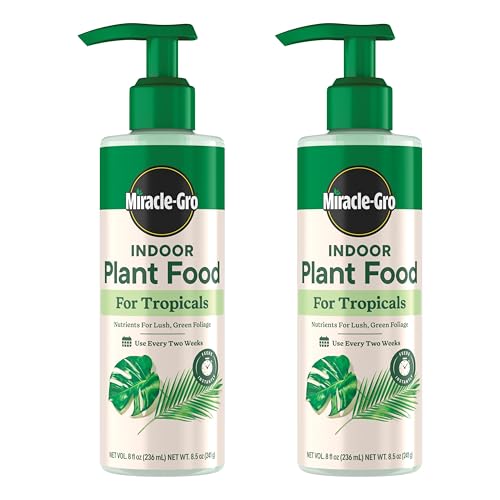
A two-bottle liquid feed for indoor tropicals that delivers quick, visible results.
This is the quick-fix liquid feed for tropical houseplants, and the 2-pack means you get two 8-fluid-ounce bottles. It’s specially formulated with potassium to help tropicals like your Bird of Paradise thrive, and it feeds plants instantly — no waiting for granules to break down. The pump-style dosing is 4 pumps per 1 quart of water, applied every 2 weeks.
Owner feedback is genuinely enthusiastic, and the reviews back it up with specifics. One plant parent who “never had any luck growing house plants” saw philodendrons and pothos “growing like crazy” — and it works on your Bird of Paradise too, since the label covers snake plants, palms, monsteras, crotons, and fiddle-leaf figs. Another reviewer notes new growth after the very first use on all three plants they treated.
The catch is that this is an indoor-focused product. Compared to the granular Miracle-Gro above, it’s not built for a full ground-planting feeding routine, and you’ll be back to pump and water every couple of weeks. But for a houseplant collection with a Bird of Paradise at the center, the instant feeding and the no-smell formula make it the easiest entry point on this list.
Instant results, zero hassle: the pump-and-water routine is simple to use, and owners mention new growth after a single application.
Indoor scope: it’s a houseplant feed, not a heavy-duty outdoor granular program.
Choose it if: your Bird of Paradise lives indoors among other tropical houseplants and you want fast leaf growth with a simple 2-week routine.
skip it if: you’re feeding a large outdoor bird in the ground — you’ll want the granular release instead.
4. BloomBiscus 4LB Plant Food – 2% Iron
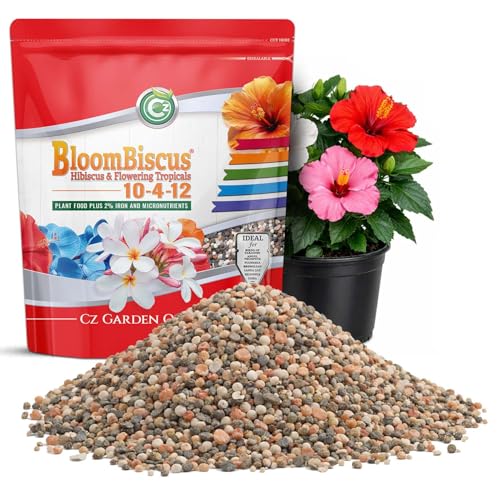
A granular bloom booster with a 10-4-12 NPK and 2% iron to encourage flowering.
If your Bird of Paradise is all leaves and zero blooms, this is the granular feed that tilts the balance toward flowers. The 10-4-12 NPK formula leans on potassium for plant strength, but the standout is the 2% iron plus micronutrients — a combination that’s been producing buds “literally the next day,” according to buyers. The manufacturer explicitly lists Bird of Paradise among the tropicals it’s made for, alongside hibiscus, angel trumpets, plumeria, and canna lily.
The bloom reports are the most dramatic on this list. One owner whose braided hibiscus barely survived a Nebraska winter in the basement saw buds appear the very next day after applying. Another went from 1 or 2 flowers a day to visible improvement immediately. What owners praise most is its effectiveness, and the bloom duration is the second-most-mentioned aspect — meaning the flowers don’t just appear, they stick around.
The honest caveat is the packaging: the 4-pound resealable pouch pours easily, but no scoop is included, so you’ll need your own measuring spoon for the pot-size dosing instructions. Compared to the liquid options above, this is also a granular feed, so it works best when you can work it into the soil or top-dress around the root zone of outdoor and container tropicals.
Why it earns its spot
- 10-4-12 NPK plus 2% iron targets flowering tropicals
- Resealable heavy-duty pouch stores cleanly between uses
- Made in the USA with premium-grade ingredients
The practical gap
- No scoop included — you’ll need your own measuring tool
- Granular form works best on soil, not as a quick foliar feed
Pick this when: your Bird of Paradise is mature and leafy but hasn’t produced a single flower — this is the bloom-focused push.
Pass on it if: you want a simple liquid routine or you’re feeding a young plant that still needs foliage growth first.
Understanding the Specs
N-P-K Ratio
The three numbers on any fertilizer label stand for nitrogen, phosphorus, and potassium — in that order. Nitrogen drives leafy green growth, phosphorus drives flowers and roots, and potassium keeps the plant’s overall systems running. For a Bird of Paradise that’s all leaves and no blooms, you want a formula with a meaningful phosphorus number to encourage flowering. The granular BloomBiscus at 10-4-12 and the Miracle-Gro palm feed at 8:2:12 both put the emphasis on that bloom-and-strength balance rather than pure foliage.
Micronutrients and Iron
Beyond the big three, tropicals need trace elements to stay deeply green. Magnesium, iron, and manganese are exactly what prevent yellowing and curling on the fronds — a common Bird of Paradise complaint that no amount of nitrogen will fix. The Miracle-Gro palm feed brings all three, and the BloomBiscus formula pushes 2% iron, which is why both get credit for restoring that healthy dark-green color. If your plant’s leaves look pale with green veins, an iron-supplemented feed is often the missing piece.
FAQ
How often should I fertilize my Bird of Paradise?
Why are my Bird of Paradise leaves turning yellow?
Will fertilizer make my Bird of Paradise bloom?
What is the difference between granular and liquid fertilizer?
Can I use palm fertilizer on my Bird of Paradise?
Is this fertilizer safe for indoor use?
Why is my Bird of Paradise growing leaves but not flowers?
How much fertilizer does my Bird of Paradise need per feeding?
Final Thoughts: The Verdict
If you want one dependable pick, the bird of paradise fertilizer winner is the Miracle-Gro Shake ‘N Feed Palm Plant Food because one application feeds for up to 3 months and brings the magnesium, iron, and manganese that keep fronds green. If you want a fast-acting liquid for a prized indoor plant, grab the species-specific liquid feed. And for pushing your Bird of Paradise into its first blooms, the BloomBiscus 10-4-12 granular with 2% iron is the one to reach for.
How We Picked
We do not accept paid placement. Every pick is matched to a real buyer and a real use-case; we do not hands-on test units.
Sources & Methodology
Specifications: manufacturer listings and product documentation. Review insights: verified customer reviews, as of August 2026. Pricing: not shown on this page (it changes often); check the current price via the retailer link.
As an Amazon Associate, Lawn Gear Lab earns from qualifying purchases. This does not affect which products we feature.