
Specs are compiled from manufacturer listings and verified buyer reviews and can change over time — please confirm the key details on the product page before buying.
The fear is real: you spray for dandelions, and next week your prized daylilies look like the weeds. The answer is a selective herbicide—a formula that kills broadleaf weeds while sparing your grass and ornamentals. This guide ranks the proven, plant-safe concentrates so you can treat your lawn without risking your flowerbeds.
I’m Rikta — the founder and writer behind Lawn Gear Lab. This guide is built by comparing the manufacturers’ published specifications and the patterns across verified customer reviews, so you get each pick’s real strengths and trade-offs instead of marketing spin.
Here are the top-rated, selective formulas that target the weed, spare the turf, and keep your garden intact—your honest shortlist for a weed killer that won’t kill plants.
Our Picks at a Glance


How To Choose A Weed Killer That Won’t Kill Plants
The most critical label word is “selective.” A selective herbicide (a chemical that targets a specific type of plant, like broadleaf weeds, while leaving others, like your grass, alone) is the only safe bet for a lawn. Non-selective killers like glyphosate destroy everything they touch.
Match the Active Ingredient to Your Weed
Match the active ingredient to your specific weed. Clover and creeping charlie respond to Triclopyr. Nutsedge (the grassy weed that looks like tall, yellow grass) needs Halosulfuron. Crabgrass, which is a grass, not a broadleaf, requires Quinclorac. Check the label’s weed list to confirm your enemy is on it.
Know Your Grass Type
Most selective formulas are safe on common turf like Bermudagrass, Fescue, and Kentucky Bluegrass. But some can harm certain grass types—like a formula safe for centipede that is toxic to fescue. Verify the product’s safe-grass list matches your lawn type before spraying.
Quick Comparison
| Model | Best For | Size | Key Active Ingredient | Kills | Amazon |
|---|---|---|---|---|---|
| Fertilome Weed Free Zone★ Best Overall | Tough broadleafs & Clover | 32 oz | Triclopyr + Clopyralid | 80+ weeds | Amazon |
| Southern Ag TrimecBest Value | Value broadleaf control | 32 oz | Trimec (3-in-1) | Wide range | Amazon |
| Atticus EmperoSpecialist Pick | Nutsedge removal | 2 packets | Halosulfuron-methyl | Nutsedge | Amazon |
| Ortho WeedClear | Ready-to-use convenience | 1.33 gal | Broadleaf mix | Listed weeds | Amazon |
| Fertilome Over The Top | Grass weeds in gardens | 8 oz | Fluazifop-p-butyl | Annual & perennial grasses | Amazon |
| Bonide Chickweed Clover | Chickweed & Clover | 128 oz | Dicamba + Triclopyr | 100+ weeds | Amazon |
| Spectracide Weed Stop | Large plots, fast results | 1 gal | Broadleaf mix | 200+ weeds | Amazon |
| Bonide Weed Beater Ultra | Warm & cool weather control | 32 oz | Broadleaf mix | 200+ weeds | Amazon |
| Primesource Quinclorac | Crabgrass & grassy weeds | 64 oz | Quinclorac | Crabgrass, Foxtail | Amazon |
In‑Depth Reviews
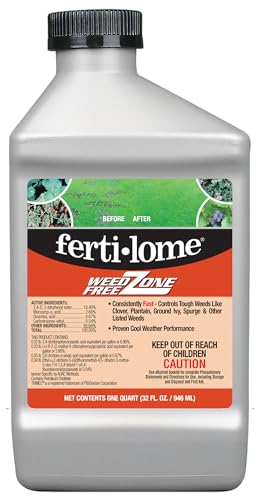
1. Fertilome Weed Free Zone Broadleaf Weed Killer Concentrate
Our pick — 4.5★ from 950+ verified ratings; the strongest balance of quality and price.
The spray that kills creeping charlie overnight—without touching your flowers.
This concentrate pairs Triclopyr and Clopyralid, two active ingredients that target over 80 tough broadleaf weeds like Clover, Spurge, and Thistle. The 32 oz bottle mixes with water for thorough lawn coverage, and injury to weeds shows within hours of application—so you see it working the same day.
Its plant-safety record is the standout feature. Buyers report spraying it “between flowers and did not kill flowers,” and it is labeled safe on Kentucky Bluegrass, Bermudagrass, Bahiagrass, and Zoysiagrass. One owner noted the label’s recommended dose ran light for clover, needing roughly double strength plus a few drops of dish soap for better adhesion.
The trade-off is the premium price and occasional leaky caps. If you have creeping charlie, this is the one people call the gold standard.
Why It Wins
- Kills creeping charlie that other products miss
- Works fast—visible weed injury within hours
- Safe on most common lawn grass types
Know Before Buying
- Costs more than other 32 oz concentrates
- Some owners need a stronger mix for clover
- Occasional leaky bottle reports
The confident pick: if creeping charlie or clover is your nemesis, this is the most effective, flower-safe arsenal you can buy.
A fair warning: the sticker price is steep, and a few owners found the listed dose too gentle—be ready to tweak the mix.
2. Southern Ag Lawn Weed Killer with Trimec
A budget-friendly 3-in-1 that wipes out dandelions in two weeks.
At roughly half the price of the Fertilome above, this 32 oz bottle uses a patented Trimec blend—three proven weed killers combined—to control a wide range of lawn weeds across 9 turf types. It covers 5,000 sq. ft. and works with both conventional and hose-end sprayers, so you do not need fancy equipment.
Owners mention it killed a dandelion invasion “in 2 weeks with no harm to lawn,” and it is notably gentle on centipede grass. The concentrated formula is praised as better than common store brands, especially for spurge and chickweed.
The catch is weeds may return within weeks, requiring reapplication. And while it handles clover, it is not the strongest option if clover is your main problem.
What Shines
- Excellent value for the coverage
- Easy to mix and apply
- No offensive smell
Watch Out For
- Weeds may return quickly
- Not the best for clover control
- Needs reapplication for full effect
Reach for this if: you want a cheap, effective broadleaf killer for a big yard and do not mind occasional re-sprays.
Look elsewhere if: you need a set-and-forget solution or your primary weed is clover.
3. Atticus Empero Q-Pak Nutsedge Killer
The only pick here built for one stubborn weed: nutsedge.
Nutsedge is not a broadleaf—it is a grassy weed with underground tubers, which is why general killers fail it. This 2-pack uses 5% halosulfuron-methyl, the active ingredient professionals trust most, and it travels down to the root system tubers for a complete kill. Each 13.5 g packet is pre-mixed with a surfactant (a soap-like additive that helps the spray cling to leaves), so you just add one to a gallon of water.
It is gentle on most warm- and cool-season turf, including bluegrass, fescue, and Bermudagrass. Patience is the requirement here: unlike fast-acting sprays, this takes a couple of weeks to show yellowing, and some owners needed a second round. It does not yellow the grass, and pets and people can re-enter once the spray dries.
Given its narrow focus, it is not a general lawn tonic. But for nutsedge that has survived everything else, this is the targeted cure.
Its Superpower
- Kills nutsedge down to the root tubers
- Pre-measured packets with surfactant included
- Safe on many turf types
The Requirement
- Slow-acting—takes a few weeks
- Small packets may need multiple rounds
The mic-drop spec: Halosulfuron-methyl is the pro-level ingredient for nutsedge, and here it comes ready-to-mix.
The single caveat: give it time—this is not a spray-and-forget overnight fix.
4. Ortho WeedClear Lawn Weed Killer Ready-to-Use

Zero mixing, zero pumping—just squeeze the trigger and spot-treat.
If you do not want to measure or mix, this 1.33 gal. jug is already diluted and ready to spray. It includes a battery-powered Comfort Wand, which lets you target weeds without a trigger finger, and it is safe on Bermudagrass, Fescues, Kentucky Bluegrass, and Zoysiagrass.
It kills crabgrass, dandelion, clover, chickweed, and creeping charlie down to the root with one application. It is best used on young, actively growing weeds in spring or fall, when temperatures are between 45°F and 90°F.
The honest catch is speed—this is a slow worker, taking weeks for weeds to die fully, and effectiveness reviews are mixed. One owner had a batch that seemed to harm the lawn, which highlights the “fast-acting” claim is relative. It is the convenience king, not the speed demon.
The Appeal
- Truly ready-to-use, no mixing
- Battery wand is easy to operate
- Targets weeds while sparing lawn color
The Trade-off
- Slow—weeks to see full kill
- Tough weeds may need 2+ sprays
- Effectiveness gets mixed reviews
A good fit for: anyone who hates mixing chemicals and wants a grab-and-go tool for small weed patches.
A poor fit for: anyone expecting instant results on a heavy weed invasion—plan for patience.
5. Fertilome Over The Top Grass Killer

The rare spray that targets grassy weeds, not your shrubs or roses.
Most weed killers go after broadleaf weeds. This one is different—it is a selective grass killer designed to take out annual and perennial grass weeds (think Bermuda grass creeping into your beds). The 8 oz bottle of Fluazifop-p-butyl concentrate makes 8 gallons of spray solution, covering 2,000 square feet per 8 oz.
Its defining trait is safety: it can be applied around vegetables, gardens, trees, shrubs, and ornamentals safely. Customers note killing Bermuda grass in flower beds after about three weeks, with no harm to shrubs or roses. One owner successfully used dish soap as a surfactant to improve results.
The downsides are real: the smell is vile, it is slow (plan for patience), and effectiveness is mixed, especially on tall grass over six inches, which gets stunted rather than killed. It is a specialist tool for a specific problem—not a general lawn spray.
Why It’s Useful
- Safe around flowers, shrubs, and vegetables
- Targets grassy weeds other sprays miss
- Concentrate makes 8 gallons of spray
What To Expect
- Strong, unpleasant odor
- Slow—takes weeks to kill
- Less effective on tall grass
Choose this for: Bermuda grass that has invaded your flowerbeds and shrubs.
Choose elsewhere for: broadleaf weeds in your main lawn, and skip it if you are sensitive to strong smells.
6. Bonide Chickweed, Clover & Oxalis Killer
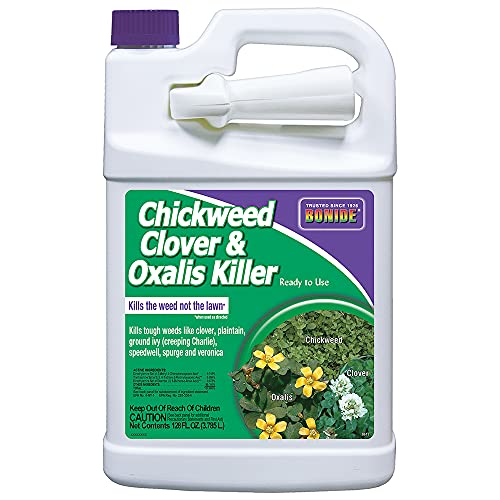
A huge ready-to-use jug that owners say totally works on clover.
This 128 oz spray bottle is ready to use right from the start—just shake, spray, and apply. With active ingredients Dicamba and Triclopyr, it controls more than 100 tough weeds including chickweed, clover, dandelions, ground ivy, alder, and thistle. Despite the size, the 8-pound container is designed for spot-treating your lawn, killing roots and all without killing the grass.
The consensus is strong on clover—reviewers point out seeing weeds dying by the next day, and the effectiveness is the most-praised feature by far. One owner noted it is not intended for crabgrass, so leave that problem to the Quinclorac pick below.
The recurring gripe is the hardware: the spray attachment gets poor reviews, with missing nozzles and a clunky applicator reported. For best results, spray when temperatures are below 90°F and the air is calm to avoid drift onto flowers.
What Impresses
- Fast—weeds die by the next day
- Huge 128 oz ready-to-use volume
- Controls 100+ weed types
The Annoyance
- Weak spray attachment, occasionally missing nozzles
- Does not work on crabgrass
Reach for this if: clover and chickweed are your main foes and you want a large, no-mix bottle.
pass on it if: you rely on the included sprayer—be ready to swap in your own.
7. Spectracide Weed Stop for Lawns Concentrate

One gallon that covers 32,000 square feet and won’t hurt your turf.
For large properties, this 1-gallon concentrate is the volume king. It treats up to 32,000 square feet of Northern grasses or 42,500 square feet of Southern grasses, killing more than 200 types of weeds down to the root. The label promises visible results in hours, and it is rainproof just 6 hours after application.
Buyers are consistent that it does not hurt the turf—one owner confirmed it “does NOT hurt your turfturf” on broadleaf plants, and another noted no damage to centipede grass. It is praised as working better than a common big-box brand on all weed types.
The value is strong for a concentrate, but performance is not uniform: some find it slow on tough, fuzzy rosette weeds and foxtail, needing a third application. Expect to do some mixing math—it is a concentrate, not a ready-to-use spray.
The Big Win
- Massive coverage—up to 32,000 sq ft
- Rainproof within 6 hours
- Kills 200+ weed types
Handle With Care
- Requires mixing and measuring
- Slow on some tough weeds
- Needs reapplication for foxtail
The standout stat: 200+ weeds killed, up to 32,000 sq ft covered, rainproof in 6 hours.
The fair caveat: this is a mix-it-yourself concentrate for big lawns, not a quick spot-treatment tool.
8. Bonide Weed Beater Ultra Concentrate

Broadleaf control with visible injury in hours and full death in two weeks.
This 32 oz concentrate is built for speed and range, killing over 200 broadleaf weeds including dandelion, clover, ground ivy, and ragweed. It is rainproof within hours of drying, so a surprise shower will not wash away your work.
What makes it stand out is the dual weather range—it works in both warm and cool conditions, where some formulas stall. Shoppers say it kills weeds within weeks while the grass stays unaffected even with overspray. One found it completely eliminated chickweed and shotweed, and it handles wild onion well.
The price is at the premium end, and the mixing instructions require precise calculation—this is not a grab-and-go product. A few owners noted it can slightly brown the grass if you are too liberal, so follow the label’s mix ratio carefully.
What It Delivers
- Fast results—injury in hours, death in 7-14 days
- Works in warm and cool weather
- Rainproof once dry
The Cost
- Premium price for a 32 oz bottle
- Complex mixing calculations
- High potency demands careful spraying
A strong pick if: you want fast, powerful broadleaf control in any season and do not mind precise mixing.
Not for you if: you want a budget, set-and-forget option—this needs attention to detail.
9. Primesource Quinclorac 1.5L Select
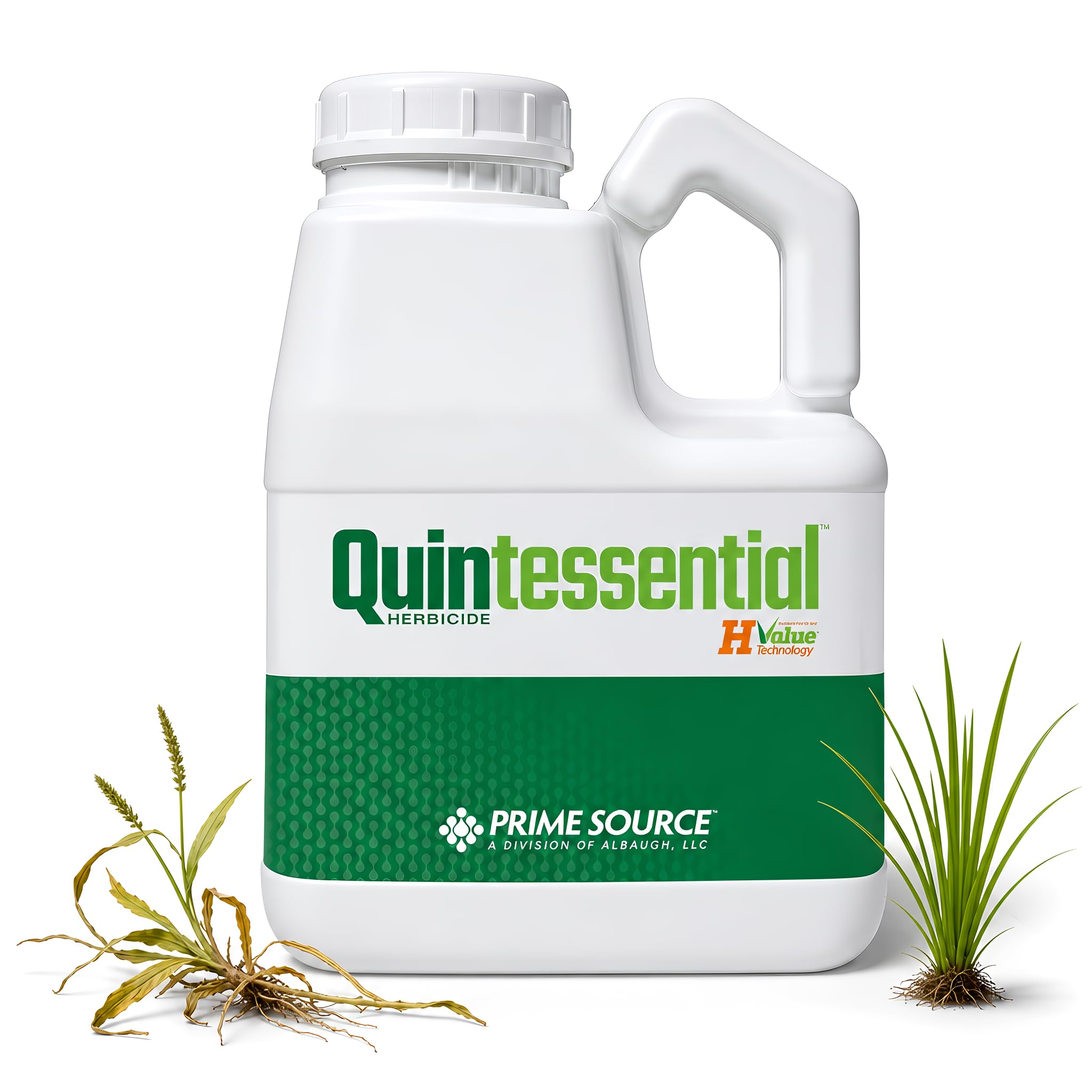
The pro-grade fix for crabgrass that laughs at ordinary sprays.
Crabgrass is a grass, so broadleaf killers ignore it. This 64 oz bottle uses 18.92% Quinclorac, a selective post-emergent herbicide (applied after the weed has sprouted) that targets crabgrass and other grassy weeds without harming your turf. It is the most expensive pick here at a premium price, but it is also the most specialized.
Buyers report one-shot kills on mature crabgrass, with signs of death in 24 hours and full browning within a week. The lawn grass stays untouched, and it is safe for overseeding in 7-10 days. It works on foxtail, Kikuyugrass, and torpedograss too, plus some broadleafs like dandelion and clover.
The key to success is a surfactant—owners stress it is essential to prevent runoff. Some report slight discoloration on Zoysia grass and around 70% kill rates rather than perfect, so it may take a follow-up spray for a full cleanup.
The Muscle
- Kills mature crabgrass in about a week
- Sparks visible death in 24 hours
- Safe on fescue and other turf
What It Takes
- Premium price for specialist use
- Needs a surfactant for best results
- May discolor Zoysia grass slightly
The mic-drop stat: 18.92% Quinclorac—the go-to concentration for crabgrass pros.
The one warning: pair it with a surfactant or you will waste most of the bottle on runoff.
Understanding the Specs
Selective vs. Non-Selective
A selective herbicide only attacks a specific plant type—like broadleaf weeds—leaving grass and ornamentals untouched. A non-selective formula (like glyphosate) kills everything it touches, which is why it is the wrong tool for a lawn. Always verify the label says “selective” before spraying near desirable plants.
Active Ingredients Explained
This is the chemical that does the killing, and it determines what weeds are vulnerable. Triclopyr handles clover and creeping charlie. Quinclorac targets crabgrass and grassy weeds. Halosulfuron is the specialist for nutsedge. Match the ingredient to your weed for the best result.
FAQ
Will a selective weed killer hurt my flowers?
What is the difference between a selective and non-selective weed killer?
Why is my crabgrass not dying from a broadleaf weed killer?
What does a surfactant do in a weed killer mix?
How long does it take to see results from a selective herbicide?
Can I spray weed killer on a windy day?
How often should I reapply a concentrated weed killer?
Is it safe for my pets to walk on the lawn after spraying?
What is the best way to apply a weed killer concentrate?
Can I use the same weed killer for my lawn and my garden beds?
Final Thoughts: The Verdict
For the majority of shoppers, the weed killer that won’t kill plants winner is the Fertilome Weed Free Zone because it pairs elite creeping charlie control with verified flower safety. If you want the best value for a large yard, grab the Southern Ag Trimec. And for the specific problem of crabgrass, the Primesource Quinclorac is the one to reach for.
How We Picked
We do not accept paid placement. Every pick is matched to a real buyer and a real use-case; we do not hands-on test units.
Sources & Methodology
Specifications: manufacturer listings and product documentation. Review insights: verified customer reviews, as of August 2026. Pricing: not shown on this page (it changes often); check the current price via the retailer link.
As an Amazon Associate, Lawn Gear Lab earns from qualifying purchases. This does not affect which products we feature.