
Specs are compiled from manufacturer listings and verified buyer reviews and can change over time — please confirm the key details on the product page before buying.
The real problem with cheap garden soil isn’t the price tag—it’s that most bags are either too heavy with filler or too light on the nutrients your plants actually need. This guide cuts through the marketing to find the amendments and mixes that genuinely improve your dirt without draining your wallet. You’ll see which bags fix heavy clay, which ones feed a hungry tomato patch, and which ones are best left on the shelf.
I’m Rikta — the founder and writer behind Lawn Gear Lab. This guide is built by comparing the manufacturers’ published specifications and the patterns across verified customer reviews, so you get each pick’s real strengths and trade-offs instead of marketing spin.
For a thriving garden on a budget, the cheap garden soil picks here focus on long-term soil health and visible plant growth, not just the lowest sticker price.
Our Picks at a Glance


How To Choose The Best Cheap Garden Soil
Before you grab the first bag on sale, ask yourself one question: are you fixing an in-ground bed or filling a pot? These two jobs need completely different products, and buying the wrong one wastes your money and your season.
Soil Conditioner vs. Potting Mix
A conditioner like the Live Earth Humate is a concentrated amendment you mix into native dirt to break up clay or add organic matter. A potting mix is a complete, lightweight growing medium designed for the confined space of a container, where drainage is critical. Using potting mix in your garden bed is expensive, and using conditioner alone in a pot won’t support root growth properly.
Reading the Bag for Real Value
Look past the pretty pictures on the front. Check the weight and volume—a 50 lb bag of a dense conditioner can offer far more working material than a fluffy 20 qt bag of peat. Also scan for key words like OMRI listed (meaning it’s approved for organic gardening) and specific ingredients like earthworm castings or perlite. These tell you what the plant is actually getting fed.
Quick Comparison
| Model | Best For | Weight | Volume | Key Active Ingredient | Amazon |
|---|---|---|---|---|---|
| Live Earth Humate★ Best Overall | Fixing clay & lawns | 50 lb | 800 oz | 45% Humic Acid | Amazon |
| Coast of Maine Veggie SoilBest Value | Tomato & veggie beds | 21 lb | 20 qt | Composted Manure | Amazon |
| Espoma Garden SoilTop Performer | In-ground planting | — | 1 cu ft | Earthworm Castings | Amazon |
| Espoma Potting Mix (2-Pack) | Indoor containers | — | 8 qt (x2) | Myco-Tone | Amazon |
| Miracle-Gro Moisture Control | Potted plants, forgiving watering | — | 16 qt (x2) | Sphagnum Peat Moss | Amazon |
| R&M Organics Compost | Reviving ailing plants | 10 lb | 160 oz | Dairy Cow Manure | Amazon |
| Michigan Peat Potting Soil | Large repotting jobs | 50 lb | — | Reed Sedge Peat | Amazon |
| Brut Organic Potting Soil | Premium container growing | — | 21 qt | Worm Castings & Azomite | Amazon |
| Miracle-Gro Potting Mix (3-Pack) | Portable small pots | — | 8 qt (x3) | Feeds up to 6 Months | Amazon |
In‑Depth Reviews
1. Live Earth Products’ Humate Soil Conditioner – 50 lb Bag
The heavy 50-pound bag that turns hostile clay into a soft, workable bed.
If your garden is plagued by dense clay that clumps like cement and strangles roots, this is the cheapest fix per pound you’ll find anywhere. This conditioner is a concentrated soil amendment—not a filler—mined from ancient organic plant deposits and derived from humic shale containing 45% total humic acid. You get a focused dose of humic acid, fulvic acid, and humin to feed the soil’s biology instead of just adding bulk.
You get far more working material for your budget here: at 50 pounds, this bag provides a generous quantity of material. Buyers report it “transformed dense clay into soft flaky soil; lawn improved dramatically in 2 months.” That structural change improves water and nutrient uptake in plants, helping them grow larger, stronger root systems—something a simple fertilizer won’t do.
The catch: humic acid works slowly, so it’s a long-term fix, not a quick green-up. Some owners see no immediate change and get frustrated, but reviews widely note that patience pays off with continual use. It’s also safe around pets and kids, so you can use it low-maintenance in your home garden.
What wins people over
- Breaks up heavy clay to soft, flaky soil over about 2 months of use.
- High quality: fine, dense humate granules that spread easily with a spreader.
- Safe for pets and kids, so it’s a good fit for family yards.
The slow-and-steady trade-off
- It’s a long-term soil fix, not an instant fertilizer—you won’t see results overnight.
- Some owners consider it expensive despite the huge bag size.
- The ground powder can take months to fully saturate your soil.
Reach for this if: you need to overhaul dense, lifeless soil on a large lawn or garden bed and you’re patient enough to let it work.
Think twice if: you want immediate green growth for potted plants—this is a soil restorer, not a quick-feed container mix.
2. Coast of Maine Organic & Natural Planting Soil for Vegetables & Tomatoes (20 Qt)
A rich, dark blend that pushes tomatoes to fruit fast, even in short northern seasons.
For the hungry vegetable patch, this mix is a top-tier performer. It combines composted manure and sphagnum peat moss in a lightweight 21-pound bag that’s formulated to balance moisture retention and drainage for both in-ground beds and containers. The quality of the soil itself is the star here—owners routinely describe it as having a rich, coal-black color and being easy to work with.
The difference shows up in growth speed. Gardeners in short northern seasons report “fast growth, tomatoes fruiting within a month,” which is remarkable for a cooler climate. This blend gives your plants that immediate boost because it’s not just filler—it’s a complete planting mix designed for abundant growth of tomatoes and vegetables. It’s also versatile enough to use when seeding, transplanting, or topping off existing beds.
The honest trade-off is that you’ll pay for that quality. One satisfied owner summed it up well: if you have one or two tomatoes, this is worth it, but for a massive garden you’d want to seek cheaper alternatives. The intense soil quality is the thing everyone raves about—it’s the plant health that makes it worth the premium over basic topsoil.
Pure quality blend: The soil quality earns heavy praise, with owners noting fantastic sprouting and rich color even before planting.
Watch for: While most report no infestation issues, a few have mentioned bugs in the soil—it’s a good habit to open bags outside as a precaution.
3. Espoma Organic Vegetable & Flower Garden Soil (1 Cubic Foot)
Enriched with earthworm castings, it gives plants a visible edge over cheaper store-bought bags.
This bag is about giving your in-ground plants the best possible start. It’s a rich blend of natural and organic ingredients enriched with earthworm castings, and it’s boosted with Myco-Tone—a proprietary blend of endo & ecto mycorrhizae (beneficial fungi that attach to roots and help them absorb water and nutrients). You mix it into your native garden soil when planting or transplanting, improving the ground you already have.
The results speak for themselves. Several owners noted that plants grown in this mix “outperformed those in a store-bought organic alternative,” with tomatoes and marigolds thriving. The soil structure is rich and well-structured, offering better moisture retention that keeps plants healthy. It’s specifically designed for organic gardening with no synthetic plant foods or chemicals used, and it arrives in a generous 1 cubic foot bag.
The main thing to keep in mind is that this is meant for in-ground use, not containers. While the majority of bags arrive bug-free and pristine, there is a recurring mention of fungus gnats in a minority of cases—a common issue with organic mixes that are alive with microbes. Dry it out or use it outdoors and it becomes a non-issue for most.
Noticeable boost
- Plants visibly outperformed those in a store-bought organic alternative.
- Rich, well-structured soil that helps with moisture retention.
- Blend of endo & ecto mycorrhizae for a stronger root system.
- Trusted organic ingredients; works great for seeds and new plants.
Honest caveats
- A few owners have reported fungus gnats, though many bags arrive clean.
- It’s a garden soil—not a standalone potting mix for containers.
Best for: in-ground vegetable patches and flower beds where you want a root-boosting organic kick. The standout is the Myco-Tone fungi blend.
Who might skip it: container gardeners need a true potting mix, not this in-ground amendment.
4. Espoma Organic Potting Soil Mix (8qt, Pack of 2)

A clean, well-packaged blend that indoor plants take to almost immediately.
This is Espoma’s answer for the container gardener. It’s a rich blend of sphagnum peat moss, humus, and perlite—the lightweight white bits that keep soil loose for drainage—enriched with earthworm castings, alfalfa meal, kelp meal, and feather meal. You get a full nutrient package in a mix designed specifically for indoor and outdoor potted plants, from herbs to African violets.
The feedback shows immediate plant uptake. “The plants took to it immediately and are growing great,” says one synopsis of the general consensus, with another owner reporting an African violet growing very quickly after transplant. It comes in a convenient pack of two 8-quart bags, which is great for keeping a fresh supply on hand. The soil quality itself is the most praised aspect, with a rich blend that provides everything an indoor plant needs without synthetic chemicals.
The reported downside is that the consistency can be on the dry side, which means it can be slightly harder to rehydrate when you’re first planting. Germination results are also mixed per the data, so it’s safer to transplant established plants into this than to rely on it purely for starting seeds.
Immediate uptake: Plants growing tall and green after transplant is the standard experience here, especially for indoor favorites like African violets and ivy.
The fit check: If you’re seeding, consider a seed-starting mix; this is better for potting up established green friends.
5. Miracle-Gro Moisture Control Potting Mix (16 qt, 2-Pack)

The heat-wave insurance policy that keeps pots from drying out, saving you daily watering.
For anyone who forgets to water or lives where summers get brutally hot, this mix is a lifesaver. It’s designed to protect against over- and under-watering, absorbing up to 33% more water than basic potting soil that doesn’t contain sphagnum peat moss, coir, and wetting agent. The result is less stress for you and your plants, especially during drought conditions.
Gardeners in hot zones like Zone 6A confirm it helped their vegetable gardens survive heat waves by locking moisture into pots. One owner was emphatic about time savings: “It saves SO much time and watering. We have had drought conditions the past 3 summers, and I had to water daily or…” The mix feeds plants for up to 6 months and, according to the brand, grows plants twice as big as unfed ones—a complete package for container growing.
The only real friction point is the premium price. It’s more expensive than basic potting soil, and the moisture-control beads don’t work quite as well in very airy or shallow planters. But for the gardener who’s tired of babysitting pots with a hose, the value is undeniable.
Day-to-day wins
- Extends the time between waterings significantly, ideal for heat waves.
- Feeds plants continuously for up to 6 months.
- Prevents the dried-out pots that kill container plants.
- Bags are easier to carry and use than larger bulk options.
Beware the cost
- It’s pricier than standard potting mixes without moisture control.
- Doesn’t replace the need for good drainage in your pots.
Who it’s a godsend for: busy gardeners and anyone in a hot, dry climate who can’t water every single day.
Who might not need it: if you overwater, the moisture retention could be a factor—though it’s designed to guard against that too.
6. R&M Organics Compost Soil Amendment (10 lb)
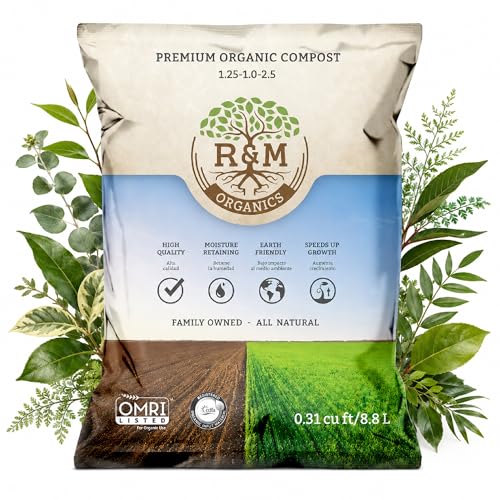
A richly composted, low-odor manure that revives even the most stressed, ailing plants.
Sometimes a plant is on its last legs and needs more than just water—it needs a nutritional intervention. This compost, made from dairy cow manure and processed with continuous aeration to keep it low-odor, is exactly that. The result is a clean, earthy, soil-like scent that makes it suitable for both indoor and outdoor gardening, which is rare for a manure-based product.
The rescue stories are compelling. Azaleas damaged by a roof-washing cleaner were brought back with this compost, and an ailing tomato plant with yellowing leaves and spindly stems started recovering just a week after mixing the bag into its 27-gallon planter. Because it’s fully composted, it won’t burn your plants, and you only need to apply a thin layer—about a quarter inch—around plants or mix it into the soil for new projects.
The trade-off here is the weight and volume: a single 10-pound bag with a 0.31 cubic foot volume goes quickly if you’re amending a large area. It’s better suited for spot-treating specific plants or small to medium projects than for overhauling a whole garden bed.
Straight-up rescue power: The fine-grained texture and complete composting make it a top choice for reviving struggling plants, with a 5:1 mixing ratio recommended for new projects.
Plan ahead: It’s a small bag, so calculate your coverage for big beds before ordering.
7. Michigan Peat General Purpose Premium Potting Soil (50 lb)

A 50-pound workhorse that makes repotting a whole collection of plants feel easy.
If you have a lot of pots to fill, this is the bag that makes financial sense. At 50 pounds, it’s a massive value, combining rich dark reed sedge peat, perlite, and sand into a pre-blended, ready-to-use mix straight from the bag. There’s no mixing required, and the included starter and slow-release fertilizers mean you don’t need to add anything else to get strong growth.
Owners with large plant collections love the bag size for repotting, noting great plant growth and water absorption. It’s versatile enough for pots, planters, containers, or raised garden beds, and works well for vegetables, flowers, and bulbs. The texture is good and, unlike some bags, it can arrive nicely moist and ready to work.
Two minor complaints: some bags reportedly carry fungus gnats—a known risk with organic, peat-based mixes—and one review calls it “dirty dirt,” meaning it’s functional, not fancy. But for pure value-per-pound on a large repotting session, it’s tough to top.
Why buy 50 lbs
- Plenty of volume for repotting many plants in one session.
- Ready to use straight from the bag; no mixing fiddling.
- Includes both starter and slow-release fertilizers for sustained feeding.
- Great water absorption and strong plant growth.
The fine print
- Some owners have reported gnats emerging from the bag.
- The texture is functional rather than premium—it’s a workhorse, not a showpiece.
Reach for this if: you’re repotting a lot of plants or filling big containers and want the lowest cost per pound.
Look elsewhere if: you’re starting delicate seedlings indoors and want a sterile, gnat-free guarantee.
8. Brut Organic Potting Soil (1 CU FT)
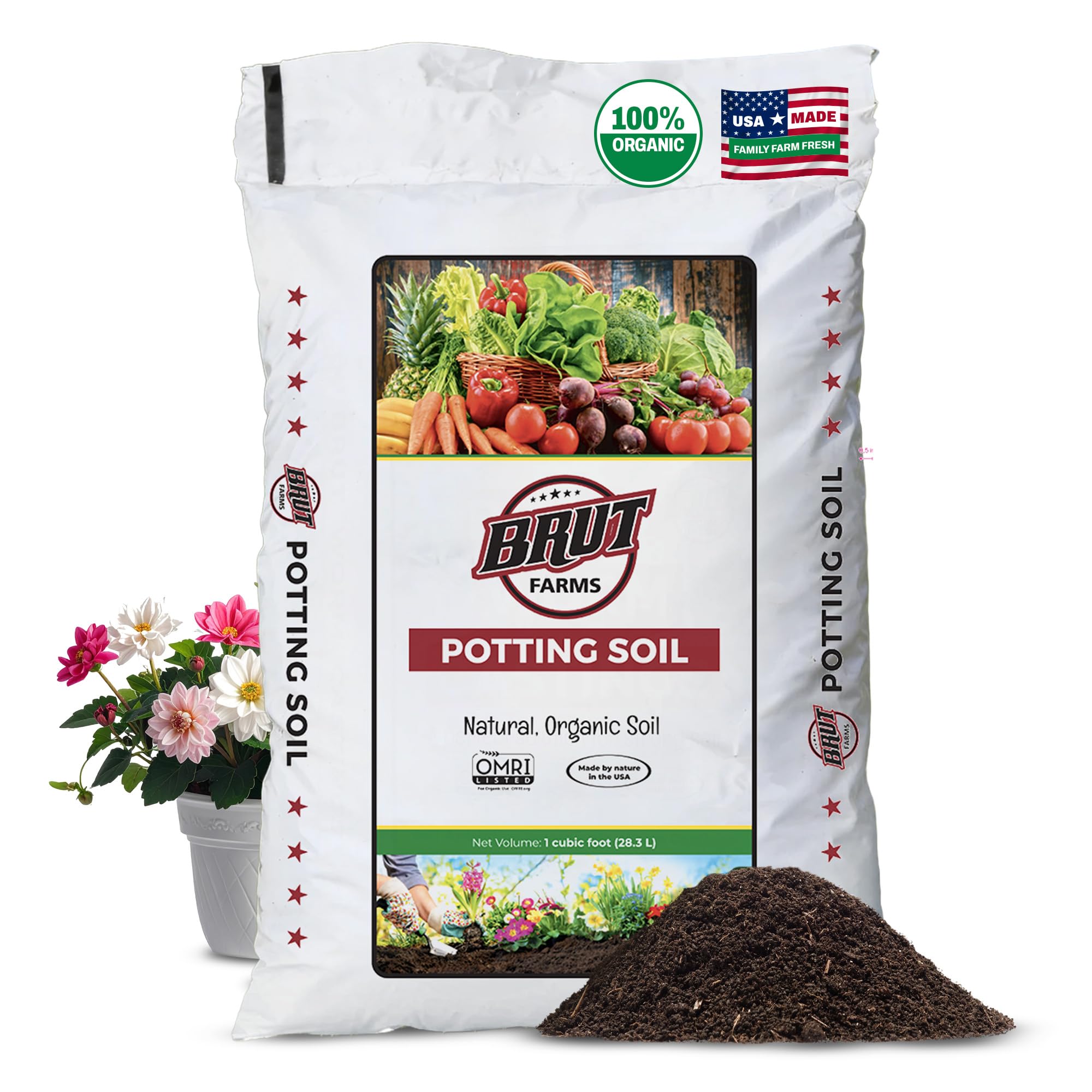
A microbe-rich, filler-free mix that turns leaves deep green almost overnight.
For the gardener who wants the absolute best for their plants, this is it. Brut is made of 100% organic ingredients and is packed with microbe-rich worm castings and trace minerals like Azomite and kelp. It’s the soil quality that dominates the conversation—owners rave about it being the best they’ve ever put their hands in, with rich dark green foliage emerging just days after planting.
The results are visual and fast. A reviewer planting a Cara Cara orange tree and a Lapins Cherry tree saw the leaves immediately turn deep green and shoot out new growth within just 2 days. It’s pure and filler-free, with no sticks, wood chips, or artificial additives, and it’s naturally pH balanced between 6.3 and 6.5—perfect for most plants. It’s also OMRI listed, meaning it’s certified for true organic gardening.
The downsides are mainly around cost and shipping. It’s definitely at the premium end of the scale, and while the product is great, the shipping has been described as slow in some cases. There are also mixed reports regarding value for money and a minority mention of fungus gnats, so it’s not a sterile mix—but the plant performance usually overpowers that caveat.
Top-notch results: The soil quality is the highest-praised aspect, with strawberry runners and ginger growing exceptionally well in this light, clean mix.
The cost of excellence: You’re paying for the premium ingredients, so it’s best for a few prized pots rather than a whole garden bed.
9. Miracle-Gro Potting Mix (8 qt, 3-Pack)

Small, manageable bags that keep your potting mix fresh without the heavy lifting.
This 3-pack of 8-quart bags is all about convenience and portability. Instead of wrestling a giant 50-pound sack, you get three smaller bags that are much easier to carry and use—a detail that reviewers appreciate when they don’t have to lug around the large ones. Each bag fills two 8-inch containers, making it a tidy option for a weekend repotting project.
The mix itself is the reliable Miracle-Gro formula that feeds all types of potted plants including flowers, vegetables, shrubs, annuals, and perennials for up to 6 months. It’s well-draining and doesn’t pack down into a hard mass, keeping the soil loose so water reaches the roots easily. This versatility makes it a great choice for both outdoor and indoor planting, as confirmed by owners who use it for everything from fertilizing to potting up houseplants.
The recurring bit of feedback is that the bag size is on the small side—you might go through a few of these if you have a large patio to fill. And while opinions on value are generally positive, some consider it pricey given the smaller volume. But if you value fresh, easy-to-handle soil for a few plants, this delivers.
Easy-to-love features
- Much easier to carry and use than large bulk bags.
- Well-draining formula that stays loose for good root water flow.
- Feeds plants continuously for up to 6 months.
- Works for a variety of potted plants, both indoor and outdoor.
Consider the volume
- Smaller bags mean fewer plants per purchase—you may need multiple packs.
- Some find the value-for-money proposition debatable at this volume.
Pick this for: light repotting jobs or small container gardens where you don’t want a huge, heavy bag taking up space.
skip it if: you’re filling large raised beds—a bulk 50 lb option will go further for the money.
Understanding the Specs
Humic Acid Content
This is the engine of soil conditioners. Humic acid is a complex molecule from decomposed organic matter that helps soil particles bind together into a loose, crumbly structure. That structure lets roots penetrate easily and improves the soil’s ability to hold onto water and nutrients. When you see a bag with a high percentage—like the Live Earth Product’s 45% total humic acid—you know you’re getting a concentrated dose of actual soil biology, not just bulk filler. It’s a slow process, but it’s a permanent improvement to your soil’s texture.
Container Mix vs. Garden Soil
A potting mix is engineered to be light and fluffy, using ingredients like perlite and sphagnum peat moss to ensure drainage and aeration in the confined space of a pot. Garden soil is denser and designed to be mixed into the ground. If you put heavy garden soil in a pot, it often compacts and suffocates the roots. Conversely, using a light potting mix in your garden bed can be a waste of money. The right call depends entirely on where your plants will live.
FAQ
What is the difference between a soil conditioner and a potting mix?
Will cheap garden soil work for growing vegetables?
How can I get rid of fungus gnats in my soil?
How long does a bag of potting soil last once opened?
Is it okay to use potting mix in a raised garden bed?
What does adding compost actually do for my plants?
Do I need fertilizer if I already bought good soil?
Why is there a big price difference between soils of similar size?
What is the best way to work soil into an existing garden bed?
How can I tell if a cheap soil is low quality?
Final Thoughts: The Verdict
For most buyers, the cheap garden soil winner is the Live Earth Products’ Humate Soil Conditioner because it delivers a concentrated 50-pound dose of 45% humic acid at a budget-friendly price per pound—giving you the most soil-structure improvement for your dollar. If you want a complete, nutrient-rich mix for a vegetable patch that fruits fast, grab the Coast of Maine Organic Planting Soil. And for potted plant lovers who need forgiveness with watering, the Miracle-Gro Moisture Control is the one to reach for, proven by a 4.6-star rating from over 500 owners.
How We Picked
We do not accept paid placement. Every pick is matched to a real buyer and a real use-case; we do not hands-on test units.
Sources & Methodology
Specifications: manufacturer listings and product documentation. Review insights: verified customer reviews, as of August 2026. Pricing: not shown on this page (it changes often); check the current price via the retailer link.
As an Amazon Associate, Lawn Gear Lab earns from qualifying purchases. This does not affect which products we feature.