
Specs are compiled from manufacturer listings and verified buyer reviews and can change over time — please confirm the key details on the product page before buying.
Japanese maples are fussy about their feet — they demand a soil that stays moist but never waterlogged, and that acidity balance is non-negotiable if you want those crimson leaves to stay vibrant. The right potting mix for Japanese maples is the difference between a thriving specimen and a tree that sulks for a season.
I’m Rikta — the founder and writer behind Lawn Gear Lab. This guide is built by comparing the manufacturers’ published specifications and the patterns across verified customer reviews, so you get each pick’s real strengths and trade-offs instead of marketing spin.
Whether you are repotting a bonsai or planting a container specimen, this look at the best potting mix for japanese maples focuses on drainage, acidity, and what actual owners discovered after months of growing.
Our Picks at a Glance

How To Choose The Best Potting Mix For Japanese Maples
Japanese maples have shallow, delicate root systems that rot quickly in heavy, water-holding soil. The ideal mix sits on the acidic side — typically a pH around 5.5 to 6.5 — and lets water drain through while still holding enough moisture between waterings.
Drainage is the non-negotiable
Roots need oxygen, and waterlogged soil suffocates them. Look for ingredients like perlite, pumice, or bark, which create air pockets so excess water flows out fast. A mix that stays soggy after watering will eventually lead to root rot, the most common killer of container maples.
Acidity feeds the leaves
Acid-loving plants pull nutrients best from soil around pH 5.5 to 6.5. Ingredients like sphagnum peat moss and pine bark naturally lower pH, which is why you see them repeated across the best mixes. If the pH drifts too alkaline, leaves yellow and growth stalls.
Particle size matters for bonsai
For bonsai maples, consistent particle size is critical — it keeps water moving evenly and roots aerated. Fine dust in a mix clogs the gaps between particles, so pre-sifted soil saves you the tedious work of screening it yourself.
Quick Comparison
| Model | Best For | Volume | Weight | Key Ingredients | Amazon |
|---|---|---|---|---|---|
| Deciduous Bonsai Blend★ Best Overall | Bonsai maples & elms | 2 quarts | — | Akadama, pumice, slate | Amazon |
| Soil Sunrise Acid Loving Mix | Container maples & berries | 12 quarts | 3.3 pounds | Peat, pine, sphagnum | Amazon |
| Calibonsai Kanuma | Bonsai purists | 17 liters | — | Kanuma | Amazon |
| Coast of Maine Acid Loving Soil | Large pots & garden beds | 20 quarts | 82 pounds | Compost, peat moss | Amazon |
In-Depth Reviews
1. Deciduous Bonsai Soil Blend Mix
Our pick — over 4.5★ from 450+ verified ratings; the strongest balance of quality and price.
The ready-to-use bonsai mix that skips the sifting step entirely.
This pre-sifted blend of 100% akadama, pumice, expanded slate, and horticultural charcoal is built for deciduous bonsai trees — Japanese maples, hornbeams, elms, and beeches. The heavy particles have already been removed, so you can pour it straight into a training pot without screening out dust and debris.
What wins people over is the quality — owners single it out far more than any other trait, and the balance of drainage to moisture retention is the recurring praise. As buyers report: “The mix has a great balance between drainage and moisture retention, which is exactly what deciduous trees need.” Water flows through readily, yet roots stay hydrated without turning soggy, which is the exact environment a maple’s shallow roots crave.
The two-quart volume is small — perfect for a single bonsai repot, but you will need several bags if you are potting a larger container maple. It holds a strong crowd rating of 4.6 stars from nearly 500 owners, making it the most-tested pick here.
Why it leads
- Pre-sifted, so no prep work before potting
- Balances drainage and moisture retention for roots
- Blended specifically for deciduous trees like maples
Who should look further
- Only 2 quarts per bag — small jobs ahead
- Value for money reads mixed in owner feedback
Reach for this if: you are repotting bonsai maples and want a ready, professional-grade substrate straight from the bag.
Think twice if: you need to fill a large patio container — you will be buying several bags.
2. Soil Sunrise Acid Loving Plant Potting Soil Mix
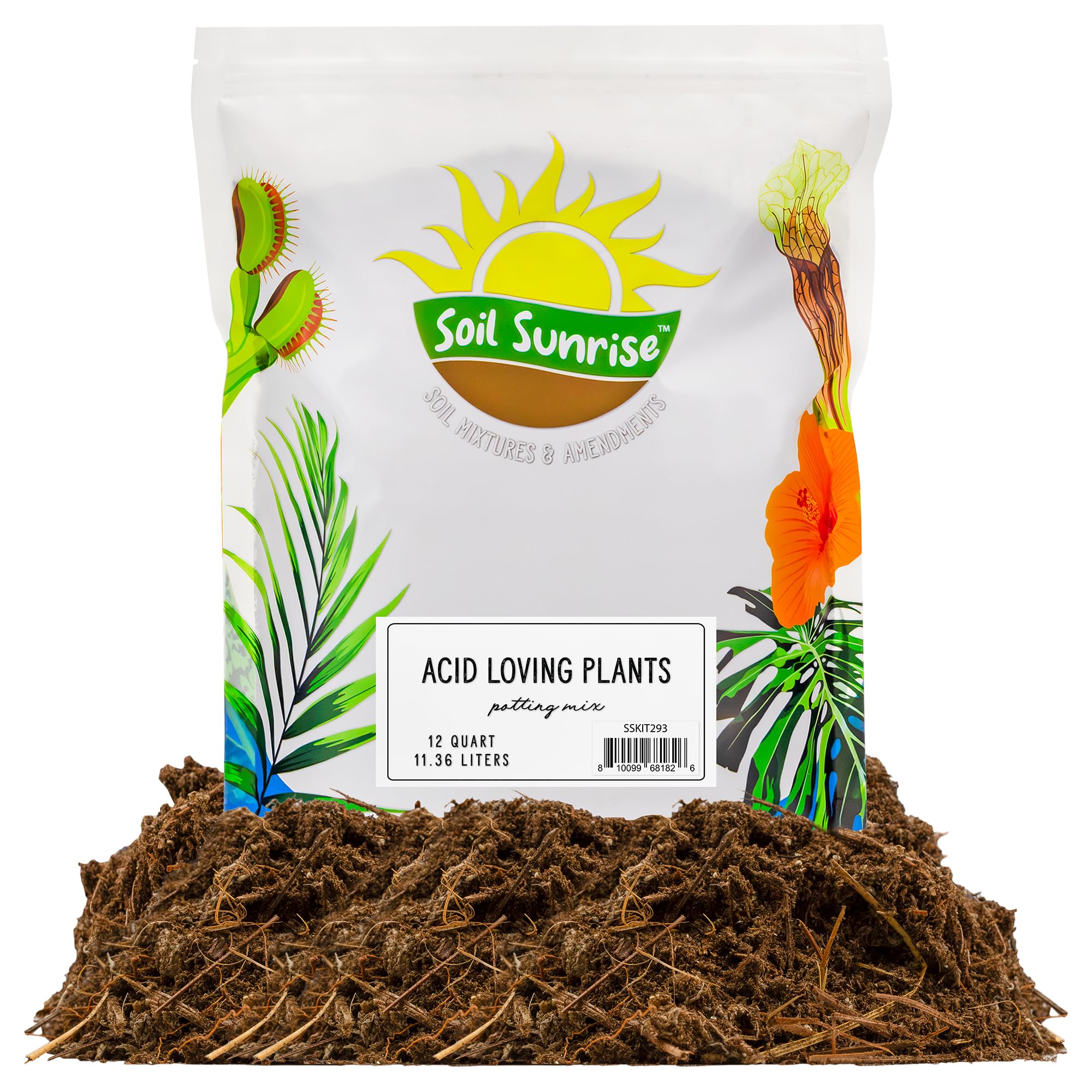
The acid-loving container blend that fuels serious growth for a modest price.
At just 3.3 pounds for 12 quarts, this is the lightest option in the lineup — at 3.3 pounds versus the Coast of Maine 82 pounds. The mix blends peat moss, pine needle mulch, pine bark mulch, sphagnum moss, and vermiculite, with perlite and sphagnum added specifically for drainage and aeration.
The growth results are the story here. Owners mention: “Olive cutting grew from 6in to 5ft bush in 3 years,” and a coffee plant doubled in size after repotting. The pine content gives the natural acidity boost that acid-loving plants like maples need to pull nutrients efficiently.
One honest quirk: the mix can be hydrophobic at first — dry peat resists water. Owners recommend pre-moistening it in a bucket before potting, after which it absorbs water fine. A couple of buyers also noted the bag is smaller than the photos suggest, so check the 12-quart volume before you buy.
Growth power: Customers note dramatic growth spurts — a 6-inch cutting becoming a 5-foot bush in three years, and gardenias thriving in it.
The trade-off: Initial dryness means a pre-soak before potting is worth the extra minute.
3. Calibonsai Japanese Kanuma Small Grain

The authentic Japanese Kanuma with consistent sizing and zero dust.
Kanuma is the traditional soil for acid-loving bonsai in Japan, and this small-grain version — particles roughly 1.5 mm to 5.0 mm — delivers the consistent particle size that serious growers demand. At 17 liters, it holds more than the Deciduous Bonsai blend’s 2 quarts.
The craftsmanship shows in the details. Reviewers point out “consistent and accurate sizing with no dust,” which matters because fine dust clogs the air gaps between particles and suffocates roots. The 4.5-star crowd rating sits close to the top pick, with owners noting they “go through this for my bonsai especially in the spring” and are “always pleased with this brand.”
It is the premium-priced option here, and owners are quick to note it: “Expensive! But you get what you pay for.” If your maples are prized specimens, the predictable drainage and aeration of true Kanuma is worth the splurge.
What the purists get
- Consistent 1.5-5.0 mm grain with no dust
- 17 liters — enough for multiple bonsai
- Authentic Japanese Kanuma for acid lovers
Know before you buy
- Premium-priced — the most expensive per-volume pick
- Small grain may pack tighter than a coarse blend
Buy it for: serious bonsai work where root aeration and consistent grain are everything.
Pass if: your budget is tight — this is a splurge, not a budget play.
4. Coast of Maine Organic & Natural Planting Soil
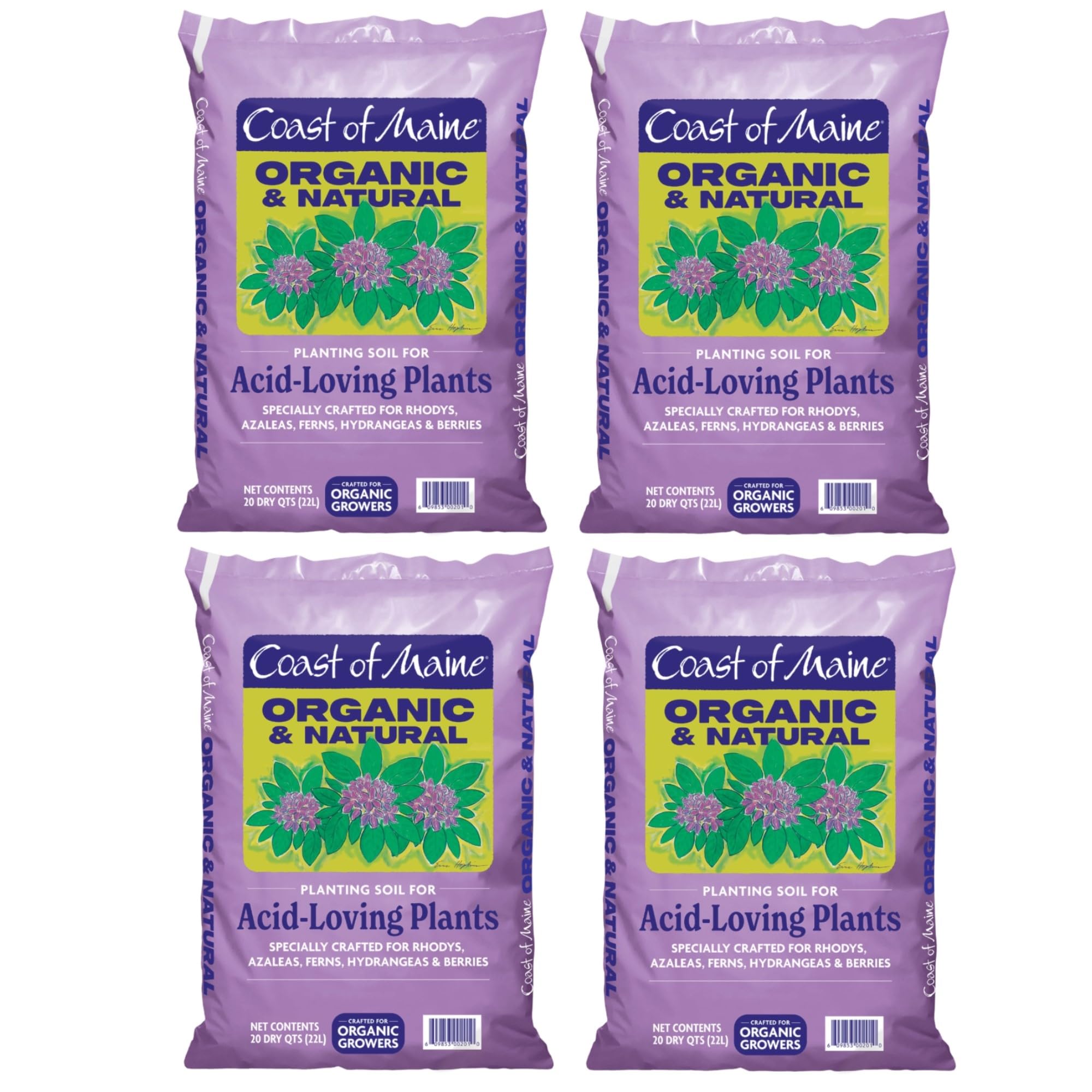
The heavy 82-pound bulk bag for big containers and garden beds.
This organic compost blend pairs sphagnum peat moss with composted manure for a low-pH formulation that feeds acid lovers — rhododendrons, azaleas, blueberries, and ferns among them. At 82 pounds for 20 quarts, it is the heavyweight of this list and the one to grab when you are filling large planters or amending garden beds, not just a single bonsai pot.
The acidity is what owners praise most — it earns the top spot in the feedback with quality close behind. As shoppers say, “dormant blueberries took off” after planting. The blend is OMRI listed for organic use, so it fits a nature-conscious garden routine without extra scrutiny.
The catch is physical: at 82 pounds, this 4-pack is a lift, not a carry. It is also the budget-stretch pick on price, though the per-volume cost works out favorably if you actually use all 20 quarts. The 4.3-star rating across a smaller owner pool suggests it is dependable, if not dazzling.
Best for big jobs: The low pH and organic compost make it a strong choice for larger containers and in-ground acid-loving beds.
The honest catch: 82 pounds is a serious lift, and the 20-quart volume is smaller than the bag’s heft suggests.
Understanding the Specs
Drainage & Aeration
Japanese maples need oxygen at the roots, and that comes from air pockets created by materials like perlite, pumice, akadama, and bark. Water should flow through quickly, not pool on top. A mix that drains poorly will drown the shallow roots of a container maple within weeks.
Acidic pH Balance
Acid-loving plants pull nutrients best from soil around pH 5.5 to 6.5. Ingredients like sphagnum peat moss, pine bark, and Kanuma naturally lower pH. When the soil drifts too alkaline, maple leaves lose their color and growth stalls — so the acid boost is a feature, not an accident.
FAQ
Can I use any potting mix for a Japanese maple in a container?
What is the difference between bonsai soil and regular potting soil?
How much mix do I need for a Japanese maple bonsai?
Why does my potting mix repel water at first?
Is Kanuma better than akadama for Japanese maples?
How often should I repot a Japanese maple in a container?
Do I need to add fertilizer to an acid-loving potting mix?
Is a heavy 82-pound bag worth it for one maple?
Final Thoughts: The Verdict
For most growers, the potting mix for japanese maples winner is the Deciduous Bonsai Soil Blend because it arrives pre-sifted and ready with the exact drainage-and-moisture balance maples need, backed by a 4.6-star crowd rating. If you want a bigger bag for container maples and dramatic growth results, grab the Soil Sunrise Acid Loving Mix. And for bonsai purists chasing authentic Japanese substrate, the Calibonsai Kanuma delivers consistent grain that owners call the best available.
How We Picked
We do not accept paid placement. Every pick is matched to a real buyer and a real use-case; we do not hands-on test units.
Sources & Methodology
Specifications: manufacturer listings and product documentation. Review insights: verified customer reviews, as of August 2026. Pricing: not shown on this page (it changes often); check the current price via the retailer link.
As an Amazon Associate, Lawn Gear Lab earns from qualifying purchases. This does not affect which products we feature.