
Specs are compiled from manufacturer listings and verified buyer reviews and can change over time — please confirm the key details on the product page before buying.
Tomato blight can turn a thriving, promising patch into a tangle of brown, dying leaves in what feels like days. Applied early, the right preventative fungicide keeps tomato plants productive deep into the season. This guide decodes fungicide labels so you can match the right blight treatment to your garden’s needs.
I’m Rikta — the founder and writer behind Lawn Gear Lab. This guide is built by comparing the manufacturers’ published specifications and the patterns across verified customer reviews, so you get each pick’s real strengths and trade-offs instead of marketing spin.
We break down organic options, copper sprays, and heavy-duty synthetics, then show you exactly which one is the crowd favorite for saving tomatoes from blight.
Our Picks at a Glance


How To Choose The Best Fungicide For Tomato Blight
Blight is a catch-all term for a few different fungal diseases, and the right treatment depends on which one you have and how you like to garden. The two most common offenders on tomatoes are early blight, which shows up as target-like rings on lower leaves, and septoria leaf spot, marked by small brown dots with yellow halos. Both thrive in warm, wet weather and spread from the soil up, so a good fungicide is only half the battle.
Decide between organic and synthetic first
If you grow organically or want to spray right up until harvest, look for products with active ingredients like Bacillus subtilis or copper. Biofungicides work by triggering the plant’s own immune response and are safe on edible crops, while copper sprays simply coat the leaf surface to stop spores from germinating. On the other hand, synthetic options like chlorothalonil offer broad-spectrum, long-lasting protection but often require you to wait a set number of days between spraying and picking fruit.
Check the label for “blight” and application method
Always confirm the label lists blight for tomatoes specifically, since some fungicides only cover ornamentals. Also, decide if you want a ready-to-spray bottle for quick use or a concentrated formula you mix yourself, which stretches further and costs less per treatment. Pay attention to how often you need to reapply, especially after rain, and whether the product has a “day of harvest” allowance.
Quick Comparison
| Model | Best For | Active Ingredient | Size | Form | Amazon |
|---|---|---|---|---|---|
| Bonide Revitalize★ Best Overall | Organic prevention | Bacillus subtilis | 16 oz | Concentrate | Amazon |
| Fertilome Fungicide 5Best Value | Disease & bacteria | Bacillus subtilis | 16 oz | Concentrate | Amazon |
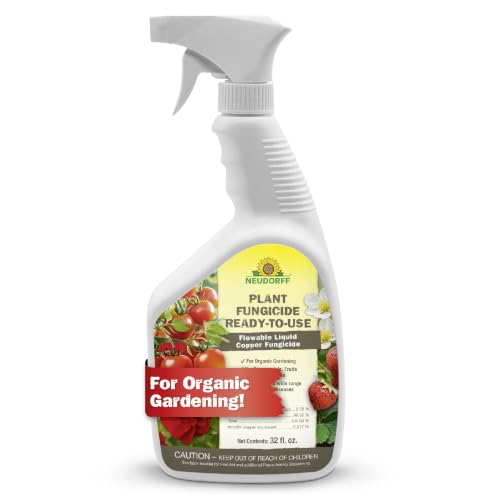
| Neudorff Copper SoapEasiest to Use | Ready-to-use ease | Copper | 32 oz | RTU Spray | Amazon |
| Bonide Fung-onil | Broad-spectrum control | Chlorothalonil | 16 oz | Concentrate | Amazon |
| BioAdvanced 3-in-1 | Pest & disease combo | Multi-action | 32 oz | RTU Spray | Amazon |
| Trifecta Crop Control | Indoor & outdoor pests | Natural oils | 32 oz | RTU Spray | Amazon |
| Monterey Liqui-Cop | Rainfast coverage | Copper | 32 oz | Concentrate | Amazon |
| Ortho MAX Disease Control | High-volume value | Chlorothalonil 29.6% | 16 oz | Concentrate | Amazon |
| Cease Foliar Control | Commercial-scale use | Bacillus subtilis | 1 gallon | Concentrate | Amazon |
In-Depth Reviews
1. Bonide Revitalize Biofungicide
Our pick — over 4.5★ from 700+ verified ratings; the strongest balance of quality and price.
The organic immune booster that turns your tomato plant into its own defender.
Instead of just coating leaves, this concentrate triggers an immune response inside the plant to fight off diseases like blight, anthracnose, and powdery mildew. It is approved for organic gardening, and you can spray right up until the day of harvest, which makes it a favorite for anyone who wants to eat what they grow without waiting out a safety interval.
The effectiveness is what wins people over here. One tomato grower summed it up perfectly: “Honestly I didn’t think this stuff would work but I used it on my tomatoes this year and it really turned my issue with septoria leaf spot.” That kind of turnaround, where a skeptic becomes a believer, shows up again and again in the owner feedback, and it is a big reason this pick holds its strong reputation among home gardeners.
You mix the 16-ounce concentrate with water and apply it as a foliar spray or soil drench, so a single bottle goes a long way across vegetables, fruits, trees, and even houseplants. It also works wonders as a soil drench on fruit trees showing fire blight, with new leaves appearing after about a month of treatment every 3-4 days.
revives stressed plants
- Safe to use up to the day of harvest on organic produce
- Versatile across vegetables, fruits, trees, and indoor plants
- Works as both a foliar spray and a soil drench
needs repeat sprays
- Results depend on the strength of the plant itself
- Needs consistent reapplication for full protection
revival pick: you want an organic, harvest-friendly biofungicide that protects a wide range of plants, not just tomatoes.
skip if lazy: you need a fast, curative knock-down of an already severe blight infection, since this shines brightest as a preventative.
2. Fertilome Fungicide 5
The concentrated Bacillus subtilis that tackles both blight and bacterial issues on a budget.
This one goes beyond fungus — it is a Disease & Bacteria Control that lists blights, molds, rots, spots, specks, and mildews on the label. Being OMRI listed means it is suitable for certified organic production, and you can apply it to the soil under and around the plant where the roots are, which is a time-saving trick that some gardeners prefer over leaf spraying.
The value story here is strong. At 1 tablespoon per gallon, one bottle makes 32 gallons of spray that owners say cured black spot on roses and held up in 94°F heat. One gardener in South Louisiana found it superior to their old product because it restored roses at max dose every 3 days without losing efficacy over time.
It works on indoor and outdoor plants alike, from vegetable gardens and flower beds to lawns, tropicals, and shrubs. Another owner reported it effective against boxwood blight, noting new plantings with fresh soil thrived under treatment.
budget-friendly coverage: this delivers organic-certified, dual-action disease control at a dilution rate that makes the bottle last all season, rivaling more expensive options on the shelf.
3. Neudorff Copper Soap Fungicide
A grab-and-go copper spray that wipes out late blight without any mixing math.
If you want zero measuring cups involved, this ready-to-use spray handles early and late blight on tomatoes and potatoes straight out of the bottle. It uses a low concentration of copper to control powdery mildew, rusts, black spot, downy mildew, and fruit rot, and it is safe for organic gardening right up to the day of harvest.
The spray performance earns its own praise, with owners noting a little goes a long way and that it holds up even after rain. One tomato grower reported black fungus spots on their fruit, and after using this product, the fruit was defect-free. A gardenia owner said it eliminated a fungus that almost killed a decades-old shrub, which is now “finally getting its green back and has even flowered.”
Just be careful on sensitive foliage — one owner found it worked a little too well and caused some burning on hostas. The instructions recommend starting treatment 2 weeks before disease normally appears, or at first sign, then repeating every 7-10 days and reapplying after rain.
gentle option: container gardeners and beginners who want a simple, effective spray with no mixing and no cleanup hassle.
not for blight: anyone with delicate, sensitive species like hostas, since copper can cause leaf burn on some plants.
4. Bonide Fung-onil
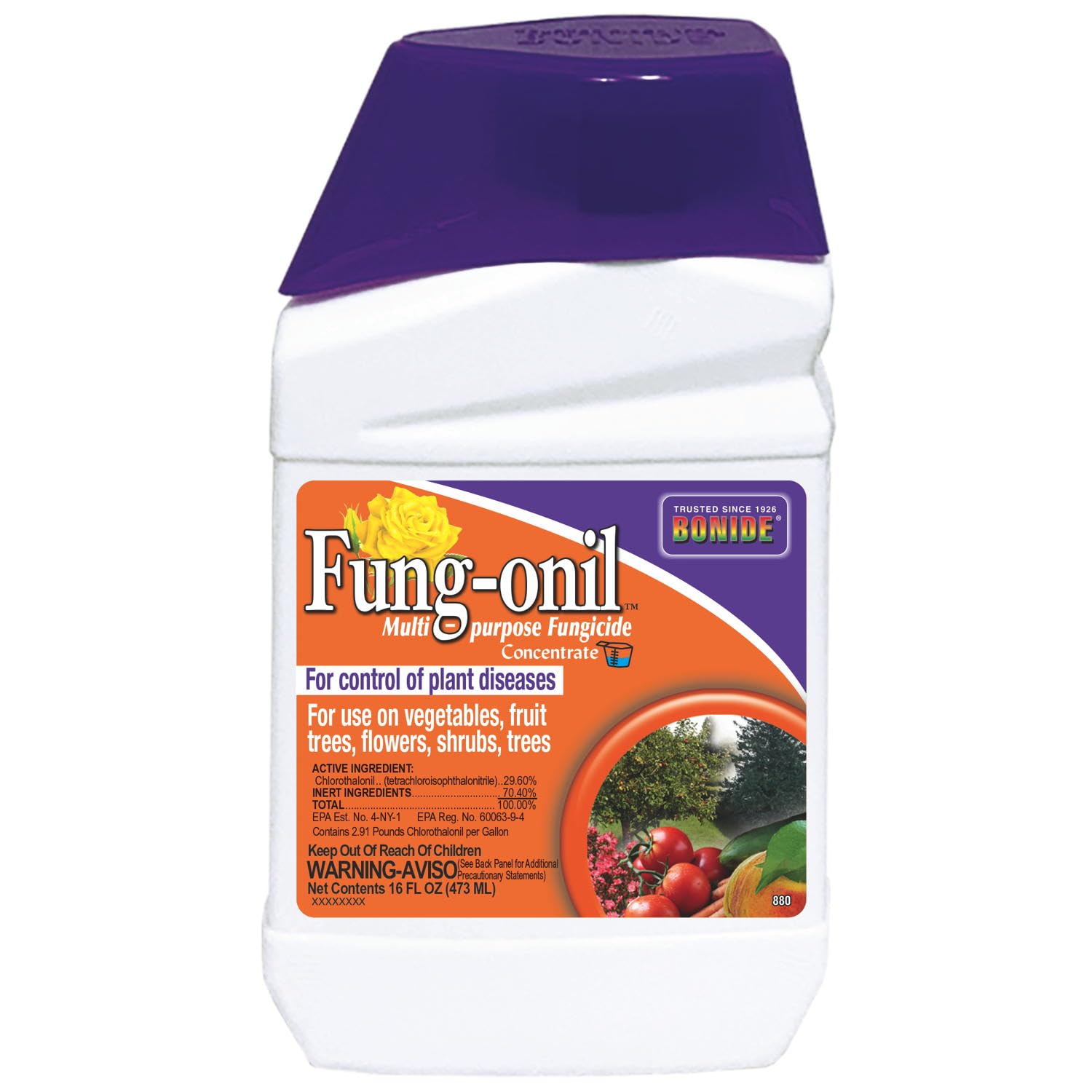
The broad-spectrum synthetic that saved infected tomato plants and kept them thriving.
When blight has already taken hold, this chlorothalonil-based concentrate is the heavy artillery. It is a broad-spectrum fungicide that controls leaf spot, rust, blight, mildew, scab, and mold across beans, vegetables, fruits, ornamentals, shrubs, and trees. The active ingredient clings to plants with a milky, soapy texture, and owners say weekly light sprays control powdery mildew without burning the foliage.
Application is where you need to pay attention. Owners note the directions could be more straightforward, and one warned to wear gloves because the concentrate can burn eyes and is hard to wash off. It also leaves a slight white residue on leaves after dilution, which is harmless but worth knowing before you spray it on your prized plants.
stops spores early: this is a protectant, and the data supports it — treated tomatoes stayed clean while an untreated neighbor plant blighted, proving the value of early, consistent coverage.
5. BioAdvanced 3-in-1 Fruit, Citrus, and Nut Tree Spray
One bottle that kills bugs, controls disease, and manages mites for a healthier harvest.
This is the multitasker of the group — a 3-in-1 formula that kills listed insects, controls listed diseases like black spot, powdery mildew, and rust, and manages mites in a single application. It is built for fruit, citrus, and nut trees but also works on vegetables and vine plants, making it a great fit if your garden is a mix of edibles and ornamentals.
Owners appreciate how easy it is to apply, with one noting the spray reaches up to 8 feet, which is handy for taller trees. The results speak to its dual action: an apple tree owner saw less rust on the fruit and a big drop in bugs, and wasps that used to eat the apples have not been around since using it. Another gardener used it every 3-4 weeks on peach trees and blackberry plants to keep bugs off.
It is safe to use up to the day before harvest when used as directed, which is a great feature for anyone who likes to pick and eat fresh. Just know that the insect control is the headline here — the disease control covers listed issues, but for a tomato-specific blight problem, a dedicated fungicide might be more targeted.
all-in-one: you want one simple spray that protects fruit trees and vegetable patches from both pests and common fungal diseases.
skip for organic: your only problem is tomato blight and you already have a separate insecticide, since you would be paying for pest control you do not need.
6. Trifecta Crop Control

A natural plant-based spray that suffocates spider mites and stops mildew without chemical residue.
If you grow indoors or want to avoid harsh chemicals on edible crops, this all-natural, plant-based formula tackles spider mites, aphids, whiteflies, and fungus gnats while also treating powdery mildew and mold. The fast-drying formula leaves no residue, which makes it a safe choice inside homes and greenhouses without the toxicity worries of other products.
The natural ingredient list is a major selling point, with owners appreciating that it is made from essential oils and works without leaving lasting odor. One gardener reported new healthy leaves appearing on their plants after treatment, and a sunflower grower called it “what all the canna growers talk about using in organic gardens.” The spray also cleans dust and grime off sticky plants while repelling pests.
The catch is cost and persistence. Owners note it is a bit pricey, and because it kills spider mites but not their eggs, you have to spray daily for the full life cycle to truly eliminate them. It can also take 2-4 oz per gallon of water, so a single 32 oz bottle may not stretch far for large gardens, making it better suited to indoor or small-scale use.
enthusiast favorite
- All-natural, biodegradable formula safe on edible crops
- No residue left behind on leaves
- Effective against both pests and fungal diseases
strong odor
- Not cost-effective for treating large outdoor gardens
- Requires daily spraying to break the mite life cycle
7. Monterey Liqui-Cop Copper Fungicide

A gel-based copper concentrate that stays put through rain for long-lasting blight defense.
This copper fungicide stands out because of its gel formulation, which is designed to prevent water from washing it off once it dries. That rainfast quality matters for blight control, since the disease spreads in wet conditions and a spray that rinses away forces you to reapply constantly. It protects a wide range of plants including fruit trees, nut crops, citrus, vegetables, and ornamentals against anthracnose, brown rot, blight, and downy mildew.
The concentration is a financial win for many, since it needs only about 2 tablespoons per gallon of water. A single quart stretches across a decade of dormant-season applications, making it a long-term value buy. Peach leaf curl was eliminated after three seasons of consistent use, and an orchardist found it effective on leaf shot while being safe on apricots where other treatments were not.
long-lasting copper: a little goes a remarkably long way here, and the rainfast gel means one well-timed application keeps working instead of washing into the soil.
8. Ortho MAX Garden Disease Control

A high-strength synthetic that makes up to 64 gallons of spray for serious disease pressure.
Some gardeners avoid heavy chemicals, but when nothing else stops leaf spot, this concentrate is the answer. One 16-ounce bottle yields up to 64 gallons of spray, delivering the lowest cost per gallon in this lineup. The active ingredient is 29.6% chlorothalonil, the same broad-spectrum protectant trusted in professional settings, formerly known as Daconil.
The results are convincing for stubborn cases. One owner fought leaf spot on a privacy screen of large photinia, and after nothing else worked, this product stopped the disease. Another with blue spruce pines and box shrubs applied it three times, once a month, and their plants fully recovered. A rose lover who lost all their leaves to a neem oil product switched to this and saw complete recovery with consistent use.
It works as a preventer and a stopper of leaf spots, rust, blights, fruit rots, mildews, scab, and molds across vegetables, fruits, roses, flowers, shrubs, and ornamentals. The main caveat is timing — it works best as a preventative, and the instructions recommend getting ahead of the disease before it takes hold. It is also a synthetic, so it is not suitable for organic gardening.
broad spectrum: large gardens and heavy infestations where you need maximum coverage per dollar and a proven synthetic protectant.
skip for edibles: organic gardeners, since chlorothalonil is a conventional chemical treatment.
9. Cease Foliar Disease Control

A commercial-grade microbial fungicide in a gallon jug for growers who want serious volume.
The scale here is different from the rest of the list. At 1 gallon, with a mix rate around 50mL per gallon of water, this is built for serious growing operations rather than a backyard patch. Owners in commercial and indoor settings report it effectively controls powdery mildew and leaf spot, with one saving oak saplings from disease while noting it struggled on 50-year-old pines and spruce in Illinois.
The honest downsides are significant for the home gardener. The mixing instructions are written for 100-gallon farm ratios, which one owner found confusing and risky for the average person to calculate. It also has an extremely foul odor, described like moldy towels or stinky feet, though the smell does fade. Full protective gear is recommended during application to avoid allergic reactions.
targeted cure: you run a serious grow operation or large greenhouse and want an OMRI-listed biological product in bulk.
skip if cheap: you have a small home garden, since the farm-scale dosing math and strong odor make it unwieldy for backyard use.
Understanding the Specs
Active Ingredient
Concentrate vs. Ready-to-Use
Concentrates require you to mix with water but stretch much further per bottle, making them more economical for large gardens. Ready-to-use sprays come pre-mixed in a bottle, so they are convenient and beginner-friendly but cost more per application. Check the label for dilution rates so you know how much spray a single bottle will actually make.
FAQ
What is the difference between early blight and late blight on tomatoes?
When should I start spraying fungicide on my tomatoes?
Can I spray fungicide on tomatoes right up until harvest?
Is copper fungicide safe for organic gardening?
What is the best organic fungicide for tomato blight?
Why is my fungicide not working on tomato blight?
How often should I reapply fungicide to my tomatoes?
Is chlorothalonil safe for vegetable gardens?
Final Thoughts: The Verdict
For most gardeners, the fungicide for tomato blight winner is the Bonide Revitalize because it offers organic, harvest-safe protection that triggers the plant’s own defenses, backed by a strong crowd following. If you want maximum coverage per dollar and do not mind a synthetic, the Bonide Fung-onil is the heavy-duty choice. And for those who want grab-and-go convenience, the Neudorff Copper Soap spray handles blight straight out of the bottle.
How We Picked
We do not accept paid placement. Every pick is matched to a real buyer and a real use-case; we do not hands-on test units.
Sources & Methodology
Specifications: manufacturer listings and product documentation. Review insights: verified customer reviews, as of August 2026. Pricing: not shown on this page (it changes often); check the current price via the retailer link.
As an Amazon Associate, Lawn Gear Lab earns from qualifying purchases. This does not affect which products we feature.