
Specs are compiled from manufacturer listings and verified buyer reviews and can change over time — please confirm the key details on the product page before buying.
Forgetting to water, watching leaves turn yellow, or worrying that the bag you just bought will stink up the whole yard — that’s the reality of feeding a garden. The right composted cow manure fixes the first two problems and completely avoids the third, because a properly composted product is dark, crumbly, and smells like fresh earth, not a barn.
I’m Rikta — the founder and writer behind Lawn Gear Lab. This guide is built by comparing the manufacturers’ published specifications and the patterns across verified customer reviews, so you get each pick’s real strengths and trade-offs instead of marketing spin.
The key is understanding what “composted” actually means for your soil’s texture, moisture, and nutrient release, which is exactly what this breakdown of the best composted cow manure options delivers.
Our Picks at a Glance

How To Choose The Best Composted Cow Manure
The single biggest mistake is treating manure like a chemical fertilizer. A bag of compost is a soil fixer first — it adds organic matter that holds water and loosens clay — and a nutrient source second. Understanding that shifts which bag you buy.
Weight vs. Volume: The Real Math
Bags are sold in pounds and quarts or cubic feet, and the two rarely match what you expect. A dense, moist 40-quart bag can weigh 34 pounds, while a lighter, fluffier 10-pound bag might fill a larger volume. Always check the unit count and volume, not just the claimed weight, to compare how much actual material you’re getting.
The Smell Test and Compost Quality
Fully composted manure goes through an aerobic process (a method with continuous air flow) that breaks down the material until it loses the raw manure odor. If a product is odor-free and earthy, it’s finished composting. If it smells like a farm, it’s not done. Work the earthy type directly into soil; be cautious with anything that still has a strong smell.
Nutrient Content and Safety
Most composted cow manure has a low, balanced fertilizer analysis — for example, a product labeled 0.5-0.5-0.5 provides small amounts of nitrogen, phosphate, and potash without the risk of burning tender roots. That makes it safer for seedlings and houseplants than fresh manure, but it also means you often still need a supplemental fertilizer for heavy feeders.
Quick Comparison
| Model | Best For | Weight | Volume | Nutrient Ratio | Amazon |
|---|---|---|---|---|---|
| R&M Organics★ Best Overall | Indoor & outdoor soil health | 10 pounds | 160 Ounces | — | Amazon |
| Black Kow 8 qtPro Soil Fixer | Root-zone moisture & aeration | 6 pounds | 8 qt | — | Amazon |
| Hoffman 20 lbsBest Value | Earthworm activity & loamy soil | 20 pounds | — | 1-1-1 | Amazon |
| Brut Cow Compost | Delicate seedlings & houseplants | 10 pounds | 10 qt | — | Amazon |
| Michigan Peat | Large lawns & garden beds | 34 pounds | 40 qt | — | Amazon |
| Black Kow 35 lb | Growing tomatoes in the bag | 35 pounds | 560 Ounces | 0.5-0.5-0.5 | Amazon |
| Espoma DCM1 | Moisture holding & aeration | — | 1 Cubic Foot | 0.5-0.5-0.5 | Amazon |
| Home & Country USA | Small indoor potting projects | — | 4 qt | — | Amazon |
In‑Depth Reviews
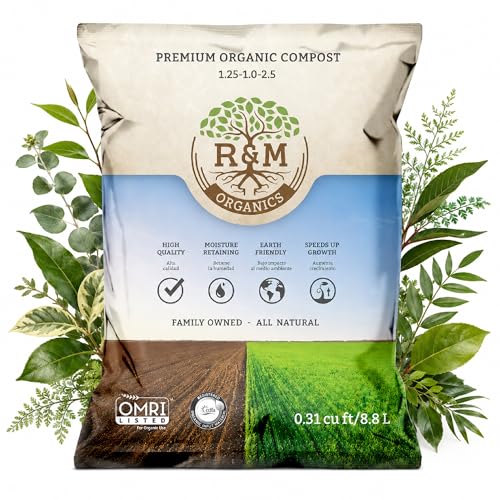
1. R&M Organics Compost Soil Amendment
Our pick — over 4.5★ from 500+ verified ratings; the strongest balance of quality and price.
The rescuer for stressed plants, wrapped in a bag that’s a quarter more generous than its rivals.
When a roof-washing cleaner left azaleas in serious die-off, this is the compost that brought them back — the fine-grained texture and clean, earthy scent are the first signals this is fully finished material, not raw manure. It works as a top dressing or mixed into a planter, and the label suggests a thin quarter-inch layer around plants goes a long way. That matters because this 10-pound bag carries a 160-ounce volume, which is 25% more material than a comparable 128-ounce product, so the bag stretches further across pots and beds.
The defining trait here is that it’s a soil health fixer first. It’s dairy cow manure, fully composted with continuous aeration (a process that constantly circulates air to break down impurities), which is why it holds moisture longer and cuts down how often you need to water. Buyers report their suffering tomatoes perked up within a week of mixing it into a 27-gallon planter. The quality is what wins people over — with 21 positive mentions for quality and 18 more for plant performance, the consensus is that this earns its place in a serious gardener’s shed.
What Owners Rave About
- Fine-grained texture mixes easily into any soil
- Low-odor formula works for indoor container plants
- Holds moisture so you water less often
What To Know Before Buying
- A 5:1 mixing ratio means it’s an amendment, not a standalone fertilizer
- You’ll want to add a balanced fertilizer for heavy feeders
Reach for this if: you want one versatile bag for houseplants, raised beds, and lawn patches without the barnyard smell.
Look elsewhere if: you need high nitrogen for heavy feeders like corn — this is about soil texture, not NPK punch.
2. Black Kow Composted Cow Manure 8 qt
The go-to for breaking up clay and holding water in sand, straight from a family tradition.
“My mama puts this in everything she plants,” owners mention — and that generational trust is backed by biology. This 6-pound bag is loaded with millions of beneficial bacteria (microorganisms that convert nitrogen into a form roots can actually use), which is what makes it such a strong soil conditioner. It actively improves two opposite problems: it adds moisture-holding capacity to sandy soils so water doesn’t leach away, and it breaks up hard clay so air and water reach the roots.
The 1:1 mixing ratio means you blend it half-and-half with your existing soil, making it a serious structural amendment rather than a sprinkle-on-top dressing. It’s a slow-release, organic product that won’t burn tender roots, and the odor profile here is a real split — some owners say it smells terrible, while the summary notes most find it essentially odorless. Value opinions are equally mixed, but the quality and plant-health results are uniformly praised, with 18 positive mentions for quality and 15 for plant health. Vegetables thrive, roses do well, and the price point for the size is considered right by most.
Soil transformer: this is the pick if your garden is mostly clay or sand, because it physically restructures the soil rather than just feeding it.
The trade-off: at 6 pounds, it’s one of the smaller bags here — you’ll likely need several for a full bed.
Who it beats: gardeners fighting extreme soil types — sandy or clay — where simple fertilizers fail.
Who it doesn’t: anyone needing to cover a large area in one go; the 8-quart size limits the reach.
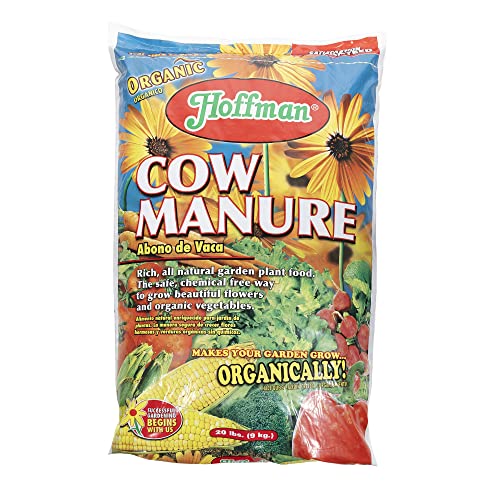
3. Hoffman Organic Cow Manure 20 lbs
The workhorse 20-pounder that turns bare patches into bloom-heavy beds for less.
At 20 pounds, this is the biggest bag in the mid-range tier, and it’s the one that brings the most literal value per pound for the money. The 1-1-1 formulation provides a balanced, gentle nutrient profile that won’t burn roots or foliage — making it forgiving for beginners and safe for established plants. Its real superpower is encouraging earthworm activity; worms churn the soil, creating the rich, loamy texture that every gardener is chasing.
The recurring notes focus on peaches blooming heavily after adding this as the only change, and cucumbers thriving. One owner who could only find dry, debris-filled steer manure at local stores called this “no comparison” for quality. The texture is clean and workable, spreading easily without the sticks and chunks that plague bagged products. With 10 positive mentions for quality and 5 for effectiveness, the reputation is consistent: this product does its job quietly and well.
Loam builder: worth picking if you want to build long-term soil health through worm activity rather than just feeding the plant.
Notable: some plants respond better than others — it’s a soil improver, not a guarantee of equal growth across all species.
Best for: vegetable patches and flower beds where you want a bigger bag for the money.
Think twice if: you’re potting a single houseplant — the 20-pound size is more than you need.
4. Brut Cow Compost 10 Quart

The pure, sifted, OMRI-listed compost that’s so gentle you can use it on seedlings.
This is the specialist you reach for when you’re dealing with delicate young plants. It’s made only from thoroughly composted cow manure that’s aerated and tested, then finely sifted into a texture that’s ideal for indoor pots and seed starting. The OMRI listing (a certification that the product meets organic standards for use in organic production) is the headline trust marker here — it’s a claim none of the other mid-range picks in this list make.
The odor-free promise holds up, which matters when you’re mixing it into houseplant soil in your living room. It’s also burn-proof, so it’s safe for seedlings and tender blooms where a stronger product might cause damage. Customers note gardens “growing like crazy” and visible signs of growth on plants shortly after application. Quality is the most-praised aspect at 23 mentions, with plant growth close behind at 10. The fineness is a double-edged sword, though: some owners feel the value is mixed for the volume you get.
Why It Shines
- Certified organic — OMRI listed for organic gardening
- Finely sifted texture works perfectly in indoor pots
- Completely odor-free, safe for living-room plants
Keep In Mind
- The 10-quart volume is modest; bigger jobs need multiple bags
- Value opinions are split — some find it pricey for the size
Grab this for: houseplants, seedlings, and indoor containers where purity and zero smell matter most.
Skip it for: blanket coverage over a huge vegetable garden — the small volume demands repeat purchases.
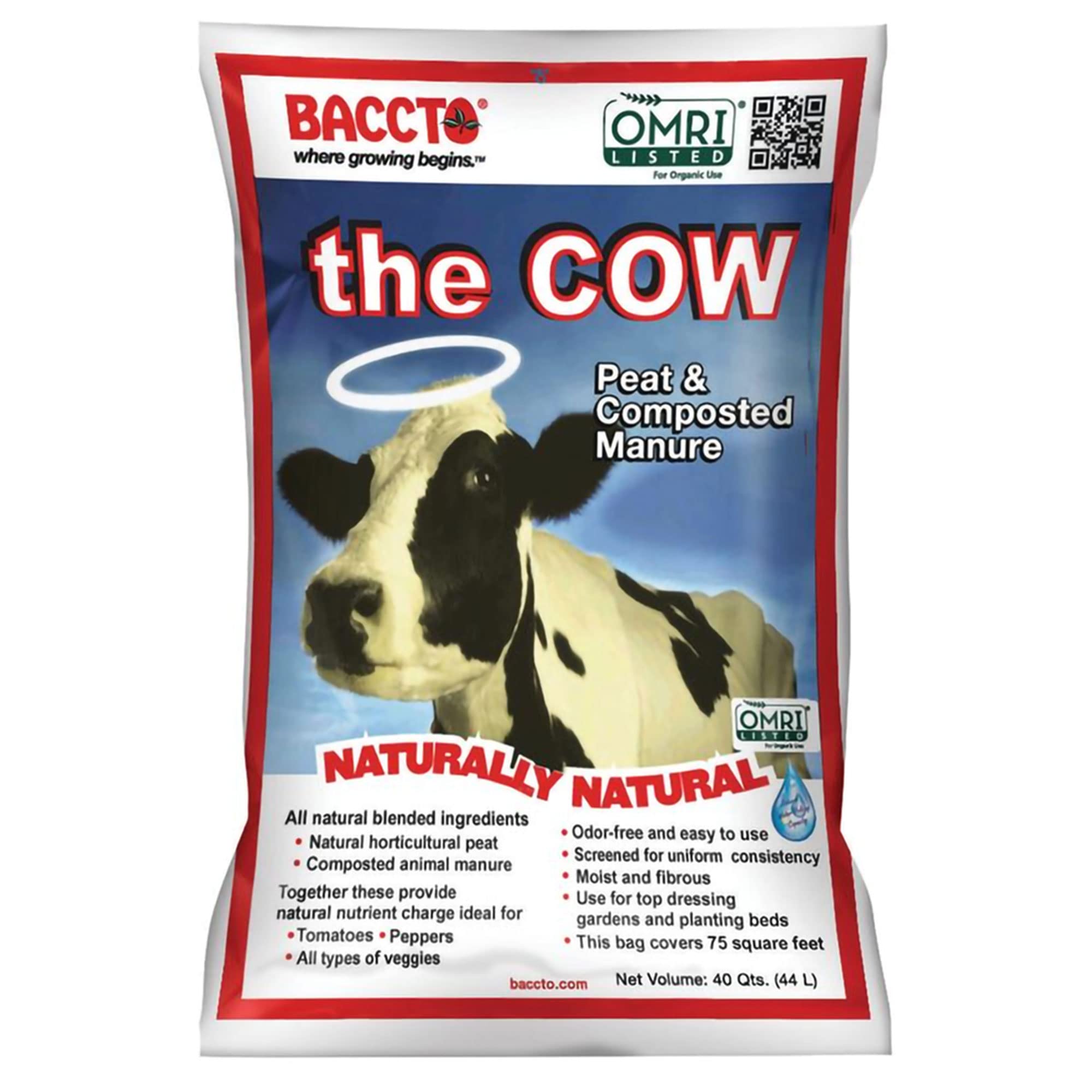
5. Michigan Peat Baccto Wholly Cow 40 Quart
The 34-pound giant that covers lawns and beds, loved by mushroom growers too.
This is the one for serious jobs. At 40 quarts and 34 pounds, it’s the heavyweight of the list, designed for top-dressing lawns and filling large planting beds without the need for multiple bags. It’s a blend of natural peat and composted animal manure, which gives it a high nutrient boost while the peat adds that signature moisture-holding capacity. The natural water-holding ability means you’ll water less often, which is a standout for new raised beds in poor, sandy soil.
The uniformity is the hidden gem. It’s screened for a consistent texture, which is why one 78-year-old gardener mixing it with coir and perlite found it looked good and worked well in a large back yard. Bumper crops of mushrooms are reported when it’s sterilized as a substrate, and vegetables are noted growing faster. The quality is the most-discussed strength at 30 positive mentions, with the low odor at 14 — buyers consistently note it has “little to no smell.” It’s rich, dark, and uniformly consistent, making it a reliable amendment for any large-scale project.
Big-job specialist: this is the efficient choice for lawns, large raised beds, and soil-building projects where smaller bags would be impractical.
Consider: at 34 pounds, you’ll want help carrying it from the car to the garden.
Who it suits: anyone with a large yard or ambitious raised-bed plans needing deep, quality soil.
Who it doesn’t: apartment dwellers with a single planter — the size is overkill, though the quality is undeniable.
6. Black Kow Composted Cow Manure 35 lb

The bag that doubles as a tomato planter, with a slow-release formula that won’t burn.
Black Kow’s bigger sibling brings a specific, beloved trick: plant tomatoes straight into the bag. Lay it on its side, cut an opening on top, punch drain holes in the bottom, and you have an instant raised bed. That’s proof of how gentle and well-structured this compost is. The 0.5-0.5-0.5 analysis (meaning 0.5% each of nitrogen, phosphate, and potash) makes it a true slow-release fertilizer that won’t burn delicate roots, ideal for houseplants as well as tomatoes.
The 560-ounce bag is the biggest unit count here, though it’s also where the value debate lives. One reviewer noted the bag weighed closer to 19.8 pounds than the advertised 35 pounds, finding it overpriced compared to local garden centers. That’s a significant caveat, but the quality and effectiveness are otherwise strongly praised — 18 positive mentions for quality and 12 for effectiveness. It’s also noted as excellent for vermicomposting. If you get a correctly filled bag, it’s a fantastic product; weigh it at the door if you’re buying online.
Smart buy: the slow-release formula makes it forgiving for beginners and safe for all plant types, from houseplants to tomatoes.
Watch out: delivery weight has been reported lower than advertised, so verify it matches expectations if cost-per-pound is critical.
Pick this if: you want the flexibility of growing tomatoes in the bag or need a safe, slow-release amendment for houseplants.
Reconsider if: buying online sight-unseen; the potential for a lighter-weight bag is a real, if occasional, complaint.
7. Espoma Organic Cow Manure 1 Cubic Foot

The heritage brand’s rich, moist blend that improves any soil it touches, straight from the USA.
Espoma brings a century of reputation — the company’s been making natural organics since 1929 — and this 1-cubic-foot bag shows why. It blends dehydrated cow manure with aged forest products, which not only feeds the plant (0.5-0.5-0.5 analysis) but also dramatically improves the soil’s moisture-holding capacity and aeration. It’s an all-natural organic blend designed for everything from vegetables and flowers to trees and shrubs.
The texture is notably rich and moist, and reviewers point out plants reacting immediately — roses and hibiscus doing well, lawns filling in bare spots, and vegetables thriving. It’s an excellent choice for patio pots, where it helps them require less water while adding nutrients. The quality is described as “very potent” and “very good moist manure.” A small number of sticks are present, which is typical for a product with aged forest products, but the overall benefit far outweighs that minor nuisance. It’s a product that delivers exactly what its heritage promises: consistent, reliable soil conditioning.
Heritage pick: you’re buying decades of formulation knowledge in a bag, with a texture that visibly improves soil structure.
Minor note: expect a few small sticks from the forest-product blend; it’s harmless but worth knowing for fine potting mixes.
Choose this for: roses, hibiscus, and patio containers where you want a rich, ready-to-use blend.
Pass if: you need the certified-organic OMRI badge that brands like Brut offer — Espoma’s claim is “all natural,” not certified.
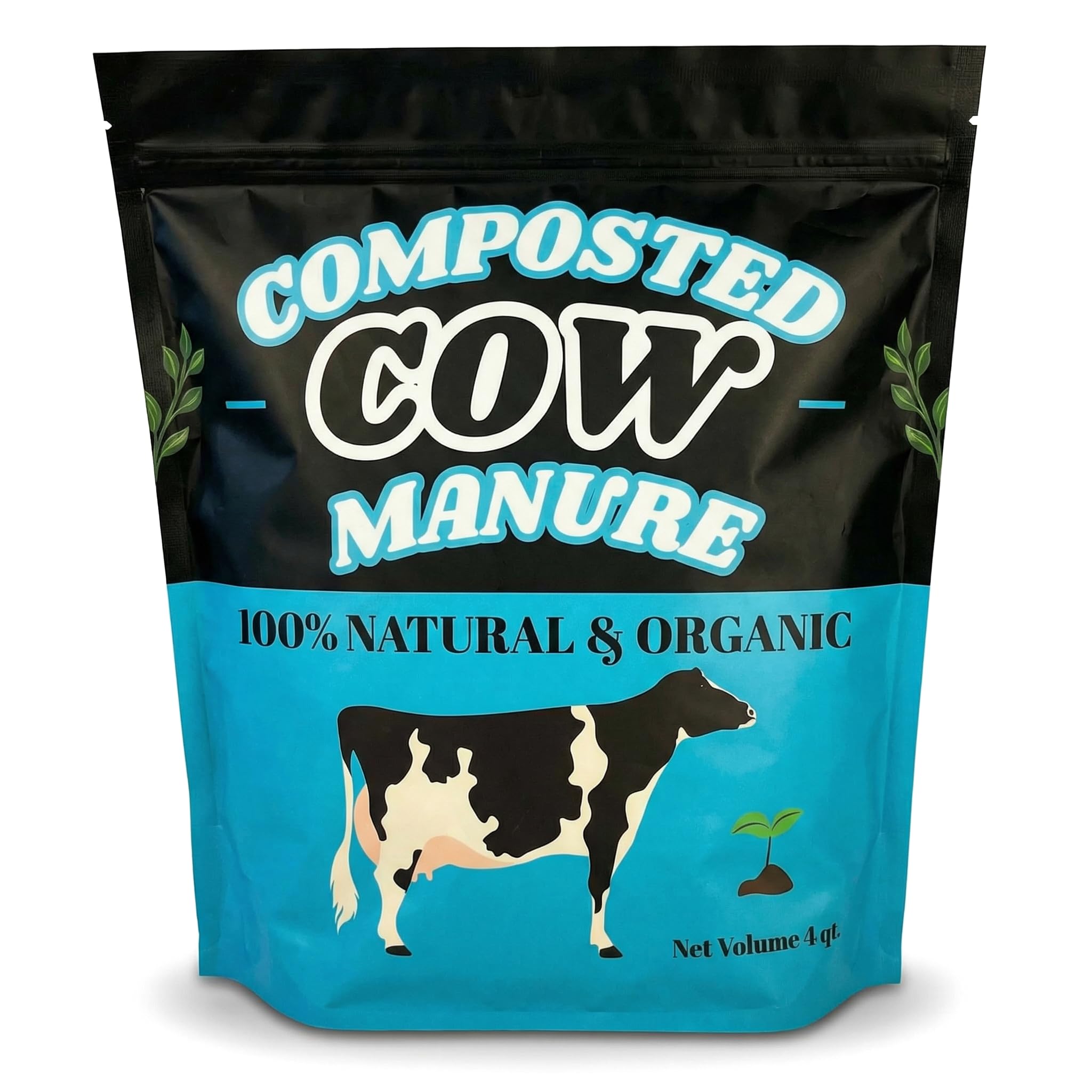
8. Home & Country USA Organic Cow Manure 4 Quart
The pint-sized entry point for flower seeds and small pots, perfectly suited to beginners.
This 4-quart bag is the most compact option here, and it fills a specific niche: small indoor potting projects and getting flower seeds started. It’s 100% organic composted cow manure, free from chemicals and additives, sourced from sustainable farms in the USA. For a single houseplant or a tray of seedlings, this is the right size — you won’t have half a bag of compost sitting in your garage for months.
The reviews are a study in expectations. Flower seeds reportedly grew into beautiful flowers, and the material works well as a soil supplement for garden and houseplants. It’s genuinely odorless and fine-textured enough for small pots, though it is a bit chunky and benefits from crumbling before use. The biggest complaint is the volume: shoppers say it’s “a lot smaller than expected,” and value is the recurring theme. This is a quality product, but the tiny bag size means you’re paying a premium per quart compared to every other option.
Why It Makes Sense
- Perfect for seedling trays and single houseplants
- Completely odor-free for indoor use
- 100% organic with no additives
Why To Think Twice
- The 4-quart size is the smallest here — it’s a sample, not a supply
- Value per quart is poor compared to larger bags
Grab it for: that one window box or a quick seed-starting project where a giant bag is wasteful.
Skip it for: any real garden bed — you’ll run out fast and pay far more per quart than the bigger picks above.
Understanding the Specs
Weight vs. Volume
Manure bags list pounds and quarts or cubic feet, and the numbers don’t always line up. A dense, moist 6-pound bag can be smaller than a light 10-pound bag. When comparing, the volume (quarts or ounces) tells you how much soil you can actually amend, while weight hints at moisture and density. For example, a 160-ounce bag holds more material than a 128-ounce one, which translates to more beds covered.
Nutrient Analysis (NPK)
This is the three-number label like 0.5-0.5-0.5 or 1-1-1, showing the percentage of nitrogen, phosphate, and potash. Composted cow manure is low and balanced, so it builds soil without burning roots — unlike chemical fertilizers. The “0.5-0.5-0.5” means half a percent of each nutrient, which feeds plants slowly as soil organisms break it down. It’s a soil amendment, so you often still pair it with a stronger fertilizer for heavy feeders.
FAQ
Can composted cow manure burn my plants?
How much composted cow manure should I mix into my soil?
Is composted cow manure the same as a fertilizer?
Why does some cow manure smell bad and some doesn’t?
Can I use composted cow manure on indoor houseplants?
What’s the difference between 0.5-0.5-0.5 and 1-1-1 manure?
How long does composted cow manure last in the soil?
Is OMRI listed compost worth paying extra for?
Final Thoughts: The Verdict
For most people, the composted cow manure winner is the R&M Organics because it combines the finest texture with a 25% larger volume than similar bags, all with the low odor that makes it usable indoors. If you’re fighting clay or sand, grab the Black Kow 8 qt for its soil-structure-transforming bacteria. And for massive beds or lawns, the Michigan Peat 40 Quart is the one to reach for.
How We Picked
We do not accept paid placement. Every pick is matched to a real buyer and a real use-case; we do not hands-on test units.
Sources & Methodology
Specifications: manufacturer listings and product documentation. Review insights: verified customer reviews, as of August 2026. Pricing: not shown on this page (it changes often); check the current price via the retailer link.
As an Amazon Associate, Lawn Gear Lab earns from qualifying purchases. This does not affect which products we feature.