
Specs are compiled from manufacturer listings and verified buyer reviews and can change over time — please confirm the key details on the product page before buying.
Most palm problems start below the surface — roots sitting in heavy, soggy soil that slowly suffocates the plant. A fast-draining, airy blend lets roots breathe and stay hydrated without waterlogging. This guide breaks down five ready-to-use blends, what each one actually contains, and which palm types each suits best.
I’m Rikta — the founder and writer behind Lawn Gear Lab. This guide is built by comparing the manufacturers’ published specifications and the patterns across verified customer reviews, so you get each pick’s real strengths and trade-offs instead of marketing spin.
Choosing the right blend is the difference between a thriving indoor palm and one that slowly yellows — this breakdown of the soil for palm trees cuts through the bag labels to the drainage, ingredients, and value that matter most.
Our Picks at a Glance


How To Choose The Best Soil For Palm Trees
A palm’s roots need oxygen, and dense garden soil chokes them off. The best palm mixes recreate the loose, fast-draining conditions of a tropical forest floor — water flows through quickly while a bit of moisture lingers for the roots to drink.
Drainage Is the Whole Game
Look for ingredients like perlite (white volcanic glass beads), pumice (light porous rock), or sand that create air pockets. These keep water from pooling around the roots, which is the main cause of root rot — the silent killer of potted palms.
Organic Matter Feeds the Roots
Peat moss, coco coir (coconut husk fiber), or compost hold moisture and provide nutrients. Some blends add worm castings or chicken manure for a slow-release fertilizer kick, so you feed your palm less often.
Size Up the Bag Before You Buy
Pay attention to bag volume — a 3-quart bag fills one small pot, while an 8-quart bag handles two 8-inch containers. A 0.5-cubic-foot bag (about 15 quarts) is the biggest jump, covering several pots or one large planter.
Quick Comparison
| Model | Best For | Volume | Key Ingredient | Pack Size | Amazon |
|---|---|---|---|---|---|
| Miracle-Gro Cactus, Palm & Citrus★ Best Overall | Best Overall | 8 quarts per bag | Miracle-Gro Plant Food | 3-Pack | Amazon |
| Espoma Organic Cactus Potting SoilOrganic Pick | Organic Pick | 8 quarts | Sphagnum Peat Moss | 2-Pack | Amazon |
| Gardenera Palm Tree Potting Mix | Palm-Specific Mix | 3 quarts | Canadian Peat Moss | 1 Count | Amazon |
| DUSPRO 5in1 Tropical Potting Mix | Houseplant Enthusiasts | 8 quarts | Coco Coir & Pine Bark | 1 Count | Amazon |
| LGM Cactus & Succulent Soil Mix | Nutrient-Rich Blend | 0.5 cu ft | Volcanic Ash & Chicken Manure | 1 Count | Amazon |
In‑Depth Reviews
1. Miracle-Gro Cactus, Palm & Citrus Potting Mix, 8 qt., 3-Pack
Our pick — over 4.5★ from 650+ verified ratings; the strongest balance of quality and price.
The triple-bag value leader that keeps palms thriving without the guesswork.
This blend solves the most common palm problem — soggy roots — with a fast-draining formula enriched with Miracle-Gro Plant Food, so your potted palm, citrus, or succulent gets both drainage and nutrition in one step. Buyers report transplants “all are doing amazing” after switching, a common refrain across hundreds of reviews.
The value here is unmistakable: you get three 8-quart bags, and each one fills two 8-inch containers, so a single purchase covers multiple plants or a season of repotting. This 3-pack provides 3.0x the soil of a single 3-quart specialty bag, enough to refresh several pots without reordering.
Plant health is the top praise: 27 owners cite it as the standout benefit, and 19 more commend the soil quality. For indoor or outdoor container plants, this is the low-maintenance choice that handles cacti, palms, citrus, and succulents alike.
What Wins Owners Over
- Fast-draining formula prevents waterlogged roots
- 3 bags at 8 quarts each cover many pots
- Enriched with plant food for steady growth
Who Should Look Elsewhere
- Aimed at cacti and succulents, not heavy-feeding tropical palms
- Not marketed as organic
Reach for it if: you want the most soil per dollar and a proven fast-draining mix that keeps multiple palms happy.
Think twice if: you specifically want an organic-certified blend — this one skips that claim.
2. Espoma Organic Cactus Potting Soil Mix, 8 qt, Pack of 2
The organic answer for aloe, palms, and citrus that hate heavy soil.
If a previous mix left your plants with mushy roots, this organic formula is the reset button. It blends sphagnum peat moss, humus, and perlite for optimum aeration and drainage, and it skips synthetic plant foods entirely — a relief for owners whose aloe “was constantly getting root rot” with another brand but “did not have that problem” here.
Beyond the base blend, Espoma adds Myco-Tone — a proprietary mix of beneficial fungi that colonize roots to help them absorb water and nutrients. It is designed for any container planting, whether you are starting a new succulent or transplanting a Christmas cactus into a bigger pot, indoors or outdoors.
This 2-pack delivers two 8-quart bags (that’s 16 quarts total), roughly double the volume of a single tropical mix, so you can repot several plants at once. Owners note the repotted Christmas cactus “is still alive and it looks healthy” — a quiet win that justifies the organic price.
Clean & simple: an organic, no-synthetic-chemicals mix that solves root rot for succulents, palms, and citrus without extra fertilizer.
3. Gardenera Palm Tree Potting Mix – The Ultimate Soil for Strong and Healthy Palms [3 Quart Bag]
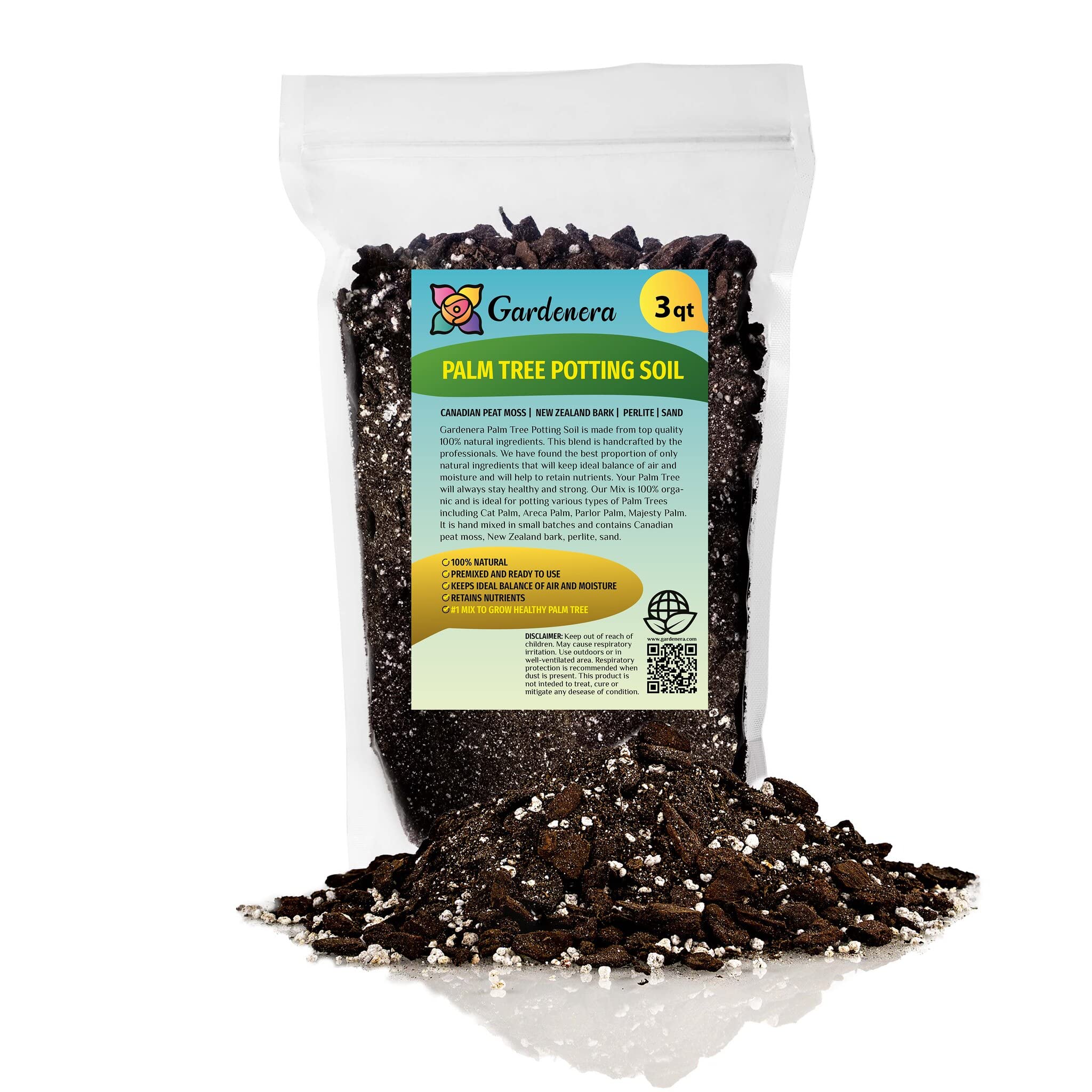
A hand-crafted blend designed specifically for palms, with Canadian peat at its heart.
Unlike general cactus mixes, this one is built from the ground up for palm trees, pairing Canadian peat moss with New Zealand bark, Ukrainian perlite, and sand. That combination strikes a “perfect balance of moisture and drainage” — rich enough in organic matter for roots to thrive, yet loose enough to prevent root rot.
Owner reports show a Bella palm “growing well and seems very happy,” and a sago palm that “was dying before” recovered after the switch. It is also easy to work with — even, clean soil that fills pots neatly without clumping.
The one honest caveat is value: at 3 quarts, this bag holds 2.7x less volume than an 8-quart tropical mix, and the price per quart runs higher. For a single prized palm, that premium buys a tailored recipe; for a whole collection, you will need several bags.
Tailored recipe: the most palm-specific mix here, perfect for one special palm that needs the right balance now.
Budget note: the smaller bag means frequent reordering if you have multiple palms to repot.
4. Pre-Mixed 5in1 Tropical Potting Mix, Drainage & Root Airflow, 8QT | DUSPRO
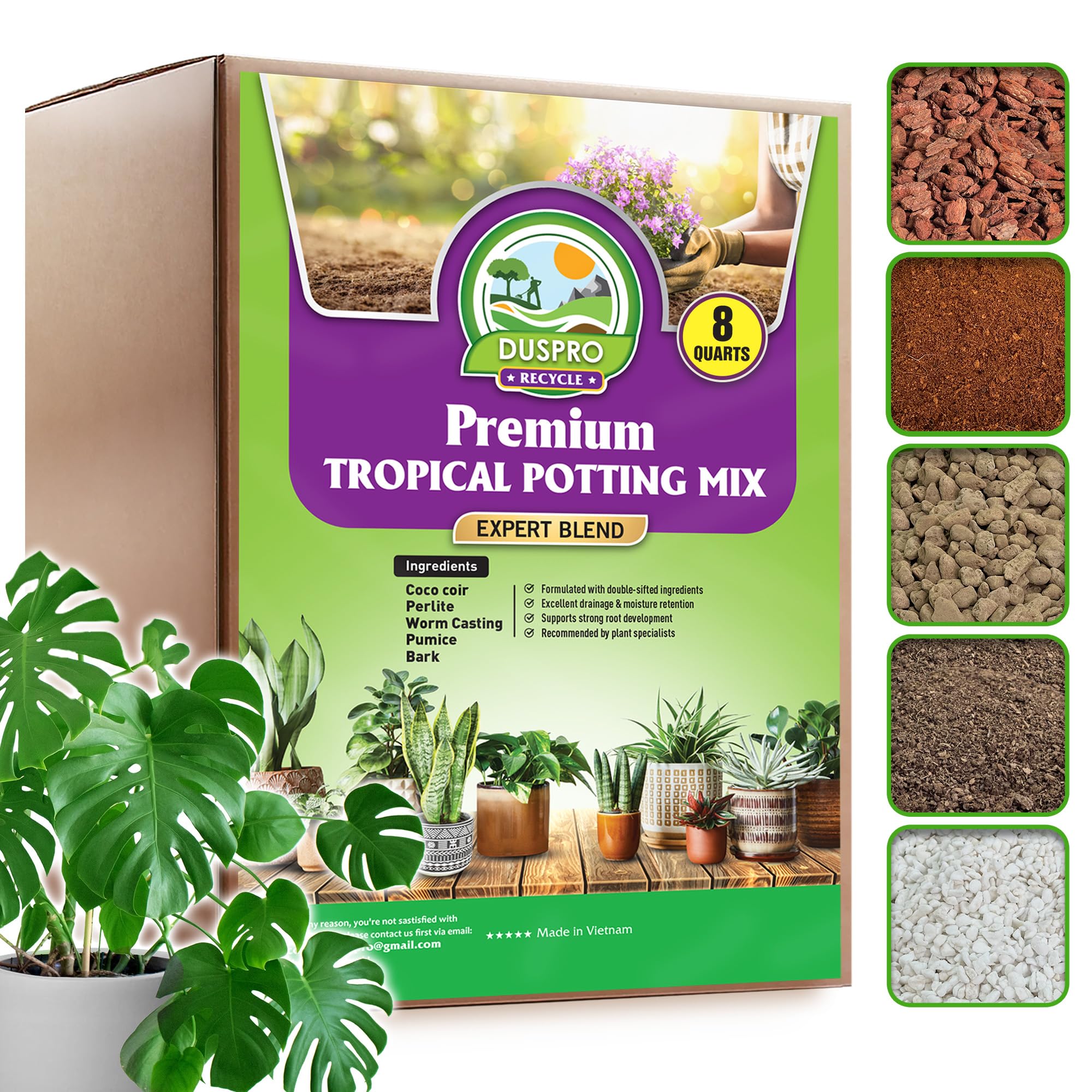
A five-ingredient tropical blend that handles palms, monsteras, and more.
This mix brings together pine bark, coco coir, perlite, worm castings, and pumice — each pulling its own weight. Coco coir holds balanced moisture, perlite opens airflow around roots, pumice speeds drainage, and worm castings add natural nutrients, so palms and their tropical neighbors get a loose, aerated home.
It is pre-mixed and ready to pour, which owners love for busy weekends — one called it “an absolute lifesaver” versus mixing their own. The 8-quart bag fills about two 8-inch pots (roughly 2.7x the volume of a 3-quart specialty bag), and it works across palms, Monstera deliciosa, Pothos, and Philodendron.
The trade-off is texture: a few owners found it dustier than expected, with the fine particles flying around during potting. It drains well once settled — a caladium looked “so much better” three days after repotting — but the dustiness may bother sensitive users.
Why It Wins Fans
- Five ingredients balanced for drainage and airflow
- Pre-mixed and ready to use straight from the bag
- Works for palms plus a wide range of tropical houseplants
The Honest Trade-Off
- A dusty texture that can scatter when pouring
- Opinions split on value — some call it pricey
Best for: a mixed indoor jungle where palms share shelf space with monsteras and philodendrons.
Not ideal if: you hate dusty soil — consider wetting it slightly before handling.
5. LGM Cactus & Succulent Soil Mix, 0.5 Cu Ft | Root Rot Protection, Volcanic Ash, Chicken Manure
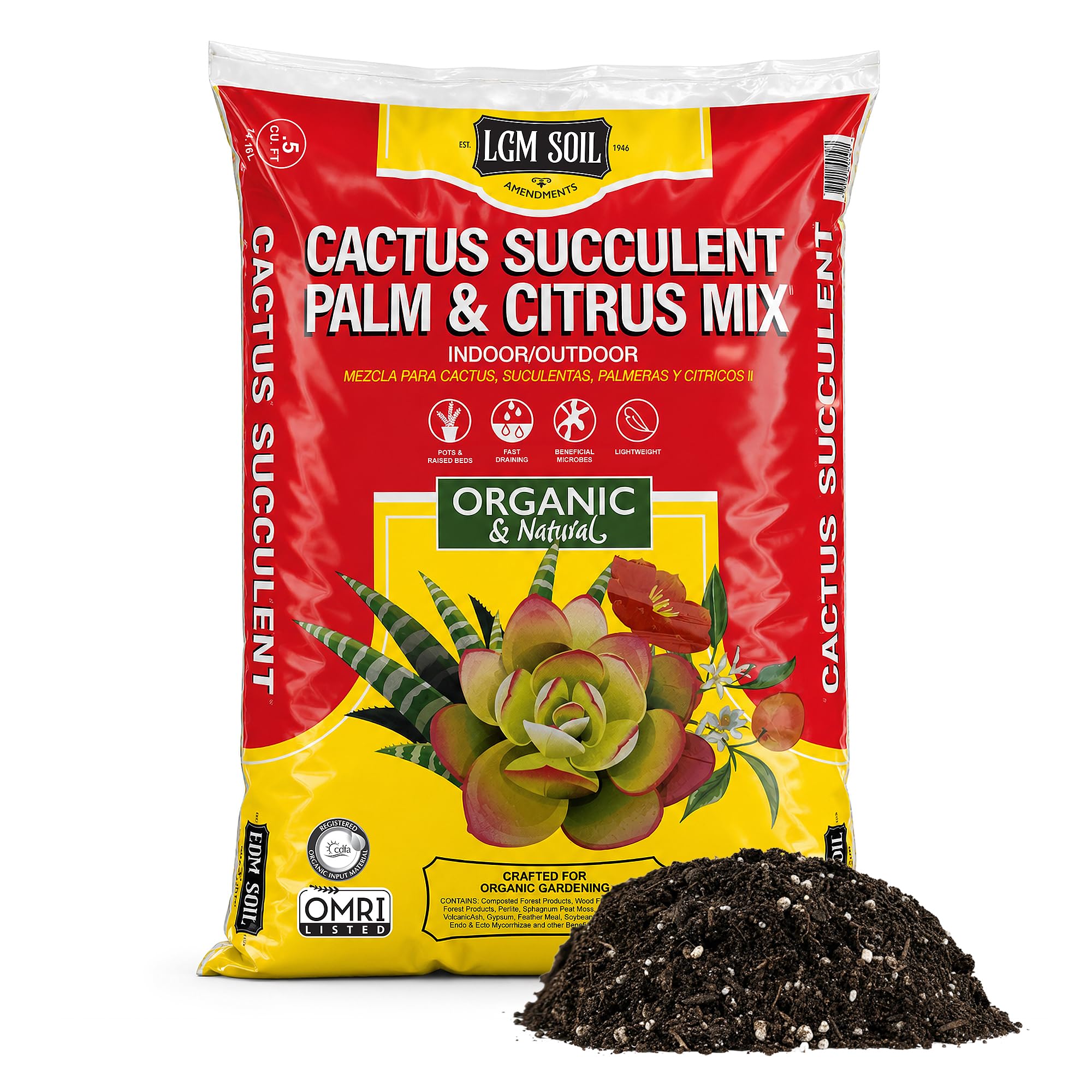
The nutrient-dense bag that feeds palms and cacti for months without extra fertilizer.
Most gritty cactus mixes are nutritionally empty, forcing you to buy separate fertilizer. This one flips that — volcanic ash and porous perlite drain instantly, while chicken manure, kelp meal, and iron sulfate feed plants naturally for months, so palms, citrus, and plumeria that drop leaves in standard soil find a steadier home.
Owners call it well-draining and good-quality, with a cactus “seeming happy” three weeks after planting and succulents thriving. The 0.5-cubic-foot bag (about 15 quarts) is the largest here — roughly 5x the volume of a 3-quart palm mix — making it the best fit for a bigger planter or several pots at once.
There is a texture quirk, though: the mix includes loose sticks and a semi-ground consistency rather than a uniform fine soil, and a lonely one-star note flagged a rare bag with a rotten-egg smell. The recurring praise for quality and drainage outweighs it, but the chunkiness is worth expecting if you prefer a uniform texture.
Superfood approach: the only mix here with built-in slow-release feeding, ideal for plants that skip the fertilizer routine.
Texture note: expect loose sticks and a chunky feel — it drains beautifully but is not fine and fluffy.
Understanding the Specs
Drainage Ingredients
Perlite (white volcanic glass beads), pumice (light porous rock), and sand create air pockets so water flows through fast. This keeps roots from sitting in moisture — the main cause of root rot. The more of these you see near the top of the ingredient list, the faster the mix drains.
Moisture-Holding Ingredients
Peat moss and coco coir (coconut husk fiber) act like sponges, holding water and releasing it slowly to the roots. They also give the mix structure. Blends that pair these with perlite or bark strike the balance palms need — moist but never soggy.
FAQ
Can I use regular potting soil for my palm tree?
How much palm soil do I need for one pot?
What is the difference between cactus soil and palm soil?
How often should I repot my palm tree with fresh soil?
Does palm soil need fertilizer added?
Why does my palm soil smell bad after repotting?
Is organic palm soil better than a synthetic mix?
Can I use aroid or tropical mix for my palm?
Final Thoughts: The Verdict
For most palm owners, the soil for palm trees winner is the Miracle-Gro 3-Pack because it delivers 8 quarts per bag across three bags — the most coverage here — with a proven fast-draining formula that keeps roots healthy. If you want an organic blend, grab the Espoma 2-Pack. And for a single prized palm that deserves a tailored recipe, the Gardenera Palm Mix is the one to reach for.
How We Picked
We do not accept paid placement. Every pick is matched to a real buyer and a real use-case; we do not hands-on test units.
Sources & Methodology
Specifications: manufacturer listings and product documentation. Review insights: verified customer reviews, as of August 2026. Pricing: not shown on this page (it changes often); check the current price via the retailer link.
As an Amazon Associate, Lawn Gear Lab earns from qualifying purchases. This does not affect which products we feature.