
Specs are compiled from manufacturer listings and verified buyer reviews and can change over time — please confirm the key details on the product page before buying.
Peonies are the divas of the spring garden — they demand the right food at the right moment or they reward you with leafy mounds and zero flowers. The single most important thing to know is that peonies need a fertilizer low in nitrogen (the first number) and higher in phosphorus and potassium (the second and third numbers) to push out those dinner-plate blooms. Skip the high-nitrogen lawn food; it grows leaves, not flowers.
I’m Rikta — the founder and writer behind Lawn Gear Lab. This guide is built by comparing the manufacturers’ published specifications and the patterns across verified customer reviews, so you get each pick’s real strengths and trade-offs instead of marketing spin.
To get your peonies off to a strong start this spring, you need a fertilizer that matches their needs—and that means picking the right N-P-K ratio (the three numbers showing nitrogen, phosphorus, and potassium), choosing how fast it releases, and deciding between organic or synthetic. The right choice boosts blooms and root health all season.
Our Picks at a Glance


How To Choose The Best Fertilizer For Peonies In Spring
Peonies are heavy feeders in spring, but they are also sensitive to overfeeding. The goal is to encourage flower bud formation, not leafy growth, so the nutrient balance you pick matters more than the brand name. Here are the three things to weigh before you buy.
Read the N-P-K ratio like a recipe
The three numbers on any fertilizer bag stand for nitrogen, phosphorus, and potassium. For peonies, you want the middle number — phosphorus — to be the highest, because that is what drives flower production. The first number, nitrogen, should be lower, since too much of it creates tall floppy stems and few blooms. A ratio like 10-30-20 or 4-10-10 is built for exactly this job.
Decide between quick-feed and slow-release
Water-soluble powders feed your peonies the moment you water them, which is great for a visible boost in a week or two. Granular and organic options release over weeks or months, so you feed once and let the soil do the work. If you want a single spring application, a slow-release granular like a bulb food is the lower-maintenance route.
Organic vs. synthetic — what changes for you
Organic fertilizers feed the soil microbes and break down gently, which protects delicate peony roots from salt burn. Synthetics deliver nutrients faster and are often more concentrated, meaning a little powder goes further. Both work well for peonies; the choice is about how hands-on you want to be and whether you avoid synthetic chemicals in your garden.
Quick Comparison
| Model | Best For | N-P-K Ratio | Form | Weight | Amazon |
|---|---|---|---|---|---|
| Jack’s Classic Blossom Booster★ Best Overall | Maximizing bloom size and color | 10-30-20 | Powder | 4 lb | Amazon |
| Espoma Bulb-Tone (4 lb)Best Organic Granules | Organic feeding for all bulbs | 3-5-3 | Granules | 4 lb | Amazon |
| Lilly Miller Bulb & BloomBest Value Granular | Slow-release spring/fall feeding | 4-10-10 | Powder | 4 lb | Amazon |
| Cz Garden 4-10-10 | Peonies waking up after transplant | 4-10-10 | Granules | 4 lb | Amazon |
| Scotts Super Bloom | Quick water-soluble feeding | 12-55-6 | Water-soluble | 2.1 lb | Amazon |
| TPS Peony Fertilizer | Container and garden peonies | — | Liquid | 32 fl oz | Amazon |
| Sunday Flower & Rose Mix | OMRI-listed organic feeding | 4-4-6 | Granules | 2 lb (2-pack) | Amazon |
| Espoma Bulb-Tone (18 lb) | Large gardens and yearly repeat buys | 3-5-3 | Granules | 18 lb | Amazon |
| EarthPods Rose & Flower Capsules | No-mess, no-measure feeding | — | Capsules | 100 count | Amazon |
In‑Depth Reviews
1. Jack’s Classic 10-30-20 Blossom Booster Water-Soluble Fertilizer, 4lb
Our pick — over 4.5★ from 5,500+ verified ratings; the strongest balance of quality and price.
The bloom-boosting powder that turns leafy peony mounds into flower factories.
This is the pick for gardeners who want visible results fast, because the 10-30-20 analysis leads with a huge middle number — phosphorus — which is what peonies need to set buds rather than just grow leaves. The water-soluble powder mixes into multiple gallons of liquid fertilizer, so a single 4 lb bag stretches across a whole bed of established plants and new spring shoots alike.
What wins people over here is the quality of the blooms: buyers report visible results in 7-10 days, with abundant blooms and healthier growth. The included measuring spoon takes the guesswork out of mixing, which matters when you are feeding a diva plant that punishes overfeeding. The added micronutrients mean you do not need a second product for trace elements.
The honest trade-off is that this is a synthetic, non-organic option, and the label carries a warning about toxicity to grazing animals like goats and cows. If you compost your peony trimmings and reuse that soil for vegetables, that is worth thinking about. But for sheer flower power in the spring border, this is the crowd favorite — 4.8 stars across 5,500+ ratings, with quality and effectiveness the most-praised aspects by a wide margin.
Why it earns the top spot
- Phosphorus-heavy 10-30-20 ratio targets flower production, not leafy growth
- Water-soluble powder feeds roots or leaves with one mixing
- Included spoon and micronutrients simplify the whole routine
Who should look elsewhere
- Synthetic formula, so organic-only gardeners will want a different bag
- Label warns it is toxic to ruminants — keep away from grazing animals
Reach for this if: you want a fast, dramatic bloom response from a proven phosphorus-boosting formula.
Look elsewhere if: you run a strictly organic garden or share space with grazing livestock.
2. Espoma Organic Bulb-Tone 3-5-3 Natural & Organic Fertilizer, 4 lb
The gentle organic granules that feed spring bulbs without a single harsh salt.
If you grow organically, this is the spring staple to keep on the shelf. The 3-5-3 analysis is low in nitrogen, so it will not push your peonies into soft leafy growth, and it carries 6% calcium to strengthen cell walls — which translates to sturdier stems holding those heavy blooms upright. It is a registered Organic Input Material, so it meets organic production requirements.
The application could not be simpler: sprinkle it on the soil surface around established plants and water in, no mixing required. Owners mention healthy, fast-growing bulbs and large blooms on daffodils, with the same care extending to tulips, crocus, and hyacinths — and lilies in spring. The reusable 4 lb bag is ready to use straight out of the package.
The recurring gripe is the smell — this is a natural, organic product, and several owners describe the odor as overwhelming. It is the price you pay for skipping synthetic chemicals, and it fades after watering. The quality and effectiveness are the most-praised aspects, and the brand has been making natural organics since 1929, so this is a well-worn path.
What owners love
- OMRI-registered organic formula with no sludges or toxic ingredients
- 6% calcium supports strong stems for heavy peony blooms
- No mixing — sprinkle and water in
The honest catch
- Natural ingredients mean a strong odor that some find unpleasant
- Granular release is slower — not for instant results
Your move if: you want certified-organic feeding that is gentle on roots and soil microbes.
Think twice if: you are sensitive to earthy fertilizer smells or need a quick bloom kick.
3. Lilly Miller Bulb & Bloom Food 4-10-10, 4 lb
A phosphorus-and-potassium powerhouse built for bright, vigorous spring blooms.
This one is aimed squarely at the bloom, not the bush: the 4-10-10 mix pairs a strong phosphorus number with an even stronger potassium number, and the combination is what gives bright, vigorous blooms. It is a slow-release feed, so one spring application keeps working for weeks — exactly the low-maintenance rhythm most peony beds need.
Gardeners pick this for peonies, clematis, and lilies because a dedicated bulb food is tough to find in local stores. Customers note the 4-10-10 granular (low nitrogen, high phosphorus for blooms) feeds reliably in both spring and fall in zone 6. The resealable bag keeps the powder dry between uses, and the mild smell is a relief compared to some organic options.
The catch is practical, not nutritional: the formula uses bone meal, which can attract pets and rodents to the garden. If you have digging dogs or a busy rodent population, store the bag securely and work the granules into the soil. Effectiveness is the most-praised aspect, and owners specifically call out the mass of flowers it produces on dahlias.
A steady performer: slow-release 4-10-10 feeding that owners trust for peonies, lilies, and clematis in spring and fall.
One warning: bone meal in the mix can draw curious pets and rodents, so bury it well.
4. Cz Garden 4-10-10 Bulb and Bloom Fertilizer, 4 lb

The low-nitrogen granular that wakes up transplanted peonies that refuse to bloom.
This is the specialist’s choice for the most frustrating peony problem: a plant that grew for years but never flowered. The 4-10-10 ratio is low in nitrogen by design, which pushes energy into bud formation, and the added 2% iron plus micronutrients green up the foliage without forcing soft growth. Reviewers point out that transplanted peonies — two years settled but bloomless — came back taller, fuller, and loaded with buds after one feeding.
The 4 lb heavy-duty resealable pouch is made for easy pouring and storage, and the granules work across flower beds, lawns, and vegetable gardens. It is a Made-in-USA product from Cz Garden Supply, and the low-nitrogen approach is praised for working on dahlias and perennials in pots as well as in-ground peonies.
The only hesitation in the reviews is timing — one owner notes they will not know the full effect until next spring. That is the nature of granular feeding: it is a season-long partnership, not a quick fix. Effectiveness is the most-praised aspect, and the bloom growth response shows up as the second most-discussed win.
Built for stubborn plants: low nitrogen plus 2% iron targets the peony that grows but never flowers.
Patience required: granular feeding rewards over the season, not overnight.
5. Scotts Super Bloom Water Soluble Plant Food, 2 lbs
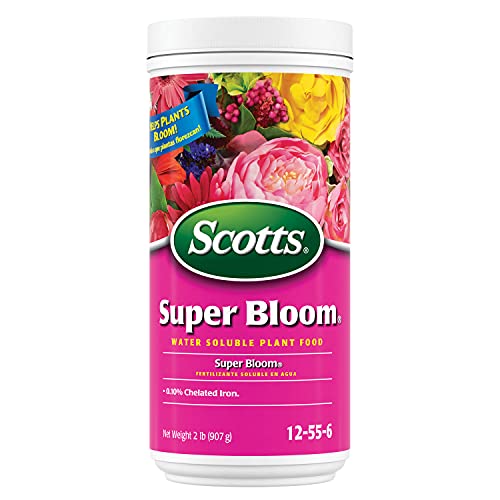
A phosphorus bomb at 12-55-6 that feeds plants the moment water hits the soil.
If you want the most aggressive bloom ratio on this list, here it is: the 12-55-6 NPK delivers a massive phosphorus punch to trigger flowering, and because it is water-soluble, the nutrients reach the roots instantly. Owners describe potted plants blooming within days and roses exploding with large, tall flowers shortly after feeding. It is built for outdoor flowers, fruiting plants, containers, and bed areas.
The feeding rhythm is simple — every 1-2 weeks for best results — and the canister is convenient and mess-free. A tiny amount goes a long way: owners note one container lasts an entire summer for several patio plants. The formula is designed not to burn your plants when used as directed, which takes the fear out of a 55-phosphorus mix.
The most-discussed negative is the seal under the lid, with some owners reporting it arrives not properly sealed — a storage hassle, not a plant problem. Blooms are the most-praised aspect by far, with owners noting plants burst with flowers all season and that it works well in indoor orchids too.
Where it shines
- Extreme 12-55-6 phosphorus ratio for maximum flower output
- Water-soluble formula feeds the moment you water
- One canister lasts a whole season for several plants
Where it stumbles
- Some units arrive with a poorly sealed lid
- High strength demands careful measuring to avoid overfeeding
Pick this for: the fastest, most dramatic bloom response when you need flowers now.
Skip if: you prefer gentle organic feeding or dislike measuring water-soluble mixes.
6. TPS Peony Fertilizer – Liquid Plant Food, 32 oz
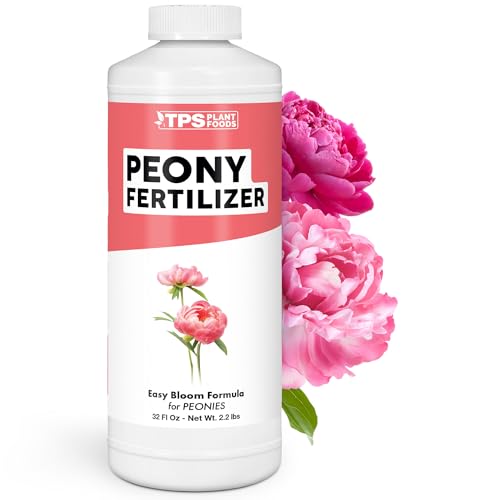
The only peony-specific liquid on the list, tuned for sturdy stems and healthy roots.
This is the rare fertilizer formulated for peonies and nothing else, which means the nutrient balance is designed around the exact challenge of this plant: supporting strong stems, healthy foliage, and improved flower development. As a 32 oz liquid, it is ready to pour and works equally well in outdoor garden beds and potted peonies — a flexibility the granular options cannot match.
Owners describe a peony bush that produced a single flower for years doubling in size and setting many buds after one season of feeding. The formula provides balanced nutrition without overfeeding or stressing peony root systems, which is the gentle touch container plants especially need. It is Made in the USA.
But the reviews show it works: shoppers say more blooms than ever after applying twice, two weeks apart, before budding.
Purpose-built: a peony-specific liquid that targets stems, roots, and bloom development in one pour.
Best for: a handful of prized plants, especially in containers, where granular feeding is awkward.
7. Sunday Flower and Rose Garden Naturals Plant Food Mix, 2 Pack
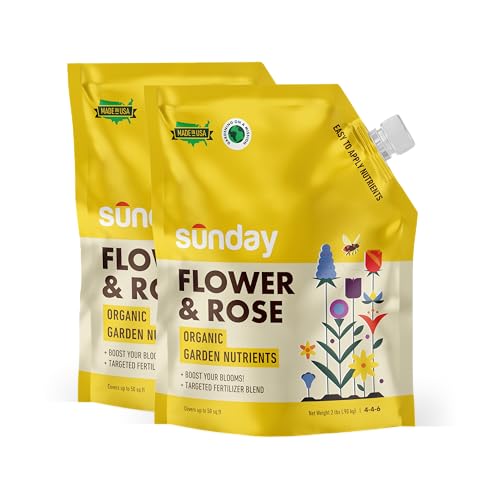
A premium organic blend that feeds soil life while your peonies drink it in.
Sunday built its name on premium lawn care, and this flower mix brings that same approach to your borders. The 4-4-6 NPK is balanced and gentle, and the ingredient list reads like a soil recipe: soy protein, composted turkey litter, and feather meal. It is OMRI-listed for organic gardening, so it earns its place in a chemical-free bed.
The application is a simple sprinkle-and-water top dressing, which one 73-year-old owner specifically praised for being easy on older gardeners. Buyers report it helping hostas bloom and giving plants a clear extra boost on raised beds, deck gardens, and window boxes. The two-pack of 2 lb bags lasts a full season for many gardens.
It also builds organic matter and supports soil microbes, which is the long-game approach to a thriving peony bed. The composted ingredients work well with compost or worm castings for an even richer result.
The appeal
- OMRI-listed organic formula with soy protein and feather meal
- Easy sprinkle-and-water application, no measuring
- Supports soil microbes and builds organic matter
The limit
- Balanced 4-4-6 ratio is not a targeted bloom booster
- Organic breakdown is slower than water-soluble feeds
Choose this for: an organic, soil-first approach that improves your whole garden over time.
Pass if: you want maximum bloom size from a phosphorus-heavy formula.
8. Espoma Organic Bulb-Tone 3-5-3, 18 lb Bag

The same trusted organic bulb food, scaled up for serious peony borders.
This is the 18 lb version of the Espoma Bulb-Tone that took the second spot, and it exists for one reason: if you feed a whole garden, the 4 lb bag runs out fast. The 3-5-3 analysis with 6% calcium is identical, and it carries the same OMRI-registered organic credentials and no-mixing application. For a large peony bed plus tulips, daffodils, and lilies, this is the economical way to buy.
Owners mention it as a kick-starter for bulbs that had not bloomed in three years, and one noted their irises produced first-time blooms after feeding as directed. The brand has been making natural organics since 1929, which is a long track record of consistent results. It is ready to use with no mixing, and the value for money on the larger bag is the second most-praised aspect.
The recurring negative is the smell — organic ingredients like bone meal and feather meal are not exactly subtle, and several owners describe it as strong. The consensus is that it is worth it for the results. One owner wisely suggests tracking the price, since it tends to fluctuate.
The bulk buy: identical trusted organic formula in an 18 lb bag for large gardens and repeat feeding.
Know before you open: the natural ingredients carry a strong odor that fades after watering.
9. EarthPods Organic Rose & Flower Fertilizer Spikes, 100 Capsules
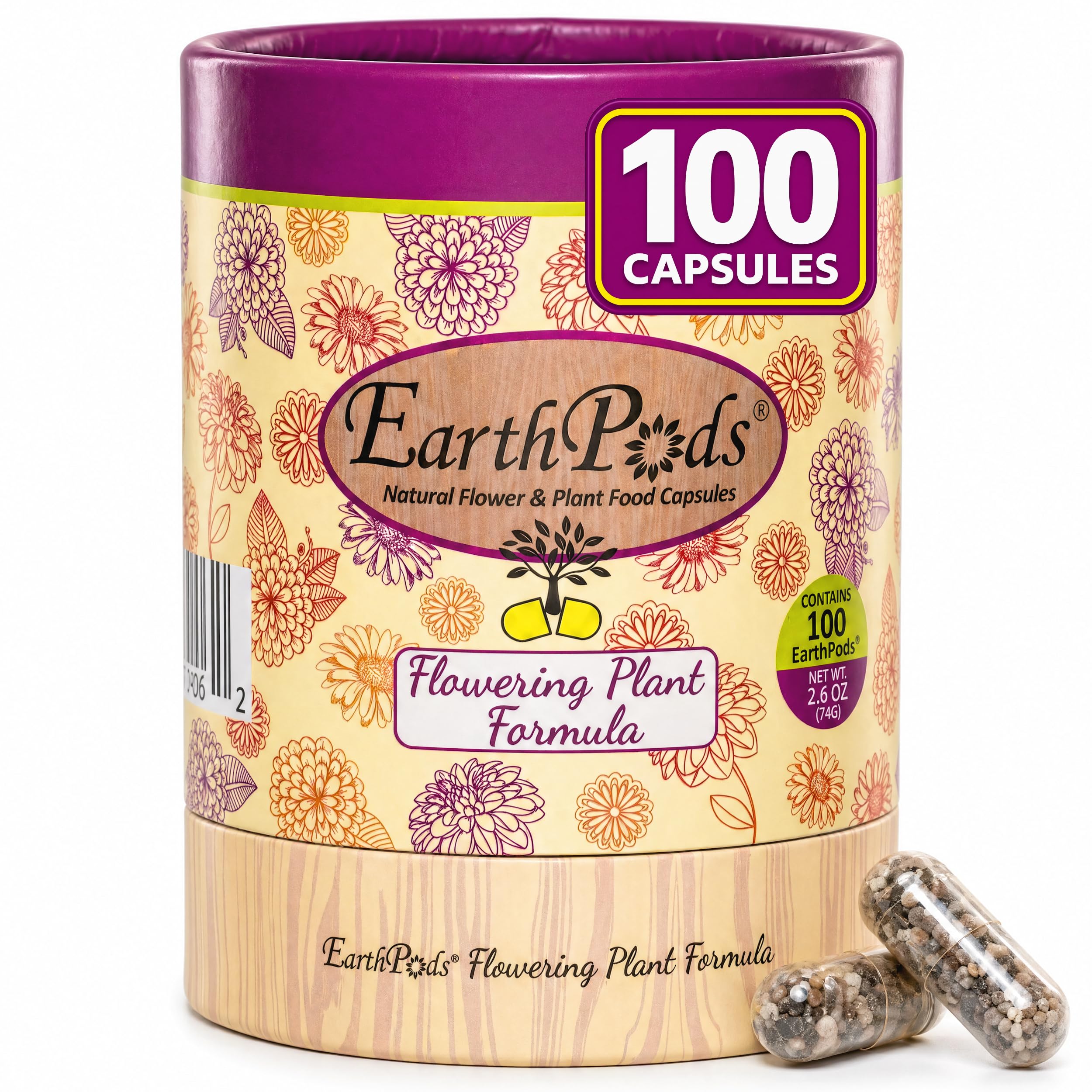
Push-in fertilizer capsules that feed a peony in five seconds with zero mess.
This is the convenience king of the list: instead of measuring powder or sprinkling granules, you push capsules into the soil near the base and water as usual. No measuring, no mixing, no smell — and each tube holds 100 capsules for up to 100 individual feedings. Use 1-2 capsules for small pots, 2-4 for medium, and 4-8 for large shrubs, every 2-3 weeks in the growing season.
The formula is fully organic, built from worm castings, humic acids, kelp, rock minerals, and beneficial soil biology, and it is made in the USA in small batches. It covers the whole flower garden — roses, peonies, dahlias, tulips, daffodils, and spring bulbs — in pots, beds, and borders. Owners describe it as wonderfully easy to use, and senior gardeners specifically praise how simple it is.
The honest negatives are cost and instructions. A 100-count tube is a real investment next to a 4 lb bag of powder, and owners note the dosage instructions are vague. Results are also less dramatic for some — one owner saw better results with a different brand. But for indoor flowering plants, violets that refuse to bloom, and anyone who hates handling fertilizer, the ease of use — the most-praised aspect by far — makes this a genuinely different way to feed.
Why it stands apart
- Push-in capsules feed in five seconds with no measuring or mess
- Vegan, organic formula with worm castings and kelp
- Gentle — no harsh salts, won’t burn roots when used as directed
Consider the cost
- Premium price per feeding compared to powder or granules
- Dosage guidance is vague and some owners saw slower results
Best for: gardeners who want the easiest possible feeding routine and prize convenience over cost.
Not for: anyone feeding a large border on a budget, where bulk granular is more sensible.
Understanding the Specs
N-P-K Ratio — the first thing to check
Every fertilizer label shows three numbers: nitrogen, phosphorus, and potassium. For peonies, the middle number (phosphorus) should be the star because it drives bud and flower formation. A low first number (nitrogen) prevents tall, floppy stems with few blooms. Ratios like 10-30-20 or 4-10-10 are built to prioritize flowers over foliage.
Water-Soluble vs. Granular vs. Liquid
Water-soluble powders feed the moment you water — fast results, but you reapply every couple of weeks. Granular options release slowly over weeks or months, so one spring application covers the season. Liquids are ready to pour and suit container plants best. Capsules offer the easiest push-and-water routine but cost more per feeding.
FAQ
When exactly should I fertilize peonies in spring?
What N-P-K ratio is best for peony blooms?
Can I use regular lawn fertilizer on my peonies?
Is organic or synthetic fertilizer better for peonies?
How often should I feed peonies in the growing season?
Will fertilizer help a peony that has never bloomed?
Can I fertilize peonies growing in containers?
Why does some organic fertilizer smell so strong?
Are fertilizer capsules or spikes safe around pets?
How much fertilizer does a single peony plant need?
Final Thoughts: The Verdict
For most gardeners, the fertilizer for peonies in spring winner is the Jack’s Classic Blossom Booster because its 10-30-20 ratio (high phosphorus for flowers) delivers visible, abundant blooms within a week or two, and one 4 lb bag covers a whole bed. If you want certified-organic feeding that is gentle on roots, grab the Espoma Bulb-Tone. And for a peony that refuses to flower or for container plants, the Cz Garden 4-10-10 or the push-in EarthPods capsules are the ones to reach for.
How We Picked
We do not accept paid placement. Every pick is matched to a real buyer and a real use-case; we do not hands-on test units.
Sources & Methodology
Specifications: manufacturer listings and product documentation. Review insights: verified customer reviews, as of August 2026. Pricing: not shown on this page (it changes often); check the current price via the retailer link.
As an Amazon Associate, Lawn Gear Lab earns from qualifying purchases. This does not affect which products we feature.