
Specs are compiled from manufacturer listings and verified buyer reviews and can change over time — please confirm the key details on the product page before buying.
The quickest way to kill a bonsai is to drown it in the wrong soil. A cactus mix that holds too much water turns your tree’s roots to mush, and the fix is choosing a gritty blend that drains in seconds. This guide compares nine mixes so you can match drainage to your watering habits and tree type.
I’m Rikta — the founder and writer behind Lawn Gear Lab. This guide is built by comparing the manufacturers’ published specifications and the patterns across verified customer reviews, so you get each pick’s real strengths and trade-offs instead of marketing spin.
Finding the right cactus mix for bonsai means balancing drainage with just enough moisture retention, and these nine picks show exactly how that balance plays out.
Our Picks at a Glance


How To Choose The Best Cactus Mix For Bonsai
Tiny pots leave bonsai roots vulnerable to waterlogging, so fast drainage is critical. Chunky particles in a cactus mix let water escape quickly and air reach the roots. A gritty mix drains in seconds, protecting roots from rot even if you over-water.
Match the mix to your watering habits
If you tend to over-water, a soilless gritty blend is your safety net. These mixes make it nearly impossible to soak your roots by accident. If you are away often and want soil that holds moisture longer, look for a blend with organic matter like forest humus to slow the drying.
Decide between ready soil and raw rocks
Some bags come pre-mixed and ready to pour straight into your pot. Others are pure lava rock or pumice that you blend with your own soil at a ratio like 20%. Ready mixes save time; raw rocks give you total control and often cover far more pots per bag.
Check the particle size before buying
Particles around 1/4 inch, or roughly 5-8 mm, strike the best balance for bonsai. That size keeps water flowing while still supporting the tree’s roots. Smaller grains pack too tight; bigger rocks leave roots with nothing to grip.
Quick Comparison
| Model | Best For | Volume | Primary Material | Key Feature | Amazon |
|---|---|---|---|---|---|
| Bonsai Jack #221★ Best Overall | All-around reliability | 2 Quarts | Organic screened mix | Optimal pH 6.4 | Amazon |
| Harris All PurposeTop Performer | Seed starting | 2 Quarts | Pumice & clay blend | Forest humus & basalt | Amazon |
| Hoffman 10708Best Value | Beginners | 2 Quarts | Soil & stone mix | Color-change indicator | Amazon |
| CJGQ 7lb Lava Mix | Colorful top dressing | 7 Liters | Lava & mineral stones | 5 stone types | Amazon |
| OUPENG 9.7lb Mix | Big repotting jobs | 9.7 Liters | Volcanic rock | Faster draining blend | Amazon |
| TOPZEA 12lb Mix | Versatile DIY use | 12 lbs | Volcanic & zeolite | Commercial grade | Amazon |
| FANTIAN 10lbs | Sifted particle size | 10 lbs | Lava & maifanitum | 5-8 mm sifted size | Amazon |
| BIOMAND 18LB | Bulk mixing on a budget | 18 lbs | Volcanic rock | 3/8 inch pre-washed | Amazon |
| Molly’s Gritty Blend | Premium soilless growing | 5 Dry Quarts | Akadama, pumice & lava | Soil-free & gnat-resistant | Amazon |
In‑Depth Reviews
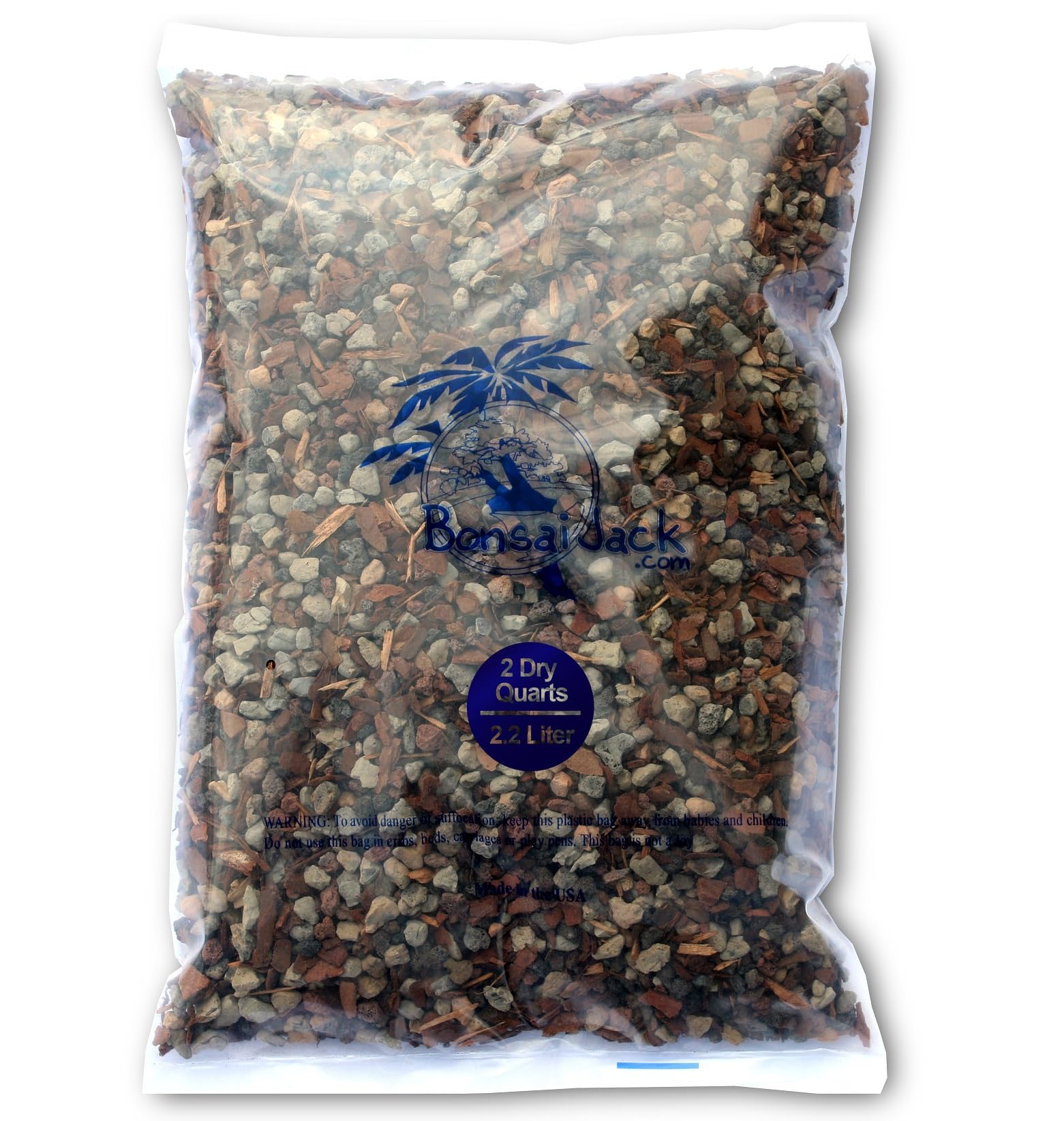
1. Bonsai Jack Universal Organic Bonsai Soil Mix #221
Our pick — over 4.5★ from 750+ verified ratings; the strongest balance of quality and price.
The crowd favorite that holds its structure season after season
What wins people over here is consistent quality — the single most-praised trait, with buyers calling out the perfect pebble size for succulents and cacti. This 2-quart bag arrives screened and pre-washed, so you can pour it straight into a pot without sifting out dust or debris. It is ready to use for most bonsai trees, including tropicals.
The mix holds an optimal pH of 6.4, which keeps nutrients available to your tree without you having to test and adjust the soil yourself. Water retention draws mixed opinions, though: most growers find the drainage excellent for preventing root rot, while a few say it dries out faster than they would like in full sun.
Buyers report the same soil “hasnt broken down significantly and holds enough water to keep my tree healthy in full sun,” holding up for years where cheaper akadama alternatives collapse. For everyday growing, this is the dependable pick, though refinement-stage trees may need a finer blend.
The reasons it wins
- Pre-washed and screened, so it is ready to use immediately
- Optimal pH of 6.4 for steady nutrient availability
- Holds structure for years without breaking down
- Well over a hundred thousand bags sold from a proven supplier
Who might skip it
- Water retention is mixed, so fast-drying pots need more frequent watering
- Not ideal for a mature tree in refinement needing tighter root growth
Reach for this if: you want a proven, no-fuss mix that protects roots from rot and lasts for years.
Look elsewhere if: you need a soil that holds moisture for long stretches between waterings.
2. Harris Bonsai Soil, All Purpose Premium Blend
The seed-starter that turned December sowings into spring sprouts
Your cuttings and seedlings get a better start because this mix holds moisture longer than a pure rocky one. Harris blends forest humus, pumice, calcined clay, organic amendments, basalt rock dust and lime into a 2-quart bag that suits juniper, pine, ficus, fir and more. Owners mention sowing 4 different bonsai seeds in December and watching 3 sprout after moving them into this soil.
What stands out is the effectiveness with young plants: one report notes needing to wet the soil only once a week in winter, proof that the moisture retention holds without turning swampy. Quality is the most-mentioned positive, with even a 15-year DIY soil maker admitting a good bag like this is hard to find.
The honest caveat is value — owners consistently call it expensive for the 2-quart size, and tree health feedback is mixed once plants mature. If you are starting seeds or nursing cuttings, this is your pick; if you repot a large collection regularly, the cost adds up fast.
Best for young growth: Cuttings and seedlings root reliably here, with moisture that lasts a full week in winter.
The catch: The premium price and mixed mature-tree performance make it a starter bag, not a bulk buy.
3. Hoffman 10708 Bonsai Soil Mix
The beginner-friendly bag with a built-in watering cue
Hoffman’s 2-quart mix is professionally formulated for evergreens and other bonsai, and it earns its reputation on quality — the most-praised trait by a wide margin, with root growth called “astonishing” after repotting. It arrives pre-mixed and ready to use, so there is no measuring or blending on your first repot.
Owners do note the resealable bag can tear if shipped with hard packages, and some find it pricey for the size. It offers the best balance of price, guidance, and performance for beginners.
Why beginners love it
- Color-change indicator removes watering guesswork
- Strong root growth reported after repotting
- Pre-mixed and ready straight from the bag
Before you buy
- Bag can tear during shipping and spill soil
- Value is mixed — some owners call it pricey
Choose it for: a guided first repot where the soil tells you when to water next.
Think twice if: you plan to repot many trees and need a bigger, cheaper volume.
4. CJGQ 7lb Mix Lava Rocks for Plants

The colorful topper that turns a plain pot into a centerpiece
This 7-pound bag mixes red lava rock, black lava rock, maifanitum and green mineral stones into a striking multi-color blend. It drains so well it prevents root rot and overwatering, which is exactly what succulents and cactus need, and the plant compatibility earns the most praise of any trait.
Semi-hydro growers love it — reviewers point out blending it with pumice and leca balls to create a moisture-perfect mix for alocasias. The five-stone blend neutralizes pH and adds trace minerals for healthier growth.
The recurring gripe is dustiness, with some bags arriving so dusty they need soaking and cleaning before use. One buyer notes the dust “goes away after first watering,” and a few call it pricey, but the beauty and drainage keep people coming back.
Form meets function: Multi-color stones that drain hard and prevent rot while dressing up the pot.
One honest note: Rinse before you pot — the dust bothers some owners more than others.
5. OUPENG 9.7lb Horticultural Lava Rock Pebbles

The fast-draining blend that shines when wet
OUPENG’s 9.7-pound bag of volcanic rock delivers faster drainage than most, with the porous lava structure letting water run through while holding just enough moisture. It is pre-washed with no artificial fillers or colors, and the quality earns the most praise — shoppers say “the soil was excellent” for terrarium succulents.
You can tell when to water just by looking: the stones change color between dry and wet, and owners note they “look amazing both wet and dry.” The 9.7-liter volume covers larger pots comfortably, and the resealable bag lets you take only what you need and store the rest.
The catch is dust: the seller warns to wash the stones 2-3 times before first use, and buyers echo that the powder needs rinsing away. Some also find the price high compared with fish-tank alternatives, but the drainage and looks keep it a repeat purchase.
The strengths
- Excellent drainage that prevents root rot
- Multi-color stones look great wet and dry
- Generous 9.7 liters for multiple pots
- Pre-washed with no dyes or chemicals
The trade-offs
- Requires 2-3 rinses to remove surface powder
- Some owners call it pricey for what you get
Grab it for: a bulk mix that covers several pots and looks vivid after a watering.
skip it if: you want stones ready to use with zero rinsing effort.
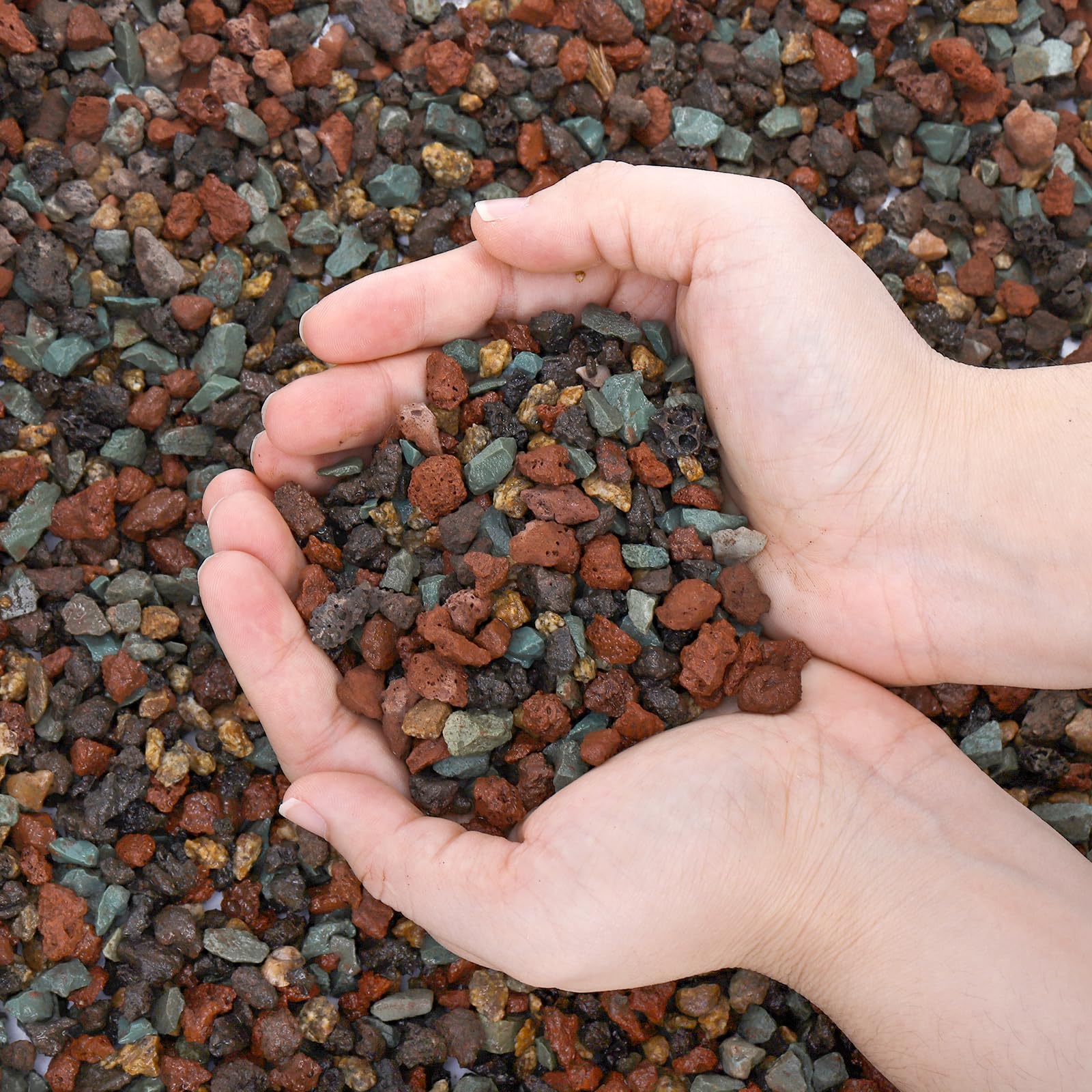
6. TOPZEA 12lb Mix Lava Rocks Pebbles
The 12-pound workhorse for DIY soil builders
TOPZEA’s commercial-grade 12-pound bag blends black volcanic rock, red volcanic rock, green zeolite and maifan stone into a versatile additive for orchids, succulents, cacti and bonsai. Porous stones drain fast while retaining a little moisture for the plant.
Versatility is the most-praised trait, and DIY pon builders are the loudest fans — buyers report making their own semi-hydro mix for alocasias and swearing they will keep buying it. The 12-pound volume at a commercial grade means serious value for money, with one buyer noting it is “perfect for bonsai substrate.”
Dust is the split decision: some find the rocks “arrived clean and ready to use,” while others say they need a rinse. Either way, watering or rinsing makes the colors brighter, and the resealable packaging keeps the rest fresh.
The all-rounder: Big volume, commercial grade and a four-mineral mix that suits every potted plant you own.
Fair warning: Dust levels vary bag to bag, so budget a minute to rinse before potting.
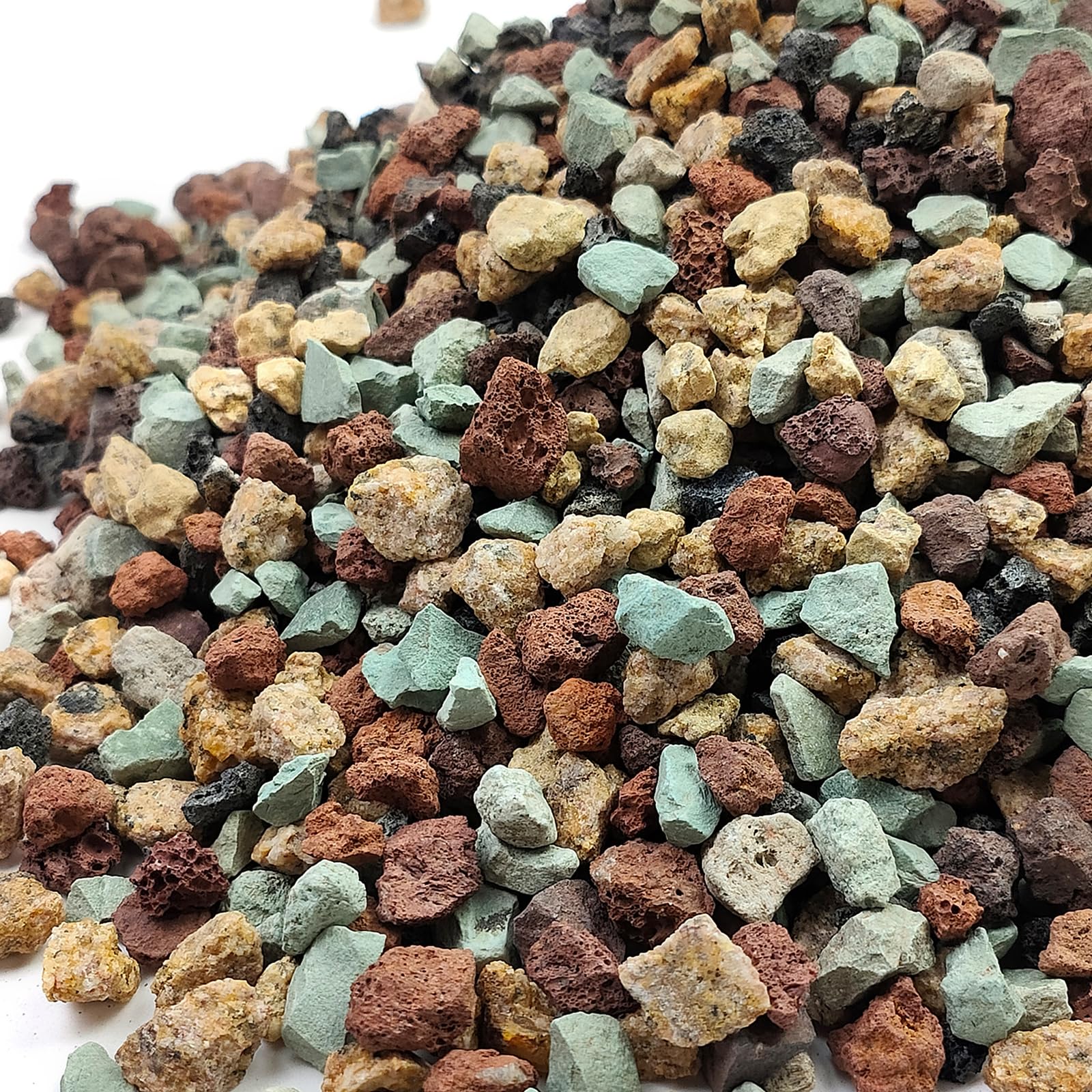
7. FANTIAN Succulent Cactus Soil Potting Mix, 10 lbs
The precisely sifted gravel that keeps fungus gnats away
FANTIAN sifts its 10-pound mix of lava stone, maifanitum and green zeolite to a consistent 1/4 inch, or about 5-8 mm, particle size. That uniformity is the seller’s promise, and the consistency earns strong praise — one buyer notes an 8-quart portion is enough for 3 plants, with rocks that are “small and unobtrusive.”
The mix works as a soil amendment, a bottom layer in pots without drainage holes, or a decorative topper. Owners mention a second purchase where the Haworthia thrived for 9 months and the gravel “keeps gnats away,” a real perk for indoor growers fighting pests.
The honest notes: some bags arrive slightly dusty from transit, and the particle size draws mixed opinions depending on your plant’s root depth. A few owners also feel it is a tad overpriced, one noting fish-tank rocks come cheaper — but the quality and ventilation keep it a repeat buy.
What makes it stand out
- Consistent 5-8 mm sifted particle size
- Helps keep fungus gnats away indoors
- Works as soil mix, pot bottom or topper
- 10 pounds covers three or more pots
What to weigh
- Slightly dusty in the bag after shipping
- Price is higher than bulk fish-tank rocks
- Particle size may not suit every root system
Pick it for: a uniform, sifted gravel that doubles as pest control in indoor setups.
Pass if: you are mixing large batches and want the cheapest per-pound option.
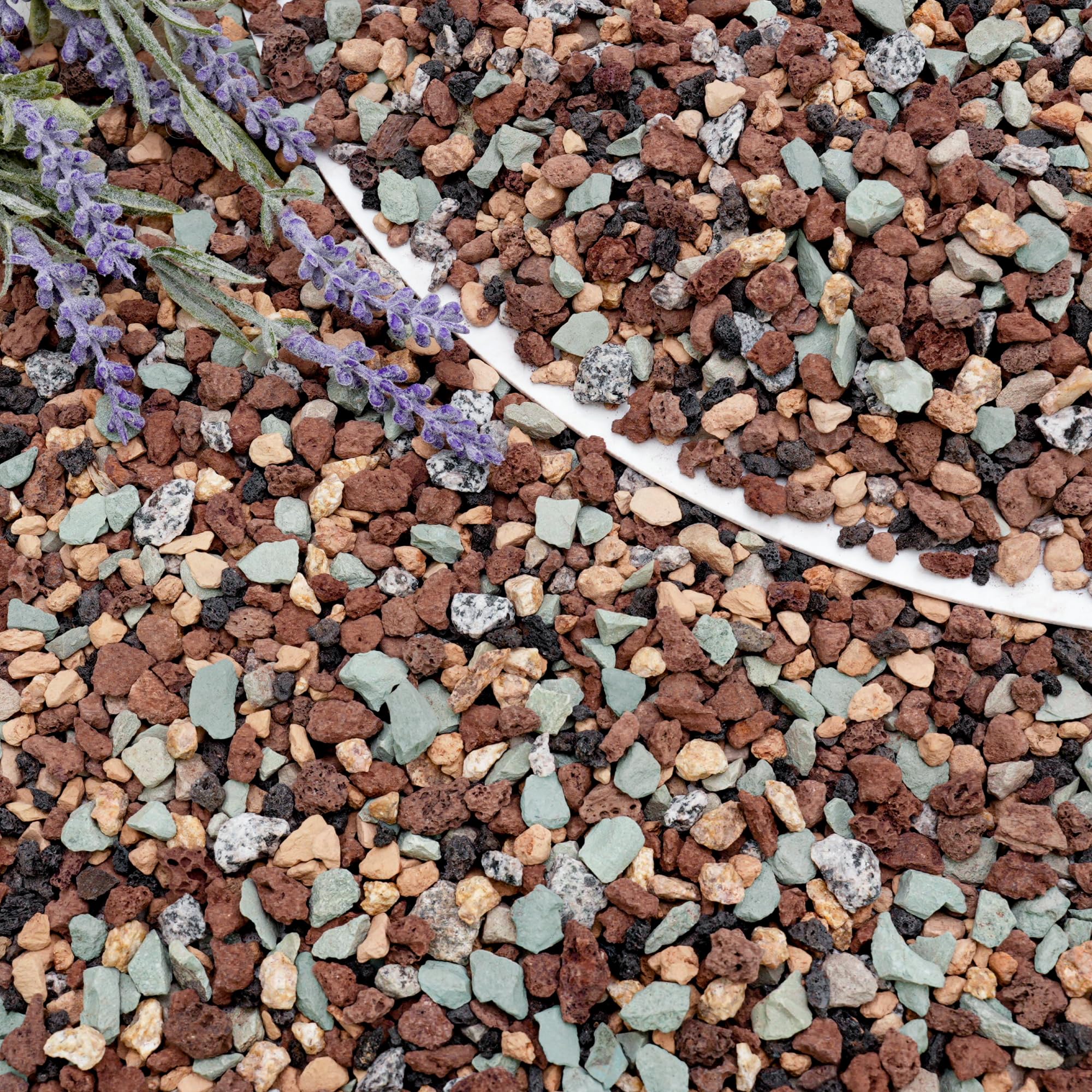
8. BIOMAND 18LB Lava Rocks for Plants
The bulk bag that makes premium bonsai soil on a budget
BIOMAND’s 18-pound bag of 3/8 inch volcanic rock gives you the most material per dollar in this lineup. The rocks are pre-washed to minimize dust and sorted for porosity, so water flows fast and oxygen reaches the roots — a combo that prevents rot in succulents, orchids and cacti.
A buyer mixing their own bonsai soil confirms the value: “Great bargan by buying this in bulk it cuts the cost when mixing with other soils,” blending it with two other ingredients. Semi-hydro growers also call it a better, chunkier alternative to trendy pon brands, with more aeration at the root zone.
At 18 pounds, this is the pick for gardeners who repot often or want to layer it at pot bottoms using the recommended 20% soil ratio. The dust is minimal after pre-washing, and the stones stay intact season after season as a reusable medium.
Bulk without the bulk price: 18 pounds of reusable rock that mixes into every pot you own.
Who it is not for: Anyone needing a small, ready-to-pour bag rather than a large additive.
9. Molly’s Succulent Potting Mix, Cactus and Bonsai Gritty Blend
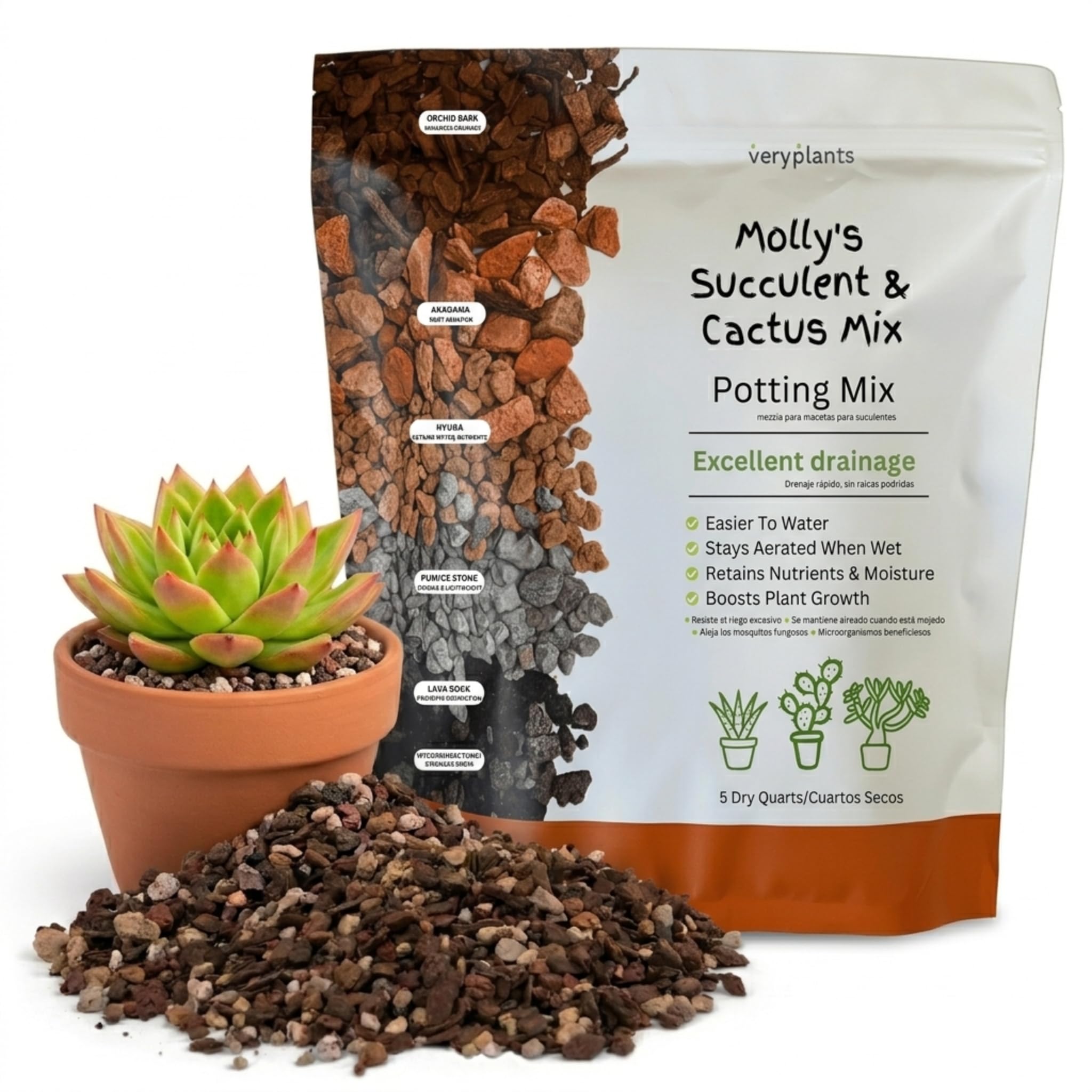
The soilless rescue blend that saved 13 of 15 dying succulents
Molly’s 5 dry-quart blend skips soil entirely, mixing orchid bark, hyuga, pumice, black lava, red lava and akadama into a chunky, gnat-resistant medium. Because there is no soil, there is no smell and no fungus gnat breeding ground — a cleaner way to grow indoors that owners swear by.
Plant suitability is the most-praised trait, and the rescue story is the proof: after a name-brand mix gave 15 succulents root rot, this blend saved 13 of them. It drains so freely it is “nearly impossible to over-water” while still holding moisture, and the mycorrhizae strengthen root systems to help with nutrient absorption.
The price is the sticking point — owners call it expensive, though repeat customers note “definitely worth it.” The 5 dry-quart volume suits a modest collection, and the resealable, recyclable bag keeps the mix fresh between uses. If your plants are drowning in traditional soil, this is the clean break you need.
The premium payoff
- Soil-free mix resists gnats and smells
- Akadama, pumice and lava for serious drainage
- Mycorrhizae support strong root systems
- Nearly impossible to over-water your plants
The honest cost
- Expensive compared to soil-based mixes
- Smaller 5-quart volume for the price
Splurge on it for: rescuing over-watered plants and keeping a clean, gnat-free indoor space.
pass on it if: you need a budget bag to cover a large bonsai collection.
Understanding the Specs
Drainage & Aeration
Drainage is how fast water runs through the pot, and aeration is how much air reaches the roots. Chunky particles like lava rock and pumice create gaps where water escapes and oxygen flows in. In a cactus mix for bonsai, fast drainage prevents the root rot that kills trees in standard potting soil. Look for porous rocks that hold a little moisture while letting the excess race out the bottom.
Particle Size & pH Balance
Particle size controls how the mix behaves — roughly 1/4 inch, or 5-8 mm, is the balance for bonsai. Smaller grains pack together and trap water; larger rocks leave roots unsupported. pH balance matters because it keeps nutrients available to the tree. A mix around a pH of 6.4, for example, lets your bonsai absorb what it needs without you testing the soil yourself.
FAQ
Can I use regular cactus soil for my bonsai tree?
What is the difference between akadama and lava rock in a bonsai mix?
How often should I water a bonsai planted in a cactus mix?
Should I rinse lava rocks before adding them to my bonsai pot?
Is a soilless mix better than a soil-based mix for bonsai?
How long does a gritty bonsai mix last before it needs replacing?
Can I mix lava rocks with my existing potting soil?
What is the ideal pH for a cactus bonsai soil mix?
Final Thoughts: The Verdict
Across the board, the cactus mix for bonsai winner is the Bonsai Jack #221 because it balances proven quality with a pre-washed, ready-to-use formula at an optimal pH of 6.4. If you want to start seeds and cuttings, grab the Harris All Purpose blend. And for growers fighting root rot and fungus gnats, the Molly’s soilless mix is the one to reach for. Across the whole lineup, owners consistently rave about Bonsai Jack’s staying power — a mix that holds structure for years without breaking down is the kind of reliability that keeps a tree healthy through every season.
How We Picked
We do not accept paid placement. Every pick is matched to a real buyer and a real use-case; we do not hands-on test units.
Sources & Methodology
Specifications: manufacturer listings and product documentation. Review insights: verified customer reviews, as of August 2026. Pricing: not shown on this page (it changes often); check the current price via the retailer link.
As an Amazon Associate, Lawn Gear Lab earns from qualifying purchases. This does not affect which products we feature.