
Specs are compiled from manufacturer listings and verified buyer reviews and can change over time — please confirm the key details on the product page before buying.
Japanese maples in pots have a narrow comfort zone — too much food scorches their fine roots, too little leaves them pale and leggy. The right fertilizer for a container tree releases nutrients slowly and gently, feeding steady growth without forcing it. That balance is the whole game, and it is what separates a thriving patio maple from one that limps along.
I’m Rikta — the founder and writer behind Lawn Gear Lab. This guide is built by comparing the manufacturers’ published specifications and the patterns across verified customer reviews, so you get each pick’s real strengths and trade-offs instead of marketing spin.
Container maples need a gentle, low-nitrogen feed that won’t overwhelm their roots, and this guide ranks the best fertilizer for japanese maple in container care by how safely and steadily each one delivers.
Our Picks at a Glance
How To Choose The Best Fertilizer For Japanese Maple In Container
Potted maples live in a confined root zone, so every granule or drop you add stays close to the roots. That makes gentleness the first rule — a formula that forces quick leaf growth can burn the fine feeder roots your tree depends on.
Read the N-P-K numbers before anything else
The three numbers on the bag stand for nitrogen, phosphorus, and potassium. Nitrogen drives leafy growth, but too much of it on a Japanese maple pushes soft, sappy growth that scorches. For containers, look for a balanced or slightly lower first number — think a 4-3-4 or an organic 3.5-3.7-3.3 — rather than a lawn-style high-nitrogen feed.
Match the release style to your routine
Pellets and time-release granules feed over weeks, which suits anyone who forgets a weekly schedule. Liquids act faster and give you control, but they demand a steady cadence. For a potted tree, the slow options reduce the risk of a concentration spike hitting those confined roots all at once.
Quick Comparison
| Model | Best For | Form | N-P-K | Unit Size | Amazon |
|---|---|---|---|---|---|
| BioGold Bonsai Pellets★ Best Overall | Set-and-forget slow feeding | Pellets | 5.5:6.5:3.5 | 10 Ounce | Amazon |
| Organic Japanese Maple Liquid KelpGentle Organic | Ultra-gentle organic liquid | Liquid | — | 4 oz (makes 24 gal) | Amazon |
| TreeHelp Premium FertilizerDeep Root | In-ground trees & deep root feeding | Granular | — | 52.9 Ounce | Amazon |
| FoxFarm Happy Frog Maple | Low-pH feeders in pots | Powder | 4-3-4 | 4 lb | Amazon |
| Yamamoto’s Organic Concentrate | Bonsai owners who want organic liquid | Liquid | 2.7-3-2.2 | 8 oz | Amazon |
| Maple Tree Liquid Food (32 oz) | Vibrant leaf color on maples | Liquid | — | 32 fluid ounces | Amazon |
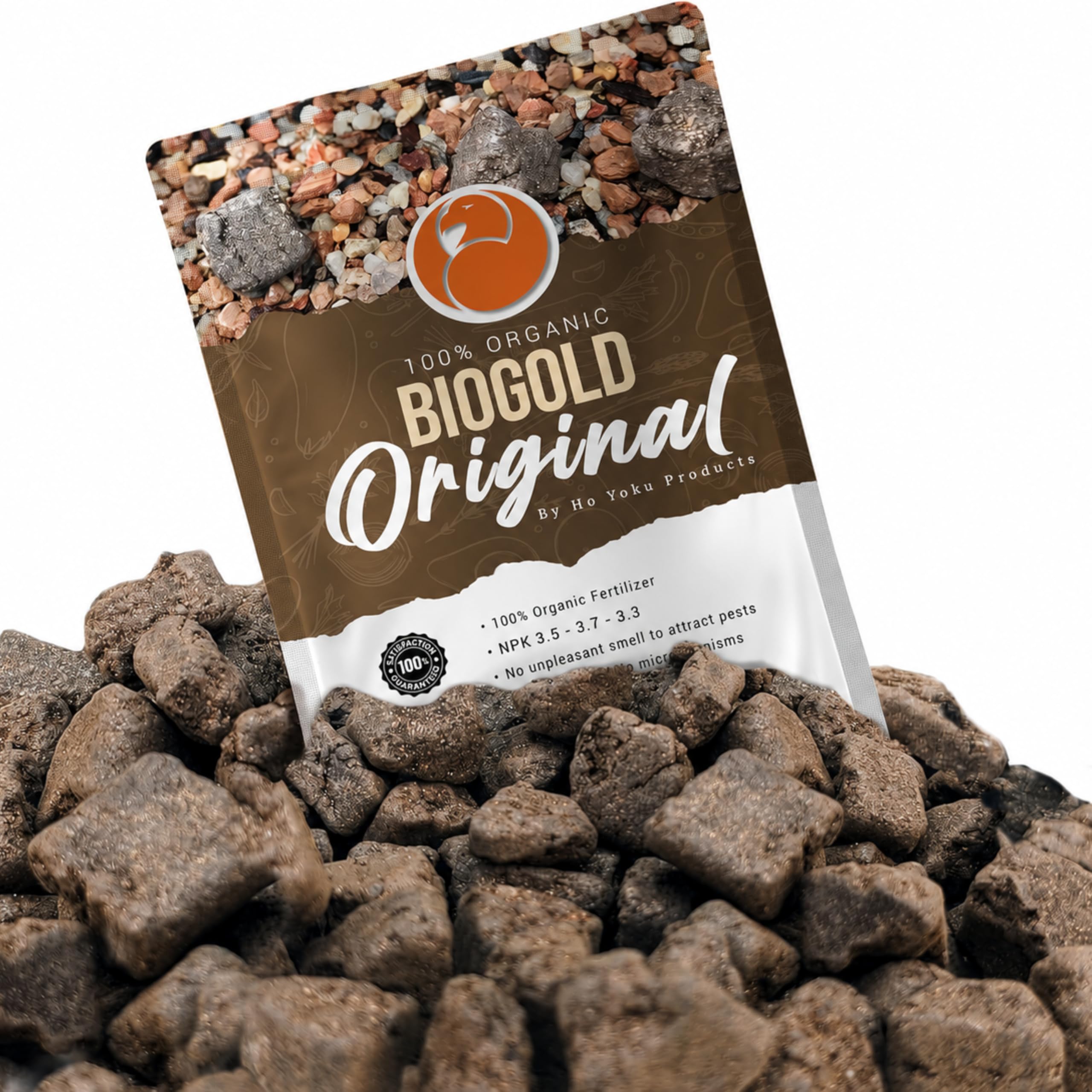
| Japanese Biogold Original (900 g) | Long-term organic feeding | Tablets | 3.5-3.7-3.3 | 31.74 Ounce | Amazon |
| Japanese Maple Liquid (1 Gal) | Large collections & full growing season | Liquid | — | 128 fluid ounces | Amazon |
In‑Depth Reviews
1. BioGold Bonsai Fertilizer Pellets
Our pick — over 4.5★ from 500+ verified ratings; the strongest balance of quality and price.
The triangle pellet that stays put instead of rolling off the pot.
These pellets are shaped like little pyramids, which sounds like a gimmick until you realize it solves the classic container problem: round granules roll off the rim and onto your patio. The triangular shape keeps each pellet where you place it in the soil, and the time-release action keeps feeding your maple for weeks without a refill.
The 10-ounce bag carries a 5.5:6.5:3.5 ratio, and the pellet form means you press a few into the top layer and let them work. Owners lean on it for bonsai and houseplants alike, and the thing that wins people over is the quality of the results — with plant growth a close second in how often it gets praised. The one honest trade-off is the odor: some say it smells faintly earthy, while a few compare it to a chicken coop until the first watering washes it down.
For a container Japanese maple, this is the closest thing to a set-and-forget feed. You are not mixing, not measuring weekly, and not risking a concentration spike. Buyers report it plainly: “Plant growth guaranteed, excellent retention and release, the smell does not attract uninvited hosts and a great value.”
What wins people over
- Triangle shape stays in the pot, not on the ground
- Time-release feeds steadily for weeks
- Works beyond bonsai — fine for houseplants too
The honest caveat
- Odor is mixed — faint to chicken-coop until first watering
- 5.5 nitrogen is high; use sparingly on maples
The crowd favorite: the pellet that keeps a steady, low-maintenance feed going for your potted maple, earning a 4.7-star reputation across hundreds of owners.
Reach for it if: you want to press a few pellets in and forget about feeding for a month. Give it a pass if the thought of any fertilizer smell bothers you.
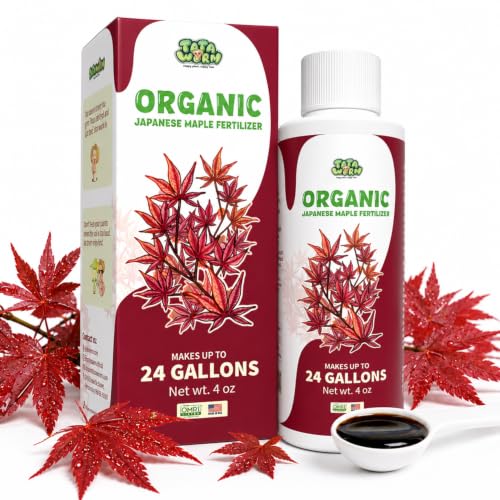
2. Organic Japanese Maple Fertilizer Liquid Kelp
A 4-ounce bottle that stretches to 24 gallons of gentle seaweed feed.
This is the pick for anyone who has scorched a maple with a strong synthetic feed and wants to play it safe. It is a liquid kelp concentrate made from North Atlantic Rockweed harvested in Maine, and it is OMRI Listed for organic use — meaning you can feed without worry about synthetic additives. The 4-ounce bottle makes up to 24 gallons, so a single purchase runs a long time at the recommended 1 teaspoon per gallon.
What makes it right for containers is the philosophy behind it: the formula won’t force excessive leaf growth. Instead it supports steady root development and better stress tolerance, which is exactly what a potted maple needs when its roots are crammed into a confined space. Owners on mature healthy maples saw good new growth with no adverse effects, and one tree in harsh Colorado conditions filled out with fuller leaves after regular use.
The catch is the smell and a note of caution. The concentrate has a pungent, dung-like odor, and one owner spotted white fungus after a couple of applications — though that may have been unrelated to the feed. The tiny bottle surprises people, but the tiny dose is precisely what makes it last.
Why it’s a safe bet
- OMRI Listed and made without synthetic additives
- 4 oz makes 24 gallons — real value per drop
- Won’t force excessive leaf growth in containers
Keep in mind
- Pungent, dung-like smell in the bottle
- One owner saw white fungus after the second use
Safest hands-down: the organic liquid for anyone nervous about burning a potted maple’s roots.
Look elsewhere if: you want a no-smell fertilizer or one you never have to mix.
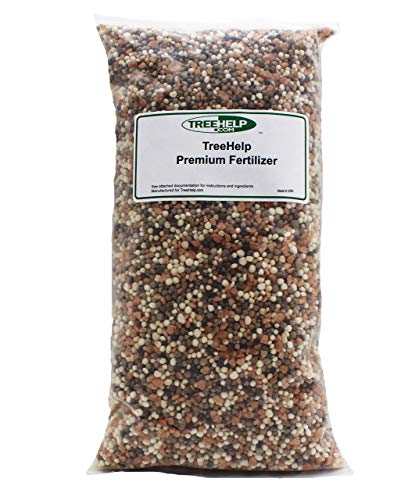
3. TreeHelp Premium Fertilizer for Japanese Maple
A 52.9-ounce bag built for serious root development — five times the BioGold.
This is a purpose-built Japanese maple feed with slow-release nitrogen that keeps working through the whole growing season. The 52.9-ounce bag is a 5.3x size jump over the BioGold’s 10 ounces, so it is aimed at people with real trees, not dainty bonsai specimens. It treats one large tree or 2-3 smaller ones, and the focus is root development — long-term vitality rather than a quick green flush.
The results speak for themselves: a 5-year-old maple produced more foliage than any year since the owner had it, and another saw a visible difference in both trees within the year. The brand’s customer service is a genuine standout — when someone asked about fertilizing a container maple, they got a fast and helpful email response. That kind of support matters when you are second-guessing a feeding schedule.
Here is the honest fork in the road. The instructions for in-ground use mention drilling holes and using an auger, which is a real tool investment. But the same product works on container trees with a simple top-dress, and the company will walk you through it. It is not sold in Washington state, so check that before ordering.
Built for real trees
- Slow-release nitrogen feeds all season long
- 52.9 ounces covers a large tree or 2-3 smaller ones
- Excellent customer service for container questions
The trade-off
- In-ground application wants an auger and drilling
- Not available in Washington state
For the serious grower: the big-bag choice when you want whole-season feeding and don’t mind a little tool work.
Pass on it if: you want a grab-and-go pellet you can press in without reading instructions.
4. FoxFarm Happy Frog Japanese Maple Fertilizer

The 4-3-4 powder with soil microbes that brought a dying maple back to life.
If your Japanese maple in a pot looks pale or stunted, this FoxFarm powder feeds it without the burn risk of standard fertilizers. The 4-3-4 ratio (4% nitrogen, 3% phosphorus, 4% potassium) is gentle for container roots, and you mix 2 tablespoons per gallon of water into the top of the soil. It also contains beneficial microorganisms and mycorrhizal fungi (root-friendly fungi that boost nutrient uptake), so your tree gets more from each feeding.
The results read like a before-and-after. A one-foot maple planted two years ago grew past 7 feet tall and 5 feet round with “insane plant growth” and extremely healthy color. Another owner brought a poorly maintained, hard-trimmed maple back to health, and a third revived a plant that had been struggling. The effectiveness is the thing everyone raves about, with growth a distant second — over 800 owners have weighed in, making this the most-tested pick in the lineup.
One practical note: the powder is fine and can drift in the wind, so apply it close to the soil rather than pouring from a height. It is formulated for monthly feeding through the growing season, which fits a container routine that runs from spring to early fall.
Why it’s a top performer
- Balanced 4-3-4 made for low-pH feeders
- Mycorrhizal fungi boost root efficiency
- Proven revival results on struggling maples
The small catch
- Powdery form can drift if you pour from height
- Monthly feeding means you stay on schedule
Most proven: the powder with the strongest revival stories for potted maples that have seen better days.
Best for: owners who want a monthly routine and a feed that works on the soil biology, not just the leaves.
5. Yamamoto’s Organic Concentrated Bonsai Fertilizer

Japan’s favorite bonsai feed, bottled at a gentle 2.7-3-2.2 organic strength.
This is the liquid for people who treat their container maple like a bonsai — carefully, patiently, and organically. It carries a 2.7-3-2.2 N-P-K, which is noticeably lower in nitrogen than most of the lineup, and that restraint is exactly what a potted maple’s roots want. The concentrate is simple: 1 tablespoon per quart of water, used every second watering.
Owners mention a pleasant, sweet smell — a genuine contrast to the pungent kelp concentrate above — and healthy growth that shows within days. A Japanese pine bonsai kept on this feed for over two years stayed very healthy, and a tree with yellowing needles bounced back after going organic. The effectiveness is the most-praised aspect, with growth following close behind.
For a single container maple, though, the modest dose means the bottle stretches further than the size suggests. It is aimed at bonsai, but the low nitrogen and balanced phosphorus make it a sound fit for a small potted Japanese maple.
Gentle by design
- Low 2.7 nitrogen protects container roots
- Pleasant sweet smell, not pungent
- 100% organic with all major and micro nutrients
Not for everyone
- Small 8-ounce bottle
- Needs mixing every second watering
For the bonsai-minded: the organic liquid that feeds a small potted maple without ever pushing it too hard.
skip it if: you want a pour-and-go pellet rather than a mix-and-feed liquid routine.
6. Maple Tree Fertilizer Liquid Plant Food (32 oz)
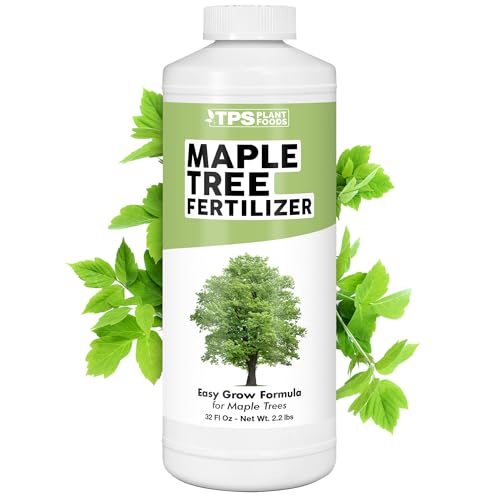
A 32-ounce liquid aimed squarely at vibrant leaf color and a fuller canopy.
This one is for the owner who judges success by the red. It is a liquid plant food built for all maple varieties, indoors or in containers, and the pitch is vibrant foliage and steady seasonal growth. The 32-ounce bottle is a mid-size option that splits the difference between the tiny concentrates and the gallon jugs.
The reviews are heavy on color. A Japanese maple fed through last summer came out this spring “fuller and they are brilliant red.” Another saw maples turn more brilliant in color with obvious growth after starting the product. Newly planted October Glory maples got a regular feed in their critical first two years, which is exactly the kind of establishment support a young container tree needs.
The honest catch is that deep feeding is better than a surface drench to avoid chlorosis, so you will want to water it in well. One owner noted they did not know maples needed feeding until branches started falling in storms — this is the product for people who want that insurance without a complicated routine.
Color-focused
- 32 ounces suits a full season on one or two trees
- Brilliant red color reported on Japanese maples
- Simple mix-and-feed for containers
Watch this
- Surface feeding risks chlorosis — water it in deep
- Regular feeding needed through the season
For the color chaser: the liquid that turns a dull maple into a brilliant red centerpiece.
Think twice if: you want a slow-release option that feeds without you touching it for weeks.
7. Japanese Biogold Original Natural Organic Fertilizer (900 g)

The 900-gram tablet version of Biogold, for people who feed a lot of trees.
If you like the pellet concept but want it in a bigger, longer-lasting form, this is the upgrade. It is the same Biogold reputation in a 900-gram bag of tablets with a 3.5-3.7-3.3 N-P-K, and the instructions suggest 2-3 pellets per quart of water — a dilute, gentle dose that suits a container maple. The balanced ratio keeps nitrogen from running away.
The tablet form earns consistent praise. A second-year buyer says you can really tell the difference, and an unhealthy Brazilian Rain Tree “exploded with growth” after feeding. The delivery is fast and the product matches the description, which sounds small but matters when you are waiting on a spring feeding window. The 900-gram size means a single bag covers many trees or a long season on one.
At this size and with this reputation, it sits at the premium end of the lineup. If you have a handful of containers or bonsai to feed, the per-dose cost works out in your favor. For a single small maple, though, the 10-ounce BioGold bag above gives you the same family of feed without the surplus.
Big-bag value
- 900 grams covers many trees for a long season
- Gentle 3.5-3.7-3.3 ratio for container roots
- Consistent results across bonsai and rain trees
The cost of bulk
- More than you need for a single container maple
- Tablets need counting out per quart
For the collector: the big-bag organic feed when you have multiple containers or bonsai to keep healthy.
Reach for the smaller bag instead if: one potted maple is your whole collection.
8. Japanese Maple Tree Fertilizer Liquid (1 Gal)
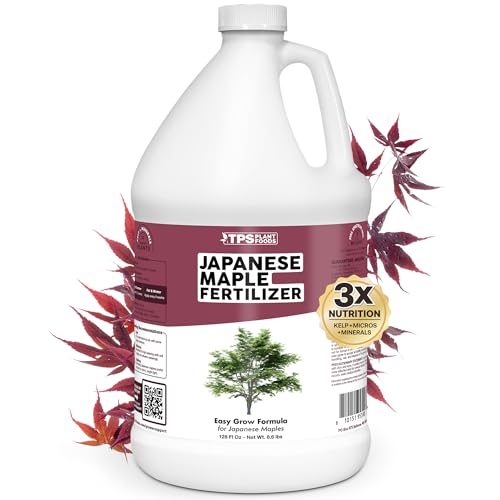
A full gallon of liquid maple food — the whole season in one jug.
Here is the volume play. This is a 128-fluid-ounce jug of liquid fertilizer built specifically for Japanese maples, for potted and landscape trees alike, and it supports foliage color, root strength, and root establishment across all growth stages. If you have several containers or a mixed landscape, this is the jug that carries you from spring flush to fall color without a reorder.
The reviews are emphatic on speed. The words “works like a miracle” come up — a bare tree in Central Texas grew a lot of leaves after three applications, and a 30-year-old Japanese maple that had started to die rebounded after feeding. The effectiveness is the most-praised aspect by a wide margin, and owners who bought one bottle ordered a second.
The one recurring issue is not the product — it is the shipping. A bottle arrived without its lid, which is a spill risk the moment you open it, and an occasional Amazon delivery misses quality checks. The formula itself earned a repeat purchase. For the price per gallon, this is the strongest value in the lineup if you will actually use the volume.
Volume that works
- 128 ounces covers many trees or a full season
- Visible results in as little as two weeks
- Revived a 30-year-old maple that was dying
Watch the delivery
- Occasional shipping misses the lid — spill risk
- A lot of liquid if you only have one tree
Best value per drop: the gallon jug for owners with multiple maples or a long feeding season ahead.
Choose a smaller bottle if: one container tree is all you are feeding — this jug would outlast your season.
Understanding the Specs
N-P-K Ratio
The three numbers on any fertilizer bag stand for nitrogen, phosphorus, and potassium — the big three nutrients. Nitrogen pushes leafy growth, phosphorus builds roots and branches, and potassium supports overall health. For a Japanese maple in a pot, a balanced ratio like 4-3-4 or a gentle organic like 3.5-3.7-3.3 keeps growth steady without scorching the confined roots.
Release Style
Pellets and tablets feed slowly over weeks, which forgives a forgetful schedule and prevents concentration spikes. Liquids act fast and give you control, but they demand a steady routine. In a container, slow-release options lower the risk of burning those fine feeder roots all at once.
FAQ
How often should I fertilize a Japanese maple in a container?
Can I use a general-purpose fertilizer on a potted Japanese maple?
Is liquid or slow-release better for a container maple?
How much fertilizer does a single potted Japanese maple need?
Will fertilizer burn my Japanese maple’s roots?
What does the N-P-K ratio mean for my maple?
Can I fertilize a Japanese maple during winter?
Is organic fertilizer better than synthetic for container maples?
Why are my maple leaves turning yellow after feeding?
Will these fertilizers work on other acid-loving plants?
Final Thoughts: The Verdict
For most container growers, the fertilizer for japanese maple in container winner is the BioGold Bonsai Fertilizer Pellets — the triangle-shaped, time-release pellets stay in the pot and feed steadily, earning a 4.7-star rating from hundreds of owners. If you prefer organic liquid, the Organic Japanese Maple Liquid Kelp is the gentlest option, stretching 4 ounces into 24 gallons of OMRI-listed (organic-certified) feed. And if you chase vivid red spring leaves, the Maple Tree Liquid (32 oz) is the one owners credit for that color.
How We Picked
We do not accept paid placement. Every pick is matched to a real buyer and a real use-case; we do not hands-on test units.
Sources & Methodology
Specifications: manufacturer listings and product documentation. Review insights: verified customer reviews, as of August 2026. Pricing: not shown on this page (it changes often); check the current price via the retailer link.
As an Amazon Associate, Lawn Gear Lab earns from qualifying purchases. This does not affect which products we feature.