
Specs are compiled from manufacturer listings and verified buyer reviews and can change over time — please confirm the key details on the product page before buying.
Choosing the right soil for flower beds is the single most important decision you’ll make for your garden’s success. The perfect bag means vibrant blooms all season; the wrong one means weak stems, yellowing leaves, and wasted effort. This guide cuts through the marketing to help you pick the mix that matches how you actually garden, whether you’re filling raised beds, refreshing containers, or amending native ground soil.
I’m Rikta — the founder and writer behind Lawn Gear Lab. This guide is built by comparing the manufacturers’ published specifications and the patterns across verified customer reviews, so you get each pick’s real strengths and trade-offs instead of marketing spin.
Let’s dig into what makes a premium mix worth it, which ingredients actually matter, and how to match a bag to your specific planting project. Read on to find the best soil for flower beds that will keep your garden thriving from spring through frost.
Our Picks at a Glance


How To Choose The Best Soil For Flower Beds
Before you buy a bag, think about where those flowers will live. A mix that’s perfect for a container on your patio can be entirely wrong for a sunny in-ground bed, and vice versa. The right starting point is matching the soil’s job to your garden’s reality.
Drainage vs. Moisture Retention
Roots need both air and water, and a good flower bed soil delivers both. If water pools and sits, roots can rot. If water runs straight through, plants dry out. Look for a mix that includes ingredients like perlite or pumice to create air pockets, combined with organic matter that holds moisture without getting soggy.
Nutrients and Feeding Power
Flowers are heavy feeders, and the soil is their pantry. Some mixes come packed with compost, worm castings, or slow-release fertilizers to feed plants for months. Others are “clean” starter mixes that are better for seeds and seedlings, where you’ll add fertilizer yourself. Read the bag to know what you’re getting before you plant.
Organic Certified vs. Standard
If you grow edibles alongside your flowers or prefer to avoid synthetic chemicals, look for an OMRI-listed bag. That seal means an independent body has checked that the ingredients meet organic standards. It’s a meaningful distinction if you’re building a fully organic garden.
Quick Comparison
| Model | Best For | Volume | Key Additives | Weight | Amazon |
|---|---|---|---|---|---|
| FoxFarm Ocean Forest★ Best Overall | Premium all-purpose growth | 1.5 cu ft | Worm castings, kelp, crab meal | 34 lbs | Amazon |
| Espoma Organic Garden SoilBest In-Ground Mix | Amending in-ground beds | 1 cu ft | Earthworm castings, Myco-tone | — | Amazon |
| Coast of Maine Roses & FlowersRose Specialist | Roses and established perennials | 20 qt | Composted manure, peat moss | — | Amazon |
| Miracle-Gro Moisture Control | Container plants, busy gardeners | 16 qt (2-pack) | Sphagnum peat, coir, wetting agent | — | Amazon |
| Home and Country All Purpose Topsoil | Small jobs, seed starting | 6 lb pail | Organic matter, essential nutrients | 6 lbs | Amazon |
| Brut Organic Potting Soil | Organic container & bed planting | 21 qt | Worm castings, trace minerals, perlite | — | Amazon |
| Michigan Peat General Purpose | Large containers and raised beds | 50 lb bag | Reed sedge peat, perlite, sand | 50 lbs | Amazon |
| Coast of Maine Castine Blend | Raised bed vegetable & flowers | 2 cu ft | Worm castings, mycorrhizae, biochar | 40.3 lbs | Amazon |
| BuildASoil Light Garden Soil | High-end organic growing | 1 cu ft | High worm castings, compost | 30 lbs | Amazon |
In‑Depth Reviews
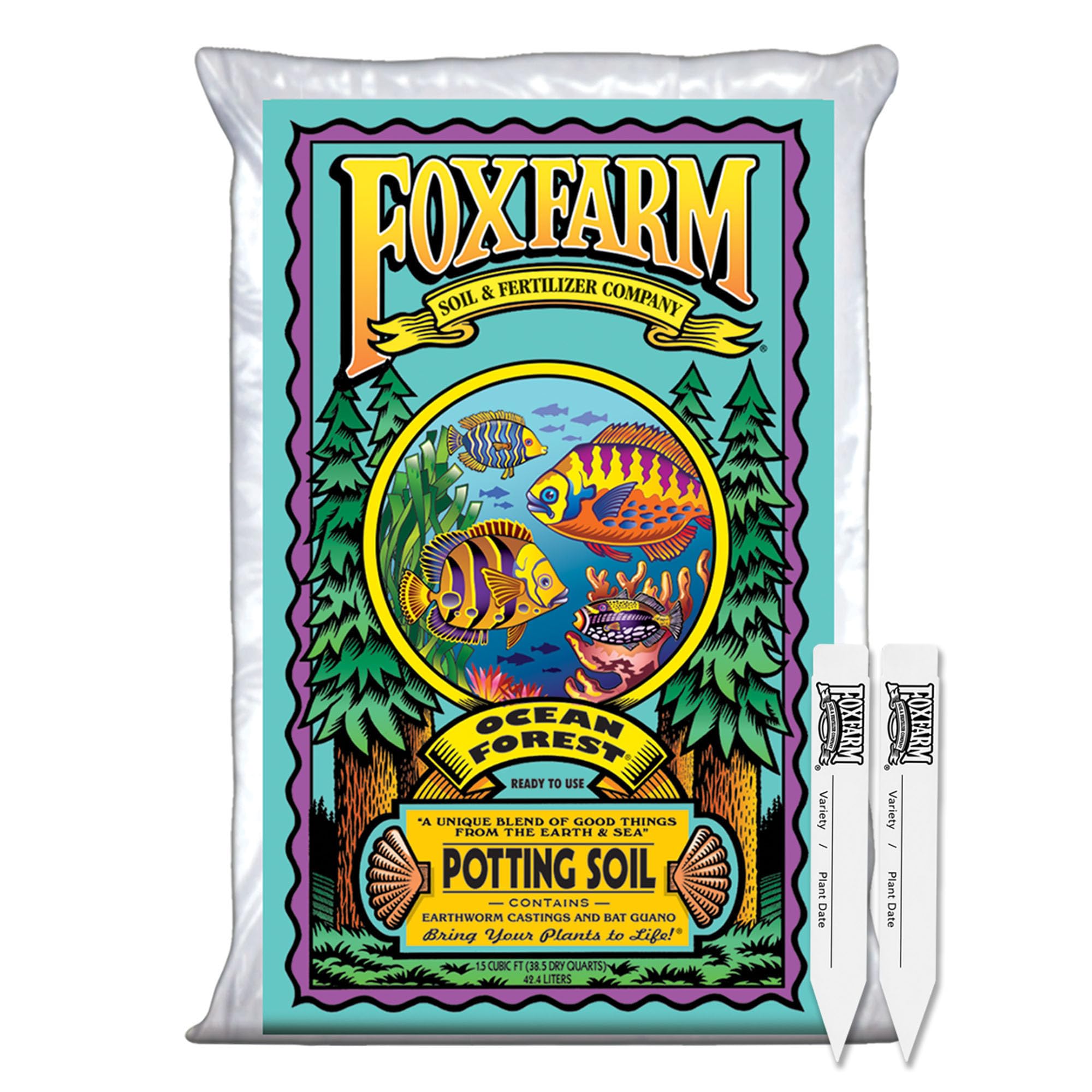
1. FoxFarm Ocean Forest Potting Soil
Our pick — over 4.5★ from 10,000+ verified ratings; the strongest balance of quality and price.
The nutrient-dense workhorse that garden enthusiasts keep coming back to every single season.
You can plant straight into this bag — no mixing, no added fertilizer. The formula is packed with 50-60% aged forest products and sphagnum peat moss to hold moisture right at the roots, while sandy loam provides drainage that fights root rot. This gives you a ready-to-go environment that’s ideal for everything from seedlings in tiny pots to established roses in a big bed.
What wins people over is the consistent quality and the growth results they see year after year. Gardeners report it “beats in quality other brands,” describing the strongest little plant starts they’ve had, and noticing their tomatoes flourish more than in other mixes. The 1.5 cubic foot bag offers noticeably more volume than the 1 cubic foot bags on this list, so you’re covering more ground per bag.
The main trade-off is the price — the biggest complaint is that it’s expensive. But for many, the results justify the cost, with some noting the rich, pre-mixed nutrient content gives plants a perfect head start. There are occasional reports of bugs, though these seem to be the exception rather than the rule for such a widely used mix.
Why Gardeners Rave
- Loaded with nutrients from fish emulsion, crab meal, and earthworm castings
- Aerated texture and sandy loam help prevent waterlogged roots
- Ready to use immediately, no extra ingredients required
- Generous 1.5 cu ft volume at 34 pounds
What To Weigh Up
- Costs more than many other options
- All-purpose recipe, not specialized for just one plant type
- A few owners have reported unwanted bugs in the bag
Reach for it if: you want a premium, feed-ready soil that performs across containers, seedlings, and flower beds without extra work.
Look elsewhere if: you’re covering a very large in-ground area and need the most budget-friendly volume per square foot.
2. Espoma Organic Vegetable & Flower Garden Soil
A rich, organic booster designed to transform your existing native soil into a flower-friendly haven.
Mix this garden soil into your native ground before planting or transplanting—it’s not a standalone potting mix. It enriches what’s already in your bed and feeds your plants with earthworm castings plus a proprietary blend of endo & ecto mycorrhizae (beneficial fungi that help roots take up water and nutrients), so your transplants get a stronger start.
The organic credentials are central here — it contains no synthetic plant foods or chemicals, which makes it a strong pick for organic gardeners. The feedback is consistent: plants in this mix “outperformed those in a store-bought organic alternative,” with gardeners noticing a “noticeable quality difference.” Tomatoes and marigolds thrive, and the soil structure holds moisture well.
There’s a caveat to note: a handful of owners have reported fungus gnats in the bag. It’s a common organic-soil issue, and most found it manageable, using the remaining bag outdoors without problems. It’s worth knowing that the 1 cubic foot volume is 50% smaller than the top pick’s 1.5 cubic feet.
Best field-tested: this amendment improves whatever native soil you have, giving transplants a sturdy start—and it comes from a trusted organic brand.
3. Coast of Maine Organic Planting Soil for Roses & Flowers
A compost-rich blend that rose growers swear by for encouraging those big, healthy, show-stopping blooms.
This mix is crafted specifically for rose varieties, flowers, and perennials, blending composted manure and sphagnum peat moss. The result is a formulation that balances moisture retention with drainage — the two things your flowering shrubs need most to stay healthy. It’s versatile too, working in containers and in-ground flower beds alike, or doubled as a revitalizing top dressing.
Buyers rave about the rich, dark texture that makes roses “work great.” They call it “very rich” and praise the value, noting it’s made with all-natural components in the USA. It arrives free of mold and pests, which is a relief for many gardeners.
The one mixed note is the smell — some find it pleasantly earthy while others have found the bag “unbelievably stinky,” noting it can attract dogs and flies. It’s a natural consequence of composted manure, and for most, the flowering results far outweigh the initial aroma.
The bloom booster: an earth-friendly organic choice from a company dedicated to sustainable practices since 1996, tailor-made for your prized roses.
4. Miracle-Gro Moisture Control Potting Mix (2-Pack)

The forgiving option for gardeners who want a buffer against the chaos of summer watering schedules.
This mix is engineered to take the guesswork out of watering your pots. Its moisture-control formula absorbs up to 33% more water than basic potting soil, then releases it slowly, protecting your plants whether you tend to overwater or underwater. It’s a lifesaver during heat waves, and it feeds your container flowers for up to 6 months, so you can almost low-maintenance.
The recurring praise is how much time it saves. Gardeners who switched report they “had to water daily” during drought conditions before this mix, and it saved them from that chore. The bags are also easier to carry and pour than most large-format soils, a small detail that makes a big difference when you’re wrangling a wheelbarrow.
Each bag in this bundle fills one 12-inch container, and the two-pack gives you enough for a solid patio arrangement. It’s designed for container plants — flowers, vegetables, annuals, and shrubs — making it the go-to for potted color rather than large in-ground beds.
Why It’s a Grab-and-Go
- Protects against over- and under-watering with moisture beads
- Feeds plants for up to 6 months with built-in fertilizer
- More manageable bag size for easy handling
Keep In Mind
- Too much volume for a small seed-starting operation
- Geared for containers, better to look at garden soils for in-ground beds
Best for: container gardeners who want vibrant flowers with a built-in safety net against drought and overwatering.
Think twice if: you’re amending a large in-ground flower bed and need bulk garden soil instead of a potting mix.
5. Home and Country All Purpose Topsoil
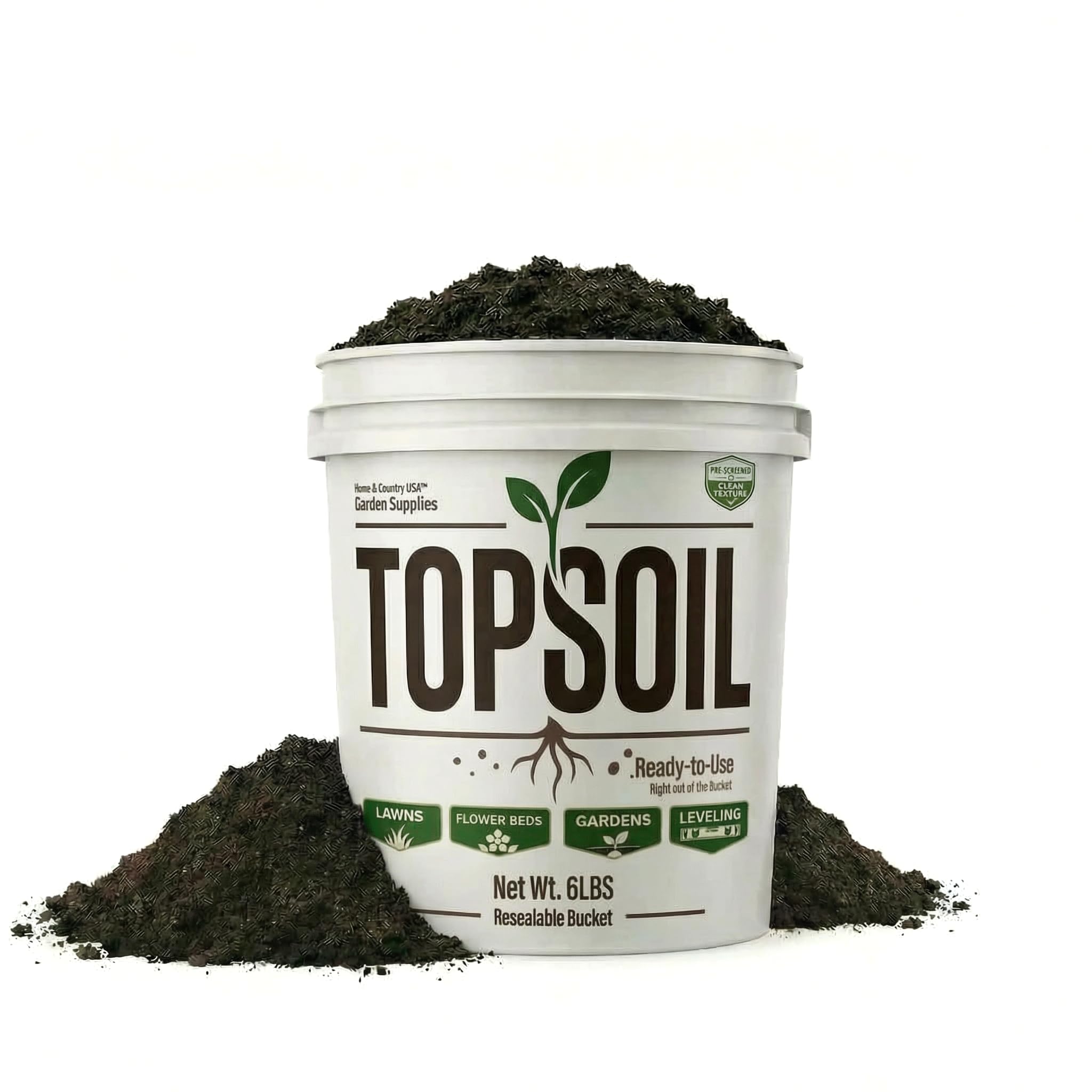
A tidy little pail that’s perfect for weekend seed-starting projects or patching a small bare spot in the bed.
If you need a small, clean, and convenient amount of soil, this 6-pound pail is a practical grab. It’s a versatile blend positioned for everything from seed starting to refreshing an indoor pot or topdressing a flower bed. The brand is clear that it contains organic matter and essential nutrients, and it pours cleanly with no mixing required.
For small uses, the quality is there — buyers report it’s “good dirt” that gets seeds sprouting nicely. The bucket itself becomes a bonus a sturdy container you can repurpose for holding garden gloves or weeding tools once it’s empty.
The catch is value: buyers agree the quantity is low for the price. “If volume is what you need, go bigger” is the recurring sentiment, and one buyer called it a “way too small container.” For a large flower bed, this isn’t your main event—it’s a convenience item for small touch-ups. Some also noticed a strong odor on arrival.
Good for small jobs: a clean, convenient soil solution for herbs and small pots, but the cost per scoop isn’t meant for big beds.
6. Brut Organic Potting Soil
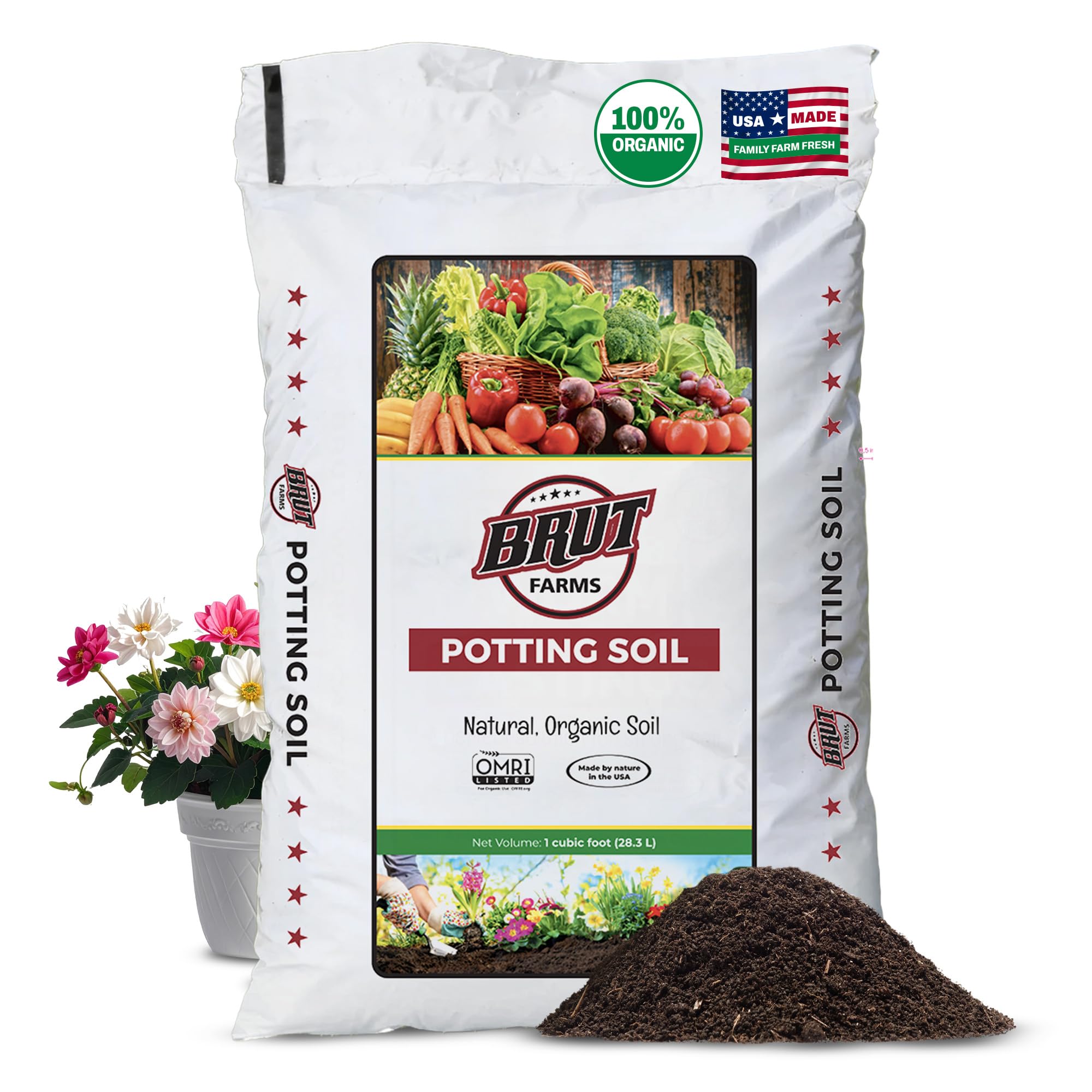
A microbe-rich, certified-organic mix that delivers a visible deep-green response in your plants within days.
This soil is built around soil biology. It’s packed with microbe-rich worm castings and trace minerals like Azomite and kelp, feeding your flowers directly from the root level. It’s OMRI-listed for organic use, and the naturally pH-balanced formula sits between 6.3 and 6.5, which is ideal for most plants. It’s also proudly filler-free — no sticks, wood chips, or artificial additives.
Owners describe the results as dramatic: leaves turning “deep green” and shooting out new growth just two days after planting. It is frequently described as “the best potting soil I’ve ever put my hands in,” with no wood pieces and a light, clean texture that plants adore. It’s versatile for indoor and outdoor use, from herbs to annuals.
However, this bag doesn’t come without warnings. There are recurring concerns about fungus gnats and poor germination in some batches, and a few owners say it’s on the pricey side. The other big frustration isn’t the soil itself — it’s shipping, with reports of slow deliveries that leave plants waiting.
For the organic purist: an exceptionally rich, clean blend that fuels rapid growth, but check the bag carefully upon arrival.
7. Michigan Peat General Purpose Premium Potting Soil

A heavyweight 50-pound bag that’s the economical answer for filling large planters and raised beds.
When you have a lot of pots to fill or a big raised bed to top up, this bag’s sheer size — a full 50 pounds — makes it the cost-effective choice. It’s a pre-blended, ready-to-use mix that combines rich dark reed sedge peat, perlite, and sand, creating a structure that promotes healthy growth and water absorption. Both starter and slow-release fertilizers are included, so your plants get sustained feeding.
The feedback highlights its versatility and value, described as a “good potting mix” that supports “extra success with plants” wherever it’s used. It’s great for repotting large collections, and it arrives moist and ready to work with, which gardeners appreciate for immediate use.
One recurring word of caution: gnats. A few owners note that “lots of gnats come out of it,” which can be a shock when you open the bag. For this price and volume, it’s a known risk with organic material. This is a general-purpose blend, so it’s better for mixed gardens than for perfecting a single fussy flower species.
Best for: filling big containers and raised beds where volume matters more than specialized formulas.
Look elsewhere if: you prefer a refined, high-end mix for a small collection of prized plants, or if you’re sensitive to the possibility of gnats.
8. Coast of Maine Castine Blend Soil
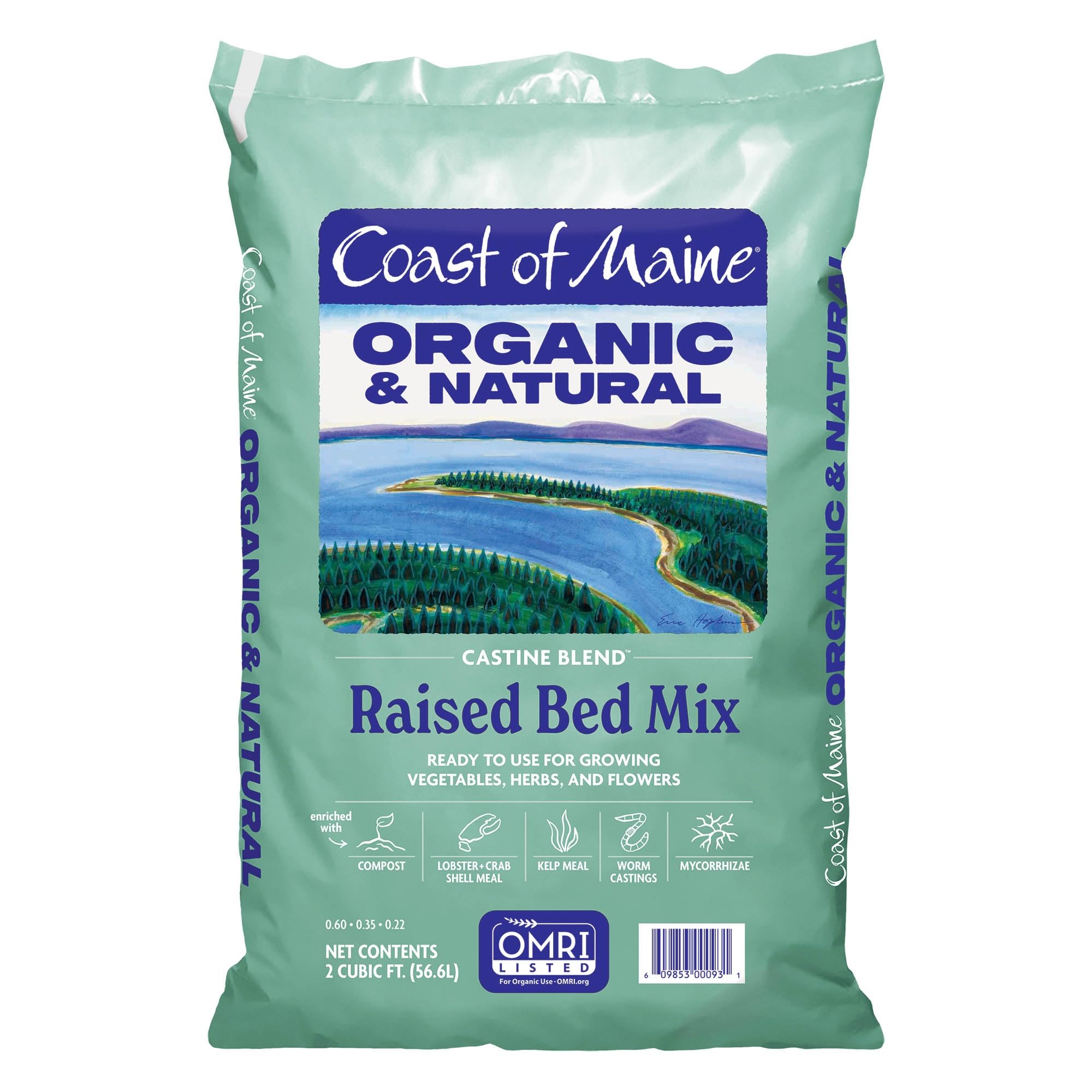
A 2-cubic-foot powerhouse blend that turns raised beds into fluffy, nutrient-rich growing machines.
This soil is specifically formulated for raised bed gardening, container gardens, and planter boxes. The Castine Blend is a rich cocktail of worm castings, mycorrhizae (beneficial root fungi), biochar (a charcoal that holds nutrients), green sand, kelp meal, and lobster and crab shell meal. It’s ready to use straight from the bag — no mixing required.
Gardeners describe it as “light and fluffy” and “soft, rich, dark, organic dirt” with no twigs or bugs. It’s praised for loosening existing soil in improve beds and creating the environment for “pretty awesome tomatoes and sunflowers.” The drainage properties get consistent positive mention, and it holds up well over multiple seasons.
As with any rich organic mix, there are a couple of trade-offs. The debris quantity gets mixed reviews — some bags may have more bits of organic matter than expected. And while many find the quality a steal, others feel it’s pricey. At 2 cubic feet, it’s larger than many bags, but some owners still find themselves wishing for more.
What Makes It Great
- Massive 2 cu ft volume, excellent for raised beds
- High biodiversity with mycorrhizae and biochar for strong roots
- Soft, fluffy texture that drains beautifully
- Trusted brand with a focus on sustainable practices
Before You Buy
- Some bags contain noticeable debris
- Premium price point may not suit all budgets
- Best for beds and containers, not standard in-ground planting
Reach for it if: you’re serious about raised bed gardening and want a premium, ready-to-use soil with a rich blend of nutrients.
Think twice if: you’re just topping off a small flower bed and don’t need the volume or the price tag.
9. BuildASoil Light Garden Soil
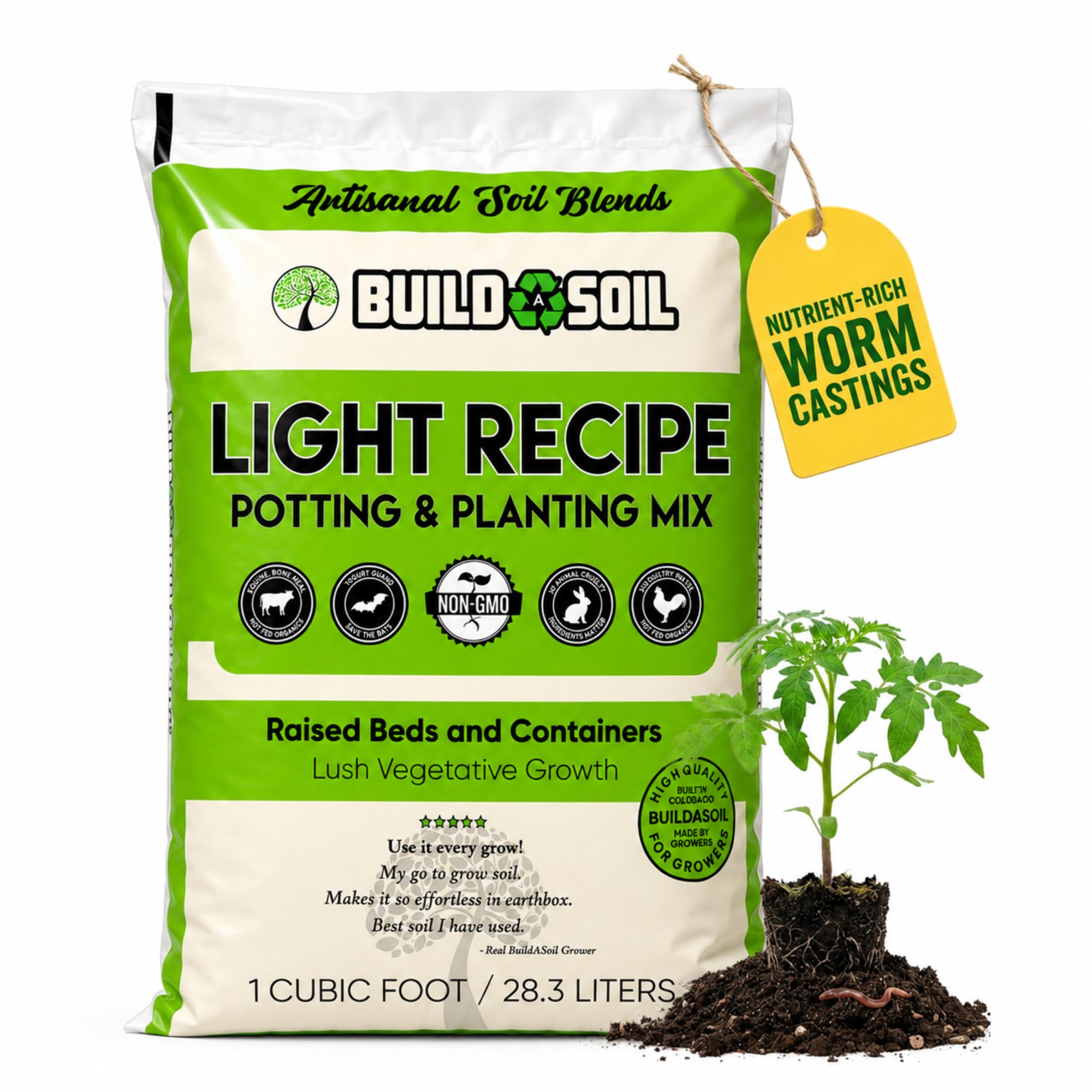
A carefully engineered organic soil with a loamy feel that serious gardeners reach for when they want the very best.
If you want a soil that’s transparent about what’s inside, this is it. BuildASoil’s most popular recipe is high in worm castings and compost to support microbial life and strong roots, with complete ingredient transparency. It’s built with certified organic ingredients and zero synthetic additives, and it’s lab-tested for consistent, reliable performance.
The formula targets a balanced loamy soil structure — a feat for a bagged mix — delivering excellent aeration, drainage, and moisture retention all at once. It’s also designed with low sodium, chlorides, and bicarbonates to help reduce salt stress on your roots, which is a thoughtful touch for sensitive seedlings and transplants.
Owners mention it’s “amazing and won’t burn your plants,” making it a safe bet for seeds and delicate starts. The trade-off is the premium price tag combined with a 1 cubic foot bag, which makes it one of the pricier options per scoop here. It’s a high-end choice for the gardener who wants to give their flower beds — or even houseplants — the best possible start.
The connoisseur’s choice: a clean, low-salt, loamy organic mix that’s gentle on young roots and built for serious growth.
Understanding the Specs
Volume (Cubic Feet & Quarts)
This tells you how much ground a bag actually covers. A 1.5 cubic foot bag is 50% larger than a 1 cubic foot bag, which matters when you’re filling multiple beds or planters. Quarts are the other common unit, with 20 to 25 quarts roughly equal to one cubic foot. Match the bag size to the scale of your project so you don’t run out halfway through planting.
Organic Matter & Nutrients
Ingredients like compost, worm castings, aged forest products, kelp, and manure provide the slow-release food your flowers need. These ingredients also improve soil structure — helping clay soils drain better and sandy soils hold water. Look for mixes that list these rich sources of fertility, and check whether fertilizer is included so you know if you’ll need to feed plants later.
FAQ
Can I use potting mix for my in-ground flower beds?
What’s the difference between OMRI-listed and just ‘organic’ on the label?
How much soil do I need to fill a 4×8 raised bed?
Why does my bag of soil have fungus gnats?
What does ‘feeds up to 6 months’ on a bag of soil actually mean?
Is it better to buy a cheap large bag or a premium smaller bag?
What is mycorrhizae and why is it in premium soil?
How do I fix a flower bed that has heavy clay soil?
Final Thoughts: The Verdict
For most flower bed gardeners, the soil for flower beds winner is the FoxFarm Ocean Forest because it threads the needle between rich nutrition, excellent drainage, and immediate usability. If you want to enrich your existing native soil for a beautiful in-ground display, grab the Espoma Organic Garden Soil. And for potted color on a patio where watering is a daily chore, the Miracle-Gro Moisture Control is the one to reach for.
How We Picked
We do not accept paid placement. Every pick is matched to a real buyer and a real use-case; we do not hands-on test units.
Sources & Methodology
Specifications: manufacturer listings and product documentation. Review insights: verified customer reviews, as of August 2026. Pricing: not shown on this page (it changes often); check the current price via the retailer link.
As an Amazon Associate, Lawn Gear Lab earns from qualifying purchases. This does not affect which products we feature.