
Specs are compiled from manufacturer listings and verified buyer reviews and can change over time — please confirm the key details on the product page before buying.
The right fertilizer can be the difference between a few straggly stems and a dense, show-stopping cluster of blooms. A high-phosphorus feed shifts the plant’s energy toward bud formation and bloom size rather than leafy growth. Here are the formulas that actually deliver, whether you’re tending garden beds, pots, or even a pond.
I’m Rikta — the founder and writer behind Lawn Gear Lab. This guide is built by comparing the manufacturers’ published specifications and the patterns across verified customer reviews, so you get each pick’s real strengths and trade-offs instead of marketing spin.
You’ll learn how the N-P-K numbers change what your lilies can do, and which form suits how you garden. This is the practical breakdown of the best fertilizer for lilies based on proven results, not packaging hype.
Our Picks at a Glance


How To Choose The Best Fertilizer For Lilies
Match the fertilizer’s N-P-K ratio to your lily’s current growth stage. A nitrogen-heavy feed builds foliage, while a phosphorus-heavy feed triggers flower bud development.
Understanding the N-P-K Ratio
Every fertilizer label shows three numbers, like 10-30-20. They represent Nitrogen (N), Phosphorus (P), and Potassium (K) as percentages. Nitrogen grows foliage, phosphorus drives root and flower development, and potassium supports overall plant health. For lilies, you want a higher middle number to encourage those big, colorful blooms.
Water-Soluble vs. Granular
Water-soluble powders dissolve in water and feed plants instantly, making them great for a mid-season boost every week or two. Granular or organic options break down slowly in the soil, feeding over several weeks or months. Choose water-soluble for immediate feeding or granular for slow, sustained release.
Quick Comparison
| Model | Best For | N-P-K Ratio | Form | Weight | Amazon |
|---|---|---|---|---|---|
| Jack’s Classic Blossom Booster 4lb★ Best Overall | Maximum blooms | 10-30-20 | Powder | 4 lbs | Amazon |
| Espoma Bulb-ToneOrganic Choice | Organic bulb feeding | 3-5-3 | Granules | 4 lbs | Amazon |
| Lilly Miller Bulb & BloomSlow-Release Pick | Slow-release feeding | 4-10-10 | Powder | 4 lbs | Amazon |
| Jobe’s Organics Granular | Organic, low-dust | 3-5-4 | Granules | 4 lbs | Amazon |
| Dr. Earth Bud & Bloom | Organic bloom booster | 3-9-4 | Granules | 4.1 lbs | Amazon |
| Jack’s Classic Blossom Booster 1.5lb | Smaller gardens | 10-30-20 | Powder | 1.5 lbs | Amazon |
| Scotts Super Bloom | High-phosphorus quick feed | 12-55-6 | Powder | 2.1 lbs | Amazon |
| Chalily Aquatic Fertilizer | Water lilies & lotus | 10-14-8 | Tablets | 9.5 oz | Amazon |
| CrystalClear Thrive | Pond plant feeding | 10-14-8 | Tablets | 0.8 kg | Amazon |
In‑Depth Reviews
1. Jack’s Classic 10-30-20 Blossom Booster Water-Soluble Fertilizer, 4lb
Our pick — over 4.5★ from 5,500+ verified ratings; the strongest balance of quality and price.
A professional-grade, water-soluble bloom booster with a 10-30-20 ratio for maximum flower production.
This is the one that shows visible results in 7-10 days, with abundant blooms and healthier growth, according to buyers. The 10-30-20 analysis is built to produce brighter, more plentiful flowers, and the high middle number (phosphorus) is exactly what pushes lily buds into action. It comes as a water-soluble powder, so a single 4-pound bag mixes into multiple gallons of liquid fertilizer for your beds or pots.
What wins people over is the quality, with hundreds of owners singling it out for effectiveness and bloom production. It works for roses, hanging baskets, and even indoor lemon seeds coaxed into flowering and fruiting. The included measuring spoon takes the guesswork out of mixing, and the added micronutrients mean you do not need to layer on extra feeding.
The honest trade-off is the price, which sits above many granular options. A couple of buyers also warn it is toxic to ruminant animals like goats and cows, so keep the bag and mixed solution away from livestock areas. For garden lilies, the results justify the premium, and the 1.5-pound version offers a smaller entry point if you want to test it first.
Why It Leads
- Proven bloom results in about a week
- Concentrated powder stretches further than liquids
- Measuring spoon included for accurate doses
What To Weigh
- Costs more than entry-level granular feeds
- Not suitable near grazing animals
Reach for this if: you want maximum flower production from your lilies and do not mind mixing a quick liquid feed.
Look elsewhere if: you need a purely organic, no-mix granular option for large garden beds.
2. Espoma Organic Bulb-Tone 3-5-3 Natural & Organic Fertilizer
A certified-organic, granular bulb food that feeds lilies from planting through bloom without mixing.
This granular feed is approved for organic gardening and registered as an Organic Input Material, so it meets the requirements for organic production. The 3-5-3 analysis with 6% Calcium is designed for all spring and fall bulbs, including lilies, and it works when mixed into the planting hole or sprinkled on the soil surface for established plants. There is no mixing required — just apply and water thoroughly.
The thing everyone raves about is how it delivers on its promise, with owners reporting healthy bulbs growing fast and large blooms on daffodils. It is enhanced with Espoma’s exclusive Bio-tone formula and is environmentally safe, with no sludges or toxic ingredients. A 4-pound bag gives medium coverage, making it a solid value for a season of bulb feeding.
The catch with many organic feeds is the smell, and this one is no exception, with a few owners mentioning an overwhelming odor. It is a natural byproduct of the organic ingredients, so expect a brief earthy punch after application that fades as it works into the soil.
Solid pick for: organic gardeners who want a simple, no-mix granular feed that is proven to produce large, blemish-free blooms year after year.
Grab this for: planting new bulbs or feeding established ones with a certified-organic granule.
Think twice if: you are sensitive to strong natural fertilizer odors during application.
3. Lilly Miller Bulb & Bloom Food 4-10-10 4lb
A slow-release granular feed that supplies nutrients for weeks with a single application.
This powder is built for slow-release feeding, which means one application keeps supplying nutrients over time. The 4-10-10 combination of phosphorus and potassium is specifically formulated to give bright, vigorous blooms, and it works for a range of flowering plants including lilies, clematis, peonies, and dahlias. It is made in the United States and comes in a resealable bag for easy storage.
Effectiveness is the most-discussed strength here, with owners noting it is excellent for bulbs like amaryllis and promotes vigorous growth. One owner specifically called it the best for dahlias, while another mentioned their neighbors enjoy the mass of flowers it produced. It is a favorite online because it is often hard to find locally.
One practical note: the formula contains bone meal, which can attract pets and rodents, so the resealable bag should be stored securely. It also has a mild natural smell, which is far less intense than some organic options.
Steady performer: a reliable granular feed for gardeners who want to apply once and let the slow-release formula do the work through the season.
Best for: gardeners who want a budget-friendly, slow-release feed that is kind to a variety of bulbs.
Be mindful if: you have pets that might dig in treated garden beds, given the bone meal content.
4. Jobe’s Organics Granular Bulb Fertilizer, 4 lbs Bag
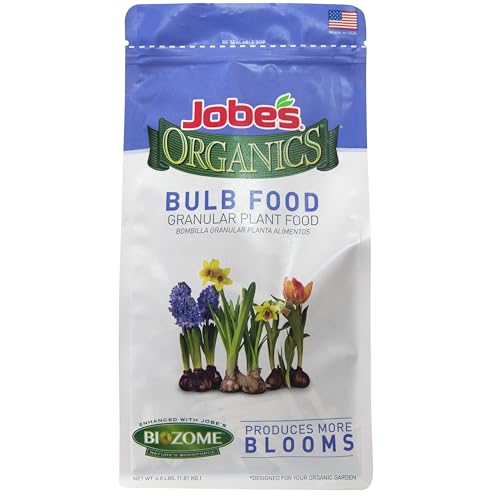
The easy-measure organic granules that keep your hands and garden beds free of dust and mess.
This is a 4-pound bag of organic bulb fertilizer with a 3-5-4 NPK, formulated to create abundant blooms and vibrant leaves. It contains no synthetic chemicals and is OMRI listed for organic gardening by the USDA. The granules are produced to avoid wasteful runoff, mess, hazards, and smells, which makes application cleaner than many competing organic feeds.
Many gardeners found this works well specifically on lilies and dahlias, producing many blooms. The application is simple and should be done every 3-5 weeks or as needed during the blooming season. Because it is mostly bone meal, it is an effective form of phosphorus for flowering plants, and the pelleted form means lower dust compared to most.
The smell gets mixed feedback, with some finding it pleasant enough for rainy-day application and others noting it lingers on hands. It is best used before a rain or watered in well, and it is worth wearing gloves to avoid the odor.
What Stands Out
- USDA OMRI-listed for organic gardening
- Low-dust granules are cleaner to apply
- Simple every-3-to-5-week schedule
What To Expect
- Natural manure-like smell that lingers
- Requires reapplication through the season
Choose this if: you want an organic, OMRI-listed feed that is easy to measure without the mess.
Pass if: you cannot tolerate strong organic fertilizer odors.
5. DR EARTH 707P Organic 8 Bud and Bloom Fertilizer, 4-Pound

The organic bloom specialist with a hefty phosphorus punch that wakes up shy flowering plants.
This granular fertilizer delivers a 3-9-4 ratio, with the high middle number meaning more naturally available phosphorus for root and flower development. It is 100-percent natural and organic, and it includes eight select strains of ecto and endo mycorrhizae. Those beneficial fungi contribute to drought tolerance, enhanced nutrient availability, and increased plant performance.
Buyers report results within a week or two, with flowers blooming like crazy and plants showing no signs of over-fertilization. It is a favorite for boosting hydrangeas, hibiscus, and crape myrtles, and its extended-release granular form means it keeps feeding over time. It is simple to top-dress monthly, making it an easy addition to a lily feeding routine.
The recurring gripe is the strong odor from the fish and feather meal ingredients, which some find off-putting, especially in the sun. It is also worth keeping pets away, as dogs may be drawn to the smell and spread it around.
Strong organic option: delivers rapid, visible bloom results with the added benefit of mycorrhizae for long-term soil health.
Reach for it if: you want a potent organic bloom booster that shows results fast.
Think twice if: you garden in small, enclosed spaces where the fish-meal smell would linger.
6. JR Peters Inc Jack’s Classic 10-30-20 Blossom Booster Water-Soluble Fertilizer – 1.5lbs
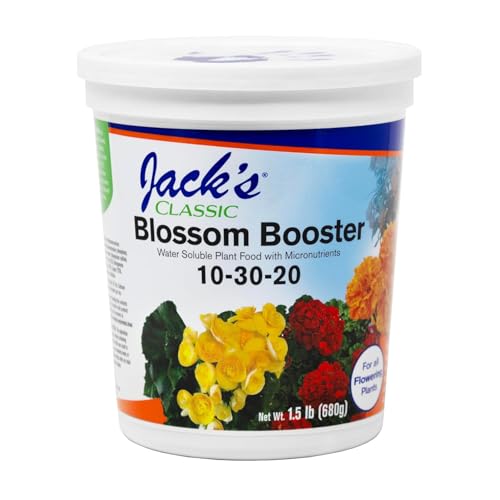
The same proven bloom formula in a smaller bag for patios, baskets, and first-time users.
This is the 1.5-pound version of the same 10-30-20 Blossom Booster that leads our list, giving you the identical high-phosphorus analysis for brighter, more plentiful flowers. It is a water-soluble powder, so it dissolves easily in water and is ready to feed multiple gallons of liquid fertilizer. The added micronutrients support optimal growth and health without requiring additional feeding.
Buyers love how it encourages more blooms, with one noting they never go a flower season without it. Colors come out brighter, and plants produce big, vibrant flowers. It is concentrated and lasts a long time, making the smaller bag a smart way to test the formula or feed a few containers and hanging baskets.
Because it is so concentrated, it is important to use the recommended dose to avoid burning your plants. At the right strength, gardeners report no burning and vigorous growth in just a few weeks.
Great trial size: gives you the exact same powerful formula as the 4-pound bag without committing to a larger quantity.
Best for: container gardeners and small patios where a little goes a long way.
One caution: stick to the measure precisely, as the concentrate is strong.
7. Scotts Super Bloom Water Soluble Plant Food, 2 lbs.
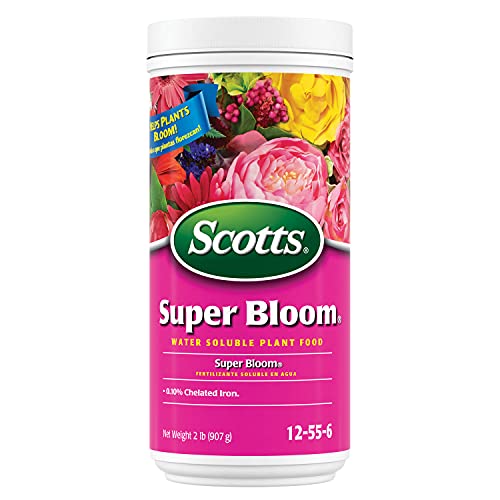
The heavy-phosphorus hitter that makes potted lilies burst into bloom within days.
This water-soluble plant food carries a massive 12-55-6 NPK ratio, with the extremely high phosphorus content dedicated to helping plants bloom. It feeds plants instantly and is designed for outdoor flowers, fruiting plants, containers, and bed areas. It is formulated not to burn your plants when used as directed, and the feeding schedule is a simple every 1-2 weeks.
Blooms are the most-discussed benefit here, with owners reporting potted plants blooming within 3 days and patio plants flowering heavily with huge blooms visible in a week. It revived frost-damaged bougainvillea and turned sparse plumbagos into full, flower-covered plants. A tiny amount goes a long way, with one owner noting a canister lasted all summer for five patio plants.
The main complaint is the seal under the lid, with several buyers finding it not properly sealed on arrival. Check the canister when it arrives, and store it in a dry place to keep the powder from clumping.
Why It Impresses
- Extremely high phosphorus forces heavy blooming
- Water-soluble for instant feeding
- Small amount lasts all season
Check This
- Lid seal is occasionally faulty on arrival
- Strong formula demands careful dosing
Reach for this if: you want a potent, fast-acting feed that delivers dramatic bloom results on container lilies.
Skip if: you prefer a gentler, organic, or slow-release approach.
8. Chalily Aquatic Plant Fertilizer for Water Lily and Lotus (60 Count)

The press-and-go tablet that keeps your pond’s water lilies blooming all season long.
Owners mention their plants stay in bloom constantly, with new growth visible within a day or two of application. The tablets made water lilies bigger and more visually perfect in koi ponds, and they work for all aquatic plants, not just lilies. The 60-count box provides full coverage for a season of feeding.
The durability feedback is mixed, with several owners noting some tablets disintegrated into powder in the box. It is worth handling the box gently, and even with a few crumbled tablets, there are ample cubes left to last a long time.
Essential for pond owners: a fish-safe, tablet-based feed that delivers constant blooms and lusher lily pads with minimal effort.
Best for: water gardeners with koi ponds or aquariums who want a simple, fish-safe feed.
Just know: some tablets may arrive crumbled, so store the box carefully.
9. CrystalClear Thrive Pond Plant Food, Fish Safe Fertilizer, 200 Tablets
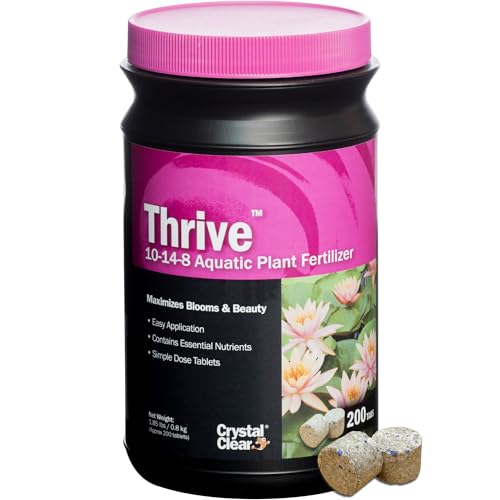
The bulk tablet box that keeps an entire water garden fed without breaking the feeding rhythm.
This is a 200-tablet supply of fish-safe pond plant food with a 10-14-8 blend of nitrogen, phosphate, and potash. It is designed to boost lily and lotus flower bloom and root growth, and it is safe for fish, koi, goldfish, frogs, snails, and other aquatic life. The simple dose is 1-2 tablets for every gallon of soil, pressed into the aquatic potting soil every 2-4 weeks when water temperatures are above 75°F.
Plant growth is the most-praised benefit, with owners reporting water lilies that have never looked this good and blooms appearing within 3 weeks. It is a third-purchase favorite for some, proving its reliability with goldfish, and it is easy to use — just push the tablet into the soil with no mixing required. The water stays clear, and owners love the value of the large count.
Durability is the most-discussed downside, as the tablets can crumble, and there is some dust content that can cause foam in the pond. Use them carefully, and expect a few broken tablets in the box, but the sheer quantity makes it a strong value overall.
Why It’s A Value
- 200 tablets feed an entire pond season
- Fish-safe for koi, goldfish, and frogs
- Simple push-in application, no mixing
Minor Annoyances
- Tablets can crumble in the box
- Dust content may cause foam
Choose this for: a big pond with multiple lilies and lotus that needs a season’s worth of feed in one box.
Consider another if: you need perfectly intact tablets and have a very small water garden.
Understanding the Specs
N-P-K Ratio
The three numbers on a fertilizer bag are the percentage of Nitrogen, Phosphorus, and Potassium by weight. For lilies, the middle number — phosphorus — is the one that drives root growth and flower production. Look for a formula where the middle number is higher than the first, like the 10-30-20 in Jack’s Classic or the 12-55-6 in Scotts Super Bloom.
Water-Soluble vs. Granular
Water-soluble powders dissolve in water and feed plants instantly, which is ideal for a quick mid-season boost. Granular feeds break down slowly in the soil and release nutrients over several weeks. For lilies in garden beds, a granular slow-release feed is convenient; for containers and pots, water-soluble gives you more control.
FAQ
What does the middle number in the N-P-K ratio mean for my lilies?
Is a water-soluble or granular fertilizer better for lilies?
Can I use bulb fertilizer on lilies growing in pots and containers?
How often should I fertilize my lilies during the growing season?
Why does my organic fertilizer smell so strong?
Is fertilizer for pond lilies different from fertilizer for garden lilies?
What is the difference between an organic and a synthetic fertilizer for lilies?
Can I use a tomato or rose fertilizer on my lilies?
Final Thoughts: The Verdict
For most gardeners, the fertilizer for lilies winner is the Jack’s Classic 10-30-20 Blossom Booster because its proven high-phosphorus formula delivers visible bloom results in about a week. If you want a certified-organic, no-mix option for garden beds, grab the Espoma Organic Bulb-Tone. And if your lilies live in a pond, the Chalily Aquatic Fertilizer is the fish-safe one to reach for.
How We Picked
We do not accept paid placement. Every pick is matched to a real buyer and a real use-case; we do not hands-on test units.
Sources & Methodology
Specifications: manufacturer listings and product documentation. Review insights: verified customer reviews, as of August 2026. Pricing: not shown on this page (it changes often); check the current price via the retailer link.
As an Amazon Associate, Lawn Gear Lab earns from qualifying purchases. This does not affect which products we feature.