
Specs are compiled from manufacturer listings and verified buyer reviews and can change over time — please confirm the key details on the product page before buying.
The most common watermelon heartbreak is a yard full of lush green vines that never produce a single melon. The fix is choosing a fertilizer built for flowering and fruiting, not just leafy growth, and this guide walks you through the formulas that actually move the needle.
I’m Rikta — the founder and writer behind Lawn Gear Lab. This guide is built by comparing the manufacturers’ published specifications and the patterns across verified customer reviews, so you get each pick’s real strengths and trade-offs instead of marketing spin.
You’ll find liquid concentrates that feed roots fast and granular options that release slowly, all chosen to help your patch thrive. Here is my hand-picked rundown of the watermelon fertilizer options that earn their space in your garden shed.
Our Picks at a Glance

How To Choose The Best Watermelon Fertilizer
Watermelons are heavy feeders, which means they pull a lot of nutrients out of the soil as they grow. Pick a feed that supports the whole journey — strong roots early, vigorous vines in the middle, and plump fruit at the end.
Read the N-P-K numbers first
Every fertilizer label shows three numbers — nitrogen (N), phosphorus (P), and potassium (K). Nitrogen drives leafy vine growth, while phosphorus and potassium support roots, flowers, and fruit. For watermelons you want a formula where potassium is not an afterthought, because that is what helps melons size up and sweeten.
Decide between granular and liquid
Granular feeds like the Shake ‘N Feed work into the soil and release over weeks, which suits gardeners who want a set-and-forget approach. Liquid concentrates get absorbed faster because you water them straight into the root zone — the right choice when plants need a quick response mid-season.
Quick Comparison
| Model | Best For | Form | Volume | Weight | Amazon |
|---|---|---|---|---|---|
| Miracle-Gro Shake ‘N Feed★ Best Overall | Set-and-forget feeding | Granules | — | 4.5 lb | Amazon |
| Leaves & Soul Melon Fertilizer | Balanced liquid feeding | Liquid | 8 fl oz | 8 oz | Amazon |
| Watermelon Fertilizer (TPS) | Biggest bottle for vines | Liquid | 32 fl oz | 2.2 lb | Amazon |
| Melon Fertilizer (TPS) | Fast plant recovery | Liquid | 32 fl oz | 2.2 lb | Amazon |
In‑Depth Reviews
1. Miracle-Gro Shake ‘N Feed Tomato, Fruit & Vegetable Plant Food
Our pick — over 4.5★ from 10,500+ verified ratings; the strongest balance of quality and price.
The crowd favorite takes the top spot — a no-mix granular feed that keeps working for months.
The biggest advantage here is the hands-off schedule: one application feeds your plants for up to 3 months, so you are not mixing bottles every week. That 4.5 lb container covers up to 128 sq ft of garden, which is a generous footprint for a single box of granules.
The formula includes calcium, which helps build stronger cell walls in the plant — the payoff is firmer, longer-lasting fruit. You simply shake it onto the soil, work it into the top 1-3 inches for in-ground plants, and water to start the feeding. It works for in-ground beds, raised containers, and indoor pots alike.
What wins people over is the effectiveness — with dozens of owners pointing to measurable results, this is the proven workhorse. Buyers report their tomato and paprika plants doubling or tripling in size, and the ease of use earns near-universal praise; there is no complicated measuring, just a sprinkle. Because it’s granules, the downside to know is over-application — use the light hand the label suggests, and it lasts.
Why it leads the list
- Feeds up to 3 months from a single application
- Calcium added for stronger cell walls and better fruit
- 128 sq ft of coverage from one 4.5 lb box
The trade-offs to know
- Granules mean slower results than a liquid feed
- Easy to over-apply if you skip the label’s dosage
Reach for it if: you want one simple application that carries your melons through the season.
Look elsewhere if: your vines need a fast mid-season boost — a liquid gets there quicker.
2. Leaves & Soul Melon Fertilizer Liquid 5-1-5
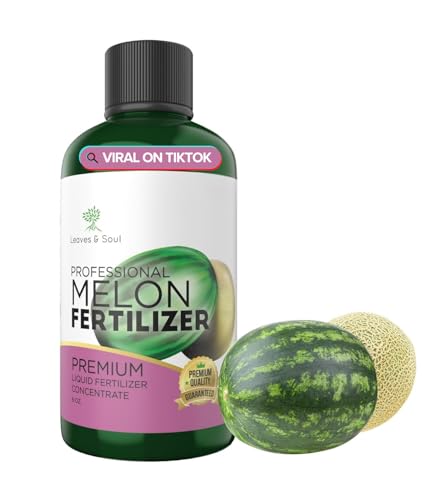
A concentrated liquid with a 5-1-5 profile, aimed squarely at melon vines and fruit set.
This one is built around a balanced 5-1-5 formula — lower nitrogen than a leafy-green feed, with potassium doing the heavy lifting for fruit. It is a fast-absorbing liquid, so you mix it with water and pour it straight to the roots, which makes it a good fit for container melons and in-ground beds alike.
The 8 fluid ounce bottle is the smallest here — it’s a quarter of the volume of the TPS options — but it is concentrated, and owners note it lasts a surprisingly long time. It is made in the USA, and the brand even offers a companion app for plant-care tips.
Gardening skeptics with frustrated vines will find this one speaks their language. The recurring story is a garden that produced “a lot of leaves and no fruit” flipping to blooms and squash flowers after switching; another grower in the northeast finally harvested watermelons before the freeze for the first time. The main gripe is simply the bottle size — at 8 fl oz it disappears fast if you have a large patch, though the plant growth results keep owners coming back.
The verdict: a smart, balanced liquid for small gardens that want a targeted melon feed without the bulk of a bigger bottle.
3. Watermelon Fertilizer – Liquid Plant Food (TPS Nutrients)
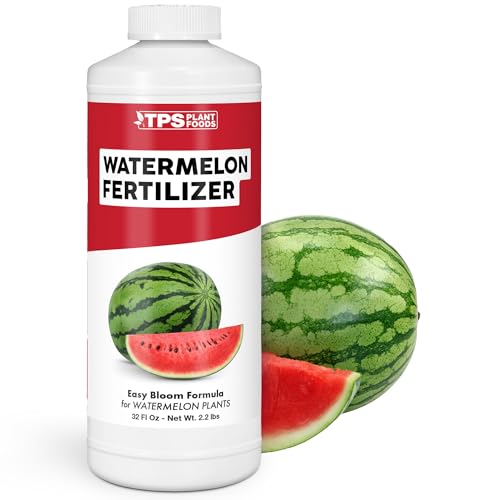
The roomiest bottle in the lineup — 32 fluid ounces aimed at vigorous vines and bigger melons.
If you want a liquid fertilizer that lasts many waterings, this 32-fluid-ounce bottle holds four times the liquid of the Leaves & Soul bottle. It weighs 2.2 pounds, compared to the Miracle-Gro’s 4.5 lb weight, so you get a lot of feeding power in a lighter package.
It is a potassium-rich formula, which is exactly the nutrient that supports flowering and fruit development in melons. Made in the USA, it suits both backyard gardens and larger field plantings, and it is designed to be mixed with water and applied regularly through the season.
Growers report quick, visible responses — watermelons “popping up more and more” each check, and vines setting fruit within weeks of a weekly feeding. The honest catch is dilution: some owners feel the concentrate is weak, with one noting only 5 feedings from a bottle that ran out in three weeks, so you will likely repurchase for a full season. It still earns repeat buyers for the growth it delivers.
Worth a look if: you want a big liquid reserve for a full season of weekly feeds.
The catch: the concentrate runs out faster than the bottle size suggests.
4. Melon Fertilizer – Liquid Plant Food (TPS Nutrients)
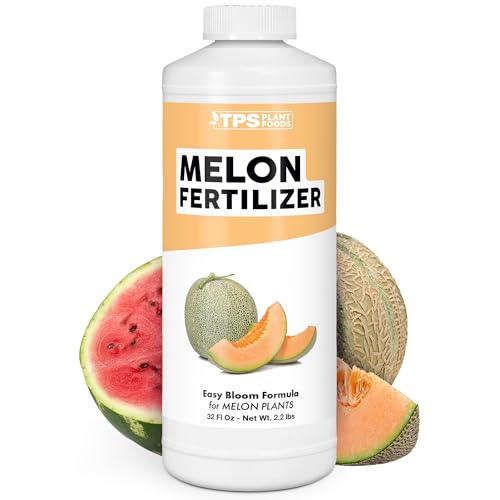
The liquid feed that brings stressed vines back to life — a favorite for rescue jobs.
This 32 fluid ounce liquid is the sibling of the TPS watermelon feed, but it’s marketed a little differently: it leans on a kelp and mineral mix, which growers credit for helping plants bounce back after setbacks. The most dramatic story involves vines stripped to minimal leaves by caterpillars, then brought “quickly back to par” — a real rescue scenario.
You apply it as a root or leaf feed by diluting the liquid concentrate in water. Owners describe clear instructions and easy mixing, which keeps the routine simple even for newer gardeners. The bottle weighs 2.2 pounds, matching the watermelon-focused version, but this one is framed around overall crop growth and fruit development.
Growers report greener leaves, faster growth, and vines that “perk up” after feeding. The honest caveat is timing: several owners say it is too early to judge the final fruit yield, and one grower in Oklahoma is still waiting on the weather to cooperate for cantaloupes. If you are recovering damaged vines or want a kelp-based boost, this is the one to try.
Best for: gardeners nursing damaged or slow vines back to health with a kelp-mineral boost.
Keep in mind: fruit results take a full season to judge, so patience is part of the deal.
Understanding the Specs
N-P-K Ratio
The three numbers on the label — nitrogen, phosphorus, potassium — tell you what the plant will prioritize. Nitrogen pushes leafy vine growth, phosphorus builds roots and blooms, and potassium drives fruit size and sweetness. For watermelons, you want a formula where potassium holds its own, like the 5-1-5 balance on the Leaves & Soul bottle.
Granular vs Liquid Form
Granular fertilizers release slowly into the soil, so one application feeds your watermelon vines for months without redoing it. Liquid fertilizers work faster because you pour them directly onto the roots, which helps when your vines look hungry and need a quick boost. So pick granular if you want a set-and-forget approach, or liquid if you prefer to mix and water regularly.
FAQ
When should I start feeding my watermelon plants?
What is the best N-P-K ratio for watermelons?
How often should I apply liquid fertilizer to melons?
Can I use a tomato fertilizer on watermelons?
Why are my watermelon vines big but not setting fruit?
How long does a bottle of liquid watermelon fertilizer last?
Is granular or liquid fertilizer better for melons?
Can liquid melon fertilizer be used on other plants?
Final Thoughts: The Verdict
For most gardeners, the watermelon fertilizer winner is the Miracle-Gro Shake ‘N Feed because it delivers a full season of feeding from one simple application, backed by the strongest owner consensus in this lineup. If you prefer a fast-acting liquid for container melons or targeted vine feeding, grab the Leaves & Soul for its balanced 5-1-5 formula. And for a bigger liquid reserve with quick results, the TPS Watermelon Fertilizer is the bottle to reach for.
How We Picked
We do not accept paid placement. Every pick is matched to a real buyer and a real use-case; we do not hands-on test units.
Sources & Methodology
Specifications: manufacturer listings and product documentation. Review insights: verified customer reviews, as of August 2026. Pricing: not shown on this page (it changes often); check the current price via the retailer link.
As an Amazon Associate, Lawn Gear Lab earns from qualifying purchases. This does not affect which products we feature.