
Specs are compiled from manufacturer listings and verified buyer reviews and can change over time — please confirm the key details on the product page before buying.
The biggest mistake first-time vegetable growers make is buying a greenhouse that looks roomy on paper but turns into a kite in the first spring storm. You need a walk-in structure that protects your tomatoes and peppers from frost, wind, and pests — not just a shelf with a plastic bag over it. The best greenhouse for vegetables balances three things: a frame that survives real weather, panels that let in light while holding heat, and enough standing room to actually work in.
I’m Rikta — the founder and writer behind Lawn Gear Lab. This guide is built by comparing the manufacturers’ published specifications and the patterns across verified customer reviews, so you get each pick’s real strengths and trade-offs instead of marketing spin.
From pop-up models for quick season extension to cedar walk-ins for serious year-round growing, here is the straight story on the greenhouse for vegetables worth your yard space.
Our Picks at a Glance

How To Choose The Best Greenhouse For Vegetables
Vegetable greenhouses live outside all year, so the three decisions that matter most are the frame, the glazing panels, and the airflow. Get those right and your plants will forgive almost everything else.
Frame material sets your wind and snow ceiling
Cedar frames resist rot naturally and hold up to heavy snow loads, which is why the premium wood models dominate the top ratings. Aluminum frames never rust and weigh less, but they flex more in strong gusts unless the design adds extra bracing. Steel pop-up frames are the budget entry point, and they are genuinely fine for mild seasons — just plan to anchor them properly.
Polycarbonate beats film for year-round growing
If you want to grow vegetables through winter, look for twin-wall polycarbonate panels. They trap a layer of air that holds heat and diffuses sunlight so leaves get even light. Cheap polyethylene film covers work for spring and fall, but they tear more easily and lose heat fast on cold nights.
Ventilation is the part beginners forget
A greenhouse can hit deadly temperatures for plants on a sunny day if it has no way to release heat. Look for roof vents you can prop open and a door or window that rolls or swings wide. More vents mean more control, and automatic vents matter if you are away during the day.
Quick Comparison
| Model | Best For | Frame | Cover | Vents | Amazon |
|---|---|---|---|---|---|
| Backyard Discovery Willow 9’x6′★ Best Overall | Year-round serious growing | Cedar Wood | Polycarbonate | 1 + exhaust fan | Amazon |
| Outsunny 8’x6’x7′Budget Champion | Budget seed starting | Alloy Steel | Polyethylene | Roll-up door | Amazon |
| CROWN SHADES 8×6 Pop UpInstant Setup | Instant seasonal protection | Steel | Polyethylene | 2 | Amazon |
| EAGLE PEAK 6×6 Pop Up | Solo setup, portable use | Alloy Steel | Polyethylene | 1 | Amazon |
| Jocisland 6×12 Polycarbonate | Long narrow beds | Aluminum | Polycarbonate | 2 | Amazon |
| Palram Canopia Mythos 6’x10′ | UV-blocking durability | Aluminum | Polycarbonate | 1 roof vent | Amazon |
| FLY BY YAN 8×14 | Large footprint on a mid budget | Aluminum | Polycarbonate | 3 | Amazon |
| Jocisland 8×9.5 Cedar | Quick-assembly cedar beauty | Cedar | Polycarbonate | 2 | Amazon |
| LYNSLIM 8×8 Cedar | Compact all-season cedar | Cedar + Steel | 6mm Polycarbonate | Adjustable + port | Amazon |
| WELYAS 16x10x10 | Maximum walk-in space | Aluminum | Polycarbonate | 3 | Amazon |
| Yardenaler 8×16 Cedar | Long-term heavy-duty growing | Wood / Cedar | 6mm Polycarbonate | 2 | Amazon |
In-Depth Reviews
1. Backyard Discovery Willow 9′ x 6′ Cedar Greenhouse
Our pick — over 4.5★ from 100+ verified ratings; the strongest balance of quality and price.
The cedar fortress that shrugs off snow and powers your whole garden year-round.
This is the greenhouse you buy when you are done replacing cheap ones. The 100% cedar frame resists decay naturally, while the commercial-grade 4-wall polycarbonate roof insulates the greenhouse. It is rated to withstand up to 2,800 pounds or 30 inches of snow load and winds up to 100 mph when anchored as the manual instructs.
Inside, 54 square feet of space includes a built-in workstation plus 13 linear feet of fixed staging shelves, so your seedlings and potting supplies have a permanent home. The patented PowerPort provides 3 electrical outlets and 3 USB ports for heat mats or grow lights, plus exterior and interior hose hook-ups. A temperature-activated exhaust fan and one easy-open window keep airflow moving so pollination happens naturally.
Owners consistently call it a “fantastic structure” that looks amazing in the yard, and the quality is the single most-praised trait in the reviews. Assembly takes real time — expect a weekend project with clear instructions and the BILT app guiding you, and several owners noted the parts arrive well-labeled. The picture is not perfect: the roof caulking is awkward to reach, and a couple of units arrived with a damaged door that the company replaced quickly. At 114.25″L x 72.75″W x 94″H, it has a length of 114.25 inches compared to the Outsunny’s 95.25 inches, which makes a meaningful difference when you are hauling trays around.
What wins people over
- Built-in PowerPort with outlets and USB ports for heat mats
- Temperature-activated exhaust fan keeps air moving
- 5-year warranty on a genuinely sturdy frame
What to know before you buy
- Assembly is a real project — plan a full weekend
- Roof caulking is hard to reach during setup
- Heavier price tag for serious growers only
Buy it for: the grower who wants one structure to last a decade and handle snow, wind, and seedlings in the same season.
Think twice if: your budget or patience cannot stretch to a multi-hour build — the pop-ups below are far lighter work.
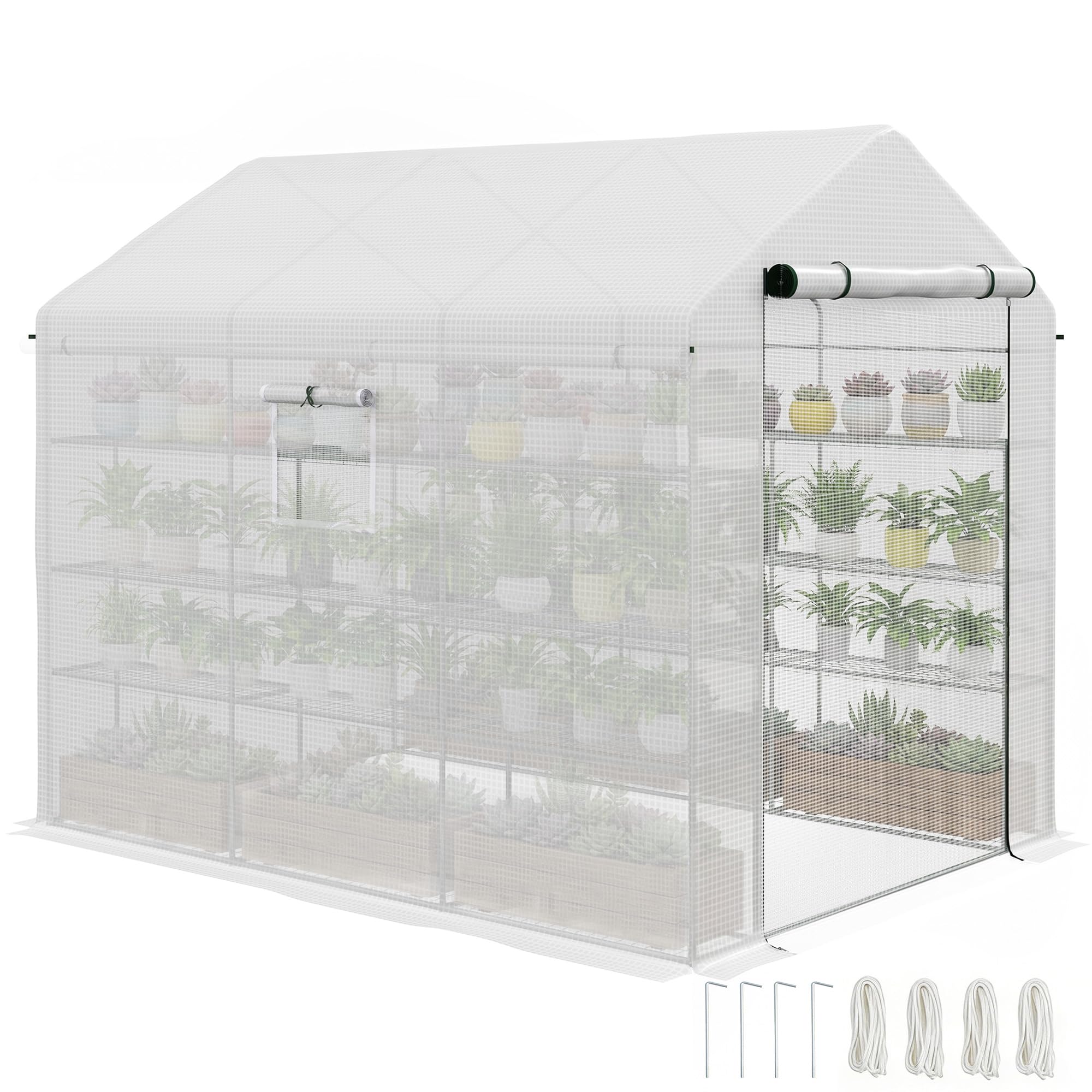
2. Outsunny 8′ x 6′ x 7′ Walk-in Greenhouse
A spacious seed-starting workhorse that asks for a few cheap upgrades.
The Outsunny earns its spot because it proves you do not need a five-figure budget to grow vegetables. The PE cover blocks harmful UV while letting in nourishing sunlight, and the powder-coated steel frame resists water damage. You get 18 shelves with trellis, a mesh door, and mesh windows included — an unusually complete kit at this level. Assembly takes about 2 hours solo, which several buyers confirmed.
At 95.25″L x 70.75″W x 84.75″H, it sits noticeably more compact than the Backyard Discovery above, but the interior still swallowed a thriving strawberry and peppermint patch in the reviews. Buyers praise the easy assembly and the spacious layout that holds many plants. The honesty here matters: sturdiness is the most-discussed downside, with reports of the plastic frame breaking and connectors coming apart. The door zipper rips easily, and the included stakes are useless in soft ground — owners recommend replacing them with heavy-duty stakes and pavers.
Look at this as a season-extender rather than a permanent structure. One owner left it open through a thunderstorm and it survived, but the consensus is that snow and strong wind are its weak spot. The roll-up door is your only ventilation, so plan to open it wide on warm days.
The value read: unbeatable space per dollar for spring and fall growing, as long as you anchor it properly and treat the zipper gently.
The honest limit: this is not a winter or high-wind structure — think of it as a very roomy cold frame.
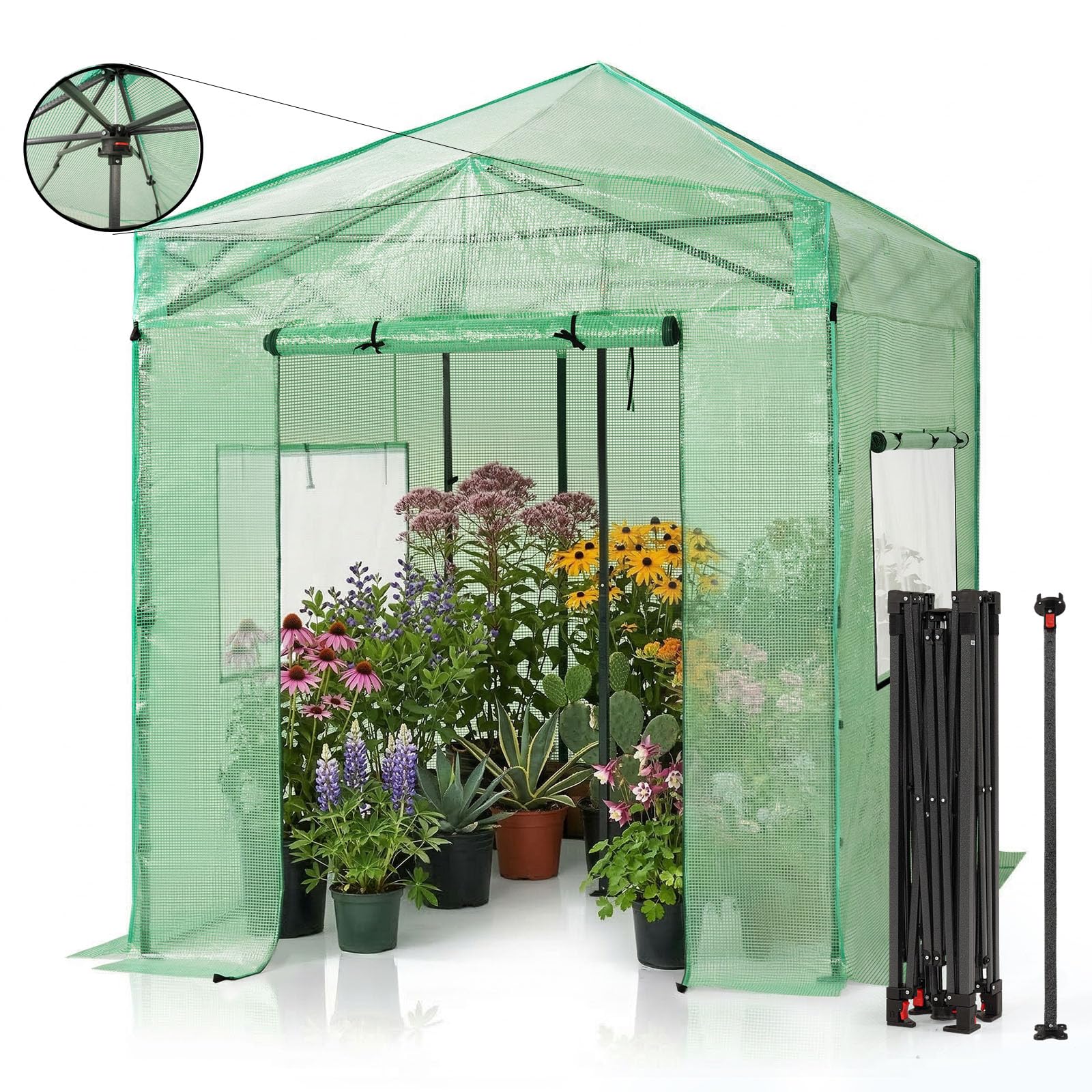
3. CROWN SHADES 8×6 Pop Up Greenhouse
Pops open in seconds and then actually survives the storm it is sold for.
If you want a walk-in greenhouse today without spending your weekend with a wrench, this is the one. The patented one-push CENTERLOK system sets up tool-free in seconds, and an internal support pole under the hub makes the frame sturdier than standard pop-ups. The 8×6 footprint gives you room to move inside for watering and pruning, with 3 adjustable height levels so the peak can grow with your tallest plants.
The wind story here is the headline: buyers report it “Survived 60mph storms when anchored,” and another owner watched it hold against 50mph gusts for 24 hours without moving once secured with straps and weight bags. The upgraded anti-aging PE cover shields plants from sunlight, light rain, and dust, while a roll-up zippered door and mesh windows keep airflow moving. With 2 vents and 2 doors, it beats the EAGLE PEAK 6×6 on ventilation options if you compare the two pop-ups directly.
Tomatoes, squash, peppers, and beans were all thriving after four weeks in the owner reviews. The trade-off: durability is genuinely mixed. A few units arrived with a small corner rip, and the PE cover can tear if a pole rubs against it — a tube of duct tape fixed that for one owner. This is best for mild-weather growing and proper anchoring, exactly as the packaging states.
Why it stands out
- Tool-free setup in seconds with the CENTERLOK hub
- 3 adjustable height levels for growing plants
- Proven storm survival when properly anchored
- 2 doors and 2 vents for real airflow control
Who should pass
- PE cover can tear at pole contact points
- Not built for heavy snow or harsh winters
- Taller users may want the height maxed out
Reach for this if: you need instant, portable protection for spring seedlings and fall extension without a permanent frame.
Look elsewhere if: you grow through snowy winters — the polycarbonate walk-ins hold heat far better.
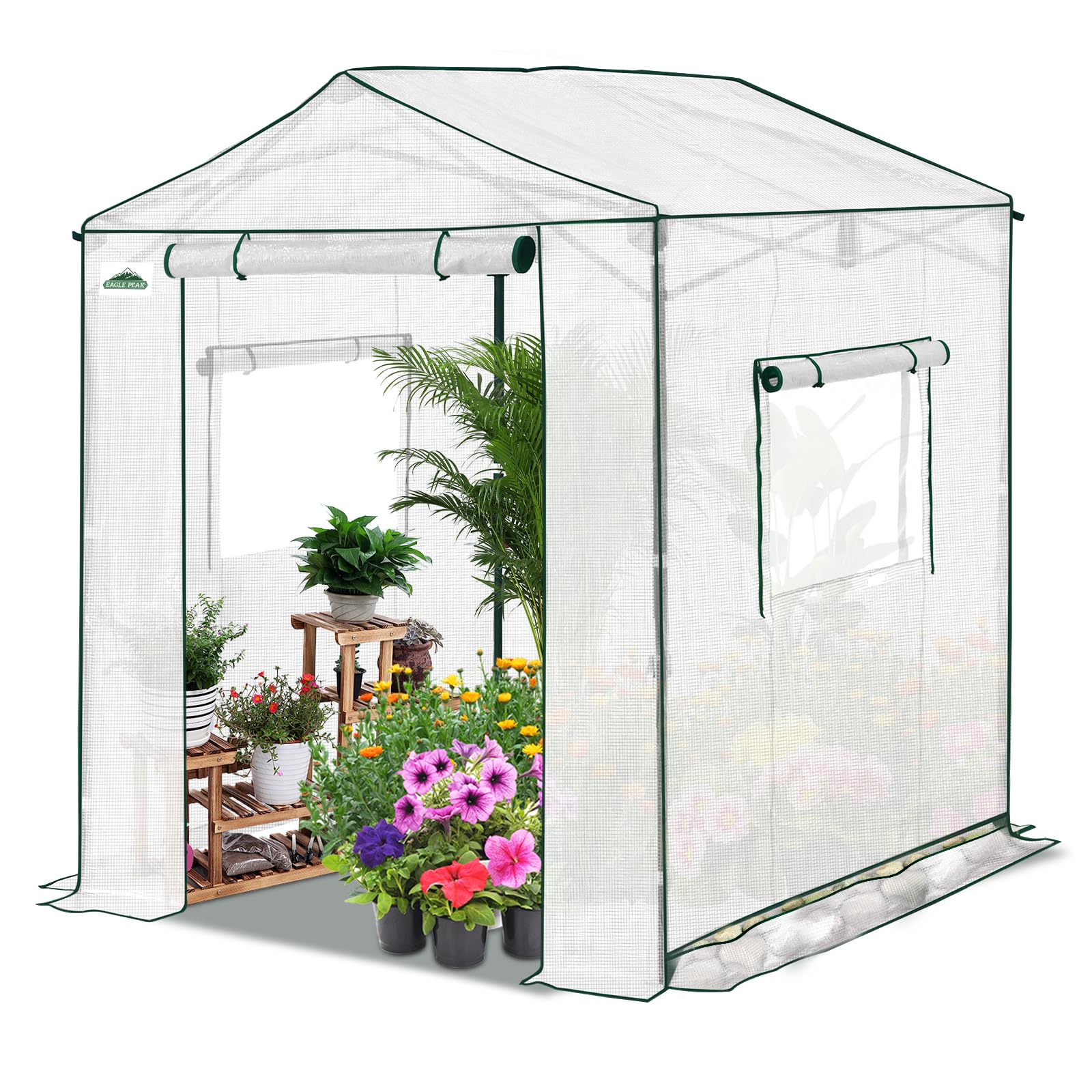
4. EAGLE PEAK 6×6 Portable Pop Up Greenhouse
A one-person pop-up whose gable roof gives you headroom others lack.
Most pop-up greenhouses feel like you are working inside a tent, but the EAGLE PEAK’s exclusive gable roof design changes that. The peaked roof adds extra headroom and improves airflow, making it a more open, comfortable space to actually garden in. The patented Peak Push Center Lock system means one person can set it up in seconds with no tools — the legs snap into place and you simply push from the center.
At 6×6, the footprint is more compact than the CROWN SHADES 8×6, which makes it ideal for decks or smaller yards, and it still fits shelving for seed starting. The powder-coated, rust-resistant steel frame includes extra steel tubing compared to standard models, and anchoring options are generous: guy ropes, ground stakes, and weight bags. The durable PE cover is water-resistant and UV-resistant, with roll-up zippered doors and mesh windows to prevent overheating.
The owner reviews are uniformly enthusiastic — easy setup, sturdy build, and great quality are the recurring themes, with the legs snapping into place called out as a nice touch. Buyers filled the weight bags with sand to anchor it, and it held up perfectly. The 1-year limited manufacturer warranty on the frame and top adds a layer of confidence you rarely see at this price. The honest note: with a single vent, airflow is slightly more limited than the CROWN SHADES, so open the door wide on hot afternoons.
The standout spec: the gable roof design — it gives you genuine working headroom and better airflow than any flat-top pop-up.
The fit: solo gardeners with deck space who want a portable greenhouse they can put up and take down alone.
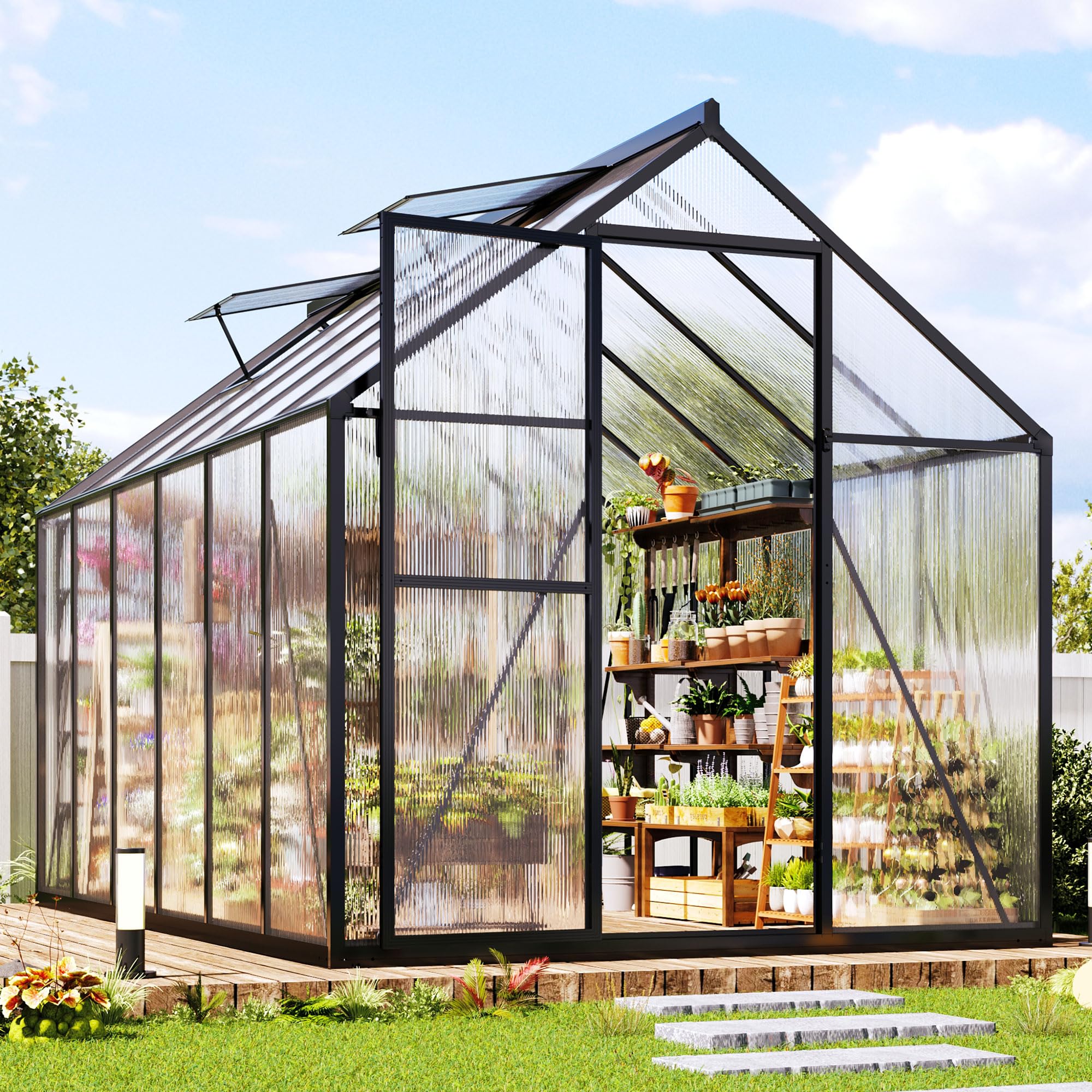
5. Jocisland 6×12 Polycarbonate Greenhouse
A long, low aluminum house that turns a narrow yard strip into a garden room.
If your yard is long rather than wide, the 6×12 layout is a gift. The aluminum frame will never rust, and the quick-connect joints let two people assemble it in just 2–3 hours — a fraction of the build time for the cedar models. Two top-opening roof vents with support rod holders give you flexible positioning for year-round climate control, and the swing door makes it easy to walk in with a watering can in each hand.
Reviewers report the interior stays in the 80s°F when it is in the 40s°F outside, which is exactly the kind of passive heat gain you want for peppers and tomatoes. In a strong wind event, it survived 70mph gusts when anchored to 4x4s, and the quality is the most-praised trait. The concrete-slab installation in the reviews needed no extra bracing because the inner structure held firm.
The assembly experience is genuinely mixed, and that is the honest caveat. Instructions are hard to follow for some, and one frustrated owner still had not figured out the vent stays without rubber bands. Important tip from the reviews: the polycarbonate panels have protective film on both sides — remove both or you will be staring at cloudy panels all season. Take your time, do not fully tighten fasteners until everything is aligned, and this is a solid mid-range greenhouse.
What makes it click
- Quick assembly — 2–3 hours for two people
- Roof vents with support rods for flexible airflow
- Proven heat gain and 70mph wind survival
- Rust-free aluminum frame
Fair warning
- Instructions are the biggest complaint in reviews
- Protective film on both sides of panels — easy to miss
- Not a solo build — bring a second person
Choose this for: narrow lots and gardeners who want polycarbonate durability without the cedar price tag.
skip it if: you are not comfortable with a fiddly DIY build — the Palram below has clearer guidance.
6. Palram Canopia Mythos 6′ x 10′ Greenhouse

The virtually unbreakable twin-wall classic with five years of proof in the reviews.
You get proven performance with the Palram Mythos, backed by years of owner reviews. Its 4 mm twin-wall polycarbonate panels block up to 99.9% of UV rays while diffusing harsh sunlight, preventing lettuce from bolting and seedlings from scorching. The rust-resistant aluminum frame sits on a galvanized steel base (steel coated with zinc to prevent corrosion), and the hinged door locks with a handle and magnetic catch.
One owner ran this structure for 5 full years through snow, hail, and high winds, reporting 100% seedling success the whole time. That longevity is the strongest endorsement in the data. The specs back it up: it supports snow loads of 15.4 lbs per sq. ft. and wind gusts of 56 mph when anchored with the Nature Series anchor kit. An adjustable roof vent and built-in rain gutters round out a genuinely complete package.
The honest trade-off is the assembly. The 56-page picture-only instructions are hard work, and the 2-day build is not for the impatient. A handful of owners dealt with flimsy panels or broken plastic pieces, though Palram replaces parts quickly. Build it on a level base, anchor it properly — one owner’s unit wandered a foot in the first wind before being staked down with steel cables — and the structure is genuinely sturdy. The experience split is real: some call it easy, others call it a nightmare.
The durability read: a 5-year survivor with 99.9% UV blocking is the definition of low-maintenance for most growers.
The cost of admission: a serious assembly project with picture-only instructions — budget a full weekend.
7. FLY BY YAN 8×14 Outdoor Polycarbonate Greenhouse
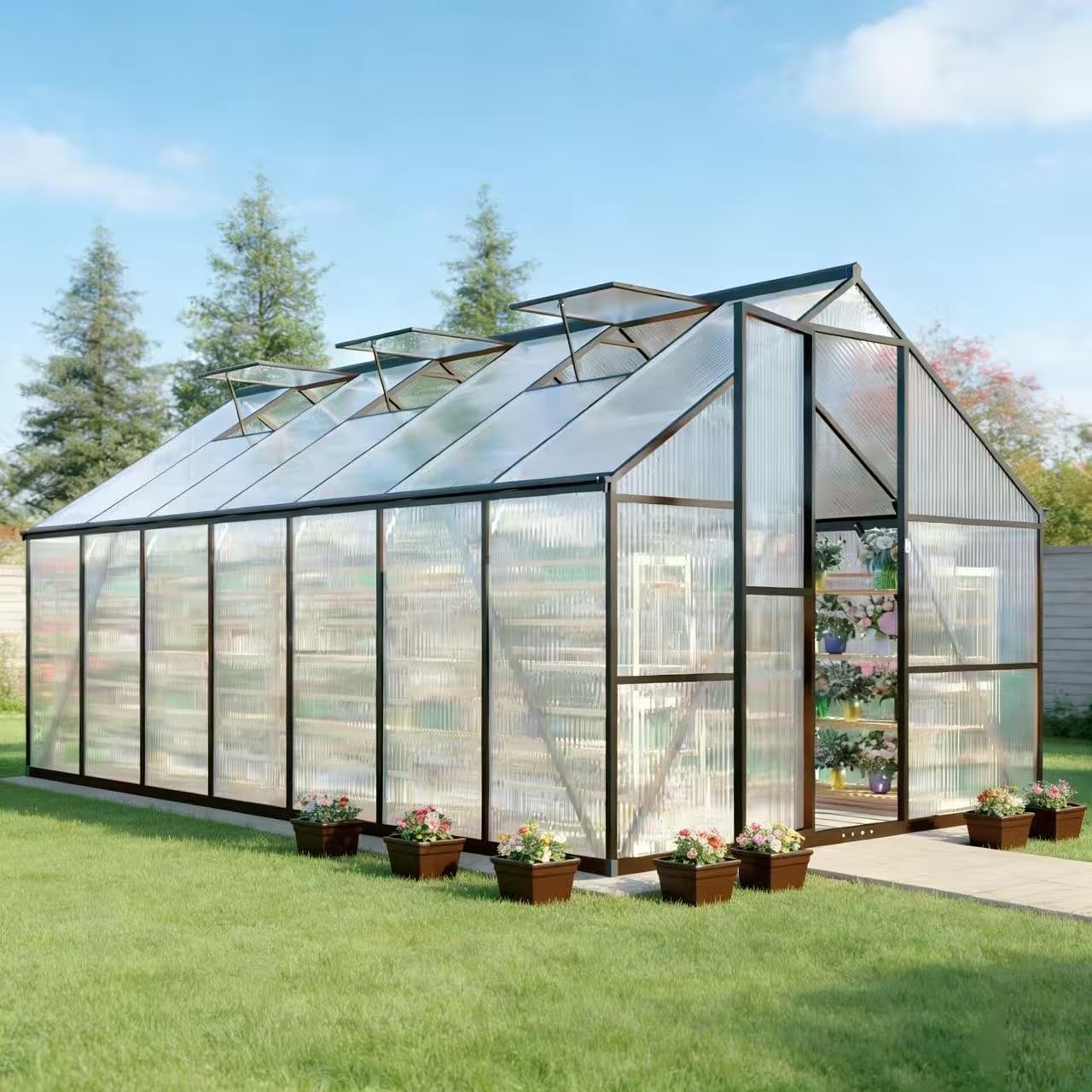
An 8×14 aluminum house with triple roof vents and a slide-in panel system.
This is the choice when you need serious floor space without stepping up to cedar pricing. At 166.1″L x 97″W x 77″H, the 8×14 footprint gives you room for multiple raised beds or a full seed-starting operation. The unique quick-install system uses slide-in panels refined through 500+ tests, so no cutting or drilling is needed — setup happens in just three steps, which the maker claims boosts speed by 40% and stability by 35%. A wrench and gloves come in the box.
In the reviews, sturdiness is the most-praised trait by a wide margin, with owners calling it “very strong” after surviving storms and wind. One buyer measured the interior at a generous 7’8″ x 13′ x 8′ and was so impressed they planned to buy a second to connect into an 8×24 mega-greenhouse. The 720g/m² polycarbonate panels are UV-coated and double-wall, so they deliver impact resistance and diffused light for even growth — safer than glass with no shattering risk.
The catch is assembly, which is the most-discussed topic and honestly mixed. Plan for 4–6+ hours with 4–5 people, and know that the instructions have frustrated some builders. A couple of owners found parts misassembled or had to build on a pallet base to stop cold leaks. The rear vents and gutters need careful attention during setup. For the space you get, the reviews still land firmly positive on quality and value.
Where it shines
- 3 roof vents for serious hot-day airflow
- Slide-in panels — no cutting or drilling
- Proven storm survival in owner reviews
- Enormous 8×14 growing footprint
What it costs you
- Assembly is a marathon, not a sprint
- Instructions could be clearer
- Needs a level base to prevent cold leaks
Buy it for: the grower with big ambitions and a big yard who wants polycarbonate quality at a mid-range price.
Think twice if: you want a weekend build — this one takes a full day with help.
8. Jocisland 8 x 9.5-Ft Wooden Greenhouse
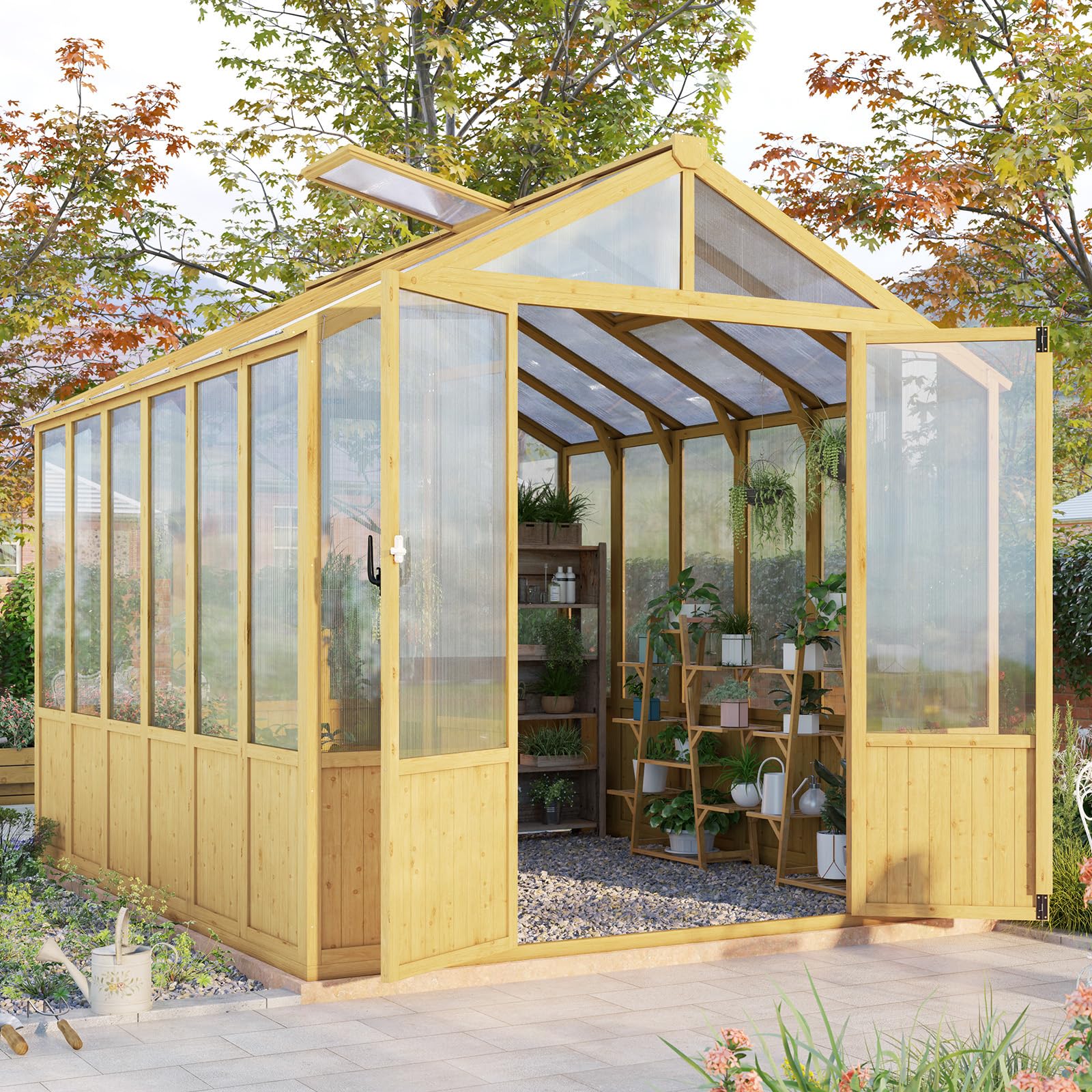
Cedar warmth with a build so easy you might finish in a day and a half.
This is the cedar greenhouse for people who want the natural look without the two-week construction project. The walls, doors, and windows arrive pre-assembled — you simply connect them with the included hardware. Owners consistently describe the assembly as a breeze, with one builder finishing in “just a handful of hours” and another completing it in 1.5 days. The instructions were rated roughly 95% clear by the reviewers.
Inside, the 5.38ft wall height and 7.45ft peak height give you real room to move — unusual for a wooden greenhouse in this class. The premium cedar frame uses reinforced metal hardware, with a wind rating of 38–46mph and a maximum load capacity of 625lbs, so it is steady in varied weather. Two adjustable windows plus the door give you temperature and humidity control, and the sunboard panels provide heat insulation and UV protection.
The reviews are remarkably positive: durability, easy assembly, and good looks are the top themes, with buyers noting it “resists winter conditions well” and retains heat admirably. The honest caveats are minor — a few owners found slightly warped panels that left small gaps (clamps fix it), and the roof beam is worth reinforcing for heavy wet snow if you live in a snowy zone. At a 4.5-star rating with a modest review count, this is a smaller-sample pick, but the feedback is uniformly warm.
The ease factor: pre-assembled panels make this the least intimidating cedar greenhouse you can buy.
The upgrade tip: add a couple of roof braces for heavy snow and you have a genuinely long-lived structure.
9. LYNSLIM 8 x 8 FT Wooden Greenhouse
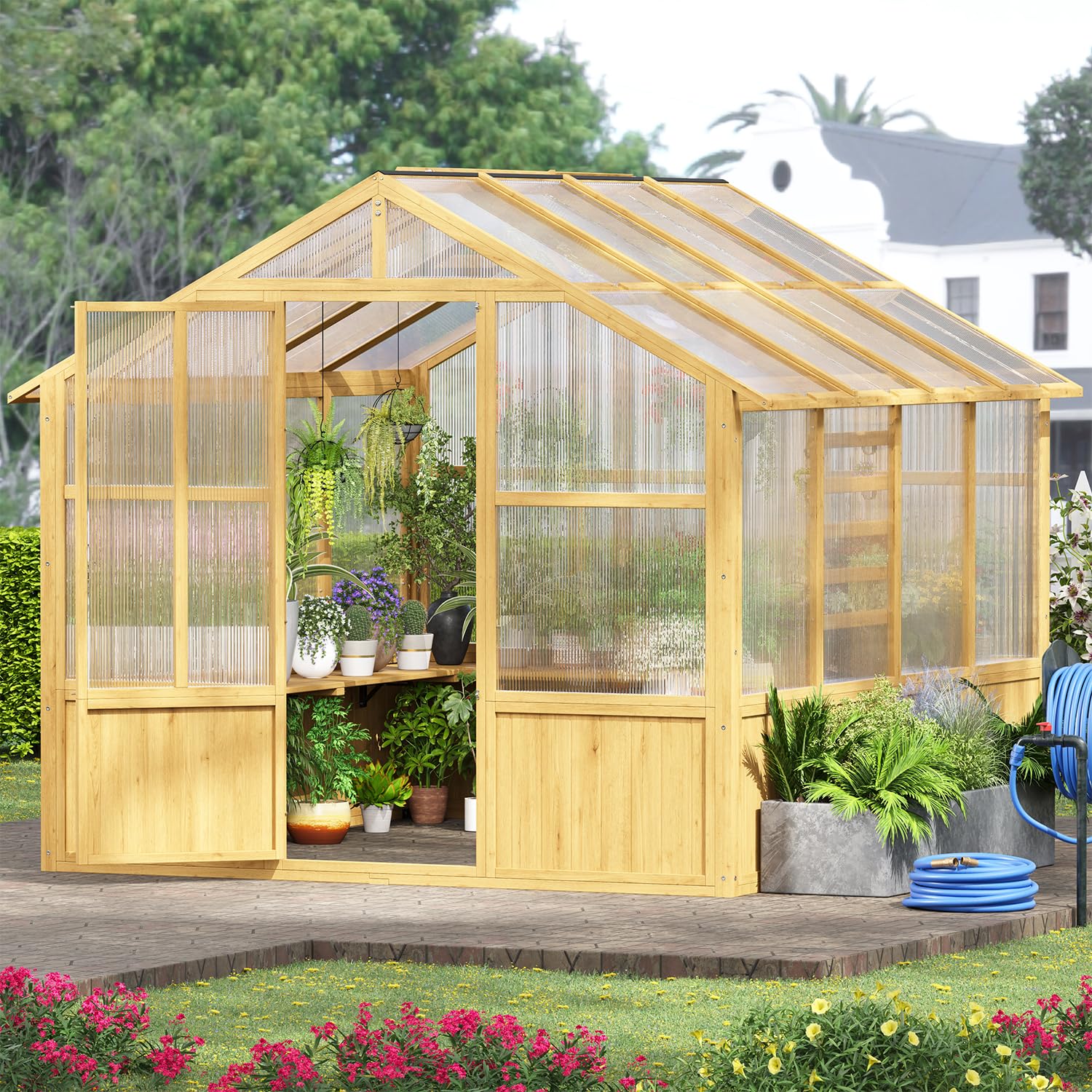
A steel-reinforced cedar square with panes thick enough to live in.
The LYNSLIM is built around one standout spec: 6mm-thick, 720g polycarbonate sheets with a UV coating that blocks 99.99% of harmful rays. That thickness is why it retains heat through cold nights — cedar’s natural insulation holds the daytime warmth, and the dense panels keep it inside. The triangular frame design minimizes the need for wind anchors, and the steel-reinforced cedar construction is meant to brave heavy snow, storms, and rain.
The details show real thought for daily use. A foldable wooden pot rack gives you display space with hooks for tool storage, pre-cut fan openings make vent installation simple, and pre-drilled water pipe holes simplify watering. The lockable front door adds security, and the slide-in panel system speeds installation by 20% while boosting stability by 15%. Owners used it successfully for potted peach, avocado, and apple trees, and one 5’5″ buyer confirmed they can stand inside comfortably.
Wind resistance is the honest caveat here. One owner tied it to a tree because the included ground stakes won’t hold, and another found it tips over too easily in winter. Buyers agree: the structure is sturdy once you anchor it properly — replace or supplement the stakes with long tent stakes or a tree tie-down, and it becomes a “sturdy little greenhouse for the money.” The seller also earned praise for quickly fixing missing parts with excellent customer service.
Why it stands out
- 6mm polycarbonate — the thickest panels in this class
- 99.99% UV protection for sensitive plants
- Foldable pot rack with tool hooks
- Pre-drilled water pipe holes
Know this first
- Stock ground stakes are inadequate for high wind
- Rails cannot hold very heavy pots
- Needs bottom insulation for nighttime heat retention
Reach for this if: you want a compact all-season cedar house with premium panel thickness and a smart pot rack.
Look elsewhere if: you cannot anchor it to something solid — this one needs a real tie-down in gusty zones.
10. WELYAS 16x10x10 FT Large Greenhouse
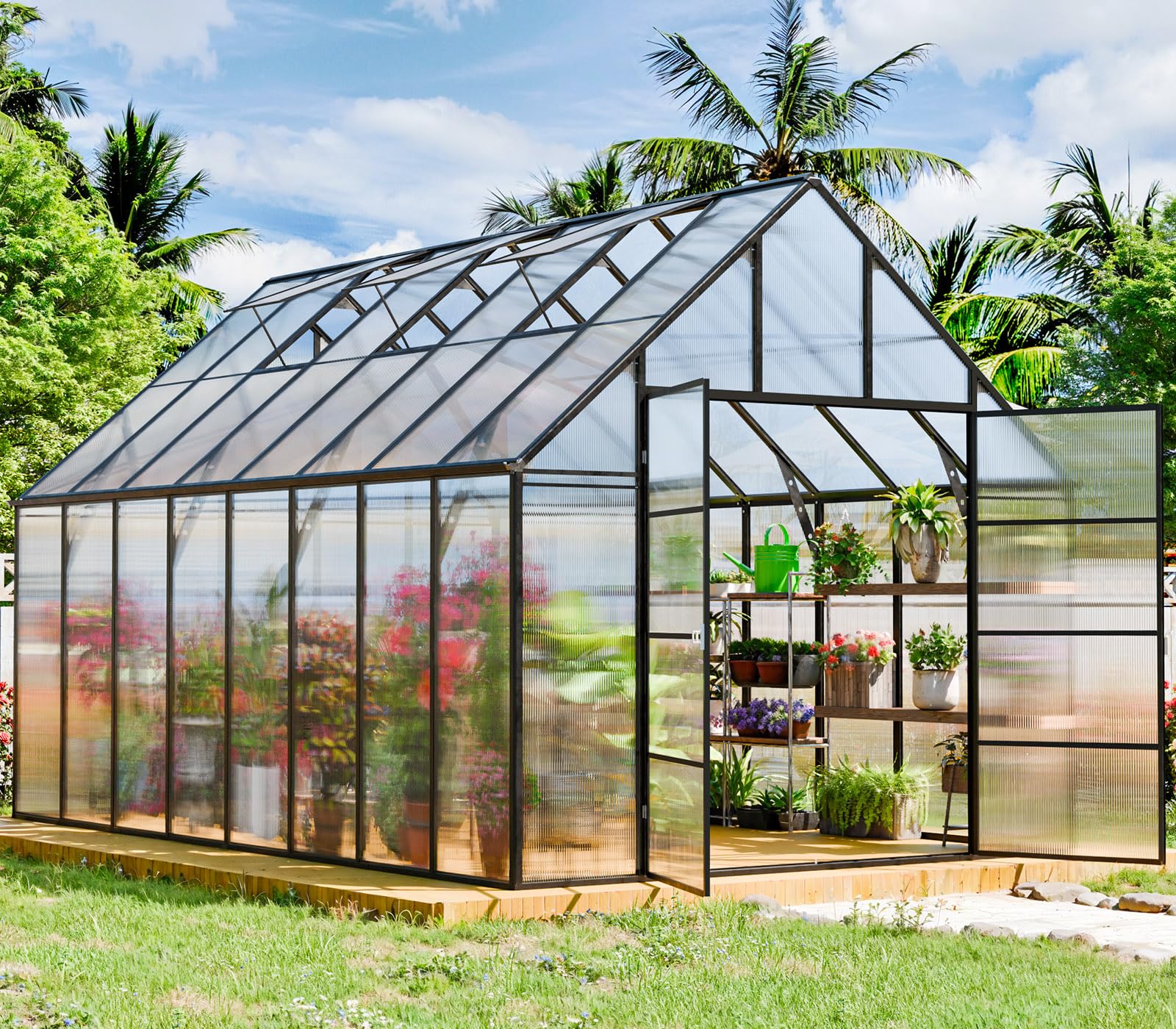
A 16-foot aluminum house with a door wide enough to roll a wheelbarrow through.
If sheer space is the dream, the WELYAS at 16x10x10 feet delivers it. The 6.5×6 FT swing door is genuinely wider than anything else in this lineup — you can walk big tools, wheelbarrows, or a potting bench straight in. The reinforced aluminum frame with anti-rust coating withstands 1000 lbs of snow and wind up to 50 mph, and it comes with extra mounted ground screws plus a built-in draining system for rainy days.
Three windows, each with 5 adjustable levels, give you granular airflow control — the most flexible ventilation setup on this list. The transparent panels ensure plants get plenty of sunlight for healthy growth, and the modularized design includes detailed instructions plus a reference video. Multiple size options mean you can scale up or down to fit your yard.
The reality check is assembly. It is the single most-discussed negative in the data, with one owner calling it “harder than IKEA” and another spending 4 days with two people. The instructions genuinely are unclear — one buyer had to email Amazon for the manual. Worth noting: one Texan found it unsuitable for summer heat (the greenhouse effect works both ways) and repurposed it as a winter turtle shelter. The consensus from owners who finished: “very sturdy and looks great,” with the lightness of the panels and the clean appearance earning consistent praise.
What you get
- 10 feet of width — room for real growing operations
- 6.5×6 FT door for tools and equipment
- 3 vents with 5 adjustable levels each
- 1000 lb snow load rating
What it demands
- Multi-day assembly with real patience
- Instructions need improvement
- Door spring locks are essentially useless
Buy it for: the serious grower with a large yard who measures success in how many beds fit inside.
Think twice if: you want a weekend project — hire help or set aside four full days.
11. Yardenaler 8×16 FT Wooden Greenhouse
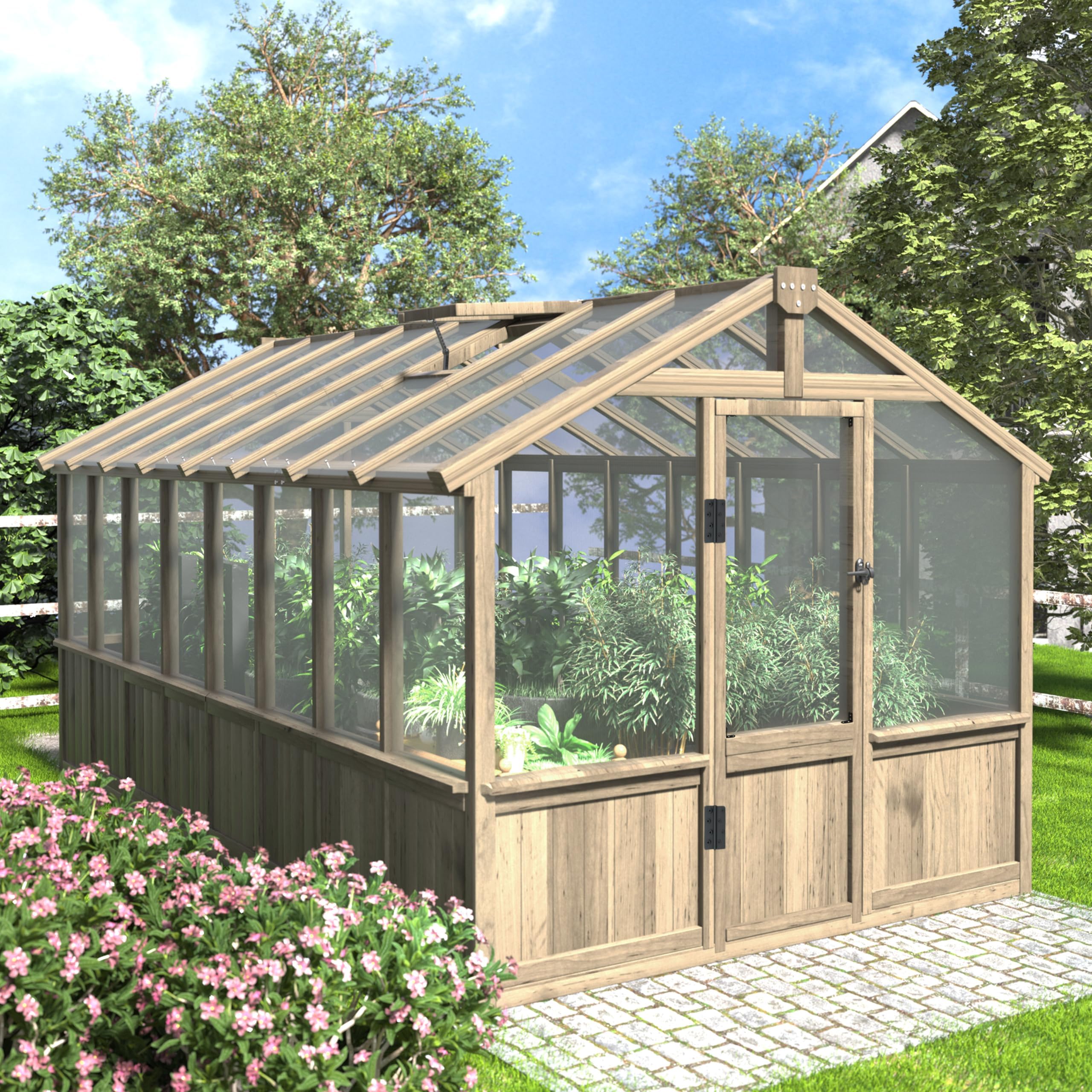
A 427-pound cedar giant whose roof tilts open a full 45 degrees for real climate control.
The Yardenaler is the biggest wooden greenhouse here, and the specs back the ambition. At 96″W x 190.2″D x 90.6″H, you get an interior that swallowed a full 2-day build on a wood frame with room to spare. The 6mm multi-layer polycarbonate panels provide high light transmission while blocking harmful UV rays, with thicker glazing than most aluminum competitors. The 427-pound weight tells you this is not a flimsy kit.
The defining feature is the adjustable roof, which tilts to a maximum opening angle of 45 degrees using a fixed joint. That single design choice gives you precise control over temperature balance and air circulation — crack it open on warm days, seal it tight at night. The 29.1″W x 71.4″H door is lockable, and the cedar frame with reinforced construction stands up to sunny, rainy, and snowy days alike.
Owner reviews paint a confident picture: quality is the most-praised trait, followed closely by sturdiness. Owners mention it “held up 1 year in 60-70 mph winds when tied to a 4×4 foundation” and survived “50+ mph winds and blizzards with anchors” with no snow getting inside. It works with auto vents and misting systems, a big deal for automation fans. The honest notes: the build is labor-intensive (you must caulk all seams), the frosted film on the panels doesn’t always adhere well, and assembly gets mixed reviews on instruction clarity.
What wins people over
- Roof opens to 45° for serious heat control
- 6mm panels hold heat through winter nights
- Proven survival in blizzards and 60+ mph winds
- Compatible with auto vents and misting systems
What to plan for
- Labor-intensive build — caulking every seam takes time
- Frosted film on panels can peel
- Ground stakes need upgrading for high wind zones
Choose this for: the grower who wants a permanent, heavy, weather-proof cedar house with real ventilation control.
pass on it if: you want quick setup — this is a commitment project with a payoff measured in years.
Understanding the Specs
Polycarbonate panel thickness
Panel thickness is measured in millimeters, and it directly controls how much winter cold gets in and how much summer heat stays out. Thin 4mm twin-wall panels like the Palram’s block UV and diffuse light, but the 6mm panels on the LYNSLIM and Yardenaler trap more air between layers for noticeably better insulation. This is the single spec to check if you plan to grow through winter rather than just extending spring and fall.
Snow load and wind ratings
Manufacturers rate how much weight a greenhouse frame can hold before collapsing. The Backyard Discovery takes up to 2,800 pounds or 30 inches of snow, while the Palram supports 15.4 lbs per sq. ft. If you live in a snowy region, match the rating to your local snowfall — a cheap PE cover will sag and tear long before a polycarbonate panel will. Anchoring is always your responsibility, not the greenhouse’s.
Vent count and placement
A greenhouse in full sun can hit 100°F+ in minutes, which cooks your vegetables. Roof vents are the most effective because hot air rises straight out. Look for at least 2 vents on any serious greenhouse, or a temperature-activated fan like the Backyard Discovery’s. More vents give you finer control without having to open the door and let heat escape entirely.
Frame material vs cover material
The frame is what survives storms; the cover is what traps heat. Cedar frames resist rot naturally and carry the highest snow loads, but cost more. Aluminum frames never rust and weigh less, but flex in wind unless braced. Steel pop-up frames are the budget entry point — fine for mild seasons with proper anchoring. Polycarbonate panels outperform polyethylene film for insulation and longevity, which is why the premium picks all use it.
FAQ
What is the best greenhouse size for growing vegetables?
Should I choose cedar wood or aluminum for my greenhouse frame?
Is a polycarbonate greenhouse better than a polyethylene film one?
How many vents do I need to keep my greenhousefrom overheating?
Why does my greenhouse need to be anchored?
Can I grow vegetables in a pop-up greenhouse?
How long does it take to assemble a walk-in greenhouse?
What is twin-wall polycarbonate and why does it matter?
Should I buy a greenhouse with shelves included?
How much weight can a greenhouse frame support?
Final Thoughts: The Verdict
For most vegetable growers, the greenhouse for vegetables winner is the Backyard Discovery Willow because it combines the highest-rated build quality with a 100% cedar frame and enough power ports and shelves to run a serious seed-starting operation. If you want a budget-friendly season extender that takes minutes to set up, grab the Outsunny 8×6 for spring and fall growing. And for maximum walk-in space where you can stand tall and work comfortably, the Yardenaler 8×16 is the one to reach for — its 45-degree adjustable roof and 6mm panels make it a genuine year-round growing room.
How We Picked
We do not accept paid placement. Every pick is matched to a real buyer and a real use-case; we do not hands-on test units.
Sources & Methodology
Specifications: manufacturer listings and product documentation. Review insights: verified customer reviews, as of July 2026. Pricing: not shown on this page (it changes often); check the current price via the retailer link.
As an Amazon Associate, Lawn Gear Lab earns from qualifying purchases. This does not affect which products we feature.