
Specs are compiled from manufacturer listings and verified buyer reviews and can change over time — please confirm the key details on the product page before buying.
Knowing your soil’s pH is the fastest route to a healthier lawn or vegetable patch. A quick test reveals whether your soil is acidic, neutral, or alkaline, so you can target the real issue.
I’m Rikta — the founder and writer behind Lawn Gear Lab. This guide is built by comparing the manufacturers’ published specifications and the patterns across verified customer reviews, so you get each pick’s real strengths and trade-offs instead of marketing spin.
A reliable tester prevents costly plant losses and wasted fertilizer. This breakdown of the home soil ph test kit options helps you match the tool to your exact gardening style.
Our Picks at a Glance

How To Choose The Best Home Soil pH Test Kit
The biggest mistake first-time buyers make is grabbing a cheap probe and trusting its pH reading blindly. These tools work best for moisture and light, while pH often needs a chemical reaction to be trustworthy.
Decide Between a Probe and a Chemical Kit
A simple metal probe gives instant results with no setup, but it only measures what’s directly touching the tip. A chemical kit, by contrast, mixes your soil with a reactive solution and compares the color change.
If you mainly want to avoid overwatering houseplants, a multi-meter probe is a great choice. If you need to know exactly how much nitrogen or potassium is missing from your vegetable bed, a liquid or tablet test kit is the more reliable route.
Check the Number of Parameters
Many users start with pH but quickly want more data. A 3-in-1 tester adds moisture and light, while a 4-in-1 chemical kit adds nitrogen, phosphorus, and potassium (the N-P-K trio).
For lawns, testing N-P-K is essential for choosing the right fertilizer. For potted indoor plants, a simple moisture and pH probe is usually enough to keep things healthy.
Quick Comparison
| Model | Best For | Type | Parameters | Weight | Amazon |
|---|---|---|---|---|---|
| HSLGOVE 7-in-One★ Best Overall | All-in-one digital monitoring | Digital Probe | 7 | 4.8 oz | Amazon |
| Luster Leaf Rapitest Digital pHCompact Pick | Simple pH-only checks | Digital Probe | 1 | 1.6 oz | Amazon |
| 2 Pack 3-in-1 TesterBudget Champion | Multi-plant households | Analog Probe | 3 | 3.68 oz | Amazon |
| Luster Leaf Rapitest Kit | Classic capsule testing | Chemical Capsules | 4 | — | Amazon |
| Soil Test Kit 140 Tests | High-volume testing | Liquid Chemical | 5 | 3.52 oz | Amazon |
| Pawfly 4 in 1 Kit | Precise nutrient readings | Tablet & Strip | 4 | 6.7 oz | Amazon |
| 7-in-one Soil Test Kit | Premium digital monitoring | Digital Probe | 7 | 5.6 oz | Amazon |
| Premium 40 Test Kit | Balanced home testing | Tablet & Strip | 4 | 6.4 oz | Amazon |
In-Depth Reviews
1. HSLGOVE 7-in-One Soil Test Kit
Our pick — over 4★ from 250+ verified ratings; the strongest balance of quality and price.
The digital all-rounder that reads your soil and your air.
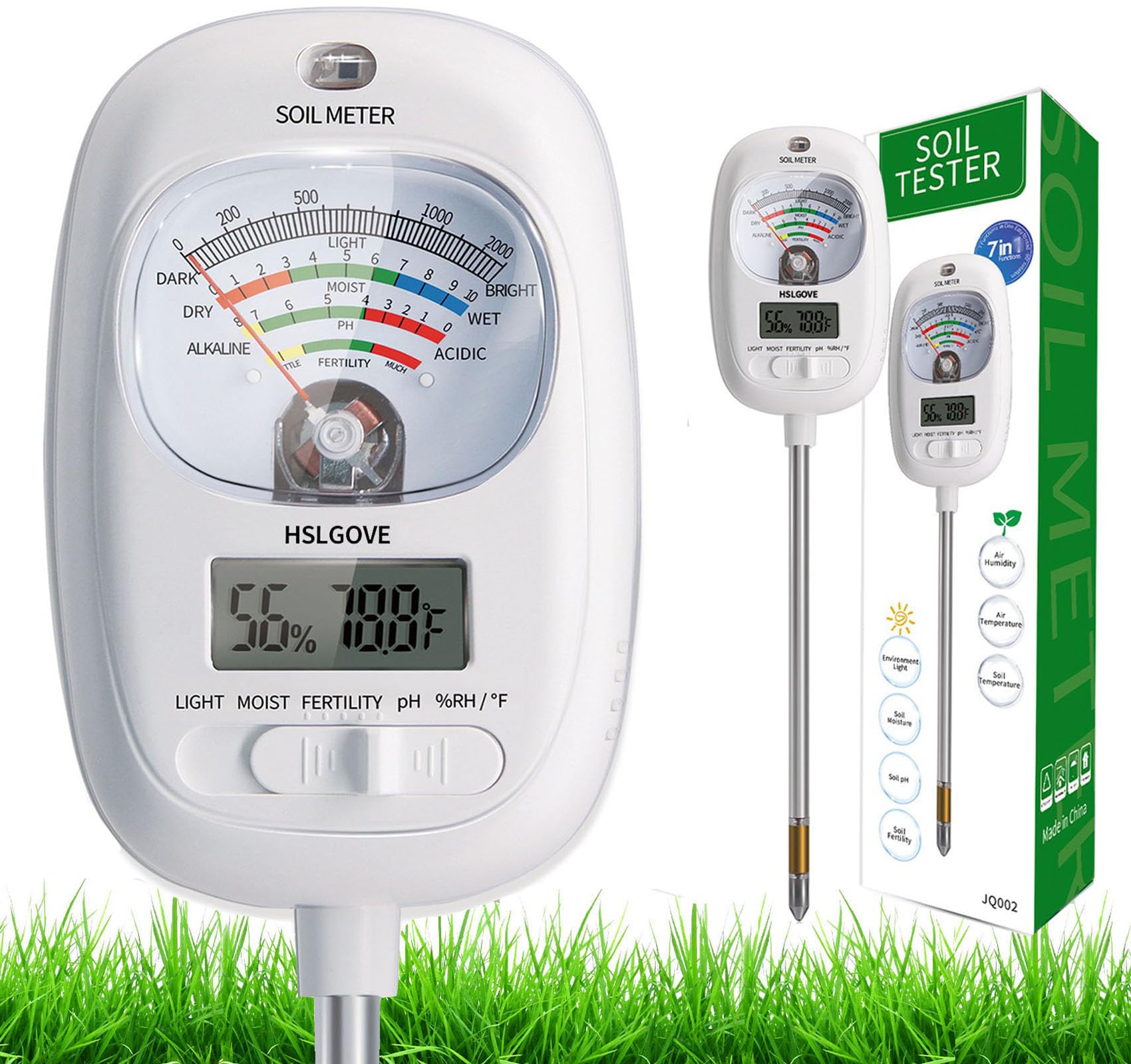
The defining feature here is the 1.6-inch chip board that pulls together seven separate readings in one unit. You move between soil moisture, pH, fertility, temperature, and light by switching modes on a single button while the LCD screen shows soil temp, air temp, and humidity.
Its seven-in-one scope suits beginners wanting a single garden tool. The probe itself runs about 6.8 inches long and is built from three kinds of metal, which keeps readings consistent and harms the plant root system less than wider prongs. Just remember it is specifically a soil meter — you should never test standing water or liquids with it. The guidance is to insert the probe more than 3 inches into the soil and wait 3-5 minutes for the LCD to settle.
Buyers report it simplifies adjusting watering and fertilizer schedules. The dual-screen display shows multiple measurements simultaneously, a favorite feature.
What wins people over
- Measures 7 soil and air conditions, so you rarely need a second tool
- Dual-screen design shows temperature and humidity without mode-switching
- Functionality is the most-discussed strength, with owners praising its range
Things to keep in mind
- Requires 3 batteries and you must install all of them for it to work
- Not meant for testing liquids, so keep it out of standing water
- Needs a few minutes per reading rather than instant feedback
Best suited for: New gardeners and plant lovers who want one digital tool covering soil and air conditions.
Worth noting: The body weighs 4.8 ounces, which comes from the useful dual-screen hardware.
2. Luster Leaf Rapitest Digital Soil pH Meter
The featherweight pH-only probe that fits in a pocket.
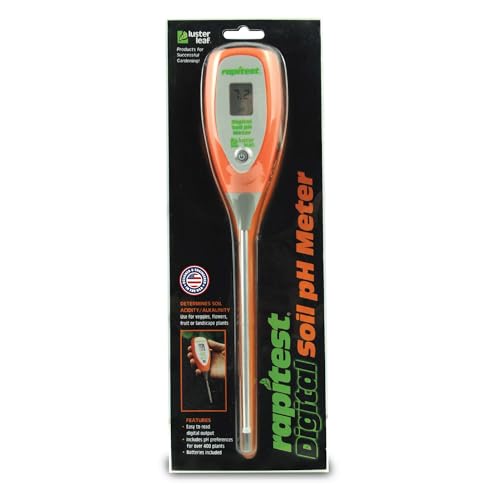
At just 1.6 ounces, this is the lightest tester in this lineup — a fraction of the 4.8-ounce weight of the HSLGOVE unit above. It does one job and does it simply: you push the probe into moist soil and read the digital acidity or alkalinity result on the spot.
What you get is a specific digital range of 3.5 to 9.0, plus a printed plant list that tells you which pH each plant prefers. That little reference sheet is genuinely useful when you are trying to decide whether your hydrangeas want the soil more acidic. The catch is reliability: while some owners found results matched their expectations in tests, a notable number report the meter stubbornly reading pH 7.0 no matter what soil they sample. As the review pages put it: “The meter reads everything as pH 7.0.”
This is the honest trade-off with budget digital probes — they can drift without proper care. Owners who got good results stress keeping the probe free and dry after each use.
Perfect niche: The featherweight digital reader for gardeners who want a quick pH number without navigating multiple modes. It is not the right choice if you need lab-grade accuracy for many different beds.
3. 2 Pack 3-in-1 Plant Moisture Meter Light & PH Tester
Two no-power probes so you always have one where you need it.
The immediate appeal is the 2-pack — you can keep one in the garden bed and one inside with the houseplants. These analog sticks need no batteries or electricity at all, so you just push the sensor into the soil and read the dial instantly.
Each unit checks three things: moisture, light, and pH. That is enough to stop the guesswork on when to water, which is what most indoor plant owners really need. The physical package is compact at 2.37 x 1.3 x 10.24 inches, which is a world away from the long 11.5-inch frame of the HSLGOVE digital unit above. The three measurement settings help owners water plants accurately instead of guessing.
There is a clear split in the reviews, though. For every owner praising the quick readings, there is another saying the light meter does not work and the other readings are off. As some buyers put it bluntly: “Cheap isn’t always a deal when the product is terrible.”
Only if: You want two disposable-style probes for basic moisture and pH checks and accept that individual units can be inconsistent. The 2-pack makes it a low-risk trial for curious plant owners.
4. Luster Leaf Rapitest Soil Test Kit

The capsule-based classic that reads pH and the big three nutrients.
This is the trusted old-school method. Instead of a probe, you mix a soil sample with water and drop in a capsule of reactive powder, then compare the resulting color to the unique color comparators included in the kit. It tests pH, nitrogen, phosphorus, and potassium — the full fertility picture that a simple probe cannot give you.
Repeat purchases are common, with owners returning season after season. One long-time owner describes it as a second purchase, noting it is easy to conduct and easy to read the results, and recommends it to both beginners and pros. Another found the results close to a college lab test, calling it cheaper than a lab and accurate enough to guide soil amendments.
The trade-off is the color-matching step. Subtle color differences can be hard to distinguish, so two people might read the same test slightly differently. One review also flagged a nitrogen test that gave a false zero on enriched soil — so treat a surprising nitrogen reading with a retest before acting on it.
For the traditionalist: If you want N-P-K plus pH in one box and do not mind following careful instructions, this capsule kit delivers lab-style depth at home. It is less convenient than a probe but far more informative.
5. Soil Test Kit 140 Tests (pH, Nitrogen, Phosphorus, Potassium & Ammonia)
Enough chemistry to test your whole yard all season long.
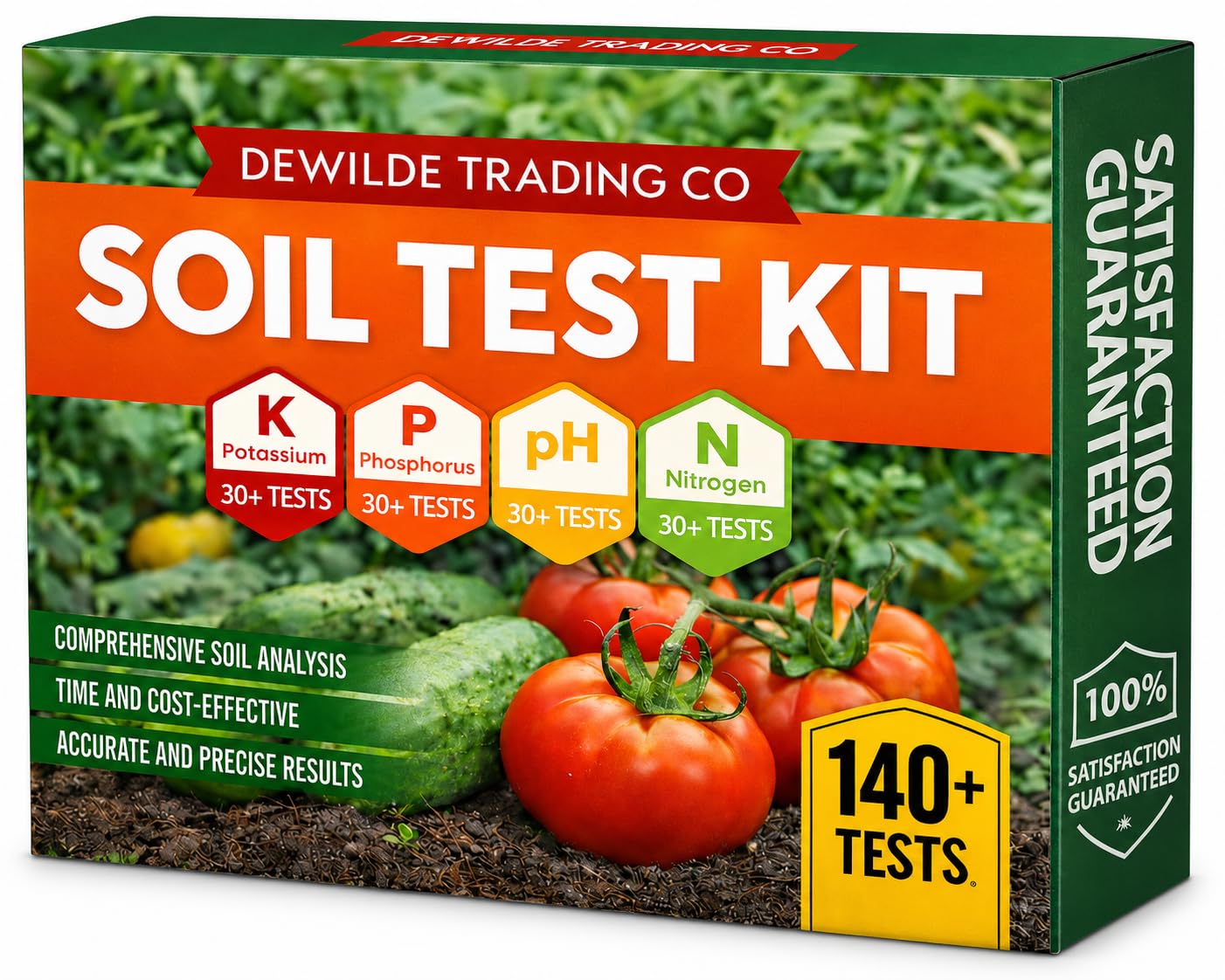
This liquid kit is all about volume. It packs roughly 140 total tests — about 40 for each of the main parameters and around 20 for nitrogen. That is enough to monitor soil health regularly across a large lawn or multiple garden beds without rationing.
It covers five measurements including ammonia, which is more than most kits in this price range offer. The liquid drop method gives you a colorimetric result you compare against the included chart, and owners say it is easy to use and gives results very quickly. It helped one buyer figure out exactly why the grass in their yard was not growing well.
Expect to do a little work, though. The beakers are small, and one owner had to run the test in two stages. Another experienced gardener felt the nitrogen reading was disappointing compared to the more precise categories found in aquarium test kits.
Great match: Gardeners testing many different beds who want a season’s worth of chemistry. The high test count makes it one of the better values for frequent, hands-on soil analysis.
6. Pawfly 4 in 1 Soil Test Kit
Precise pH and nutrient ranges for gardeners who want real numbers.
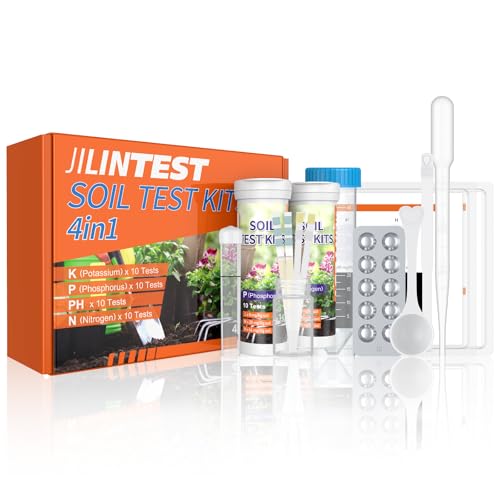
What makes this kit stand out is the specificity of its test ranges. It is built to detect pH from 3.5 to 9, nitrogen from 40 to 320 mg/kg of soil, phosphorus from 8 to 64 mg/kg, and potassium from 40 to 160 mg/kg. Those numbers give you a clear picture of whether your soil is genuinely deficient or just slightly low.
You get precise nutrient readings instead of vague color bands, so you can pick the right fertilizer for your shrubs and trees. The kit includes 20 testing strips and 40 tablets, which gives you 10 tests for each of the four parameters, plus two centrifuge tubes, a test tube, glass vial, dropper, grinding rod, sample spoon, and a color chart. Owners mention it beats simple strips when you need exact nutrient levels for targeted feeding.
The recurring gripe is the instructions. They are described as poorly written with crucial information left out, and one frustrated buyer said only a soils engineer could handle it. If you are patient and willing to figure out the process, the readings are solid — but it is not the most beginner-friendly box.
For the detail-oriented: This kit suits you if you want exact nutrient concentrations rather than vague color bands. skip it if you want a quick, simple to use test — the learning curve here is real, so you’ll need patience to master the steps.
7. 7-in-one Soil Test Kit with LCD Display
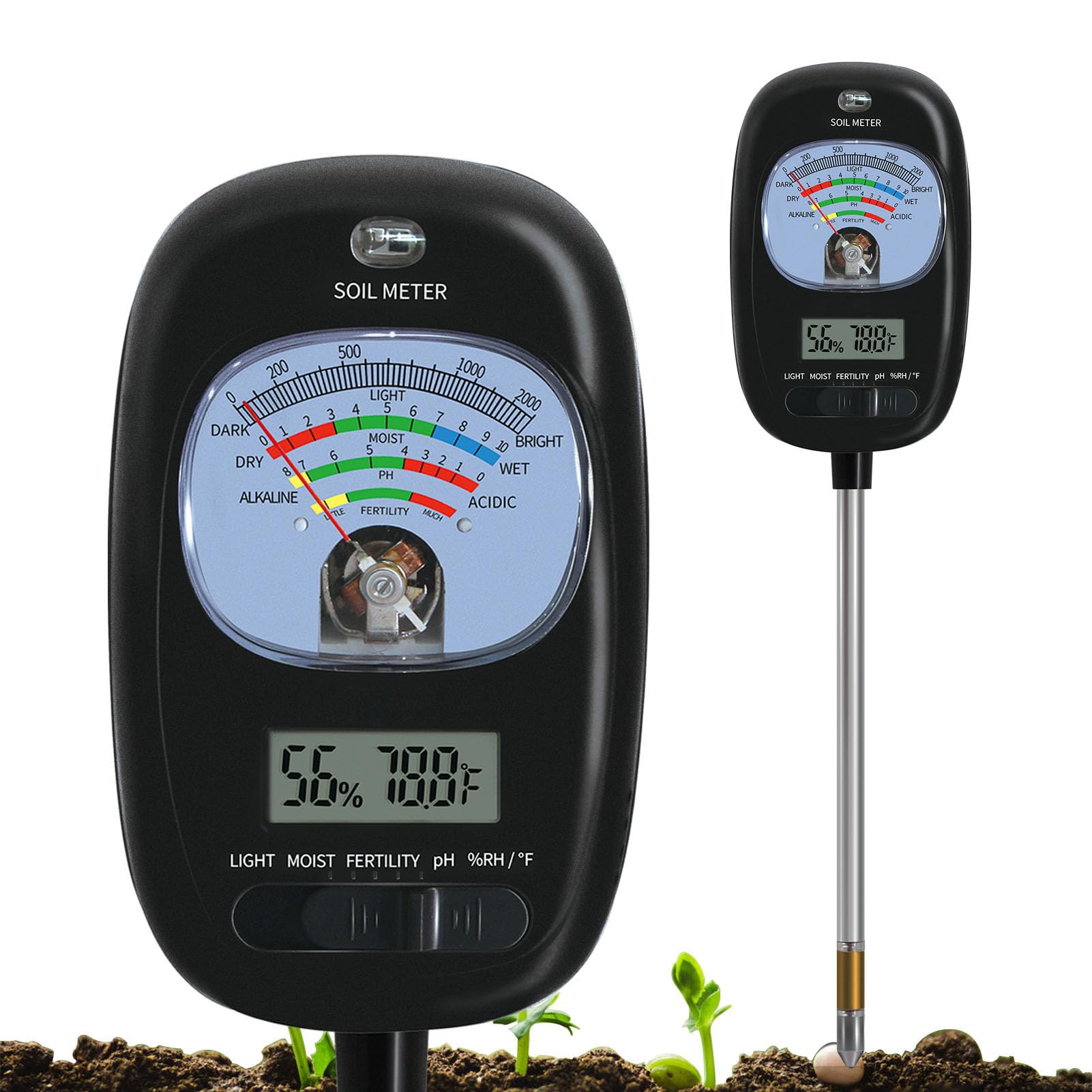
A premium digital meter built for serious plant care.
This Auduto meter takes the digital-probe concept and polishes it. It measures all seven key conditions — moisture, pH, sunlight intensity, fertility, soil temperature, air temperature, and air humidity — on a clear LCD that owners say is readable even outdoors.
The metal probes are the headline here because they are designed to be more corrosion-resistant than ordinary materials, which translates to faster, more accurate readings over years of use. That is a genuine upgrade over cheaper probes that drift after a season.
The maker includes specific care tips that tell you a lot about how to get the best results: insert two-thirds of the probe depth, keep it clean and dry, and avoid using it in sandy or loose soils. Owners praise it as a sleek, well-made meter that boosts confidence in watering and fertilizing, and there is a clear note that following the instructions matters for consistency.
Worth the upgrade: For gardeners who want the reliability of a single well-built digital unit and are willing to follow its care rules. The corrosion-resistant probes are the standout reason to pay more here.
8. Premium Soil Test Kit: 40 Complete Tests
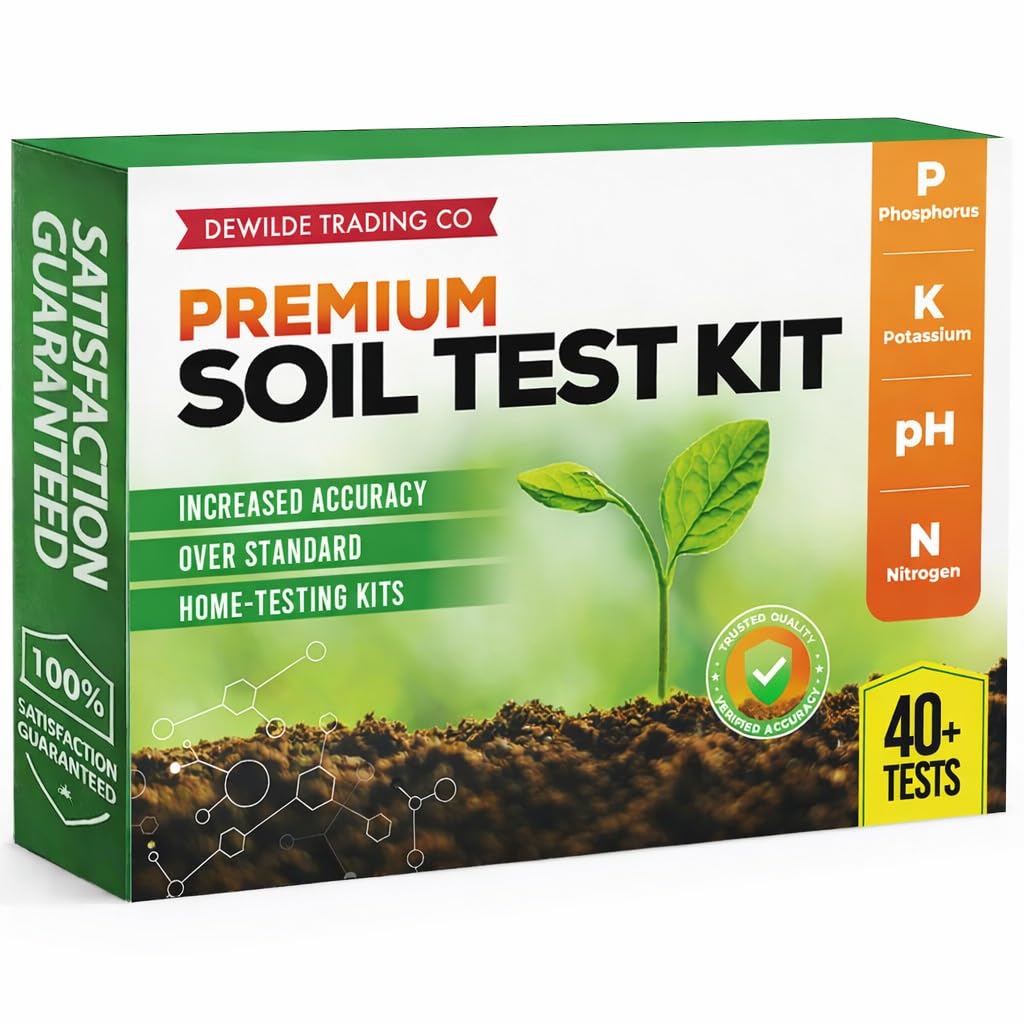
A friendly chemical kit that takes the intimidation out of N-P-K testing.
This 4-in-1 kit from Dewilde Trading Co. is designed to feel approachable for all skill levels. It covers pH, nitrogen, phosphorus, and potassium with enough supplies for 40 total tests — 10 for each parameter — which is plenty for a typical home garden season.
What makes it easy is the packaging. You get a quick guide plus detailed instructions, two bottles of test strips, two test tubes, 40 tablets, a dropper, a stick, and a color card. That means everything you need is in one portable box.
The reviews say it clearly: the range of tests is simple to perform and very helpful for dialing in missing nutrients. One owner says it identified low nitrogen on their lawn, which is exactly the real-world scenario this kit is built for.
Strong starting point: If you want the full nutrient picture without a steep learning curve, this is the kit to grab. It is genuinely friendly for beginners while still being precise enough for lawn diagnostics.
Understanding the Specs
pH Range and Scale
Soil pH runs from 0 to 14, where 7 is neutral. Most plants prefer a slightly acidic range of 6.0 to 7.0. The best kits give you a clear pH range, like 3.5 to 9.0, so you know exactly where your soil lands and how far you need to adjust it.
N-P-K Testing
Beyond pH, the big three nutrients are nitrogen (N), phosphorus (P), and potassium (K). Nitrogen fuels leafy growth, phosphorus drives roots and blooms, and potassium boosts overall health. A 4-in-1 kit that tests all three plus pH gives you the full picture for fertilizer decisions.
FAQ
How often should I test my home soil pH?
What is the difference between a probe and a chemical test kit?
Can I test the pH of water with a soil tester?
Why does my inexpensive pH meter always read 7.0?
How many tests do I really need in a kit?
Is a more expensive soil test kit more accurate?
Can I use the same kit for my lawn and my houseplants?
How do I fix soil that is too acidic or too alkaline?
Why do my test strip colors look different from the chart?
Final Thoughts: The Verdict
The best pick for most households is the HSLGOVE 7-in-One because it replaces several separate tools with one digital unit that reads soil and air conditions. For a reliable read on all four major nutrients, the Premium 40 Test Kit is the approachable choice. And if you want lab-style precision at home, the NewTest Kit is the one to reach for.
How We Picked
We do not accept paid placement. Every pick is matched to a real buyer and a real use-case; we do not hands-on test units.
Sources & Methodology
Specifications: manufacturer listings and product documentation. Review insights: verified customer reviews, as of July 2026. Pricing: not shown on this page (it changes often); check the current price via the retailer link.
As an Amazon Associate, Lawn Gear Lab earns from qualifying purchases. This does not affect which products we feature.