
Specs are compiled from manufacturer listings and verified buyer reviews and can change over time — please confirm the key details on the product page before buying.
Dull pruners crush stems instead of slicing them, and a tired lawn mower blade tears grass rather than cutting it clean. The right sharpening tool fixes both in minutes, but the shelf is crowded with files, stones, and diamond cards that all promise the same result. This guide sorts through the real options so you can pick the one that matches the tools you actually own and the way you like to work.
I’m Rikta — the founder and writer behind Lawn Gear Lab. This guide is built by comparing the manufacturers’ published specifications and the patterns across verified customer reviews, so you get each pick’s real strengths and trade-offs instead of marketing spin.
From guided angle systems to pocket-sized diamond cards, here is the honest breakdown of the best garden sharpening tools for keeping every blade in your shed razor-ready.
Our Picks at a Glance

How To Choose The Best Garden Sharpening Tools
Garden sharpening tools split into three families: files, stones, and diamond plates. Each one removes metal differently, and the right choice depends on whether you are reprofiling a damaged edge or just touching up a blade that sees weekly use.
Match the abrasive to the job
A coarse grit (a lower number like 100 or 325) cuts fast and reshapes nicked edges, while a fine grit (600 or 1200) polishes and hones. If your mower blade has dings, you need coarse; if your pruners just need a quick refresh, fine does the job.
Decide between guided and freehand
Guided systems hold the blade at a set angle, so you cannot spoil the edge by rocking the tool mid-stroke. Freehand files and stones demand a steady hand but handle curved blades and awkward tools that never fit a guide.
Quick Comparison
| Model | Best For | Abrasive Type | Grits | Weight | Amazon |
|---|---|---|---|---|---|
| Work Sharp Guided Field Sharpener★ Best Overall | All-in-one guided kit | Diamond & Ceramic | 5 surfaces | 135 g | Amazon |
| Helko Werk Axe SharpenerPro Pick | Axe & machete reprofiling | Carbon Steel | Fine (dual-sided) | 0.1 kg | Amazon |
| SHARPAL 116N Diamond Card | Pocket-sized multi-tool | Monocrystalline Diamond | 325 / 600 / 1200 | 6.72 oz | Amazon |
| SHARPAL 127N Dual-Grit Stone | Shears, axes & knives | Monocrystalline Diamond | 325 / 1200 | 160 g | Amazon |
| Norton Crystolon Utility Stone | Mower blades & spades | Silicon Carbide | 100 (coarse) | 16 oz | Amazon |
| FELCO 905 Sharpener | Pruners & secateurs | Carbide | Coarse / Fine | — | Amazon |
| Fiskars Maintenance Kit | Complete care routine | Diamond | Single | 0.15 kg | Amazon |
In-Depth Reviews
1. Work Sharp Guided Field Sharpener
Our pick — over 4.5★ from 12,500+ verified ratings; the strongest balance of quality and price.
The complete kit that teaches you perfect angles while you sharpen.
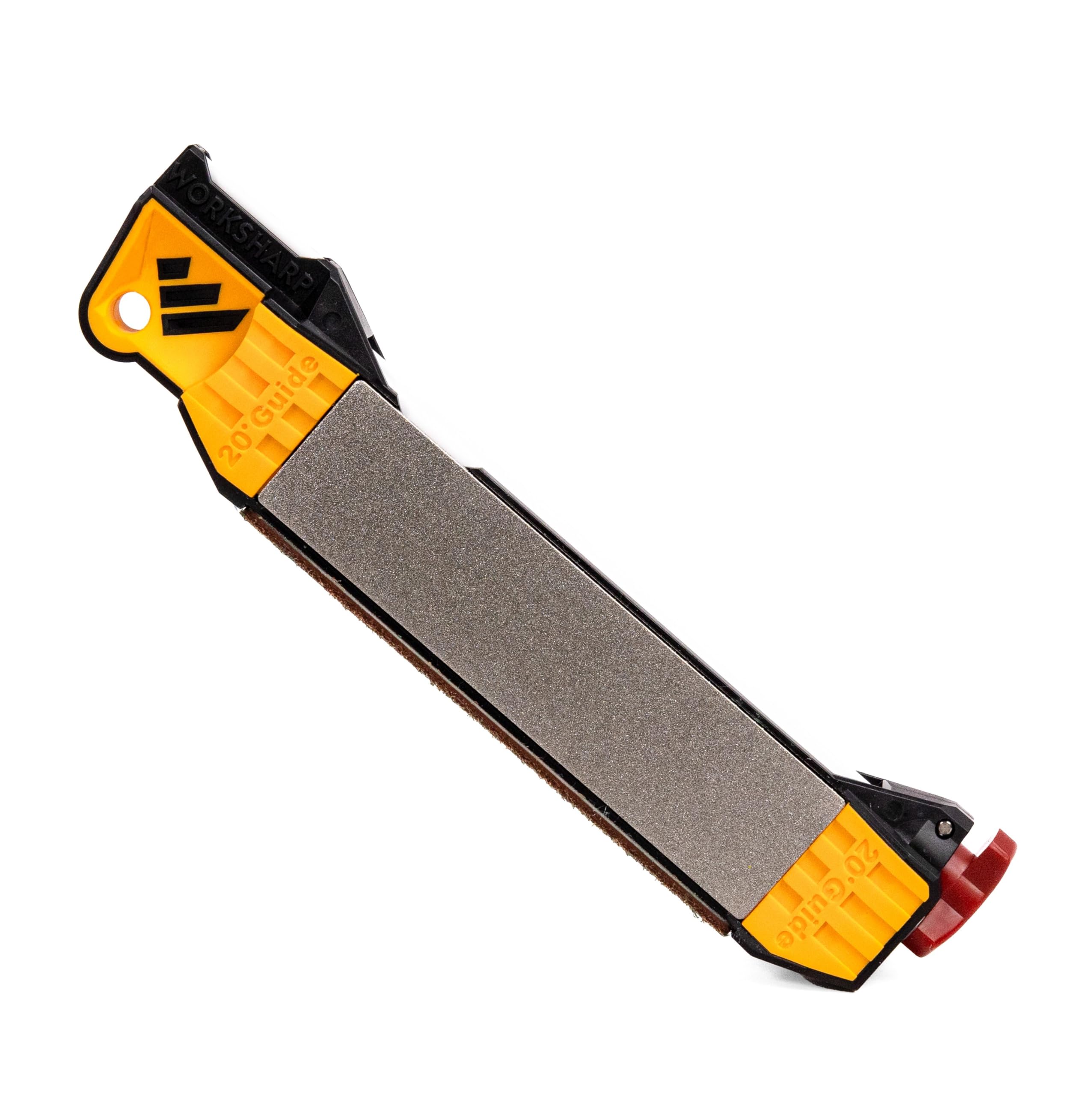
This is the set that gives you everything in one compact case: diamond plates, ceramic rods, a leather strop, and sharpening guides. Because the angle is set at 20-25 degrees, you do not need to guess how to hold the blade — the guide does the thinking for you, which is why beginners rave about it.
The ceramic honing rod rotates to expose coarse and fine surfaces, plus a grooved section made for fish hooks, so one tool covers kitchen knives, pocket knives, and the pruners in your shed. Buyers report that a SOG Trident that had seen basic sharpeners for 7-8 years came out razor sharp — “could not be more happy” is how they sum it up. The diamond plates pop off to reveal a broad head wrench, a detail that saves you time in the field.
The one limitation is that the guide locks you to a 20-degree angle, so if you want a different edge angle you have to adjust by feel. It weighs just 135 g, so it rides easily in a pack for camping or hiking without adding bulk.
field-friendly all-in-one
- Guided system delivers consistent angles every stroke
- Five abrasives in one self-contained case
- Rotating ceramic rod with a fish hook groove
needs steady hand
- Fixed 20-degree angle, no adjustable guides
- No handle, so it relies on the case for grip
portable jobs: you want one portable kit that sharpens nearly everything and removes the guesswork while you learn.
bench use: you need a truly adjustable angle system for specialty edges.
2. Helko Werk Germany Dual Sided Axe Sharpener
A precision file that treats your axe like fine cutlery.
This compact file, made in Germany from C125W2 high carbon tool steel, has a single-cut fine tooth pattern on one side and a double-cut pattern on the other. The double-cut side removes metal aggressively for reprofiling nicks, while the single-cut side delivers the fine finish — and the edges have no teeth, so you will not accidentally cut into the surface next to the blade.
What makes it special is the feel: buyers call it “by far, the best file I’ve ever owned,” noting it works beautifully on delicate tasks because of that safe edge. It is small enough to tuck into a pack or pocket for outdoor work, and the flat handle grips securely with a hanging hole for storage. The build quality is the thing owners praise most — it is well-made through and through.
At only 9 inches long, it is lighter and shorter than a bench file, so it will not swing as hard on heavy reprofiling jobs. One owner found it skipped on a hardened axe head, so very hard steel may need a diamond option instead.
axe owners: anyone who wants a portable, precise file for axes, hatchets, and machetes without the bulk of a full-size file.
pocket carry: your tools are made from unusually hardened steel that a file cannot bite into.
3. SHARPAL 116N Pocket Diamond Sharpening Card
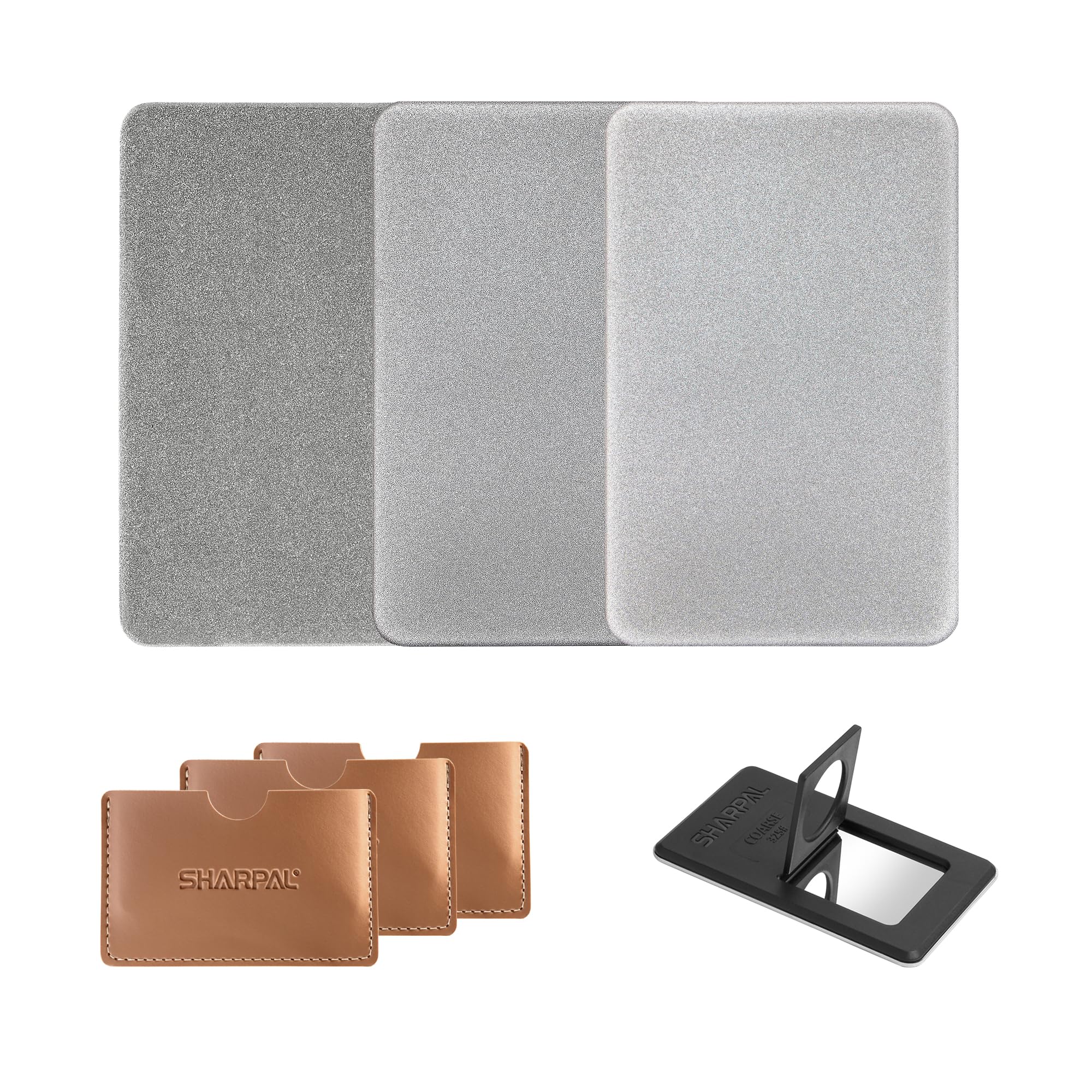
A credit-card-sized sharpener that lives in your pocket until needed.
Three grits — coarse 325, fine 600, and extra fine 1200 — give you a full progression from setting an edge to honing it, all on a card that slips into a pouch and disappears into a pack. You move the stone over the blade rather than the blade over the stone, which makes it forgiving on curved edges like hatchets and carving knives.
The pop-out ring grip keeps your fingers clear of the cutting edge, and there is even a signaling mirror on the back. The monocrystalline diamond surface works dry, so there is no oil or water to carry or clean up. Build quality is the top praise here — the grits are flat and uniform, and owners mention using the same set for years of travel and maintenance.
The thick plastic backing adds footprint that can crowd a leather sheath, and you will want a surface under it to protect your table. It shines on touch-ups rather than heavy reprofiling of badly damaged edges.
on-the-go: you want a go-anywhere multi-grit system for knives, hatchets, and small tools.
heavy duty: you regularly need to reshape badly nicked mower blades that demand aggressive material removal.
4. SHARPAL 127N Dual-Grit Diamond Sharpening Stone

A full-tang diamond file that doubles as a stropping case.
You get a sharp edge fast on a mower blade or axe with the coarse 325 grit, then the extra fine 1200 grit polishes it to a smooth finish. The stone has a full tang (the metal runs through the whole handle) coated in monocrystalline diamond, so it stays sturdy and cuts well. The ergonomic grip keeps your hand comfortable during long sessions, and it works dry, so you skip the oil mess.
The genuine cowhide leather sheath does double duty as a strop, letting you put that final polished edge on after the diamond work. Owners love how it handles hard-to-sharpen items — Gingher embroidery scissors included — and the versatility across carbon steel, stainless, and ceramic knives. Quality and sharpening performance are the two things buyers praise most, and the leather strop is a recurring highlight.
An occasional burr may remain after the fine side, which is exactly what the strop removes with a few passes. It is a mid-size tool at 8.43 inches long, so it fits a toolbox drawer but is not quite pocket-sized.
kitchen blades: gardeners who want one durable stone for shears, axes, and knives with a built-in finishing strop.
coarse work: pocket portability is your top priority — the card-style sharpener above is smaller.
5. Norton Crystolon Utility File Sharpening Stone
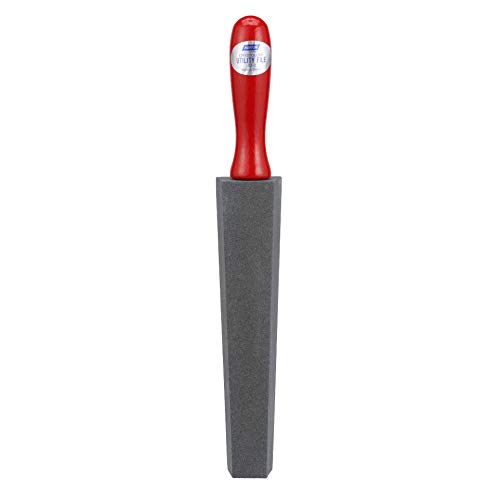
The long coarse stone that makes short work of mower blades and spades.
At 14 inches with a hefty wooden handle, this four-sided silicon carbide stone is built for the big jobs: lawn mower blades, shovels, hoes, scythes, and spades. The 100 coarse grit removes material quickly and shapes edges without loading up, and because it is silicon carbide, the stone self-sharpens as it wears, exposing fresh abrasive.
Sharpening performance is what owners praise most, with the stone gliding through material quickly and evenly. The handle is hefty and matches the weight of the stone, and you keep your fingers a safe distance from the edge as you work. It is the pick for offsite or remote jobs where you need one tool that handles rough, dirty edges.
The trade-off is that aggressive coarse grit leaves a working edge, not a polished one — you will want a fine stone after it for a razor finish. Durability gets mixed feedback, with some wishing the abrasive lasted longer, though it remains a favorite for its brute effectiveness.
rough edges: you sharpen mower blades and digging tools and want fast material removal in one long stroke.
fine honing: you need a fine finishing edge — this is a coarse workhorse, not a polisher.
6. FELCO 905 Sharpener-Carbide Stone
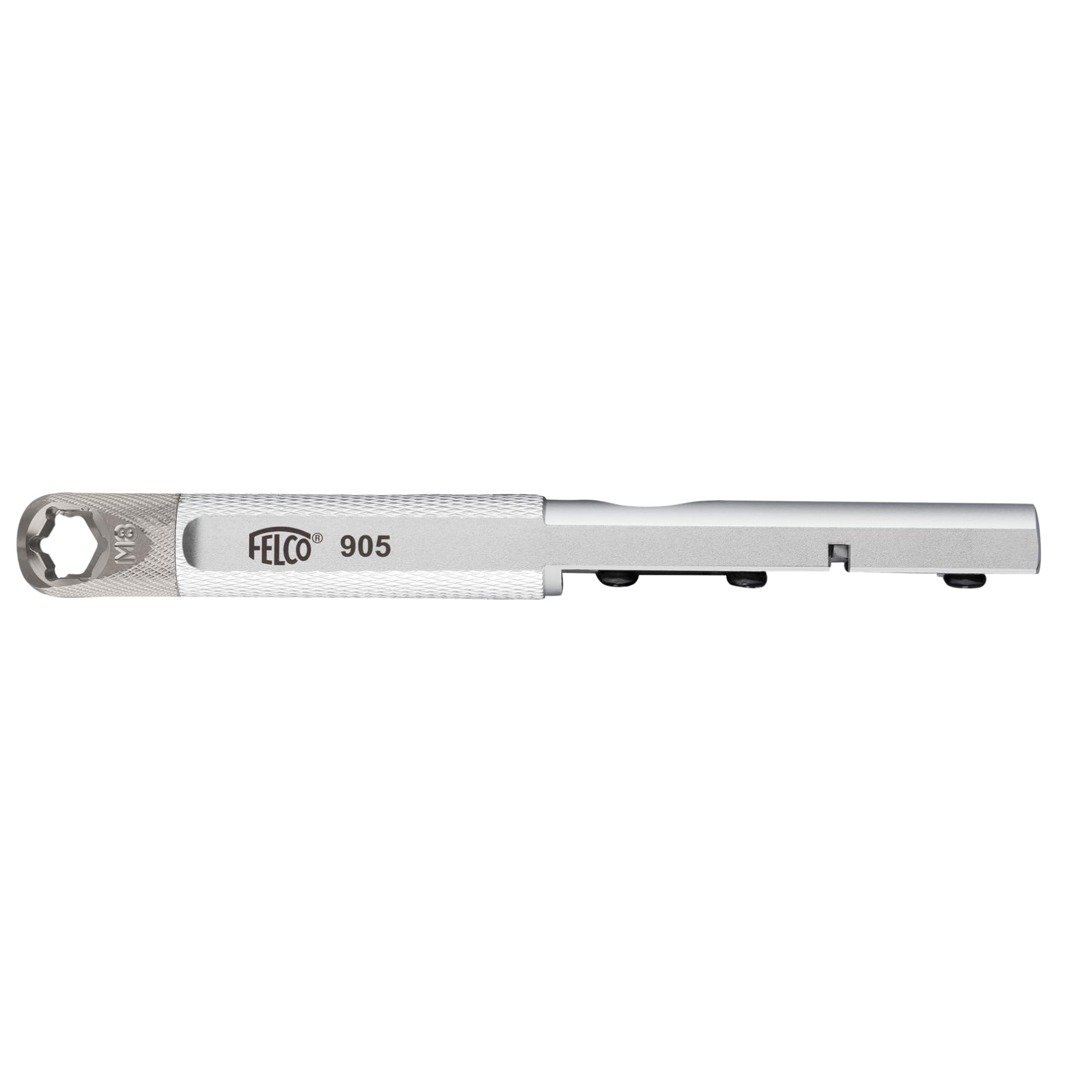
The pocket pruner sharpener that florists carry to weddings.
Designed specifically for pruning tools, this tiny carbide stone keeps an ideal cutting edge on the blade with a preset 22-degree angle so there is no guessing about your hand position. It is the tool that travels to weddings and events to keep floral snips working perfectly — a real-world use case owners highlight.
For Felco No. 2 secateurs, it is ideal: the carbide steel cutting edge is locked at that 22 degrees, and the sharpening is easy, quick, and predictable. Quality and sharpening performance are the most-praised aspects, and it is small enough (2.95 inches long) to live in a pocket or apron. It sharpens so simply that you will actually use it after every pruning session.
The catch is reach: it cannot access every part of a shear, and the bolt on some models will not budge, limiting how deep you can go. It is a maintenance tool for regular touch-ups, not a reprofiler for badly damaged blades.
quick touch-ups: anyone with pruners or secateurs who wants a fast, simple to use touch-up between cuts.
precision edges: your tools have heavily nicked edges that need aggressive reshaping first.
7. Fiskars Maintenance Kit

A full care routine in one box, from sharpening to oiling.
The diamond file is built for knife blades, scissors, saws, and other sharp garden cutting tools, and its non-slip rubber coating keeps your grip secure even when your hands are damp.
Owners find the included oil stays on the tool for a long time, protecting joints and springs against corrosion while reducing friction. The care instructions are genuinely useful, with Fiskars recommending specific angles — 20 degrees for roll-grip shears, for example — and stressing that you should use water, never run dry. Gardeners report their snips have never worked better after following the routine.
The diamond file is light and easy to handle, though freehand sharpening takes practice to hold a consistent angle. The abrasive is a fine film, so durability over heavy use is uncertain, and the oil smells like a generic sewing machine oil — effective, if not fancy.
garden tools: you want one kit that handles sharpening and routine oiling of all your cutting tools.
pro sharpening: you only need a sharpener and already have oil — a standalone stone gives you more abrasive for the same money.
Understanding the Specs
Grit Number
Grit measures how coarse the abrasive is. A low number like 100 cuts fast and removes material — ideal for reshaping nicked mower blades. A high number like 1200 polishes and hones, leaving the fine edge you want on pruners and knives.
Abrasive Material
Diamond is the hardest and fastest-cutting, working dry on any steel. Silicon carbide self-sharpens as it wears but needs oil for best results. Carbon steel files are traditional and affordable but struggle on hardened steel.
FAQ
Can I use the same sharpener for pruners and mower blades?
Do diamond sharpeners need oil or water?
What angle should I use to sharpen garden tools?
How often should I sharpen my pruners?
Is a file or a stone better for an axe?
Why does my sharpener not work on hardened steel?
What does a leather strop actually do?
Should I oil my garden tools after sharpening?
Final Thoughts: The Verdict
For most buyers, the garden sharpening tools winner is the Work Sharp Guided Field Sharpener because its guided angles and five abrasives make sharpening simple to use for beginners and pros alike. If you want a precision tool for your pruners, grab the FELCO 905. And for heavy mower blade work, the Norton Crystolon Utility Stone is the one to reach for.
How We Picked
We do not accept paid placement. Every pick is matched to a real buyer and a real use-case; we do not hands-on test units.
Sources & Methodology
Specifications: manufacturer listings and product documentation. Review insights: verified customer reviews, as of July 2026. Pricing: not shown on this page (it changes often); check the current price via the retailer link.
As an Amazon Associate, Lawn Gear Lab earns from qualifying purchases. This does not affect which products we feature.