
Specs are compiled from manufacturer listings and verified buyer reviews and can change over time — please confirm the key details on the product page before buying.
Choosing the wrong pot size is the fastest way to stunt a plant’s growth. Root-bound plants stop thriving, they need constant watering, and they topple over in the wind. The right large nursery pot gives roots room to spread, keeps the pot stable, and makes moving the whole setup manageable — whether you are on a patio, in a greenhouse, or starting a vegetable garden.
I’m Rikta — the founder and writer behind Lawn Gear Lab. This guide is built by comparing the manufacturers’ published specifications and the patterns across verified customer reviews, so you get each pick’s real strengths and trade-offs instead of marketing spin.
Below, I have broken down the highest-rated large nursery pots across every common size — from the budget-conscious 1-gallon packs to the serious 15-gallon tree planters — and matched each one to the real-world job it handles best.
Our Picks at a Glance


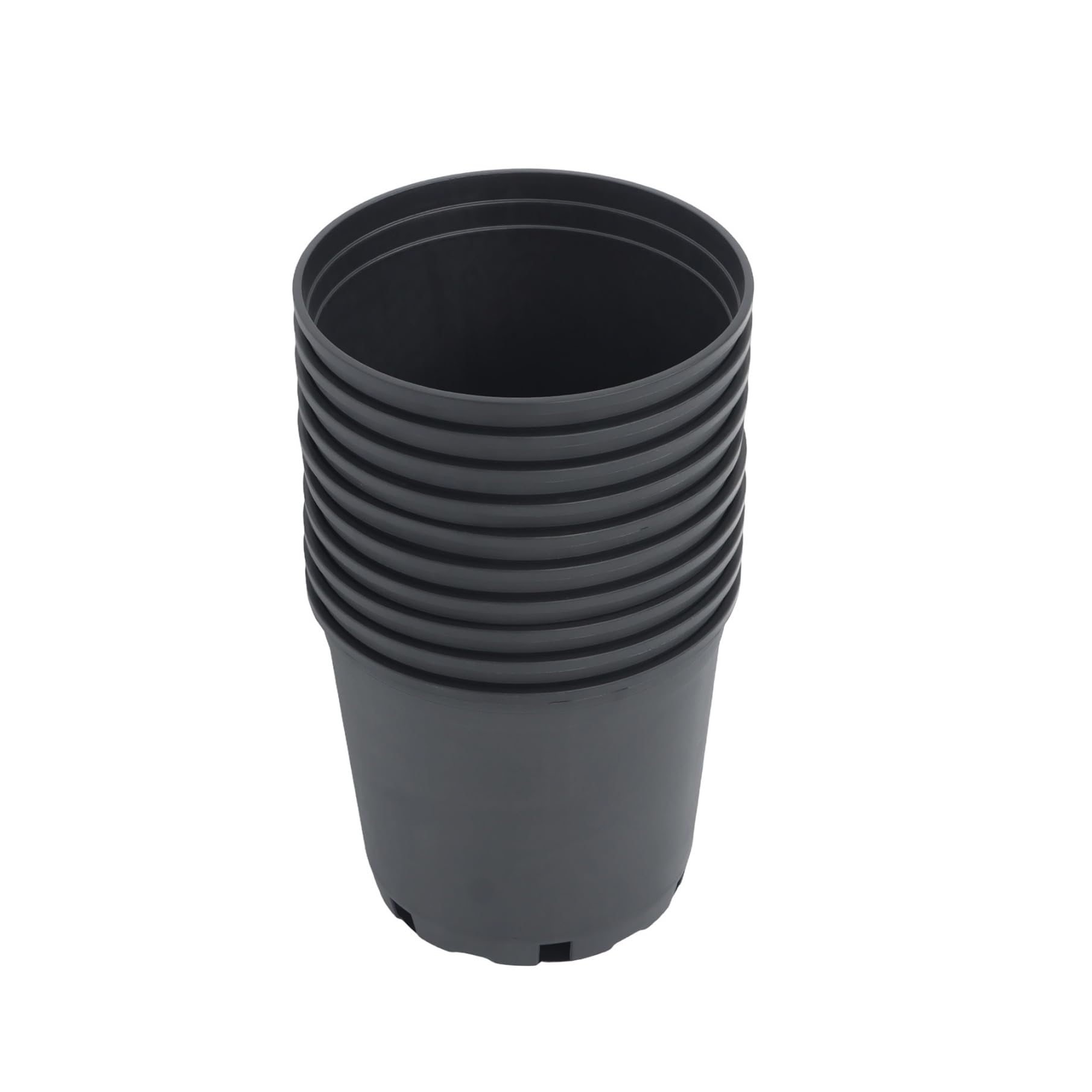
How To Choose The Best Large Nursery Pots
Picking a nursery pot is not complicated, but a few key decisions separate a pot that lasts years from one that cracks by mid-season. Focus on these three factors first.
Match the real volume to your plant’s root mass
A pot labeled “5 gallon” may hold only 3.7 gallons of actual liquid — that is the compacted soil fill, not free-flowing water. This is standard across the industry, but it matters if your tomato plant needs 5 gallons of loose soil to fruit well. Always check the “actual liquid volume” note in the specs rather than trusting the big number on the label.
Injection-molded versus blow-molded plastic
Injection-molded pots (the kind with a visible seam or a very rigid feel) are thicker and resist cracking in sun and cold far better than traditional blow-molded nursery pots. They also have wider rims with a grip lip that makes carrying a wet, heavy pot much easier on your fingers. Blow-molded pots are lighter and cheaper, but they tend to become brittle after a couple of seasons in direct sun.
Drainage that matches your watering style
Look at where the holes are. Pots with drainage only on the flat bottom can get blocked when set on a solid surface. Side-drainage pots and pots with raised bottoms let water escape even if the pot sits flush on a patio or tray. If you bottom-water (fill a tray and let the pot soak it up), skip the raised bottom and look for a wide, flat base.
Quick Comparison
| Model | Best For | Capacity | Material | Item Weight | Amazon |
|---|---|---|---|---|---|
| 1.5 Gallon Green Nursery Pot 10-Pack★ Best Overall | Seedling up-potting | 1.5 gal | BPA-Free Recycled Plastic | 1.33 kg (pack) | Amazon |
| Gro Pro Premium Nursery Pot 15 GallonPremium Heavyweight | Single large specimen (tree/shrub) | 15 gal | Injection-Molded Plastic | 2.6 lbs | Amazon |
| Labworkauto Nursery Pot 2 Gallon (10pk)Best Value | Heavy-duty mid-size planting | 2 gal | Recycled HDPE Plastic | 3.7 lbs (pack) | Amazon |
| Pro Cal Premium Nursery Pot 1 Gal (20/pk) | Herbs & small vegetables | 1 gal | Impact-Modified Plastic | 4 lbs (pack) | Amazon |
| GroTheory 1 Gallon Nursery Pots (100pk) | High-volume transplanting | 1 gal | Flexible Plastic | 6.7 x 6.7 x 6.9 in each | Amazon |
| Pro Cal Premium Nursery Pot 5 Gal (5pk) | Containers for peppers/eggplant | 5 gal | Injection-Molded Plastic | 4.9 lbs (pack) | Amazon |
| Pro Cal Premium Nursery Pot 3 Gal (10pk) | Patio vegetable garden | 3 gal | Impact-Modified Plastic | 7.2 lbs (pack) | Amazon |
| Pro Cal 10 Gallon Premium Nursery Pot (5pk) | Larger tomatoes & shrubs | 9.6 gal | Injection-Molded Plastic | 9 lbs (pack) | Amazon |
In‑Depth Reviews
1. 1.5 Gallon Green Nursery Pot Plastic Planters 10-Pack
Our pick — over 4.5★ from 900+ verified ratings; the strongest balance of quality and price.
The crowd favorite that handles the transition from solo cup to serious pot better than anything else at this price.
Nothing in this price range feels as solid as these Cotta Planters pots. The 1.5-gallon size is the balance for moving tomato and tomatillo seedlings out of solo cups without jumping straight to a 5-gallon container. Buyers consistently point out the sturdiness as the top reason to pick this set — the plastic is noticeably thicker and firmer than the typical cheap nursery pot.
The drainage system is smart: a raised bottom with holes on the sides and the base, so water keeps draining even when the pot sits flat on a patio or saucer. This helps prevent that soggy-bottom root rot that kills young plants. On the flip side, the raised bottom means you cannot tray-soak these pots — water will just run out the sides. A handful of units arrived with a thin plastic layer blocking some drainage holes, but buyers report it is a quick fix with a knife.
Quality and sturdiness are the two most-praised aspects, and the owner feedback backs it up: people plan to wash and reuse these for many seasons. The 10-pack is a good deal if you are filling a seed-starting operation or a raised bed off to the side.
Best for: Gardeners moving dozens of seedlings from starter trays into a pot with real room — the 1.5-gallon size and thick plastic make this an easy, durable win.
skip it if: You need a pot for tray-soaking or you expect every single pot to arrive flawless — a small number arrive chipped due to thin packaging.
Reach for this if… you are up-potting tomatoes, peppers, or flowers and want a pot that feels sturdier than a solo cup without spending big.
Who else fits… anyone who prefers a raised bottom for drainage — just do not plan to bottom-water without a tray that catches side runoff.
2. Gro Pro Premium Nursery Pot 15 Gallon
A 15-gallon injection-molded pot that stays light to move but tough enough to hold a small tree.
This Gro Pro pot is the heaviest-duty option here for anyone growing a single large plant — a patio tomato, a cucumber trellis, or even a small citrus tree. It holds 15 gallons of soil, which is a tenfold jump over the 1.5-gallon 10-pack above. The injection-molded construction keeps the weight down to just 2.6 pounds for the pot itself, so you can actually lift and reposition the whole setup when it is full.
The grip lip around the rim is a small detail that makes a big difference: when the pot is full of wet soil, your fingers do not get pinched. Buyers mention the quality and durability more than any other factor, and several note they plan to use these for years. The 15-gallon size also gives roots room to really spread, which is why people use it for ornamentals and privacy screening — one owner mentioned using it to block out “snoopy neighbors” with a growing shrub.
The trade-off is packing and shipping. Some units arrive taped together with no padding, and a few arrive cracked. The pot ships as a single piece, so if the box takes a hard hit, it shows. That is a disappointment considering the otherwise premium feel. Also, the label is famously stuck on and hard to peel off, which bothers some owners who want a clean look.
What wins people over
- Injection-molded plastic is thick and rigid, yet the pot weighs only 2.6 lbs empty.
- The grip lip at the top makes moving a full pot much less of a finger strain.
- Generous drainage holes keep large root balls from sitting in water.
What holds it back
- Shipping can be rough — some pots arrive cracked when packed loosely.
- The brand label is permanently bonded to the plastic and nearly impossible to remove cleanly.
Who it serves best: Anyone growing a single large plant — a fruit tree, a big tomato, or a privacy shrub — who wants a pot that is heavy-duty but not so heavy they cannot move it.
A fair warning: The shipping fragility is the most common hiccup; if you are ordering one, inspect it before filling.
3. Labworkauto Nursery Pot 2 Gallon (10pk)
A 2-gallon pot that feels surprisingly thick and strong, with a bonus pot more often than not.
Labworkauto uses recycled HDPE plastic (high-density polyethylene, the same material used in heavier-duty containers), and it shows in the feel. The 2-gallon size is right for tomatoes and peppers that need more room than a 1-gallon pot but are not ready for the jump to 5 gallons. The rim design makes stacking easy, and the six drainage holes around the bottom keep the soil from getting waterlogged.
Quality and sturdiness are the most-discussed strengths. Buyers frequently note that the plastic is thicker than expected at this price point. One owner’s experience sums up the brand’s quirky appeal: “the order says 10pc, but I usually get 11pc.” That kind of over-delivery is rare. A few owners question the long-term durability, saying the plastic feels slightly flimsier than some nursery pots they have used for years. The odor from the fresh plastic is also mentioned a handful of times — it fades after a day or two in the sun.
At this price, you get ten sturdy black pots that are perfectly sized for mid-stage growth. They handle outdoor sun well and stack neatly when not in use.
The smart bet: A reliable multi-pack for the gardener who needs a dozen or more mid-size pots for a big planting push — the HDPE plastic and quality score make it a safe choice.
One note: If you plan to keep pots outdoors for years, check the first one after a full season — a few owners feel the plastic may not hold up as long as premium brands.
Best if: You need a large batch of 2-gallon pots that are thick enough to handle a full season of tomatoes but priced low enough to treat as expendable after a few years.
pass on it if: The faint smell of fresh HDPE bothers you — give them a day to air out before bringing indoors.
4. Pro Cal Premium Nursery Pot 1 Gal (20/pk)

American-made impact-modified pots that feel more like hard plastic than a typical nursery pot.
Pro Cal uses impact-modified plastic, meaning they add a bit of flex and toughness to reduce cracking. The 1-gallon size holds 2.9 quarts of actual liquid volume (the label “1 gallon” refers to compacted loose soil), so keep that in mind if you are potting up a plant with an established root ball. The wide rim with a grip lip makes handling easy, and owners say the pots are flexible enough to squeeze the sides and slide out a plant without tearing the roots.
The quality and durability are the two most highlighted traits. Buyers describe these as heavier and sturdier than the typical nursery pot you find at a garden center. They nest and stack well, and many owners wash and reuse them year after year. A common use-case is transplanting nursery vegetables into these 1-gallon pots for indoor growth before moving them outside. The flexibility also means they bounce back to shape if you accidentally squish one.
Size is the main point of mixed feedback. A few buyers expected a bigger 1-gallon pot — specifically, one that matched a standard milk jug. At 6.5 x 5.1 x 7 inches, these are slightly shorter than some competitors. They work great for herbs and lettuces, but if you are trying to grow a full-size pepper plant from seed, you may want the 2-gallon or 3-gallon version.
What owners praise
- Impact-modified plastic is noticeably thicker and more durable than regular nursery pots.
- The flexibility makes transplanting easy — just squeeze the sides to pop the root ball out.
- Made in the U.S.A. from BPA-free plastic.
What owners flag
- Actual liquid volume is 2.9 quarts, not a full gallon — small for some uses.
- A few owners note the pots feel slightly shorter than other 1-gallon options.
The right pick for: Anyone who values toughness over size — these are built to last through years of washing, squeezing, and reusing, especially for herbs and small vegetables.
Who should look elsewhere: Growers who need a true 1-gallon liquid capacity for large seedlings should size up to the 2-gallon or 3-gallon Pro Cal version.
5. GroTheory 1 Gallon Nursery Pots (100pk)
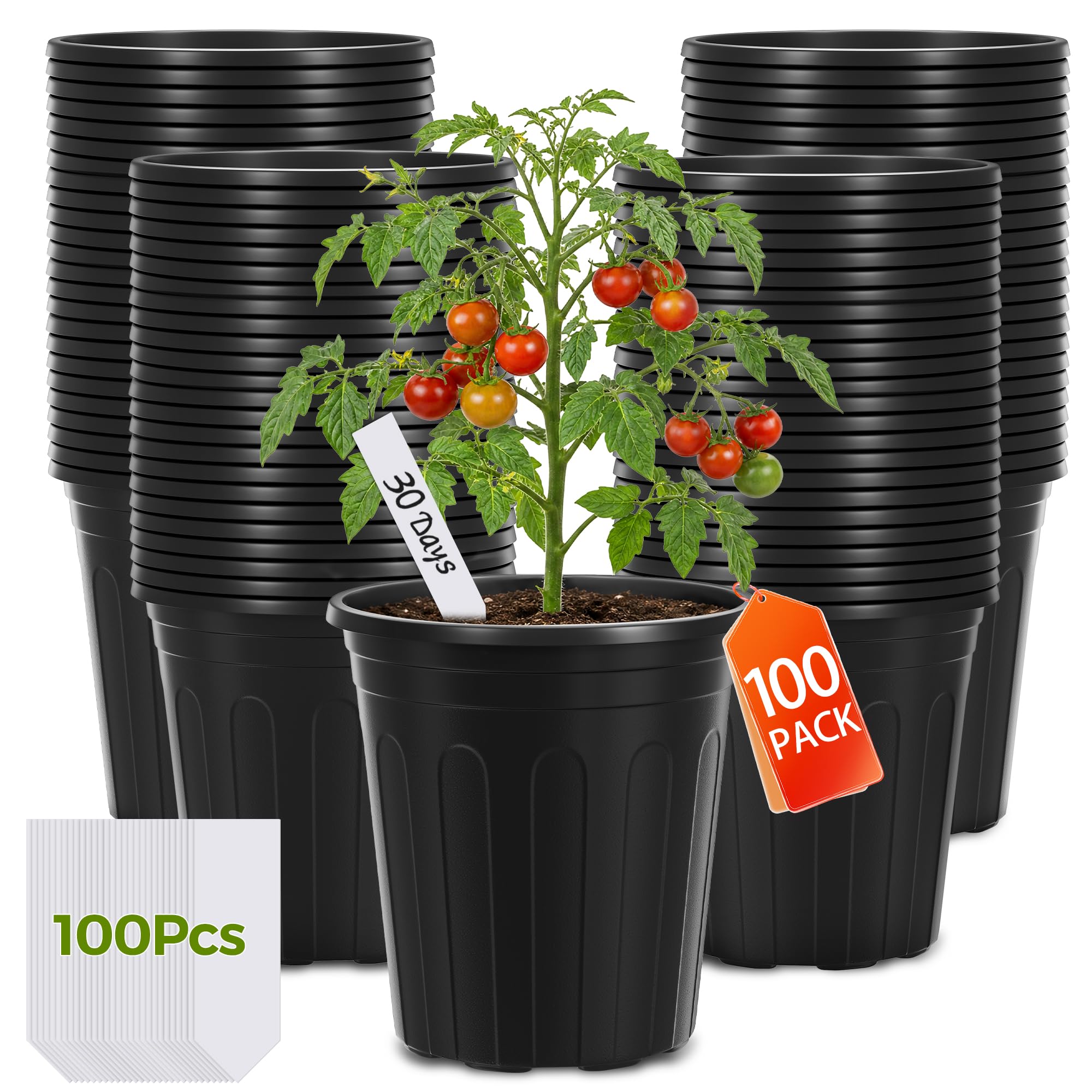
The 100-pack that makes large-scale transplanting affordable without sacrificing drain performance.
When you need a hundred pots for a big spring planting session, the GroTheory 1-gallon pack is the obvious pick. Each pot measures 6.7 inches wide and 6.9 inches tall, and they come with 100 plant labels included. The plastic is on the thinner side, which is the trade-off for the low per-pot price, but owners mention it is flexible enough to bounce back to shape after a squeeze rather than crack.
The 12 small drainage holes at the bottom do their job: water runs out cleanly, and the soil stays moist but not soggy. Owners use these for transplanting vegetables, starting seeds, and even moving plants around the yard since the pots are light. A few owners note that the plastic sags a little after a full season of sun, but they still last several years before needing to be replaced. The flexible nature also means you can fold them up when done, which is handy for storage.
If you are looking for heirloom-quality pots that will survive a decade, these are not it. But if you need a massive quantity of functional 1-gallon pots that work great for one season or two, the GroTheory pack is a smart way to buy in bulk.
Best for: High-volume starts — anyone running a small nursery, a community garden, or a big vegetable patch who needs a ton of pots at a low per-unit cost.
it’s not for you if: You want thick, heavy-duty plastic that handles rough handling — these are flexible and work best when treated as semi-disposable transplant pots.
Go with this if: You value quantity and function over premium feel — 100 pots plus labels for the price of a single dinner out.
Look elsewhere if: You need pots that hold their shape perfectly after years of direct sun and heavy soil.
6. Pro Cal Premium Nursery Pot 5 Gal (5pk)

A squat, wide 5-gallon pot that stays put in wind and suits shallow-rooted plants perfectly.
Most 5-gallon pots are tall and narrow, which means they tip over in a breeze. The Pro Cal 5-gallon uses a “squat” design — wider across the base and shorter — so it catches more water during rain and stays planted on the ground even in windy conditions. The actual liquid volume is 3.7 gallons (the 5-gallon rating is for compacted loose soil), so keep that in mind when comparing to other 5-gallon containers.
The injection-molded construction gives the pots a professional-grade feel, and the heavy-duty wrap-around rim makes them easy to grab even when the soil is wet. Owners use these for peppers, eggplant, carrots, and determinate tomatoes — the wide base works especially well for shallow-rooted vegetables. Several customers note the quality is better than what local garden centers carry, and many find them sturdy enough to reuse season after season.
One quirk: some reviewers point out that you need to drill your own additional drainage holes if you want more than what comes pre-drilled. The side-and-bottom drain design is good, but heavy-watering gardeners may want extra holes. The size label is also a point of confusion — a few owners expect a full 5-gallon liquid capacity rather than compacted volume.
Why it stands out
- The squat, wide shape resists tipping in wind better than tall nursery pots.
- Injection-molded plastic with a heavy-duty rim that is easy to grip.
- Professional-grade quality that owners prefer over local garden center options.
The catch
- Actual liquid volume is 3.7 gallons, not the full 5 that some buyers expect.
- Pre-drilled drainage holes may not be enough for very heavy watering without drilling your own.
Who needs this: Container gardeners in breezy areas who want a 5-gallon pot that does not tip — the wide base and injection-molded build make this a durable, stable choice.
Who should measure twice: If you need a full 5 gallons of liquid-holding capacity, this pot falls short at 3.7 gallons; size up to the 10-gallon version instead.
7. Pro Cal Premium Nursery Pot 3 Gal (10pk)

A 3-gallon workhorse with impact-modified plastic that feels far more expensive than its price.
This Pro Cal 3-gallon pot is sized right for patio tomatoes, cherry blossoms, and herb gardens that need more depth than a 1-gallon. Like the other Pro Cal pots, the impact-modified plastic is thicker and more forgiving than standard blow-molded nursery pots — it can flex under pressure without cracking. The wide rim with a grip lip makes moving a full pot manageable, and the drainage holes are well-placed on the bottom.
Durability and quality are the most-discussed features, and the numbers back it up: owners mention the sturdy construction more than sixty times across the reviews. They work great for a “pot in a pot” landscaping setup where you sink a black nursery pot into a decorative outer pot. The 3-gallon size is roomy enough for a single tomato plant or a small shrub, and many owners say the pots have lasted through multiple growing seasons without any brittleness or cracking.
Size again is the mixed point — a few buyers expected a larger 3-gallon pot. The actual liquid volume is 2.1 gallons, which is standard for this style of compacted-soil rating, but worth knowing if you are trying to match a specific soil bag size. The price has crept up over time, which disappoints repeat buyers who have ordered these before.
Best for: The “pot in a pot” gardener or anyone growing medium-size patio vegetables that need a sturdy, reusable pot with a grip rim.
One honest note: If you are working with a tight budget and need 3 gallons of liquid-holding capacity, you will want to size up or check the actual volume note.
Reach for this if: You want a 3-gallon nursery pot that feels indestructible — the impact-modified plastic and positive durability record make it a reliable buy for multi-season use.
Look elsewhere if: You strictly need a full 3 gallons of water-holding volume; the compacted-soil rating means it holds 2.1 gallons of liquid.
8. Pro Cal 10 Gallon Premium Nursery Pot (5pk)

A 10-gallon pot pack that delivers nursery-grade toughness for serious container gardening.
The Pro Cal 10-gallon pot is the largest multi-pack in this lineup, and it is built for the long haul. Each pot measures 17 inches in diameter and stands 16 inches tall, giving roots deep room to run. The actual liquid volume is 9.6 gallons — closer to a true 10 than many compacted-soil ratings. The injection-molded plastic with wrap-around rims makes these pots easy to grab and move even when they are full of soil and a large plant.
Quality is the most-praised aspect by a wide margin — 123 buyers specifically call it out. Durability, sturdiness, and value for money all follow closely, making this among the most consistently praised multi-packs in the category. Owners use them for tomatoes, peppers, shrubs, and even young trees, and many say the pots hold up beautifully after several years of outdoor use in sun and rain. The side and bottom drainage holes handle the watering needs of larger plants well.
The most common complaint is a packaging and labeling issue: some buyers receive only 1 pot instead of 5, and a handful note the bottom of the pot says “Pro Can” instead of “Pro Cal.” That is a quality-control miss from an otherwise premium brand, and Amazon’s customer service usually resolves it quickly. The price also keeps climbing, which has frustrated repeat buyers who have seen the cost go up over time.
The clear strengths
- Injection-molded, heavy-duty construction that holds up for years — owners call out quality and durability heavily.
- At 9.6 gallons of actual liquid volume, this is closer to a true 10-gallon pot than most competing options.
- The 17-inch diameter gives large root balls (tomatoes, shrubs, trees) generous space to spread.
The recurring issues
- Some buyers receive an incomplete order (1 pot instead of 5) — check your package on arrival.
- The price has increased noticeably over the years, pricing out some repeat customers.
Who should buy this: Serious container gardeners growing large, heavy-feeding plants like big tomatoes, peppers, or shrubs who want a set of pots that can survive years of outdoor use.
Who should be cautious: Anyone ordering long-distance — the shipping and quality-control issues are not universal, but they are common enough to warrant checking your box immediately upon arrival.
Understanding the Specs
Compacted Soil vs. Liquid Volume
A pot marked “5 gallon” often holds only 3.7 gallons of liquid. That is because the rating measures compacted loose soil (which settles), not free-flowing water. Always check the fine print in the specs for “actual liquid volume.” If a pot says 5 gallons of loose soil, expect it to hold roughly 3–4 gallons of water. This matters the most when your plant needs specific root room to fruit well.
Injection-Molded vs. Blow-Molded Plastic
Injection-molded pots are poured into a mold under high pressure, which makes the plastic denser and more rigid. The rim is usually thicker and has a grip lip. Blow-molded pots are cheaper and lighter, but they tend to become brittle after a couple of seasons in direct UV light. If you plan to reuse pots for years, injection-molded is the safer bet. The higher upfront cost pays off in longevity.
Drainage Hole Placement
Where the holes are changes how you water. Bottoms-only drainage works fine if the pot sits on gravel or a tray, but it can block on solid concrete. Side-drainage pots and raised-bottom designs let water escape even when the pot is flat on the ground. If you bottom-water (fill a tray and let the pot soak it up), look for a flat bottom with no raised channels — that design keeps the water inside where the roots can reach it.
Grip Lip / Rim Design
A wide rolled rim, sometimes called a grip lip, makes carrying a full pot much easier on your fingers. Without it, the sharp edge of the plastic can dig into your hands, especially when the pot is heavy with wet soil. If you move your pots around the yard or into a greenhouse regularly, a grip lip is one of those small features that makes a big daily difference.
FAQ
Will a 5-gallon nursery pot hold a full 5-gallon bag of soil?
What is the difference between injection-molded and blow-molded nursery pots?
How long do plastic nursery pots last outdoors?
Can I reuse nursery pots from one season to the next?
Why do some nursery pots have a raised bottom?
What size pot do I need for a tomato plant?
Are BPA-free nursery pots safer for growing vegetables?
Can I leave plastic nursery pots outside in freezing weather?
Final Thoughts: The Verdict
If you want one dependable pick, the large nursery pots winner is the 1.5 Gallon Green Nursery Pot 10-Pack because it nails the everyday task — firm, BPA-free plastic at a 1.5-gallon balance that is big enough to move seedlings out of solo cups but small enough to keep on a windowsill — with more consistent build quality than any other multi-pack near its price. If you want maximum size for a single plant, the Gro Pro 15 Gallon is the injection-molded beast that stays light (2.6 lbs) and handles a tree. And for a budget-friendly bulk buy, the {“@context”: “https://schema.org”, “@graph”: [{“@type”: “ItemList”, “name”: “8 Best Large Nursery Pots”, “url”: “https://lawngearlab.com/best-large-nursery-pots/”, “numberOfItems”: 8, “itemListElement”: [{“@type”: “ListItem”, “position”: 1, “name”: “1.5 Gallon Green Nursery Pot Plastic Planters 10-Pack”, “url”: “https://lawngearlab.com/best-large-nursery-pots/#product-1”}, {“@type”: “ListItem”, “position”: 2, “name”: “Gro Pro Premium Nursery Pot 15 Gallon”, “url”: “https://lawngearlab.com/best-large-nursery-pots/#product-2”}, {“@type”: “ListItem”, “position”: 3, “name”: “Labworkauto Nursery Pot 2 Gallon (10pk)”, “url”: “https://lawngearlab.com/best-large-nursery-pots/#product-3”}, {“@type”: “ListItem”, “position”: 4, “name”: “Pro Cal Premium Nursery Pot 1 Gal (20/pk)”, “url”: “https://lawngearlab.com/best-large-nursery-pots/#product-4”}, {“@type”: “ListItem”, “position”: 5, “name”: “GroTheory 1 Gallon Nursery Pots (100pk)”, “url”: “https://lawngearlab.com/best-large-nursery-pots/#product-5”}, {“@type”: “ListItem”, “position”: 6, “name”: “Pro Cal Premium Nursery Pot 5 Gal (5pk)”, “url”: “https://lawngearlab.com/best-large-nursery-pots/#product-6”}, {“@type”: “ListItem”, “position”: 7, “name”: “Pro Cal Premium Nursery Pot 3 Gal (10pk)”, “url”: “https://lawngearlab.com/best-large-nursery-pots/#product-7”}, {“@type”: “ListItem”, “position”: 8, “name”: “Pro Cal 10 Gallon Premium Nursery Pot (5pk)”, “url”: “https://lawngearlab.com/best-large-nursery-pots/#product-8”}]}, {“@type”: “Product”, “position”: 1, “name”: “1.5 Gallon Green Nursery Pot Plastic Planters 10-Pack”, “image”: “https://m.media-amazon.com/images/I/71Kz3BV1g8L.jpg”, “brand”: {“@type”: “Brand”, “name”: “1.5”}, “url”: “https://www.amazon.com/dp/B08VH535XC/”, “offers”: {“@type”: “Offer”, “url”: “https://www.amazon.com/dp/B08VH535XC/”}}, {“@type”: “Product”, “position”: 2, “name”: “Gro Pro Premium Nursery Pot 15 Gallon”, “image”: “https://m.media-amazon.com/images/I/51SI4kHOY9L.jpg”, “brand”: {“@type”: “Brand”, “name”: “Gro”}, “url”: “https://www.amazon.com/dp/B00WC00LPU/”, “offers”: {“@type”: “Offer”, “url”: “https://www.amazon.com/dp/B00WC00LPU/”}}, {“@type”: “Product”, “position”: 3, “name”: “Labworkauto Nursery Pot 2 Gallon (10pk)”, “image”: “https://m.media-amazon.com/images/I/512ozY+esLL.jpg”, “brand”: {“@type”: “Brand”, “name”: “Labworkauto”}, “url”: “https://www.amazon.com/dp/B089321MYD/”, “offers”: {“@type”: “Offer”, “url”: “https://www.amazon.com/dp/B089321MYD/”}}, {“@type”: “Product”, “position”: 4, “name”: “Pro Cal Premium Nursery Pot 1 Gal (20/pk)”, “image”: “https://m.media-amazon.com/images/I/91v4WCfAz1L.jpg”, “brand”: {“@type”: “Brand”, “name”: “Pro”}, “url”: “https://www.amazon.com/dp/B00NNS3ONQ/”, “offers”: {“@type”: “Offer”, “url”: “https://www.amazon.com/dp/B00NNS3ONQ/”}}, {“@type”: “Product”, “position”: 5, “name”: “GroTheory 1 Gallon Nursery Pots (100pk)”, “image”: “https://m.media-amazon.com/images/I/81PKZ650l9L.jpg”, “brand”: {“@type”: “Brand”, “name”: “GroTheory”}, “url”: “https://www.amazon.com/dp/B0CFX45KZL/”, “offers”: {“@type”: “Offer”, “url”: “https://www.amazon.com/dp/B0CFX45KZL/”}}, {“@type”: “Product”, “position”: 6, “name”: “Pro Cal Premium Nursery Pot 5 Gal (5pk)”, “image”: “https://m.media-amazon.com/images/I/71XAC8lnyuL.jpg”, “brand”: {“@type”: “Brand”, “name”: “Pro”}, “url”: “https://www.amazon.com/dp/B07MR2D4RF/”, “offers”: {“@type”: “Offer”, “url”: “https://www.amazon.com/dp/B07MR2D4RF/”}}, {“@type”: “Product”, “position”: 7, “name”: “Pro Cal Premium Nursery Pot 3 Gal (10pk)”, “image”: “https://m.media-amazon.com/images/I/51UrloHvPBL.jpg”, “brand”: {“@type”: “Brand”, “name”: “Pro”}, “url”: “https://www.amazon.com/dp/B00NNS3OS6/”, “offers”: {“@type”: “Offer”, “url”: “https://www.amazon.com/dp/B00NNS3OS6/”}}, {“@type”: “Product”, “position”: 8, “name”: “Pro Cal 10 Gallon Premium Nursery Pot (5pk)”, “image”: “https://m.media-amazon.com/images/I/61uIvGh2VGL.jpg”, “brand”: {“@type”: “Brand”, “name”: “Pro”}, “url”: “https://www.amazon.com/dp/B00NNS3ORM/”, “offers”: {“@type”: “Offer”, “url”: “https://www.amazon.com/dp/B00NNS3ORM/”}}, {“@type”: “FAQPage”, “mainEntity”: [{“@type”: “Question”, “name”: “Will a 5-gallon nursery pot hold a full 5-gallon bag of soil?”, “acceptedAnswer”: {“@type”: “Answer”, “text”: “Not necessarily. Most nursery pots use a \”compacted soil\” rating, meaning the pot holds 5 gallons of loose soil when patted down, but the actual liquid volume is usually lower — often around 3.7 gallons for a \”5-gallon\” pot. Check the product’s fine print for actual liquid volume if matching exact soil bags is important.”}}, {“@type”: “Question”, “name”: “What is the difference between injection-molded and blow-molded nursery pots?”, “acceptedAnswer”: {“@type”: “Answer”, “text”: “Injection-molded pots are produced under high pressure, creating a denser, thicker plastic that resists cracking in UV light and cold weather. Blow-molded pots are lighter and cheaper but tend to become brittle after a couple of seasons. For pots you want to reuse year after year, injection-molded is the better choice.”}}, {“@type”: “Question”, “name”: “How long do plastic nursery pots last outdoors?”, “acceptedAnswer”: {“@type”: “Answer”, “text”: “Injection-molded pots often last 5 to 10 years or more in direct sun, while blow-molded pots may start cracking after 2 or 3 seasons. The plastic’s UV resistance matters — check if the pot is labeled \”UV-protected\” or \”weather-resistant.\” Recycled HDPE plastic pots also hold up well, but the thin walls of budget packs may sag or become brittle faster.”}}, {“@type”: “Question”, “name”: “Can I reuse nursery pots from one season to the next?”, “acceptedAnswer”: {“@type”: “Answer”, “text”: “Yes, as long as you wash them with a mild bleach solution or soapy water to kill any lingering pathogens. Avoid pots that are cracked or have rough edges — they can harbor pests. Thicker injection-molded pots are easier to clean and more likely to survive repeated seasons of scrubbing and sun exposure.”}}, {“@type”: “Question”, “name”: “Why do some nursery pots have a raised bottom?”, “acceptedAnswer”: {“@type”: “Answer”, “text”: “A raised bottom lifts the pot slightly off the ground so that water can drain out of the holes even when the pot sits on a flat surface. This prevents the bottom of the pot from sitting in a puddle of water, which helps avoid root rot. However, it also means you cannot effectively bottom-water the pot — the water will just run out the sides.”}}, {“@type”: “Question”, “name”: “What size pot do I need for a tomato plant?”, “acceptedAnswer”: {“@type”: “Answer”, “text”: “For a single determinate (bush) tomato, a 5-gallon pot is usually the minimum. For indeterminate (vining) tomatoes, go up to a 10-gallon or even 15-gallon pot for the best fruit production. Remember that the \”5-gallon\” label may hold only 3.7 gallons of actual liquid volume, so err on the larger side if space allows.”}}, {“@type”: “Question”, “name”: “Are BPA-free nursery pots safer for growing vegetables?”, “acceptedAnswer”: {“@type”: “Answer”, “text”: “BPA-free plastic is widely available and is the standard for food-grade containers. While there is no evidence that standard nursery pot plastics leach harmful compounds into soil, BPA-free is a common consumer preference, especially for edible plants. Most premium brands in this guide specify BPA-free materials.”}}, {“@type”: “Question”, “name”: “Can I leave plastic nursery pots outside in freezing weather?”, “acceptedAnswer”: {“@type”: “Answer”, “text”: “Injection-molded pots generally handle freeze-thaw cycles better than blow-molded ones, but no plastic is guaranteed crack-proof in extreme cold. If you live in an area with hard freezes, bring the pots inside or insulate them for winter. Thin, flexible pots are more likely to crack when the soil inside freezes and expands.”}}]}]}