
Specs are compiled from manufacturer listings and verified buyer reviews and can change over time — please confirm the key details on the product page before buying.
If you mow a slope, you know the frustration of front wheels slipping as the front end rises. A large rear wheel lawn mower fixes that by putting the drive power over the big back tires, so they grip and pull the mower up the hill rather than spinning uselessly. This guide focuses on the mowers that actually deliver that traction advantage — gas and battery models built with serious rear-wheel drive and real cutting width.
I’m Rikta — the founder and writer behind Lawn Gear Lab. This guide is built by comparing the manufacturers’ published specifications and the patterns across verified customer reviews, so you get each pick’s real strengths and trade-offs instead of marketing spin.
Best large rear wheel lawn mower options for slopes, thick grass, and big yards are reviewed here.
Our Picks at a Glance

How To Choose The Best Large Rear Wheel Lawn Mower
The right mower for your yard depends on three things: how much ground you cover, how steep the terrain is, and if you want to deal with gas or battery. Here is what matters most when shopping for a mower with big rear wheels.
Rear-Wheel Drive vs Front-Wheel Drive
Rear-wheel drive (RWD) is the key feature that makes a large rear wheel mower worth buying. RWD puts the drive power over the big rear tires, so they grip the ground and push the mower forward. On a slope, this is the difference between climbing steadily and watching the front wheels spin. Front-wheel drive mowers are lighter on the handles but lose traction the moment the front end lifts on a hill.
Cutting Width and Deck Size
A wider cutting deck means fewer passes across your lawn. Most large rear wheel mowers start at 21 inches, and the real time-savers jump to 22 or even 24 inches. If your yard is half an acre or more, a 22-inch or 24-inch deck shaves 15 to 20 minutes off your weekly mow compared to a 20-inch model. The trade-off is storage space — a 24-inch steel deck takes up more room in the shed.
Engine Power and Battery Runtime
Gas mowers in this category use 140cc to 201cc engines. The higher the cc, the more torque you get for thick grass and wet conditions. Battery mowers rely on voltage and amp-hours (a measure of total energy capacity). A 56V 6.0Ah battery gives you about 50 minutes of runtime, which covers a quarter to half an acre depending on grass thickness and how much you use the self-propel. If you have a larger yard, you will want a second battery or a larger tank.
Cutting Height Range
You need a mower that adjusts low enough for a close cut in spring and high enough for the heat of summer. Look for at least six positions or a range from about 1.25 inches up to 4 inches. A mower that only goes to 3.9 inches might leave your lawn looking a bit long if you prefer a taller cut during hot weather. Single-lever adjustment is a convenience that saves you bending down at each wheel.
Quick Comparison
| Model | Best For | Cutting Width | Engine/Battery | Cut Height Range (in) | Amazon |
|---|---|---|---|---|---|
| EGO 21″ Self Propelled (6.0Ah)★ Best Overall | Gas-Equivalent Battery Power | 21 in | 56V 6.0Ah Brushless | 1.25 – 4 | Amazon |
| PowerSmart 22″ 170ccBudget Champion | Budget Gas Value | 22 in | 170cc Gas | 1.5 – 3.9 | Amazon |
| PowerSmart 21″ 140cc B&S | Hills & Mid-Size Yards | 21 in | 140cc Briggs & Stratton | 1.5 – 3.9 | Amazon |
| SENIX 22″ 201cc | Large-Grass Cutting Power | 22 in | 201cc Gas | 1.25 – 4 | Amazon |
| YARDMAX 24″ 201cc | Maximum Deck Width | 24 in | 201cc Gas | 1.57 – 3.74 | Amazon |
| EGO Power+ Touch Drive (2x 4.0Ah) | Premium Electric with Dual Batteries | 20.5 in | 56V 4.0Ah (x2) Brushless | 1.25 – 4 | Amazon |
In‑Depth Reviews
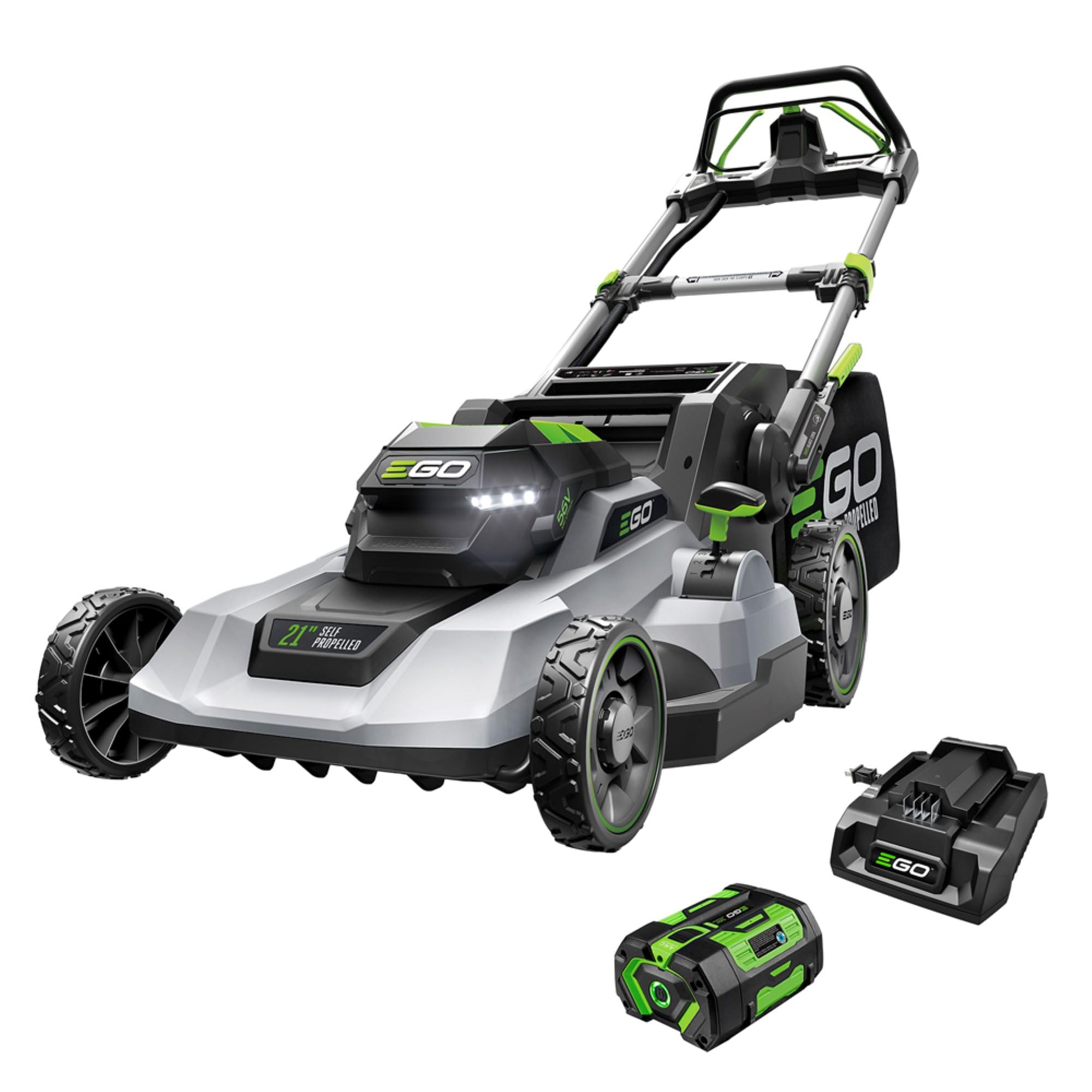
1. EGO 21″ Self Propelled Mower With Dual Toggle Kit (6.0Ah, 320W Charger)
Our pick — over 4★ from 300+ verified ratings; the strongest balance of quality and price.
The battery-powered mower that genuinely out-torques gas on a slope.
The defining feature here is the 6.0 ft-lbs of cutting torque (a measure of twisting force) from the brushless motor — that is more twist than most gas mowers in this class, delivered instantly with no warm-up. The self-propel uses a dual-toggle handleset so you can engage it with either hand, and the 56V 6.0Ah ARC Lithium battery gives you a solid 50 minutes of runtime. Buyers report it mows roughly half an acre per charge when running self-propelled at three-quarter speed, which is real-world useful.
The 21-inch deck cuts fine, but the seven-position height range from 1.25 to 4 inches is what makes it versatile — you can scalp it low in spring or let it ride high in summer heat. The flip side is that the battery is 50 minutes, not 80. A couple of owners note that on a small flat lawn the battery barely finishes one mow and blinks red. If your yard is larger than half an acre, you will probably want a second battery. The LED headlights and adjustable handle height are nice extras that make evening cuts feel less like a chore.
“Quiet operation” and “no gas or oil to deal with” are the phrases that keep coming up. The crowd favorite holds a strong 4.4 rating with over 300 owners weighing in, and it beats the PowerSmart 22-inch gas mower on cutting height range — 1.25 to 4 inches versus 1.5 to 3.9 inches, which is a noticeable difference if you like a taller summer cut.
What Wins People Over
- 6.0 ft-lbs of torque — genuinely competitive with gas mowers
- 50-minute runtime covers a typical half-acre lawn
- 7-position height adjustment (1.25–4 in) handles every season
- Lightweight at 50.9 lbs; easy for any household member to use
The Honest Trade-Offs
- Battery barely finishes one mow on a flat yard; a second pack is recommended
- Clogs in very tall, wet grass — raise the deck and slow down
- Plastic deck feels less durable than steel
The call: Grab this if you want electric power that matches gas torque, your yard is half an acre or less, and you value instant start and quiet operation.
Look elsewhere if: You have a large, steep property that needs a second battery or you prefer the proven durability of a steel gas deck.
2. PowerSmart 22-Inch 170cc Self Propelled Gas Lawn Mower
The widest budget-friendly gas cut you can get for under three hundred.
A 22-inch cutting deck at this price is unusual, and the 170cc OHV (overhead valve) four-stroke engine has enough grunt to handle thick grass without bogging down too quickly. The rear-wheel drive gives you real traction on slopes — the big rear tires dig in while the front follows. Six cutting positions from 1.5 to 3.9 inches cover the basics, and the 3-in-1 system lets you mulch, bag, or side discharge. The 60-liter grass bag is generous, so you make fewer trips to the compost pile.
The trade-off is that the 1.5-to-3.9-inch range may not allow a 4-inch cut; if you prefer a 4-inch summer cut, the EGO models offer that extra inch. Owners mention the self-propel works well on slopes, but a few note the blade is not razor-sharp from the start and the mower can bog in very tall grass. Assembly is straightforward — customers note it starts on the first pull and feels solid thanks to the steel deck. At 928+ ratings averaging 4.2 stars, this is the most-reviewed mower on the list, and the consensus is clear: it is a reliable workhorse if your expectations match the price.
The value read: You give up the tallest cutting height and a razor-sharp blade, but you gain a wider 22-inch deck and proven reliability at a price that is tough to top. This is the mower to reach for if your yard is flat to mild and your budget is tight.
Best for: Buyers who want the widest deck possible for under three hundred and do not need the highest summer cut setting.
Pass on this if: You have steep, tall grass or you need a cutting height above 3.9 inches for warm-season grass.
3. PowerSmart 21″ Self-Propelled Gas Lawn Mower, 140cc Briggs & Stratton Engine
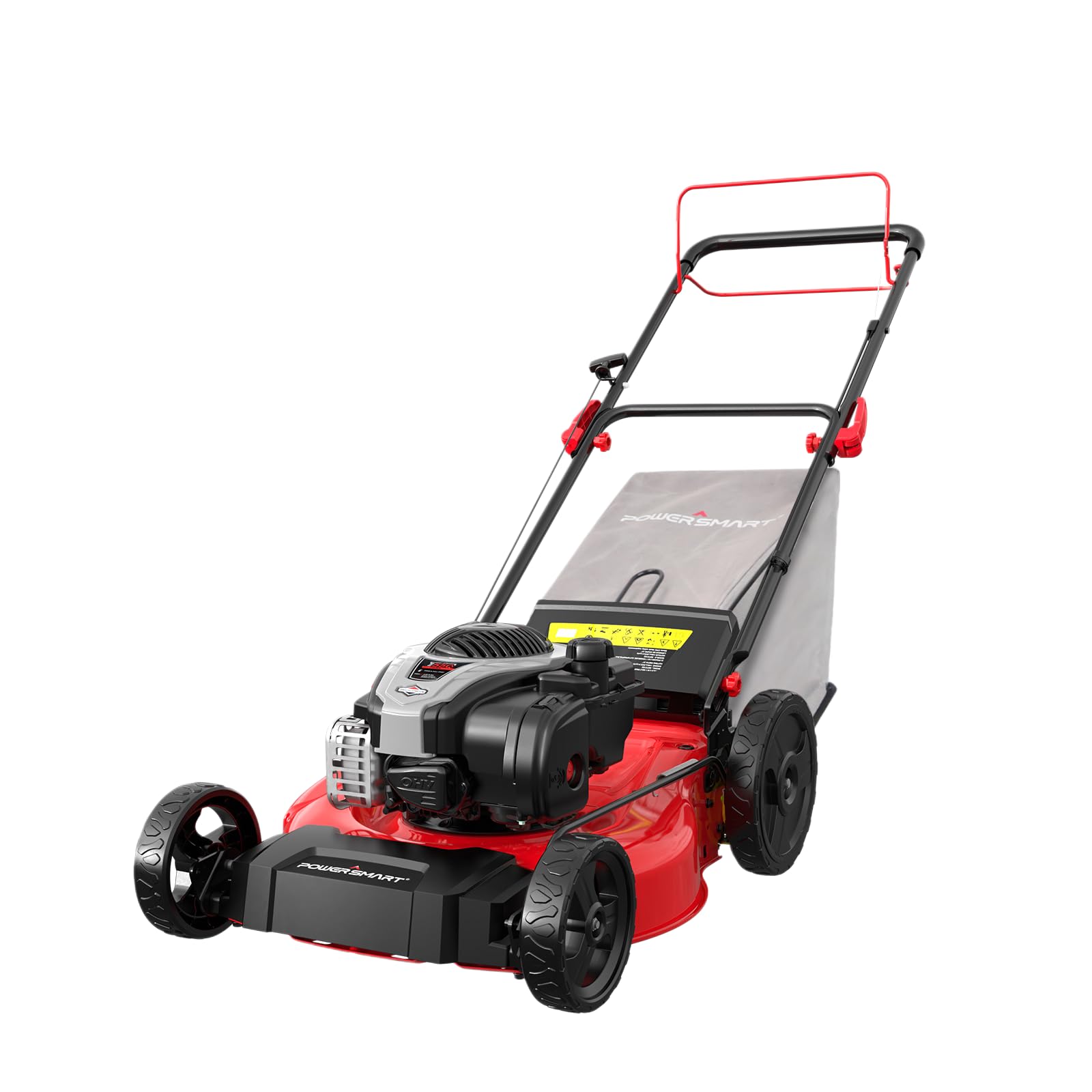
The 10-inch rear wheel specialist built for hills and half-acre plots.
The standout physical spec here is the 10-inch rear wheels paired with 7-inch fronts — that size difference is what gives this mower its climbing confidence. The Briggs & Stratton E550 engine is a 140cc four-stroke with ReadyStart (a system designed to reduce the effort of starting by priming the carburetor automatically). It weighs only 70 pounds, so the self-propelled rear-wheel drive does most of the heavy lifting on a slope while you guide it. The 21-inch steel deck and 1.4-bushel bag (a bushel is a volume measure equal to about 1.25 cubic feet) are standard for the class, and the six height positions (1.5 to 3.9 inches) cover typical needs.
The mixed story here is starting performance — it is the most-discussed aspect in the reviews, and the feedback is split. Some owners say it starts on the second pull and handles mulching small branches without stalling. Others report that the engine arrived locked up or would not start after assembly, possibly from shipping damage. The overall rating sits at 3.8 stars from 95 ratings, which is the lowest on the list, and the mixed feedback reflects genuine inconsistency. The self-propel speed is also noted as a bit fast by some owners.
The honest take: When this mower works, it works well — the big rear wheels and Briggs engine make it a capable hill climber. But the QC inconsistency makes it a roll of the dice. If you are handy and want a lightweight hill mower on a mid-range budget, it could work out fine. If you want guaranteed first-pull starting every time, spend a bit more.
Who it works for: A buyer comfortable with some assembly and basic troubleshooting who needs a lightweight hill mower under four hundred.
skip it if: You want a guaranteed, fuss-free start every single time or you need a cutting height above 3.9 inches.
4. SENIX 22″ 201cc Variable Speed Rear Wheel Self Propelled Gas Lawn Mower
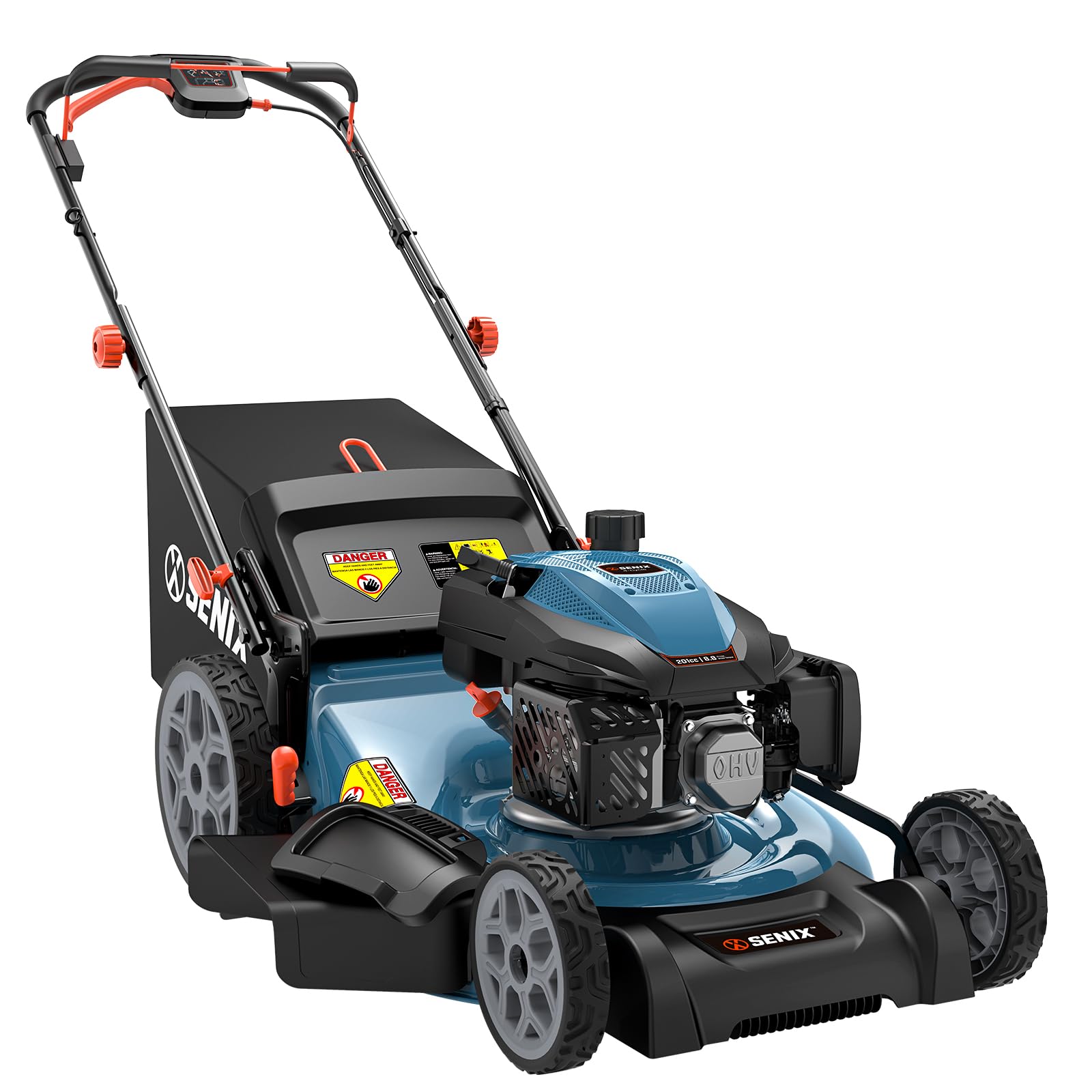
The 201cc engine that eats thick, wet grass without complaint.
At 201cc, this is the biggest engine in the gas lineup, and paired with a 22-inch stainless steel deck, it is the mower you grab when the grass has gotten away from you. Reviewers point out it starts on the first pull after priming and handles overgrown, wet lawns with surprising ease. The six-position height adjustment uses a single-handle, four-wheel synchronized system, so you set all four corners at once from 1.25 to 4 inches — that extra quarter-inch at the top end beats the PowerSmart models if you like a taller cut. The self-propel is rear-wheel drive, which is the right call for slopes.
The durability conversations are honest: some shoppers say bolts loosening and even falling out within five weeks, requiring a thread-locker (a glue-like compound that keeps fasteners tight). A few also mention the mower is hard to restart when the engine is hot. The overall rating is 4.0 stars from 429 ratings, and the top positive aspect by far is starting performance — 75 owners praise how easily it fires up. “Cuts well, large gas tank, minimal deck clippings” is a typical owner summary.
What Owners Praise Most
- 201cc engine powers through tall, wet grass easily
- Single-lever height adjustment from 1.25 to 4 inches
- 2-year warranty for confidence
- Starts on first pull after priming
Where It Shortens
- Bolts can loosen over time; a dab of thread-locker solves it
- Harder to restart when hot
- Some owners wish it went higher than 4 inches for very tall grass
Reach for this if: You have thick, wet, or overgrown grass and want the most displacement you can get at this price.
Think twice if: You want a completely maintenance-free build or you frequently mow in the heat and need reliable hot restarts.
5. YARDMAX 24 in. 201cc Electric Start Self Propelled Lawn Mower
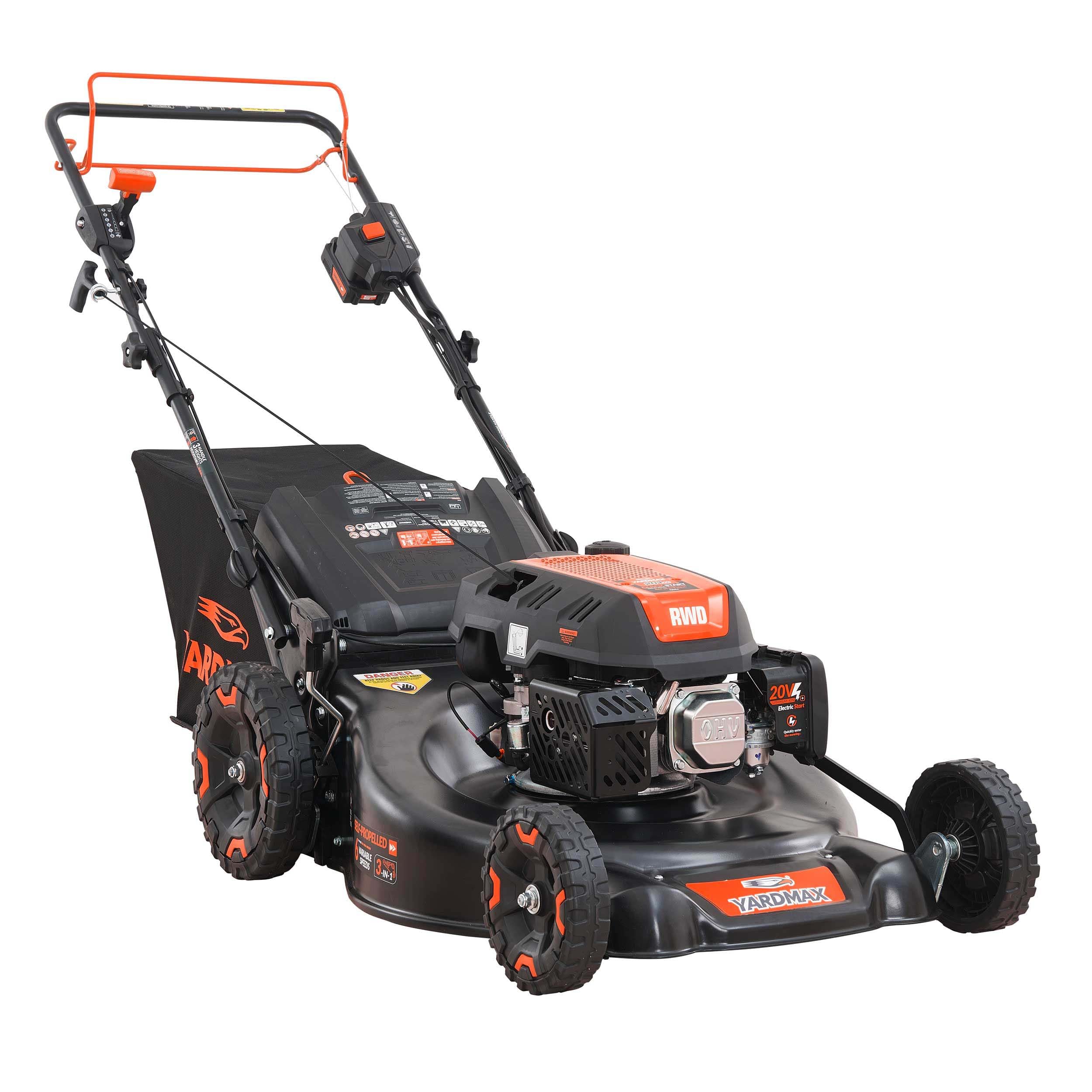
The 24-inch deck that lets you cross the yard in fewer passes than any other.
This is the widest deck on the list at 24 inches, and that extra three inches over a standard 21-inch mower translates to noticeably less walking on a large lawn. The 201cc engine is paired with a CVT (continuously variable transmission) that lets you dial through six speeds to match your walking pace, and the electric start means one push fires it up — no yanking. The one-piece smooth steel deck is 16-gauge stamped steel, which is heavier and more vibration-resistant than the typical stamped decks. The MAXFlow Deck Technology uses a volute spiral design (a curved, snail-shaped internal path) that the brand claims improves airflow and mulching.
The honest weight is 103.5 pounds, which makes this the heaviest mower here. That heft gives it a planted feel on flat ground, but it does not maneuver well in tight spaces — buyers report it feels ungainly around flower beds and garden edges. The cutting height range is 1.57 to 3.74 inches, which is actually the most limited range on the list; you lose about a quarter-inch on both the low and high ends compared to the EGO mowers. Some owners have also reported the electric start failing on day one, and the speed control gets mixed feedback. At 71 ratings and 3.9 stars, it is the least-reviewed premium pick, but owners who get a good one call it a powerful, efficient worker for large, open lawns.
The trade-off verdict: You gain a massive 24-inch deck and an electric start, but you pay for it in weight and a slightly narrower cutting height range. This is a mower for big, open, relatively flat yards — not for finesse work around a landscaped property.
Best for: Owners with large, open lawns who want to finish mowing as fast as possible and do not mind a heavy machine that stays in a straight line.
Not ideal for: Anyone with tight turns, narrow gates, or a preference for a very low or very high cutting height.
6. EGO Power+ Electric Lawn Mower, Self-Propelled Cordless with Touch Drive (2x 4.0Ah Batteries)

The touch-operated self-propel that feels like an extension of your walk.
The Touch Drive system is the feature that sets this apart — you engage the self-propel by simply pressing your palm on the handle, and a scroll dial on the grip lets you smoothly adjust speed. It delivers up to 6.0 ft-lbs of cutting torque (matching the single-battery EGO above) and comes with two 56V 4.0Ah ARC Lithium batteries, giving you up to 65 minutes of combined runtime. The 20.5-inch cutting width is slightly narrower than the 21-inch models, but the seven-position height range (1.25 to 4 inches) is the same full-season flexibility. The included two-bushel grass bag is generous, and the IPX4 weather resistance (a standard for protection against splashing water from any direction) means rain or morning dew is not an instant showstopper.
“Much lighter and more maneuverable than gas self-propelled” is the consensus from owners switching over. The mower handles thigh-high weeds effectively when you raise the deck, and the thick grass sensor system automatically slows the blade rotation when it encounters a heavy patch. The performance is the top praised aspect — 43 owners single it out. The honest catch is that the self-propel uses more battery, so if you have a full half-acre of thick grass, you might burn through both batteries and need a recharge. The overall rating is 4.4 stars from 126 ratings, putting it on equal footing with the single-battery EGO model in terms of owner satisfaction.
Why Owners Love It
- Touch Drive self-propel is genuinely intuitive and responsive
- Two 4.0Ah batteries give 65-minute total runtime
- 6.0 ft-lbs torque matches gas mowers for cutting power
- Lightweight at 70.8 lbs — easier to handle than any gas self-propelled
The Real Downsides
- Self-propel drains batteries faster; a half-acre may need both packs
- 20.5-inch cutting width is narrower than some gas competitors
- Thick grass on low mulch setting can cause stalls; raise the deck to fix
Reach for this if: You want the most intuitive self-propel experience available, dual batteries for extended runtime, and no gas or oil maintenance.
pass on it if: You need a 22-inch or wider cutting deck, or your yard is over half an acre of very thick grass and you do not want to recharge mid-mow.
Understanding the Specs
Engine Displacement (cc)
The cubic centimeters (cc) of a gas engine tells you how much air and fuel it can move, which directly translates to torque (the twisting force that spins the blade). A 140cc engine is adequate for flat, quarter-acre lawns. A 170cc engine handles thicker grass and mild slopes. A 201cc engine is the balance for wet grass, overgrown lots, and steeper hills. Higher cc usually means more weight and noise, so match it to the actual demands of your yard.
Cutting Width (inches)
This is the width of the swath the mower cuts in one pass. A 20-inch deck is common on entry-level mowers. A 21-inch deck is the standard size for most homeowners. A 22-inch or 24-inch deck saves time on open lawns but is heavier and harder to store. The rule of thumb: every extra inch of cutting width saves you about 5 percent of mowing time per pass on a rectangular lawn.
Cutting Height Range & Number of Positions
The cutting height range (in inches) tells you the lowest and highest setting the mower can achieve. More positions give you finer control. Six positions are standard, seven is a bonus. A range from 1.25 to 4 inches covers spring scalping, summer height, and fall cleanup. A range that starts at 1.5 inches and tops out at 3.9 inches is functional but less versatile for warm-season grass that prefers a 4-inch cut in July.
Self-Propelled Drive System
Rear-wheel drive (RWD) is the preferred system for large rear wheel mowers because it puts the drive force over the big rear tires, providing better traction on slopes. Front-wheel drive (FWD) is common on budget mowers but loses grip when the front of the mower rises on a hill. Variable speed control (often a CVT, or continuously variable transmission, which is a type of belt-driven system that lets the engine stay in its most efficient RPM range while the mower moves at different speeds, or a dial) lets you match the mower’s pace to your walking speed, which reduces fatigue on long mows.
FAQ
What size rear wheels count as large on a lawn mower?
Is rear-wheel drive better than front-wheel drive on a slope?
How much run time should a battery mower have for a half-acre lawn?
What does a 3-in-1 mower mean for daily use?
Can a large rear wheel mower handle very tall or overgrown grass?
How do I maintain the large rear wheels on my mower?
Is a 24-inch deck too big for a typical suburban yard?
How does electric start work on a gas mower?
What is the difference between a self-propelled mower and a push mower with big wheels?
Will a large rear wheel mower fit through a standard garden gate?
Final Thoughts: The Verdict
Across the board, the best large rear wheel lawn mower is the EGO 21″ Self Propelled with Dual Toggle Kit because it combines the instant-start convenience of battery power with 6.0 ft-lbs of genuine gas-equivalent torque, a versatile 1.25-to-4-inch cutting range, and a 50-minute runtime that covers the typical half-acre yard. If you want the widest cut possible for the money, grab the PowerSmart 22-inch 170cc. And for the most intuitive, easy self-propel experience with dual-battery freedom, the EGO Power+ Touch Drive is the one to reach for — especially if you want to leave gas and oil behind for good.
How We Picked
We do not accept paid placement. Every pick is matched to a real buyer and a real use-case; we do not hands-on test units.
Sources & Methodology
Specifications: manufacturer listings and product documentation. Review insights: verified customer reviews, as of July 2026. Pricing: not shown on this page (it changes often); check the current price via the retailer link.
As an Amazon Associate, Lawn Gear Lab earns from qualifying purchases. This does not affect which products we feature.