
Specs are compiled from manufacturer listings and verified buyer reviews and can change over time — please confirm the key details on the product page before buying.
That moment you spot brown or purple blotches creeping across your hydrangea leaves — that feeling of watching months of careful growth get picked apart by a fungus you cannot see. Leaf spot on hydrangeas is frustrating because it does not just look bad; it weakens the plant, steals its energy, and if you do not catch it early, the leaves drop and next year’s blooms suffer. You need something that actually stops the spread, and The right fungicide determines whether your hydrangea limps through summer or thrives..
I’m Rikta — the founder and writer behind Lawn Gear Lab. This guide is built by comparing the manufacturers’ published specifications and the patterns across verified customer reviews, so you get each pick’s real strengths and trade-offs instead of marketing spin.
Whether you treat a single potted hydrangea or a row of shrubs, pick a formula that tackles leaf spot without harming your plant or soil.. This guide covers the best fungicide for hydrangea leaf spot to help you decide which one fits your garden, your comfort with chemicals, and your budget.
Our Picks at a Glance

How To Choose The Best Fungicide For Hydrangea Leaf Spot
Not every fungicide works on hydrangeas or handles leaf spot.. Look for a fungicide labeled for ornamental plants that lists leaf spot or Cercospora on the label…
Systemic vs. contact action
OMRI listing for organic gardens
If you grow vegetables near your hydrangeas or want to avoid synthetic residues, look for an OMRI Listed formula. These products use active ingredients like citric acid, copper soap, or sulfur, which break down naturally and are safe to use up to the day of harvest on edible plants.
Concentrate vs. ready-to-use
A concentrate saves money and shelf space — one 32-ounce bottle makes 10 to 64 gallons of spray.. Ready-to-use (RTU) sprays cost more per application but require no mixing or sprayer — just point and squirt.. For a single hydrangea bush, RTU is sufficient.. For a whole garden, concentrate stretches further.
Quick Comparison
| Model | Best For | Active Ingredient | Liquid Volume | Form | Amazon |
|---|---|---|---|---|---|
| Quali-Pro Propiconazole 14.3★ Best Overall | Preventing leaf spot on large ornamental beds | Propiconazole 14.3% | 32 fl oz | Concentrate | Amazon |
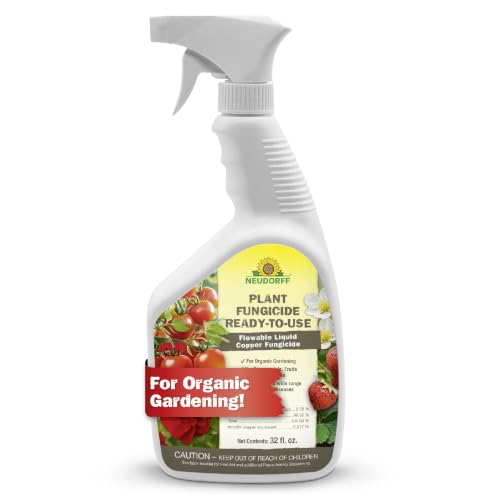
| Neudorff Copper FungicideQuick Fix | Quick organic spot treatment on a few plants | Copper soap | 16 fl oz | Ready-to-use spray | Amazon |
| Earth’s Ally Disease ControlEco Pick | Gentle organic prevention near edibles | Citric acid | 32 fl oz | Concentrate | Amazon |
| Fertilome Liquid Systemic II | Fixing active fungal spots on shrubs and lawns | Propiconazole | 32 fl oz | Concentrate | Amazon |
| Arber Bio-Fungicide | Family-safe protection on indoor hydrangeas | Biological & plant-derived actives | 16 oz | Concentrate | Amazon |
| Monterey Complete Disease Control | Organic routine care in humid climates | Biofungicide | 32 fl oz | Ready-to-use spray | Amazon |
| Ortho MAX Garden Disease Control | Heavy-duty clean-up of stubborn leaf spots | Chlorothalonil 29.6% | 16 fl oz | Concentrate | Amazon |
| Bonide Sulfur Fungicide | Dry-powder prevention in large beds | Sulfur | 4 lbs | Dust | Amazon |
| Dow AgroSciences Eagle 20EW | Professional-grade control for advanced infections | Myclobutanil | 16 fl oz | Concentrate | Amazon |
In‑Depth Reviews
1. Quali-Pro Propiconazole 14.3 Fungicide, 32 oz
Our pick — over 4.5★ from 850+ verified ratings; the strongest balance of quality and price.
Broad-spectrum systemic that stops leaf spot before it reaches new growth.
This is the one you grab when you are tired of watching brown rings spread across your hydrangea leaves and want something that actually gets inside the plant and protects it from the inside out. Propiconazole 14.3% is a locally systemic fungicide — meaning it moves through the leaf tissue and keeps working long after you spray. Buyers report it stopped white and brown patch on Bermuda grass immediately with one application, and it is labeled for leaf spot on ornamental shrubs and flowers. The microemulsion formulation cuts down on odor and improves coverage across the leaf surface, so you are not leaving gaps where spores can sneak through.
What wins people over is the longevity: one bottle lasts multiple seasons — owners say a bottle stretches 4 to 5 years with yearly reapplication. The concentrate mixes at 2 oz per gallon for heavy infections and 1 oz per gallon for maintenance, so a single 32-oz bottle treats a lot of ground. There is a built-in measuring device that owners appreciate for getting the ratio right without guesswork. The catch is the safety gear: reviews consistently mention that full PPE — bunny suit, respirator, goggles, gloves — is required, and you need a quality sprayer for even coverage. For a single hydrangea bush this is overkill; it shines when you have a whole bed or a mixed ornamental border to protect.
The Standout Strengths
- Extremely economical — bottle lasts multiple seasons for non-lawn use
- Low-odor microemulsion formulation
The Practical Trade-Offs
- Requires full PPE and a good sprayer
- Stronger than needed for a single hydrangea plant
Best suited for: Gardeners managing leaf spot across multiple ornamental shrubs who want a long-lasting, systemic solution.
Think twice if: You prefer a ready-to-use spray for a single potted hydrangea — this concentrate demands measuring, mixing, and protective gear.
2. Neudorff Copper Soap Fungicide Ready-to-Use Spray, 32 oz
Zero-mixing copper spray that knocks back leaf spot in one trigger pull.
Best pick when: You need an immediate, no-mix treatment for a single hydrangea or a small cluster of shrubs.
Reach for this if: You want the convenience of a ready-to-use organic spray that works on contact.
Look elsewhere if: Your leaf spot is severe or has already turned leaves yellow and dropping — you need a systemic.
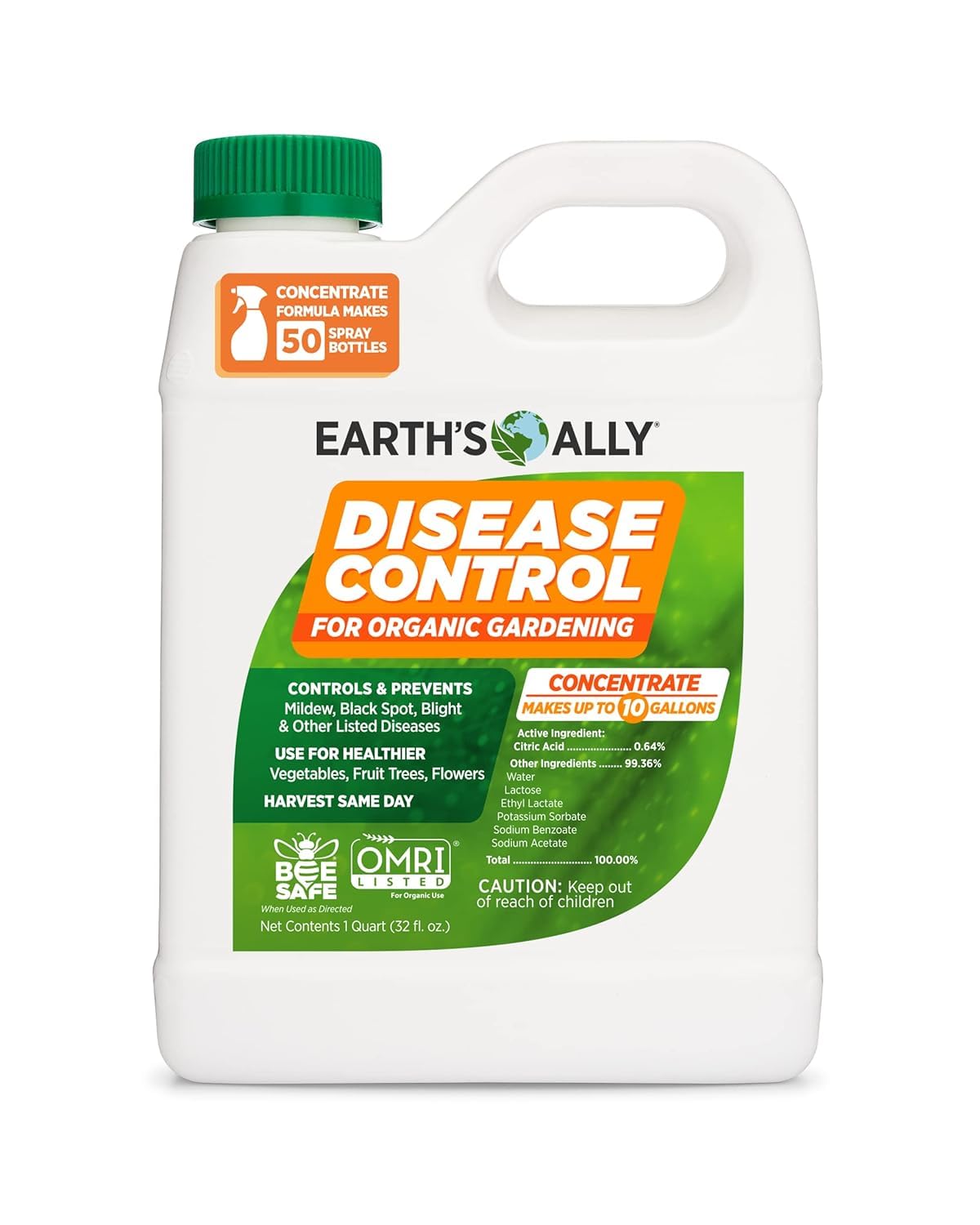
3. Earth’s Ally Disease Control Fungicide Concentrate, 32 oz
Citric-acid formula that stops leaf spot without harsh chemical residue.
For those who want an organic option that still comes as a concentrate — giving you the same cost-per-gallon advantage as a synthetic — this is a strong contender. The active ingredient is citric acid, a naturally occurring compound that kills fungal spores on contact. The label specifically lists leaf spot alongside powdery mildew, downy mildew, blight, black spot, and canker. That covers almost everything a hydrangea can catch. Customers note visible improvement after the first application and praise how easy it is to mix: 6 tablespoons of concentrate per gallon of water, and one 32-ounce bottle makes 10 gallons of ready-to-use spray.
Because it is OMRI Listed, you can spray it on vegetables and herbs up until the day of harvest without worrying about residues. The honest trade-off is that citric acid is a contact-only treatment — it needs to hit every infected leaf, including the undersides, and it washes off in heavy rain. Owners say the instructions are clear, though a few wish the mixing ratio was printed larger on the bottle.
Why It Works
- OMRI Listed — safe for organic gardens and edible plants up to harvest
- Concentrated formula makes 10 gallons of spray from one bottle
- No synthetic chemicals; citric acid breaks down naturally
What to Watch
- Contact-only action requires thorough coverage of both leaf sides
- Rain can wash it off, needing reapplication sooner than systemic options
Best suited for: Organic gardeners who need a concentrate for multiple plants but want to avoid synthetic fungicides.
skip it if: Your hydrangea leaf spot is advanced and already inside the leaf tissue — you need a systemic at that point.
4. Fertilome Liquid Systemic Fungicide II Concentrate, 32 oz
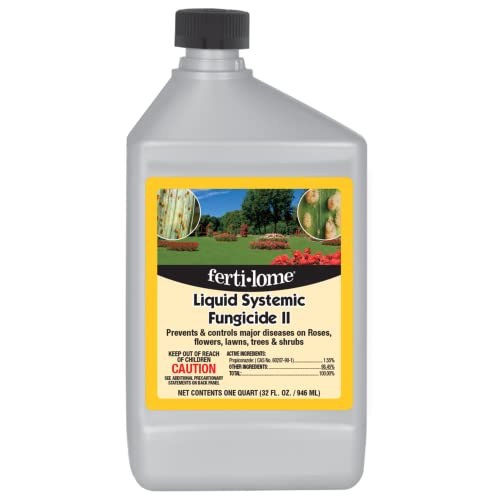
Propiconazole concentrate that moves inside the leaf to cure existing damage.
This is essentially the home-garden version of the pro-grade Quali-Pro — same active ingredient (propiconazole) but packaged under the Fertilome brand for the residential market. It controls leaf spot, brown patch, dollar spot, and take-all patch on roses, flowers, lawns, and trees, which makes it directly useful for hydrangeas in a mixed ornamental bed. Reviewers point out it stopped yellowing leaves on mature Live Oak trees after a single treatment, and one owner said it cleared powdery mildew and rust faster than granular fungicides they had used before.
The 32-ounce liquid volume matches the Quali-Pro, and it weighs 2 pounds — essentially identical in density. Because it is systemic, it protects new growth as it emerges, which is key for hydrangeas that keep putting out fresh leaves through the season. The main knock is that it is labeled primarily for early-season application, so if you have waited until the leaves are covered in spots, you may need a second dose at the suggested interval. Another thing to note: some owners found it effective on dandelions as a herbicide side-effect, which confirms it is a broad-spectrum product that you should use only on the plants listed on the label.
The edge here: It is the same chemistry as the top pick but at a more accessible price point for homeowners who do not want to buy from a pro distributor.
The honest limit: A smaller review base (155 ratings) compared to the top pick, so the long-term reliability data is thinner.
Reach for this if: You want a systemic propiconazole formula for leaf spot on hydrangeas and other ornamentals without the pro-grade branding.
Think twice if: You need a product with a large body of owner feedback — this one has fewer reviews than the top pick.
5. Arber Organic Bio-Fungicide Concentrate, 16 oz

Biological formula that builds a protective barrier on leaves and roots.
This is the one to reach for when you have kids, pets, or pollinators in the garden and do not want to worry about chemical drift. Arber uses certified-organic biologicals and plant-derived active ingredients that create a protective film on leaves and roots while supporting the soil microbiome. It is labeled for leaf spot, powdery mildew, root rot, and lawn diseases, so it covers the main threats to hydrangeas. Shoppers say it cleared fungus on Amaryllis bulbs and snake plants, and one owner said it stopped Bacterial Leaf Blight on peach trees after other fungicides failed — a strong sign it can handle tough ornamentals.
The 16-ounce bottle is smaller than most other concentrates, but the shelf life is up to 3 years, so it does not go bad between seasons. Owners say it works best as a preventative: catch the leaf spot early, apply every 5 to 10 days, and the fungus does not get a foothold. The honest feedback is that it is less effective on root rot (the active ingredients do not target certain root fungi), and for severe leaf spot that has already browned half the leaf, you may find it slower than a propiconazole product. It is low-odor and safe for indoor use, which is a rare bonus if you overwinter hydrangeas in a greenhouse or sunroom.
The Big Plus
- Safe around kids, pets, and beneficial insects when used as directed
- Biological formula supports long-term soil health
- Indoor-friendly with low odor
The Catch
- Not effective against specific root rot fungi despite listing them
Best suited for: Households with children or pets where safety is the top priority, especially for ongoing prevention.
pass on it if: Your hydrangea leaves are already spotted and yellowing — you need a stronger curative at that stage.
6. Monterey Complete Disease Control Spray, 32 oz RTU
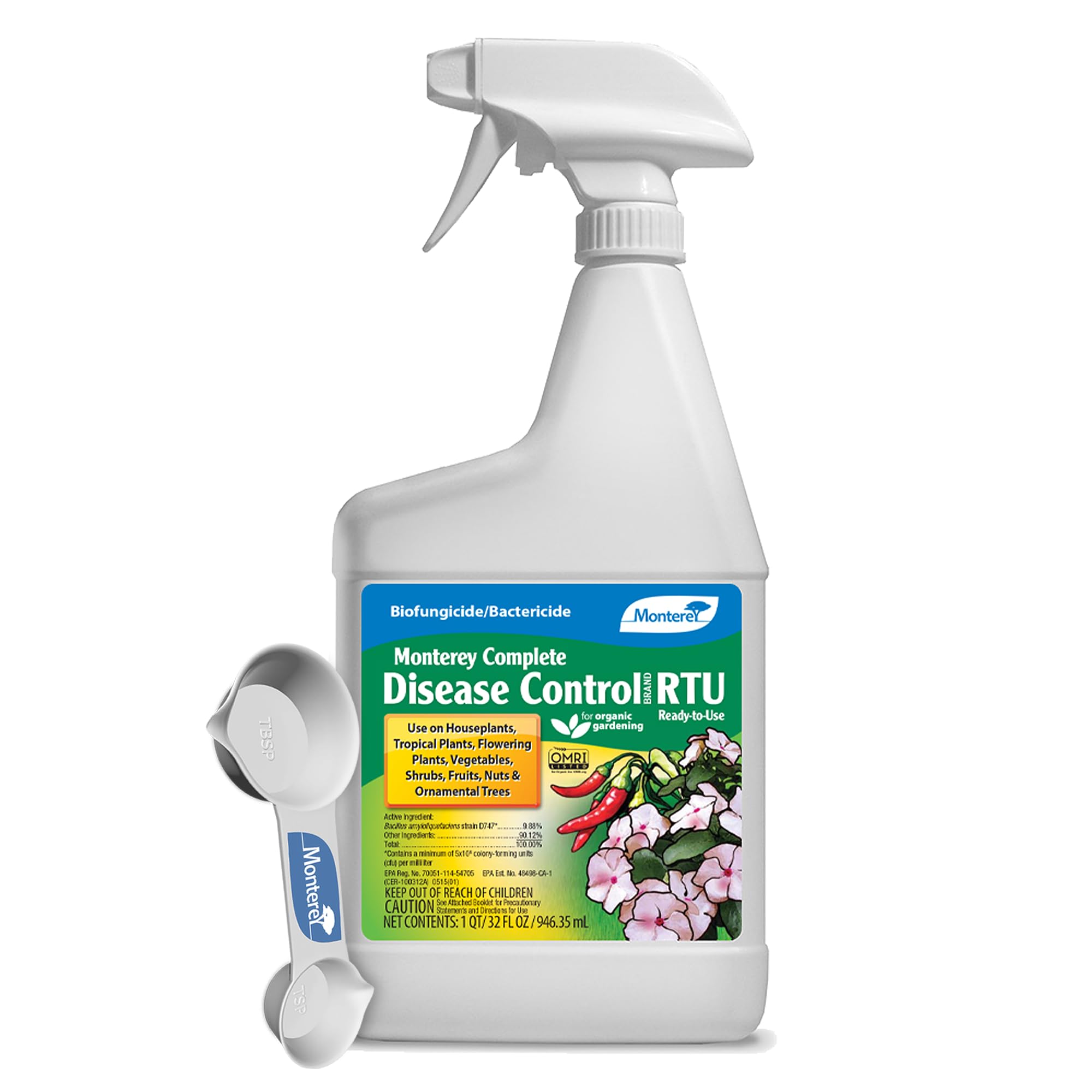
Ready-to-use biofungicide that colonizes root hairs for lasting defense.
Monterey takes a unique approach: instead of just spraying the leaves, this biofungicide also colonizes the root hairs of the plant, which helps prevent disease-causing fungi from establishing in the root zone. For hydrangeas, this is relevant because leaf spot pathogens often overwinter in the soil and re-infect the plant the next season. The ready-to-use spray comes with a spray nozzle, so you do not need a separate sprayer — just soak the leaves, stems, and new shoots until they drip. Buyers report it works perfectly on powdery mildew on squash after a couple of applications, and one says it is their go-to in humid Florida for brown spot on bushes and palms.
At 32 fluid ounces, this RTU bottle holds the same volume as the Neudorff copper spray (32 ounces). It is OMRI Listed for organic gardening and can be used up to the day of harvest. The downside is that, like the Earth’s Ally, it is a contact and root-colonizing treatment — it prevents and stops disease but does not move systemically through the leaf tissue. For hydrangea leaf spot that has already spread across multiple leaves, you need to be diligent about reapplication every 7 to 10 days. One owner gave it to a school group for a project, which says something about how safe it feels to handle, though they could not personally rate the results.
Standout feature: Root-hair colonization is rare in an RTU — most ready-to-use sprays only protect the leaves.
Reach for this if: You want a convenient, no-mix organic spray that protects both leaves and roots.
Look elsewhere if: You need a fast-acting curative for widespread leaf spot — a systemic concentrate will hit harder.
7. Ortho MAX Garden Disease Control Concentrate, 16 oz

Chlorothalonil concentrate that wipes out leaf spot even after other products fail.
When you have tried organic sprays and the leaf spot keeps spreading, this is the chemical option that usually ends the fight. The active ingredient is 29.6% chlorothalonil (formerly branded as Daconil), a broad-spectrum protectant fungicide that stays on the leaf surface and stops spore germination across a wide range of diseases: leaf spots, rust, blight, fruit rots, mildews, scab, and molds. Owners mention it effectively prevents and cures leaf spot on photinia, stopping the spread and eliminating existing infection after monthly applications — and one says it healed roses from black spot after a neem oil product had failed.
The 16-ounce bottle makes up to 64 gallons of diluted spray, which is an incredible value if you have a large garden. It is significantly more potent than the copper or citric-acid options, and owners specifically note it does not cause the leaf burn that some similar products do. The trade-off is the low rating count (87 ratings at 4.0 stars), meaning the crowd-sourced reliability data is thinner than for other picks here. Also, chlorothalonil is a synthetic chemical — not for organic gardens, and you need to follow the label strictly regarding application timing and PPE. For leaf spot on a hydrangea that is already losing leaves, this is the heavy artillery.
Why It Hits Hard
- 29.6% chlorothalonil — among the most potent contact fungicides available to homeowners
- Extremely economical: 16 oz makes 64 gallons of spray
- Gentle on plants — owners note no leaf burn
What to Consider
- Synthetic chemical — not allowed in organic gardening
- Smaller owner feedback base (87 ratings) compared to top picks
Best suited for: Gardeners dealing with persistent leaf spot that organic products have failed to control.
it’s not for you if: You grow organically or want a product with widespread owner feedback.
8. Bonide Sulfur Plant Fungicide Dust, 4 lbs

Dry sulfur dust that doubles as a pH adjuster and a leaf-spot preventer.
This is the oddball in the list — a dust rather than a liquid spray, and one that does double duty as a fungicide and a soil acidifier. The active ingredient is sulfur, a natural element that plants need for healthy growth, and it controls rust, leaf spot, and powdery mildew on fruits, vegetables, and ornamentals. Customers note it did a great job stopping fungus on pachysandra with a single application, and on large areas, they sprinkled it on with a small spade and let rain wash it in. Because sulfur is approved for organic gardening, this works if you want to avoid synthetic residues.
The fine particle size (extremely fine, per the manufacturer) creates a uniform film on leaf surfaces for better adhesion and distribution. One Florida owner mentioned using it to lower soil pH around fruit trees and raised beds, which is an interesting side benefit for hydrangea lovers — you get leaf spot protection plus a shift toward the acidic soil that hydrangeas love for blue blooms. The catch is the mess: owners freely admit it is “so freaking messy” to work with, and it has a mild sulfur smell that fades after an hour. For a single hydrangea, dusting is a bit clumsy compared to a spray; this makes more sense for a large bed or a vegetable garden where you want a no-mix, no-sprayer option.
The unique angle: Sulfur dust is a two-in-one — fungicide plus soil acidifier for blue hydrangeas.
The practical downside: Dusting is messy, and you need dry weather for it to stick; rain can wash it off before it works.
Reach for this if: You want an organic dust that also lowers soil pH for blue hydrangea blooms.
Think twice if: You prefer a precise, clean spray application on a single specimen plant.
9. Dow AgroSciences Eagle 20EW Fungicide, 16 oz

Agricultural-grade systemic that controls leaf spot from inside the tissue.
This is the strongest tool in the lineup — a myclobutanil-based systemic fungicide from Dow AgroSciences designed for turf and ornamentals in professional settings. It controls more than 15 fungal diseases including leaf spot, powdery mildew, rusts, brown patch, and anthracnose, and it works from the inside out to protect new growth. Reviewers point out it is very effective against powdery mildew and shot-hole disease on hydrangeas, peonies, ivy, and stone fruit, with one owner noting that copper fungicide had failed on the same plants. Another said it is their go-to product for zone 7 for powdery mildew.
The 16-ounce bottle is potent: the mixing ratios are listed in oz per acre per 100 gallons, which means home users need to do some math to convert it for a backyard sprayer. One review explicitly noted they likely miscalculated the ratio but the product still saved their plantings — proof of its strength but also a warning that you need to calculate carefully. Owners say PPE is mandatory, and it is clearly an agricultural product, not a grab-and-go garden spray. The crowd-sourced feedback is strong (4.5 stars across 848 ratings), with effectiveness cited as the top positive aspect. For leaf spot on hydrangeas that has resisted everything else, this is the final option, but only if you are comfortable handling concentrated agricultural chemicals.
The Power
- Systemic myclobutanil protects new growth from the inside
- Controls 15+ fungal diseases including Septoria and Zonate leaf spot
- Large positive owner base — 848 ratings at 4.5 stars
The Caution
- Mixing ratios are agriculture-scale — requires careful conversion
- Strong chemical requiring full PPE
Best suited for: Experienced gardeners with severe or recurring leaf spot who need a professional-grade systemic solution.
look elsewhere if: You want a simple mix-and-spray routine; the conversion math and PPE requirements are overkill for a few hydrangeas.
Understanding the Specs
Systemic vs. Contact Fungicides
Concentrate vs. Ready-to-Use (RTU)
A concentrate requires you to mix a measured amount with water in a sprayer. It costs less per application and one bottle can treat a large area — the Ortho MAX makes up to 64 gallons of spray from 16 oz of concentrate. A ready-to-use spray comes pre-mixed in a trigger bottle. It costs more per gallon but requires no equipment and no measuring. For a single hydrangea bush, RTU is the simpler choice. For a whole bed or multiple ornamentals, concentrate stretches further.
FAQ
What is the best active ingredient for hydrangea leaf spot?
Can I use a lawn fungicide on my hydrangeas?
How often should I reapply fungicide for leaf spot?
Will fungicide turn my hydrangea blooms blue?
Is it safe to spray fungicide when hydrangeas are blooming?
What is the difference between chlorothalonil and propiconazole?
Can I mix fungicide with insecticidal soap for a combined spray?
How do I know if my hydrangea leaf spot is fungal and not bacterial?
Final Thoughts: The Verdict
For the majority of shoppers, the fungicide for hydrangea leaf spot winner is the Quali-Pro Propiconazole 14.3 because it offers broad-spectrum systemic control, a massive owner community (4.6 stars across 900+ ratings), and one bottle lasts seasons. If you want a no-mix organic spray for a single hydrangea, grab the Neudorff Copper Soap. And for heavy-duty clean-up when the leaf spot has gotten out of hand, the Dow AgroSciences Eagle 20EW is the one to reach for — but only if you are comfortable with concentrated agricultural chemistry and PPE.
How We Picked
We do not accept paid placement. Every pick is matched to a real buyer and a real use-case; we do not hands-on test units.
Sources & Methodology
Specifications: manufacturer listings and product documentation. Review insights: verified customer reviews, as of July 2026. Pricing: not shown on this page (it changes often); check the current price via the retailer link.
As an Amazon Associate, Lawn Gear Lab earns from qualifying purchases. This does not affect which products we feature.