
Specs are compiled from manufacturer listings and verified buyer reviews and can change over time — please confirm the key details on the product page before buying.
Digging is the hardest part of any outdoor project — and the reason most people stall on planting a fence, a garden, or even a row of bulbs. An electric shovel for dirt cuts through that bottleneck, trading sweat and blisters for a motor that does the heavy lifting below ground. But the category splits three ways: corded demolition hammers that break rock and clay, cordless augers for planting and fence posts, and a slender middle ground of handheld power shovels for the gardener. Picking wrong means a 56-pound tool you have to haul around, or a lightweight that stalls in hard red clay.
I’m Rikta — the founder and writer behind Lawn Gear Lab. This guide is built by comparing the manufacturers’ published specifications and the patterns across verified customer reviews, so you get each pick’s real strengths and trade-offs instead of marketing spin.
These are the picks that earn their place in the shed — the crowd favorite hitting 4.5 stars across 700+ owners, a 4.7-star auger that surprised everyone, and the cordless wonder that owners call “the best thing they bought for their back.” Together they cover every version of the electric shovel for dirt decision.
Our Picks at a Glance


How To Choose The Best Electric Shovel For Dirt
An electric shovel is not a single tool — it is a category name covering three very different machines. The first split is power source: corded tools deliver relentless torque (twisting force) at the cost of dragging an extension cord through wet grass, while cordless designs trade runtime for freedom of movement. The second split is digging style — an auger (a corkscrew-shaped bit) spins a corkscrew bit down into the soil, excellent for round fence-post holes, while a reciprocating spade bit hammers and pries, better for trenches and breaking hardpan. Match the machine to the dirt: loose topsoil is easy work for a handheld auger, but rocky clay or thick tree roots will stall anything short of a high-torque demolition hammer (a breaker that shatters material with repeated impacts).
Motor Power and Torque
Raw wattage (1,500W to 2,200W) is the headline number, but torque measured in foot-pounds (ft-lb, the twisting force applied to the bit) tells the real story of whether the tool will stop when it hits a rock. A 1,500W motor at 90 ft-lb can drill most garden soil, but the same motor with lower gearing at 200 RPM (revolutions per minute, how fast the bit spins) handles hard clay without stalling. For demolition-style shovels, the blows-per-minute (BPM, the number of impacts the tool delivers each minute) number — typically 1,350 to 1,800 — determines how fast you break concrete or dislodge roots. Higher BPM paired with a heavy metal housing (50+ pounds) turns the machine into a stationary anchor, letting gravity do the work.
Corded Convenience vs Battery Freedom
A corded electric shovel runs as long as its extension cord reaches — excellent for long trench days but limited by the nearest outlet. A cordless model with a 12V or 20V lithium-ion battery (a rechargeable battery, typically 2Ah to 4Ah ampere-hours, which is its energy storage capacity) gives you roughly 20 to 30 holes per charge on a 6-inch auger before recharging. That freedom is the difference between digging fence posts in a remote paddock and buying a generator. The trade-off is power: cordless units top out around 4.4 pounds for a handheld shovel or 22 pounds for a battery auger, while corded breakthrough tools weigh 28 to 56 pounds and demand both hands and steady footing.
Quick Comparison
| Model | Best For | Motor Power | Digging Style | Weight | Amazon |
|---|---|---|---|---|---|
| VEVOR Demolition Jack Hammer★ Best Overall | Trenching & rocky soil | 2200W | Spade / Demolition | 27.9 lb | Amazon |
| Rotoshovel Handheld ShovelLightest Dig | Gardening & planting | 12V Brushless | Handheld Auger | 4.4 lb | Amazon |
| DC House 1500W Post Hole Digger | Fence posts & shrubs | 1500W (90 ft-lb) | 6″ Spiral Auger | — | Amazon |
| XtremepowerUS 2200W Jack Hammer | Concrete & heavy trenching | 2200W | Spade / Demolition | 56 lb | Amazon |
| HIGOSPRO 1500W Post Hole Digger | Post holes in compacted clay | 1500W (90 ft-lb) | 6″ & 4″ Spiral Auger | — | Amazon |
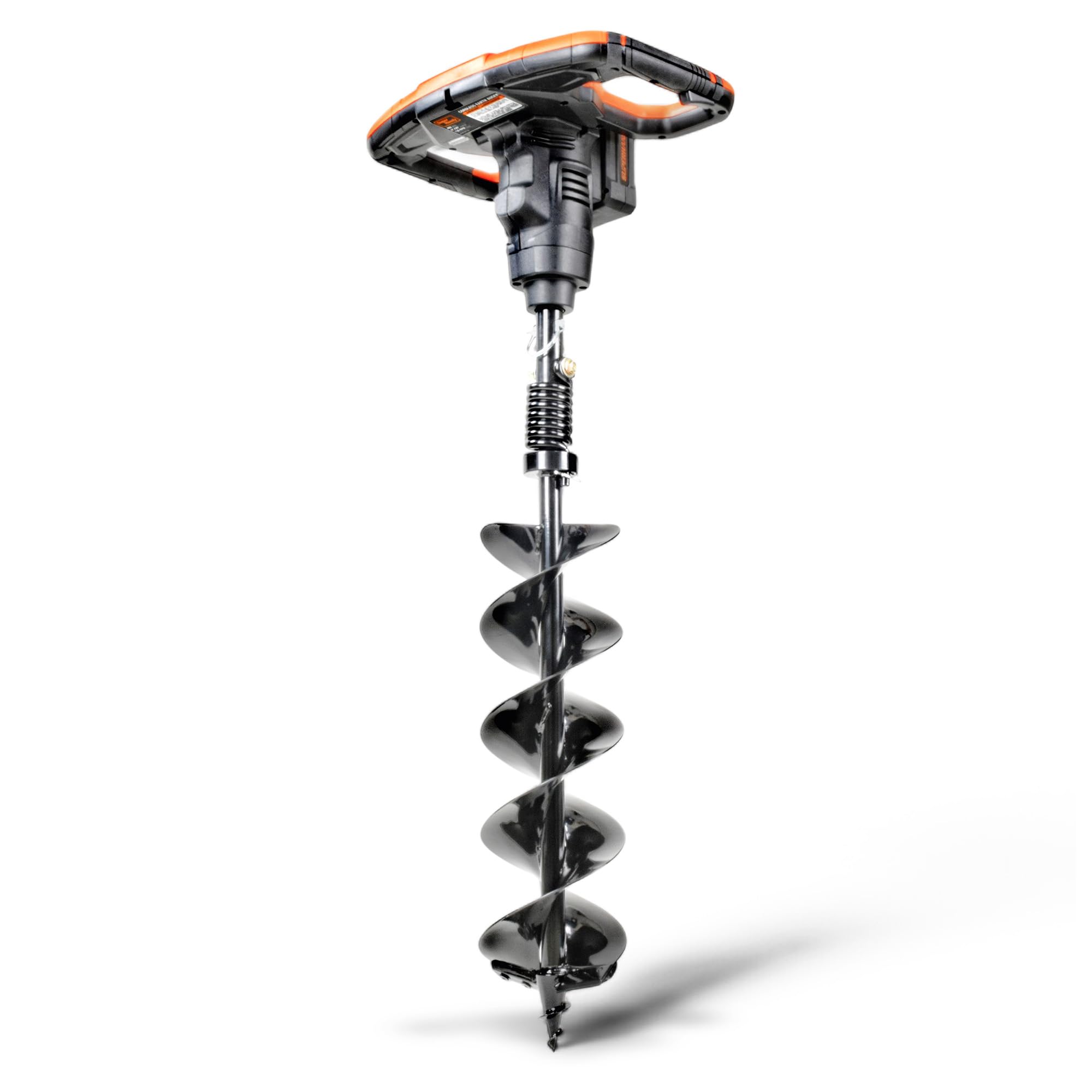
| SuperHandy Cordless Earth Auger | Remote jobs & low noise | 20V Brushless | 6″ Spiral Auger | 17.6 lb | Amazon |
In‑Depth Reviews
1. VEVOR Demolition Jack Hammer, MAX 2200W
Our pick — 4.5★ from 700+ verified ratings; the strongest balance of quality and price.
The corded brute that turns rocky clay into post-hole dust.
A MAX 2200W motor delivers 1,350 blows per minute through a spade chisel that breaks dirt and roots apart instead of scraping them. A MAX 2200W motor delivers 1,350 blows per minute (BPM, the number of impacts per minute) through a spade chisel that breaks dirt and roots apart instead of scraping them. The real-world result, as buyers report: “Made digging post holes a breeze and was even able to handle very rocky soil.” At 27.9 pounds it is not a one-hand tool, but the weight works in your favor — gravity pushes the bit down while the 360° adjustable front handle and a D-shaped rear grip absorb vibration. Four included chisels (clay spade, scraping, flat, and point) mean you switch from trenching to chipping concrete without buying extra parts.
Performance is the single most-praised quality in the reviews — far outpacing any other aspect — and the second-most is value for money, because at this price the tool competes with a weekend rental that would cost nearly as much. Buyers also note that the oil port makes maintenance straightforward, though one owner advised keeping an eye on lubrication because the factory fill may not last a full day. The multi-position front handle offers enough control to keep the machine stable in hard ground without exhausting the operator.
It weighs nearly 28 pounds and plugs into a 110V outlet, so this is not a tool for small flower beds or quick bulb planting. This is for the person digging a trench for water lines, breaking up a concrete slab, or planting a dozen fence posts in soil that laughs at hand tools. The cord is a limitation — you will need a heavy-duty extension cord — but the trade-off is unstoppable power that does not fade after ten minutes.
The Muscle
- 2200W motor delivers the most torque in this lineup — stops for nothing in rocky clay
- Four included spade and chisel bits cover trenching, digging, and concrete breaking
- Vibration-dampening D-handle and 360° adjustable fore grip reduce fatigue
The Anchor
- At 27.9 pounds it is heavy and corded — not suited for quick garden digs or tight spaces
- Oil port requires regular maintenance; factory oil leak reported by some early buyers
Reach for it if: you need to dig trenches, break hardpan, or install fence posts in rocky soil and want demolition-grade power at a fraction of rental cost.
Think twice if: your work is all potting, bulb planting, or shallow garden beds — the VEVOR is built for bite, not finesse.
2. Rotoshovel Powered Handheld Shovel (12V)
Four-point-four pounds of battery-powered relief for gardeners who cannot afford another day with a shovel.
This handheld auger redefines the shovel as a 4.4-pound, battery-powered tool for gardeners. — a handheld auger (a corkscrew-shaped bit that drills into the ground) that weighs 4.4 pounds and runs on a 12V rechargeable battery. The brushless motor (a motor with no brushes that wear out, so it runs longer and cooler) spins through compacted soil and gravel, and an automatic safety shutoff stops the auger if it kicks back. Owners mention digging multiple holes in under a minute each, which translates to work that formerly took ten minutes of manual effort fading away. Versatility is the most-praised trait — the Rotoshovel fits planting beds, bulbs, potting, and small fence posts, and the battery lasts long enough for over 20 holes per charge.
Its ergonomic design eliminates stooping, twisting, and blistered palms, according to reviews. A 125-pound reviewer reports handling it alone without strain. That said, the auger is not a heavy-duty shovel; one owner hit a rock and the tool jammed (the safety shutoff then kicked in). Hard red clay also defeated it for one buyer who went back to a drill-mounted bit, so this is a tool for gardeners, not demolition crews. It errs on the side of caution — which is exactly what a gardener with a tender back needs.
The Rotoshovel’s 4.4-pound design prioritizes portability and precision over raw torque. But that lightness also means it will not muscle through large rocks or heavy clay without help. For the dedicated gardener planting spring bulbs, roses, or the occasional small shrub, this is the difference between a morning’s work and a week of soreness. If you need the raw power of the VEVOR demolition hammer for heavy clay, skip this one; but for daily garden work, nothing in this guide is as gentle on your body.
The Masterstroke: At 4.4 pounds with a brushless motor and a safety kickback shutoff, the Rotoshovel is the only electric shovel that feels like an extension of your arm — it removes the backache before it starts. The trade-off is that it struggles in heavy clay and rocks; for hard red dirt, a more powerful auger or a corded spade is better suited.
Reach for it if: you are a gardener, a planter, or anyone over 50 who wants to keep digging without the pain — the weight and safety features are purpose-built for this.
Look elsewhere if: your soil is thick red clay, you need to break concrete, or you want to dig deep post holes; the Rotoshovel is not a heavy-duty trencher.
3. DC House 1500W Electric Post Hole Digger

The 1500W auger that impressed everyone — especially the 76-year-old using it solo.
This auger hit a 4.7-star average across over 100 owners — the highest rating in this category — and when you read the reviews the pattern is clear: it works faster than a manual post hole digger and with less effort. The 1,500W motor delivers 90 ft-lb of torque (twisting force) at 270 RPM (revolutions per minute) through a 6-inch digging bit, and a reverse function that lets you unstick the auger from roots or rocks by spinning the bit the other way. That reverse button, set at position “II,” lifts the crushed soil out so you do not have to wrench the bit free by hand. A 125-pound female owner says she can use it alone — a strong sign of how well the ergonomics work.
Performance is the top-praised aspect, followed by overall functionality, and buyers consistently mention the torque, the cutting tip, and the durability. The anti-slip, anti-vibration handle and safety lock add control, but the same torque that makes it fast can yank the tool from your grip if you are not careful — especially in clay or rocks. The advice repeated in reviews is to go slow, lift the bit every few inches to clear soil, and let the reverse do the heavy lifting when you hit a snag. Its torque is comparable to the VEVOR, but at a much lower weight and cost.
It is corded, so an extension cord trailing behind you is part of the deal. But for the price, it outperforms gas models that cost significantly more and weigh more. One factor to note: the torque can be dangerous. Owners advise firm footing and a light touch. For anyone installing a fence, planting rose bushes, or transplanting a garden, this tool makes the job quick enough that you will wonder why you did not buy it last year.
The Speed
- 1500W motor at 90 ft-lb torque cuts through compacted soil and roots faster than a manual digger
- Reverse function unclogs the auger when you hit rocks — no prying needed
- Ergonomic anti-slip, anti-vibration handle with safety lock for stable one-person operation
The Catch
- Torque is high enough to spin the tool from your hands if you lose your grip in hard clay
- Corded design limits mobility; needs a heavy-duty extension cord
Solid bet if: you are putting up a fence, planting multiple shrubs, or digging deep post holes and want a durable corded auger with a safety net.
skip it if: you dig small, shallow holes in soft soil only — the torque is overkill and the cord is a nuisance.
4. XtremepowerUS 2200W Demolition Jack Hammer

A 56-pound concrete breaker that doubles as an electric shovel for the most stubborn dirt.
This is the heaviest tool in the guide at 56 pounds — more than double the VEVOR — and it earns every pound. A 2,200W motor delivers 1,800 blows per minute (BPM, the number of impacts per minute), which is the fastest impact rate in this lineup, through a 1-1/8-inch hex shank (the hexagonal connection that holds the bit). That translates to cracking 6-inch reinforced concrete slabs without bogging down. Functionality is the most-praised quality — buyers mention it excels in rocky soil and can cut through flint rocks and roots, and one owner used it for 18 months in South Florida corral rock without issue. The package includes a 16-inch bull point chisel, a 16-inch flat chisel, and a 16-inch shovel chisel, plus protective gloves and goggles.
The 360-degree rotary front handle gives you control from any angle, and the heavy metal housing absorbs enough vibration that the tool stays planted without constant bracing. Customers note it dug 2- to 3-foot-deep holes in under an hour in rock-hard ground. The downsides are physical: at 56 pounds, carrying it across a property is a two-person task, and the included case tends to arrive cracked near the caster. Also, the tool does not include oil, and owners recommend using 40-weight oil for the pneumatic mechanism (an air-powered system that drives the piston). Unlike the Rotoshovel, which is built for lightness, this one is built for absolute force.
This is the ultimate pick if you plan to break up concrete, dig through caliche or corral rock, or trench for major underground work. For smaller garden tasks, it is absurdly oversized. The 60-day manufacturer warranty is short, but the tool’s durability record over hundreds of reviews — including owners who left it outside for a year — suggests it can take a beating. Consider it for the project that demands a rented breaker, but at a price that keeps the tool in your shed permanently.
The Breaker: With 1,800 BPM and a 56-pound body, this jackhammer demolishes concrete slabs and rocky soil alike. It is not an electric shovel in the traditional sense — it is a demolition tool that happens to dig trenches very well. The weight is the barrier; plan for two people to load it and a cart to move it.
Buy it for: breaking up concrete, digging through rock-hard ground, or trenching for underground utilities — it replaces a rented pneumatic hammer at a fraction of the daily cost.
Pass if: your work is planting, small holes, or soft garden soil — the XtremepowerUS is a sledgehammer when you need a screwdriver.
5. HIGOSPRO 1500W Electric Post Hole Digger (6″ & 4″ Bits)

A 1,500W auger with two bits that digs through decades-old compacted clay.
This auger comes with both a 6-inch bit (standard for 4×4 posts) and a 4-inch bit (ideal for smaller holes), plus a carry bag. The 1,500W motor spins at 200 RPM (revolutions per minute) with 90 ft-lb of torque (twisting force) — a slightly lower RPM than the DC House auger but the same torque, which makes it stable in hard soil without the tool trying to yank away. Buyer feedback emphasizes digging performance as the top aspect, calling it effective even in decades-old compacted clay dirt. The security lock on the left-hand side and anti-vibration grip handle give stable control, and the skid-proof handles add leverage.
An honest trade-off: this model lacks a reverse function. When the auger hits a root or a rock, you have to remove the cotter pin and manually twist the bit free — a process owners describe as manageable but slow. The torque is strong enough that the tool can throw you if you lose control in a deep squat. Multiple reviewers found that after the auger loosens the dirt, a manual post hole digger is still needed to clean the hole out. That is common to most augers in this class, but note if you expect a single-pass experience.
The carry bag is a nice touch for transport and storage, and having two bit sizes expands the tool’s usefulness from fence posts to mailbox installations and tree planting. For the money, it competes directly with the DC House auger — the DC House has a reverse function, while this one comes with a second bit and a bag. Choose this if you value the extra bit and bag over the convenience of reverse.
The Advantage
- Comes with both 6-inch and 4-inch spiral bits plus a travel bag — a dual-size kit right from the start
- 90 ft-lb torque at a steady 200 RPM digs clean holes without excessive kickback
- Security lock and anti-vibration handle reduce strain on long workdays
The Disadvantage
- No reverse function — removing a stuck bit from a root or rock requires manual open up
- High torque can still spin the tool if you do not brace properly; needs firm handling
Best for: the homeowner installing a fence or deck who needs two auger sizes in one purchase and can live without reverse.
Consider the alternative: the DC House auger has reverse for the same power class; choose this if the second bit and bag matter more than the unsticking feature.
6. SuperHandy Cordless Earth Auger (20V)
A lithium-ion auger that trades gas fumes for quiet, portable drilling.
If you hate the smell of gasoline and the roar of a two-stroke engine, this is your auger. The SuperHandy runs on a 20V 2Ah lithium-ion battery (charger included) and uses a brushless motor (a motor with no brushes that wear out, so it runs longer and cooler) with a 3-planetary gear system (a set of gears in a compact housing that boosts torque) for higher efficiency. It weighs 17.6 pounds — significantly lighter than a gas-powered unit — and produces no exhaust, so you can use it in enclosed areas or near open windows. The 6-inch x 30-inch earth auger bit is included, and a reverse function helps unstick the bit from roots and rocks. Owners say it tears through thick clayey soil and delivers roughly 10 holes per charge at 30 inches of depth.
Ease of use is the standout theme: the quick safety release stops the auger electronically when you release the trigger, and a high-intensity LED light helps you see what you are doing in dim light. The ergonomic grips and balanced design make one-person operation manageable, though you still need a firm hold. The most common complaint is the charger — it lacks an auto cut-off, so you have to monitor it manually. And after two years, one owner found the company no longer sells replacement chargers, rendering two batteries unusable. That is a real caution if you plan to keep this auger for the long haul.
It cuts digging time from hours to minutes for fence posts, planting, and aeration, and it is light enough to carry across the property without a cart. The battery limit (about 10 holes per charge) means you will pause to recharge for larger projects. An optional 4Ah battery extends runtime, but that is an extra purchase. For the eco-conscious homeowner or anyone who wants to dig without the noise and fumes, this auger delivers a clean, quiet experience that works. If you can afford the trade-off in runtime versus the corded DC House or HIGOSPRO augers, the freedom from an outlet is transformative.
The Cordless Edge: A 20-volt brushless motor with a reverse safety release and an LED light makes this the most user-friendly auger for the weekend warrior. The battery range is the limiting factor — bring the charger to the job site for a midday top-up.
Pick it if: you value quiet operation, no exhaust, and the freedom to work far from an outlet — the SuperHandy is the cleanest sink in this category.
Hesitate if: you dig more than 10 deep holes per session or need a guaranteed long-term parts supply; the battery ecosystem is not as mature as corded plug-and-play.
Understanding the Specs
Wattage and Torque
Motor power is listed in watts (1,500W to 2,200W here), but that number does not tell you how much twisting force the tool actually applies to the ground. Torque (measured in foot-pounds, or ft-lb) is the real measure of digging capability — a 90 ft-lb motor can bore through compacted clay, while a 40 ft-lb motor will stall. Higher wattage tends to support higher torque, but gearing matters. A demolition hammer like the VEVOR or XtremepowerUS does not use torque in the same way; it uses blows per minute (BPM) to shatter material. If you are digging in loose garden soil, 1,500W at 200 RPM is fine. If you are battling hardpan or tree roots, you want a high BPM hammer or a high-torque auger at a lower RPM so the tool does not rip itself out of your hands.
Auger Size and Shank Type
The bit diameter (4-inch, 6-inch, or larger) controls the hole width. A 6-inch auger is the standard for 4×4 fence posts, while a 4-inch bit fits smaller jobs like mailbox posts or bulb planting. Most augers in this guide accept a straight shank, which is the industry standard for consumer-grade electric augers. The shank is the part that connects the bit to the motor. If you want to swap bits between brands, check the shank type and diameter — a 1-1/8-inch hex shank (used by the XtremepowerUS and VEVOR demolition hammers) is not compatible with a standard spiral auger head. Always buy bits that match your tool’s shank specification.
Reverse Function
Reverse spins the auger the opposite direction, which lifts the soil and helps unstick the bit from underground obstacles like roots, rocks, or clay suction. Not every auger has it — the HIGOSPRO and the Rotoshovel lack reverse. If you dig in rocky or root-filled soil, reverse is a time-saver that prevents you from having to manually twist the bit free with a pry bar. The DC House and SuperHandy both include reverse, and owners call it among the most-valued features.
Weight and Portability
The weight of an electric shovel determines who can use it and for how long. A 4.4-pound handheld like the Rotoshovel can be operated one-handed by almost anyone. A 17.6-pound cordless auger like the SuperHandy is manageable for a single person but tiring overhead. Demolition hammers at 28 to 56 pounds are two-person tools for ground-level work — you brace, you guide, you do not lift unless you have to. Always check the weight before buying: a tool that is too heavy to carry from the car to the fence line will end up left in the garage.
FAQ
Can an electric shovel for dirt handle rocky soil?
Is a corded or cordless electric shovel better for fence posts?
How many holes can a battery-powered auger dig on one charge?
Do I need a reverse function on an electric auger?
What is the difference between a spade bit and an auger bit for digging?
How heavy is too heavy for an electric shovel?
Can I use an electric shovel to dig through concrete?
How often do I need to oil an electric demolition hammer?
Will a 6-inch auger work for 4×4 fence posts?
What safety features should I look for in an electric shovel?
Final Thoughts: The Verdict
The electric shovel for dirt decision depends on the dirt itself and the scale of the work. For trenching, heavy clay, and rocky soil, the VEVOR Demolition Jack Hammer is the runaway winner — it has the highest ratings volume, the most owner praise for performance, and the muscle to handle what manual tools cannot. For the weekend gardener with planting beds and bulbs, the {“@context”: “https://schema.org”, “@graph”: [{“@type”: “ItemList”, “name”: “6 Best Electric Shovel For Dirt”, “url”: “https://lawngearlab.com/best-electric-shovel-for-dirt/”, “numberOfItems”: 6, “itemListElement”: [{“@type”: “ListItem”, “position”: 1, “name”: “VEVOR Demolition Jack Hammer, MAX 2200W”, “url”: “https://lawngearlab.com/best-electric-shovel-for-dirt/#product-1”}, {“@type”: “ListItem”, “position”: 2, “name”: “Rotoshovel Powered Handheld Shovel (12V)”, “url”: “https://lawngearlab.com/best-electric-shovel-for-dirt/#product-2”}, {“@type”: “ListItem”, “position”: 3, “name”: “DC House 1500W Electric Post Hole Digger”, “url”: “https://lawngearlab.com/best-electric-shovel-for-dirt/#product-3”}, {“@type”: “ListItem”, “position”: 4, “name”: “XtremepowerUS 2200W Demolition Jack Hammer”, “url”: “https://lawngearlab.com/best-electric-shovel-for-dirt/#product-4”}, {“@type”: “ListItem”, “position”: 5, “name”: “HIGOSPRO 1500W Electric Post Hole Digger (6\” & 4\” Bits)”, “url”: “https://lawngearlab.com/best-electric-shovel-for-dirt/#product-5”}, {“@type”: “ListItem”, “position”: 6, “name”: “SuperHandy Cordless Earth Auger (20V)”, “url”: “https://lawngearlab.com/best-electric-shovel-for-dirt/#product-6”}]}, {“@type”: “Product”, “position”: 1, “name”: “VEVOR Demolition Jack Hammer, MAX 2200W”, “image”: “https://m.media-amazon.com/images/I/71HGlhtFNXL.jpg”, “brand”: {“@type”: “Brand”, “name”: “VEVOR”}, “url”: “https://www.amazon.com/dp/B0BPX4F4X8/”, “offers”: {“@type”: “Offer”, “url”: “https://www.amazon.com/dp/B0BPX4F4X8/”}}, {“@type”: “Product”, “position”: 2, “name”: “Rotoshovel Powered Handheld Shovel (12V)”, “image”: “https://m.media-amazon.com/images/I/41Wp6Pd1U4L.jpg”, “brand”: {“@type”: “Brand”, “name”: “Rotoshovel”}, “url”: “https://www.amazon.com/dp/B0F344CH5L/”, “offers”: {“@type”: “Offer”, “url”: “https://www.amazon.com/dp/B0F344CH5L/”}}, {“@type”: “Product”, “position”: 3, “name”: “DC House 1500W Electric Post Hole Digger”, “image”: “https://m.media-amazon.com/images/I/41dNsc-G+LL.jpg”, “brand”: {“@type”: “Brand”, “name”: “DC”}, “url”: “https://www.amazon.com/dp/B0D6RJV6BP/”, “offers”: {“@type”: “Offer”, “url”: “https://www.amazon.com/dp/B0D6RJV6BP/”}}, {“@type”: “Product”, “position”: 4, “name”: “XtremepowerUS 2200W Demolition Jack Hammer”, “image”: “https://m.media-amazon.com/images/I/71wq+wtvztL.jpg”, “brand”: {“@type”: “Brand”, “name”: “XtremepowerUS”}, “url”: “https://www.amazon.com/dp/B016APNNQ6/”, “offers”: {“@type”: “Offer”, “url”: “https://www.amazon.com/dp/B016APNNQ6/”}}, {“@type”: “Product”, “position”: 5, “name”: “HIGOSPRO 1500W Electric Post Hole Digger (6\” & 4\” Bits)”, “image”: “https://m.media-amazon.com/images/I/41yZmRV5CnL.jpg”, “brand”: {“@type”: “Brand”, “name”: “HIGOSPRO”}, “url”: “https://www.amazon.com/dp/B0B4J3S2Y3/”, “offers”: {“@type”: “Offer”, “url”: “https://www.amazon.com/dp/B0B4J3S2Y3/”}}, {“@type”: “Product”, “position”: 6, “name”: “SuperHandy Cordless Earth Auger (20V)”, “image”: “https://m.media-amazon.com/images/I/61zGaB1AL9L.jpg”, “brand”: {“@type”: “Brand”, “name”: “SuperHandy”}, “url”: “https://www.amazon.com/dp/B07Q3964MZ/”, “offers”: {“@type”: “Offer”, “url”: “https://www.amazon.com/dp/B07Q3964MZ/”}}, {“@type”: “FAQPage”, “mainEntity”: [{“@type”: “Question”, “name”: “Can an electric shovel for dirt handle rocky soil?”, “acceptedAnswer”: {“@type”: “Answer”, “text”: “Yes, but you need the right type. A corded demolition hammer (2,200W with a spade bit) breaks through rocky soil and even tree roots because it impacts the ground rather than spinning. A standard spiral auger can handle small rocks and gravel, but large rocks will stall the motor or jam the bit — a reverse function helps unstick it. The Rotoshovel, at 4.4 pounds, will stop at a fist-sized rock, while the VEVOR or XtremepowerUS hammer will shatter it.”}}, {“@type”: “Question”, “name”: “Is a corded or cordless electric shovel better for fence posts?”, “acceptedAnswer”: {“@type”: “Answer”, “text”: “Corded is better for durability and power. Fence posts require holes 24 to 36 inches deep, and a corded auger (1,500W or more) can dig 10 to 20 holes without stopping. Cordless models are convenient for remote locations, but you get roughly 10 deep holes per charge and then have to wait for a recharge. If your fence line runs near an outlet, go corded. If the posts are far from power and you need portability, a cordless unit with an extra battery is the answer.”}}, {“@type”: “Question”, “name”: “How many holes can a battery-powered auger dig on one charge?”, “acceptedAnswer”: {“@type”: “Answer”, “text”: “It depends on the battery capacity and soil hardness. A 2Ah lithium-ion battery in the SuperHandy auger delivers roughly 10 holes at 30-inch depth in average soil — loose or sandy soil may extend that to 12 or 14 holes, while heavy clay will drop it to 6 or 7. An optional 4Ah battery can double the runtime. Always carry the charger to the job site for a midday top-up if you are digging more than 10 holes.”}}, {“@type”: “Question”, “name”: “Do I need a reverse function on an electric auger?”, “acceptedAnswer”: {“@type”: “Answer”, “text”: “Reverse is not essential for soft, rock-free soil, but it is extremely valuable if you hit a root or a stone underground. When an auger binds, reverse spins the bit backward, lifting the debris and allowing the tool to back out cleanly. Without reverse, you must manually disconnect the bit (often by removing a cotter pin) and pry it free. For heavy clay, rocky soil, or root-filled ground, reverse saves significant time and frustration.”}}, {“@type”: “Question”, “name”: “What is the difference between a spade bit and an auger bit for digging?”, “acceptedAnswer”: {“@type”: “Answer”, “text”: “A spade bit is a flat blade that hammers and pries at the soil — it is most effective in demolition hammers for breaking concrete and loosening compacted dirt. An auger bit is a spiral corkscrew that drills into the ground, pulling the soil upward as it turns. Augers produce a clean round hole ideal for fence posts and planting, while spade bits create a rough trench or wider cavity. Choose an auger for round post holes and a spade bit for trenches or breaking hard ground.”}}, {“@type”: “Question”, “name”: “How heavy is too heavy for an electric shovel?”, “acceptedAnswer”: {“@type”: “Answer”, “text”: “If you plan to move the tool from the car to the work site by yourself, a weight under 25 pounds is manageable. Demolition hammers at 56 pounds (like the XtremepowerUS) require two people or a cart. For most homeowners and gardeners, a weight between 4 and 20 pounds is practical for self-loading and carrying. If the tool is staying on a property or in a truck bed full-time, weight matters less.”}}, {“@type”: “Question”, “name”: “Can I use an electric shovel to dig through concrete?”, “acceptedAnswer”: {“@type”: “Answer”, “text”: “Only demolition-style hammers with a spade or bull point chisel can break concrete. The VEVOR and XtremepowerUS hammers (both 2,200W with BPM rates of 1,350 and 1,800 respectively) are designed for concrete, brick, and block. Standard augers and handheld shovels will stall or break on concrete. If your project involves cutting through a concrete slab, choose a dedicated jackhammer with a chisel bit, not a garden auger.”}}, {“@type”: “Question”, “name”: “How often do I need to oil an electric demolition hammer?”, “acceptedAnswer”: {“@type”: “Answer”, “text”: “Most corded demolition hammers have an oil port for lubricating the pneumatic (air-driven) or reciprocating mechanism. The VEVOR hammer recommends checking the oil level before each use and refilling when low; the included oil bottle is small and may need frequent replenishment. Some reviewers point out the factory oil leaks out within the first hour, so it is wise to have ISO VG 46 or 40-weight oil on hand and to top up after every 20 to 30 minutes of heavy use. Skipping maintenance can overheat the piston assembly.”}}, {“@type”: “Question”, “name”: “Will a 6-inch auger work for 4×4 fence posts?”, “acceptedAnswer”: {“@type”: “Answer”, “text”: “Yes — a 6-inch auger is the standard size for 4×4 wooden fence posts. The hole needs to be slightly wider than the post to allow for gravel drainage and concrete backfill. A 4-inch auger is too narrow for 4×4 posts and is better suited for T-posts, small tree stakes, or bulbs. Most electric augers in this guide (DC House, HIGOSPRO, SuperHandy) come with a 6-inch bit, and the HIGOSPRO additionally includes a 4-inch bit for smaller jobs.”}}, {“@type”: “Question”, “name”: “What safety features should I look for in an electric shovel?”, “acceptedAnswer”: {“@type”: “Answer”, “text”: “At a minimum, look for a trigger lock or safety lock that prevents accidental starting. The Rotoshovel adds an automatic safety shutoff that stops the auger on kickback — a feature that reduces the risk of sudden torque spinning the tool. Demolition hammers often have a lock-on button for continuous operation, but they also benefit from a vibration-dampening handle to reduce fatigue. Always wear safety glasses, gloves, and steel-toed boots when using any electric digging tool. Augers can snag on roots and yank if you lose your grip, so a firm stance and two-handed operation are non-negotiable.”}}]}]}