
Specs are compiled from manufacturer listings and verified buyer reviews and can change over time — please confirm the key details on the product page before buying.
A handheld garden cultivator is the difference between clawing at the dirt on your knees and standing upright while you work. These manual tools—no motor, no battery, no gas—use sharp steel tines to rip through soil, yank out weeds by the root, and fluff up compacted beds so water and air reach your plants. The right one saves your lower back and your knuckles. The wrong one bends on the first rock.
I’m Rikta — the founder and writer behind Lawn Gear Lab. This guide is built by comparing the manufacturers’ published specifications and the patterns across verified customer reviews, so you get each pick’s real strengths and trade-offs instead of marketing spin.
After digging through the specs and hundreds of owner experiences, these nine picks represent the best handheld garden cultivator options available right now, from heirloom-quality forged-steel hand tools to long-handle tillers that let you work without bending over.
Our Picks at a Glance


How To Choose The Best Handheld Garden Cultivator
A few simple specs separate a tool you will reach for every weekend from one that ends up in the back of the shed. Focus on these three things.
Tine Material and Construction
The steel used for the tines determines whether the cultivator will slice through hard-packed clay or fold up on the first root. Tempered boron steel is the strongest option at the high end—it keeps a sharp edge and resists rust. Forged high-carbon steel is the next tier, offering serious strength for heavy soil. Cheaper stamped-steel tines bend and dull quickly, so look for words like “forged,” “tempered,” or “carbon steel” in the spec.
Handle Length and Ergonomics
This is the single biggest comfort factor. A short handle (11 to 16 inches) is ideal for close-up work in raised beds, flower boxes, and around shrubs—you kneel or sit, and the tool moves with your hand. A long handle (44 to 58 inches) lets you stand upright and use your body weight, which saves your lower back on big weeding jobs. Some cultivators offer telescoping handles (15.5 to 55 inches) so you get both modes from one tool.
Tine Shape and Number
Straight tines are great for general loosening and mixing. Curved or angled tines grab soil as you twist, yanking out weeds and breaking clods more effectively. Three tines work fine for light soil; four or five tines give you wider coverage with each pull, speeding up the job. Twist-type tillers with a spiral-shaped claw do a different job—they require a twisting motion rather than a pull, which is hugely effective for aeration and deep weed removal.
Quick Comparison
| Model | Best For | Tines | Handle Length | Steel Type | Amazon |
|---|---|---|---|---|---|
| DeWit 5-Tine Cultivator★ Best Overall | Heirloom-quality hand work | 5 | 11″ | Tempered Boron Steel | Amazon |
| YEELOR 3-Tine TillerSmart Value | Adjustable long-reach tilling | 3 | 15.5″–55″ | High-Quality Steel | Amazon |
| BARAYSTUS Long Hand CultivatorBest Build | Sturdy, telescoping 4-tine work | 4 | Telescoping | Carbon & Stainless Steel | Amazon |
| GSBLUNIE Twist Tiller | Twist-and-aerate in tight spots | 4 (Twist) | 44.3″ | Alloy Steel | Amazon |
| BARAYSTUS Garden Claw | Wide-curve twisting tiller | 4 (Curved) | 16″ | Alloy Steel | Amazon |
| Truper Rapid Tiller | Dual-head digging & clearing | 3 + Blade | 14″ | Forged Steel | Amazon |
| Altdorff Hand Tiller | Stand-up twisting in beds | 4 (Twist) | 17.7″ arc | Alloy Steel | Amazon |
| CobraHead Mini Weeder | Precision weeding & planting | 1 (Curved blade) | — (Hand tool) | Tempered Forged Steel | Amazon |
| VNIMTI 58″ Cultivator | Full-size, back-saving tilling | 4 | 58″ | High Carbon Steel | Amazon |
In‑Depth Reviews
1. DeWit 5-Tine Hand Cultivator – Tempered Boron Steel Claw Tool
Our pick — over 4.5★ from 400+ verified ratings; the strongest balance of quality and price.
The heirloom-quality cultivator that slices through crabgrass like a hot knife.
This is the cultivator you buy once. The five tines are forged from tempered boron steel (a super-hard alloy that resists rust and holds a sharp edge), and the head measures 5 inches long and 3.5 inches wide. At just 8 ounces, it is featherlight in the hand—but buyers report it is tough enough to yank out Bermuda grass clumps, roots and all. The 11-inch ash hardwood handle comes from FSC-certified forests, and DeWit backs it with a lifetime guarantee.
What wins people over is the build quality—96 owners single out the steel and construction above everything else. Owners mention the five curved tines dig deeper and cover more ground than straight-pronged cultivators, and they work equally well in clay and sandy soil. A few note the handle could be longer to reduce bending, but at this weight and size, it is meant for close-in kneeling work in raised beds and borders. It even pulls double duty mixing fertilizer into potting mix.
The crowd favorite is a 4.9-star average among hundreds of owners, which is exceptional for any garden tool. If you want one small cultivator that will outlast every other tool in your shed, this is the one.
What owners love
- Forged from tempered boron steel for extreme strength and rust resistance
- Lifetime guarantee means you will never buy another one
- Five sharpened tines dig wider and deeper than three-tine designs
A trade-off to know
- 11-inch handle keeps you low to the ground; not ideal for standing garden work
- Premium price reflects the forged steel and lifetime backing
The long-term keeper: Buy this if you want one hand tool that does not bend, rust, or wear out—and you work in raised beds, borders, or containers.
Think twice if: you need a long-handle cultivator to avoid bending; the 11-inch length puts you on your knees.
2. YEELOR 3-Tine Long Handle Tiller
A telescoping handle from 15.5 to 55 inches so you can sit or stand.
This is the most versatile handle setup in the list. The three-section pole adjusts from short enough for kneeling work up to a full 55-inch standing height, which makes it a smart pick for gardeners with back pain or for elderly users who cannot bend. The steel head has an anti-rust coating, and at 0.96 kg (about 2.1 pounds), it is light enough for a 71-year-old owner to handle comfortably.
One owner describes the three tines as “large and nice,” and customers note the tool works well for debris removal—it even moved 1.5-inch rocks after a minor modification in a vise. The design uses a sleeve-and-screw joint (a metal collar tightened with a screw) instead of just friction, and owners call the claw-to-pole attachment “very rugged.” A few note that the handle sections connect with a plastic part, so this cultivator suits light-to-moderate weeding and tilling in flower beds and vegetable gardens, not breaking sod.
Handles every posture: The telescoping design is the key feature here—set it at 15.5 inches for close work or extend to 55 inches to stand straight.
Light but not indestructible: Stick to loosening, weeding, and fertilizing in established beds; heavy-duty sod-busting is not its job.
Reach for this if: you want one tool that works both as a hand cultivator and as a stand-up tiller, especially if bending is a problem.
Look elsewhere if: you regularly work in hard-packed clay or need to break new ground—the plastic joints limit heavy use.
3. BARAYSTUS Long Hand Cultivator
Four rust-resistant tines with a telescoping handle that feels heavier than its price.
The material choice here is smart: carbon steel for the tines (tough and holds an edge) and stainless steel for the body (resists corrosion), so rust is not an issue even if you leave it out. The telescoping handle extends to a comfortable standing length, or you can shorten it to one section and use it as a hand tool—giving you two tools in one. At 2 pounds it has noticeable heft at the tine end, which owners say helps sink into soil without much effort.
Sturdiness is the most-praised aspect, with 34 owners calling it out, followed by quality at 31 mentions. Versatility also scores high (29 mentions) because the four tines work for loosening, weeding, clearing debris, and even harvesting potatoes and root vegetables. Reviewers point out it is “very strong” and “much better quality than I expected.” The soft padded grip at the end makes the adjustable handle comfortable to hold through longer sessions.
The handle design is a little different from the YEELOR above—the BARAYSTUS telescopes rather than using a screw-together pole, and it uses both carbon and stainless steel instead of coated iron. If you want a corrosion-resistant four-tine tool that moves easily between standing and hand work, this one is a strong contender.
Rust-resistant steel blend: Carbon steel tines for bite, stainless body for weather resistance—a smart material pairing.
Dual-mode versatility: Shorten to one section for hand work, extend for stand-up weeding, and the padded grip keeps it comfortable either way.
Great for: anyone who wants a single corrosion-resistant tool that handles both standing garden work and close-up hand tilling.
Not for: very heavy clay breaking—the telescoping sections can flex under extreme pressure.
4. GSBLUNIE Twist Tiller
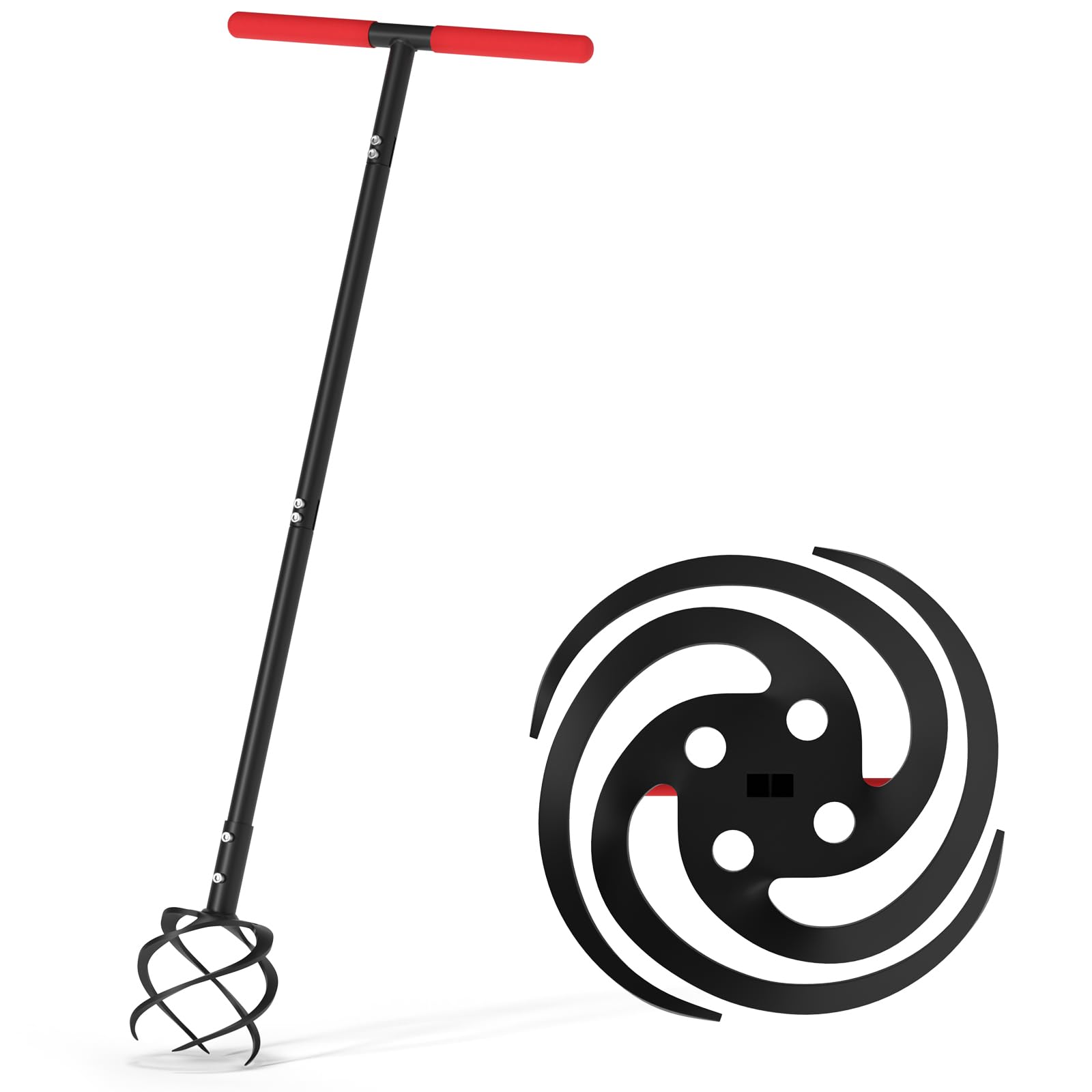
A twist-and-pull claw that plunges 5.5 inches deep into hard soil.
Instead of a pull action, this tiller uses a twisted claw design—you push the tines into the ground and twist, which breaks up clods and aerates the soil. The max depth is 5.5 inches, which is deep enough for most flower beds and vegetable starts. The 44.3-inch handle keeps you upright, and the non-slip grip is genuinely helpful when you are applying twisting force. It weighs 1.5 pounds, so it is light enough for an 11-year-old to use, as one owner notes, yet tall enough for a 6-foot-3 user to work without hunching.
Owners praise its effectiveness above everything—16 call it out, and the next most-discussed aspect is functionality at 12 mentions. One buyer in clay soil says it “cuts through the dirt with ease.” The alloy steel construction feels heavy-duty, and assembly takes minutes with no special tools. A few owners mention that heavy root systems can be a small issue, but overall the feedback is that this is “one of the best gardening tools to own.”
The twist action is fundamentally different from the straight-pull BARAYSTUS cultivator above. If you have compacted soil that a standard cultivator just skims across, the twisting claw gives you a mechanical advantage that pulls you deeper.
Penetrates compacted soil: The twisted tines grab and pull downward as you turn, reaching 5.5 inches deep without needing to lift the tool.
Universal height fit: The 44.3-inch handle works for both a 6’3″ gardener and an 11-year-old helper.
Best for: improving aeration in compacted garden beds and flower boxes where a standard pull-cultivator struggles.
skip it if: you prefer a traditional pull-action weeding tool—this one requires a twisting motion.
5. BARAYSTUS Garden Claw Twist Tiller
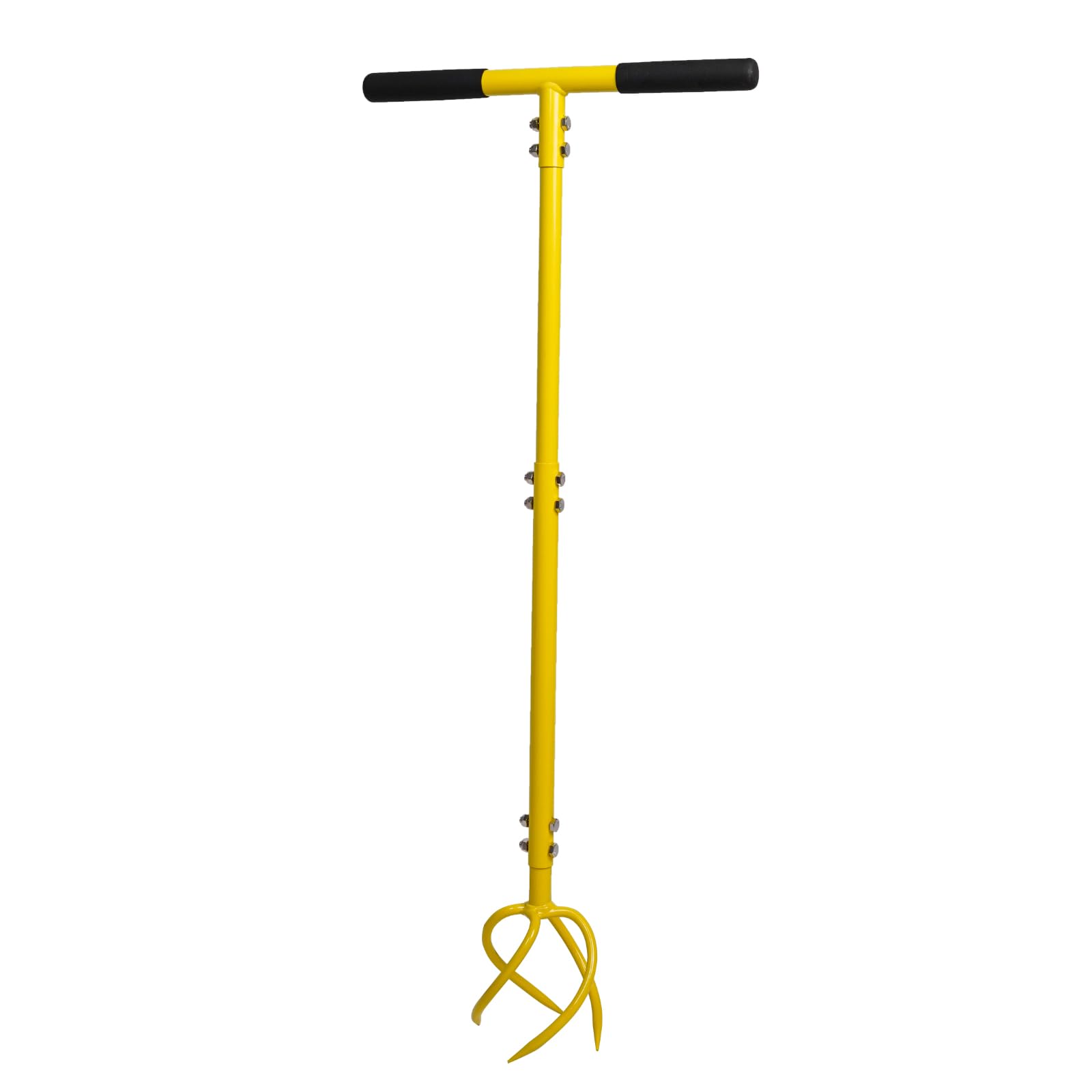
Longer, wider curve tines that dig deeper with every twist.
This twist-style tiller from BARAYSTUS is built differently from its straight-tine sibling in the list. The tines have a wider and longer curve, so each rotation grabs more soil and pulls you deeper faster. At 2.9 pounds it is noticeably heavier than the GSBLUNIE twist tiller above (which comes in at 1.5 pounds), and that heft helps drive the tines into tough ground. A buyer tilled a 26-by-4-foot flower bed in about 20 minutes.
The 16-inch handle is shorter than the GSBLUNIE’s 44-inch pole, and it works as a twisting handle rather than a stand-up long handle. Owners say the tines are “arrow sharp” and the rotation-angle shape makes the turning motion feel natural. Assembly takes about five minutes with the included tool, and the screw connection between the handle and claw is firm enough that it does not loosen during work. One buyer mentions that wet soil can clump on the tines, but the tool still does the job.
If you have a small-to-medium flower bed and prefer to work on your feet with a twisting action, the extra tine curve on this model versus the standard BARAYSTUS cultivator gives you more bite per rotation. Do not try it on rocky ground—the sharp tines can bend if you hit a stone at full twist.
Faster soil breaking: The wider, longer tine curve means each twist grabs more dirt—an owner tilled a 26×4 bed in 20 minutes.
Sturdy screw connection: The handle-to-claw joint uses a screw rather than a friction fit, so it stays tight during hard twisting.
Reach for it if: you want the fastest twist-tilling action for flower beds and your soil is rock-free.
Think twice if: you need standing height—the 16-inch handle keeps you bending over.
6. Truper Rapid Tiller, Digger Cultivator
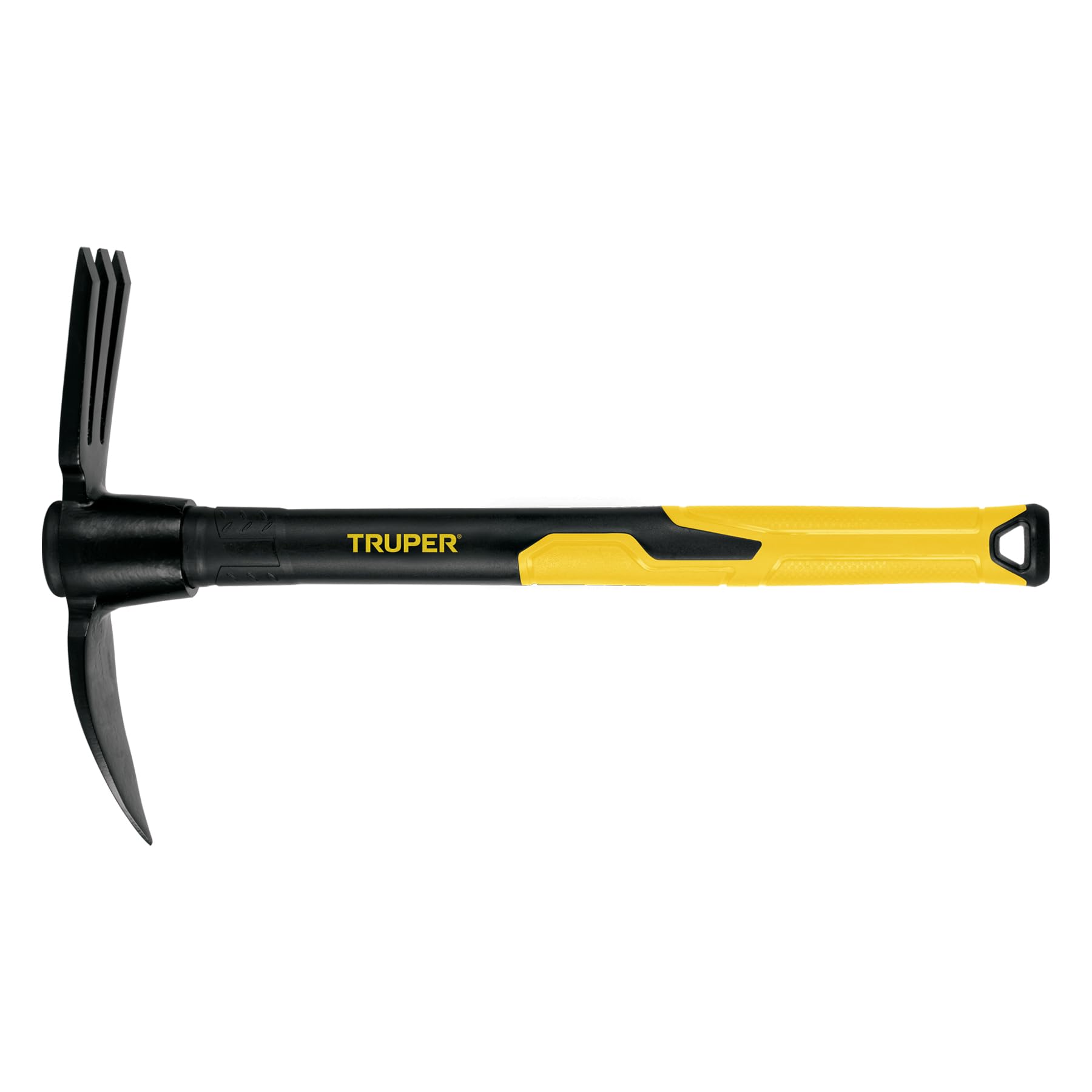
One head digs, the other cultivates—a two-in-one forged-steel hand tool.
This is the only hand-held cultivator in the list with a dual-head design. One side is a sharp digging blade, the other is a three-tine cultivator, so you can switch between weeding and trenching without switching tools. The 14-inch fiberglass handle absorbs shock and resists weather, and the forged steel head is built to hold an edge through professional-grade use. It weighs 16 ounces (1 pound), which owners call a “great weight and handle length combination” for swinging.
Durability earns the most praise at 59 mentions, with functionality (45 mentions) and effectiveness (39 mentions) close behind. One owner reports six years of farm use: the pointy end removes dandelions, and the three-prong end extracts roots. The balanced weight distribution means the tool works well in heavy red clay, where owners say it tears through accurately without vibrating. A few note that it is slightly heavier than expected, which can cause arm fatigue after a few hours—but the extra weight also provides momentum for deeper digging.
Unlike every other pick here, the Truper gives you a dedicated digging blade plus a cultivator in one tool. If you regularly need to switch between cutting roots and clearing soil, this saves you bending down to swap tools.
Smart two-in-one design
- Sharp digging blade on one side, three-tine cultivator on the other—no tool swap needed
- Forged steel head holds up to years of farm and garden use
- Fiberglass handle absorbs impact and resists rain and sun
What to expect on weight
- At 16 ounces it is the heaviest hand-size tool here; some owners find arm fatigue after extended use
- Handle length of 14 inches keeps you low, not ideal for standing work
Buy it for: double-duty work in heavy soil where you need both a cultivator and a cutting blade in one hand tool.
pass on it if: you want a long-handle stand-up tool or prefer a very lightweight cultivator for all-day kneeling work.
7. Altdorff Hand Tiller

An arc-shaped handle that turns your body weight into twisting power.
The defining feature here is the 17.7-inch arc handle. Rather than a straight pole, it curves so you can grip it with both hands and torque your whole upper body into the twist. This makes a big difference in hard-packed soil—the sharp angled tines sink in with less arm effort. The handle design is what owners call out as the reason weeding becomes “so easy” (effectiveness is the most-praised aspect at 59 mentions, with ease of use at 41). At 3.5 pounds, it is the heaviest twisting claw in the list, which helps drive the tines down.
The overall length is about 37 inches, meaning you still have to bend a little, but the arc handle reduces the strain on your lower back compared to a short hand tool. Assembly uses four bolts and butterfly nuts and takes minutes. Durability and sturdiness both show mixed feedback—some owners feel the tines are a little flimsier than expected. The manufacturer explicitly says to avoid rocks and cement, so this is best for sandy or loamy soil. One owner uses it exclusively to turn compost and says it works great.
Compared to the GSBLUNIE twist tiller, the Altdorff is heavier and has that curved handle for better leverage. If you have sandy or loose soil and want a twist-action tool that takes most of the effort out of the motion, this one is a strong pick.
Leverage-first design: The 17.7-inch arc handle channels your body weight into the tines—less arm fatigue, more soil penetration.
Keep it out of rocks: Mixed feedback on long-term durability means this tool thrives in sandy, loose soil and compost, not rocky clay.
Great for: gardeners with sandy or well-tended soil who want a twist-tiller that minimizes arm effort through its curved handle.
Avoid for: breaking new ground full of rocks and roots—the tines may not hold up to that abuse.
8. CobraHead Mini Weeder & Cultivator

The curved, one-blade tool that makes weeding cramped beds a one-handed job.
This is not a multi-tine cultivator—it is a single, curved, tempered forged-steel blade on a recycled plastic handle, and it excels at a specific job: yanking weeds out by the root in tight spaces. At just 5 ounces and 9ish inches long, it is the smallest tool in the list. But shoppers say it cleared overgrown beds and a flagstone path in two hours, outperforming all their big-box weeders. The curved head acts like a mini spade, a root hook, and a stirrup hoe all in one.
Quality tops the praise list at 72 mentions, with weeding performance at 48 and ease of use at 38. The ergonomic design gets 20 positive mentions, with owners saying it prevents hand and wrist pain during long weeding sessions (the universal grip works for right or left hands). Size gets mixed feedback—some call it “perfect,” others find it “laughably small.” It is made in Cambridge, Wisconsin, and comes with a one-year unconditional warranty. A very occasional owner mentions blisters when using it without gloves, but that is the only recurring downside.
If you have perennials, bulbs, or a flagstone path where a wide tine head would damage neighboring plants, this is the tool for that job. The CobraHead is not a replacement for a full-size tiller—it is a precision instrument for the details.
One blade, many jobs: The curved forged-steel head digs, hooks roots, and hoes—owners say it replaces a trowel, a weeder, and a knife.
Made for tight spaces: The mini size fits between perennials and along paths where a 5-tine head would be too wide.
Reach for this if: you do detailed weeding around established plants, in crevices, or in raised beds where precision matters more than raw coverage.
Look elsewhere if: you need to break up large areas of hard soil or want a wide tine coverage—this is a single-blade hand tool.
9. VNIMTI 58-Inch Cultivator

A 58-inch standing cultivator that spares your back while tackling heavy soil.
This is the longest-handle cultivator in the list by a wide margin—58 inches means you stand fully upright, and the thick fiberglass handle has two non-slip grips that become tackier when wet. The head is a one-piece forging from high carbon steel, attached to the handle with two rivets (double reinforcement) to prevent loosening. At 2.6 pounds (listed weight 2.7 in specs), it is light enough to swing all afternoon but heavy enough at the head to drive the tines into packed ground.
Durability is the most-praised aspect at 19 mentions, followed by functionality at 16. One owner used it to tear apart a beaver dam; another uses it for creek cleanup, retrieving everything from plastic bags to soccer balls from the water. The four tines handle loosening, weeding, tilling, and fertilizing without bending, and the full-length fiberglass handle means the waist pressure is minimal. The manufacturer says the “well-made VNIMTI cultivator” effectively improves soil structure and aeration.
The trade-off is that at 58 inches it is less maneuverable in small raised beds or tight flower boxes—the length is designed for open ground and large garden beds. If you have back issues or want to cover a lot of ground without bending, this is the one. It sits at a higher entry price than the long-handle YEELOR, but the one-piece forged head and double-rivet construction justify the premium.
Stand-up, no-back-pain design
- 58-inch fiberglass handle with dual non-slip grips lets you stand fully upright while working
- One-piece forged high-carbon steel head resists bending and deformation
- Double-rivet attachment prevents head loosening during heavy work
Room to work
- Full length is less ideal for small raised beds or containers—you need room to swing it
- Higher price than short-handle hand cultivators reflects the long handle and forged head
Buy it for: large vegetable plots, open garden beds, or any situation where standing upright is the priority—the 58-inch handle is the ultimate back-saver.
it’s not for you if: you work primarily in small raised beds, flower boxes, or tight borders—the length becomes awkward in confined spaces.
Understanding the Specs
Tine Steel: Why It Matters
The steel type determines how long the tines stay sharp and whether they bend or rust. Tempered boron steel (like the DeWit) is the top tier—it is heat-treated to be extremely hard and corrosion-resistant. High-carbon steel (the VNIMTI and BARAYSTUS models) is the next best: it holds an edge well and resists deformation. Stamped or coated mild steel is what you find in cheap tools—it dulls quickly and can rust after a single wet season. Look for “forged,” “tempered,” or “carbon steel” in the description.
Handle Length: Work Posture
Your handle length decides whether you kneel, bend, or stand. Short handles (11 to 16 inches) give you the most control for close-up weeding and raised beds—you are on your knees but you feel every tine. Medium handles (17 to 44 inches) let you stoop slightly, which helps for border work. Long handles (55 to 58 inches) let you stand fully upright, which is the best option for large beds and for anyone with back pain. A telescoping handle lets you adjust between these positions, but the joints add potential failure points.
FAQ
What is the difference between a hand cultivator and a hand tiller?
How many tines do I need for a handheld cultivator?
Will a handheld cultivator work in clay soil?
How do I prevent rust on my garden cultivator?
Is a long-handle or short-handle cultivator better for raised beds?
What is the difference between a pull-cultivator and a twist-tiller?
Can I use a handheld cultivator to plant seeds or bulbs?
How do I assemble a telescoping handle cultivator?
Is a heavier cultivator better for tough soil?
What maintenance does a handheld garden cultivator need?
Final Thoughts: The Verdict
Across the board, the handheld garden cultivator winner is the DeWit 5-Tine Cultivator because its tempered boron steel and lifetime guarantee mean you buy it once and never replace it. If you want an adjustable handle that works both as a hand tool and a stand-up tiller, grab the YEELOR 3-Tine Tiller. And for the biggest back-saving option, the VNIMTI 58-Inch Cultivator is the one to reach for—Standing upright while tilling eliminates back strain for gardeners with chronic lower back issues..
How We Picked
We do not accept paid placement. Every pick is matched to a real buyer and a real use-case; we do not hands-on test units.
Sources & Methodology
Specifications: manufacturer listings and product documentation. Review insights: verified customer reviews, as of July 2026. Pricing: not shown on this page (it changes often); check the current price via the retailer link.
As an Amazon Associate, Lawn Gear Lab earns from qualifying purchases. This does not affect which products we feature.