
Specs are compiled from manufacturer listings and verified buyer reviews and can change over time — please confirm the key details on the product page before buying.
The middle number on your fertilizer bag — the phosphorus (P) — is what drives root growth, flower set, and fruit production in tomato plants. The difference between a weak plant and one loaded with tomatoes often depends on that single number. This guide covers the top performers that give your tomatoes the phosphorus boost they need.
I’m Rikta — the founder and writer behind Lawn Gear Lab. This guide is built by comparing the manufacturers’ published specifications and the patterns across verified customer reviews, so you get each pick’s real strengths and trade-offs instead of marketing spin.
Starting seedlings or nursing a heavy-fruiting plant — finding the right high phosphorus fertilizer for tomatoes is the single most effective decision you’ll make for your garden this season.
Our Picks at a Glance

How To Choose The Best High Phosphorus Fertilizer For Tomatoes
Choosing the right phosphorus source means understanding what your tomato plants actually need at each stage. A balanced fertilizer early in the season is fine, but once buds appear, a high-phosphorus formula helps push energy into flowers and fruit instead of leaves. You have several delivery methods to consider: water-soluble powders that act fast, granular options that release slowly over weeks, and ready-to-use spikes that take the guesswork out of measuring. Your choice of organic versus synthetic also affects how quickly nutrients become available. Organics like bone meal require soil microbes to break them down, so they work best when applied well before planting. Synthetics like triple super phosphate deliver phosphorus immediately, which is ideal for correcting a mid-season deficiency. Finally, consider the secondary nutrients. Some bone meals also supply calcium, which helps prevent blossom end rot, while many bloom formulas include potassium (K) to support overall fruit quality and plant vigor.
Understand the N-P-K Ratio
A tomato fertilizer’s N-P-K numbers represent the percentage of Nitrogen (N) — about 13 to 16 percent of a leaf’s structure; Phosphorus (P) — drives roots and blooms; and Potassium (K) — controls water and disease resistance — by weight. You want a middle number that is higher than the first and third. Products like a 4-12-0 or a 10-30-20 clearly signal a focus on flowers and fruit, not foliage. Products with zero in the first or third slot may be useful for targeted applications but lack the balanced nutrition needed for a full season of growth.
Choose Your Application Method
Water-soluble powders and liquids give you fast results because the nutrients are immediately available to plant roots. These are ideal for weekly feeding during peak blooming or fruiting. Granular fertilizers are mixed into the soil and break down over several weeks, providing a steady supply of nutrients. Slow-release formulations are more forgiving if you forget a feeding. Bone meal falls into this category; it needs microbial action to release phosphorus, making it a great pre-plant or early-season amendment.
Consider Form and Additives
Look for added calcium and magnesium in bloom formulas, as these help prevent common tomato issues like blossom end rot. A product labeled “bloom booster” typically has a high P and K ratio, but check the fine print for micronutrients. Many premium fertilizers include a package of trace elements like iron, zinc, and manganese that support overall plant health and lead to more resilient, productive plants. Organic options appeal if you prefer to avoid synthetic chemicals, while conventional formulas offer predictable, fast results at a lower cost per application.
Quick Comparison
| Model | Best For | N-P-K Ratio | Form | Unit Size | Amazon |
|---|---|---|---|---|---|
| Espoma Organic Bone Meal★ Best Overall | Pre-planting & bulbs | 4-12-0 | Granules | 4 lb (2-pack) | Amazon |
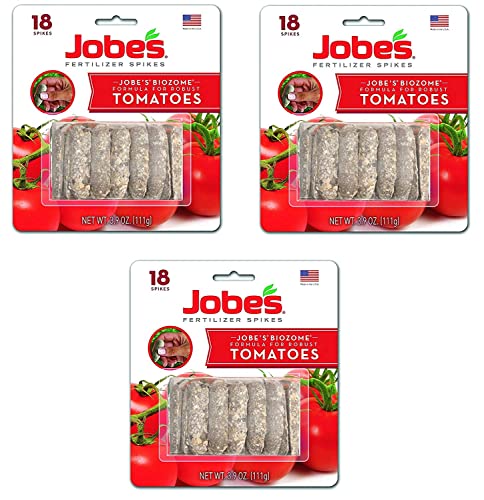
| Jobe’s Tomato SpikesEasiest Feed | No-mess feeding | 6-18-6 | Sticks | 54 Spikes | Amazon |
| The Grow Co Triple Super Phosphate | Max phosphorus | 0-46-0 | Granules | 5 lb | Amazon |
| EZ-GRO Blossom Booster | Fast, weekly feeding | 10-30-20 | Liquid | 1 Qt | Amazon |
| Gaia Green Power Bloom | Organic heavy yields | 2-8-4 | Powder | 2 kg | Amazon |
| Greenway Biotech Bone Meal | Calcium plus phosphorus | 3-15-0 | Powder | 5 lb | Amazon |
| Jack’s Classic Blossom Booster | Precision feeding | 10-30-20 | Powder | 4 lb | Amazon |
In‑Depth Reviews
1. Espoma Organic Bone Meal Fertilizer 4-12-0
Our pick — over 4.5★ from 450+ verified ratings; the strongest balance of quality and price.
The top-rated organic that turns tomato plants into towering producers.
This crowd favorite — 4.8 stars across nearly 500 owners — proves its worth in the garden season after season. The 4-12-0 ratio supplies the phosphorus (P) tomatoes need, driving flower formation and fruit growth without a pile of nitrogen (N) that would just grow more leaves. One bag covers a good patch of soil, and you get two bags in this pack so you can feed at planting and again later. Buyers report tomato plants that reached over ten feet tall and were “extremely potent” after using this meal.
Because it is an organic bone meal, it needs soil microbes to break down and release the phosphorus. Work it into the soil a few weeks before transplanting for the best results. The granules are easy to sprinkle and mix, which owners appreciate. The quality is the aspect praised most, with plant health running a close second. A few owners mention that the smell attracts dogs, so you might want to bury it well if you have canine diggers in the yard.
Garden Proof
- Excellent 4.8-star rating from hundreds of gardeners — the highest overall score in this guide
- Organic source means no synthetic chemicals and slow, steady phosphorus release
- Two bags give you enough for a full season of pre-plant feeding
Hands-On Note
- Slow release requires warm soil and microbial activity — not a quick fix for a mid-season deficiency
- Powdered form can attract dogs who love the smell; bury it well to avoid digging
Best pick when: You want a proven, organic phosphorus source with the highest owner satisfaction for building soil health before planting.
Think twice if: You need an immediate phosphorus hit for a plant that is already showing deficiency symptoms.
2. Jobe’s Tomato Fertilizer Spikes, 6-18-6
No mixing, no measuring — just push a spike into the soil and walk away.
If you are after convenience, this is your pick. Each spike delivers a 6-18-6 ratio with added calcium, magnesium, and sulfur, all of which tomatoes love. You get 54 spikes in the pack — enough for a healthy row of plants for most of the season. Just push one spike into the soil near the root zone, water it in, and the time-release formula feeds for weeks. The word “easy” comes up constantly, with owners noting good growth on tomatoes and peppers.
Compared to the Espoma organic bone meal above, these spikes are faster-acting because the nutrients are more immediately available. The trade-off is that a few spikes arrived broken in some shipments, and you cannot adjust the dose per plant as you can with a granular or liquid product. Effectiveness leads the aspect list by a wide margin, so owners get real results despite the occasional breakage. Each spike feeds a single plant, so factor in how many tomatoes you are growing before you stock up.
easy Setup
- Pre-measured spikes eliminate the risk of over-fertilizing or measuring wrong
- Time-release formula feeds plants steadily for weeks with just one application
- Includes calcium and magnesium which help prevent blossom end rot
One Caveat
- Some spikes can arrive broken in the package, reducing the usable count
- Less flexible than powders or liquids — you cannot dial in a custom dose per plant
Great for: The busy gardener who wants a set-and-forget solution with no mixing, no dust, and no measuring spoons.
skip it if: You prefer granular products that let you adjust the feeding rate for individual plants.
3. Triple Super Phosphate 0-46-0 (The Grow Co)
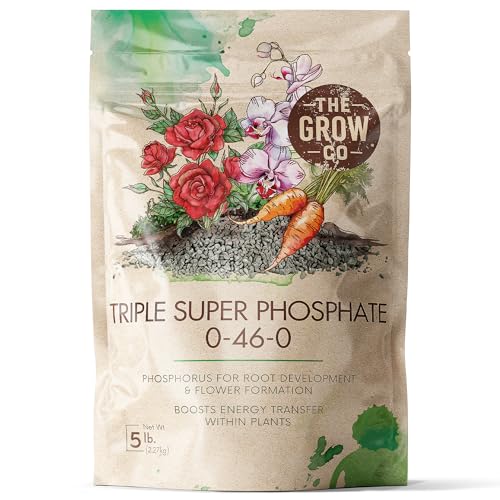
Pure phosphorus with zero nitrogen — the nuclear option for flowering and root growth.
This is the most concentrated phosphorus product in this lineup. The 0-46-0 ratio means it contains no nitrogen and no potassium, just a massive 46% available phosphate (the form of phosphorus plants can absorb). You would use this when your soil is already rich in nitrogen but low in phosphorus, or when you need a targeted boost at bloom time. The recommended rate is simple: apply 1/2 lb (roughly 3/4 cup) per 100 square feet, work it into the top inch of soil, and water thoroughly. Repeat every six weeks. Long-time users report reviving plants that had not flowered in years and getting “more and bigger flowers” than they thought possible.
The aspect counts back this up — effectiveness and quality are tied at the top. The 0-46-0 powder gives you 80 oz versus the Espoma bone meal’s 64 oz, but it packs a much bigger phosphorus punch. The catch is that it contains no secondary nutrients like calcium or magnesium. You will need to supplement those separately if your soil is deficient. It is also a conventional synthetic product, so organic-only gardeners would choose the Espoma bone meal instead.
Best paired with: A balanced N-K source because this product covers only phosphorus. Using it alone for a whole season can lead to nitrogen or potassium deficiency.
What owners say: “Phosphates are getting expensive… if you want your plants to flower massively, use this. Best time is 4-6 weeks before typical blooming season.”
Reach for this when: You need the highest possible phosphorus concentration to correct a deficiency or push a heavy bloom cycle.
pass on it if: You want an all-in-one formula or an organic source that also feeds soil microbes.
4. EZ-GRO 10-30-20 Blossom Booster Fertilizer

Liquid nutrition that shows results overnight — a secret weapon for mid-season blooms.
When you see a plant that needs help now, a liquid fertilizer is the tool. The EZ-GRO is a concentrated 10-30-20 formula that you mix with water and apply weekly during bud set. Owners mention that their plants perked up overnight and burst into blossom within days. Tomatoes already on the vine grew noticeably larger. The liquid form means the nutrients are absorbed instantly through the roots or leaves, which is a major advantage over granular products that need soil moisture to dissolve.
Balancing the fast action is the price — owners consistently note the high cost per application compared to powdered concentrates or bone meal. The 1-quart (1 Qt) bottle does not go far if you have many plants, which is why some owners say they use it sparingly. It is a premium product for a specific purpose: giving a tired, mid-summer plant a phosphorus jolt to finish the season strong. The founder is an agronomist who developed scientific agronomic programs, so the formula has serious expertise behind it.
Smartest use: Apply every 7 days during the transition from flowering to fruit set. One owner noted that a struggling powder puff tree started greening up and blooming within days of use.
Honest trade-off: At this price per quart, it is best reserved for your most productive plants rather than the whole garden.
Best for: Targeted, fast-acting feeding during peak bloom when you want visible results within days.
Skip if: You have a large garden and need a more cost-effective solution for weekly feeding.
5. Gaia Green 2-8-4 Power Bloom

A Canadian organic powerhouse that grows 8-foot tomato plants and peppers that tower.
This all-natural 2-8-4 powder from Gaia Green is designed to promote bigger blooms and more fruit, and the reviews back that up in a big way. Customers note tomato and pepper plants reaching 8 feet tall with incredibly healthy foliage. The phosphorus (8%) and potassium (4%) work together to support both flowering and fruit quality, while the low nitrogen (2%) keeps growth manageable. It is a powder that you mix into the top layer of soil or use as a top dress.
The 2 kg bag is a generous size that covers a good season of feeding for a home garden. Because it is organic, it improves soil health and microbial activity over time, which is a long-term benefit that synthetic fertilizers do not provide. A few reviews mention using it for cannabis cultivation, but the formula is ideal for any flowering or fruiting plant. One owner says the 2-8-4, combined with Gaia Green’s 4-4-4 all-purpose, transformed their garden entirely.
Organic Power
- Supports both bloom and fruit quality with a balanced 2-8-4 ratio
- Improves long-term soil health and microbial activity — a lasting investment
- Large 2 kg bag provides excellent value for serious home gardeners
Simple Trade-Off
- Like all organic powders, it requires soil microbes for breakdown, so apply in warm weather
- Fewer application details in the listing compared to some competitors
Ideal for: The organic gardener who grows heavy-feeding tomatoes and wants a phosphorus-rich formula that also builds soil life for next season.
Less ideal if: You need an immediate correction or you want a fertilizer with added calcium for blossom end rot prevention.
6. Greenway Biotech Bone Meal Fertilizer 3-15-0
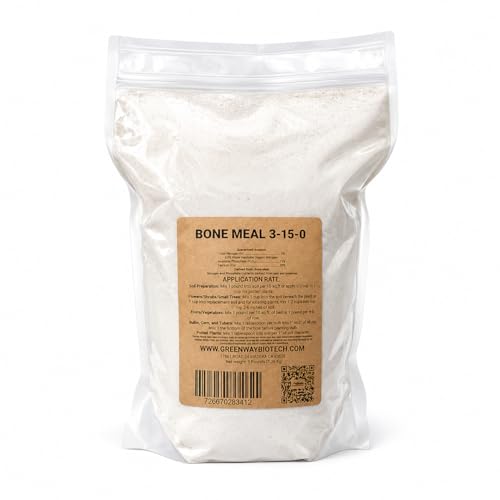
Bone meal with a calcium bonus that fights blossom end rot while feeding roots.
The Greenway Biotech bone meal stands out with its 3-15-0 ratio plus 24% calcium. That calcium content is a big deal for tomato growers because it helps prevent blossom end rot — the ugly black spot on the bottom of fruit. This powder is repackaged from organic bone meal with added calcium to suppress the typical bone meal odor, though some owners still note that dogs find it irresistible. Quality leads the aspect counts by a wide margin, with plant growth and effectiveness right behind.
The 5 lb bag provides more volume than the Espoma two-pack for a similar price point, making this a solid value. Owners use it with blood meal (a high-nitrogen organic powder) to create a balanced feeding program. One owner with 25 tomato plants found it easy to mix and effective, with tomatoes turning red after application. It is a powder, so you mix it into the soil before planting or side-dress during the season. The main downside is that some dogs will dig up the soil to get at the smell, so bury it deeply or consider using a liquid alternative if you have curious pets.
Health note: The 24% calcium makes this an excellent choice if your soil is calcium-deficient or if you have struggled with blossom end rot in previous seasons.
Real-world feedback: Works well for strong root development and “protecting my plants” when used alongside other amendments.
Best pick if: You want bone meal that brings significant calcium to the table for preventing blossom end rot in your tomato patch.
it’s not for you if: Your garden attracts dogs that like to dig — the bone meal scent can trigger excavation sessions.
7. Jack’s Classic 10-30-20 Blossom Booster
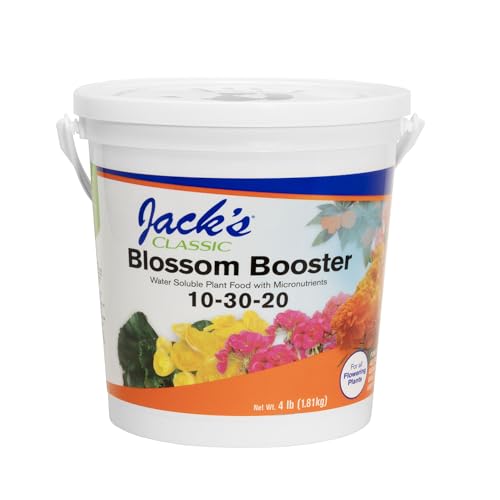
Bloom spectacles that double your flower count — the pro-grade option for serious growers.
Jack’s Classic comes from JR Peters, a name long respected in the fertilizer industry. The 10-30-20 ratio is a classic bloom booster formula, and the 4 lb powder bag makes over 64 gallons of liquid fertilizer when mixed. That is a lot more feeding than a pre-mixed quart of liquid for roughly the same price. Reviewers point out that it doubles blooms after the first use and makes the garden grow “like never before.” The water-soluble powder can be applied as a root drench or a foliar spray (directly on leaves), giving you two ways to feed.
This is the product for the grower who treats feeding as a precise science. The included measuring spoon takes the guesswork out of mixing, and the targeted micronutrient package means you do not need to supplement with other fertilizers. It works well on vegetables, flowers, and even cannabis, according to reviews. The biggest upside over the EZ-GRO liquid is value: 4 lb of powder goes much further than 1 quart of liquid. A few owners note that you need to dissolve it fully to avoid clumping, but that is standard for powdered concentrates.
Why It Wins
- 4 lb powder makes over 64 gallons of liquid fertilizer — unbeatable value for serious gardeners
- Versatile application: use as a root drench or spray directly on leaves (foliar feeding)
- Targeted micronutrient package eliminates the need for extra supplements during bloom
Fine Print
- Powder must be fully dissolved to prevent clumping in the sprayer or watering can
- Synthetic formula — not suitable for certified organic gardening
Best for: The productive gardener who wants professional-grade results and is comfortable mixing their own liquid feed for maximum value.
look elsewhere if: You strictly follow organic practices or you prefer a no-mix solution like ready-to-use spikes.
Understanding the Specs
The N-P-K Ratio Explained
The three numbers on the bag represent the percentage by weight of Nitrogen (first number), Phosphorus (second), and Potassium (third). For a high phosphorus fertilizer, you want that middle number to be higher than the first and third. A 10-30-20 means 30% phosphorus, which drives root growth, flower formation, and fruit set. A 0-46-0 is essentially pure phosphorus with no nitrogen or potassium, best used for targeted correction rather than all-season feeding.
Slow Release vs. Fast Acting
Organic options like bone meal are “slow release” because soil microbes must break them down. This makes them ideal for pre-plant preparation but less useful for a quick rescue. Synthetic formulas like triple super phosphate or water-soluble powders are “fast acting” because the phosphorus is already in a form that plant roots can absorb immediately. Pick slow release for building soil long-term and fast acting for immediate results during the growing season.
Form Matters: Granules, Powder, Liquid, Spikes
Granules and powders (bone meal, triple super phosphate) are worked into the soil and provide steady nutrition over weeks. Water-soluble powders (Jack’s Classic) dissolve to make liquid feed, which you apply weekly. Pre-mixed liquids (EZ-GRO) are the fastest to action but cost more per application. Spikes (Jobe’s) are the easiest — no mixing, no measuring — but give you less control over the dose per plant.
Secondary Nutrients: Calcium and Magnesium
Tomatoes have high calcium needs, especially during fruiting, because calcium deficiencies cause blossom end rot. Bone meal fertilizers, like the Greenway Biotech option, naturally provide calcium alongside phosphorus. Some bloom boosters also include magnesium, which is essential for chlorophyll production and overall plant health. If your fertilizer lacks these, consider supplementing with gypsum (calcium) or Epsom salts (magnesium) as needed.
FAQ
When should I apply a high phosphorus fertilizer to my tomatoes?
How do I know if my soil needs more phosphorus?
Can I use too much phosphorus on my tomato plants?
What is the difference between bone meal and super phosphate?
How often should I apply a liquid bloom booster?
Is a bloom booster fertilizer safe for tomato seedlings?
Does a high phosphorus fertilizer really make tomatoes taste better?
Can I mix different fertilizers together for tomatoes?
Will bone meal attract animals to my garden?
How long does a bag of fertilizer last for a typical tomato garden?
Final Thoughts: The Verdict
For most gardeners, the high phosphorus fertilizer for tomatoes winner is the Espoma Organic Bone Meal 4-12-0 because it combines trusted organic ingredients, top-tier ratings, and real-world results that include ten-foot-tall plants. If you want a no-mess, set-and-forget solution, grab the Jobe’s Tomato Spikes 6-18-6. And for precision feeding with class-leading value, the Jack’s Classic 10-30-20 Blossom Booster is the one to reach for — it makes over 64 gallons of liquid feed from a single 4 lb bag.
How We Picked
We do not accept paid placement. Every pick is matched to a real buyer and a real use-case; we do not hands-on test units.
Sources & Methodology
Specifications: manufacturer listings and product documentation. Review insights: verified customer reviews, as of July 2026. Pricing: not shown on this page (it changes often); check the current price via the retailer link.
As an Amazon Associate, Lawn Gear Lab earns from qualifying purchases. This does not affect which products we feature.