
Specs are compiled from manufacturer listings and verified buyer reviews and can change over time — please confirm the key details on the product page before buying.
You want a greener lawn faster, bigger vegetables, or more flowers from your garden. The problem is choosing a fertilizer that actually delivers nitrogen without burning your plants or costing a fortune. The right balance of nitrogen (the N in an NPK ratio) fuels leaf and stem growth, but get the source wrong and you risk patchy results, strong smells, or wasted money.
I’m Rikta — the founder and writer behind Lawn Gear Lab. This guide is built by comparing the manufacturers’ published specifications and the patterns across verified customer reviews, so you get each pick’s real strengths and trade-offs instead of marketing spin.
if you need fast greening for a tired lawn or a slow-release boost for organic vegetables, this breakdown of the best good nitrogen fertilizer options helps you match the right product to your specific plants and soil conditions.
Our Picks at a Glance


How To Choose The Best Good Nitrogen Fertilizer
Nitrogen drives the green growth you see above ground. Choosing the right one means looking at the source, the release speed, and how it fits your soil and the plants you are feeding. Here is what to consider.
Understand the N-P-K Numbers
The first number in the bag (like the 46 in 46-0-0 or the 12 in 12-0-0) is the percentage of nitrogen by weight. A 46-0-0 urea fertilizer contains 46% nitrogen, making it extremely concentrated. A 12-0-0 feather meal or blood meal contains 12% nitrogen and is much less potent, which reduces the risk of burning your plants. Match the nitrogen percentage to your plant’s appetite — heavy feeders like corn and lawns handle high numbers, while delicate flowers and seedlings prefer lower, gentler ratios.
Quick Release vs Slow Release
Synthetic options like urea and ammonium sulfate dissolve fast and green up plants within days. That speed comes with a catch: you risk burning the foliage or roots if you over-apply or miss a watering. Organic types like fish emulsion, feather meal, and blood meal break down more slowly as soil microbes process them. They feed the soil as well as the plant, but they need warmth and moisture to work and will not produce an instant transformation.
Liquid vs Granular Application
Liquid fertilizers (fish emulsion and liquid nitrogen like the 28-0-0) mix with water and get absorbed through leaves and roots for the fastest response. They are ideal for container plants and small gardens. Granular fertilizers (urea and ammonium sulfate) need to be spread on the soil and watered in. They work well for large lawns and vegetable rows, especially if you already own a broadcast spreader. Granules can sit on the surface and evaporate if you skip the watering step.
Soil pH and Your Nitrogen Source
Ammonium-based nitrogen sources like ammonium sulfate and urea lower the pH of the soil around them. That is great if your soil is already alkaline (common in dry regions) or for acid-loving plants like blueberries, azaleas, and hydrangeas. If your soil is naturally acidic, these fertilizers can push it too low and stress the plants. In that case, a neutral source like feather meal or a balanced fish emulsion is the safer bet.
Quick Comparison
| Model | Best For | NPK Ratio | Item Form | Item Weight | Amazon |
|---|---|---|---|---|---|
| The Grow Co Fish Fertilizer★ Best Overall | Organic Gardens | 2-3-1 | Liquid | 128 fl oz | Amazon |
| The Andersons PGF 16-0-8Premium Pick | Professional Lawn Care | 16-0-8 | Granules | 18 lb | Amazon |
| Down To Earth Blood MealBest Organic | Quick Organic Boost | 12-0-0 | Granules | 4 lb | Amazon |
| The Grow Co Ammonium Sulfate | Acid-Loving Plants | 21-0-0 | Granules | 4 lb | Amazon |
| Dirty Gardener Urea 46-0-0 | Lawn Greening | 46-0-0 | Granules | 5 lb | Amazon |
| The Grow Co Urea 46-0-0 | High-Concentration Feeding | 46-0-0 | Granules | 5 lb | Amazon |
| Down To Earth Feather Meal | Slow Organic Growth | 12-0-0 | Granules | 4 lb | Amazon |
| Alaska Fish Fertilizer | Versatile Container & Garden Feeding | 5-1-1 | Liquid | 115 fl oz | Amazon |
| Petramax Liquid Nitrogen | Lawn Green-Up Speed | 28-0-0 | Liquid | 32 fl oz | Amazon |
In‑Depth Reviews
1. The Grow Co Organic Fish Fertilizer 2-3-1
Our pick — over 4.5★ from 600+ verified ratings; the strongest balance of quality and price.
The liquid fish emulsion that grows 8-ft pepper plants without burning a single leaf.
This 2-3-1 fish emulsion hits a balance for organic gardeners who want a complete feeding rather than just a pure nitrogen blast. The phosphorus (the middle 3) supports strong root development and flower production, which makes it more versatile than a single-nutrient source. You mix just one part of this concentrate with 100 parts water (that 1:100 ratio), and a single 128-ounce bottle covers over 160 gallons of mixed solution — enough to feed a sizeable vegetable garden all season.
The trade-off is the smell. Buyers are upfront about the “pungent fishy aroma,” and one puts it directly: “Stinks! This is good because it’s supposed to stink.” That odor fades once it is watered into the soil, but it makes this a tough pick for indoor plants or for anyone with a sensitive nose. A long-time gardener notes the consistency is “very thin” but still calls it good value, especially when paired with other fertilizers. This is an organic pick that works beautifully — just keep it outdoors.
The real-world results speak louder than the odor. Buyers report their gardens respond with “vigorous plant growth and high yields,” and the crowd likes the higher phosphorus content compared to many fish emulsions that lean toward higher nitrogen. If you grow vegetables and prefer an organic liquid that feeds the whole plant cycle, this is your pick.
Best organic all-rounder: One of the top-rated choices for anyone growing vegetables, fruits, or flowers who wants a balanced, OMRI-friendly source of nitrogen that also delivers phosphorus for blooms.
The honest catch: The fish smell is strong during mixing and lingers for a day — not a problem for outdoor gardens, but a deal-breaker for indoor or patio containers.
Reach for this if: You need a gentle, organic liquid feed that boosts both leaf growth and flower production in your vegetable garden.
Look elsewhere if: You want a pure high-nitrogen kick for a lawn or a non-smelly option for indoor use.
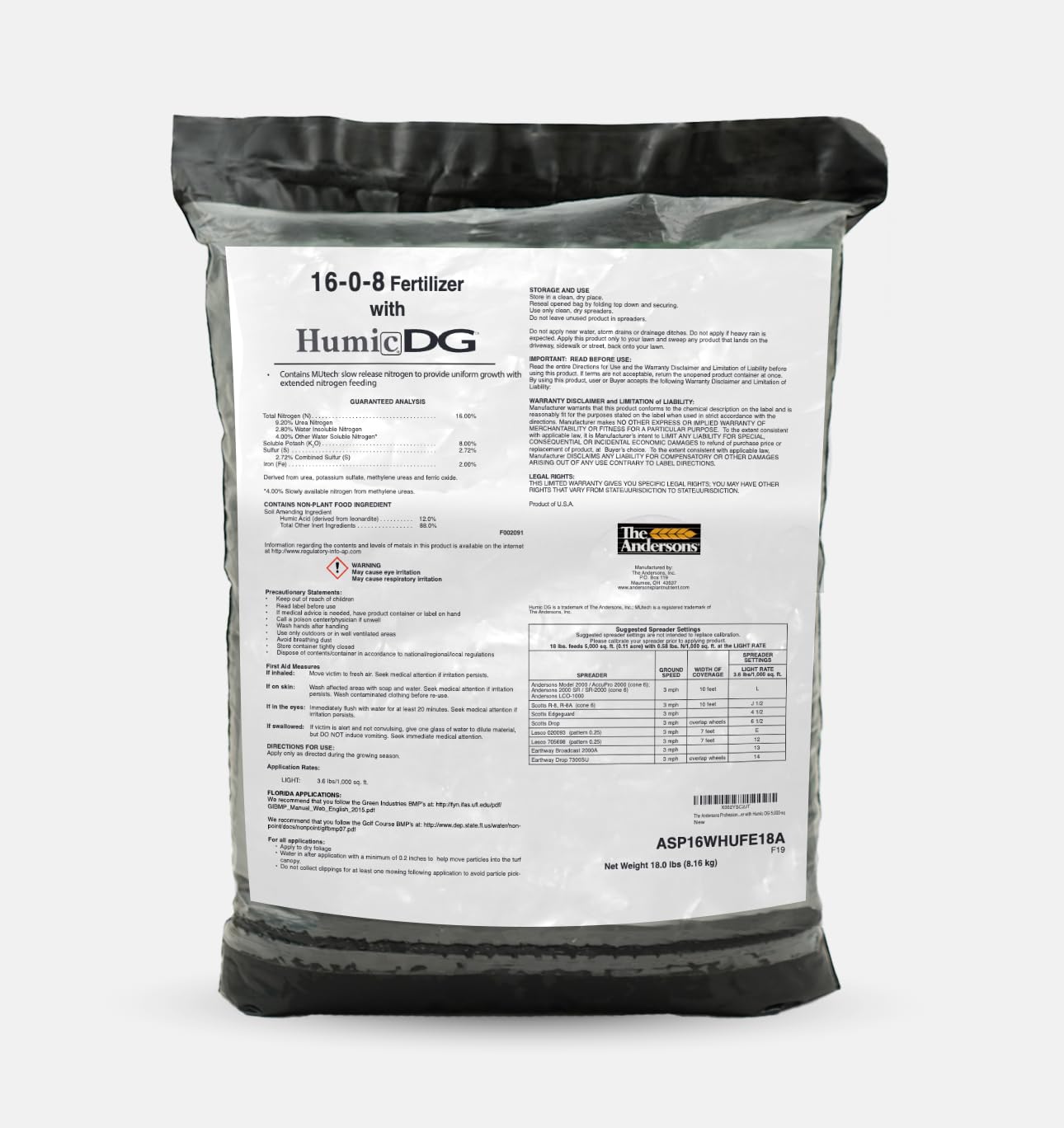
2. The Andersons Professional PGF 16-0-8 Fertilizer with Humic DG
The ultra-fine granules that deliver professional-grade results with twice the distribution per square foot.
If you treat your lawn like a project, this is the fertilizer you want in your spreader. The 16-0-8 ratio includes 16% nitrogen plus 8% potassium (the K for root and stress tolerance), and it is completely phosphorus-free, making it ideal if a soil test already showed high phosphorus levels. The real stand-out here is the particle size — The Andersons uses “super-fine particles” that provide even distribution. That means no striping, no patchy burn spots.
The Humic DG technology delivers humic acid (which improves nutrient uptake) right alongside the nitrogen, and the formula combines quick-release for immediate greening with slow-release that keeps feeding for up to eight weeks. The 18-pound bag covers 5,000 square feet if you are doing a full application. Buyers consistently call the results “transformative” and note their lawns are greener and healthier within three weeks. The common thread is that it is pricey, but the cost is justified by the even coverage and the quality of the green-up.
This is not a product for the occasional gardener. It is a serious piece of lawn nutrition for someone who is already tracking their soil tests and wants predictable, professional-grade results. The mixed reviews on value for money come from the higher price tag, not from any lack of performance.
The lawn perfectionist’s choice: Built for homeowners who want streak-free application and a deep, sustained green that lasts most of the growing season.
What to consider: Not sold in California or Oregon, and the price is higher than most bagged fertilizers — but the coverage and quality match the investment.
Pick this if: You are managing a lawn with known high phosphorus levels and you want a precision fertilizer with professional-level particle distribution.
Skip this if: You need a cheaper option for a small garden or you want a phosphorus-rich formula for flowers and vegetables.
3. Down To Earth Organic Blood Meal 12-0-0
The OMRI-certified blood meal that greens up stressed plants within two weeks.
Sometimes a plant is simply starving for nitrogen, and a quick organic fix is the fastest way to get it back on track. This blood meal from Down To Earth delivers a potent 12-0-0 ratio from an OMRI-certified organic source, which means it is safe for organic vegetable gardens. The granules are easy to apply as a top-dressing around the drip line of plants or worked into the soil before planting. Buyers confirm that heat-stressed plants bounce back noticeably after a single application.
The speed is the headline here — owners mention “quick vegetative growth” and a visible green-up “in 2 weeks.” Unlike synthetic sources, this feeds the soil microbes as it breaks down, improving long-term soil fertility. The drawbacks are real: the initial smell is strong (it is blood meal, after all), and it can attract animals like raccoons or dogs if you do not work it into the soil. There is also a risk of nitrogen burn if you apply too much. The bag is only 4 pounds, and several customers note the box is very small for the price.
If you want an organic option that can outpace feather meal for speed and you are okay with a bit of animal management, this is the strongest natural kick you can buy in a bag. It earns a 4.7 rating and the most positive feedback goes to its effectiveness for the price.
Fastest-acting organic nitrogen: Ideal for giving vegetables and greens a quick organic boost when they look pale and weak.
The real trade-off: The smell attracts animals and the small bag size means you may need to reorder for larger gardens.
Choose this for: A fast, certified-organic nitrogen fix for vegetables, leafy greens, or heat-stressed plants.
Pass if: You have pets that roam the garden or you need a large quantity for a big lawn application.
4. Dirty Gardener Urea Fertilizer 46-0-0

The 46% pure prilled urea that turns a thin lawn into the thickest on the block.
For pure nitrogen content, nothing on this list comes close to the 46-0-0 ratio of this urea. It is a dry granular that works in most broadcast spreaders, and reviewers point out it “works well in my broadcast spreader” without clumping. The 5-pound bag delivers a lot of available nitrogen in a small package. One owner who applies it “weekly in the spring and fall on the lowest spreader setting” says the result is “an amazingly green thick lawn” — and admits to mowing twice a week because the growth is that aggressive.
The catch with high-nitrogen urea is that it can dehydrate the soil around the roots, which means you need adequate water after application. Over-application is a real risk. One buyer warns that “uneven hand application caused patchy growth” and that spills burned the grass. This is not a low-maintenance fertilizer — it demands consistent watering and even distribution. It is also an inorganic source, so it does not build soil biology the way organic options do.
This is the go-to pick if you already have a spreader, you want the most nitrogen for your dollar, and you understand the watering discipline it requires. At a 4.6 rating, owners are enthusiastic about the greening power.
Highest nitrogen concentration available: Gives lawns a deep, fast green and fills in bald spots when used correctly.
Requires precision: Burn risk is real if you over-apply or skip watering — a broadcast spreader is essential.
Best for: Experienced lawn owners who want the most potent, budget-friendly nitrogen source and have a spreader to apply it evenly.
Not for: Beginners, organic gardeners, or anyone who cannot water deeply after application.
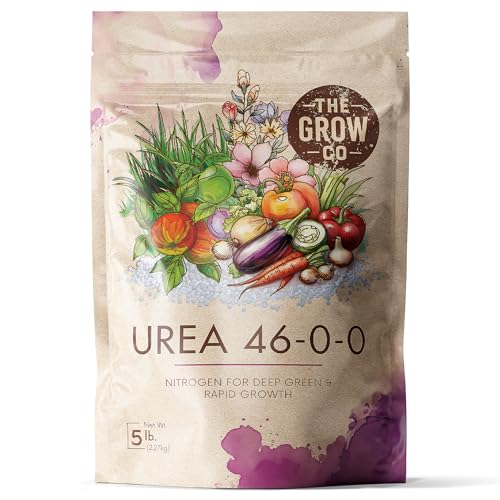
5. The Grow Co Urea 46-0-0 High Nitrogen Fertilizer
The granular urea that produced corn stalks “as big around as my arm.”
Here is another 46-0-0 urea, but with a slightly different application focus. The Grow Co version is specifically marketed for vegetables, fruits, and flowers as well as grass, and it includes measured application instructions: spread half a pound per 1,000 square feet for established turf, and apply half a teaspoon near the drip line for individual plants. It is “highly soluble and quickly absorbed,” which means the nitrogen is available to the plant roots almost immediately after watering.
The real-world proof comes from a sweet corn grower who applied this fertilizer at 6 inches and again at 12 inches tall: “I have never had such big beautiful corn. The stalks are as big around as my arm.” Other shoppers say boosted tomato and squash growth, bigger blooms on flowering plants, and healthier leaves. The product earns a 4.7 rating with the most common praise directed at its quality and effectiveness.
Like all urea, you need to water it in right away to avoid nitrogen loss through evaporation. The 5-pound bag is manageable for a small vegetable patch or a medium-sized lawn. If you like the idea of a high-nitrogen granular that has explicit rates for both lawns and garden plants, this is the more detailed version of the classic urea bag.
Versatile high-concentration feeding: Works equally well on lawns and individual vegetable plants with clear per-plant dosage instructions.
Same urea caution: Must be watered in immediately and requires careful measuring to avoid burn.
Choose this if: You want a high-nitrogen granular that comes with specific application rates for both lawns and garden plants like corn and tomatoes.
Pass if: You prefer a slow-release or organic formula that feeds over several weeks.
6. Alaska Fish Fertilizer 5-1-1 OMRI Listed

The OMRI-listed fish emulsion that a 10-year gardener calls an absolute staple.
Alaska Fish Fertilizer has been around long enough to earn loyal users who apply it every three weeks during the growing season. The 5-1-1 ratio delivers a solid nitrogen boost (5%) with minimal phosphorus and potassium, making it a good choice for supporting early vegetative growth. It is OMRI-listed for organic use and comes in a 115-fluid-ounce bottle. The cold-processed extraction preserves micronutrients that synthetic fertilizers do not provide, and the formula is safe enough not to burn plants when used at the recommended dilution.
“My Plants Grew… but get a good air freshener,” reads one honest review. The fish smell is “extremely pungent” during mixing, though buyers consistently report it dissipates “within a day” once watered in. This is a liquid concentrate, so you will need a hose-end sprayer for large lawns or a watering can for containers. Several owners note that because it is low in phosphorus and potassium, you may need to supplement with a bloom booster when your plants start flowering or fruiting.
It is an outstanding all-purpose organic feed for green growth. Use it on vegetables, shrubs, trees, and container plants through the spring and summer. The 4.7 rating across a large pool of buyers confirms this is a trusted, repeat-purchase product for gardeners who prefer liquid feeding.
Trusted liquid organic feed: A cold-processed fish emulsion that supports strong stems and fast leaf growth without burning.
Plan for the smell: It is pungent at mixing time, but the odor fades quickly after application — fine for outdoor use.
Pick this for: A versatile, organic liquid nitrogen source that is safe for almost every type of outdoor plant.
Switch if: You need a high-phosphorus feed for heavy blooming or a completely odor-free option for indoor plants.
7. Down To Earth Organic Feather Meal 12-0-0

The slow-release feather meal that grows tomatoes “incredibly large and green” without any smell.
Feather meal is one of the best slow-release organic nitrogen sources, and Down To Earth packages it in a convenient 4-pound granular bag. With a 12-0-0 ratio, it provides a steady supply of nitrogen as soil microbes break down the protein-based particles over weeks. The release is slow enough that you avoid the burn risk associated with blood meal or urea. It is OMRI-listed, so it is certified for organic vegetable gardens.
The buyer feedback is consistently positive. One gardener with low-nitrogen soil reports this product “effectively added needed nitrogen” and was “easy to use, no bad smell.” Their tomatoes grew “incredibly large and green,” to the point where they outgrew their cages. The lack of odor is a major difference compared to the fish and blood options — feather meal is nearly scent-free in the bag and on the soil. The application rate is straightforward: mix one-third of a cup per plant or use 12 pounds per 1,000 square feet.
The trade-off is speed. This will not green up a lawn in 48 hours. If you need fast results, look at the urea or ammonium sulfate options. But if you want a no-smell, organic, slow-release nitrogen that feeds your vegetables through the whole season with one or two applications, this is a top-tier pick.
The odorless organic option: Perfect for gardeners who want organic slow-release nitrogen without the strong smell of fish or blood meal.
Slow to start: Results take weeks, not days — plan ahead if you are correcting an acute nitrogen deficiency.
Ideal for: Organic vegetable gardeners who value a slow, steady nitrogen release and want to avoid any strong odors near the house.
Not for: Quick fixes or lawn owners who need a visible green-up within a few days.
8. The Grow Co Ammonium Sulfate 21-0-0

The 21-0-0 crystallized nitrogen that greened up deficient corn “overnight.”
When you need to fix yellow, nitrogen-starved plants fast, ammonium sulfate is one of the quickest tools in the shed. This is a 21-0-0 granular with an extra feature: it contains 24% sulfur, which acts as a soil acidifier. If your soil pH is too alkaline (above 7.0), this will gradually bring it down, making micronutrients more available to plant roots. The granules are water-soluble and, as buyers describe it, “dissolves instantly in a sprayer.”
One owner sums up the experience clearly: the crystallized nitrogen (21-0-0) “quickly greened up nitrogen-deficient corn overnight.” The same buyer warns that it must be used carefully on other vegetables to avoid overgrowth — this is a powerful feed. The granules can clump in high humidity, which makes even hand-spreading difficult. Several buyers flag this as a minor annoyance. The 4-pound bag is lighter than the 5-pound urea bags above, but the two products serve different purposes — this one also corrects soil pH, making it a dual-purpose tool.
If you have alkaline soil or grow acid-loving plants like blueberries, azaleas, or hydrangeas, this is a smarter buy than straight urea. It lowers pH while feeding nitrogen, which means you accomplish two things with one bag. The 4.6 rating is supported by strong feedback on its effectiveness and pH-reduction benefits.
Two-in-one soil fixer: Feeds 21% nitrogen and simultaneously lowers soil pH for acid-loving plants and alkaline soil correction.
Moisture-sensitive: Granules clump in humid conditions, making uniform hand spreading tricky — a spreader is best.
Buy this if: Your soil is alkaline or you grow acid-loving plants that need both nitrogen and a pH adjustment.
Skip this if: Your soil is already acidic or you want a pure nitrogen source with no soil pH effect.
9. Petramax Liquid Nitrogen Fertilizer 28-0-0

The liquid lawn feed with dual-release technology that turns yellow grass deep green.
Petramax combines two nitrogen release mechanisms into one bottle. The 28-0-0 formula offers 70% quick-release nitrogen for an immediate color change and 30% slow-release nitrogen for continued feeding between applications. This dual approach means you see results in days but do not get a rebound yellowing a week later. It works on warm-season and cool-season grasses, making it a versatile option for any lawn type. One 32-ounce bottle treats up to 12,800 square feet for maintenance or 6,400 square feet for correcting a nitrogen deficiency.
“This stuff works great and my lawn has never been so green,” a repeat customer reports, and the theme across reviews is that the greening effect is both fast and noticeable. The product is easy to mix — 5 ounces per gallon of water for maintenance, 10 ounces per gallon for deficiency correction — and works well with any hose-end sprayer. The main downside is the mixed opinion on value, with some owners finding it expensive for the bottle size compared to granular alternatives.
This is a liquid alternative to bagged granular nitrogen. It is easier to apply evenly (no spreader required) and the risk of burn is lower if you follow the dilution rates. If you prefer spray-on convenience and want a lawn green-up that lasts beyond a single week, this is the liquid to reach for.
Instant plus sustained greening: A two-stage liquid formula that delivers rapid color and maintains it between applications.
Cost per use: The bottle is small for the price, but the coverage is generous — measure carefully per the label to make it last.
Choose this for: A quick, easy-to-apply liquid nitrogen treatment that works on all grass types and does not require a spreader.
Consider alternatives if: You want the lowest cost per pound of nitrogen — granular options are more economical per application.
Understanding the Specs
NPK Ratio
These three numbers — for example, 46-0-0 or 12-0-0 — tell you the percentage of Nitrogen, Phosphorus, and Potassium in the bag by weight. The first number is the one you care about most for green growth. A 46-0-0 fertilizer is 46% nitrogen, making it extremely concentrated. A 12-0-0 is 12% nitrogen. Higher percentages mean you use less product to deliver the same amount of nitrogen, but they also carry a higher risk of burning plants if you miscalculate the dose.
Quick Release vs Slow Release
Quick-release nitrogen (found in urea and ammonium sulfate) dissolves in water immediately and is available to plants within hours. It produces a rapid green-up but can burn roots if over-applied. Slow-release nitrogen (found in feather meal and coated granules) breaks down over weeks or months via soil microbes or water penetration. It feeds steadily, reduces the risk of burn, and requires fewer applications, but it will not rescue a yellow lawn overnight.
Liquid vs Granular Form
Liquid fertilizers (fish emulsion and liquid nitrogen concentrates) are mixed with water and applied with a sprayer or watering can. They absorb through leaves and roots for the fastest response, making them ideal for container plants and small areas. Granular fertilizers (urea, ammonium sulfate, blood meal) are spread on the soil and must be watered in. They work best for lawns and large garden beds, especially if you already own a broadcast spreader.
Soil pH and Acidity
Some nitrogen sources — particularly ammonium sulfate and urea — lower the pH of the soil as they break down. This is beneficial if your soil is alkaline (above pH 7) and you want to make nutrients more available. It is also useful for acid-loving plants like blueberries and hydrangeas. If your soil is already acidic, using these fertilizers can push the pH too low and stunt growth. Organic sources like fish emulsion and feather meal have a neutral effect on soil pH.
FAQ
What does the N-P-K ratio mean on a fertilizer bag?
What is the difference between urea 46-0-0 and ammonium sulfate 21-0-0?
Can I use fish fertilizer on my lawn?
How much nitrogen fertilizer should I apply to my lawn?
What is the best nitrogen fertilizer for vegetables?
How do I apply granular nitrogen fertilizer without burning my plants?
Will nitrogen fertilizer make my flowers bloom more?
How long does it take to see results from nitrogen fertilizer?
Can I mix nitrogen fertilizer with water and spray it on leaves?
What is the best organic nitrogen fertilizer for a vegetable garden?
Final Thoughts: The Verdict
For the majority of shoppers, the best good nitrogen fertilizer winner is the The Grow Co Organic Fish Fertilizer because it combines a balanced 2-3-1 NPK ratio with organic certification and an easy liquid application that feeds both leaves and roots — though the fishy smell means it is best for outdoor gardens only. If you want the fastest lawn greening and can handle precise watering, grab the Dirty Gardener Urea 46-0-0. And for a professional-grade lawn treatment that distributes evenly and feeds for up to eight weeks, the The Andersons PGF 16-0-8 is the one to reach for.
How We Picked
We do not accept paid placement. Every pick is matched to a real buyer and a real use-case; we do not hands-on test units.
Sources & Methodology
Specifications: manufacturer listings and product documentation. Review insights: verified customer reviews, as of July 2026. Pricing: not shown on this page (it changes often); check the current price via the retailer link.
As an Amazon Associate, Lawn Gear Lab earns from qualifying purchases. This does not affect which products we feature.