
Specs are compiled from manufacturer listings and verified buyer reviews and can change over time — please confirm the key details on the product page before buying.
The hardest part of picking inexpensive lawn edging isn’t finding a low price — it’s choosing between something that will rust, something that will crack in the sun, and something that a weed wacker will chew to pieces in a month. Most cheap edging falls apart before the first frost, which is exactly why you are reading this. The real trick is knowing which material and installation style fits your specific yard, and where the hidden weak points are in each option.
I’m Rikta — the founder and writer behind Lawn Gear Lab. This guide is built by comparing the manufacturers’ published specifications and the patterns across verified customer reviews, so you get each pick’s real strengths and trade-offs instead of marketing spin.
Below is a curated look at the best options on the market, with a hard focus on what actually lasts through a season of weather, string trimmers, and the occasional misstep. If you are looking for budget-friendly inexpensive lawn edging, this breakdown covers the exact specs that separate a smart purchase from a frustrating re-purchase.
Our Picks at a Glance
How To Choose The Best Inexpensive Lawn Edging
Before you sort by price, sort by the problem you are trying to solve. Are you stopping aggressive grass like bermuda from invading a flower bed? Containing loose gravel on a pathway? Or just making a clean visual line between your lawn and a garden? Each job calls for a different height, material, and installation method. Here are the three specs that matter most when you’re shopping on a budget.
Material: Galvanized Steel vs. Polyethylene (PE) vs. High-Density Polyethylene (HDPE)
The material is everything. Galvanized steel is the strongest barrier and does not rot, but the cut edges can be dangerously sharp. HDPE plastic (like the Master Mark products) is tough, resists UV damage, and can be flexible or rigid depending on its thickness. Standard PE plastic is the most common and cheapest — it’s flexible and easy to cut but can become brittle in direct sunlight after a season or two. Your climate and sun exposure should guide this choice.
Height: How Deep Does It Need to Go?
A 4-inch tall strip might seem short, but you bury at least an inch or two. That leaves 2-3 inches above ground — enough to contain mulch and create a visual border. For blocking invasive roots like bermudagrass, you want a 5.5-inch or 6-inch exposed section that goes deeper into the soil. Taller edging also resists being pushed out of place by frost heave or foot traffic. For a simple lawn separator, 4 inches is plenty; for a root barrier, go taller.
Installation: Pound-In vs. No-Dig vs. Trench
Cheap edging often promises “no-dig” installation, but that is only true if your soil is soft and free of rocks. Pound-in edging (like the EasyFlex) works well for straight lines and gentle curves on soft ground but can buckle on hard clay. Trench-style edging (dig a narrow slot, insert the edging, backfill) takes more time but is by far the most stable and works on any soil type. No-dig interlocking panels are the easiest for a weekend project but depend entirely on the quality of their stakes — plastic stakes can snap, ruining the whole concept.
Quick Comparison
| Model | Best For | Material | Height | Total Length | Amazon |
|---|---|---|---|---|---|
| Corrugated Steel Edging★ Best Overall | Root Barriers | Galvanized Steel | 5.5 in | 80 ft | Amazon |
| Master Mark Terrace (Brown)Best Value | Natural Look | HDPE | 4 in | 40 ft | Amazon |
| FunFanso 50FT EdgingLong Run | Pebble Containment | PE Plastic | 4 in | 50 ft | Amazon |
| EasyFlex Pound-In | Quick DIY | Recycled Plastic | 4.5 in | 20 ft | Amazon |
| AggFencer No-Dig 33ft | Long Runs | PE Plastic | 4 in | 33 ft | Amazon |
| Master Mark Terrace 5in | Weed & Grass Shield | HDPE | 5 in | 40 ft | Amazon |
| AMURS White Edging | Decorative Borders | PP Plastic | 6 in | 20 ft | Amazon |
| Vashly No-Dig 20ft | Interlocking Curves | Plastic | 6 in | 20.5 ft | Amazon |
| AGTEK 49FT Edging | Pathway Borders | Plastic | 3 in | 49 ft | Amazon |
In‑Depth Reviews
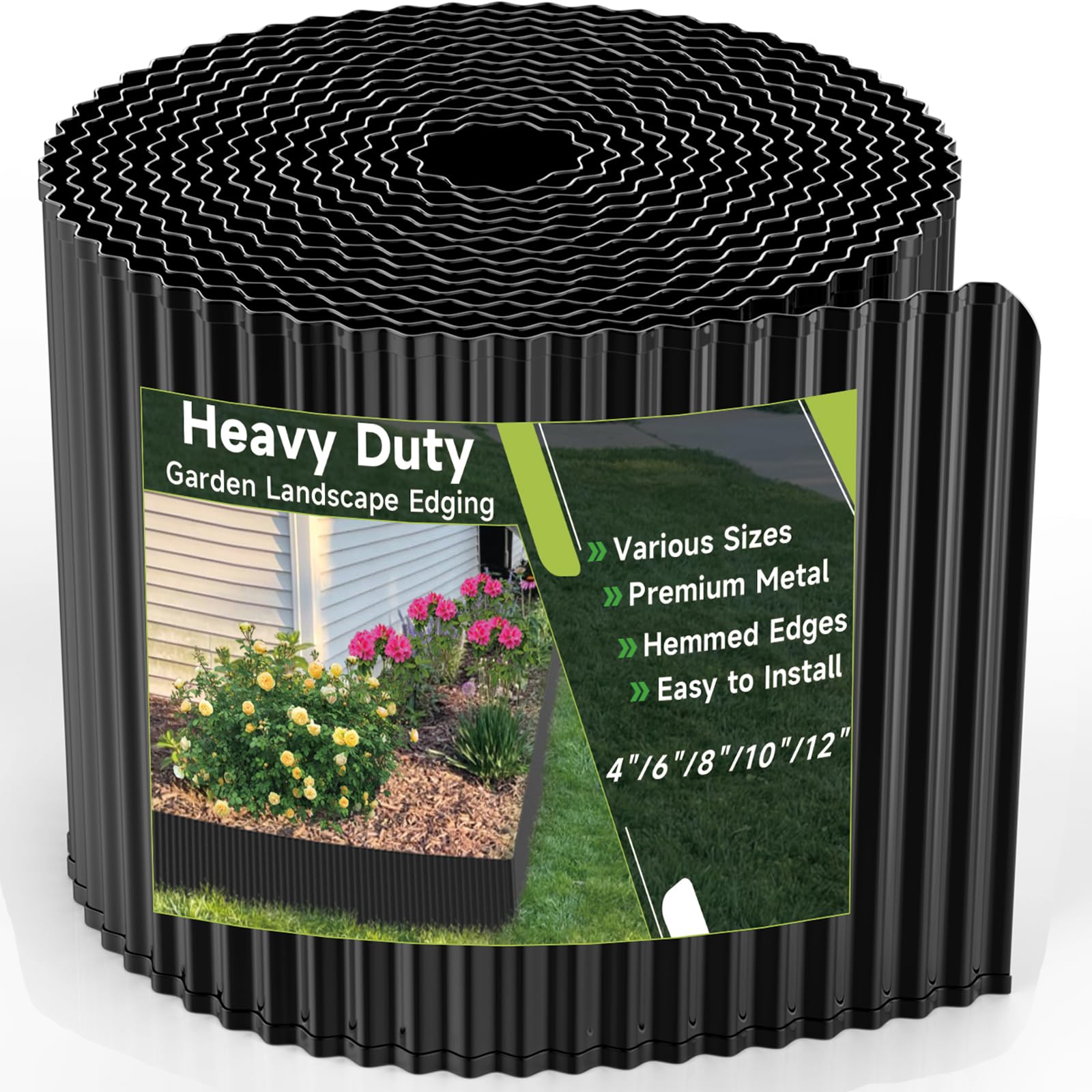
1. Corrugated Garden Edging, 5.5″ x 80 Ft Galvanized Steel
Our pick — 4.5★ from 500+ verified ratings; the strongest balance of quality and price.
80 feet of heavy-duty galvanized steel that doubles as a bermudagrass Fort Knox.
If stopping aggressive roots is your priority, this is the single best inexpensive lawn edging on the list. The 5.5-inch height is enough to sink a good 2-3 inches into the soil while still leaving a visible border above, and the galvanized steel construction means it will not rust or rot. The length here — 960 inches (that is 80 feet) — is a massive 4x the coverage of the shorter coils like the EasyFlex at 240 inches, so you can surround a large garden or run multiple flower beds from one roll.
Installation does not require a professional, but it does require a bit of physical effort. The method owners favor is cutting the soil with a flat shovel, aligning the edging, and pounding it in with a mallet and a 2×4. It bends smoothly around curves and, as buyers report, holds up in rain without issue. The rolled top and bottom edges mean no sharp spots along the length — though cutting it to size creates a razor-sharp edge, so wearing heavy gloves is not optional. The crowd favorite rating (4.5 stars across 500+ ratings) backs up the sentiment that this is a sturdy, attractive solution that delivers on its promises.
Sturdy galvanized steel
- Galvanized steel offers the strongest barrier against invasive grass roots — one owner notes that “8” keeps out bermuda grass roots if weeded outside.”
- The 80-foot length covers a large area in one go, saving you from buying multiple kits.
- Flexible enough to form tight curves for flower beds, tree surrounds, or custom shapes.
Needs careful installation
- The cut edges are extremely sharp — you must use cut-resistant gloves after trimming.
- Installation on hard or rocky soil requires digging a trench; it’s not a true “no-dig” solution.
Long-lasting: Anyone fighting bermudagrass, crabgrass, or other spreading weeds who needs a long-lasting, weather-proof barrier for a large area.
Hard to curve: You want a quick no-dig weekend project or are working in very shallow soil where a 5.5-inch height is overkill.
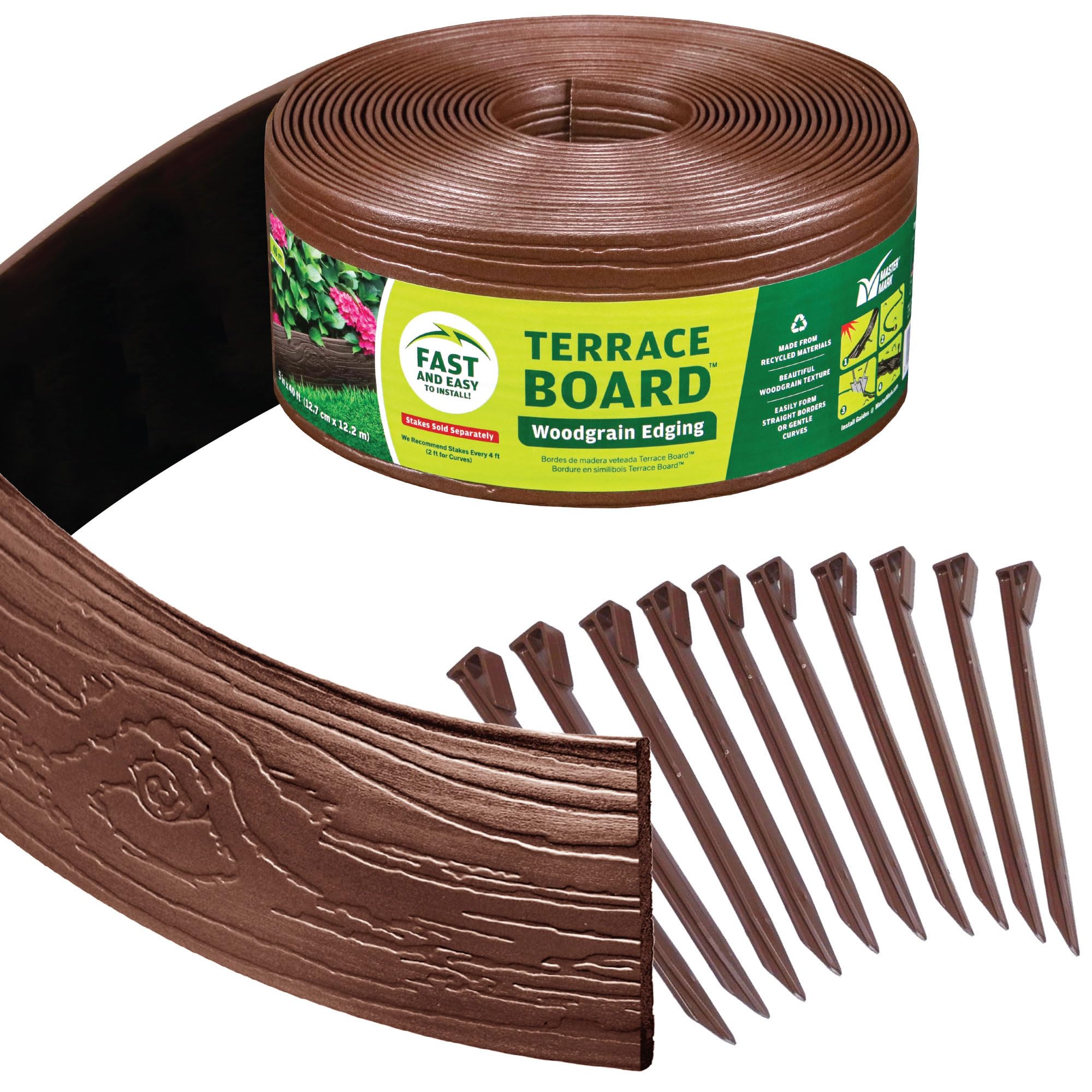
2. Master Mark Landscape Edging Coil (Terrace Board), 40 ft. x 4 in.
A 40-foot workhorse with a convincing wood-grain texture that won’t rot.
This Master Mark coil is the most-reviewed product in the group with nearly 900 ratings, and for good reason: it nails the balance between cost, durability, and looks. At 4 inches tall and made from thick HDPE plastic (5/32 inch thick, as owners point out), it is rigid enough for straight lines yet flexible enough for smooth curves once you let it warm in the sun for an hour. The wood-grain finish is a genuine texture, not a printed pattern, so it blends into a garden much better than a flat black strip.
It does come with a notable limitation: the included 10 stakes are simply insufficient for a 40-foot run, especially on curves, and the shade can vary between coils. Owners consistently recommend buying extra stakes, and note that warming the plastic in the sun is essential to remove its coil “memory.” Despite those quirks, the consensus is that it is a strong, inexpensive solution — as one buyer put it, “5/32″ thick, plenty strong,” and at a fraction of the cost of steel. It is significantly thicker and more rigid than the standard PE plastic edging found in many cheaper kits, which is why it holds up so well against string trimmers and weather.
Flexible terrace board: Ease of installation and long-term durability are what owners praise most — this is the top pick for a reason, backed by a 4.4-star average across nearly 1,000 ratings.
May shift over time: You will need to budget for extra stakes, and if you buy multiple rolls for one continuous run, expect some color variation between batches.
Easy bends: You want the best blend of price, appearance, and long-term toughness without dealing with sharp cut edges — this is the plastic edging benchmark.
Not for heavy soil: Your primary goal is stopping deep-rooted invasive weeds — the 4-inch height is not tall enough for that job.
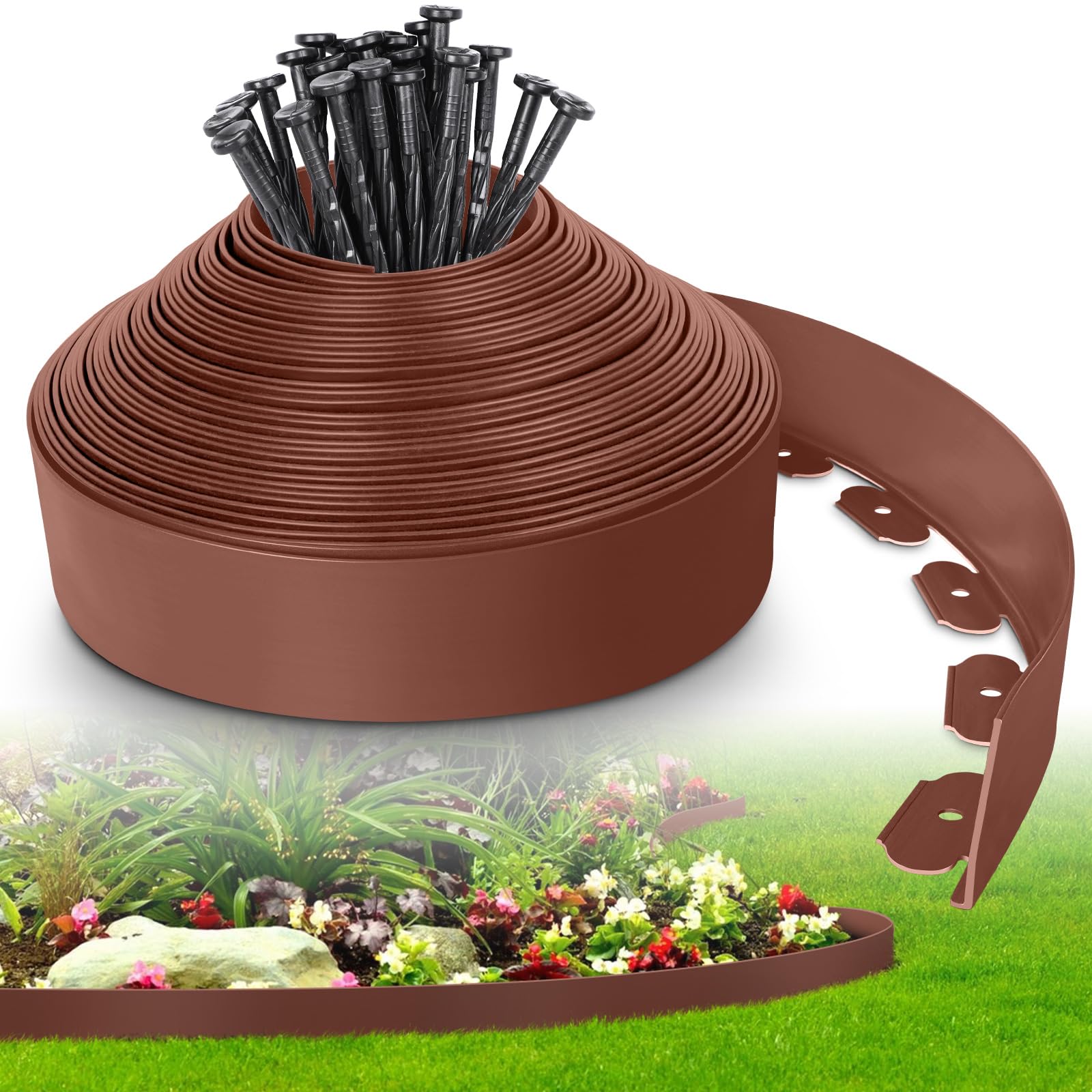
3. FunFanso 4-Inch x 50 FT Landscape Edging Border with 75 Spikes
50 feet of edging with a generous 75 spikes for serious holding power.
This is the kit you grab when you have a lot of ground to cover and do not want to run out of stakes halfway through. That makes it ideal for long, straight runs where you want to stake every foot for maximum stability.
The material is standard black PE plastic, 4 inches tall, and it is about flexibility and ease of installation. You do not need to dig — you just hammer the spikes into the ground. The stakes themselves are described as quality plastic, but owners note that if you hammer them too hard, the tops can pop off. The trick is to stop at the bottom loop on the stake. The edging itself holds up well to sun, rain, and heat, and it does a solid job containing pebble flooring or separating a rock bed from grass. It’s not as thick or durable as the HDPE Master Mark products, but for the price and the sheer amount of stakes included, it’s a budget-friendly workhorse.
Budget choice: Long, straight sections where you need a lot of spikes to keep things locked down — think driveway borders, large rock beds, or path edging.
Prone to damage: You need to make tight curves or want a thicker material that can stand up to a weed wacker at close range.
4. MASTER MARK Terrace Board, 5 in. x 40 ft. (Black)

An extra inch of height makes this the plastic edging for serious root defense.
If you want the durability of the standard Master Mark (Product 2) but need more bite below the soil surface, this 5-inch version is your pick. The extra inch of height over the 4-inch model means you can bury it about 1.5 inches deep for stability while still having 3.5 inches visible above ground. As per its description, this provides “plenty of height to get below the root level” to block invading weeds and grass.
Like its shorter sibling, this is made from HDPE plastic that does not chip, fade, rot, or peel. It installs by trenching about 1.5 inches deep, setting the edging, and backfilling. The 10 included stakes are again on the stingy side — one owner explicitly notes that “10 stakes is nowhere near enough stakes for 40 feet” — so factor in buying extra. At 3.59 kg (about 7.9 lbs), it is noticeably heavier than a standard PE roll, which speaks to its denser, more rigid construction. This is the plastic option to choose if you are worried about plastic feeling flimsy; this one has some real heft.
Neat look: You want a non-metal solution for blocking weeds and grass but need more height than a standard 4-inch strip provides — a great middle ground between basic plastic edging and steel.
Short border: You are on a tight budget and the slightly higher cost for the extra inch of height does not feel justifiable for your project.
5. AMURS 6 Inch Tall 20Ft White Landscape Edging Border

A tall, clean white border that makes flower beds pop from a distance.
This is the most distinct-looking option in the lineup. Instead of a continuous coil, it comes as 20 interlocking panels made from white PP plastic. The manufacturer claims it can withstand 60mph winds, and it certainly feels sturdy once assembled. At 6 inches tall, it is the second-highest option here, and the white color serves as a strong visual separator that makes green plants and dark soil stand out.
Do not confuse this with a heavy-duty root barrier — it is a decorative border first and foremost. The interlocking system is simple enough: you slot the pieces together and hammer the included stakes into the ground. The catch is that the securing stakes are widely described as “some of the most worthless plastic imaginable” — they are thin and break easily. Several owners recommend using tent stakes or buying metal spikes as a replacement. The panels themselves are also shorter than you might expect from the 6-inch claim once installed. This is a great pick for creating a tidy look around a small flower bed or tree ring, but it is not built for the same kind of abuse as a solid strip of steel or HDPE.
Visible edge: Small decorative gardens, pool borders, or flower beds where appearance matters more than brute-strength containment — the white color is a standout look.
Short run: You need a serious barrier against grass invasion or are installing in an area with heavy foot traffic or frequent weed-whacking.
6. Vashly No-Dig 20ft Landscape Edging, 6 Inch Tall
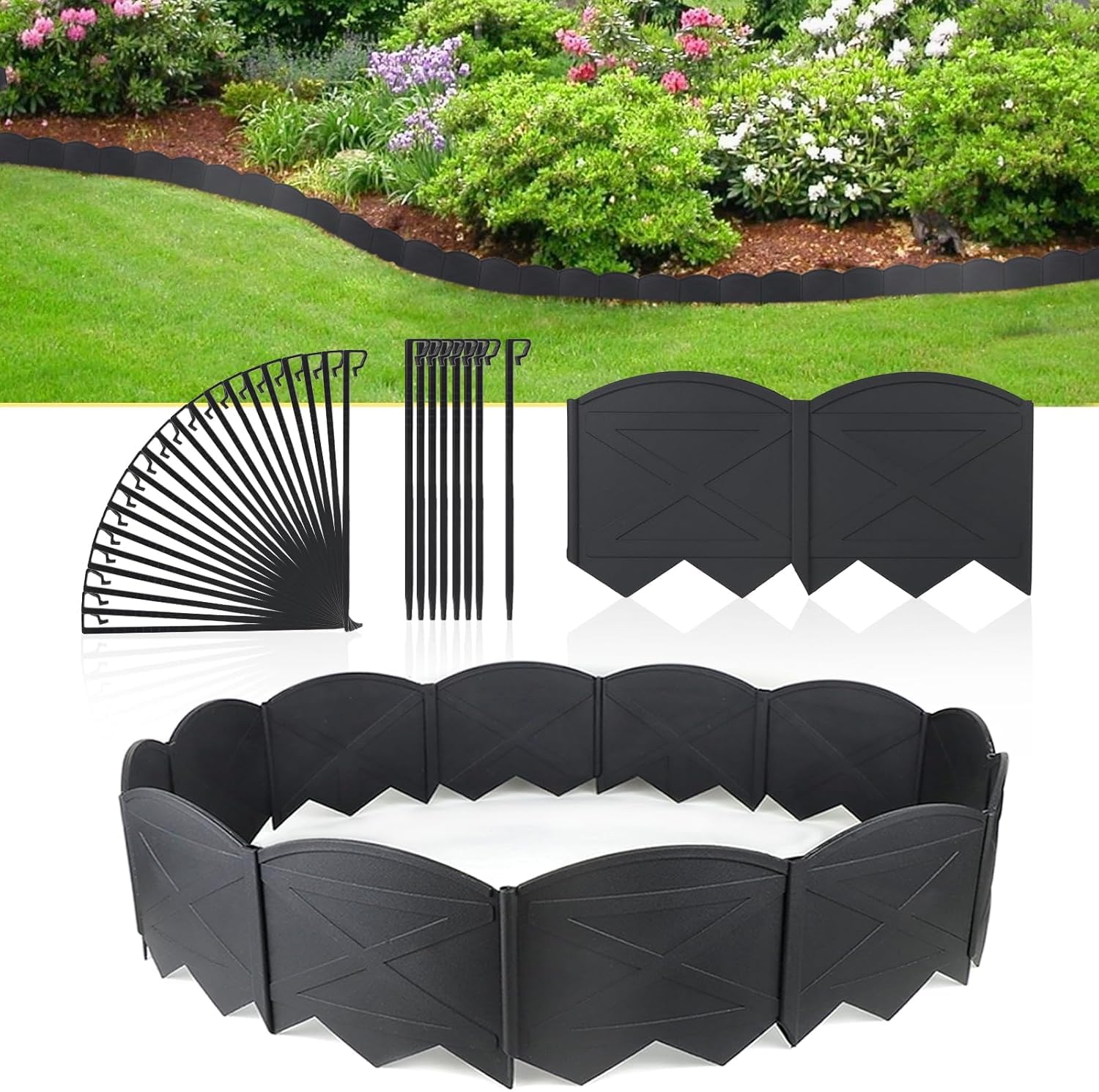
A snap-together system that bends into hearts, ovals, and tight arcs.
For the DIY gardener who wants to create custom shapes, this Vashly kit is the most flexible interlocking option here. Each piece measures 12.2 inches long and 6 inches tall, and the set of 20 pieces covers about 20.5 linear feet. The panels slide together easily and can be shaped into arcs, ovals, circles, or even heart shapes to suit your garden layout.
The installation is genuinely no-dig on soft ground — you use a mallet to tap each piece in and then secure it with the included 7.8-inch plastic stakes. The panels themselves are well-liked for how easy they are to assemble and how nice they look. However, the long-term durability raises a flag. Owners mention that after only a few months outside, the material can “become brittle and break easy,” turning what was a pretty border into a frustrating one. This is a trade-off for its flexibility and low price point. It has held up well to Florida downpours in the short term, but it is not a purchase you will make once and forget about for years.
Quick setup: You are creating a small, decorative bed with intricate curves and want the easiest possible no-dig installation for soft soil.
Not for slopes: You need edging that will last multiple seasons in full sun without becoming brittle — look at the HDPE Master Mark or galvanized steel instead.
7. EasyFlex Pound‑In Landscape Edging with Bonus Anchoring Stakes – 20‑Ft

The fastest path from box to a straight, clean border — just score and pound.
If your primary concern is a fast weekend project with minimal fuss, the EasyFlex is the most accessible pick. The method is simple: score the soil with a shovel or edger, place the coil, and use a rubber mallet to drive it in. It comes with 6 anchoring stakes (marketed as “bonus” stakes, triple the standard). At 20 feet and 4.5 inches tall, it is shorter than many options, but that is by design — it is meant for quick, clean lawn-to-bed borders, not deep root barriers.
The plastic is made from recycled materials, and it is thick enough to hold its shape. However, consistency is a noted issue: some owners received units that were thick and sturdy, while others found the curved top to be thin and bendable. It works best after being warmed by the sun for a day. As one owner put it, the “20ft roll sufficient for 15ft at good price,” meaning the 20 feet is the total coil length, but you lose some to curves or tension. It is a solid, no-nonsense product for small yards, but manage your expectations on overall rigidity.
Firm hold: Homeowners with a small lawn who want a clean, quick edge between grass and a flower bed without digging a trench or dealing with sharp steel edges.
Hard on tools: You have a large perimeter to cover, hard clay soil, or need a barrier that stops tough creeping weeds.
8. AggFencer Landscape Edging 4in Tall 33ft, No Dig, with 61 Spikes
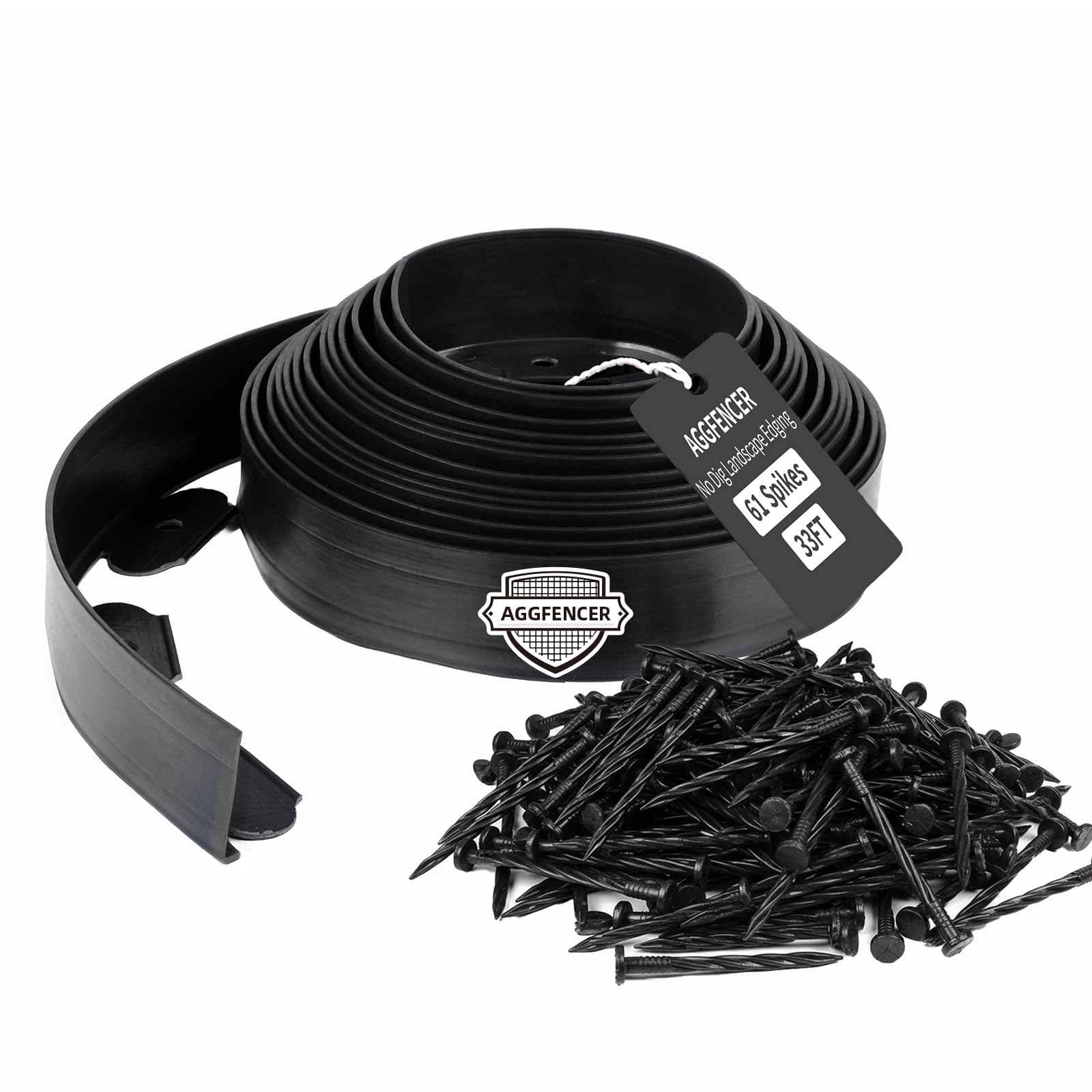
33 feet of edging with an absurdly generous pile of 61 spiral spikes.
This kit is all about covering ground and having the hardware to hold it. At 33 feet and 4 inches tall, it is a straightforward no-dig coil that you unroll, shape, and stake. The standout detail is the 61 stakes — that is more than enough to put a spike in every other hole for a very firm hold. The material is PE plastic, which is durable enough for sun and rain but is not going to have the same heft or rigidity as the HDPE Master Mark products.
The catch is the stakes. They are plastic spiral spikes, and while there are a lot of them, a significant number of owners found them to be “bendy” and prone to breaking during installation. If your ground is soft, they go in fine; if it is not, you will want metal stakes. The edging itself holds up well to a weed wacker and looks good once installed. It is a good value for the money if you factor in the sheer quantity of stakes, but do not treat them as a premium component — they are functional, not indestructible.
Subtle border: A medium-sized project where you want a lot of extra spikes to ensure the edging stays put — great for windy areas or loose soil.
Minimal height: Your soil is hard, rocky, or compacted — you will likely break half the plastic stakes and need to buy metal replacements.
9. AGTEK Garden Edging 49FT, 3 Inch Height with 30 Stakes
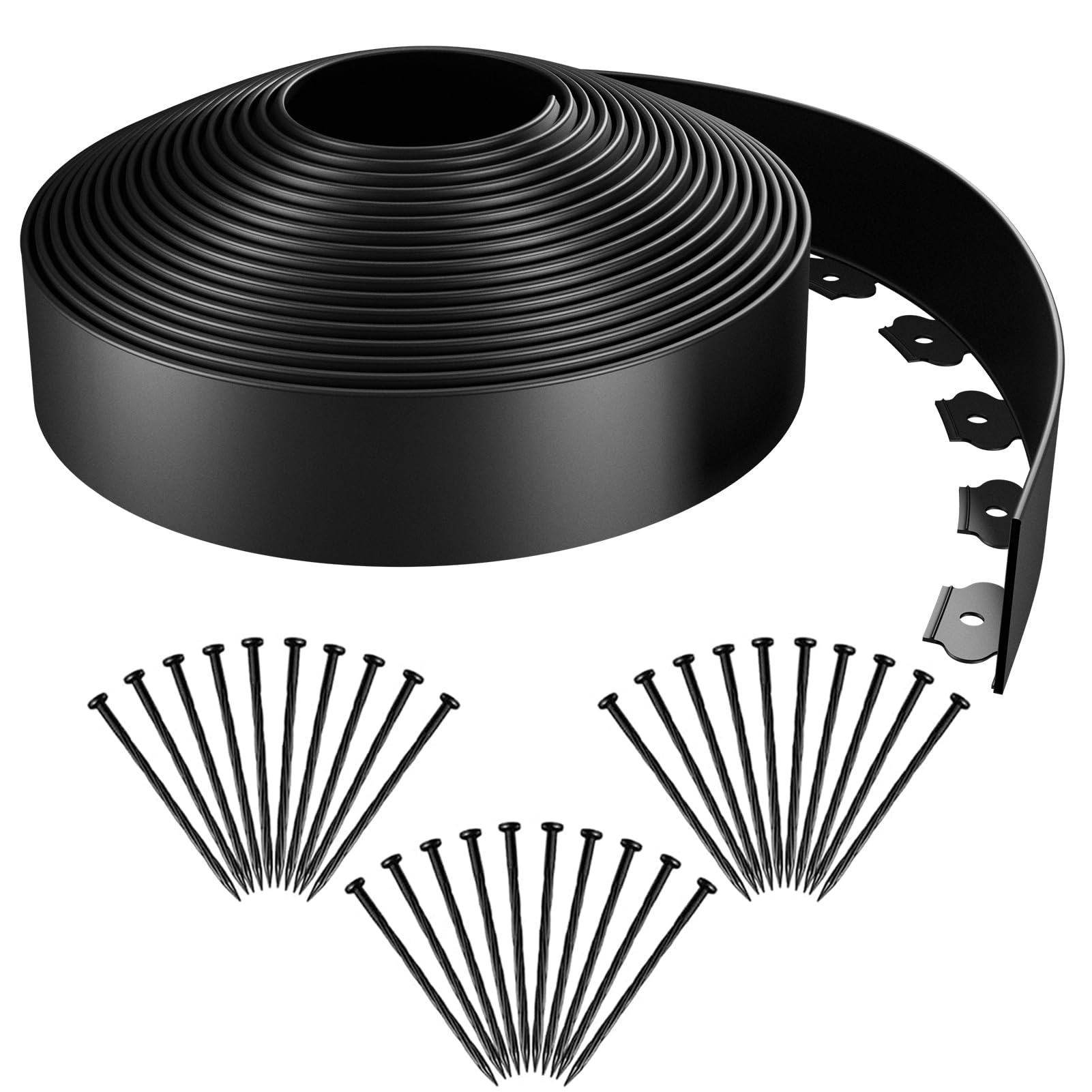
49 feet of the shortest, cheapest path to a tidy lawn-to-bed line.
This is the bottom-tier option in terms of height (3 inches), but it makes up for it with raw length and a very accessible entry point. If you just need to define a boundary between a lawn and a path — and you don’t need to contain mulch or block roots — this is the most economical way to do it. It comes with 30 stakes, so you have about one stake for every 1.6 feet, which is a solid ratio.
The plastic is flexible and easy to cut with utility scissors, and it installs by simply tapping it into the soil. The feedback is generally positive about its ease of use and value for money, but the low height is a clear limitation. It will not contain a deep bed of pebbles, and it does not stop invasive grass. Its main job is visual — creating a clean, professional-looking line. That is a common and perfectly valid need. It does that job well, but do not expect it to perform beyond its spec.
Large area: You need to run a very long, simple separation line for a pathway or a lawn border without spending much money — this is pure functional value.
Low barrier: You need even a modest amount of height to contain mulch, gravel, or block the roots of creeping weeds.
Understanding the Specs
Height vs. Above-Ground Visibility
The height of the edging listed (3 in, 4 in, 5.5 in, etc.) is the total height of the strip. Since you bury 1-2 inches for stability, a 4-inch edging leaves only about 2.5 inches visible. For containing a 2-inch layer of mulch, that is plenty. For blocking bermudagrass or creating a taller visual barrier, look for a 5.5-inch or 6-inch model.
Stake Count and Type
Ten stakes for a 40-foot roll is typically not enough, especially on curves. A good rule of thumb is one stake every 2-3 feet, plus extras at every curve or joint. Plastic stakes are prone to breaking in hard soil; metal stakes are more reliable. If a kit skimps on stakes or uses thin plastic ones, factor in the cost and effort of replacing them.
FAQ
What is the difference between HDPE and PE plastic for edging?
Will 4-inch tall edging keep bermudagrass out of my flower bed?
Can I cut steel edging to a custom length without special tools?
How many stakes do I actually need for a 40-foot run?
Is “no-dig” installation really no-dig?
Why does my plastic edging have a coil “memory” and how do I fix it?
Can I use a string trimmer (weed wacker) near plastic edging?
What is the best edging for containing beach pebbles or small gravel?
Does galvanized steel edging ever rust?
How do I install edging around a tree without damaging the roots?
Final Thoughts: The Verdict
If you want one dependable pick, the inexpensive lawn edging winner is the Corrugated Galvanized Steel Edging because it offers the best value per foot at 80 feet and provides a genuinely effective barrier against invasive grass roots. If you prefer the look and easy shaping of plastic without sharp edges, grab the Master Mark Terrace Board — it is the most trusted name in the plastic edging category with thousands of satisfied owners. And for the simplest weekend job on a short budget, the AGTEK 49FT Edging is the inexpensive way to create a clean, unobtrusive line between your lawn and your garden.
How We Picked
We do not accept paid placement. Every pick is matched to a real buyer and a real use-case; we do not hands-on test units.
Sources & Methodology
Specifications: manufacturer listings and product documentation. Review insights: verified customer reviews, as of July 2026. Pricing: not shown on this page (it changes often); check the current price via the retailer link.
As an Amazon Associate, Lawn Gear Lab earns from qualifying purchases. This does not affect which products we feature.