
Specs are compiled from manufacturer listings and verified buyer reviews and can change over time — please confirm the key details on the product page before buying.
You spot yellow, mushy leaves or powdery white patches on your snake plant — fungus is the culprit, but guessing the right spray wastes time and risks the plant. The best fungicide for snake plant stops the infection on contact, stays gentle on those thick waxy leaves, and fits your weekly care routine without harsh fumes in your home. The Athena IPM 32oz Broad Spectrum is the top recommendation because it is a concentrate (you mix it with water) that works as both a fungicide and an insecticide, giving you more treatments per bottle than any ready-to-use spray here.
I’m Rikta — the founder and writer behind Lawn Gear Lab. This guide is built by comparing the manufacturers’ published specifications and the patterns across verified customer reviews, so you get each pick’s real strengths and trade-offs instead of marketing spin.
Whether you are fighting powdery mildew, leaf spot, or root rot on your prized Sansevieria (the botanical name for snake plants), a fungicide that works on contact, stays gentle on the foliage, and fits smoothly into your weekly care routine is what you need.
Our Picks at a Glance
How To Choose The Best Fungicide For Snake Plant
Snake plant leaves are thick and waxy — that is why some sprays just bead up and run off instead of soaking in. You need a formula that actually sticks to the leaf surface and penetrates without clogging the leaf pores (called stomata). The right fungicide kills the infection and prevents it from coming back without scorching the foliage.
Read the active ingredients
Ready-to-use vs concentrate
A ready-to-use spray is the safest bet if you only have a couple of plants — no mixing, no guesswork, just spray and go. Concentrates give you more value per ounce and let you adjust the strength, but they require measuring and a separate spray bottle. For quick rescue on a single snake plant, ready-to-use saves time.
Check the safety window
Most indoor fungicides are safe around people and pets once dry, but some leave a strong odor that lingers for hours. If your snake plant lives in a bedroom or a living room where you spend most of the day, a low-odor formula makes a big difference in comfort.
Quick Comparison
| Model | Best For | Type | Volume | Key Target | Amazon |
|---|---|---|---|---|---|
| Athena IPM 32oz★ Best Overall | Broad-spectrum rescue | Concentrate | 32 fl oz | Mites, mildew, aphids | Amazon |
| Miracle-Gro Leaf Protect & ShinePro Pick | 2-in-1 shine + protection | Ready-to-use | 8 fl oz | Mites, thrips, powdery mildew | Amazon |
| Smart Grower Neem Oil Spray | Natural preventative care | Ready-to-use | 8 fl oz | Fungus gnats, mealy bugs | Amazon |
| Neudorff Copper Fungicide | Organic heavy-duty control | Concentrate | 16 fl oz | Powdery mildew, rust, leaf spot | Amazon |
| Arber Organic Fungicide | Certified-organic prevention | Concentrate | 16 oz | Powdery mildew, leaf spot, root rot | Amazon |
| Evergreen Way Organic Combo | Insect + fungus 2-pack | Concentrate | 16 oz | Spider mites, aphids, powdery mildew | Amazon |
In‑Depth Reviews
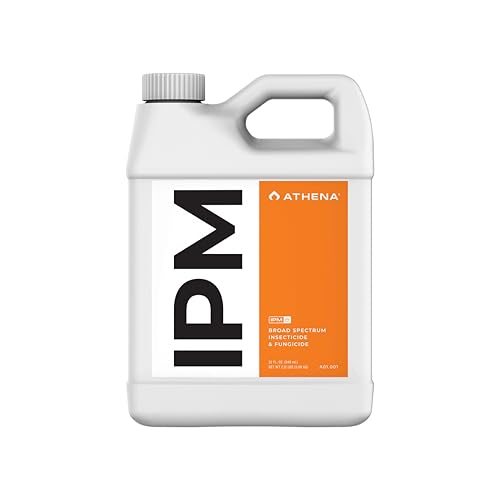
1. Athena IPM 32oz Broad Spectrum Fungicide & Insecticide for Plants
Our pick — over 4.5★ from 250+ verified ratings; the strongest balance of quality and price.
The big bottle that hits mites and mildew in one pass — and you get 32 fluid ounces of concentrate.
This is the most versatile liquid in the lineup — a broad-spectrum spray that works as both a fungicide and an insecticide. The active ingredients are natural oils, and it is made with ingredients on the EPA’s 25(b) list (a list of minimum-risk active ingredients that are exempt from federal registration because they pose little risk to human health or the environment). That means you can use it around pets, people, and children without worrying about harsh chemical fumes inside your home. The 32 fluid ounce bottle is a concentrate: you add water, shake, and spray with any pump bottle or sprayer, which makes it last far longer than a ready-to-use formula.
What wins people over is the effectiveness — buyers report it zaps spider mites, aphids, thrips, and powdery mildew on contact. As one reviewer put it: “Zaps mites as well as all the other critters that cause problems.” The scent gets consistent praise too, with several people noting it smells pleasant rather than chemical. It works on houseplants, vegetable gardens, herb gardens, flower beds, and even hydroponic systems (a method of growing plants without soil), so you are not locked into one use-case.
The only catch is the 2.2-pound weight — heavier than the ready-to-use options above, so store it on a shelf you can reach easily. It is also a concentrate, which means you do have to mix it yourself. If you prefer a grab-and-spray solution for a single snake plant, this may feel like more effort than needed.
Best for the whole plant collection: If you have multiple houseplants or a mix of indoor and outdoor greenery, the 32 oz volume and broad-spectrum coverage make this the one to reach for first.
skip it if you hate mixing: If you want the simplest possible routine and only treat one or two snake plants, a ready-to-use spray saves you the extra step.
What it beats: Beats every other pick here on sheer volume — 32 fl oz vs 8 fl oz for the Miracle-Gro and Smart Grower options, making it a much better value per treatment.
One honest trade-off: The mixing step means you cannot just grab it and spray when you spot trouble — you need a separate spray bottle and a few seconds to measure.
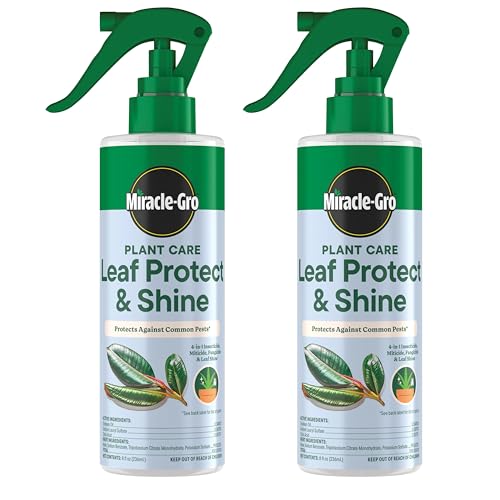
2. Miracle-Gro Plant Care Leaf Protect & Shine, 8 fl. oz. (2-Pack)
A 4-in-1 spray that fights pests while making leaves glow — no mixing needed.
This is the only pick on the list that combines insecticide (kills insects), miticide (kills mites), fungicide (kills fungus), and leaf shine into a single ready-to-use bottle — and you get two 8 fluid ounce bottles in one bundle. That means you can treat your snake plant for powdery mildew while also giving the leaves a natural-looking gloss. The formula targets mites, thrips, aphids, and whiteflies, and includes a fungicide to protect against powdery mildew.
Owner feedback is strong on effectiveness, with one common observation: “My plants look radiant and healthy after two days of using these products.” The plant protection aspect gets specific praise, and the ease of use is a recurring note — you just spray directly on the leaves every 7 to 14 days. The leaf shine aspect is more mixed: some owners mention a clean, natural glow, while others say it does not produce the shiny look they expected. (Note: the highest-count aspect in reviews is leaf shedding, which is flagged as mixed, so it is not a feature to rely on uniformly.)
The 8 fl oz bottle has only 8 fluid ounces per bottle, so it runs out faster than the concentrate options like the Athena IPM. It is designed for hard-leaved houseplants like fiddle leaf figs, monsteras, rubber plants, and pothos, and the same applies to snake plants — the thick waxy leaves respond well to the spray-on-and-shine routine.
Best for the aesthetics-focused owner: If you want your snake plant to look its best while staying protected, this 2-pack delivers both in one step without needing extra products.
Watch out for the shine expectation: The leaf shine is not guaranteed to give a high-gloss finish on every plant, so treat it as a bonus rather than the main reason to buy.
One sentence verdict: the easiest option for someone who wants protection plus a beauty boost, but the small bottle size means you will repurchase sooner than with a concentrate.
Works on the standard schedule: Apply every 7-14 days as a preventative, and you keep your snake plant protected without a complex mixing routine.
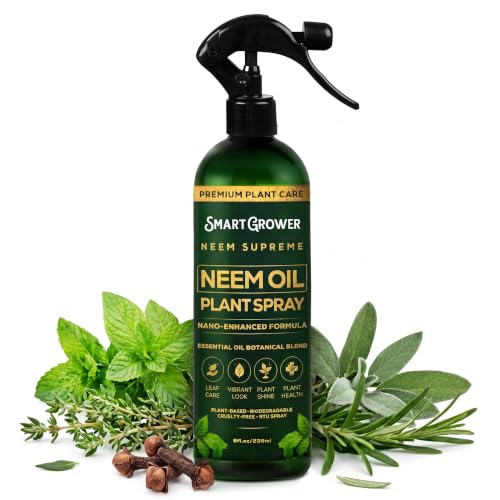
3. Smart Grower Neem Oil Spray for Plants, 8oz
A pleasant-smelling neem spray that doubles as leaf polish — and it is ready to use right out of the bottle.
Neem oil is the go-to natural remedy for snake plant owners, and this ready-to-use 8 fluid ounce bottle makes it simple. It is infused with a blend of nine essential oils including tea tree, clove, sage, thyme, cedarwood, lemongrass, peppermint, garlic, and capsicum. The result is a fine botanical mist that smells noticeably better than the typical neem products — several owners describe it as great-smelling, which is rare for a plant spray. It is biodegradable, cruelty-free, and plant-based, so you can use it indoors without worrying about synthetic chemicals.
The formula gets high marks for controlling fungus gnats (small flying insects that live in moist soil) and mealy bugs (small white cottony pests on leaves), and the fragrance is the second-most praised aspect by a wide margin. Owners also report that it leaves leaves looking super shiny, healthy, and pest-free. As one puts it: “This has been great for my plants. Super shiny, healthy leaves and no pests. It also smells great unlike some of the other neem products.” The spray is ready to use — no mixing required — and you can wipe the leaves for extra shine if you want.
The one limitation is that it is not effective against everything. A few owners found it did not stop fungus gnats completely even after using the full bottle with sticky traps. The fine mist is great for coverage, but if you have a heavy infestation on a large snake plant, you may need a stronger concentrate like the Athena IPM or a copper-based alternative like the Neudorff.
Best for regular preventative care: If you want a gentle, good-smelling neem spray to use weekly as a protective measure, this is the easiest and most pleasant pick.
Not the heavy hitter: For advanced fungal infections that have already spread, you will likely need a concentrate or a copper fungicide to knock it back fast.
Reach for this if you are new to plant care: The ready-to-use simplicity and pleasant scent make it a low-friction entry point for anyone learning how to protect their snake plant naturally.
Look elsewhere if you need a rescue spray: If your snake plant already has widespread brown spots or soft, mushy leaves, go straight to a concentrate-based option for stronger action.
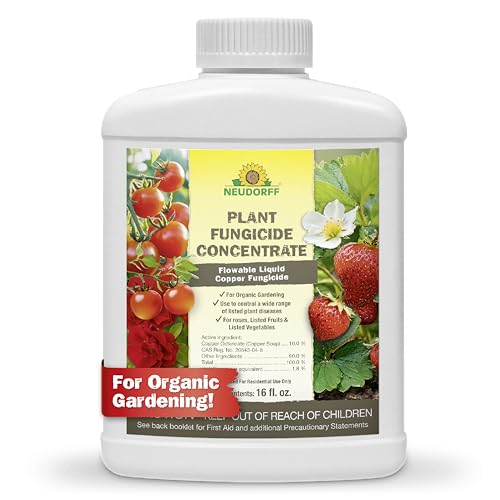
4. Neudorff Plant Fungicide Concentrate, 16 OZ
The copper-based concentrate that saved a decades-old gardenia — and covers up to 21,780 square feet per bottle.
Copper soap fungicide is the traditional heavy artillery for plant diseases, and this 16 fluid ounce concentrate from Neudorff brings it to indoor and outdoor plants. It controls powdery mildew, rusts, black spot, leaf spot, downy mildew, fruit rot, late blight, and peach leaf curl. The formula uses a low concentration of copper that decomposes into soluble copper and fatty acid (a type of fat that helps the copper stay on the leaf), both of which can be used by microbes and plants. You mix 0.5 to 2.0 fluid ounces in a gallon of water, and the bottle covers up to 21,780 square feet — far more than any other concentrate here.
The effectiveness is the standout trait here — customers note it works almost immediately, with one describing how it “eliminated a fungus that almost killed our decades old gardenia.” Another owner saw black fungus spots on tomatoes clear up completely. The spray performance also gets positive feedback, with buyers noting a little goes a long way. It is labeled for organic gardening and can be used up to the day of harvest on fruits and vegetables.
The one caution is that copper can cause leaf burn on sensitive plants if you use too high a concentration. One owner found it caused leaf burn on hostas even though it killed the fungus. For snake plants, the thick waxy leaves are less sensitive than delicate ornamentals, but start with the lower end of the mixing range (0.5 fl oz per gallon) to be safe.
Best for serious fungal outbreaks: If your snake plant is fighting black spot, rust, or persistent powdery mildew, this copper concentrate will stop it fast — just measure carefully.
A note on leaf sensitivity: Test on one leaf first if you have a variegated or particularly delicate snake plant variety to avoid burn marks.
What it beats: Leads on coverage area — 21,780 square feet is far more than any other concentrate here (the Arber covers a smaller area and the Athena is a different type), so one bottle goes a very long way even with regular reapplications.
The main trade-off: Requires precise mixing (0.5 to 2.0 fl oz per gallon), so it is less convenient than a ready-to-use spray when you just want to spot-treat one plant.
5. Arber Organic Fungicide for Indoor & Outdoor Plants, 16 oz

A certified-organic formula that actually cleared snake plant fungus — and lasts up to 3 years on the shelf.
This 16 ounce concentrate is powered by certified-organic biologicals and plant-derived actives that create a protective barrier on leaves and roots. It targets powdery mildew, leaf spot, root rot, lawn diseases, mushroom, and rust. The formula is designed to be gentle on foliage while supporting soil microbiome balance (the community of beneficial microbes in the soil), which matters for snake plants that hate having their roots disturbed. It is safe around kids, pets, and beneficial insects when used as directed, and it has a low odor that works well indoors.
The real-world proof is direct: one owner reports it “cleared up the fungus on my Amaryllis bulb and on my snake plant!” That is the exact scenario most snake plant owners face — stopping an infection without harsh chemicals. Another owner used it to stop bacterial leaf blight on peach trees after other fungicides failed, applying it every 5 days for 4 treatments and then switching to 10-day intervals. The concentrate dilutes easily, and the shelf life extends up to 3 years, so you can keep it stocked without worrying about it spoiling.
The one limitation is that it works best as a preventative measure. Owners who used it after a full-blown root rot had already set in found it ineffective because the formula does not list target fungi like Armillaria, Fusarium, Pythium, or Phytophthora (all specific types of fungi that cause root rot). Catch the problem early, and this works beautifully; wait too long, and you may need a stronger copper-based product like the Neudorff.
Best as a first line of defense: If you want to prevent powdery mildew and leaf spot before they start, this certified-organic concentrate is the safest and longest-lasting option in the lineup.
Not for advanced root rot: If your snake plant already has soft, mushy bases and a foul smell, this will not reverse the damage — you need a systemic fungicide at that point.
One sentence verdict: The smart buy for proactive snake plant owners who want a gentle, organic shield that lasts up to 3 years on the shelf.
Best paired with good habits: Use it after repotting, after travel, or when bringing new nursery plants home — prevention is where this product truly shines.
6. Evergreen Way Organic Insecticide & Fungicide for Plants, 16oz

An organic two-pack that handles pests and fungus in one routine — and you can mix both concentrates in the same sprayer.
This is actually two separate concentrates in one purchase — an insecticide and a fungicide — designed to be mixed together in the same sprayer. The insecticide targets spider mites, aphids, whiteflies, thrips, and fungus gnats, while the fungicide tackles powdery mildew and leaf disease. The formula is bio-based and safe for pollinators when used as directed. Reviewers point out that a nightly application of both products significantly reduced aphids, caterpillars, and gnats, while the fungicide promoted lush green growth with no leaf burn.
What makes this stand out is the flexibility. The insecticide mix rate is 2 tablespoons per gallon, while the fungicide is 1 tablespoon per gallon. You can mix them in the same bottle and apply to the foliage and root zone. Owners also appreciate that it is odorless and easy to apply. One owner described it as “a great organic option for prevention” and noted it is safe for kids, pets, and pollinators. The product was featured on Shark Tank, which adds a layer of credibility.
The main drawback is that the insecticide does not kill Japanese beetles — several owners mentioned that limitation explicitly. Also, the fungicide has a thicker consistency and a stronger smell than the insecticide, so the experience of mixing the two is not perfectly uniform. For snake plant owners, the combination is useful because snake plants often attract both fungus and pests at the same time, so one application covers both problems.
Best for the multi-problem plant: If your snake plant has both powdery mildew and fungus gnats or spider mites, this two-pack saves you from buying separate products and mixing routines.
A note on mixing: The two concentrates have different consistencies, so shake the bottles well before each use to ensure consistent coverage on the leaves.
What it beats: No other pick here comes as a dedicated insecticide + fungicide combo pack — you get two separate bottles designed to work together in the same spray session, unlike the Athena which is a single all-in-one concentrate.
The trade-off: Two bottles mean two sets of mixing instructions, and the fungicide is noticeably thicker and smellier than the insecticide, so the experience varies between the two.
Understanding the Specs
Concentrate vs Ready-to-Use
A concentrate contains the active ingredients undiluted — you add water before spraying. It gives you more treatments per bottle and lets you adjust strength, but you need a separate spray bottle and a measuring tool. Ready-to-use sprays come pre-diluted in the bottle; you just squeeze the trigger and spray. They are easier for quick treatments but run out faster and cost more per ounce.
Broad Spectrum vs Targeted Formula
A broad-spectrum fungicide controls multiple types of fungus (powdery mildew, leaf spot, rust, root rot) in one product. A targeted formula focuses on one or two specific diseases. For snake plants, a broad-spectrum option is safer because the thick leaves can hide early signs of different fungi, and you may not know exactly which one you are fighting until it is too late.
Copper Soap vs Neem Oil
EPA 25(b) Minimum Risk Ingredients
The EPA 25(b) list includes active ingredients that are considered safe enough to be exempt from federal pesticide registration because they pose little to no risk to human health or the environment. Products with this designation use natural oils, soaps, or biologicals as their active ingredients. They are generally safer to use indoors, around pets, and on edible plants, but they also tend to be less aggressive than synthetic chemical fungicides.
FAQ
Can I use any houseplant fungicide on a snake plant?
How often should I treat my snake plant for fungus?
What is the difference between a fungicide and a miticide?
Is neem oil safe for snake plants?
Will copper fungicide burn my snake plant leaves?
Can I mix fungicide and insecticide in the same bottle?
How do I know if my snake plant has fungus or just old leaves?
Should I treat the soil or just the leaves?
Do these products work on other houseplants too?
Can I prevent fungus on snake plants without chemicals?
Final Thoughts: The Verdict
For most snake plant owners, the best fungicide for snake plant is the Athena IPM 32oz Broad Spectrum Fungicide & Insecticide — it is the only bottle here that hits both pests and fungus in a single concentrate, giving you 32 fluid ounces of treatment per purchase, far more than any ready-to-use option. If you prefer the simplicity of a grab-and-spray bottle that also shines the leaves, grab the Miracle-Gro Leaf Protect & Shine 2-Pack. And for those who want a certified-organic preventative that lasts up to 3 years on the shelf, the Arber Organic Fungicide is the one to reach for.
How We Picked
We do not accept paid placement. Every pick is matched to a real buyer and a real use-case; we do not hands-on test units.
Sources & Methodology
Specifications: manufacturer listings and product documentation. Review insights: verified customer reviews, as of July 2026. Pricing: not shown on this page (it changes often); check the current price via the retailer link.
As an Amazon Associate, Lawn Gear Lab earns from qualifying purchases. This does not affect which products we feature.