
Specs are compiled from manufacturer listings and verified buyer reviews and can change over time — please confirm the key details on the product page before buying.
You want your chilli plant to produce a heavy crop of fiery fruit, not just leaves — and the secret is the exact nutrient ratio you feed it. Most all-purpose garden feeds are designed for leafy greens like lettuce, not for pushing capsaicin (the compound that makes chillies hot) into a habanero. The difference between a bush full of green ornaments and one dripping with red heat is a fertiliser that matches what a fruiting plant actually needs.
I’m Rikta — the founder and writer behind Lawn Gear Lab. This guide is built by comparing the manufacturers’ published specifications and the patterns across verified customer reviews, so you get each pick’s real strengths and trade-offs instead of marketing spin.
Whether you grow a single jalapeño on a windowsill or a row of Carolina Reapers in the garden, the right nutrients decide your harvest. This breakdown helps you find the best fertiliser for chilli plants that actually delivers heat and yield.
Our Picks at a Glance


How To Choose The Best Fertiliser For Chilli Plants
Chilli plants are heavy feeders that need a different nutrient balance at every growth stage. To pick the right fertiliser, you need to understand three things: the three numbers on the bag (N-P-K ratio), if you want slow-release or instant feed, and the extra micronutrients that prevent common problems like blossom-end rot.
Decode the N-P-K ratio
The three numbers on a fertiliser label stand for nitrogen (N), phosphorus (P), and potassium (K). Nitrogen drives leafy growth, which you want early on. Once flowers appear, you need a higher phosphorus and potassium mix — that is what pushes the plant to set fruit and ramp up the heat. A ratio like 4-18-38 or 5-10-10 is what you look for at flowering stage, not a balanced 10-10-10 that keeps the plant green but stingy with fruit.
Granules vs liquid
Granular fertilisers are sprinkled onto the soil and break down over weeks, feeding steadily. They are low-effort and hard to overdo. Liquid fertilisers get absorbed immediately through the roots, which is useful for a quick boost when you spot a deficiency, but they need more frequent application. Both work well — choose granular for busy growers who want one application to last, and liquid for hands-on gardeners who like to fine-tune every watering.
Chelated micronutrients
Beyond the main three numbers, chillies need a suite of trace elements — especially calcium, magnesium, iron, and zinc. Calcium prevents blossom-end rot, the ugly brown patch that ruins the bottom of your fruit. Chelated means the mineral is wrapped in an organic molecule so the plant can absorb it even if your soil pH is off. Look for EDTA-chelated iron or zinc on the label if you have alkaline tap water or poor soil.
Match the fertiliser to your growing method
Soil growers have the widest choice — any granular or liquid product works. Hydroponic growers must use a fully water-soluble formula that will not clog pumps or leave a film on the reservoir. Container gardeners need a gentle, non-burning formula since the roots are confined and vulnerable to salt buildup. Read the label for “hydroponic” or “soil” compatibility to avoid damaging your system.
Quick Comparison
| Model | Best For | N-P-K Ratio | Item Form | Weight | Amazon |
|---|---|---|---|---|---|
| FoxFarm Happy Frog★ Best Overall | Overall chilli & veggie gardens | 5-7-3 | Granules | 4 lb | Amazon |
| Growth Technology ChiliTop Performer | Liquid specialist feed | — | Liquid | 100 ml | Amazon |
| Greenway Biotech 11-11-40Premium Pick | Hot pepper & herb yield | 11-11-40 | Powder | 1 lb | Amazon |
| MasterBlend 4-18-38 | Hydroponic & high-yield soil | 4-18-38 | Powder | 16 oz | Amazon |
| Cz Garden 5-10-10 | Fruiting stage soil feed | 5-10-10 | Granules | 4 lb | Amazon |
| Espoma Garden-Tone | Organic veggie & herb gardens | 3-4-4 | Granules | 4 lb (bag of 2) | Amazon |
| Down To Earth All Purpose | Organic all-round feeding | 4-6-2 | Granules | 5 lb | Amazon |
| TPS Nutrients Pepper | Liquid boost for peppers | — | Liquid | 32 oz | Amazon |
| Cz Garden 4-18-38 | Value hydroponic & soil feed | 4-18-38 | Powder | 5 lb | Amazon |
In‑Depth Reviews
1. FoxFarm Happy Frog Tomato & Vegetable Fertiliser
Our pick — over 4.5★ from 600+ verified ratings; the strongest balance of quality and price.
The crowd-favourite granular feed that turns struggling chilli plants into bloom machines.
This is the fertiliser that chilli growers keep coming back to — and the nearly perfect customer score bears that out. The 5-7-3 ratio leans toward the phosphorus and potassium that support flowering and fruiting, and the added calcium directly targets blossom-end rot, the most frustrating problem for pepper gardeners. It also includes mycorrhizal fungi (beneficial root fungi that expand the root system’s reach), which helps the plant pull more water and nutrients from the soil.
What really wins people over is plant health — that is the single most-discussed aspect. Owners consistently report that after one application, plants that were stalled pushed out new blooms and darker green leaves. The granule form means you spread it dry around the drip line and water it in, with no measuring cups or mixing required. And unlike some organic fertilisers, there is no chemical or fishy smell hanging around the garden.
At 4 lb, the bag is compact enough for a small garden but still covers several large containers. The only real limitation is that it is formulated for vigorous feeders in general, not a pure chilli-specific ratio — so if you are a hydroponic grower who needs an ultra-high potassium blast, the liquid specialists below might suit you better.
Why It Works for Chillies
- Calcium prevents blossom-end rot — a common chilli killer
- Mycorrhizal fungi boost root efficiency for stronger uptake
- No unpleasant smell, easy to sprinkle and forget
The Trade‑Off
- General vegetable ratio, not a high-potassium chilli-specific formula
- Granules release slowly — not ideal for a sudden deficiency rescue
Reach for this if: you want a proven, easy-to-use granular feed that covers the whole season from transplant to harvest, especially if blossom-end rot has been a problem in past years.
Look elsewhere if: you run a hydroponic system and need a fully water-soluble, zero-residue formula.
2. Growth Technology Chili Fertiliser
The only liquid feed formulated exclusively for chillies and peppers — and it shows in the harvest.
Growth Technology claims this is the only liquid nutrient solution on the market built specifically for chillies and peppers, and the consistency among buyers backs that up. The 1:200 mix ratio (very dilute — roughly 5 ml per litre of water) means you use it at every watering from the seedling stage straight through to fruiting. The result, as regular buyers report, is “pepper plants have flourished; the harvest is amazing!”
The bottle is small — just 100 ml — and that is the catch. A single bottle goes further if you are only growing a couple of chillies on a windowsill, but for a full patch, the 1-litre size makes more sense. The shipping speed drew a complaint here and there, but no one argues with what it does once it arrives: increased yield and fruit set are the consistent reports.
Compared to the FoxFarm granules above, this is instant absorption — you see results within a day or two. The trade-off is the price per feeding, which runs higher than a bag of dry granules.
What It Does Best
- Formulated purely for chilli and pepper plants — not a general vegetable mix
- Fast-acting liquid feed shows results within days
- Use straight from seedling to harvest with no switching
The Catch
- 100 ml bottle goes fast with multiple plants
- Liquid requires mixing every watering — less set-and-forget than granules
Best suited to: dedicated chilli enthusiasts with a few prized plants who want a targeted, fast-acting feed and don’t mind regular mixing.
Think twice if: you have a large garden — the small bottle size means frequent repurchasing.
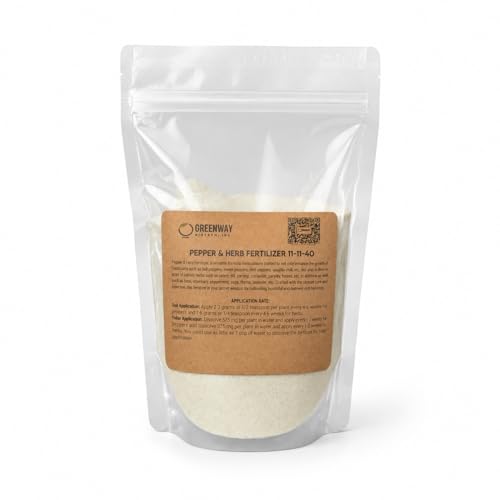
3. Greenway Biotech Pepper & Herb Fertiliser 11-11-40
An ultra-high-potassium powder engineered to crank up capsaicin and essential oils.
This formula is a specialist’s tool. The 11-11-40 ratio — note that massive 40 percent potassium — is designed to drive capsaicin production in hot peppers and essential oil concentration in herbs. Potassium is the nutrient that tells the plant to ripen fruit and build chemical compounds, so this is the fertiliser to reach for when you want ghost peppers that actually blister your tongue. It also contains iron, manganese, zinc, and copper in EDTA-chelated form, meaning those metals stay available to the plant even if your water pH fluctuates between 4 and 9.
Buyers consistently report that this stuff turns things around fast — “saw results within the first couple days of application,” one owner notes, describing how sluggish pepper plants “took right off” after a single feed. The powder is 100-percent water soluble and dissolves completely at room temperature, so it won’t clog drip lines or hydroponic emitters. Because it is super concentrated (0.5 pounds per 100 gallons of water), a 1 lb bag makes 200 gallons of feed solution — enough to last an entire season for a serious grower.
Downsides: it is a powder, so you need a scale or a precise scoop to measure the tiny doses, and at 1 lb the bag is small compared to the 4-5 lb granular options. It is also really intended for the flowering and fruiting stage — you would want a higher-nitrogen feed for the early vegetative weeks.
The Edge It Has
- Ultra-high 40% potassium pushes maximum heat and fruit production
- EDTA-chelated micronutrients prevent pH-related lockout
- 200 gallons of feed from one bag — extremely concentrated
Keep in Mind
- Not a complete all-stage feed — best paired with a veggie-stage grow formula
- Powder requires careful measuring to avoid over-fertilisation
Grab this for: hot pepper fanatics aiming for the hottest possible fruit, especially if you grow superhots like Carolina Reaper or ghost pepper in soil or hydroponics.
skip it if: you only grow mild bell peppers and prefer a single, simple granular feed.
4. Cz Garden 5-10-10 Tomato & Vegetable Fertiliser

A high-phosphorus, high-potassium granular feed designed for the fruiting stage.
Switching to a 5-10-10 ratio at flowering time is a classic chilli-grower move, and this Cz Garden bag delivers exactly that. The 2 percent iron and additional micronutrients address the yellow-leaf issues that often pop up mid-season. The resealable pouch is a small but real bonus — granules stay dry and ready for next use without having to transfer them to another container. Buyers consistently mention that “it has never burned my plants,” which speaks to the gentle, slow-release nature of the formula.
The application is straightforward: sprinkle 1-2 tablespoons per plant around the drip line every two weeks during fruiting and water it in. That low-effort approach is one reason effectiveness — the most-discussed aspect with over 40 mentions — scores so well. Several owners note that it produced “huge tomatoes” and excellent squash, and the same logic applies directly to chilli fruiting.
One thing to know: a few buyers found it pricey for the amount, and it is primarily a fruiting-stage feed — you will want a higher-nitrogen source for early growth. But for the window between first flowers and final harvest, this is a strong, burn-proof option.
Where It Shines
- High phosphorus and potassium support heavy fruit set without burning roots
- Added iron prevents interveinal chlorosis (yellowing between leaf veins)
- Resealable bag keeps granules fresh for next season
The Downside
- Not a complete all-season fertiliser — needs a veggie-stage partner
- Value-for-money opinions are mixed among buyers
Best for: soil and container growers who want a targeted, heavy-fruiting push in the second half of the season without risking root burn.
Not ideal for: hydroponic systems — granules are for soil drench only.
5. Espoma Organic Garden-Tone 3-4-4

A two-bag organic pack that keeps chilli plants fed month after month without synthetic chems.
Espoma has been making organic fertilisers since 1929, and Garden-Tone is their straightforward granular for vegetables and herbs. The 3-4-4 analysis (3% nitrogen, 4% phosphorus, 4% potassium) is lower in nitrogen than many vegetable feeds — that is actually good during fruiting because too much nitrogen pushes leaves, not fruit. With 5% calcium included, it prevents blossom-end rot (the dark, sunken spot on the bottom of fruit) just like the FoxFarm above, but in an organic form listed by OMRI (the Organic Materials Review Institute, which verifies products for certified organic production).
The pack contains two 4 lb bags, giving you 8 lb total for a very reasonable outlay. Owners mention it works “very well for my tomatoes and peppers” and that it significantly improved garden health through the hottest part of the season. One buyer in zone 10b (a very hot climate) noted that vegetables stayed productive from late July into early September — a span when many plants stall.
The trade-off is the smell — this is a natural organic product, and some owners find the odour unpleasant, though it dissipates after a few days. It also needs monthly reapplication, so it is slightly less hands-off than a synthetic slow-release granular.
Why Organic Growers Love It
- OMRI-listed for certified organic production
- Two-bag pack provides 8 lb total — excellent value
- Calcium content helps prevent blossom-end rot naturally
Fair Warning
- Organic odour lingers for a few days after application
- Requires monthly reapplication throughout the growing season
Get this if: you are committed to organic gardening and want a trusted, calcium-rich fertiliser that keeps chillies fruiting steadily.
Pass if: smell sensitivity is a dealbreaker or you prefer a once-and-done synthetic feed.
6. Down To Earth All Natural Fertiliser 4-6-2

A 5 lb bag of organic ingredients that replaces a shelf full of separate soil amendments.
Down To Earth’s 4-6-2 mix is made from fish bone meal, blood meal, feather meal, rock phosphate, langbeinite (a natural potassium-magnesium mineral), greensand, humates, and kelp meal. That is a full-spectrum organic feed in one box — customers note it simplifies gardening by replacing 15-plus separate amendments. The 4-6-2 ratio is a gentle all-purpose blend that supports growth without burning, and the 5 lb size is generous.
Effectiveness is the most-praised quality, and it is easy to see why: reviewers point out it revived pale, flimsy tomato plants within two weeks of application. For chilli plants, the phosphorus (6) and potassium (2) support root development and flowering, while the nitrogen (4) keeps foliage healthy without going overboard. It is OMRI-listed, so it fits organic gardens, and the granular form is as simple as sprinkle-and-water.
The smell is the recurring honest note — organic ingredients like bone and blood meal have a distinct odour that some find unpleasant, though it fades after a few days in the soil. It is an all-purpose mix rather than a chilli-specific high-potassium formula, so for maximum fruiting you might supplement with a liquid bloom booster later in the season.
What Makes It Great
- Single box replaces many individual organic amendments
- 5 lb bag provides excellent coverage for the price
- Gentle enough not to burn, even for container plants
One Catch
- Organic smell is noticeable for a few days
- All-purpose ratio is less potent for fruiting than a high-P-K specialist blend
Perfect for: the organic gardener who wants one simple, high-quality box for tomatoes, chillies, and everything else, and does not mind a temporary earthy odour.
Better options exist if: you want a chilli-specific high-potassium feed for maximum fruit production.
7. TPS Nutrients Pepper Fertiliser

A liquid lifeline for stunted, yellowing pepper plants that need a fast turnaround.
This is the pick for when your chilli plants look sad — droopy, yellow between the veins, dropping flowers before they set fruit. TPS Nutrients made this liquid formula specifically for peppers, and the kelp-enriched base provides a broad spectrum of trace minerals alongside the main nutrients. Owners repeatedly describe how it rescued plants that were “struggling from yellowing, flower drop, and death” and had them “turned green and flowering heavily” within a short window.
The 32 oz bottle is the largest liquid volume in this list, which means more feedings per bottle compared to the 100 ml Growth Technology option above. The biggest praise centres on plant growth and pepper performance — the two most-mentioned aspects. One owner who grows in containers noted it “dramatically improved bell pepper growth, greening, and flowering after a slow start with other fertiliser.”
The honest feedback is the price — a few owners describe it as “just a little pricey.” For a whole garden of chillies, the cost per feeding does run higher than the granular competitors. But for someone who needs to fix a specific problem and wants a liquid that the plant absorbs instantly, the results speak for themselves.
When to Use It
- Fast liquid uptake corrects deficiencies in days, not weeks
- Kelp-enriched formula supports root health and stress recovery
- Large 32 oz bottle covers many feedings
Worth Noting
- Higher per-feeding cost than granular alternatives
- Requires regular mixing and application
Choose this for: reviving struggling pepper plants quickly, especially in containers, or when you want a fuss-free liquid at a generous volume.
pass on it if: budget per feeding is your primary concern.
8. MasterBlend 4-18-38 Tomato & Vegetable Fertiliser
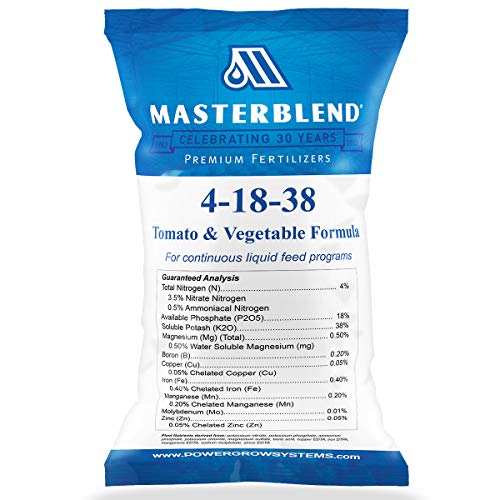
The world-renowned hydroponic formula that soil growers also swear by for chilli yields.
MasterBlend’s 4-18-38 is something of a legend in the pepper-growing community. Originally designed for hydroponics, this 100-percent water-soluble powder is so effective that soil and container growers use it too — mixing it into a watering can for a quick drench. The ultra-high phosphorus (18) and potassium (38) are exactly what chilli plants need from the moment flowers appear, and the complete trace mineral package means you rarely see deficiency symptoms.
Buyers consistently note that “it lasted me over a year” and that it is “super effective for lush and hefty vegetables.” One owner with 30 years of hydroponic experience recommends it highly, and another who uses it in a Kratky method (a non-circulating hydroponic technique) says it grows lettuces and tiny tomatoes all winter. For chillies specifically, the same logic applies — the low nitrogen keeps foliage manageable while the high phosphorus and potassium drive explosive fruiting.
The 16 oz bag is compact, but because it is super-concentrated (you mix a tiny amount per gallon), that small bag goes a very long way. The only note from buyers is that mixability gets some mixed feedback — it dissolves completely, but you do need to stir or shake well, and some first-timers were not expecting a powder instead of a ready-to-use liquid.
Why It’s a Classic
- 4-18-38 ratio is perfectly tuned for fruiting and flowering
- Works in hydroponics, soil, and container systems
- One 16 oz bag can last a whole growing season
One Detail
- Powder form requires thorough mixing — not a ready-to-pour liquid
- Low nitrogen means you need a veggie-stage feed for early growth
Ideal for: hydroponic growers and soil gardeners who want the most effective flowering-stage boost available, especially for superhot peppers.
Not for: gardeners who prefer a premixed liquid they can use straight from the bottle.
9. Cz Garden 4-18-38 Fertiliser (5 lb)

An identical 4-18-38 formula to MasterBlend, but in a 5 lb bag that makes 1000 gallons of feed.
If the MasterBlend above is the classic, this Cz Garden version is the value play with the exact same guaranteed analysis. The 4-18-38 ratio is identical — low nitrogen, high phosphorus, very high potassium — and includes the same suite of EDTA-chelated micronutrients (boron, copper, iron, manganese, zinc, and molybdenum). The key difference is the bag size: 5 lb versus 16 oz, which is a massive volume advantage for anyone with a serious chilli patch.
The company claims this is “greenhouse grade” and warns against agricultural-grade alternatives that leave an oily film on equipment — a meaningful distinction for anyone using drip irrigation or a fertiliser injector. One owner who runs a soaker hose system reports it “dissolves quickly and flows right through” and attributes a record tomato harvest to switching to this formula. For chillies, the same high-potassium approach applies: you use it from flowering onward and watch the fruit pile on.
The honest downside: at 76 ratings it has the thinnest track record on this list, and a couple of large-scale growers found it pricey for the quantity relative to raw salts. But for the home grower, this 5 lb bag is essentially a multi-year supply of the most effective fruiting-stage feed available, at a per-feed cost that undercuts everything else here.
The Big Advantage
- 5 lb bag makes 1000 gallons — unbeatable value per feed
- Identical 4-18-38 ratio and chelated micronutrients as the leading brand
- Greenhouse-grade powder won’t clog irrigation systems
Consider This
- Newer product with fewer total reviews than the established MasterBlend
- Large bag can feel excessive for a small windowsill grower
Buy this if: you have a large chilli garden or multiple hydroponic systems and want the absolute lowest cost per gallon of feed.
Pass if: you grow just one or two plants — the smaller MasterBlend bag will be more practical.
Understanding the Specs
N-P-K Ratio
The three numbers on every fertiliser package stand for nitrogen (N), phosphorus (P), and potassium (K). Nitrogen drives leaf and stem growth, which you want early. Once flowers appear, a higher phosphorus number helps the plant set fruit, and a higher potassium number boosts fruit size, colour, and heat. For chilli plants, look for a middle or last number that is higher than the first — something like 4-18-38 or 5-10-10, not a balanced 10-10-10 that keeps the plant leafy but stingy with pods.
Form: Granules vs Liquid vs Powder
Granules are dry particles you sprinkle on soil — they release nutrients slowly over weeks and are very forgiving. Liquids are ready-to-pour concentrates that plants absorb immediately, perfect for a fast rescue when leaves turn yellow. Powders are water-soluble crystals that you dissolve in a watering can or reservoir — they combine the precision of liquid with the concentrated economy of a dry product. For soil, any form works. For hydroponics, use only powder or liquid that is labelled fully water-soluble to avoid clogging pumps.
Chelated Micronutrients
Beyond the main N-P-K, chilli plants need calcium, magnesium, iron, zinc, and manganese in tiny amounts. “Chelated” means each mineral is wrapped in an organic molecule that keeps it dissolved and available to the plant, even if your tap water is alkaline or your soil pH is off. Without chelation, minerals can lock up in the soil and your plant starves despite there being plenty in the pot. EDTA-chelated iron and zinc are the most common and most effective forms to look for.
Application Frequency
Granular fertilisers are typically applied every 2-4 weeks and watered in. Liquid fertilisers are used more often — sometimes every watering at a very dilute ratio — because the plant absorbs them immediately and they flush out faster. Powders fall in between, often applied weekly or biweekly depending on the dilution. The right frequency depends on your growing medium (soil holds nutrients longer than coco coir or hydro) and the plant’s stage — heavy fruiting demands more frequent feeding than early vegetative growth.
FAQ
What is the best N-P-K ratio for chilli plants during fruiting?
Can I use tomato fertiliser on chilli plants?
How often should I fertilise my chilli plants?
What causes blossom-end rot on chillies and how do I prevent it?
Is liquid or granular fertiliser better for chilli plants?
Can I use a fertiliser with a high first number (nitrogen) on chillies?
Do I need different fertiliser for hydroponic chilli growing?
How do I make my chillies hotter with fertiliser?
Will fertiliser burn my chilli seedlings?
Final Thoughts: The Verdict
For most growers, the best fertiliser for chilli plants is the FoxFarm Happy Frog Tomato & Vegetable Fertiliser because it combines a sound 5-7-3 ratio with calcium for blossom-end-rot prevention and mycorrhizal fungi (beneficial root fungi that help roots absorb water and nutrients) for root health — all in an easy, no-mix granular form that over 600 owners rate at an elite level. If you run a hydroponic system or want the absolute highest fruiting yield, grab the MasterBlend 4-18-38, the multi-decade standard for water-soluble bloom feed. And for pure organic gardening on a budget, the Down To Earth 4-6-2 gives you a 5 lb box of premium organic ingredients that covers the whole season while staying affordable. The honest bottom line: any of these picks will grow better chillies than a generic all-purpose feed — choose the one that matches your growing style and your patience for mixing.
How We Picked
We do not accept paid placement. Every pick is matched to a real buyer and a real use-case; we do not hands-on test units.
Sources & Methodology
Specifications: manufacturer listings and product documentation. Review insights: verified customer reviews, as of July 2026. Pricing: not shown on this page (it changes often); check the current price via the retailer link.
As an Amazon Associate, Lawn Gear Lab earns from qualifying purchases. This does not affect which products we feature.