
Specs are compiled from manufacturer listings and verified buyer reviews and can change over time — please confirm the key details on the product page before buying.
Deadheading roses, snipping fresh basil for dinner, or shaping a bonsai — a single bad cut can crush a stem and invite disease. The right flower pruning scissors make a clean, precise snip every time, keeping your plants healthy and your hands happy through hours of trimming.
I’m Rikta — the founder and writer behind Lawn Gear Lab. This guide is built by comparing the manufacturers’ published specifications and the patterns across verified customer reviews, so you get each pick’s real strengths and trade-offs instead of marketing spin.
Whether you are a weekend gardener or a florist cutting stems all day, the right pair of scissors defines your work. Here is how to choose the best flower pruning scissors for your garden and hands.
Our Picks at a Glance


How To Choose The Best Flower Pruning Scissors
Flower pruning scissors are more delicate than standard garden loppers. You need a clean cut that doesn’t crush the stem, and a tool that fits your hand size for comfortable repeated use. Here is what to look for.
Bypass vs. Anvil Blades
For live, green stems — flowers, herbs, thin branches — a bypass blade is almost always the right choice. Two curved blades slide past each other like scissors, making a clean cut that heals quickly. An anvil blades (one sharp blade meeting a flat edge) tends to crush living stems, which can slow recovery and invite pests. Most of our picks are bypass shears for this reason.
Blade Material and Coatings
High-carbon steel blades hold a razor edge far longer than basic stainless steel. Some models add a non-stick coating (like Teflon or PTFE) so sap and resin wipe off easily instead of gumming up the blades. A titanium coating adds hardness and corrosion resistance, useful if you work in wet conditions. For the sharpest, longest-lasting edge, look for Japanese SK5 steel or similar high-carbon grades.
Handle Comfort and Safety
If you have arthritis, carpal tunnel, or small hands, an ergonomic handle with a soft non-slip grip makes a huge difference over a long pruning session. A safety lock is essential for storing the shears in a pocket or tool bag without risking a cut. Some models offer a stepless (adjustable) handle opening so you can set the grip width to match your hand size exactly.
Quick Comparison
| Model | Best For | Blade Material | Blade Type | Weight | Amazon |
|---|---|---|---|---|---|
| Modern Sprout Pruning Shears★ Best Overall | Everyday detail snipping | High Carbon Steel | Bypass | Lightweight | Amazon |
| CYRUS Blue Floral ShearsFlorist’s Choice | Rose pruning & thorn removal | Stainless Steel | Bypass | 170 g | Amazon |
| Dramm ColorPoint ShearsPocket Powerhouse | Pocket portability & fine cuts | Stainless Steel | Anvil | Lightweight | Amazon |
| PrunePro Garden Scissors | Non-stick precision on delicate stems | German Stainless Steel | Bypass | 0.14 kg | Amazon |
| ARS HP-130DX Pruner | Small hands & heavy daily use | High Carbon Steel | Bypass | 0.13 kg | Amazon |
| TABOR TOOLS K18A Snips | Arthritis-friendly comfort | High Carbon Stainless Steel | Anvil | 0.18 kg | Amazon |
| VOTREK Pruning Shears | Thicker woody stems | Titanium-Coated SK5 Steel | Bypass | 8.32 oz | Amazon |
| Kimura 8″ Pro Scissors | Long-lasting edge retention | Japanese SK5 Steel | Straight | Lightweight | Amazon |
| Saboten Harvesting Shears | Fast repetitive trimming | Fluorine-Coated Steel | Straight | 42 g | Amazon |
In‑Depth Reviews
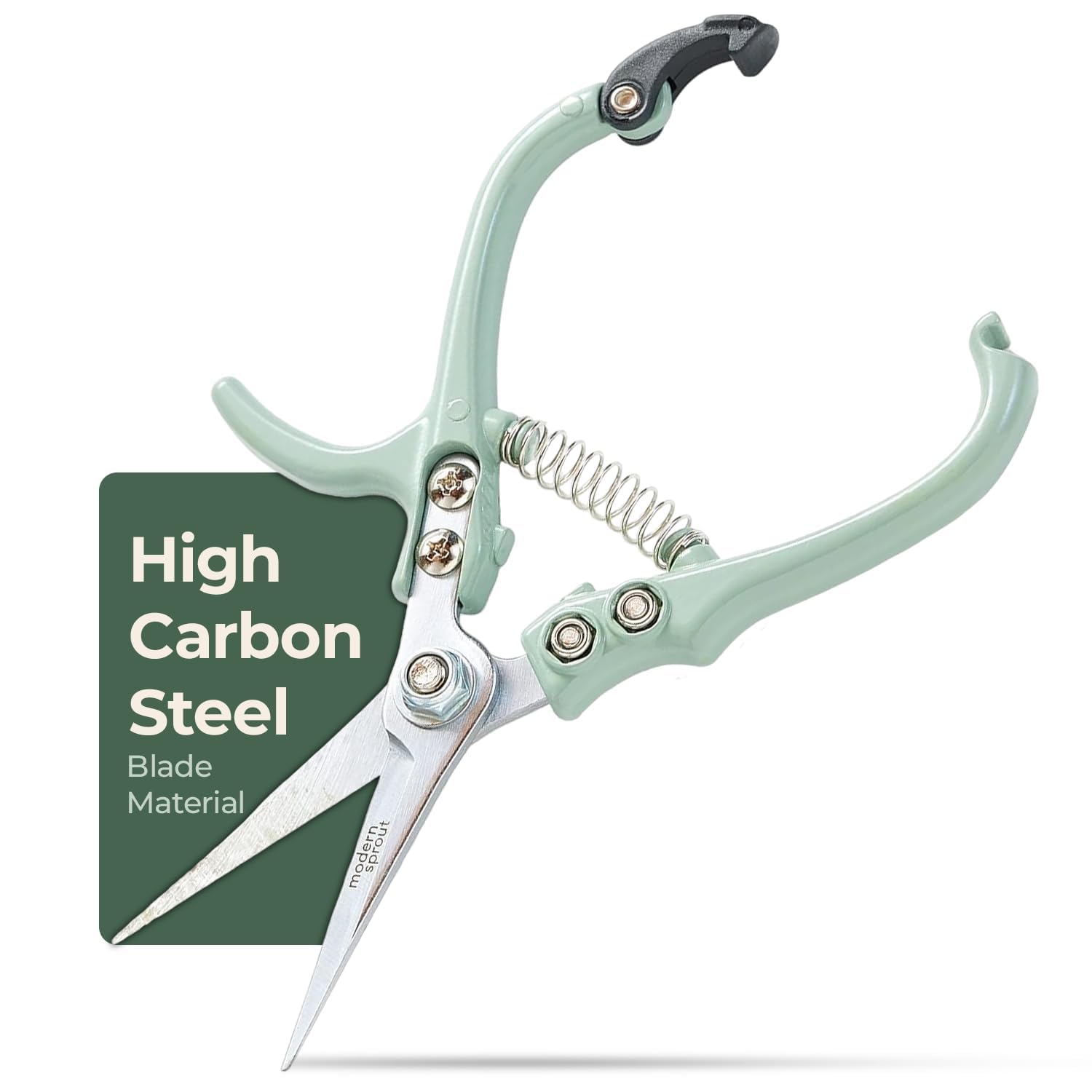
1. Modern Sprout Pruning Shears
Our pick — over 4.5★ from 900+ verified ratings; the strongest balance of quality and price.
The featherweight snip that turns detailed trimming into a satisfying ritual.
These shears are the crowd favorite for a reason — 4.8 stars across nearly a thousand owners, and the praise is overwhelmingly for quality and sharpness. The high-carbon steel blades are rust-resistant and needle-nose fine, meaning you can reach into a dense herb pot or a tangled rose bush and snip exactly one stem without bruising the neighbor. The ergonomic aluminum handles keep the weight down so your hand does not ache after a long deadheading session.
The easy-lock safety latch clicks shut for storage — no more stabbing your fingers when you reach into a drawer. Buyers report that they handle thick stems well despite their delicate look, and the design works for both left and right hands. “LOVE THIS little pruner,” one owner wrote about snipping herbs and slender-stemmed blooms. “Perfect for herb snipping, deadheading slender-stemmed spent blooms while leaving buds on same stem intact.”
If you want one pair of scissors that does flowers, herbs, bonsai, and bouquets without complaint, this is it. The only limitation is that the fine tip is not meant for thick woody branches — but that is not what it is built for.
Why it wins
- Needle-nose high-carbon steel tip offers pinpoint precision on delicate stems
- Ergonomic aluminum handles keep the weight low and reduce hand fatigue
- Safety lock and ambidextrous design make it safe and easy for anyone to use
A real caveat
- Fine tip is not intended for thick woody branches or heavy-duty pruning
Your daily snipper: Reach for these for herbs, flowers, houseplants, and any stem finer than a pencil — they make every cut feel easy and precise.
Who should skip this: If you need to regularly cut branches half an inch thick or more, you will want a heavier pruner with a larger blade.
2. CYRUS Blue Stainless Steel Floral Shears
Rose lovers, this one has a built-in thorn stripper that saves you real time.
The defining trick of these shears is the hole integrated into the blade — you insert a thorn and slide it off, cleaning stems in one motion without swapping tools. Beyond that a neat extra, the stainless steel blades are electroplated to resist rust, and the three-finger ergonomic handle (TPR and PP resin) gives you a non-slip hold even with sweaty hands. Owners mention the scissors are “nice and sharp and work well,” and several note they are comfortable enough for arthritic hands.
These are 7.5 inches long and weigh 170 grams — substantial enough for larger stems but still compact for detailed work. The bypass blade design keeps cuts clean on live stems. The recurring praise is comfort: the large handles provide ample finger room, and people with small hands find them easy to control. One owner who used them after hand surgery called them “the best garden scissors ever.”
Snip and strip in one: If you work with roses or other thorny plants regularly, the integrated thorn remover alone makes these worth picking up. They are comfortable, sharp, and built to last through many seasons.
A note on fit: These work best for people with smaller to average hands — if you have very large hands, the finger holes may feel snug.
Grab these if: You prune roses often and want a single tool that cuts stems and strips thorns in one go — plus the comfortable grip makes extended pruning sessions much easier on your hands.
Look elsewhere if: You need a very small, ultra-lightweight snip for precision bonsai or micro-trimming — the blade is slightly shorter and wider than needle-nose shears.
3. Dramm ColorPoint Stainless Steel Compact Pruning Shears
Tiny enough for a pocket, sharp enough for professional florist work.
These compact shears have a 2-inch blade that makes them ideal for quick snips on the go. The stainless steel is corrosion resistant, and the anvil blade design is suitable for cutting flowers and herbs. What wins people over is the balance — it feels substantial but is light enough to forget in your pocket. “The best small pruning sheers I’ve ever had,” customers note. “So sharp and compact, perfect for flowers.”
The locking mechanism slides easily, and the fine point is excellent for deadheading and orchid root trimming. Owners note that the shears hold up well after months of daily use with no rust and no pivot looseness. They are available in six bright colors if you want to keep one pair for herbs and another for flowers. The limitation is the cutting width of 0.25 inches — this is strictly for fine stems, not heavier branches.
Your pocket-sized snipper: If you wander the garden grabbing snips as you go, these vanish into a pocket and come out ready for precise, clean cuts on anything thin and green.
Best for: Gardeners who want a go-anywhere shear for flowers, deadheading, and herbs — especially if you have small hands or need a comfortable, lightweight tool for arthritis.
Not for: Cutting thick, woody stems or branches — keep these for stems 0.25 inches or less.
4. PrunePro Garden Scissors
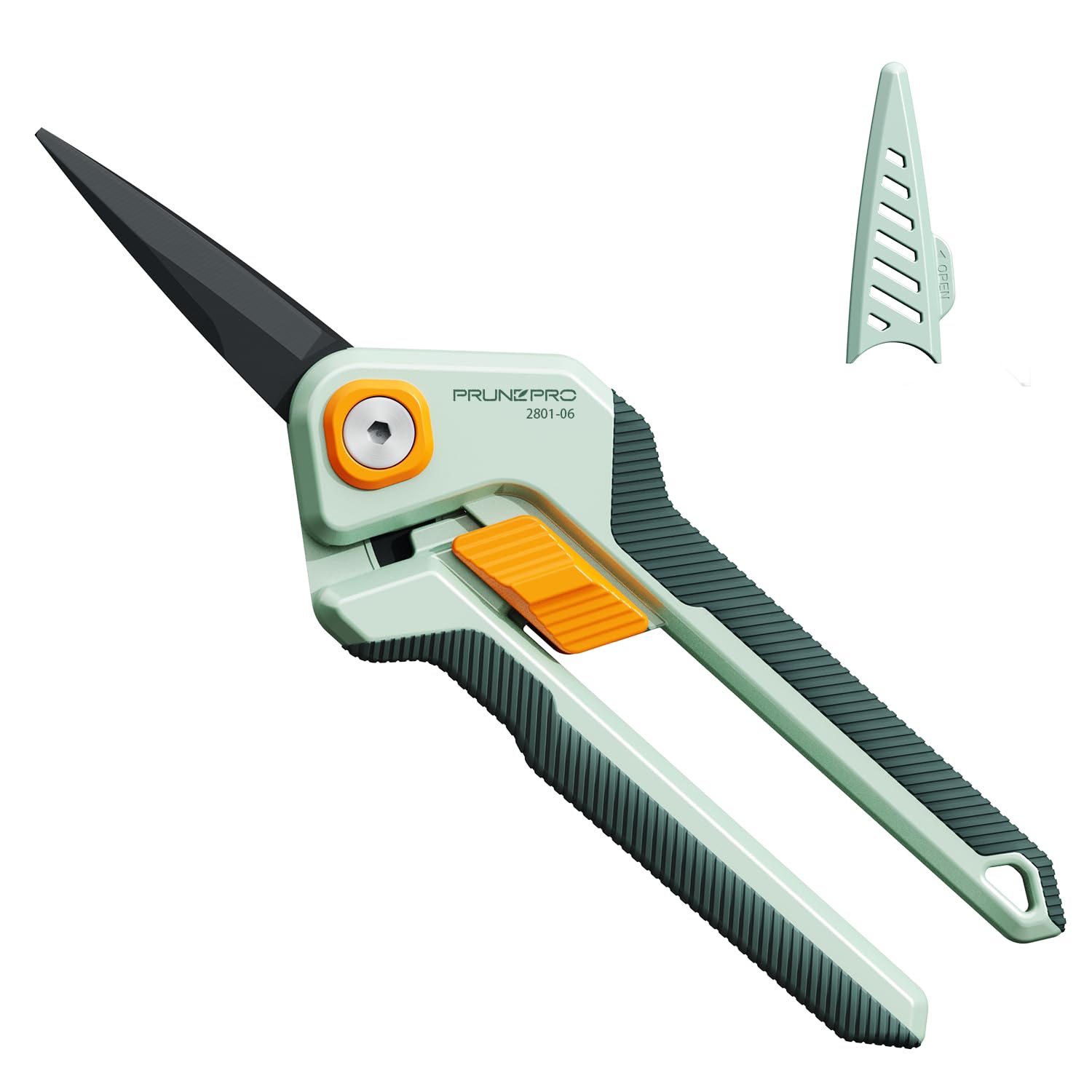
German steel and a Teflon coat mean sap slides right off.
The blades here are high-carbon 1.4031 German stainless steel with a Teflon coating, so resin, sap, and sticky plant residue do not build up. This makes cleanup as simple as a quick wipe. The micro-tip snips let you make precise cuts in tight spaces — perfect for bonsai, vegetables, and delicate flower stems. The high-tension spring reduces the effort needed per snip, and the ergonomic polypropylene handles help prevent hand fatigue during longer sessions.
Buyers praise the sharpness and the clean cuts, noting that the lock mechanism slides smoothly and stays put. “These pruners are very sturdy and easy to use in my garden,” one owner wrote. “They are very sharp! And get the job done fast.” The important caveat is that these are designed specifically for delicate stems and thin green growth — do not use them on thick woody branches or the blades may be damaged.
What stands out
- Teflon-coated blades resist sap buildup and simplify post-use cleaning
- Micro-tip snips allow precision cuts in tight spaces without damaging surrounding stems
- High-tension spring reduces hand effort for repetitive snipping
A note on strength
- Not intended for thick woody branches — use only on delicate stems and thin green growth
Reach for these if: You hate spending time cleaning sticky sap off your shears after every pruning session — the non-stick Teflon coating is a standout for frequent use.
Skip them if: You need a single tool that handles both fine stems and woody branches; these are specialized for lighter work.
5. ARS HP-130DX 7-Inch Ideal Light Pruner

A legend among florists that fits small hands like a glove and stays sharp for years.
At 0.13 kg with a 7-inch length, this ARS pruner is made for people with smaller hands — the soft PVC handles are narrow and comfortable, and the precision-ground high-carbon tool steel blade keeps a razor edge for years. The hard chrome plating resists rust, so it holds up in humid garden conditions. Buyers are emphatic about the longevity: one owner reported using theirs for three years cutting flowers for weddings and events, and the shears remained “still sharp and my favorite to use.”
The bypass blade is single-bevel and cuts branches up to half an inch cleanly. The safety latch is simple and does not interfere with routine use. What makes this a specialist choice is the hand orientation — it is a right-handed tool, so left-handed users should look for a different option. The thickness of the blade is greater than ARS’s premium models, but the trade-off is a more affordable price and excellent everyday performance for the home gardener or florist.
Small hands, big performance: If standard pruners feel bulky and awkward in your grip, this lightweight ARS model disappears into your palm and cuts beautifully for years.
Your best bet if: You have small hands and want a pruner that fits naturally — plus the hard chrome blade resists rust even in wet conditions.
Not ideal for: Left-handed users (this model is right-handed only) or anyone needing a tool for branches thicker than half an inch.
6. TABOR TOOLS K18A Straight Pruning Shears
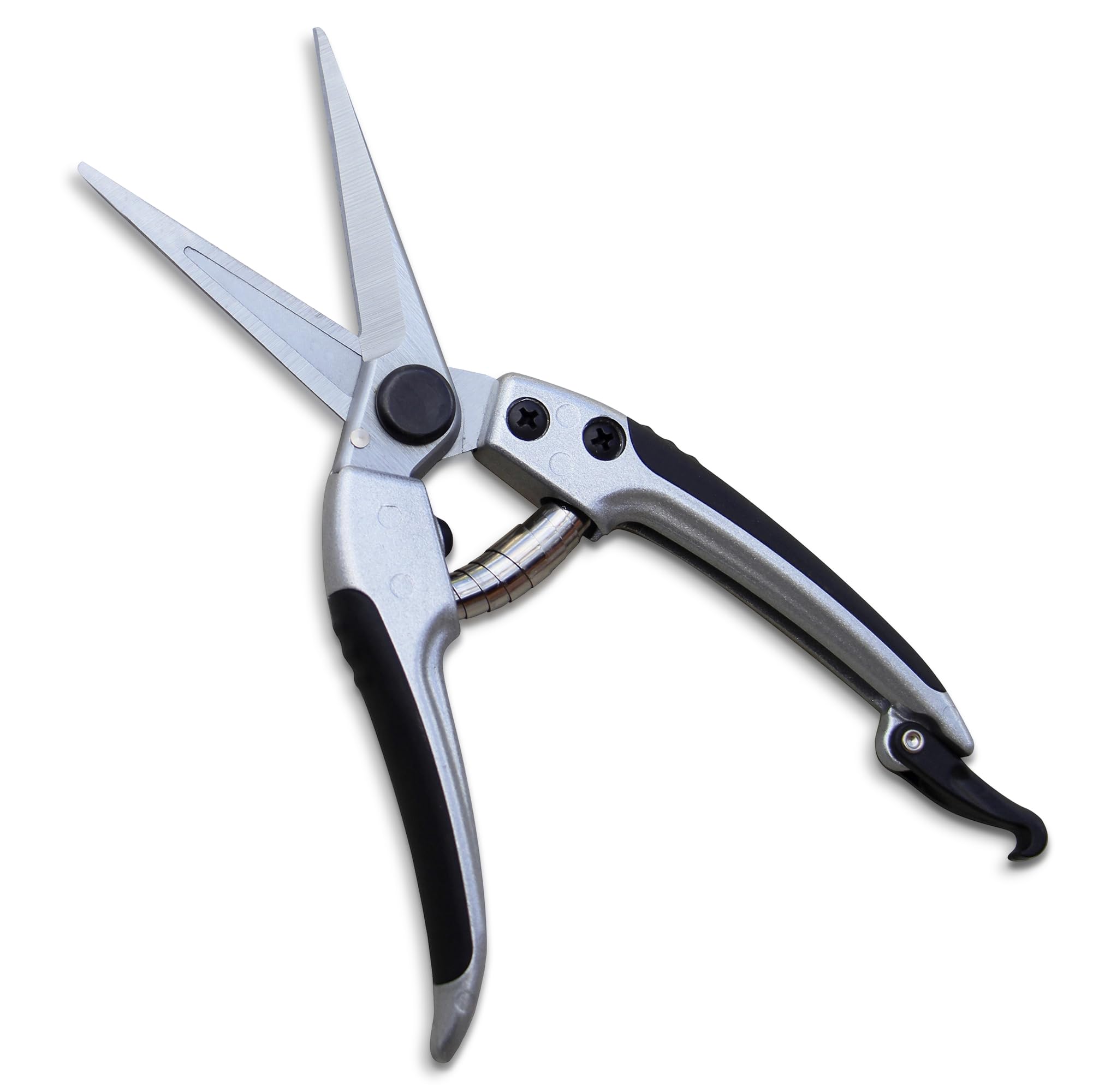
Arthritis-friendly design that lets you snip all afternoon without hand pain.
The K18A uses an anvil blade — the sharp edge meets a flat surface — which makes it notably easier to close with less hand strength than a bypass design. This makes it a strong choice for anyone with arthritis, carpal tunnel, or limited grip strength. The high-carbon stainless steel blades are non-stick, so cuts stay smooth even on thicker stems. The spring returns the shears open automatically, and the safety clip at the end of the upper handle makes one-handed locking simple.
Reviewers point out that the previous version lasted over eight years, and the ergonomic rubber grip on the aluminum handle is comfortable for extended use. The straight Japanese-style blade gives you a long reach into plants for precise snipping. The anvil design does mean a slightly higher risk of crushing live green stems compared to a bypass, so these are best suited for harvesting, deadheading, and cutting thicker stems where a clean crush is less critical.
What makes it special
- Anvil blade design requires less hand strength for cutting — ideal for weak or arthritic hands
- Non-stick high-carbon stainless steel resists sap buildup and stays sharp
- One-handed safety clip with comfortable spring return for efficient repetitive use
A design trade-off
- Anvil blade is more likely to crush live green stems than a bypass design; best for harvesting and deadheading
Reach for this if: You have arthritis or limited hand strength and want a pruner that opens easily and cuts with less effort — the anvil design and spring return make a real difference.
Look elsewhere if: You primarily snip live, delicate flower stems where a clean bypass cut is critical for plant health.
7. VOTREK Pruning Shears
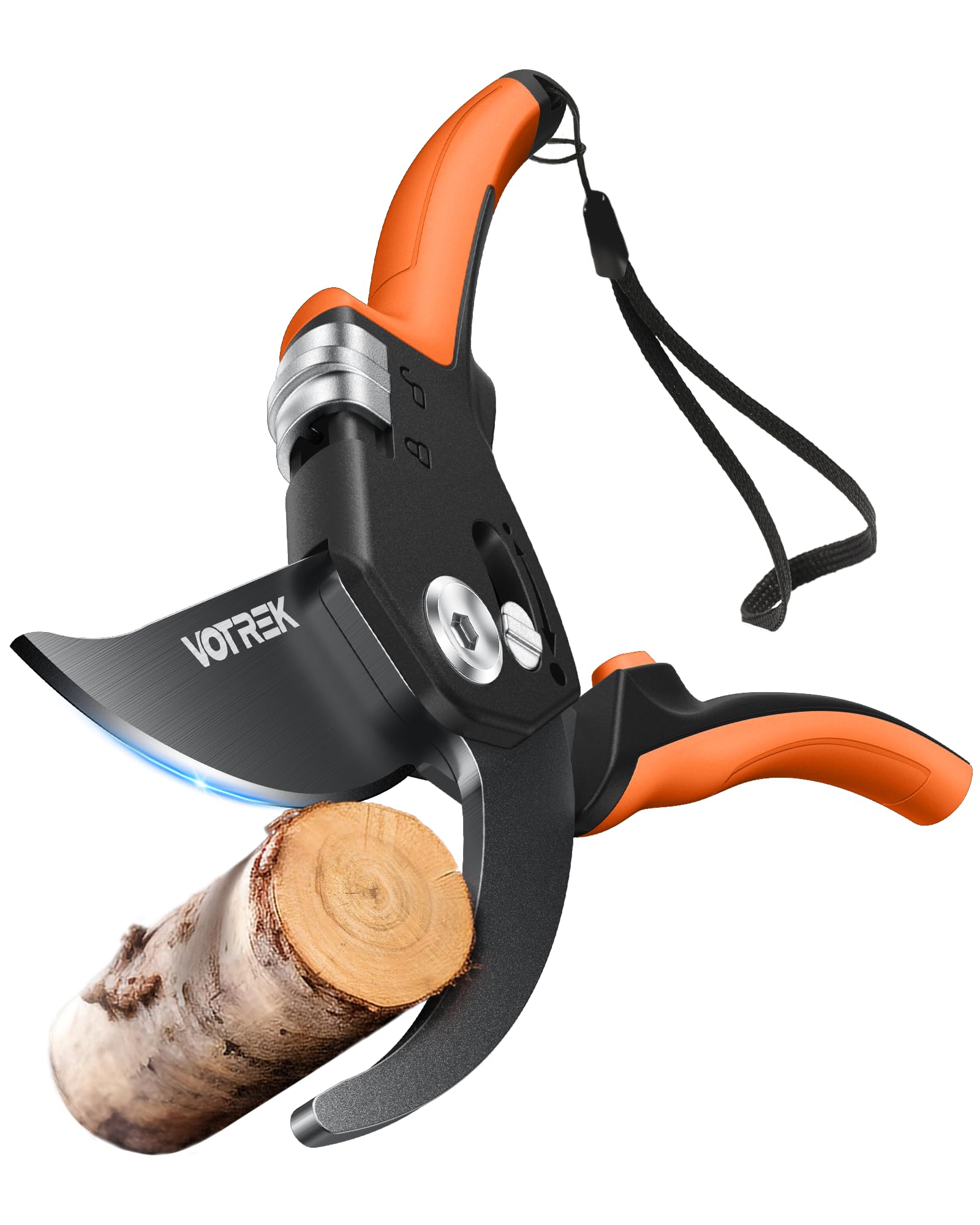
A titanium-coated beast that chews through inch-thick branches without effort.
These are for the gardener who does not just snip flowers — you also prune shrubs, fruit trees, and vines. The SK5 high-carbon steel blades have a titanium coating for extra hardness and corrosion resistance, and the cutting width is a full inch. That is far more than any other pick here, meaning these can handle rose canes and small branches that would ruin a lighter pair. The bypass blade keeps cuts clean on live wood.
The patented stepless handle opening can be adjusted to fit any hand size, so you are not stuck with a fixed grip width. The TPR thermoplastic rubber handles are comfortable, and the thumb safety lock is easy to engage one-handed. At 8.32 ounces, these are the heaviest shears on this list but still manageable. Shoppers say they are “VERY sharp” and easy on hands during use. The enclosed spring is a nice touch — it will not pop out and get lost.
A step up in power: If your garden includes both flowers and shrubs, these bridge the gap — they are sharp enough for delicate stems but strong enough for woody branches up to an inch thick.
Choose this if: You need one pruner for mixed tasks — flowers, vines, and small branches — and you value the adjustable handle opening and titanium-coated toughness.
Think twice if: You only prune delicate flowers and herbs — the extra weight and power are overkill for fine snipping.
8. Kimura 8″ Pro Pruning Scissors

Japanese SK5 steel so sharp and tough you will barely ever need to resharpen it.
The blades here are forged in Japan from high-carbon SK5 steel, heat-treated to 59 HRC (Rockwell Hardness C — a standard measure of steel hardness). That makes the edge exceptionally durable — owners say frequent sharpening is simply not necessary. The PTFE coating reduces friction so the blades glide through plants without sap building up and causing rust. The aluminum handles are lightweight and coated in non-slip vinyl, which gives you control even with damp or sweaty hands.
These scissors cut up to 15 millimeters (about 0.6 inches), so they handle hardy stems and even blackberry canes. Buyers call them “extremely sharp” and note they are “easy on stiff hands.” The locking strap is quick — a light push open up, a thumb push locks. The lifetime warranty is a strong signal of confidence. The only real catch is the price: you pay more than for basic shears, but owners generally say the build quality and edge retention justify it.
Why it is worth more
- Japanese SK5 steel (59 HRC) delivers an edge that stays sharp far longer than standard stainless
- PTFE non-stick coating prevents rust and sap buildup, keeping cuts smooth
- Non-slip vinyl-coated aluminum handle reduces fatigue on stiff or arthritic hands
The honest trade-off
- Premium price — you pay for the Japanese steel, lifetime warranty, and long-term durability
Invest in this if: You want a long-term tool that barely needs sharpening and feels great in the hand — the SK5 steel and PTFE coating make every snip smooth and easy.
Pass on it if: You only prune once a month and do not need the premium edge retention or lifetime warranty — a simpler pair will serve you fine.
9. Saboten Japanese Harvesting Shears

A magnetic repulsion mechanism means no spring to wear out, ever.
Instead of a metal spring that can fatigue or pop off, these Saboten shears use built-in magnets that push the handles apart after every cut. The result is a smooth, consistent rhythm that is ideal for repetitive harvesting — think snipping a whole row of herbs or deadheading a bucket of flowers. The fine angled tip slips between leaves and buds to reach tight spots, and the slim 42-gram frame is the lightest on this list, making it nearly forgettable in your hand.
The fluorine coating on the Japanese stainless steel blades resists sap and resin buildup, so cuts stay smooth and cleanup is fast. Heat treatment keeps the edge crisp and minimizes stem crushing. The cushioned, non-slip handles absorb shock and reduce wrist pressure. Buyers report they are “extremely sharp” and a “must-have for bonsai, small trees, veggies, fruits.” One professional florist who used them daily for a year called them “the best shears I’ve ever had.” The main caution: these are tune for delicate stems, not thick woody branches. Some users also note the blade tip can chip under very heavy use over time.
Fast and fluid: The magnetic action gives these a unique feel — you can snip rapidly without fighting a spring, and the angled tip makes tight-spot trimming a breeze.
Perfect for: Florists, bonsai enthusiasts, and anyone who does high-volume snipping of delicate stems — the magnetic action and featherlight weight reduce fatigue dramatically.
Keep in mind: These are not for thick woody branches; the fine tip is best on stems, herbs, and flowers. Handle with care to avoid chipping the blade tip under extreme use.
Understanding the Specs
Bypass vs. Anvil Blades
Bypass blades work like scissors — two curved edges slide past each other for a clean cut that heals quickly on live stems. This is the standard for flowers and herbs. Anvil blades have one sharp edge that closes onto a flat surface, crushing the stem in the process. Anvil designs require less closing force, making them easier on weak hands, but the crushed stem can slow plant recovery. For most flower and herb pruning, bypass is the better choice.
Blade Material and Coatings
High-carbon steel (like SK5 or German 1.4031) holds a sharp edge far longer than basic stainless steel. A non-stick coating (Teflon, PTFE, or fluorine) prevents sap and resin from sticking to the blade, which keeps cuts smooth and makes cleanup quick. Titanium coatings add hardness and corrosion resistance. Hard chrome plating also resists rust but does not add edge retention. For the longest-lasting sharpness, Japanese SK5 high-carbon steel is the premium choice.
Handle Design and Ergonomics
Handles are made from aluminum, steel, plastic, or a combination. Aluminum is lightweight; steel is stronger but heavier. A non-slip rubber or vinyl coating improves grip and reduces hand fatigue. For arthritis or carpal tunnel, look for ergonomic handles with a wider grip and a low-closing-force design. Some models offer a stepless (adjustable) handle opening so you can set the grip width to exactly match your hand size. A safety lock is essential for pocket or tool-bag storage.
Weight and Size
Lightweight shears (under 100 grams) are ideal for extended snipping sessions and fine work. Heavier models (150 grams and up) offer more cutting leverage and are better for thicker stems. Look for a fine, needle-nose or angled tip if you need to reach into tight spots between leaves and buds. A straight blade is easier for harvesting and general snipping. Your choice depends on whether you prioritize portability and comfort or cutting power.
FAQ
Can I use flower pruning scissors on thick woody branches?
How do I clean and maintain my pruning shears?
What does a bypass blade mean?
Are anvil shears bad for flowers?
What is the difference between high-carbon steel and stainless steel shears?
Do I need a specific pair for left or right-handed use?
How often do I need to sharpen pruning shears?
What is the ideal weight for flower pruning shears?
Final Thoughts: The Verdict
Across the board, the best flower pruning scissors winner is the Modern Sprout Pruning Shears because it combines needle-nose precision, a comfortable lightweight aluminum handle, and rust-resistant high-carbon steel at a reasonable price — backed by an overwhelming number of very satisfied owners. If you want a built-in thorn stripper for rose work, grab the CYRUS Blue Floral Shears. And for ultralight, high-volume snipping with a unique magnetic mechanism, the Saboten Japanese Harvesting Shears is the one to reach for.
How We Picked
We do not accept paid placement. Every pick is matched to a real buyer and a real use-case; we do not hands-on test units.
Sources & Methodology
Specifications: manufacturer listings and product documentation. Review insights: verified customer reviews, as of July 2026. Pricing: not shown on this page (it changes often); check the current price via the retailer link.
As an Amazon Associate, Lawn Gear Lab earns from qualifying purchases. This does not affect which products we feature.