
Specs are compiled from manufacturer listings and verified buyer reviews and can change over time — please confirm the key details on the product page before buying.
The problem with a garden bed is that everything else wants what you planted. Birds, bugs, rabbits, and a sudden frost can undo a season in a couple of hours. You need a barrier that handles all of them without turning your raised bed into a sweat lodge or blocking the rain. Which cover actually does that without a fight?
I’m Rikta — the founder and writer behind Lawn Gear Lab. This guide is built by comparing the manufacturers’ published specifications and the patterns across verified customer reviews, so you get each pick’s real strengths and trade-offs instead of marketing spin.
From ultra-fine mesh that stops Japanese beetles to thick frost blankets that protect down to 28 degrees, this breakdown of the best garden bed covers helps you match the right material to your specific pest or weather problem.
Our Picks at a Glance


How To Choose The Best Garden Bed Covers
The first decision is what you are protecting against. A net that keeps birds out of your blueberries has a completely different weave than a frost blanket that traps ground heat for a cold snap. If you use a bug net on a freezing night, you get frost damage. If you throw a thick frost cloth over tomatoes in July, you cook them. Pick your primary enemy first, then the material follows.
Mesh Density: The Hole Size Determines the Pest
Mesh is measured in holes per inch. A coarse net (roughly ¼-inch holes) stops birds and deer but lets cabbage moths and flea beetles right through. An ultra-fine mesh — around 0.8mm x 0.8mm or 80 mesh per inch — stops tiny pests, including aphids and thrips, while still letting air and water pass. The trade-off is that very fine mesh reduces a small amount of light, usually fine for leafy greens but note for full-sun crops like tomatoes or peppers.
Frost Cloth Weight and Temperature Rating
Frost blankets are rated by weight in ounces per square yard. A lighter fabric (around 0.5 oz/sq yd) offers protection down to about 28°F but lets more light through. Heavier fabrics (1.5 oz/sq yd and up) can handle harder freezes but block significantly more light, so you cannot leave them on for more than a few days. The real-world number to look for is the lowest temperature the manufacturer claims — some stop at 28°F, while others claim to hold warmth down into the low 20s.
Kit vs. Flat Sheet: Do You Need Support?
A flat sheet of netting or frost cloth draped directly over plants works for low-growing crops. For taller plants — tomatoes, peppers, trellised beans — you need hoops to keep the fabric from crushing leaves and stems. Kits that include fiberglass or steel hoops, connectors, and clips simplify setup, but the durability of those hoops varies widely. Flimsy poles sag under wet netting, so check the pole diameter and material (fiberglass resists rust longer than coated steel).
Quick Comparison
| Model | Best For | Material | Size (LxW) | Mesh / Weight | Amazon |
|---|---|---|---|---|---|
| ANPHSIN 10x12ft★ Best Overall | Bug-proof patio screens | Polypropylene (PP) | 144″ x 120″ | Ultra-fine / 33% shade | Amazon |
| YFFSIDMY 10x20ftBudget Champion | Season-wide freeze defense | Polypropylene | 10ft x 20ft | 0.9 oz/sq yd | Amazon |
| KLEWEE 10x50ftBest For Large Beds | Large-scale pest exclusion | Polyethylene (PE) | 590.5″ x 118.1″ | 0.8mm mesh | Amazon |
| AlpineReach 10x30ft | Hard-freeze survival | Polypropylene | 10ft x 30ft | 1.2 oz/sq yd | Amazon |
| RIFNY 2-Pack 10x33ft | Two-bed coverage | Polyethylene (PE) | 396″ x 120″ | 0.04in mesh | Amazon |
| WYRJXYB Mesh + Hoop Kit | All-in-one raised bed system | PE / Steel hoops | 10ft x 30ft | 0.8mm x 1mm mesh | Amazon |
| Monirsen Hoop + Net Kit | Tailored grow tunnels | PE / Fiberglass hoops | 360″ x 120″ | 0.8mm x 1mm mesh | Amazon |
| Ohuhu 8x4x1ft Bed + Cover | All-in-one planter and greenhouse | Galvanized steel / PE cover | 97″ x 50″ | PE cover, 4 doors | Amazon |
In‑Depth Reviews
1. ANPHSIN 10x12ft Strong PP Nanocomposite Mosquito Net
Our pick — over 4.5★ from 600+ verified ratings; the strongest balance of quality and price.
The crowd-pleaser that seals out bugs without sealing out the breeze.
This 10x12ft netting earns top marks because it solves the two biggest frustrations with garden covers: poor airflow and flimsy material. The upgraded nanotechnology polypropylene (PP) feels noticeably tougher than standard mesh — buyers report it held up for a full year when stapled to a porch frame. It still lets rain and air through, and the 33% shade rating means it takes the edge off harsh afternoon sun so tender leaves do not scorch.
At just 1.2 pounds, it is light enough to drape directly over a raised bed or a row of tomatoes without crushing stems. That same light weight means it can tangle during setup, and a stiff wind will lift it if you do not anchor the edges with soil or stakes. Compared to the KLEWEE net, which is 4.1 times longer at 590.5 inches, this ANPHSIN is the compact, ready-to-go option for a standard bed without leftovers you have to fold away.
The review pages sum it up: “Great row-cover; sunlight and water penetrate easily.” The fine weave stops Florida mosquitoes and keeps cats contained on a patio while remaining nearly invisible from the street. For the gardener who wants one simple, durable sheet that works across bugs, birds, and breeze, this is the one.
Why It Wins
- Tear-resistant nano-PP outlasts standard mesh
- 33% shade reduces heat stress on delicate plants
- Near-transparent from a distance — keeps the view
Watch For
- Tangled during first setup; needs patient unfolding
- Lightweight means it lifts in strong wind unless anchored
Who grabs this: Anyone with a raised bed or patio who wants a tough, see-through bug barrier that also blocks a bit of sun.
The trade-off: At 10x12ft, it is a moderate size — if you need to cover a long row of crops, the KLEWEE 50-foot roll covers more ground.
2. YFFSIDMY Plant Covers Freeze Protection 10x20ft Frost Cloth
A frost blanket that earns its keep in wind, ice, and dog traffic.
This 10x20ft cloth is built around a simple idea — thicker polypropylene (0.9 oz/sq yard) that can take a beating. And owners put it through a lot. One buyer in a Houston “winter” reported it “withstood heavy winds, dogs, ice, and rain” while protecting plants with only bricks holding the edges. The breathable non-woven fabric lets light and air reach the soil, so you are not smothering the plants while shielding them from frost.
The primary praise — plant protection (46 mentions) and effectiveness (40 mentions) — lines up with the real-world trials. It covers up to 200 square feet, so a single sheet can protect an entire raised bed or a row of strawberries. It is not 100% freeze-proof; one owner noted it did not protect sub-tropical plants during a hard freeze, which is a fair caution for deep-cold climates. But for typical spring and fall frosts in the 28°F-and-above range, it does the job without the bulk of heavier blankets.
Weighing 1.26 pounds, it is slightly heavier than the ANPHSIN net (the frost cloth is about 5% more in weight), which helps it stay put better in gusts. It doubles as a summer shade cloth when you flip the season, making it a true two-season cover.
Best For
- Withstood heavy winds, dogs, ice, and rain — tough build
- Covers 200 sq ft in one lightweight piece
- Works as both frost cloth and summer shade cover
At The Margin
- Thin material; some owners wanted heavier for deep freezes
- Windy days make it hard to lay flat without extra anchors
Reach for this if: You need a versatile winter-summer cover that survives real weather (wind, ice, pets) without costing as much as a premium blanket.
Think twice if: You live where temperatures drop into the teens for days at a time — you likely need a thicker 1.2 oz/sq yd cloth like the AlpineReach below.
3. KLEWEE 10 x 50 FT Garden Mesh Netting
A 50-foot roll that gives you enough netting to cover a whole season’s planting.
If you have multiple raised beds, a long row of blueberries, or a vineyard, the KLEWEE 10x50ft net is the volume play. The ultra-fine mesh is 0.8mm x 0.8mm (80 holes per inch), so it stops birds, Japanese beetles, and even tiny pests like thrips while letting sunlight and rain pass through without removal. Owners mention it works as a “great row-cover” that lets you check on growth without lifting the fabric.
The material is polyethylene (PE) stabilized for UV resistance, which means it survives a full season of sun without turning brittle. It is tough enough to reuse year after year, and lightweight enough to not damage plant buds when draped directly. At 590.5 inches long, it is 4.1 times the length of the ANPHSIN net, giving you the flexibility to cut custom pieces for each bed. The white color reflects some heat, which helps in hot climates.
One recurring note from owners: the material, while strong, is thin and can snag on rough edges. You will want to use clips or stones to secure it rather than staples that might puncture the weave.
The big roll edge: Perfect for covering a long row of crops or multiple beds without buying multiple small sheets.
A practical tip: The 0.8mm mesh is tight enough to stop Japanese beetles but still lets pollinators access small flowers — a rare balance.
Grab this for: Large gardens, berry patches, or any setup where you need netting in bulk and want to cut custom sizes.
The limit: At 1.01 kg (about 2.2 lbs), it is lightweight but can tangle if you do not store it rolled properly between seasons.
4. AlpineReach Plant Covers Frost & Sun Protection 10 x 30 ft
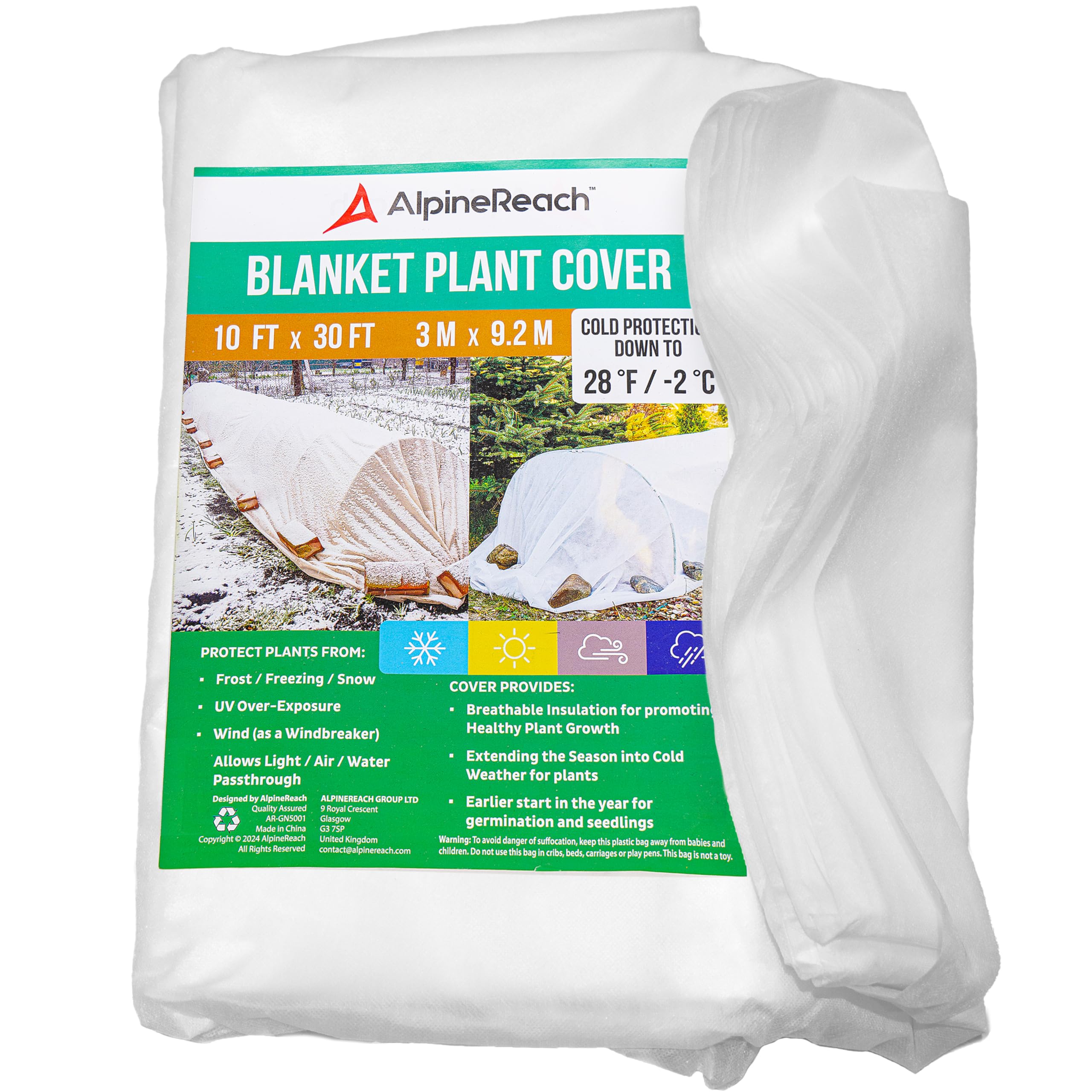
A thicker 1.2 oz/sq yd blanket for the nights when birds are not the enemy — the freeze is.
This is the cover you roll out when the forecast hits 28°F or lower. At 2.46 pounds, it is nearly twice the weight of the YFFSIDMY frost cloth, and that mass translates into real cold protection. One owner in Texas used it during a week-long stretch of single-digit temperatures — the fabric kept frost and snow off Indian Hawthorns, and the plants stayed green. Another in Wyoming used it with wire frames to protect tulips and roses from 8 inches of wet snow.
The plant protection praise (58 mentions) is the highest count across any aspect in the entire garden cover category here. Quality (34 mentions) follows close behind. The fabric is durable enough to handle thorny rose canes without tearing, according to one owner. It also provides UV sun scorch protection and acts as a windbreaker, giving you three layers of defense from a single sheet.
The main trade-off is material thickness — a few buyers wanted a heavier gauge for extreme cold. At 1.2 oz/sq yd (ounces per square yard, a measure of fabric weight), it balances two needs: thick enough to protect against hard freezes, yet light enough to let sunlight reach your plants during short-term coverage.
What Stands Out
- 58 owners praise its plant protection — the top count in this category
- Survived single-digit freezes and wet snow without tearing
- Also shields from UV scorch and wind stress year-round
The Nuance
- A few found it thinner than expected; not the heaviest industrial-grade blanket
- At 10x30ft, you may need to cut for smaller beds
Pick this if: Your winters bring hard freezes, heavy snow, or prolonged cold — this blanket has the weight and owner-proven track record to handle it.
skip it if: Your “cold” season rarely dips below freezing; the YFFSIDMY cloth covers the same ground at a lower weight and cost.
5. RIFNY Garden Netting for Raised Beds, 2 Pcs 10x33Ft

Two large nets for the price of one — ideal for separating beds by pest risk.
This 2-pack gives you two 10x33ft nets, and the ultra-fine mesh (0.04in openings) creates a tight barrier that stops cabbage moths, squirrels, and chipmunks. Bird protection is the top praise (67 mentions), and owners note the weave is tighter than expected for the price. The oblong hole construction lets air and water pass while blocking dust and small insects — you can water right through the fabric without lifting it.
One owner in Florida reported it kept the garden productive despite aggressive local pests, calling it “the best netting found so far.” The material is polyethylene (a durable plastic) stabilized for reuse year after year, but durability gets mixed feedback — some owners note it stretches and tears over time, especially after a full season of sun and hail. One review described the material as almost “self-healing” when snagged, meaning the fibers move apart rather than rip, which is a unique resilience for a thin net.
Because you get two full-size nets, you can run one as a floating row cover for leafy greens and the other as a hooped tunnel for tomatoes, all from a single purchase.
The 2-pack advantage: Covers twice the area of a single roll, so you can rotate crops without buying more netting.
One owner’s experience: “Kept the bugs out of my veggies” despite heavy cabbage moth pressure — the mesh density does the work.
Best for: Gardeners with two separate beds or a long row that needs more than one net — the twin pack saves you from buying a second roll.
Know before you buy: The polyethylene mesh can sag or stretch in high heat; plan to replace after 1-2 seasons of heavy use.
6. WYRJXYB Garden Mesh Netting Kit (10x30Ft Net + 6 Hoops + Clips)
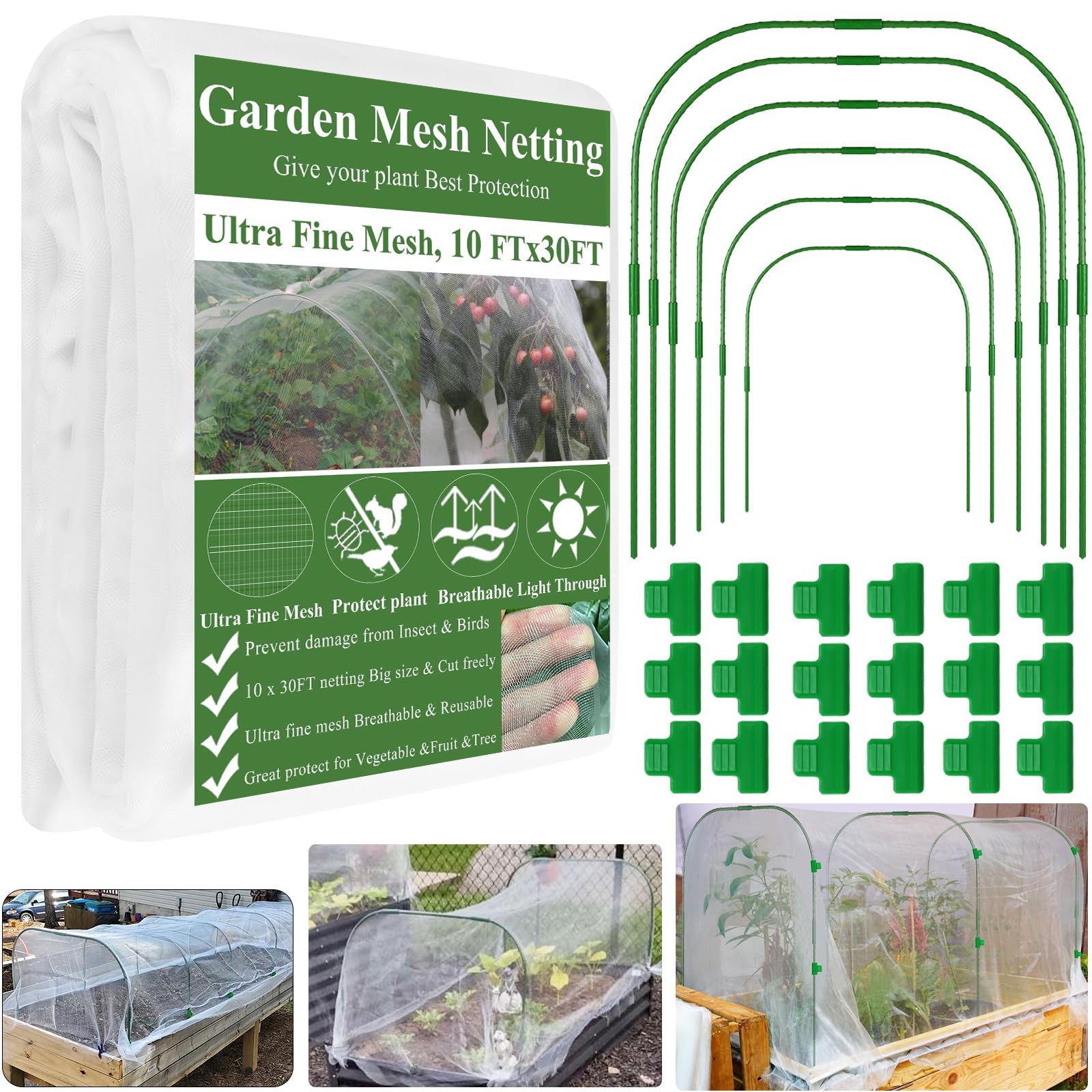
A complete hoop house for raised beds — net, poles, and clips in one box.
This kit eliminates the most frustrating part of using flat netting: building a structure that holds the fabric above your plants. It comes with a 10x30ft ultra-fine mesh net (0.8mm x 1mm openings), 6 plastic-coated steel hoops, and 18 clips. The hoops are 25.6 inches wide and 33 inches tall, giving you enough clearance for tomatoes, peppers, and trellised beans. Owners say it is easy to set up — “installed in less than 5 minutes” — and effective at keeping rabbits, birds, and deer out of raised beds.
The steel hoops are sturdier than the fiberglass poles in the Monirsen kit below, but some buyers find them “a little flimsy” when the netting gets wet and heavy. The netting itself gets consistent praise for toughness — one owner reported it was “super tough” and kept critters out for two seasons. The kit includes curved tubes, straight tubes, connectors, and greenhouse clips, so you can build different sizes depending on your bed layout.
The main downside is that the clips can be fiddly, and the netting snags easily on rough corners. But for a gardener who wants everything in one package without hunting for separate hoops and fasteners, this kit solves the problem.
What Is Included
- 6 plastic-coated steel hoops + connectors
- 18 greenhouse clips to secure netting
- 10x30ft net — plenty for several raised beds
Areas To Prep
- Hoops can feel flimsy under heavy, wet netting
- Netting snags easily on sharp edges
- Clips take practice to attach securely
Grab this if: You want a single purchase that includes every component — no trips to the hardware store for hoops and clips.
Consider alternatives if: You expect heavy snow loads, because the steel hoops may need extra reinforcement to stay upright.
7. Monirsen Garden Netting Kit for Raised Beds (10x30Ft Net + 6 Sets 8ft Fiberglass Hoops)
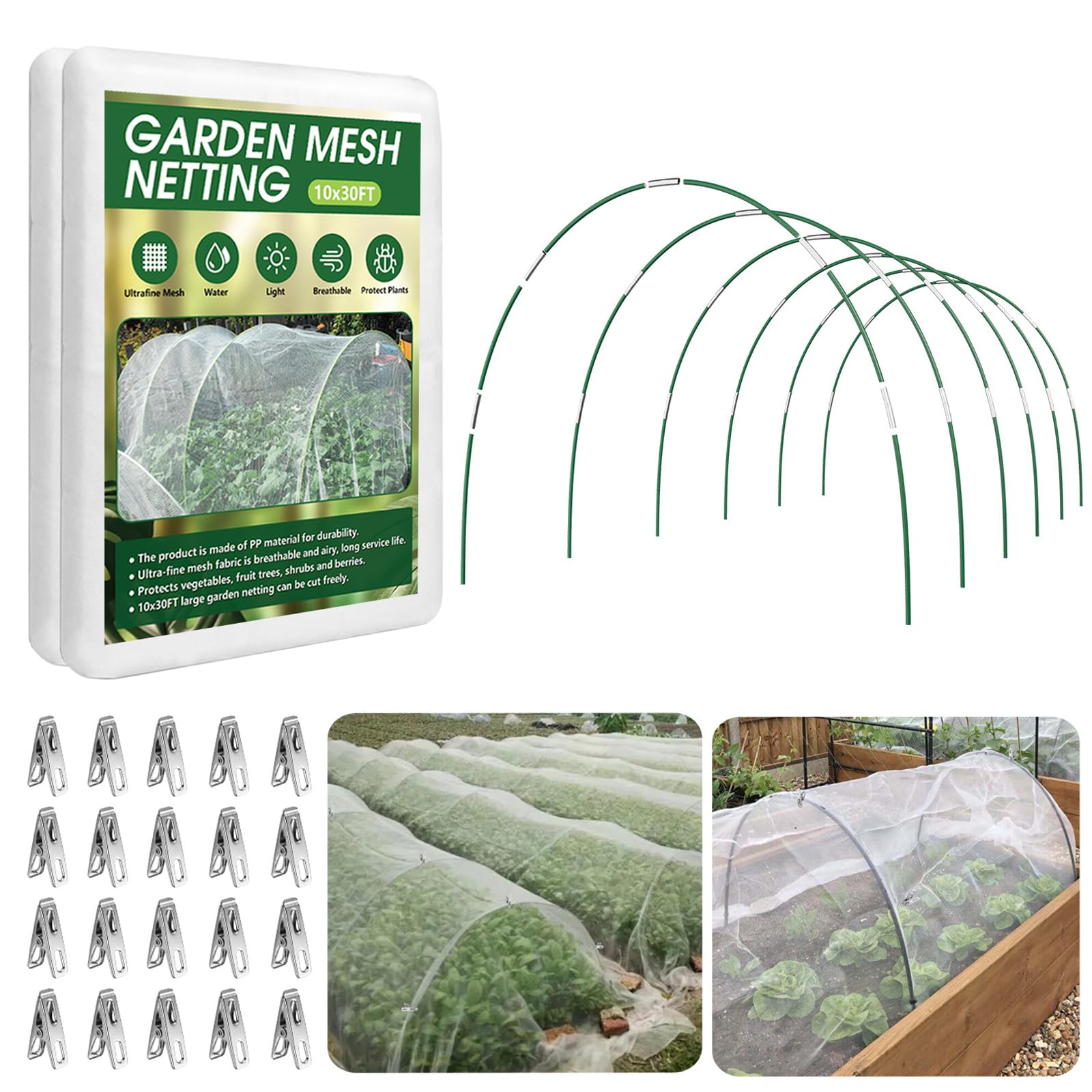
Fiberglass arches that bend without rusting — built for wet climates.
This kit swaps steel for fiberglass hoops (8 feet long each), which means they will never rust or corrode even in high-humidity regions. You get 6 sets of hoops — each set includes multiple sections and connectors — plus 20 clips and a 10x30ft net with 0.8mm x 1mm mesh. The fiberglass is flexible enough to bend into an arch without cracking, and you can adjust the height by pushing the legs deeper into the soil. The netting allows water and light through, and owners confirm it keeps slugs, snails, and birds out while protecting pumpkin patches from predators.
The assembly is straightforward, but some owners ran into a shortage of hardware — one review noted the 50-foot kit lacked enough clips and rods, causing arches to sag and the netting to pull them crooked. The netting itself draws mixed durability feedback; it pulls and frays easily, so it may not survive multiple seasons if you are rough with it. The silver clips, however, earn high marks as “way easier to use than the standard green plastic type.”
For a gardener who wants a rust-proof hoop system for moist or coastal gardens, the Monirsen kit delivers. Just order a few extra clips if you plan to secure the net along both sides of a long bed.
The fiberglass advantage: Zero rust in wet soil — these hoops outlast steel in rainy climates.
An owner’s solution: “Pole sections can be adjusted to the height you need” by varying how deep you insert them in the soil.
Best for: Damp or coastal regions where metal hoops would rust, and for gardeners who want to customize tunnel height for tall crops.
Know before ordering: The kit may come with fewer rods and clips than needed for a full 10x30ft install — budget for extras.
8. Ohuhu 8x4x1 FT Raised Garden Bed Outdoor with Cover
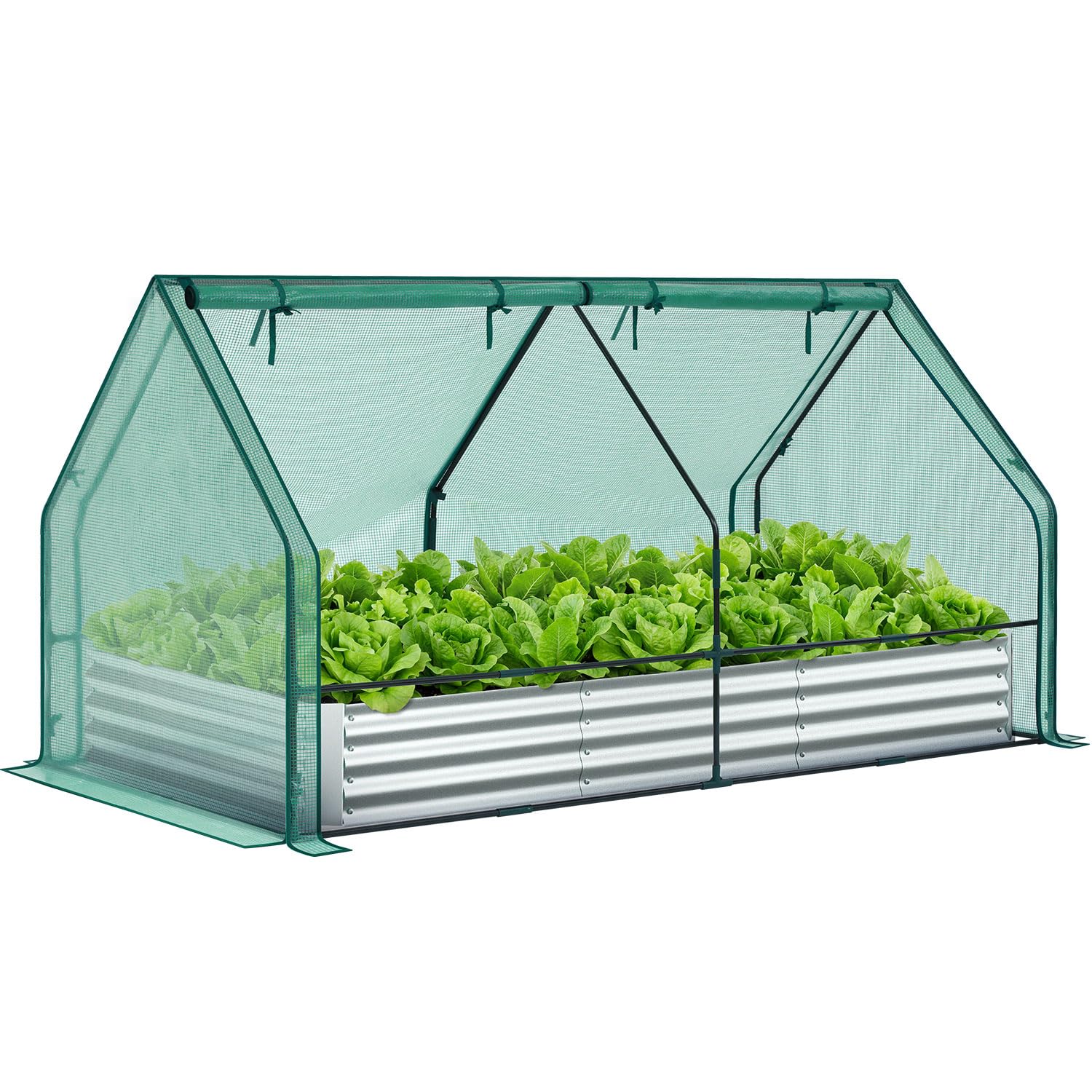
A galvanized bed and greenhouse cover in one package — the full walk-in solution.
This is not just a cover — it is a complete planter + greenhouse system. The raised bed is 8x4x1 ft and built from galvanized steel to prevent rust, with internal metal support rods that stop the walls from bowing under soil pressure. The PE greenhouse cover fits over the top with a sloped roof (97 x 50 x 51.6 inches) that sheds rain and snow instead of pooling. Four zippered doors give you access from every side, so you can reach the back plants without crawling. The cover extends 10cm below the bed frame, and you weigh it down with stones or blocks to keep it from blowing away.
Owners praise the “easy assembly, rugged” construction and the attractive look in the yard. The system withstood a tornado in one report, though the zippers and seams eventually broke after a full summer of heat and storms. The actual bed dimensions run about 2 inches shorter than advertised in length and width, which frustrated some square-foot gardeners. Assembly requires many nuts and bolts — it is a two-person job, and the metal panels can have sharp corners.
This is the premium pick if you are starting from scratch: you get a bed and a frost/insect/sun cover that works like a mini greenhouse, all from one order. But if you already have raised beds, you would be paying for the planter box twice.
what separates it
- Galvanized steel bed resists rust — long-term durability
- Four zippered doors for easy access and ventilation
- Withstood a tornado; structurally impressive for a kit
Fit Notes
- 2 inches shorter than advertised in length and width
- Zippers and seams may break after one season of extreme weather
- Sharp metal corners during assembly — wear gloves
Buy this if: You are building a new raised bed from scratch and want a complete greenhouse-style cover included — no separate shopping for a planter and a hoop house.
Skip this if: You already own raised beds and only need a cover; you will pay extra for the planter box.
Understanding the Specs
Mesh Density (Holes Per Inch)
The tighter the weave, the smaller the pest it stops. A coarse net with quarter-inch holes keeps birds and deer out but lets cabbage moths and flea beetles through. Fine netting at 0.8mm x 0.8mm (about 80 holes per inch) stops tiny insects like thrips and aphids. The trade-off: very fine mesh slightly reduces light, which matters for full-sun crops like peppers. Always match the mesh to the pest you are fighting — you do not need 80-mesh netting if birds are your only problem.
Frost Cloth Weight (oz/sq yd)
This number tells you how much cold protection the fabric offers. Lighter cloths (0.5 oz/sq yd) protect down to about 28°F and let more light through. Heavier cloths (1.2 oz/sq yd and up) handle harder freezes but block more sunlight, so you should remove them after a few days. The weight also affects durability — heavier cloths resist tearing from wind and animal traffic. Match the weight to your local winter lows, not the marketing label.
FAQ
Can I leave a garden cover on through a rainstorm?
What is the difference between a row cover and a frost blanket?
Will a garden netting kit rust if left out all year?
How do I secure a garden cover so wind does not lift it?
Can I cut a garden cover to fit a smaller bed?
How long does a garden cover typically last before replacing?
Will a fine mesh net prevent pollinators from reaching my plants?
Do all garden bed covers block sunlight?
What is the best way to store garden covers between seasons?
Can I use a garden cover on a sloped or irregular bed?
Final Thoughts: The Verdict
For most buyers, the best garden bed covers winner is the ANPHSIN 10x12ft because it balances a tough nano-PP weave with a 33% shade rating and a near-invisible look that works on patios and raised beds alike. If you need to cover a long row of crops, grab the KLEWEE 50-foot roll — its 80-mesh-per-inch density stops tiny pests across a massive area. And for deep-winter protection, the AlpineReach 1.2 oz/sq yd blanket is the one to reach for when the thermometer hits 28°F and keeps dropping.
How We Picked
We do not accept paid placement. Every pick is matched to a real buyer and a real use-case; we do not hands-on test units.
Sources & Methodology
Specifications: manufacturer listings and product documentation. Review insights: verified customer reviews, as of July 2026. Pricing: not shown on this page (it changes often); check the current price via the retailer link.
As an Amazon Associate, Lawn Gear Lab earns from qualifying purchases. This does not affect which products we feature.