
Specs are compiled from manufacturer listings and verified buyer reviews and can change over time — please confirm the key details on the product page before buying.
You want to start seeds indoors without the mess of soil or the guesswork of watering. That is exactly what a hydroponic seed starter does — it gives your seeds water, nutrients, and light directly, so they germinate faster and grow stronger. The challenge is picking the right size and features for your counter without paying for things you will not actually use.
I’m Rikta — the founder and writer behind Lawn Gear Lab. This guide is built by comparing the manufacturers’ published specifications and the patterns across verified customer reviews, so you get each pick’s real strengths and trade-offs instead of marketing spin.
To find the best hydroponic seed starters, match the pod count (the number of planting spots), light quality, and water capacity to how much you plan to grow.
Our Picks at a Glance

How To Choose The Best Hydroponic Seed Starter
Every hydroponic seed starter holds seeds above water and shines light on them. But the size, light power, and automation separate a system you outgrow in one season from one you keep using for years. Here are the four factors that matter most.
Pod Count and Water Tank Capacity
This determines how much you can grow at once. An 8-pod system with a 3-liter tank works for a few herbs on a kitchen counter. A 42-pod unit with a 23-liter tank can feed a family with lettuce, peppers, and tomatoes. Bigger tanks need more space and hold more water weight, but they also let you go longer between refills.
Light Quality and Adjustability
The full-spectrum LED panel is the engine of the system. A 24-watt light with adjustable height gives you room to raise the lamp as seedlings stretch toward maturity. Fixed-height lights work for small herbs but can burn tall plants or leave leggy seedlings reaching for the panel.
Circulation and Aeration
Roots need oxygen, not just water. A built-in water pump that cycles on and off (common patterns are 30 minutes on or 15 minutes on every two hours) keeps the water moving and prevents stagnation. Quiet operation matters if the system sits in your living room or kitchen.
Ease of Setup and Maintenance
The best starter is the one you actually use. Systems with a simple control panel, a clear water gauge, and a straightforward timer are far more likely to produce results than complex units requiring assembly videos and pH balancing. Beginners should prioritize intuitive controls over raw capacity.
Quick Comparison
| Model | Best For | Pod Count | Light Wattage | Water Capacity | Amazon |
|---|---|---|---|---|---|
| Ahopegarden 12-Pod★ Best Overall | Best Overall | 12 | 22W | 5L | Amazon |
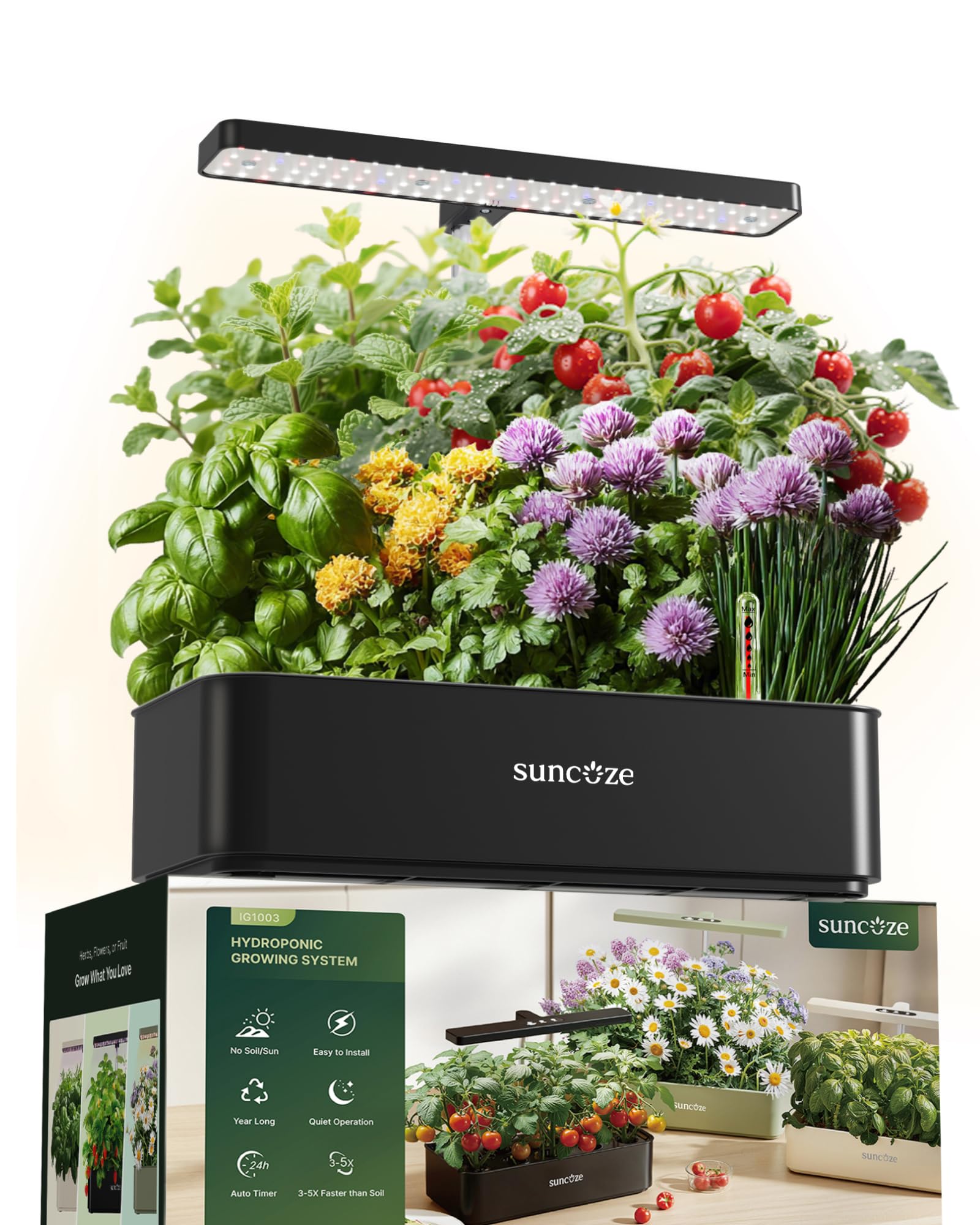
| SUNCOZE 12-PodBest Value Upgrade | Best Value Upgrade | 12 | 24W | 4L | Amazon |
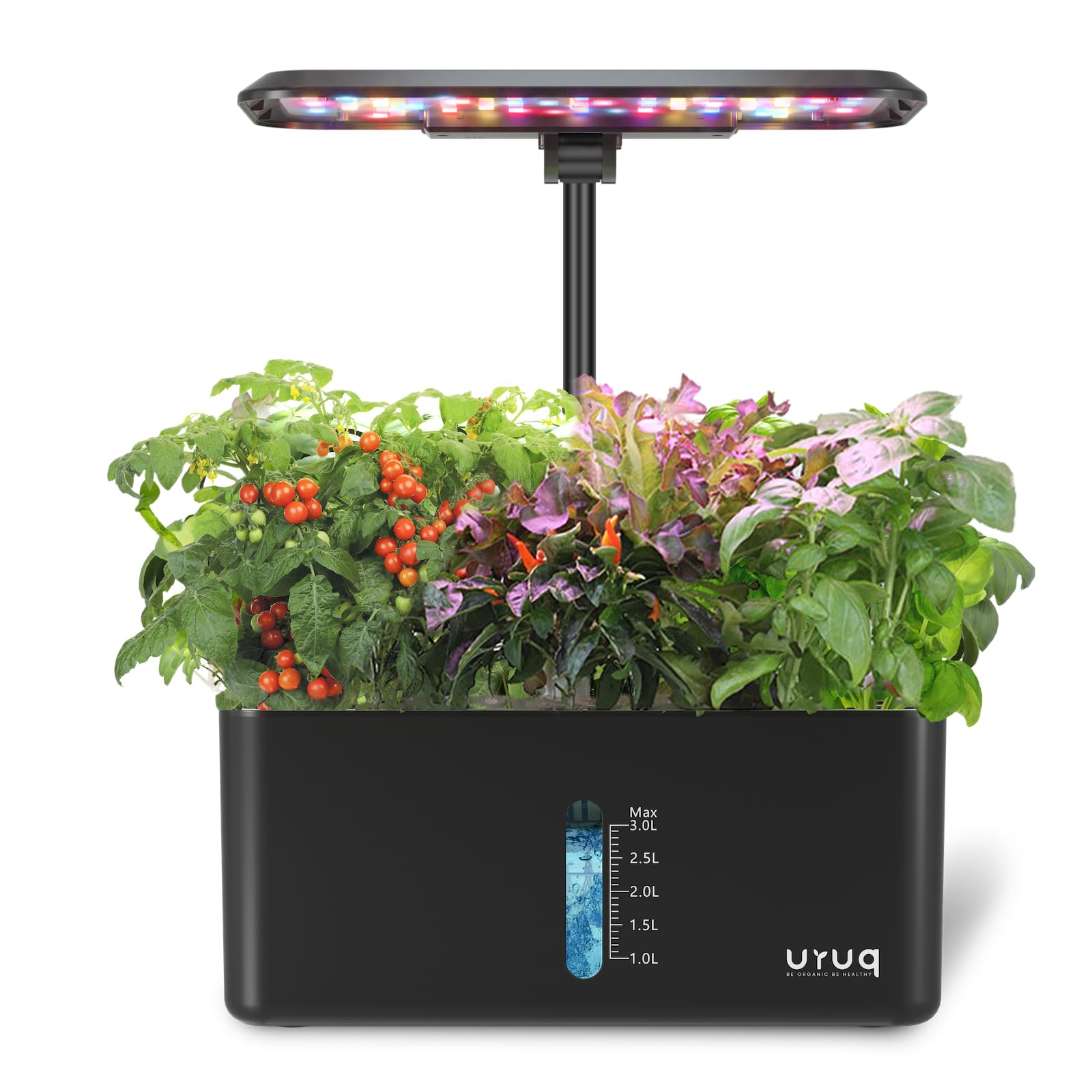
| URUQ 8-PodCompact Kitchen | Compact Kitchen | 8 | 24W | 3L | Amazon |
| YJXFON 80-Cell | Traditional Seed Starting | 80 cells | — | — | Amazon |
| BlumWay 80-Cell | Budget Tray Duo | 80 cells | — | — | Amazon |
| joyhalo 40-Cell Kit | All-in-One with Heat | 40 cells | — | — | Amazon |
| Gardyn Nursery | Gardyn Ecosystem | 10 yCubes | — | — | Amazon |
In‑Depth Reviews
1. Ahopegarden 12-Pod Hydroponics Growing System Kit
Our pick — over 4.5★ from 950+ verified ratings; the strongest balance of quality and price.
The Ahopegarden 12-Pod packs a 5-liter tank and a 17-inch tall adjustable light — more than the URUQ 8-Pod offers — for less than most premium competitors.
You get 12 planting spots in this unit, and the 5-liter water tank is the largest among the compact systems here. The adjustable light tower reaches up to 17 inches, so you can grow low basil or tall tomato seedlings without burning leaves. The LCD touchscreen lets you switch between dual light modes and a 22-hour flowering boost (a feature that, according to the manufacturer, helps plants flower and sweeten).
Compared to the URUQ 8-pod, this Ahopegarden gives you four more planting spots and two extra liters of water capacity for a small increase in counter space. Buyers report that most veggies grew well in a month, with only occasional seed failures — an honest result you expect from a home unit. The silent 30-minute water pump cycle keeps roots aerated without sounding like a washing machine.
The system holds a 4.6-star rating across 900+ reviews, and multiple owners say they bought more after their first success. The trade-off: the round planting baskets sit a bit shallow, and a few users note that tall plants can lean without support.
Smart-Tech Edge: The 22-hour light mode is designed to boost flowering and sweetness — a feature typically found on far pricier systems.
Honest Caveat: Pods sit shallow, so taller plants may lean without some support.
Reach for this if: You want the best all-around value — 12 pods, 5 liters, and a quiet pump that just works.
Look elsewhere if: You want a more compact system for a tiny windowsill; the URUQ 8-pod fits tighter spaces.
2. SUNCOZE 12-Pod Hydroponics Growing System
Its 24-watt full-spectrum panel has four brightness levels, so you can dial in the exact intensity for seedlings, leafy greens, or flowering plants.
The Ahopegarden uses an LCD panel and a 22-hour boost mode. This SUNCOZE takes a different approach: a 24-watt full-spectrum panel with four separate brightness levels. The light automatically follows a 16-hour-on, 8-hour-off cycle, and the adjustable height spans 2.2 to 12.4 inches — a bit shorter than the Ahopegarden but fine for most countertop herbs.
With 300+ owner ratings and a 4.4-star average, this system is praised for being easy to use and for its growing performance. Owners mention sprouts in 2–3 days and full greens within a week, calling it “simple and effective.” The built-in water gauge and low-nutrient alerts make it hard to neglect your plants accidentally. One honest note: the telescoping arm can sag in higher positions — a few owners prop it with a small shim.
Why It Stands Out
- 4-level brightness adjustment for seed-to-flower stages
- Compact footprint with a solid 4L tank
- Very low maintenance — water ever few days, nutrients weekly
The Minor Gripes
- Light bar could be wider for fuller coverage
- Telescoping arm may need a prop at max height
Grab this for: The four brightness levels that let you tune the light as plants grow.
skip it if: You need the 17-inch maximum height of the Ahopegarden for tall tomatoes.
3. URUQ 8-Pod Hydroponics Growing System
This 8-pod system tucks into tight spaces yet packs the same 24-watt panel found in the larger SUNCOZE — a surprise for its small footprint.
At just 8 pods and a 3-liter tank, this system is built for the windowsill where larger 12-pod units won’t fit. It carries the same 24-watt LED panel as the SUNCOZE, which is a serious amount of light for such a small unit. The panel tilts up to 180 degrees and extends to 21 inches, giving you room for herbs like basil, mint, and parsley.
Owners highlight plant growth and functionality as the top reasons to buy — seeds sprout within days, and the quiet pump (rated below 20 decibels) cycles every 30 minutes to keep water fresh without disturbing your sleep. The smart timer delivers 16 hours of light and 8 hours of rest automatically. A few buyers wish the timer included an auto on/off feature, and the 3-liter tank means you refill slightly more often than with the 5-liter Ahopegarden.
Desktop Champ: 24 watts of light in a body that fits on a shelf — the best power-to-size ratio here.
One Trade-Off: 3-liter tank needs topping up every few days; the Ahopegarden’s 5-liter tank goes longer.
Perfect for: Anyone with limited counter space who still wants a full-spectrum 24W light and a quiet pump.
Think twice if: You want to grow more than 8 plants at once — step up to the 12-pod models.
4. YJXFON 80-Cell Seed Starter Tray with Grow Light
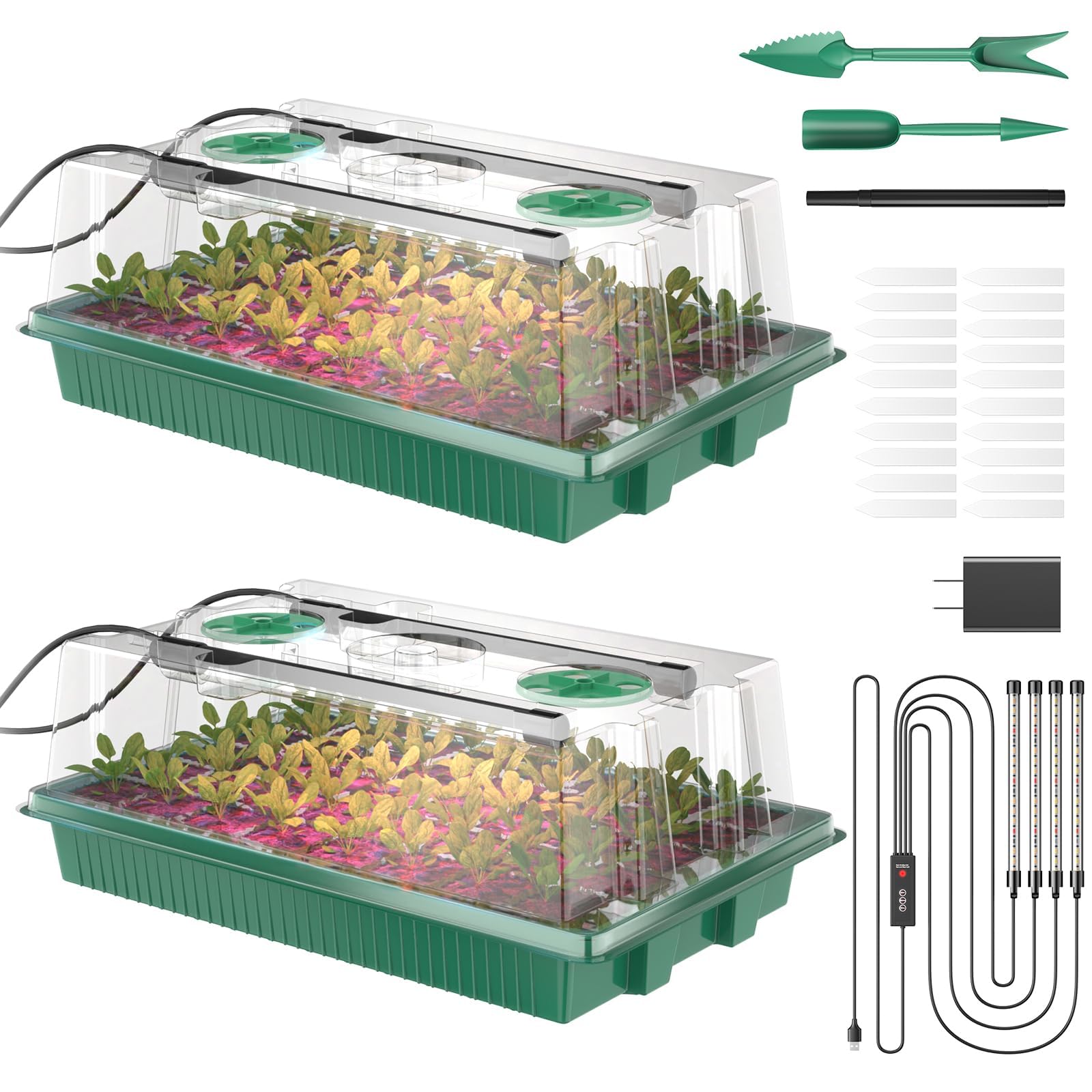
You get 80 cells with a humidity dome and four full-spectrum strip lights — a hybrid setup for gardeners who prefer a soilless mix over deep-water culture.
Not every seed starter needs a water pump. This YJXFON kit uses 80 individual cells with drainage holes and a humidity dome, plus four full-spectrum strip lights mounted on top. It is a smart compromise if you prefer starting seeds in a soilless mix rather than a hydroponic system. The tray measures 9.5 x 15 x 5.5 inches — large but still fits on a standard shelf.
Quality earns the most praise. The trays are sturdy, the silicone bottom makes seedling removal easy, and the adjustable vents on the dome let you dial in humidity. A few owners mention the lights are not as strong as they expected, which is common with strip-style fixtures, but for germination they deliver enough intensity. This set is reusable season after season.
What Owners Love
- Sturdy, reusable construction — built to last multiple seasons
- Silicone bottom tray makes popping out seedlings easy
- Complete kit includes tools, labels, and a pen
The Honest Catch
- Strip lights are less powerful than a dedicated LED panel
- Durability gets mixed feedback — a few trays arrive with cracks
Best for: Traditional gardeners who want grow lights but still prefer a soil or soilless-mix approach.
Not ideal if: You want a true hydroponic pump system; this is a light-assisted tray, not a water-culture setup.
5. BlumWay 80-Cell Seed Starter Tray with Grow Light

Two full 80-cell seed starter kits — each with a humidity dome and four strip lights — for less than many single-tray kits cost.
This BlumWay set gives you two complete 80-cell seed starter kits. The lights offer three timing functions (3, 6, or 12 hours) and five brightness modes, plus a 360-degree spectrum that owners say helps seedlings grow faster and stronger than window light alone. The ABS plastic (acrylonitrile butadiene styrene, a tough, impact-resistant plastic) construction feels solid for the price, and the clear dome lets you check soil moisture without lifting the lid.
A common tip from experienced users: when installing the round vent covers, press firmly — the stems are short and can feel flimsy. That minor quibble aside, this is the cheapest way to get two large seed-starting stations under lights.
Two-For-One Value: Two trays, two domes, two sets of lights — the best bang-per-cell in this list.
Watch For: Vent covers feel cheap; press hard during installation.
Ideal for: Budget-focused gardeners who need to start a lot of seeds across two separate growing areas.
Pass if: You want the sturdiest possible build; the slightly pricier YJXFON feels more sturdy.
6. joyhalo 40-Cell Seed Starter Kit with Grow Light and Heating Mat
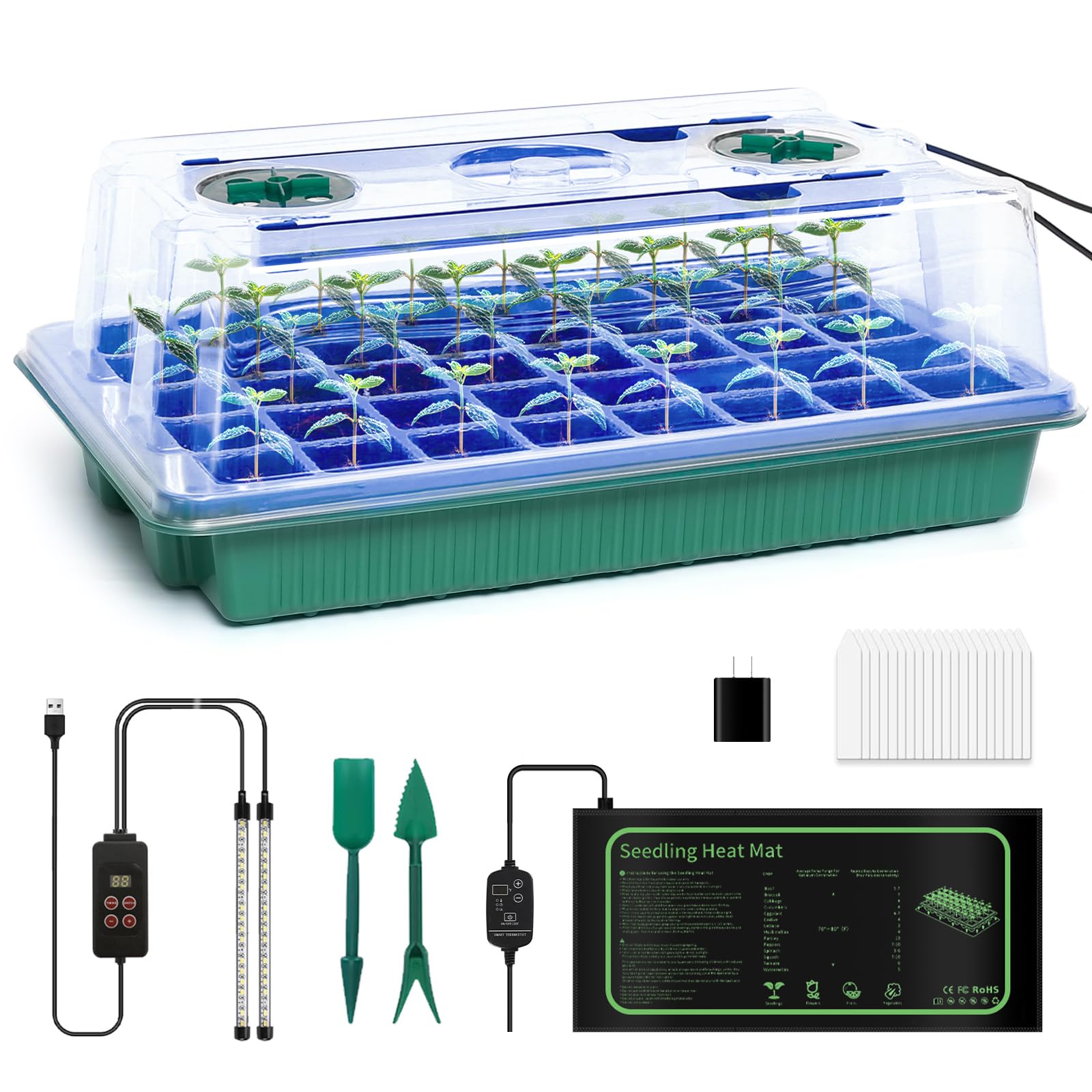
A graphene heating mat sits under the 40-cell tray — designed to warm the root zone faster and more evenly than standard electric mats, for fussy seeds like peppers and tomatoes.
Most seed starter trays rely on ambient room temperature. This kit adds a graphene heat mat underneath the 40-cell tray. Graphene heats up faster and more evenly than traditional electric heating mats, creating the warm, stable soil temperature that peppers, tomatoes, and herbs need for quick germination. The full-spectrum strip lights offer 3 light modes and 7 brightness settings, giving you fine-grained control over the growing environment.
Functionality is the main reason owners choose this kit — it works well from the start, and the adjustable vents on the humidity dome let you dial in moisture for each stage. One reviewer noted that when using only the included lights, seedlings stretched and fell over, suggesting the lights work best as a supplement to a stronger source. The 40-cell count is a middle ground between a small herb garden and a full seed-starting operation.
Why It Stands Out
- Graphene heat mat heats faster and more evenly than standard mats
- 3 light modes + 7 brightness settings for precise control
- Complete all-in-one kit: tray, lights, mat, labels, tools
Potential Limitation
- Included lights may cause stretching if used as the sole light source
- Durability gets mixed feedback from some owners
Reach for this if: You start seeds in a cold room or garage and need the heat mat for reliable germination.
pass on it if: You need a true 24W panel light; the strip lights are better for germination than full growth.
7. Hugbow 80-Cell Seed Starter Tray with Grow Lights and Heat Mat
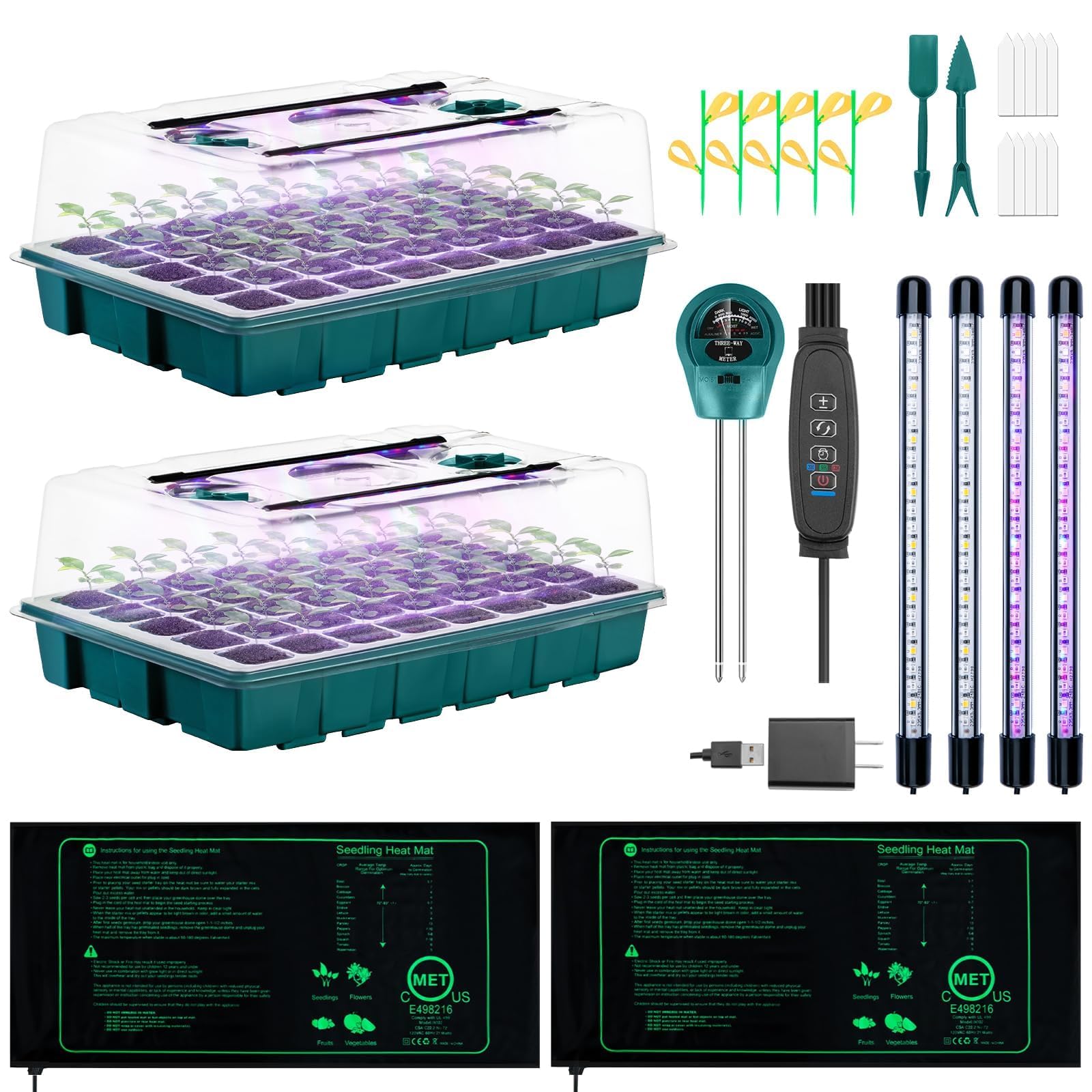
This 80-cell kit includes two 40-cell trays, two humidity domes, four LED light bars, two heat mats, and a 3-in-1 soil meter — a complete seed-starting station for serious germination.
This is not a standalone seed starter. It is a germination tray specifically for the Gardyn ecosystem. The base, inner tray, and vented lid create a mini-greenhouse that works best when placed on the Gardyn device base so seeds receive LED light from the tower’s own plant lights. The clear plastic lid also works near a sunny window if you prefer natural light.
Owners confirm it works for germination, but the value-for-money rating is clear: the tray is overpriced for what it is. A few customers note they would make a DIY solution instead, and one called it “incredibly overpriced.” If you already own a Gardyn tower and want the official nursery, it does the job. If you are starting from scratch, this is an expensive way to germinate 10 seeds.
What Works
- Perfect fit for Gardyn tower bases and lights
- Vented lid creates a controlled microclimate
- Small footprint — 12.5 inches long
The Real Downside
- Very expensive for a simple plastic tray and lid
- Only works with Gardyn yCubes (not included)
Only for: Existing Gardyn tower owners who want the official nursery accessory.
Avoid if: You are buying your first hydroponic system — the value is just not there for standalone use.
Understanding the Specs
Pod Count vs. Cell Count
Pod systems (8, 12, or 42 pods) are true hydroponic setups with water pumps and reservoirs — you drop seeds directly into the system and it handles everything. Cell trays (40 or 80 cells) are traditional seed-starting trays that use a soilless mix or soil, with the dome and light as aids. A pod system is more automated; a cell tray gives you more control over the medium and is typically lower cost.
Full-Spectrum LED Light
A full-spectrum grow light mimics natural sunlight across the wavelengths plants need for photosynthesis. In basic terms, it means your seedlings get the right type of light even in a dim room. The wattage (24W, 30W, 90W total) tells you how much energy the light uses — higher wattage generally means more light intensity and larger coverage area.
Water Pump Cycle
A water pump circulates water from the reservoir to the plant roots. Most pumps run on a timer cycle, such as 30 minutes on or 15 minutes on every two hours. This movement prevents stagnation, adds oxygen to the water, and delivers nutrients evenly. Look for a pump rated below 20 dB if the system will sit in your living space.
Adjustable Height
An adjustable light arm or pole lets you raise the LED panel as seedlings grow taller. A range of 2–17 inches lets you keep the light close to small sprouts (preventing leggy stretching) and raise it for mature basil or tomato plants. Fixed-height lights work for herbs but limit what you can grow.
FAQ
What is the difference between a pod system and a seed starter tray?
How many pods do I need for a kitchen herb garden?
Do hydroponic seed starters work for all types of seeds?
How often do I need to add water and nutrients?
Do I need to clean a hydroponic seed starter?
What is a humidity dome and do I need one?
How long does it take for seeds to sprout in a hydroponic system?
Can I use tap water in a hydroponic seed starter?
What is the benefit of a heat mat for seed starting?
Are hydroponic seed starters better than growing in soil?
Final Thoughts: The Verdict
For most buyers, the best hydroponic seed starters overall is the Ahopegarden 12-Pod because it delivers a 5-liter tank, 17-inch adjustable height, quiet pump, and 12 pods at a price that undercuts premium competitors while keeping a 4.6-star crowd rating. If counter space is tight, grab the URUQ 8-Pod for its compact footprint and surprisingly powerful 24W light. And for the serious indoor farmer, the AOONEG 42-Pod turns a corner of your home into a year-round vegetable garden with enough capacity to feed a family.
How We Picked
We do not accept paid placement. Every pick is matched to a real buyer and a real use-case; we do not hands-on test units.
Sources & Methodology
Specifications: manufacturer listings and product documentation. Review insights: verified customer reviews, as of July 2026. Pricing: not shown on this page (it changes often); check the current price via the retailer link.
As an Amazon Associate, Lawn Gear Lab earns from qualifying purchases. This does not affect which products we feature.