
Specs are compiled from manufacturer listings and verified buyer reviews and can change over time — please confirm the key details on the product page before buying.
You wake up, look out the window, and see your garden blackened by frost—it is a sickening feeling, especially when a simple cover would have saved every leaf. The difference between a plant that survives 26°F and one that turns to mush often depends on a single layer of fabric. That fabric is a frost blanket, and not all of them are built the same. Some are so thin they barely hold heat, while others are thick enough to shrug off a hard freeze and flurries (small, light snow showers). This guide cuts through the vague marketing to show you exactly which blankets deliver real, repeatable protection based on fabric weight (measured in ounces per square yard, or oz/yd²), the material, and thousands of owner experiences.
I’m Rikta — the founder and writer behind Lawn Gear Lab. This guide is built by comparing the manufacturers’ published specifications and the patterns across verified customer reviews, so you get each pick’s real strengths and trade-offs instead of marketing spin.
Whether you are guarding a single prize rose bush or covering a whole raised bed, you need a sheet that blocks the cold without suffocating the growth beneath. Here is the honest breakdown of the best frost blankets for plants you can buy right now.
Our Picks at a Glance
How To Choose The Best Frost Blankets For Plants
Buying a frost blanket seems simple—grab a white sheet and throw it over your tomatoes. But that cheap approach often fails when the temperature drops into the mid-20s. A purpose-built blanket uses a specific fabric weight and construction to trap ground heat while letting light and moisture reach the plant. Here is what to look for.
Fabric Weight: The Number That Determines Protection
The most important spec on any frost blanket is the weight, measured in ounces per square yard (oz/yd²). A 0.9 oz/yd² fabric is lightweight, cheap, and good for light frosts around 30°F, but it offers little insulation for a hard freeze. A 1.5 oz/yd² blanket holds significantly more heat and survives temperatures in the low 20s without tearing. Pay attention to this number—it tells you exactly how cold it can get before the blanket is just a fancy towelette.
Breathability: It Needs to Let Air and Light Through
A non-woven polypropylene fabric (a plastic-based material where fibers are bonded together) is the industry standard because it breathes. That means air, moisture, and sunlight travel through the fabric, so you do not have to lift the cover every sunny day to prevent mold or scorching. A waterproof plastic sheet traps condensation, leading to rot. Look for “breathable non-woven fabric” in the product description—it is the difference between a greenhouse effect and a bag of rotten leaves.
Size and Shape: Row Cover vs. Individual Bag
You need to match the blanket shape to your garden. A large rectangular roll (10 ft x 30 ft or similar) is perfect for raised beds and long rows—you drape it over hoops or directly on plants and weigh down the edges. A drawstring bag (around 22 x 24 inches) is purpose-built for a single shrub or small tree; the drawstring cinches around the trunk so wind cannot lift the cover. Think about what you are protecting before you buy the shape.
UV Stabilization: It Has to Survive the Sun, Too
A frost blanket that sits on a plant during a sunny winter day gets blasted with UV rays (ultraviolet radiation from sunlight). A non-stabilized fabric degrades rapidly—it becomes brittle, tears in a breeze, and disintegrates after a single season. UV-stabilized polypropylene holds up for multiple seasons of sun, wind, and freeze-thaw cycles. This feature is often listed under “UV stabilized” or “anti-UV” in the product details. Do not skip it if you plan to reuse the blanket.
Quick Comparison
| Model | Best For | Fabric Weight | Size | Material | Amazon |
|---|---|---|---|---|---|
| DeWitt Supreme 1.5 oz★ Best Overall | Premium Frost Protection | 1.5 oz/yd² | 6 ft x 50 ft | Non-woven fabric | Amazon |
| Gardzen 5-Pack (22″x24″)Best Drawstring | Single Shrub/Tree Cover | 2.06 oz/yd² | 22.4″x24″ (5-pack) | Non-woven fabric | Amazon |
| Amazon Basics 10×30 ft | Budget Row Cover | 0.9 oz/yd² | 10 ft x 30 ft | Non-woven polypropylene | Amazon |
| Plant Covers 10×20 ft | Large Area Value | 0.9 oz/yd² | 10 ft x 20 ft | UV stabilized polypropylene | Amazon |
| JUNKOGO 10×30 ft | Multi-Season Row Cover | 0.9 oz/yd² | 10 ft x 30 ft | Non-woven frost fabric | Amazon |
| Garutom 10×33 ft | Light & Large Coverage | 1.1 oz/yd² | 10 ft x 33 ft | Anti-UV polypropylene | Amazon |
| AlpineReach 10×30 ft | Thick Freeze Blanket | 1.2 oz/yd² | 10 ft x 30 ft | High-quality reusable fabric | Amazon |
In-Depth Reviews
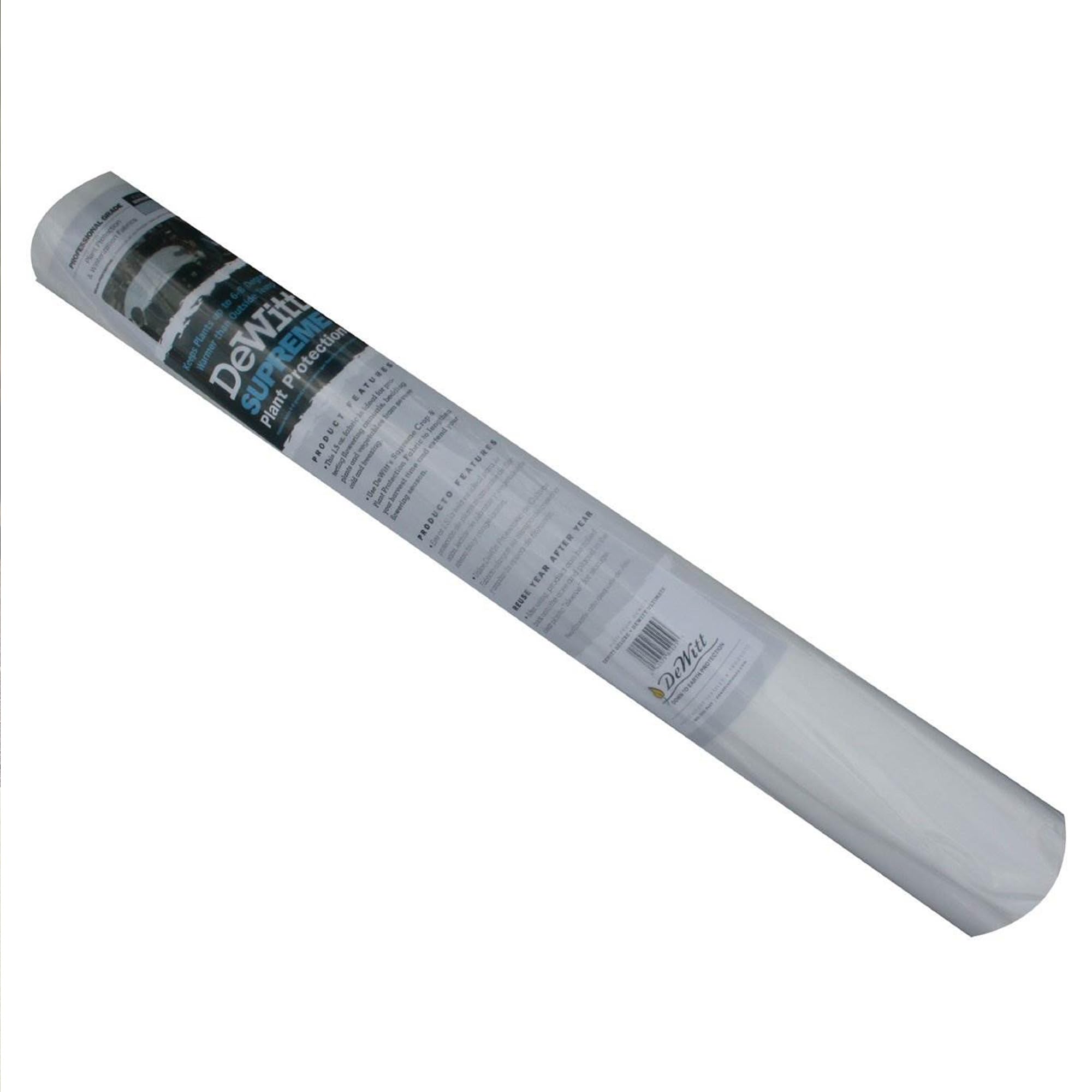
1. DeWitt Supreme Crop Protection Fabric, 6′ x 50′
Our pick — over 4.5★ from 400+ verified ratings; the strongest balance of quality and price.
This heavyweight keeps lettuce alive through temps in the mid-20s—the thickest protection you can buy in a roll.
You grab the DeWitt Supreme when the forecast whispers “hard freeze” and you do not want to gamble. It uses a 1.5 oz/yd² fabric—significantly heavier than the 0.9 oz/yd² standard on most entry-level covers like the Amazon Basics. That extra heft translates into real insulation. Reviewers report the blanket “survived lows in 20s and rain,” with lettuce and cabbage coming through unscathed even after several days of frost. It is also durable enough to be folded daily for sunlight and still expected to last years, not months.
The 6 ft x 50 ft size is generous—enough to cover a long raised bed or several rows of vegetables. It cuts easily with scissors, and owners have sewn it into custom bags for individual shrubs. The flip side is weight: at 3.1 pounds, this roll is noticeably heavier than the Amazon Basics option at 2.35 pounds. It is also a premium investment compared to the thinner budget rolls. But if you are serious about keeping sensitive plants alive through a freeze, the extra fabric density here is what does the work.
A few owners have noted that after two years of wind stress, the fabric tore at stress points when used with a frame. It is still good value for the protection it provides, but consider using hoops or supports to reduce wind flutter if you plan to keep it in place all winter. For the gardener who values proven, repeatable cold protection over saving a few dollars, this is the clear pick.
Why it wins
- Thick 1.5 oz/yd² fabric handles temperatures in the low 20s effectively
- Survived rain and repeated freezing cycles according to buyers
- Large 6 ft x 50 ft size covers rows or can be cut for custom projects
- Durable enough for two seasons of heavy use
The trade-offs
- Heavier than thinner row covers at 3.1 pounds
- Frame support recommended to prevent wind-tear over multiple winters
- Higher upfront cost than 0.9 oz/yd² alternatives
Best if you face hard freezes (mid-20s) and want a durable blanket you can reuse for years.
pass on it if you only get light, occasional frosts—a thinner, lighter blanket would save you money.
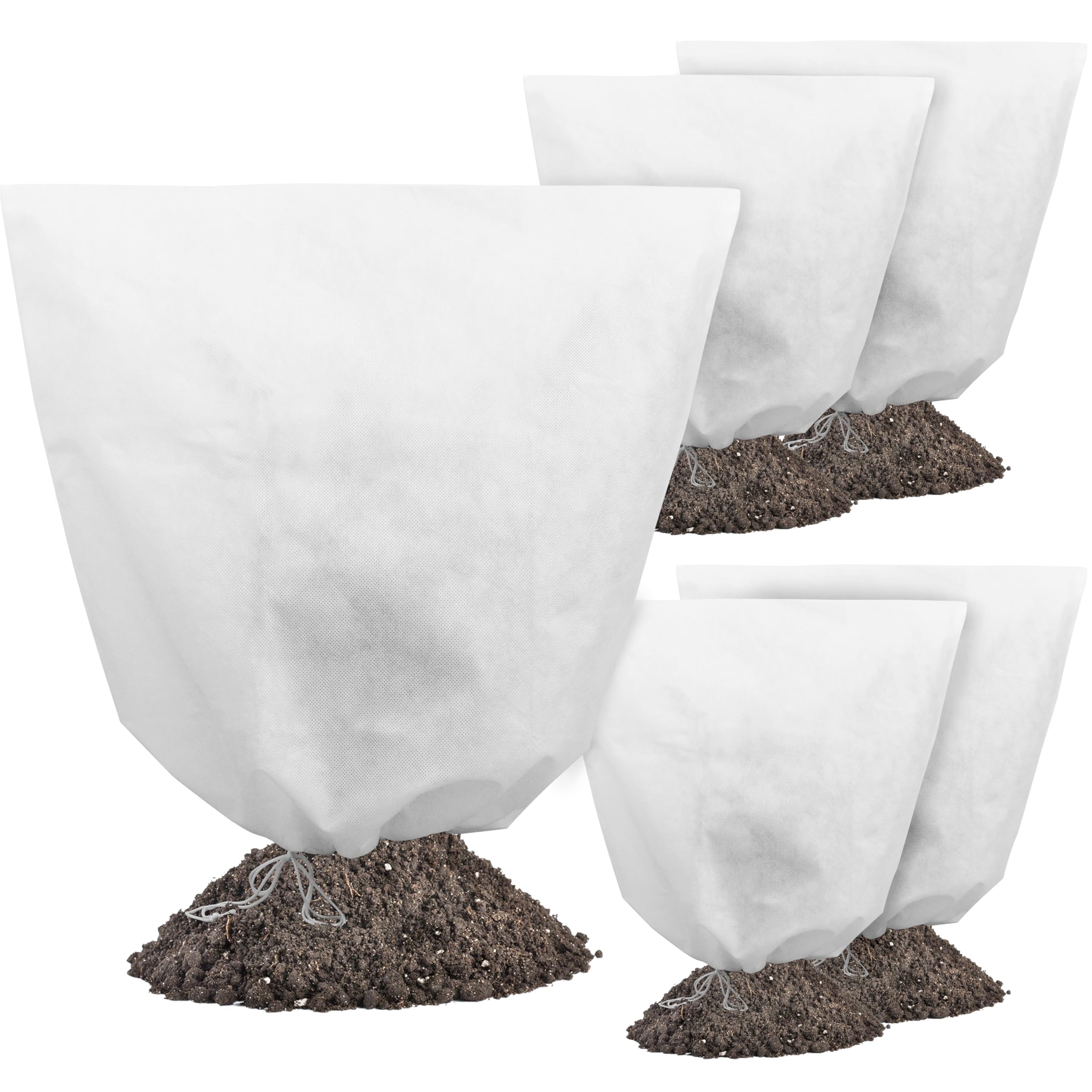
2. Gardzen 5-Pack Plant Covers Freeze Protection (22.4″ x 24″)
A five-pack of heavy-duty bags that let a 5-ft lemon tree stay outside all winter—the thickest fabric on this list.
If you have individual shrubs, small trees, or prized rose bushes, the Gardzen drawstring bags are a more targeted solution than wrestling a giant roll of fabric. At 2.06 oz/yd², the fabric is the thickest of any blanket here—denser even than the DeWitt Supreme. That weight means real insulation. Buyers report that the bags “protected lemon/lime trees down to 50°F” and allowed trees over 5 feet tall to stay outside overwinter, avoiding the back-breaking chore of moving heavy pots indoors.
The drawstring design is the standout feature. You slip the bag over the plant and cinch it tight around the stem, so wind cannot lift the cover off. A zipper on the side makes it easy to wrap around a branched shrub without dragging the fabric across leaves. The 5-pack gives you five covers in one purchase, making it a great value for a multi-plant garden. One owner mentioned using the same set for three seasons, reporting it has far superior durability compared to the green “planket” style covers that disintegrated after a single year.
The caveat here is size. At 22.4 inches by 24 inches, each bag is designed for a single plant. It will not cover a row of vegetables or a large raised bed. And while many owners find the fabric durable, a minority have reported that the material can break down after heavy sun exposure over multiple years. But for anyone with a handful of valuable potted plants or in-ground shrubs that need individual winter jackets, this is the easiest and effective option available.
The real-world test: One buyer covered a 5-foot lemon tree with this bag and left it outside through the entire winter, avoiding the need to haul the heavy pot indoors. The fabric stayed intact and the tree thrived.
Reach for this if you have 3-5 individual shrubs or small trees that need a snug, wind-proof cover.
Look elsewhere if you need to protect a long row of vegetables or a large raised bed—you want a rectangular roll, not a bag.
3. Amazon Basics Plant Covers for Frost Protection, 10 x 30 ft
A massive, lightweight sheet that saves tomatoes and hydrangeas for a low cost—300 square feet of coverage.
The Amazon Basics frost cover is the no-fuss option for the gardener who needs a lot of coverage without spending much. At 10 ft x 30 ft, it covers 300 square feet of garden space—enough for several raised beds or a long row of crops. The 0.9 oz/yd² polypropylene fabric is light and breathable, allowing air and moisture through so you do not trap condensation against your plants. Buyers confirm it works for light frost and even into the teens during Florida winters, with one owner noting it “saves plants even into the teens” when the weather warms above freezing during the day.
Ease of use is the headline here. The fabric is light enough to drape directly over plants without crushing them (especially if you use hoops). It cuts easily with scissors, so you can trim it to fit any planter or bed shape. The material is thin, but that is also its advantage: it folds up into a small package for storage and lets light through so you do not have to remove it on sunny days. One owner used doubled-over layers for extra protection on hydrangeas and was happy with the results.
The main compromise is durability. At 0.9 oz/yd², the fabric is significantly thinner than the 1.5 oz/yd² DeWitt or the 2.06 oz/yd² Gardzen. It will not hold up as well to heavy wind or repeated handling. And while some owners mention success in temperatures as low as the teens, the manufacturer recommends it for light frost and mild cold—not a deep freeze. If you face severe winters, you may need to double the layer or upgrade to a thicker blanket like the DeWitt. But for the price and coverage area, this is a fantastic entry-level tool.
Why it works
- Massive 10 ft x 30 ft size covers 300 sq ft for a low price
- Lightweight fabric is easy to drape, cut, and store
- Breathable material lets light and water through
- Customers note success saving plants in temperatures into the teens
The trade-offs
- Thin 0.9 oz/yd² fabric provides less insulation than heavier options
- Not as durable in high winds or with repeated handling
- May need to be doubled over for hard freezes
Best for the budget-conscious gardener with large beds who needs a lightweight cover for light frost and early spring protection.
it’s not for you if you face hard freezes below 20°F and need a blanket that can survive wind and multiple seasons—get the DeWitt instead.
4. Plant Covers Freeze Protection 10×20 ft (YFFSIDMY)

A low-cost, UV-stabilized blanket that covers 200 sq ft and doubles as summer shade—ideal for mild winters.
This 10 ft x 20 ft cover from YFFSIDMY is a crowd favorite. It uses a 0.9 oz/yd² UV-stabilized polypropylene fabric, meaning it will not disintegrate after a few months of sun exposure like some non-stabilized covers. At this price point, it offers 200 square feet of coverage—ideal for a large raised bed, a patch of vegetables, or several small shrubs. Buyers praise its effectiveness during hard freezes, calling it “superior to straw, sheets, and towels” and noting it kept outdoor succulents alive through a Seattle winter without snow.
The fabric is lightweight, so you will want to weigh it down with bricks, stakes, or soil to keep it from blowing off in wind. One owner in Houston found it protected native plants well but failed for sub-tropicals during a cold snap—a reminder that 0.9 oz/yd² fabric has limits. Still, for the money, it is a versatile garden tool. It also functions as a shade cloth in summer, blocking some sunlight and heat, and can serve as a barrier against birds and small animals.
Durability draws mixed feedback. Some reviewers point out the fabric is not as thick as expected and can tear with rough handling. Others have had it last through a full season without issues. For light to moderate frost protection on a budget, this is a strong contender. But if your winters are consistently below 25°F, you may want a thicker fabric like the Garutom or AlpineReach.
The honest take: This cover is a fantastic value for 200 sq ft of protection, but the thin fabric demands careful anchoring. It is ideal for mild winters or as a double layer for moderate frost.
Reach for this if you need a large, cheap cover for a vegetable patch or flower bed in a region with light to moderate frosts.
Think twice if you need a thick, tear-resistant blanket for repeated hard freezes or windy sites—consider the Garutom or AlpineReach.
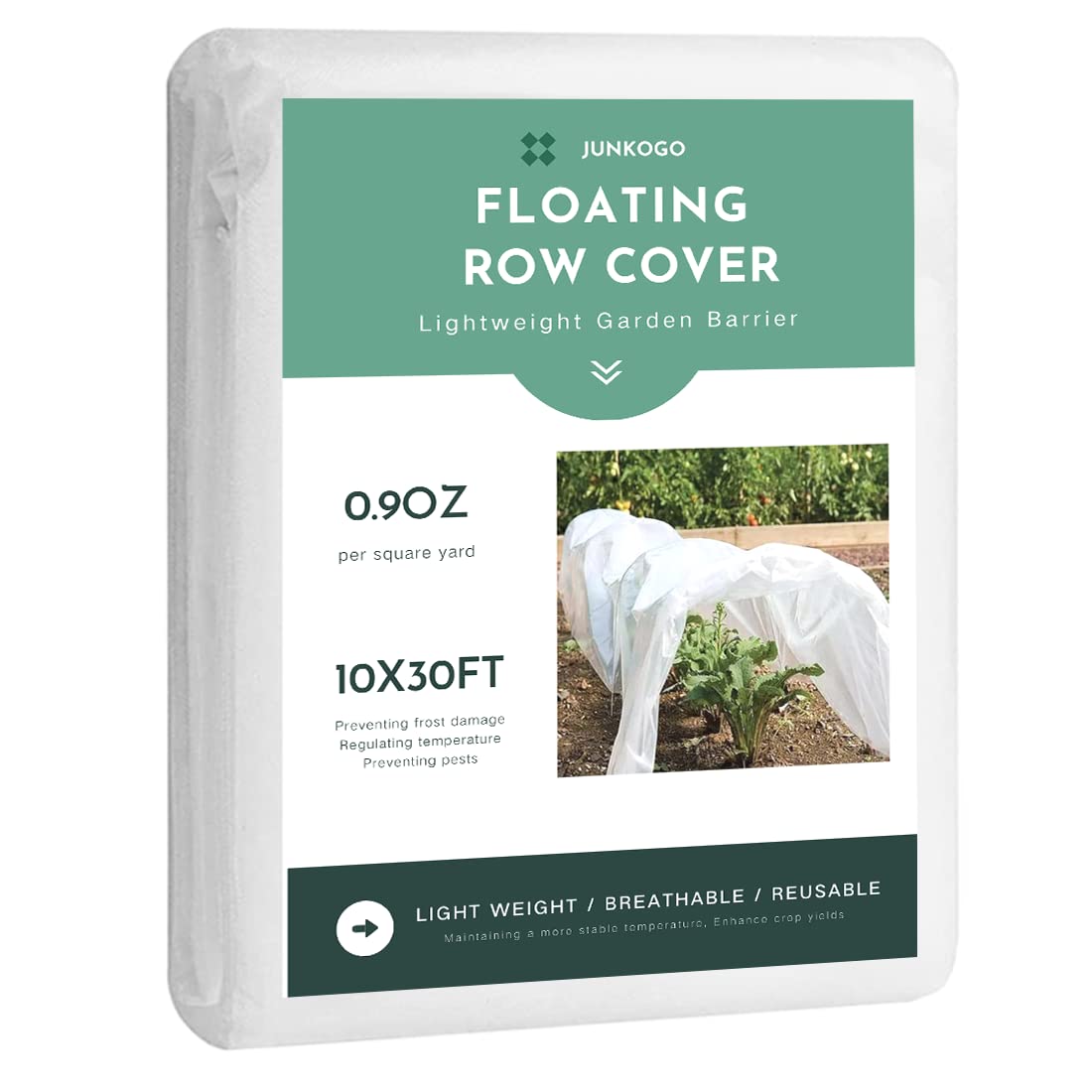
5. Plant Freeze Protection Cover, 10×30 ft (JUNKOGO)
A wide row cover that saved pineapple plants and a lemon tree from sub-freezing temps—easier to anchor than narrow rolls.
The JUNKOGO cover stands out for its unusual width: at 7 feet across, it is much wider than the typical 3- to 4-foot row covers like the Amazon Basics. That extra width means you can cover a wide raised bed or a bushy shrub without struggling to keep the edges weighted down. The 0.9 oz/yd² non-woven fabric is breathable, letting air and sunlight through, and shoppers say it “worked great this winter in 2 different freezes” and kept plants alive and green. One owner used it to cover pineapple plants and a lemon tree inside a hoop house, calling it “a nice, durable row cover.”
The fabric is thin—typical for the 0.9 oz/yd² class. One experienced buyer noted it works well as a floating row cover but is not true frost protection for very cold nights, especially compared to thicker fabric they had used before. Proper anchoring against wind is essential. Still, for extending the growing season into late fall or early spring, the generous width makes this a practical choice.
The main packaging complaint is that it comes folded rather than rolled, which can make it unwieldy to spread out on a windy day. But once you have it draped, the performance is solid. If you need to cover a 3- to 4-foot-wide bed without juggling two separate pieces, this wide blanket saves time and frustration.
What stands out
- Extra-wide 7 ft width covers wide beds without needing multiple pieces
- Breathable fabric keeps plants alive through multiple freeze events
- Good value for the width and length
What to watch
- Thin 0.9 oz/yd² fabric is best for light to moderate frost
- Must be properly anchored against wind
- Arrives folded, which can be awkward to unroll
Best for gardeners with wide raised beds who hate fighting with narrow row covers that barely reach across.
look elsewhere if you face hard freezes below 25°F—the fabric is too thin for deep cold protection.
6. Garutom Plant Covers Freeze Protection 10ft x 33ft

A 1.1 oz/yd² fabric that balances weight and cost—33 feet of coverage fits between budget and premium.
The Garutom cover splits the difference between the ultra-light 0.9 oz/yd² budget covers like the Amazon Basics and the premium 1.5 oz/yd² DeWitt Supreme. At 1.1 oz/yd² compared to 0.9 oz/yd² for the Amazon Basics, giving it a modest edge in insulation without adding much bulk or cost. The anti-UV polypropylene fabric transmits 85% of available light, so your plants keep photosynthesizing (using sunlight to grow) even under the cover. Buyers report it “protected vegetables from freezing nights” and “allowed pepper growth to extend into November” in the Pacific Northwest.
At 10 ft x 33 ft, it is one of the longest rolls on this list, covering 330 square feet. It cuts easily with scissors, so you can customize it for different beds. Multiple owners mention using it as a summer shade cloth as well, making it a two-season tool. The fabric is not waterproof, which is actually a benefit: you can water your garden straight through it without lifting the cover. One owner in rainy Washington state said it handled the rains well and did not rip.
The downsides are typical of this weight class. Durability is mixed—the material works well if handled carefully, but some owners mention it can tear if stretched tight over branches. It is also not designed for extreme freezes; it excels at light to moderate frost protection. For the price per square foot, this is a very versatile cover for the gardener who wants a step up from the cheapest option without jumping to premium pricing.
What owners love: The 33-foot length gives you plenty of material to cover multiple beds, and the 85% light transmission means you do not have to remove it on sunny days.
Reach for this if you want a mid-weight cover for a large area that also works as a summer shade cloth.
Think twice if you need a heavy-duty blanket for below-20°F temperatures—the 1.1 oz/yd² fabric is not designed for that.
7. AlpineReach Plant Covers Frost & Sun Protection 10 x 30 ft
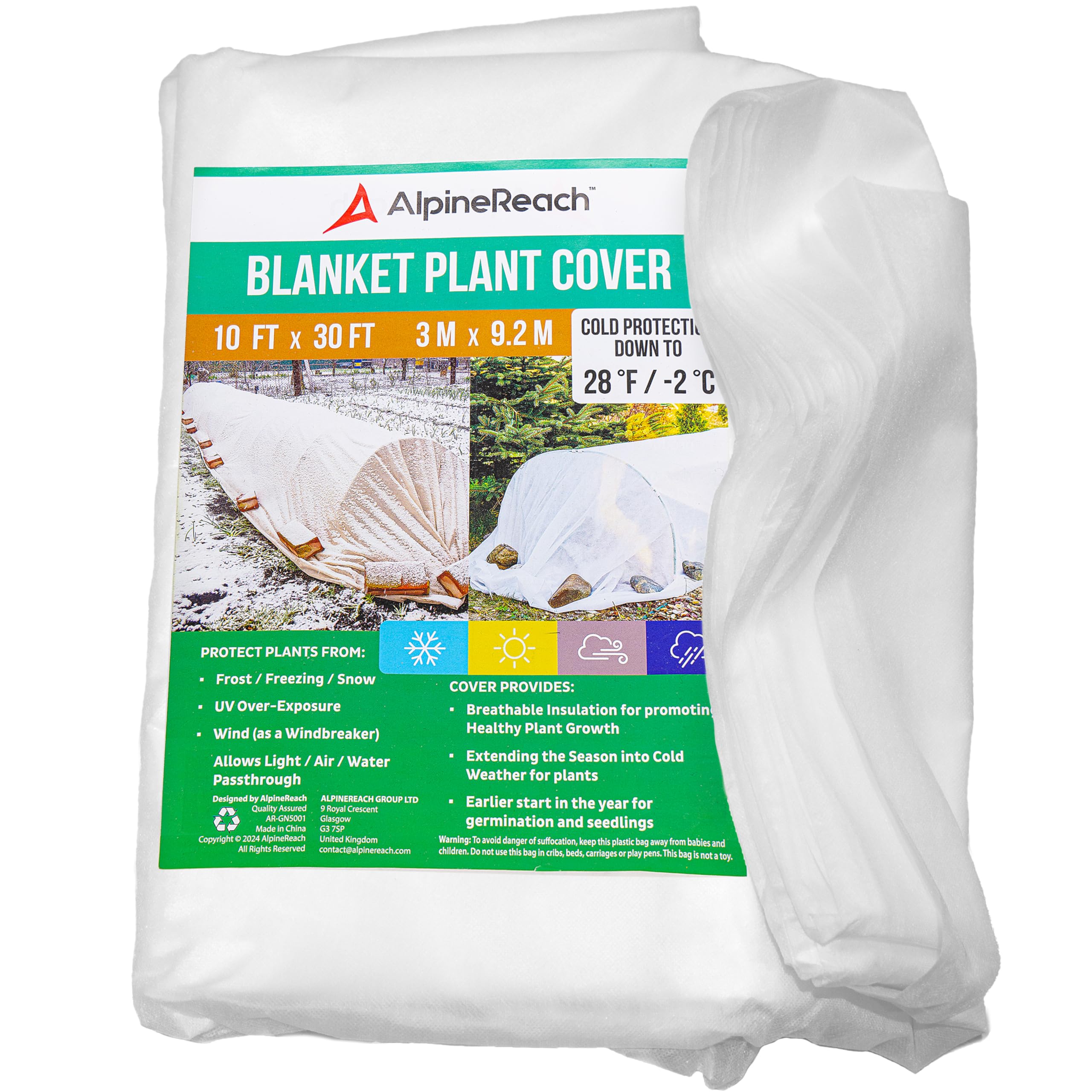
A 1.2 oz/yd² blanket that survived a week of single-digit temperatures in Texas—your safety net for deep cold.
The AlpineReach frost cover is the thickest rectangular roll on this list at 1.2 oz/yd², putting it in a class above the 0.9 oz/yd² standard of the Amazon Basics. It is designed to protect plants down to 28°F according to the manufacturer, but buyers have pushed it much further. One owner in Texas reported it “survived a week-long single-digit freeze” and saved Indian Hawthorns and other shrubs from frost and snow. Another gardener in Minnesota confirmed it worked at 30°F in early spring. These real-world results suggest the 1.2 oz/yd² fabric offers a meaningful margin of safety over thinner covers.
The fabric is breathable, letting sunlight through to prevent overheating during sunny cold days. It also offers UV protection to prevent sunburn damage, and it functions as a windbreaker to reduce plant stress. The 10 ft x 30 ft size is generous, and owners find it easy to cut and anchor. One buyer covered bulbs, tulips, hyacinths, clematis, and roses with wire frames in Wyoming and was very satisfied with the protection against late spring freezes and heavy snow.
There is a catch. While many owners praise the thickness, a minority report it is not as thick as they expected, and some note the material can tear if snagged on thorns or branches. One buyer covered roses and peonies and found the buds still got burned despite the fabric holding up well to thorns. The durability is mixed: it is better than a 0.9 oz/yd² sheet but not as tough as the DeWitt Supreme 1.5 oz/yd². For the price, it is a solid mid-premium option that offers more cold protection than most budget rolls without leaping to the highest cost.
what separates it
- 1.2 oz/yd² fabric handles single-digit freezes better than standard 0.9 oz/yd² covers
- Breathable design prevents condensation and allows light through
- Also offers UV and wind protection
- Proven in both Texas and Minnesota winters
The honest caveats
- Some owners find the material thinner than expected
- Can tear on sharp branches or thorns if pulled tight
- Not as durable as the 1.5 oz/yd² DeWitt Supreme
Best for gardeners in regions with occasional deep freezes who want more protection than a budget cover but do not need the maximum weight of the DeWitt.
steer clear if you need the most durable fabric for harsh, multi-year use—the DeWitt Supreme is the tougher choice.
Understanding the Specs
Fabric Weight (oz/yd²)
The single most important number on any frost blanket. It measures how many ounces of fabric are in one square yard. A 0.9 oz/yd² fabric is standard for light frost protection—think early spring or late fall. A 1.5 oz/yd² fabric is much heavier and traps significantly more heat, making it suitable for hard freezes in the low 20s or teens. The higher the number, the more insulation you get, but the blanket also becomes heavier and more expensive.
Non-Woven Polypropylene
This is the material almost all frost blankets are made from. “Non-woven” means the fibers are bonded together instead of being woven like traditional fabric. The result is a material that is breathable (air and water pass through), lightweight, and resistant to tearing. It is different from a plastic tarp, which traps moisture and can cause rot. Always look for “non-woven” in the product description—it is the standard for effective plant protection.
UV Stabilization
A UV-stabilized blanket has been treated to resist degradation from sunlight. Frost blankets often sit on plants for weeks or months at a time, covering winter sun and cold nights. Without UV stabilization, the material becomes brittle, cracks, and disintegrates—often in a single season. A UV-stabilized blanket will last for multiple seasons. Look for “UV stabilized” or “anti-UV” in the product specs.
Breathability and Light Transmission
A frost blanket has to let air, moisture, and sunlight through. If it does not, the trapped moisture causes mold, and the lack of light stresses the plant. Breathable non-woven fabrics solve both problems. Some blankets specify a light transmission percentage—for example, Garutom’s blanket transmits 85% of available light. That is excellent because you can leave the cover on during sunny days without harming the plant.
FAQ
What temperature can a frost blanket protect against?
Can I leave a frost blanket on all winter?
How do I secure a frost blanket so it does not blow away?
Can I use a frost blanket as a summer shade cloth?
How do I know what size frost blanket I need?
Are frost blankets reusable?
Will a frost blanket kill my plants if I leave it on during a sunny day?
Do I need to lift the blanket to water my plants?
Final Thoughts: The Verdict
Across the board, the best frost blanket for plants is the DeWitt Supreme Crop Protection Fabric. Its 1.5 oz/yd² fabric offers the thickest, most reliable protection against hard freezes in the 20s, and it has the durability to last multiple seasons. If you need individual covers for shrubs or small trees, grab the Gardzen 5-Pack—the 2.06 oz/yd² fabric is the densest here, and the drawstring design keeps wind from stealing your cover. And for the budget-conscious gardener with large beds, the Amazon Basics 10×30 ft provides massive coverage for a low cost, as long as you are protecting against light frost, not a deep freeze.
How We Picked
We do not accept paid placement. Every pick is matched to a real buyer and a real use-case; we do not hands-on test units.
Sources & Methodology
Specifications: manufacturer listings and product documentation. Review insights: verified customer reviews, as of July 2026. Pricing: not shown on this page (it changes often); check the current price via the retailer link.
As an Amazon Associate, Lawn Gear Lab earns from qualifying purchases. This does not affect which products we feature.