
Specs are compiled from manufacturer listings and verified buyer reviews and can change over time — please confirm the key details on the product page before buying.
Stepping up from a small countertop herb garden to a large hydroponic system is a big move. You are no longer just sprouting a few basil leaves — you are aiming to grow a serious portion of your own vegetables, fruits, and greens indoors, year-round. But the market floods you with promises of massive yields, automated everything, and complex setups that sound like a second job.
I’m Rikta — the founder and writer behind Lawn Gear Lab. This guide is built by comparing the manufacturers’ published specifications and the patterns across verified customer reviews, so you get each pick’s real strengths and trade-offs instead of marketing spin.
You need a system that fits your space and skill level without drowning you in hidden costs or daily fuss. Here is the straight truth on the best large hydroponic systems that actually deliver on their promise of a bountiful, soil-free garden. large hydroponic systems come in many forms, and this breakdown helps you pick the right one for your home.
Our Picks at a Glance


How To Choose The Best Large Hydroponic System
A big system means more than just a big price tag. The smartest choice balances your space, the types of plants you want to grow, and how much hands-on time you have each week. Here are the critical factors to sort through first.
Matching System Type to Your Crops
Tower systems stack plants vertically and are brilliant for leafy greens, herbs, and strawberries that don’t need deep root zones. Deep Water Culture (DWC) bucket systems, with their individual 5-gallon containers, let you grow sprawling vegetables like tomatoes, peppers, and larger fruiting plants that need more root space and structural support. PVC pipe systems sit in between, offering a grid of many small planting sites — ideal for a steady supply of lettuce and greens but prone to problems with root crowding on larger plants.
Reservoir Size and Water Autonomy
The water tank capacity dictates your maintenance schedule. A 10-liter tank might need topping off every few days with a thirsty crop, while a 40-liter reservoir can stretch a week or more between refills. Look for models with a water-level window or gauge so you can check at a glance without opening the system. A larger tank also helps buffer nutrient concentrations and temperature swings, making for more stable root conditions.
Grow Light Power and Coverage
Your plants receive the energy they need to flourish from the integrated LEDs. Check the actual wattage of the lights — a 53W panel on a tall tower may not throw enough light to the lower tiers, while a 90W unit (30W per layer) spreads the energy more evenly. Systems with adjustable-height light bars let you raise the lights as plants stretch toward harvest, preventing scorching in the seedling stage and ensuring full coverage for tall crops like tomatoes or bell peppers.
Maintenance and Cleanability
All hydroponic systems eventually need a thorough cleaning to prevent algae and mineral buildup. Designs that let you remove individual tubes or columns make the job far easier. Self-cleaning features, such as a reverse pump function that flushes the lines, can save you an afternoon of scrubbing. Pay attention to the pump quality — a quiet, reliable unit is worth paying more for, as a loud or underpowered pump is the most common recurring complaint in owner reviews.
Quick Comparison
| Model | Best For | Plant Sites | Reservoir | Grow Light | Amazon |
|---|---|---|---|---|---|
| Ahopegarden 66-Pod★ Best Overall | Zone Planting Flexibility | 66 | 30 L (3x10L) | 53W Dual-Mode LED | Amazon |
| LAPOND 108-SiteMax Capacity | High-Volume Greens | 108 | None (drip) | Not Included | Amazon |
| GENORTH A-TypeBest Value | Algae-Free Growing | 72 | None (drip) | Not Included | Amazon |
| VEVOR DWC | Large Fruiting Plants | 8 | 5 Gal x 8 | Not Included | Amazon |
| VIVOSUN DWC+Drip | Veggies & Fruit Combo | 8 | 5 Gal x 8 | Not Included | Amazon |
| Carpathen Tower | All-in-One Starters | 30 | 10 L | Full-Spectrum LED | Amazon |
| Growell 90-Pod | Serious Bulk Harvests | 90 | 40 L | 90W 3-Panel LED | Amazon |
| Gardyn Studio 2 | Smart, Low-Maintenance | 16 | ~10 L | Smart LED + AI | Amazon |
| ALTO GARDEN Tower | No-Subscription Premium | 24 | 10 Gal | Adjustable LED + Timer | Amazon |
In‑Depth Reviews
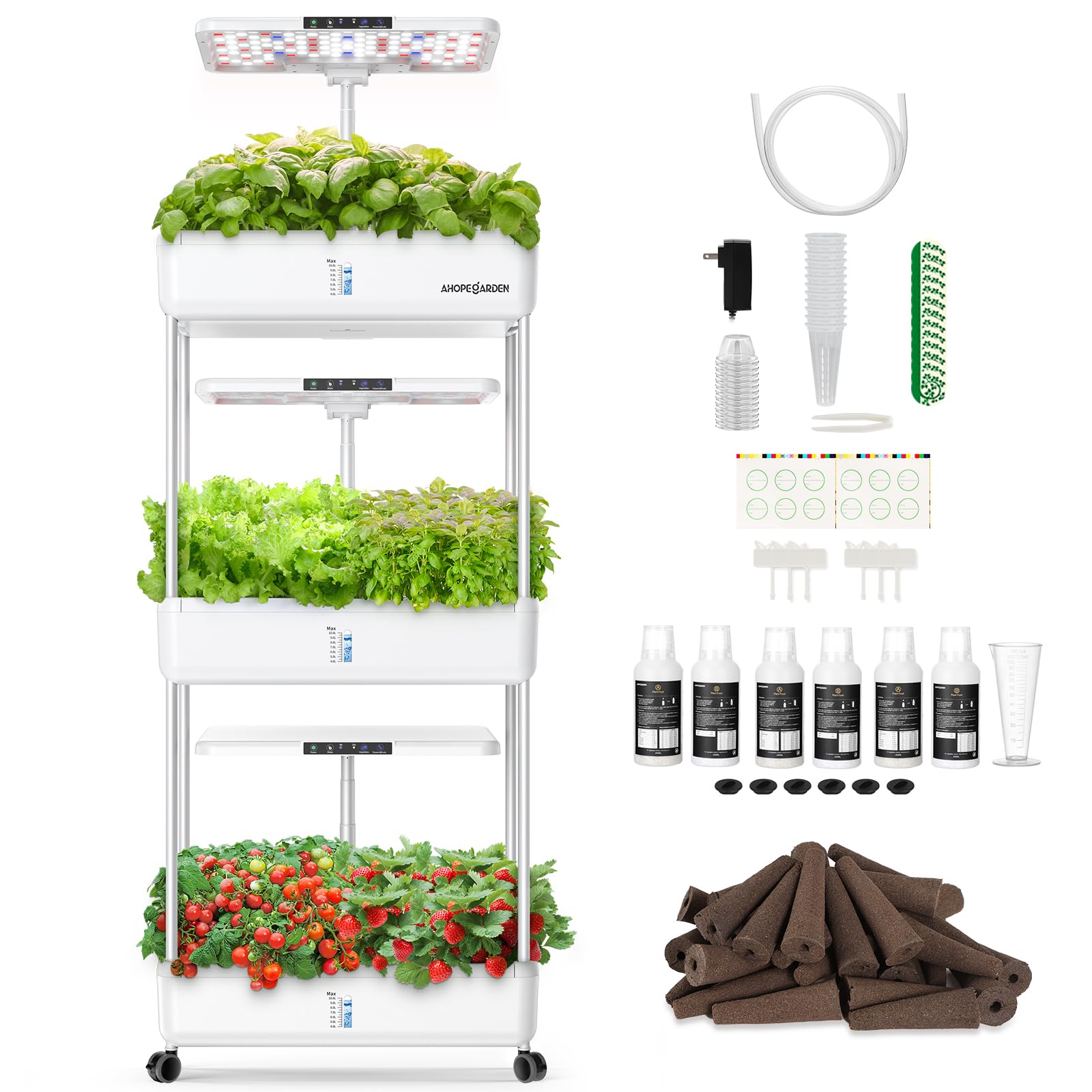
1. Ahopegarden 66-Pod Hydroponic System
Our pick — 4.5★ from 80+ verified ratings; the strongest balance of quality and price.
The best balanced system for growing a huge variety of crops with minimal daily fiddling.
This unit hits the balance between capacity and thoughtful engineering. It holds 66 plants across three independent 10L tanks (30 liters total), each with its own water pump. That separate-pump design means you can grow lettuce in one zone, peppers in another, and herbs in the third — each with tailored nutrient mixes — without cross-contamination. The 53W dual-mode LED light lets you choose a 16-hour cycle for greens or a 22-hour cycle for fruiting plants, and one grower reported a bountiful lettuce harvest in just three weeks. The telescoping light post adjusts up to 14.68 inches, so you can accommodate plants from seedling to tall maturity.
The real praise here centers on the sheer value. Owners consistently note that this system costs “more than half” of competing brands that charge or more, yet delivers the same quiet pump operation, solid build, and a two-week reservoir fill cycle. The included kit is generous: blackout paper covers, grow domes, sponges, and starter nutrients. The one trade-off is that the system lacks built-in WiFi, so you won’t get app-based monitoring. But given the price point, most buyers find that a fair compromise — the simple programming on the built-in panel covers the basics well.
What wins people over is the size — 22 owners mention it positively — followed closely by the easy setup. A few owners flagged that the plastic is not the most impact-resistant, so placing it in a high-traffic area might invite knocks. Overall, this is the crowd favorite for good reason: it packs commercial-level features into a package that serious home growers actually find affordable.
What Owners Rave About
- Three independent tanks and pumps let you grow different crop types in the same unit
- 53W dual-mode LED (16 or 22 hours) accelerates both greens and fruiting plants
- Quiet pump with a reverse-clean function makes maintenance simple
- Generous kit includes nutrients, domes, and sponges — just add seeds and water
The Honest Trade-Offs
- No WiFi or app integration — the control panel is fully manual
- Plastic feels slightly less dense than premium towers; take care during moves
Reach for this if: you want a large, flexible system that lets you manage three separate mini-gardens from a single unit, without paying a premium for smart features you may not need.
Look elsewhere if: remote monitoring and app alerts are essential for your lifestyle, or if you plan to grow very tall fruiting plants that need a larger root zone than even the stacked 10L tanks provide.
2. LAPOND 108-Site Hydroponic System
The highest plant count for the lowest entry price among large systems.
If your goal is to produce a constant supply of salad greens for a large household, this three-layer PVC pipe system gives you 108 planting sites in one frame. The tube diameter measures 2.5 inches, and the manufacturer increased the spacing between layers by 5.9 inches compared to the standard version, which means taller plants like celery and bell peppers have room to grow. The automated pump runs on an adjustable timer, delivering nutrient water on a cycle you can set and forget. As one reviewer noted, the “easy 30-min setup with clear directions” makes it an accessible entry point for beginners who are not afraid of a bit of DIY.
The catch here is the material and build quality. The pipes are food-grade PVC, but owners repeatedly note two problems: the white pipes let light through, which encourages algae growth inside the system, and the shallow pipe angle can cause poor drainage. Some owners estimate they lost around 30 plants to root rot from water sitting too long. The included foam sponges also drew criticism for retaining too much moisture. A few buyers recommend wrapping the pipes in light-blocking material and using your own grow media.
The pump receives mixed feedback — some find it adequate, while a handful report it stops working shortly after arrival. That said, for the price, this system is a fraction of the cost of many competitors with similar site counts. It is a solid option for the budget-minded grower who is willing to make a few modifications to ensure healthy roots. The 30-minute assembly time noted in reviews is a real advantage if you want to get planting fast.
Strengths at This Price
- 108 plant sites in three layers, 5.9 inches taller between levels for bigger crops
- Very fast assembly — buyers report it takes about 30 minutes
- Floor-standing frame with a small footprint for the yield
Plan for These Issues
- White PVC pipes transmit light, leading to algae — plan to cover or paint them
- Included grow sponges may cause root rot; many owners swap them for better media
- Pump quality is variable; some units arrive with a non-working pump
Best for: the grower who wants maximum plant count on a tight budget and is comfortable making small modifications (wrapping pipes, swapping media) for healthier results.
skip it if: you want a fully sealed, maintenance-light system or if you need a warranty-backed pump that you can rely on from day one.
3. GENORTH A-Type 72-Site System
The best value for a leak-free, sturdy pipe system that solves the algae problem.
GENORTH tackled the biggest complaint of PVC-pipe systems head-on by using dark blue tubes that block sunlight. This single change eliminates the algae growth that plagues white-pipe designs. The A-Type shape tilts the growing rows so light reaches every plant evenly from the top — no shading from upper layers. The system uses an omnidirectional gravity-fed flow with a water control valve so you can adjust the drip rate for different crop stages. Owners consistently praise the build quality, with 13 comments calling out the solid construction and 9 specifically noting the sturdiness. One buyer summed it up: “no leaking without the use of sealant” — a rarity in this category.
Assembly is straightforward, taking around 45 minutes according to veteran builders. The pump runs quietly with the included adjustable timer. However, the system does not come with a water tank, grow lights, starter nutrients, or hole covers. At 72 sites, the pipe spacing is tighter than ideal for full-sized fruiting plants, meaning you will want to plant every other port for crops like peppers. Several owners recommend using reflective tape or stickers to cover the unused end ports to prevent roots from growing into the pipe and clogging the flow.
The value proposition here is strong. At a mid-range price point, you get a durable, leak-resistant frame with dark pipes that solve the most persistent maintenance headache. If you are willing to supply your own lighting and a bucket reservoir, this is one of the smartest buys in the pipe-system segment.
One-verdict take: The GENORTH A-Type is the pipe system to buy if you want a solid foundation without the algae hassle. The missing components (lights, tank) mean the final cost with add-ons may rival a more complete kit, but the build quality justifies the extra effort.
Choose this for: a stable, leak-free pipe system that won’t give you algae headaches — ideal for greens and herbs in a space where you already own grow lights.
Think twice if: you need an all-in-one solution with integrated lighting and a water reservoir, or if you plan to grow large squash or tomatoes in every single port.
4. VEVOR DWC 8-Bucket System
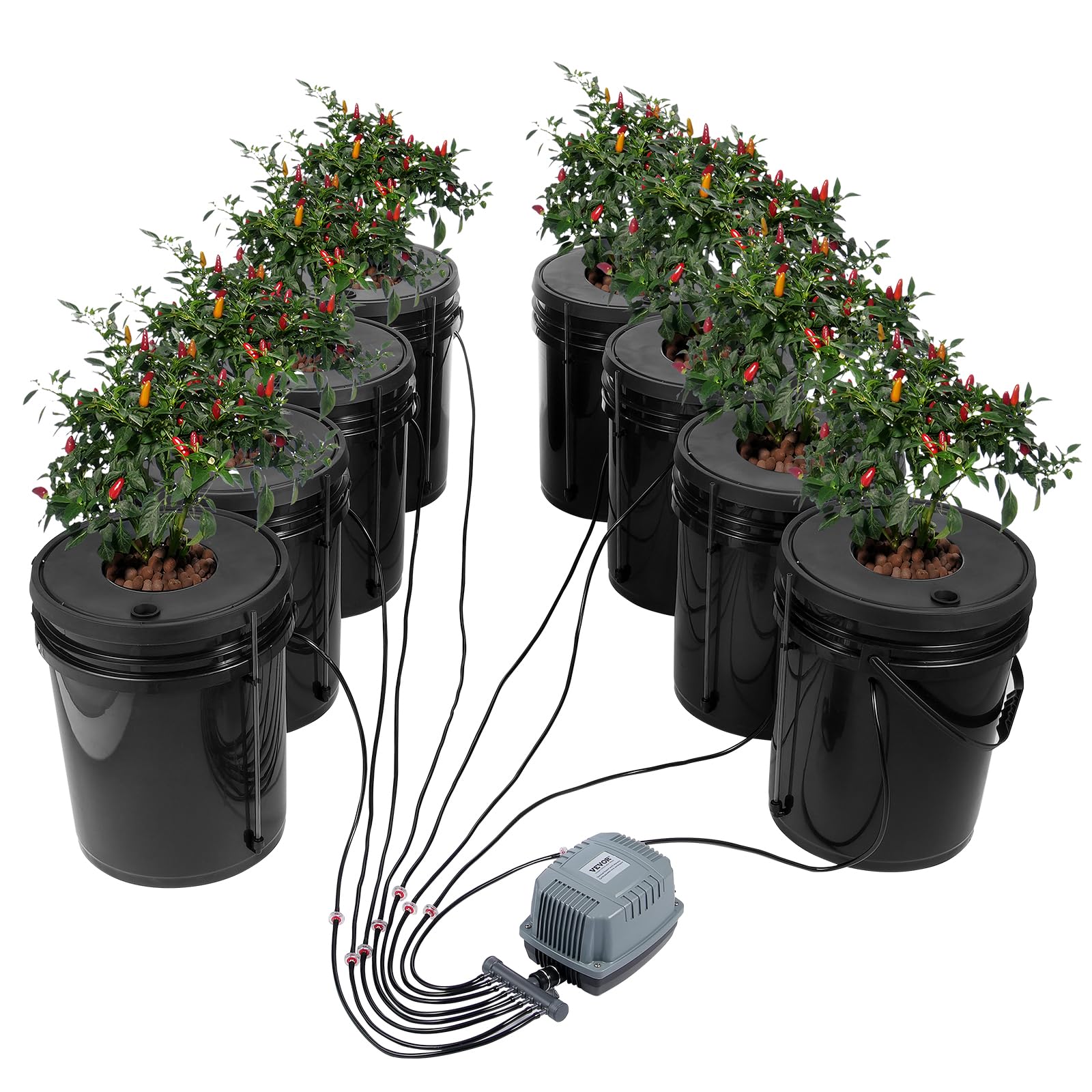
The go-to DWC kit for growers who want individual 5-gallon buckets for sprawling crops.
Deep Water Culture puts the plant’s roots directly into a nutrient-rich, oxygenated bath, and this VEVOR kit gives you eight separate 5-gallon buckets for a total of 40 gallons of growing volume. Each bucket has its own 5-inch basket, an air stone, and a water-level device on the side so you can see the nutrient level without lifting the lid. The 10W air pump pushes 25 L/min through a 12-meter hose to all eight buckets. The thick, light-proof PP (polypropylene) plastic blocks light from reaching the root zone, preventing the algae growth that haunts transparent DIY setups.
This system is built for growers who want to manage large individual plants — tomatoes, peppers, cucumbers, or even flowers. Since each bucket is separate, you can start crops on different schedules and pull one plant without disturbing the others. The connected reservoir design keeps all buckets at the same nutrient level through a manifold. However, the setup is more involved than a plug-and-play tower, requiring you to assemble the manifold, install check valves, and connect the air stones. The instructions are thin, and many owners note that the air pump is surprisingly loud — audible through walls in some setups.
The build quality earns high marks for the thick plastic and sturdy water-level indicators. A few owners reported that the included air pump is underpowered for deep root systems and plan to upgrade to a higher-capacity unit. No grow lights are included, so you will need a separate light source — which is standard for this category of system. At a mid-range price, this kit gives you the core of a serious DWC setup without the premium branding markups.
What Makes It a Strong Investment
- Eight independent 5-gallon buckets give you 40 gal of root space for heavy feeders
- Light-proof black PP plastic keeps root zones dark and algae-free
- Side water-level windows let you check nutrient status at a glance
- Individual buckets allow staggered planting and easy single-plant removal
What to Prepare For
- Included air pump is loud enough to need placement in a garage or insulated space
- Assembly requires careful plumbing of check valves and hoses; instructions are sparse
- You must supply your own grow lights and pH/EC monitoring equipment
Grab this for: a sturdy, expandable DWC foundation for large fruiting plants in a grow tent or dedicated garden room where you already have lighting and ventilation.
Pass if: you need a quiet system for a living area, or if you prefer a self-contained all-in-one unit that includes lights and a simple setup.
5. VIVOSUN DWC 8-Bucket with Top Drip
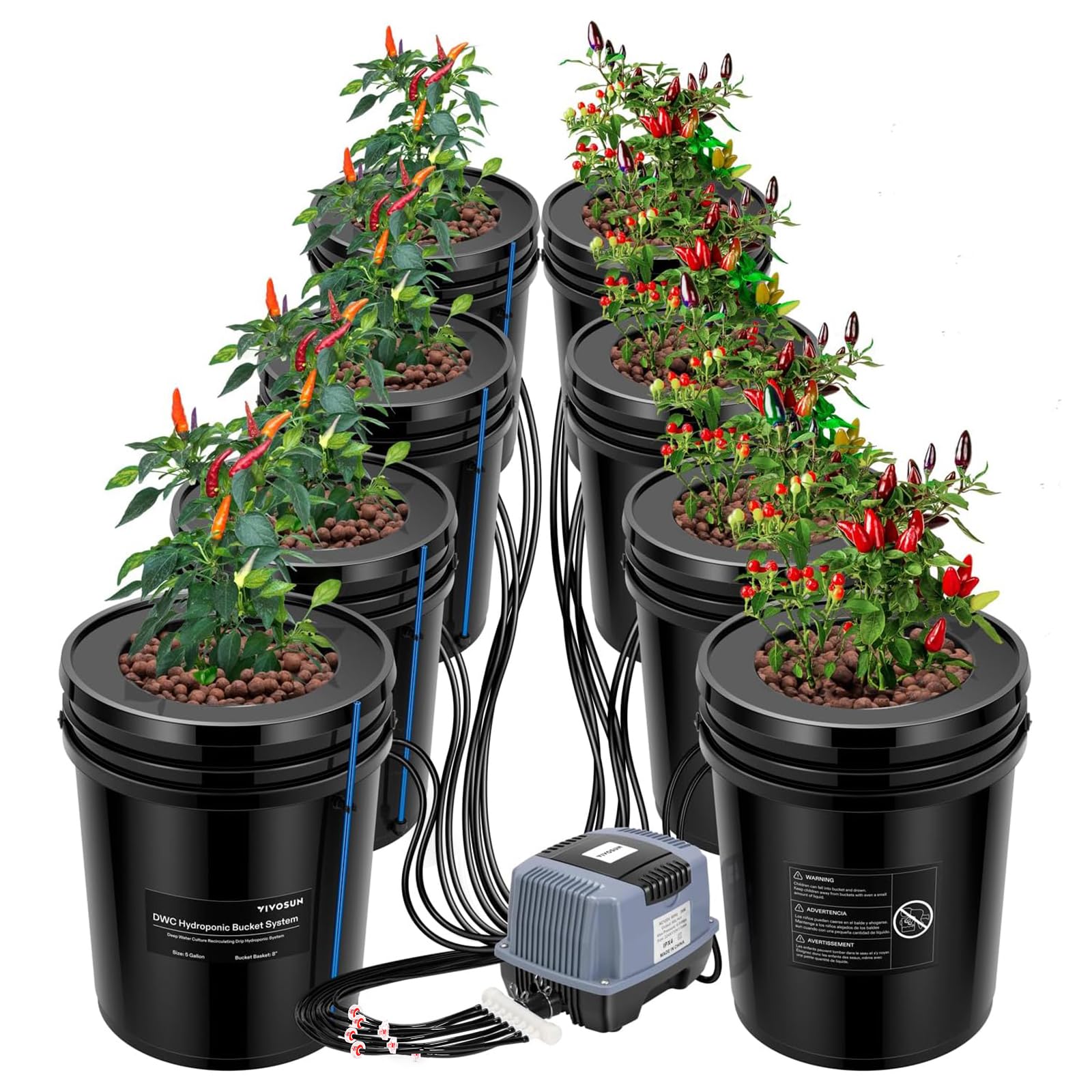
A complete DWC system with an added top-drip circulation loop for extra nutrient flow.
VIVOSUN takes the standard DWC bucket design and adds a top-drip irrigation ring to each bucket. This means the plant roots get oxygen from the air stones below while also receiving a gentle trickle of nutrient water from above, keeping the grow media moist during the early stages. Each of the eight buckets holds 5 gallons and comes with an 8-inch basket, a water-level tube with a red float ball, drip irrigation rings, and seal gaskets. The included air pump generates 60 L/min at 35W — noticeably more powerful than the standard 10W pumps found in budget DWC kits. A 24-meter air hose connects everything, with 16 inline check valves included to prevent water from backing up into the pump.
Owners rate the quality and performance highly — 65 and 64 positive mentions respectively — and note that the system is “super easy to set up,” with one grower reporting having it running with plants in just a few hours. A common praise is that the air pump is actually quiet once you connect the tubing, contrary to some online assumptions. The flexible bucket design means lids fit any standard 5-gallon bucket, giving you the option to swap in your own containers.
The leakage aspect gets mixed attention. Some buyers found that the pre-drilled holes on the buckets required sealing with silicone to prevent drips, and a few chose to drill holes in the lid instead for the air and water lines. The 1-inch ball air stones are on the small side for a 5-gallon bucket; several owners recommend upgrading to 4-inch disc stones for more even oxygenation. The noise level is the most cited negative, with 26 mentions, though this largely depends on the surface the pump sits on — placing it on a foam pad dampens the vibration significantly. For the price, this kit includes the strongest air pump in this DWC roundup.
Key Advantages
- Top-drip rings keep media moist for seedlings while roots develop in the deep reservoir
- 60 L/min air pump is among the most powerful in its class
- 8-inch baskets give more room for large root systems
- 24 meters of air hose and 16 check valves cover the whole array
Common Workarounds
- Pre-drilled bucket holes may leak — many owners seal them with silicone
- Included 1-inch air stones are undersized for 5-gal buckets; plan to upgrade
- Noise level varies; pump needs vibration damping for quiet operation
Best for: intermediate to advanced DWC growers who want the convenience of top-drip irrigation and need a powerful air pump that handles a full 8-bucket lineup.
Not ideal if: you are looking for a completely leak-free, out-of-the-box system with zero assembly fuss, or if absolute silence is non-negotiable.
6. Carpathen Hydroponic Tower
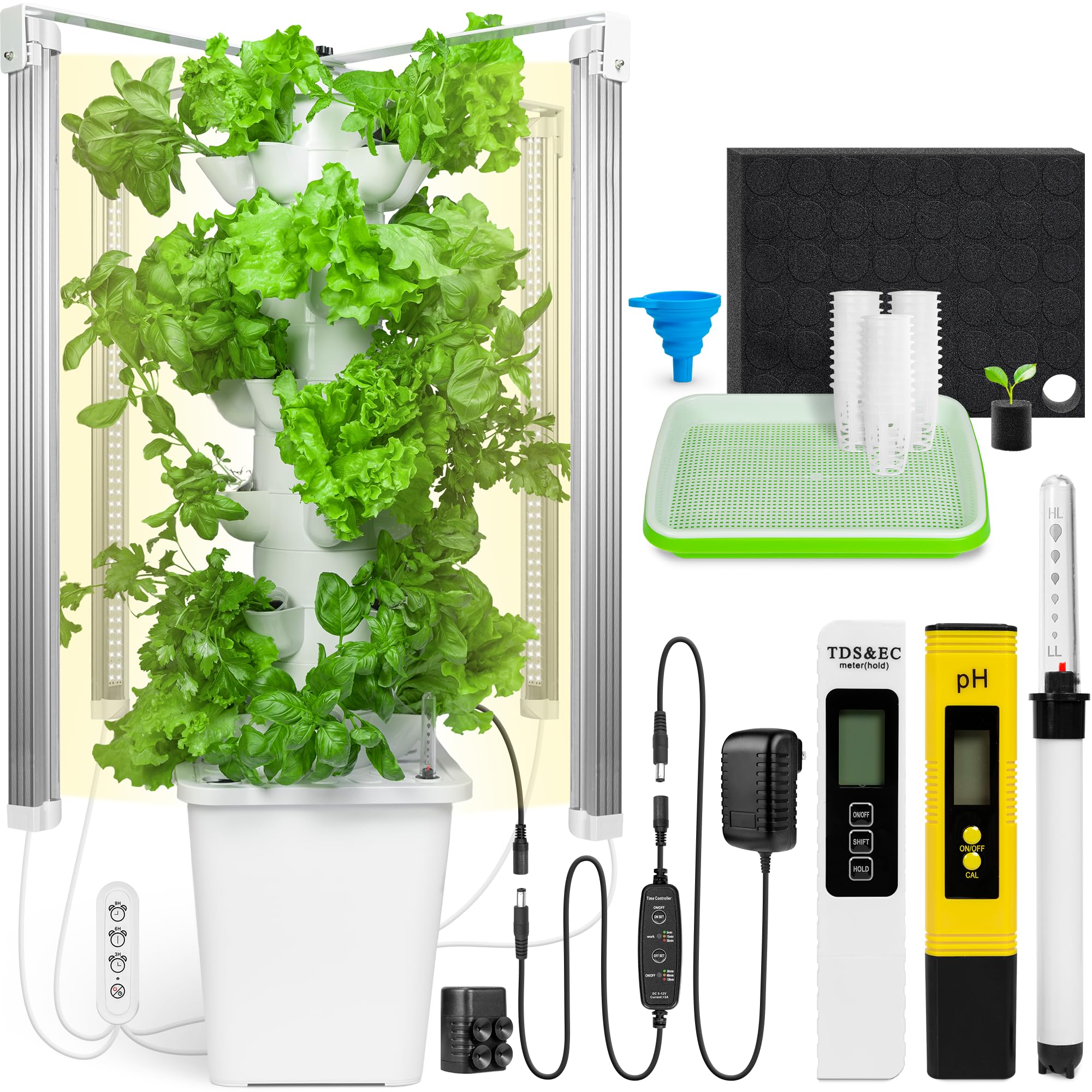
A true all-in-one tower with built-in pH/TDS meters and integrated lighting.
This 6-level vertical tower stands less than 3 feet tall and fits 30 plants in an area under 3 square feet — perfect for a kitchen counter or apartment balcony where space is tight. The kit includes full-spectrum LED grow lights with a 3/6/9-hour timer, a quiet submersible pump, a 10L water tank, a seedling tray, and both pH and TDS (total dissolved solids) meters. The inclusion of a pH/TDS meter is a rarity at this price tier and removes one of the biggest hurdles for beginners: guessing whether the nutrient solution is in the right range for healthy growth.
Assembly takes under 30 minutes according to multiple owners, and the clear picture instructions make it beginner-friendly. Growers report rapid results with lettuce, Swiss chard, kale, and spinach, with one owner noting that the bright lights and consistent water flow produced “3× faster harvests” compared to soil. The pump is quiet enough for a living room. On the downside, a few owners mention that the net pots do not seat completely flush with the tower — a design quirk that does not seem to affect growth but may bother the detail-oriented.
The compact size is both the biggest draw and the primary limitation. The 10L reservoir requires more frequent topping off than larger systems, especially when the plants are fully grown and drinking heavily. The manufacturer claims the system uses 95% less water than soil gardening, so the refill frequency is still manageable. For someone who wants a self-contained, everything-included system without subscriptions or hidden fees, this is a very clean package.
The bottom line: this is the most complete starter kit for vertical growing. The built-in meters and included lights mean you can unbox it, set it up in half an hour, and start growing without buying anything else except seeds.
Choose the Carpathen if: you are new to large hydroponics and want one box that contains everything (lights, meters, pump, tank) with a small footprint that fits in your kitchen.
Pass if: 30 plant sites is too few for your ambitions, or if you need a system that can go longer between water refills.
7. Gardyn Studio 2 Hydroponic System

The smartest system with an AI assistant and app-based plant care for the modern home.
The Gardyn Studio 2 is as much a piece of furniture as it is a hydroponic system. It grows 16 non-GMO plants in a sleek vertical tower that takes the footprint of a single potted plant. The upgraded LED grow lights feature sunrise and sunset modes, gradually brightening and dimming to mimic natural daylight cycles — a detail that creates a calming ambiance in the room. But the real headline here is the technology: an integrated high-resolution camera and “Kelby,” Gardyn’s AI assistant, that monitors plant health in real time and sends personalized care tips to your phone.
Assembly takes about 20 minutes, and the sealed columns with watertight silicone seals eliminate the need for periodic deep cleaning. The design earned high marks from an educator, who called it “an educators dream” for classroom use, and from multiple homeowners who love how it looks in their kitchen. One owner summed up their experience simply: “Grows crazy fast.” The system is app-dependent for the advanced features, and while the app is intuitive, some owners wish it offered more tailored plant-specific advice and bookmarking features.
The biggest consideration here is the ecosystem cost. The Studio 2 itself sits at a premium price, and you also need to factor in the subscription for seed packs and ongoing nutrient delivery. A few owners mentioned that the temperature/humidity sensor placement inside the unit could be better tune. But for the buyer who values design, convenience, and AI-powered guidance, the Gardyn delivers a polished experience that no other system in this list can match.
Standout Features
- AI-powered camera system provides real-time plant health monitoring and care alerts
- Sunrise and sunset LED modes mimic natural light cycles for healthier growth
- Sealed columns with silicone seals — virtually no cleaning needed
- Grows 16 plants in a footprint smaller than a standard houseplant pot
Consider Before Buying
- Requires ongoing subscription for seeds and nutrients
- App is essential for full functionality; no offline manual mode for advanced controls
- 16 plant sites is modest compared to cheaper systems with 70+ sites
Buy the Gardyn if: you want a stunning, low-maintenance hydroponic centerpiece that tells you exactly what to do via an app, and you are comfortable with a subscription model for supplies.
pass on it if: you want maximum plant count for your money, or if you prefer a completely self-contained system without recurring costs.
8. Growell 90-Pod Vertical Hydroponic System
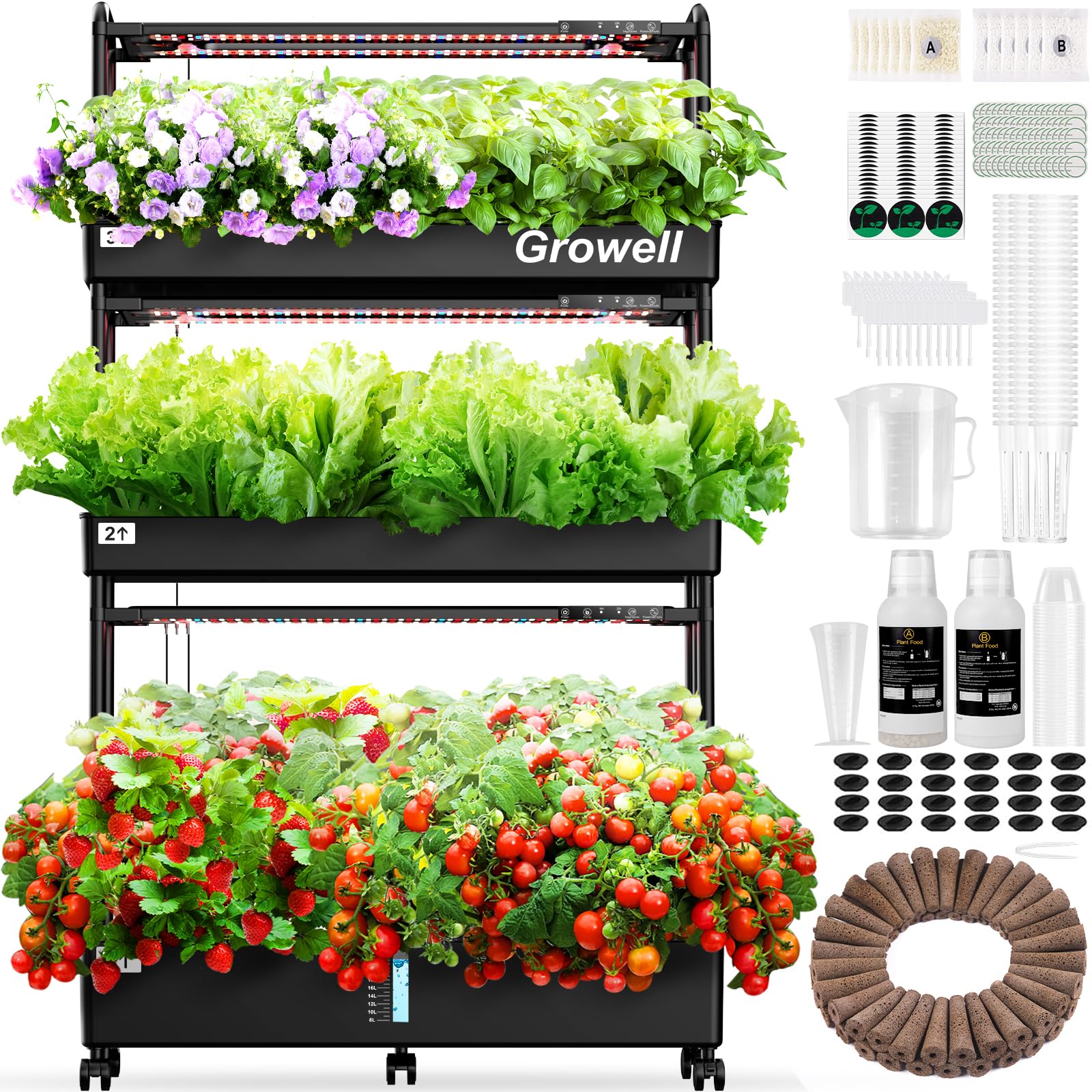
A 90-plant tower with separate light timers for vegetables vs. fruits — the biggest all-in-one kit.
This vertical tower from Growell packs 90 pods into a three-section cart with a 40-liter tank split into 24L, 8L, and 8L compartments. That massive reservoir means you can go for weeks without topping off — a real relief when you are managing 90 plants. The 90W lighting is split into three panels (30W each), and each layer’s lights can be controlled individually. The system offers two dedicated light modes: Vegetable Mode for leaf growth and Flowers & Fruits Mode for blooming plants. A 16-hour or 22-hour timer completes the configuration, letting you tailor the light cycle to the exact stage of growth.
Owners highlight how easy assembly is — the instructions are clear, and the cart comes on 4 wheels (2 locking) so you can move it around. The bottom section has extra height for taller plants like tomatoes, which is a thoughtful detail many towers overlook. The pump is quiet, and the system survived a week-long vacation without any issues. One owner in an agricultural setting called it a “must purchase” for classroom use, noting that students loved watching the growth stages unfold.
The noise level gets a mixed reception — the water circulation makes a noticeable sound that one owner described as “audible over conversation,” so it may not be ideal for a silent study room. The price is on the higher end, and a few buyers felt the plastic components are slightly delicate for a cart that gets moved around frequently. The kit is genuinely complete: it includes 563 pieces covering everything from sponges to blackout covers, so you truly only need seeds. This is the system to buy when you are ready to dedicate a corner of your home to serious, high-volume production.
Why It Stands Out
- 90-pod capacity with 40L water tank — the largest all-in-one kit in this guide
- Individual light controls per layer with dedicated vegetable and fruit modes
- Lockable rolling wheels make it easy to reposition
- Extra-tall bottom section accommodates fruiting plants like tomatoes
Honest Caveats
- Water pump noise is noticeable at conversational level
- Plastic construction feels slightly less sturdy than premium metal-framed towers
- Premium price places it well above the average budget for most home growers
Go with the Growell if: you are ready to manage a 90-plant garden and want the most complete all-in-one tower with lighting, wheels, and a massive water tank — everything except seeds.
Consider another option if: your space is in a quiet living area where even moderate water sounds would be a bother, or if your budget does not stretch to the premium tier.
9. ALTO GARDEN Hydroponic Tower (24 Site)
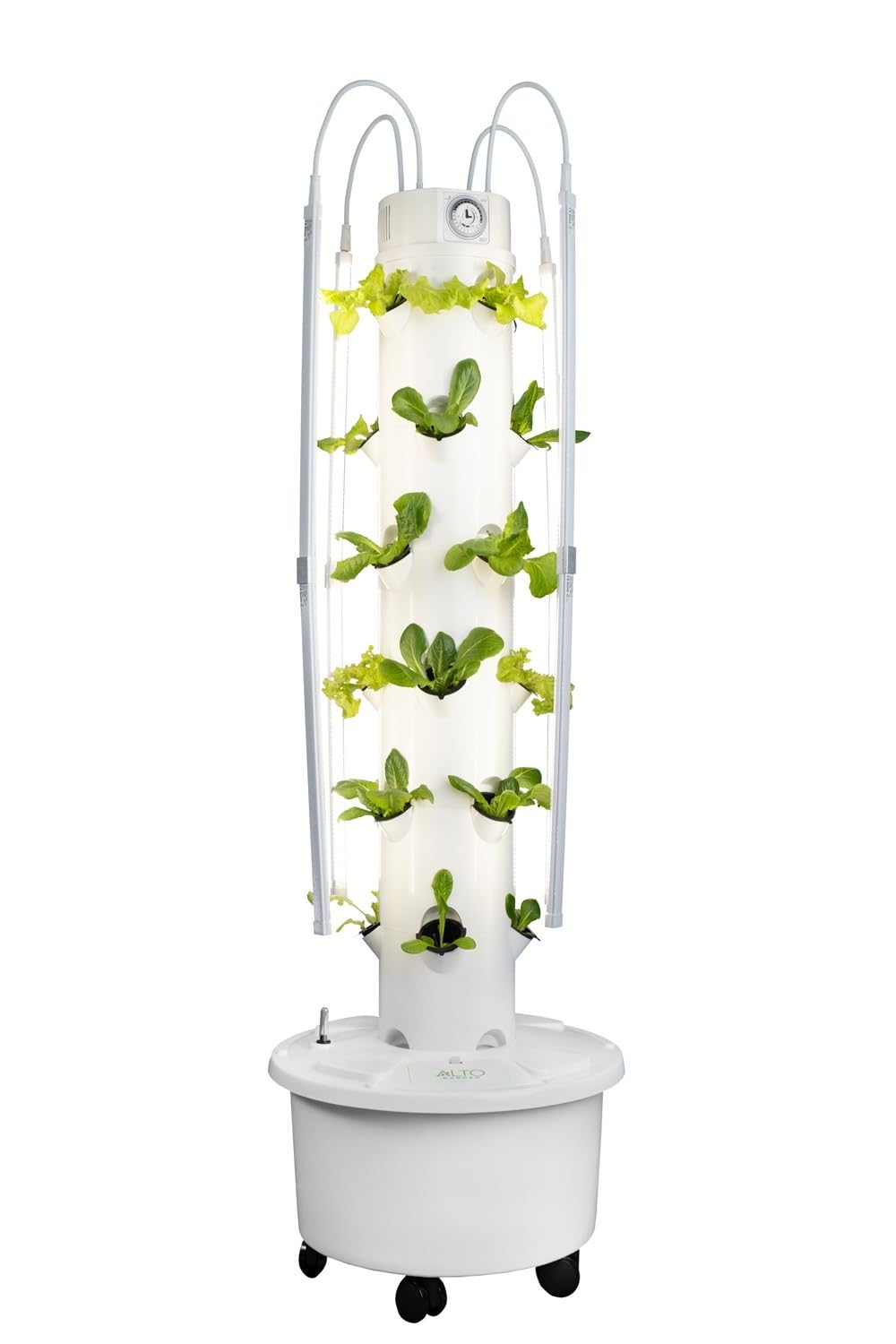
The premium tower with industry-leading 2mm thick walls and zero subscription fees.
ALTO GARDEN built this tower for the discerning grower who wants a durable, serviceable system that does not lock you into a monthly subscription. The tower walls are 2mm thick — notably thicker than most competitors — and each layer is a solid 360-degree construction, meaning no seams or joints to leak. The 6-level tower holds 24 plants in less than 3 square feet, with wide-spaced pots that give each plant room to fully mature without overcrowding. The kit comes with adjustable LED grow lights (with built-in timer), a water pump with timer, a 10-gallon reservoir on wheels, 24 net pots, 30 rockwool cubes, A+B plant nutrients, a digital pH test pen, and even a 4-head germination light with clamp.
Owner feedback is overwhelmingly positive. Multiple buyers mention that the customer service is exceptional — one had a faulty LED wand replaced quickly with extra supplies included. The system is “extremely well-designed” and “easy to assemble,” with plants (Swiss chard, kale, lettuce) outgrowing an outdoor fall garden. The tower recycles water like a fountain — pumping from the reservoir to the top and dripping back down — which the manufacturer claims uses 95% less water than soil farming. One owner praised that there are “no hidden fees” and that the company offers readily available replacement parts (extra baskets, nozzles).
At this premium price, you are paying for build quality and confidence — no subscriptions, a generous starter kit, and a company that clearly invests in customer support. The main trade-off is capacity: 24 plant sites is fewer than many cheaper systems, so if your goal is maximum plant count, systems like the Growell 90-pod tower give you nearly four times the growing capacity for a similar budget. But if durability, service, and long-term ownership experience matter most, the ALTO GARDEN is the gold standard in this roundup.
What Justifies the Investment
- 2mm thick tower walls — the thickest in the test — with no leak-prone seams
- No monthly subscription; you own the system outright
- Comprehensive kit: pH pen, nutrients, germination light, rockwool, and net pots
- Outstanding customer service documented across multiple owner experiences
The Only Trade-Offs
- 24 plant sites are limited compared to other systems in the same price bracket
- Tall 66-inch tower may not fit under standard kitchen cabinets
Invest in the ALTO GARDEN if: you value build quality, zero recurring fees, and a proven customer support team above all else. This is the tower you buy once and count on for years.
Consider a higher-capacity option if: your top priority is growing as many plants as possible for the upfront cost, or if a 66-inch tower is too tall for your space.
Understanding the Specs
Reservoir Capacity (Liters)
This number tells you how much water the system holds. A larger reservoir means fewer refills and a more stable nutrient concentration. For a system with 30+ plants, look for at least 20L of water capacity. Systems with 40L or more can often go a full work week without topping off, even with thirsty crops like tomatoes. A water-level window on the tank makes it easy to check the level at a glance rather than opening the lid and disturbing the roots.
Grow Light Wattage (Watts)
Integrated LED lights power your plants’ photosynthesis. A 53W panel works well for a 66-pod system focused on leafy greens, but the wattage needs to be spread across the full plant zone for even coverage. For towers with multiple layers, look for systems where each layer has its own light panel (such as 30W per panel). The real-world check is whether the light height is adjustable — raised lights for tall plants prevent leaf scorching and ensure the lower leaves still receive usable energy.
Plant Count vs. Density
The number of plant sites matters, but so does the spacing. A system with 108 sites at 2.5-inch diameter holes works well for lettuce and herbs but becomes too crowded for tomatoes or peppers. A system with 24 wide-spaced sites may actually yield more usable fruit because each plant has room to branch and fill out. Look at the hole size and spacing, and match it to your target crops: dense greens want many small sites; fruiting plants want fewer, larger sites.
System Type
Tower systems stack plants vertically around a central column, recirculating water from a reservoir at the base. They are space-efficient but can struggle with even light distribution to lower tiers. DWC (Deep Water Culture) bucket systems suspend roots in an oxygenated nutrient bath — ideal for large plants with aggressive root systems. PVC pipe systems run nutrient water through horizontal pipes with net pots, offering many planting sites in a horizontal footprint. Each type has a trade-off between density, root space, and maintenance complexity.
FAQ
How often do I need to change the water in a large hydroponic system?
Can I grow tomatoes and peppers in a tower system?
What is the difference between DWC and aeroponic tower systems?
Will the included grow lights be enough, or do I need to add more?
How do I clean a large hydroponic system after a harvest?
Why do some systems have a water pump timer and what setting should I use?
Are PVC pipe systems safe for growing food?
Can I set up a large hydroponic system outdoors on a balcony?
How much electricity does a large hydroponic system use?
Final Thoughts: The Verdict
For most buyers, the large hydroponic systems winner is the Ahopegarden 66-Pod System because it delivers the best balance of capacity, independent growing zones, built-in lighting, and owner satisfaction for a mid-range price. If you want a hands-off smart experience with AI guidance, grab the Gardyn Studio 2. And for maximum durability and zero recurring fees, the ALTO GARDEN Tower is the one to reach for.
How We Picked
We do not accept paid placement. Every pick is matched to a real buyer and a real use-case; we do not hands-on test units.
Sources & Methodology
Specifications: manufacturer listings and product documentation. Review insights: verified customer reviews, as of July 2026. Pricing: not shown on this page (it changes often); check the current price via the retailer link.
As an Amazon Associate, Lawn Gear Lab earns from qualifying purchases. This does not affect which products we feature.