
Specs are compiled from manufacturer listings and verified buyer reviews and can change over time — please confirm the key details on the product page before buying.
Flea beetles are small but they punch way above their weight — they riddle your eggplants, tomatoes, and brassicas with tiny holes until the leaves look like they have been shot with buckshot. You need something that kills on contact without nuking your soil or your harvest window, and that is exactly what an insecticidal soap does. The trick is picking the right one, because not all soaps handle these jumpy little pests the same way.
I’m Rikta — the founder and writer behind Lawn Gear Lab. This guide is built by comparing the manufacturers’ published specifications and the patterns across verified customer reviews, so you get each pick’s real strengths and trade-offs instead of marketing spin.
Below you will find the eight best insecticidal soap for flea beetles, ranked by real-world effectiveness so you can stop the damage fast and keep your garden producing.
Our Picks at a Glance


How To Choose The Best Insecticidal Soap For Flea Beetles
Flea beetles are jumpy and fast, so your spray needs to hit them before they hop away. Here are the three things that matter most when picking your soap.
Concentrate vs. Ready-to-Use
A concentrate (like a 16-ounce bottle you mix with water) gives you many gallons of spray — ideal if you have a big vegetable patch. A ready-to-use bottle is grab-and-go for a few pots or a small bed. The trade-off: concentrates cost less per gallon but require a separate sprayer and careful measuring. Ready-to-use sprays cost more per ounce but you can start spraying in seconds.
Active Ingredient Strength
All the products here use potassium salts of fatty acids — the active ingredient that dissolves the flea beetle’s outer shell and dehydrates it. The percentage matters: a 1% solution is gentler on plants and works well for light infestations, while higher concentrations knock down heavy populations faster but need more careful dilution to avoid leaf burn.
OMRI Listing and Harvest Timing
If you are growing food, look for OMRI Listed (Organic Materials Review Institute) soaps — they are certified for organic gardens and can be used right up to the day of harvest. That means you can spray a flea beetle outbreak on your eggplants today and pick dinner tomorrow.
Quick Comparison
| Model | Best For | Type | Volume | OMRI Listed | Amazon |
|---|---|---|---|---|---|
| Safer 5118-6 Concentrate★ Best Overall | Best Overall | Concentrate | 16 fl oz | Yes | Amazon |
| Bonide Japanese Beetle KillerReady-to-Use Power | Ready-to-Use Power | Ready-to-Use | 32 fl oz | No | Amazon |
| NATRIA Insecticidal SoapTwo-Pack Value | Two-Pack Value | Ready-to-Use | 48 fl oz | Yes | Amazon |
| Safer with Seaweed Extract | Plant-Friendly Formula | Ready-to-Use | 32 fl oz | Yes | Amazon |
| Ferti-lome Natural Guard | Premium Contact Spray | Ready-to-Use | 16 fl oz | No | Amazon |
| Southern Ag Concentrate | Powerful Concentrate | Concentrate | 16 fl oz | No | Amazon |
| Bonide Insect Soap (3-Pack) | Garden Coverage | Ready-to-Use | 96 fl oz | No | Amazon |
| Garden Safe (6-Pack) | Organic Bulk Value | Ready-to-Use | 192 fl oz | Yes | Amazon |
In‑Depth Reviews
1. Safer 5118-6 Insect Killing Soap Concentrate
Our pick — over 4★ from 6,000+ verified ratings; the strongest balance of quality and price.
The concentrated heavyweight that turns a single bottle into gallons of flea-beetle defense.
This is the crowd favorite for a reason — over 6,300 owners have rated it 4.4 stars, and the thing everyone raves about is its effectiveness against soft-bodied pests. The active ingredient is potassium salts of fatty acids, which works by weakening the flea beetle’s outer shell and dehydrating it on contact. You mix 2.5 to 4 tablespoons of this concentrate per gallon of water, and one 16-ounce bottle makes enough spray to cover a sizable vegetable garden all season.
Because it is OMRI Listed, you can spray it on your eggplants, tomatoes, and greens right up until the day you harvest — no waiting period. Buyers report that it wiped out severe aphid infestations with “90% dead day 1, all by day 3,” and the same contact-kill action works on flea beetles. The catch is that over-application or mixing it too strong will burn leaf edges, so follow the dilution instructions carefully and spray in cool, indirect sunlight to avoid damage.
Why it wins
- Concentrated — one 16-oz bottle makes gallons for pennies per treatment
- OMRI Listed for organic gardening; use up to day of harvest
- Kills a massive list of pests including aphids, whiteflies, spider mites, and leafhoppers
- Does not kill beneficial insects when used as directed
Know before you buy
- Needs a separate sprayer and careful dilution — not grab-and-go
- Can burn leaves if mixed too strong or sprayed in hot sun
- Strong smell that some find unpleasant
Grab it for: gardeners with medium-to-large plots who want the most pest-killing power per dollar from an organic concentrate.
Think twice if: you want a ready-to-use bottle — you will need to mix this yourself with a pump sprayer.
2. Bonide Japanese Beetle Killer Ready-to-Use Spray, 32 oz
A trigger-spray solution for when you spot the first hole and need to act now.
If you do not want to mix anything, this 32-ounce ready-to-use spray is your go-to. The bottle lists flea beetles by name on the label — it directly controls them along with Japanese beetles, aphids, leafhoppers, caterpillars, and stink bugs. Owners mention that it “worked very well” on rose plants, though most note that you need two or three applications to fully knock down an active infestation. One buyer summed it up: “Worked very well. Rose plants are good now. The only thing is we should spray at least two or three times to get rid of Japanese beetles.”
The convenience of a ready-to-use sprayer means you can walk the garden and hit any leaf showing the tell-tale shot-hole pattern. The flip side: the effectiveness gets mixed feedback — some owners had beans “decimated” and found it totally ineffective. That pattern is common with contact sprays; thorough coverage of the leaf undersides is make-or-break. For a small bed or container garden, this is the fastest way to respond. For a larger infestation, you will want the concentrate above.
When it works: for spot-treating flea beetle hot spots on vegetables, flowers, and ornamentals with zero mixing time.
Its limit: effectiveness is tied directly to coverage — miss the undersides once and the beetles survive.
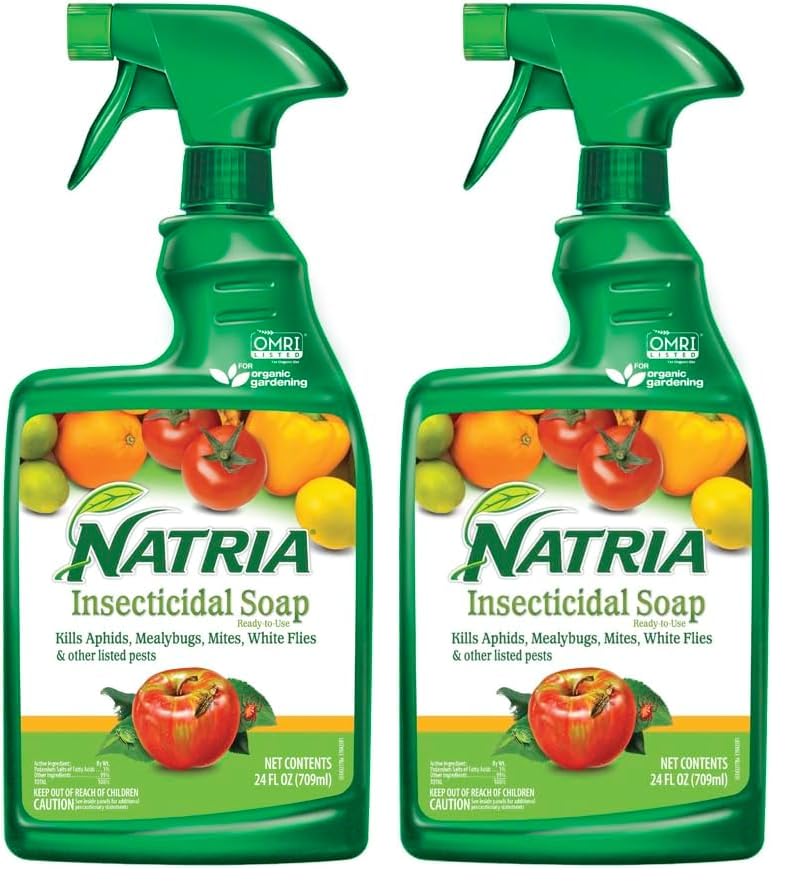
3. NATRIA Insecticidal Soap, Ready-to-Use, 24 Ounce (Pack of 2)
Two ready-to-use bottles that bring 48 ounces of quiet, no-fuss flea beetle control.
NATRIA gives you two 24-ounce bottles totaling 48 fluid ounces — a 3.0x larger volume than the Safer concentrate bottle, though this is ready-to-use so it goes faster. Owners love that it has no harsh smell and does not hurt plants or pets. Customers note it was “effective against severe mealybug infestation after other products failed” and got rid of tiny black bugs on lemon and lime trees. The active ingredient is a 1% potassium salts of fatty acids solution — gentler than a concentrate, which means lower risk of leaf burn but may need more frequent reapplication on heavy flea beetle populations.
The recurring gripe is the sprayer bottle. Multiple owners mention the nozzle failing or the hose not fitting the cap correctly, and some transferred the liquid to a different sprayer. That is annoying but does not affect the soap itself. For a small garden or a handful of houseplants, this two-pack gives you a spare bottle to keep in the greenhouse.
Best for: indoor and outdoor plants where odor matters — this one is nearly scent-free and safe for organic gardens up to harvest day.
Downside: the sprayer has quality issues; budget a few minutes to swap bottles if yours arrives with a dud nozzle.
4. Safer Insect Killing Soap With Seaweed Extract, 32 oz
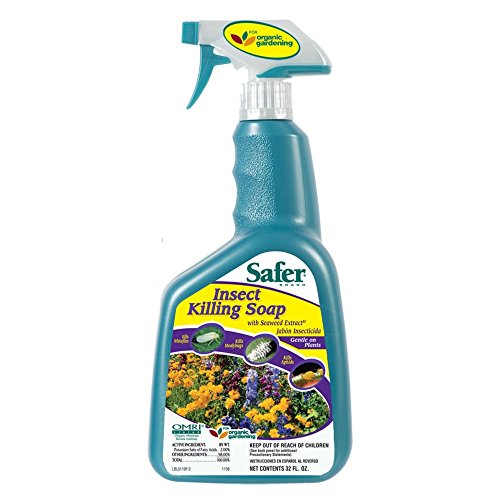
A ready-to-use soap with a bonus — seaweed extract that feeds your plant while killing pests.
This 32-ounce ready-to-use spray adds seaweed extract to the standard insecticidal soap formula. Reviewers point out that it not only eliminated whiteflies, gnats, and mites after two applications, but also improved the greenness of the foliage — the seaweed acts as a mild foliar feed. It is OMRI Listed and safe for use around children and pets when used as directed, making it a solid choice if you have a mixed garden of vegetables and ornamentals.
The downside is that it is a ready-to-use product, so you will go through the 32 ounces faster than a concentrate would. Owners note that it took a couple of applications to work on tougher pests. For flea beetles, which are quick to jump away, a direct and thorough soak is essential. If you want a single bottle that both treats and conditions your plants, this is the one.
Why it stands out: the seaweed extract gives your plants a nutrient boost after spraying, which helps them recover from flea beetle damage faster.
Its limit: for a large garden, you will burn through the 32 oz bottle quickly — this is best for small beds or targeted treatment.
5. VPG Fertilome Natural Guard Insecticidal Soap, 16 oz

A precise, small-bottle spray for the gardener who wants a targeted punch against leafhoppers and mites.
Ferti-lome brings a compact 16-ounce ready-to-use spray that targets lace bugs, spiders, mites, aphids, leafhoppers, and earwigs. It is described as an environmentally friendly contact spray safe for use indoors and outdoors on fruit trees, vegetables, ornamentals, and citrus. At 4.5 stars from 132 ratings, it is one of the highest-scoring products here, and owners who used it on gardenias found it helpful.
The catch is significant — some shoppers say that even at half the recommended dosage, the product severely damaged their spinach crop and turned grass brown. This pattern suggests that the formula can be harsh on certain tender-leaf crops, so test it on a small area before spraying your whole vegetable bed. It has the lowest total volume of any pick here (16 fluid ounces), so it is best for small, targeted treatments rather than covering a large flea beetle infestation.
Best for: spot-treating ornamentals, shrubs, and fruit trees where you want a concentrated contact kill.
Be careful: it has damaged delicate crops like spinach even at reduced doses — test on a single leaf first.
6. Southern Ag Insecticidal Soap Concentrate, 16 oz
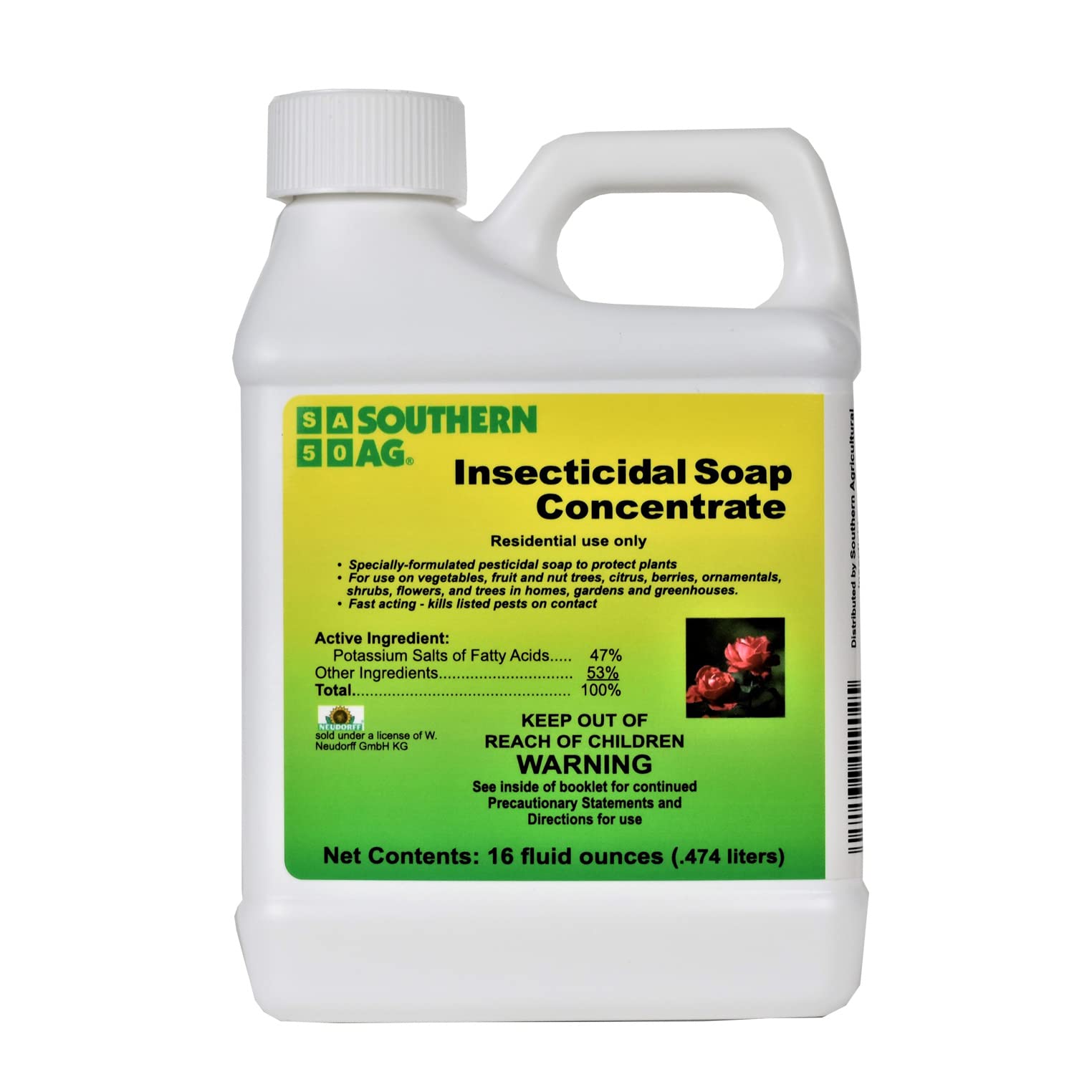
A thick, potent concentrate that punches above its weight for aphids and mites.
Southern Ag makes a concentrate that one owner described as “concentrated to the point that it is thick” — a strong sign of a potent formula. Buyers report it “works like a charm for aphids” and is effective as a miticide. A notable feature: owners say that once it dries on the plant, it does not wash off in the rain, which is a huge advantage if you are fighting flea beetles during a wet season.
The downside is that it takes 4 tablespoons to make a single quart of spray, so one 16-ounce bottle goes quickly if you are tackling a full infestation. At only 26 ratings, the sample size is very small — the 4.4-star score is promising but less proven than the Safer concentrate above. For the price, you are paying a premium for a concentrated formula that sticks to foliage through rain.
Why buy it: the rain-fast formula means one good spraying session holds up even if a storm hits the next day.
The trade-off: heavy dilution ratio (4 tbsp per quart) means the bottle disappears fast on a large garden.
7. Bonide Insect Soap Ready-to-Use, Quart (3 Pack)
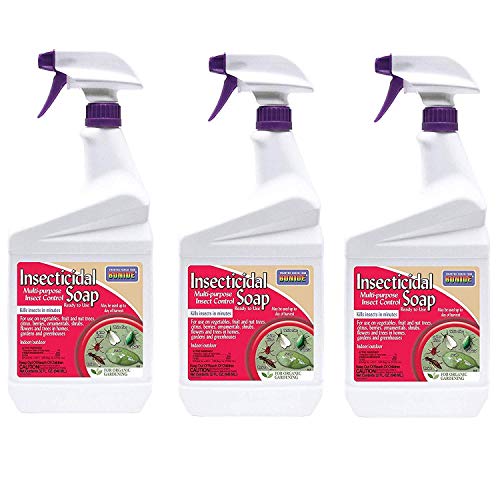
Three quart bottles for the gardener who wants to blanket a bed without mixing.
Bonide’s three-pack gives you 96 fluid ounces of ready-to-use insecticidal soap spread across three quart bottles. The formula uses potassium fatty acids from plants to kill insects on contact, and it is preferred by organic gardeners because it does not persist in the environment. You can use it up to the day of harvest on vegetables, fruits, and flowers. Owners mention it works well on caterpillars and general garden bugs, with one noting they spray “every few days” to keep flowers lush.
The biggest practical problem is packaging. Multiple customers note that all three bottles leaked during shipping because the caps were not secured well and the bottles were not packed in plastic bags. That is a frustration you will deal with on delivery. Also, for the total volume, this comes at a premium compared to buying a concentrate and mixing it yourself. If you value grab-and-go convenience over economy, this is a solid option for covering a medium garden.
Best for: no-mix gardeners with a medium-sized flower or vegetable bed — open a bottle and start spraying immediately.
Watch out for: leaking bottles in transit — open the box over the sink or a tarp.
8. Garden Safe Insecticidal Soap, 32 Fluid Ounces (Pack of 6)
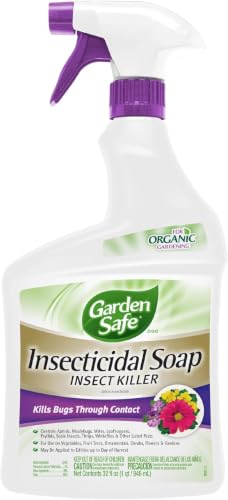
A six-bottle stockpile that treats your entire garden without a single mixing step.
This is the bulk champion — six 32-ounce bottles giving you 192 total fluid ounces of ready-to-use spray. The formula contains potassium salts of fatty acids and is designed for organic gardening. You can use it indoors, outdoors, and in greenhouses on vegetables, fruit trees, ornamentals, shrubs, and flowers. It kills aphids, mealybugs, mites, leafhoppers, psyllids, scale insects, thrips, and whiteflies — and all of those are contact-killed just like flea beetles.
Owners confirm it “kills aphids on contact” and worked on spider mites within hours. The spray nozzle on the bottle is a common weak point — several reviewers point out it fails mid-bottle. Still, the product itself is effective and has a 4.4-star average from over 2,700 ratings. At this volume, you are paying for convenience rather than economy (a concentrate would cost less per ounce), but having six bottles ready to go means you never have to pause a spraying session to mix a new batch.
Why stock up: six bottles mean you can treat a large garden multiple times without ever leaving to buy more — crucial during a fast-moving flea beetle outbreak.
The annoyance: the spray nozzle is unreliable; keep a spare sprayer handy if the trigger fails.
Understanding the Specs
Potassium Salts of Fatty Acids
This is the active ingredient in every insecticidal soap. It works by penetrating the flea beetle’s outer shell (the cuticle), causing the cells to collapse and the insect to dehydrate and die within minutes. It only works on contact, so you must spray the pest directly — once it dries, it offers no residual protection. That is why repeat applications every 5 to 7 days are often needed to catch newly hatched or migrating beetles.
Concentrate vs. Ready-to-Use
A concentrate (like the 16 oz Safer bottle) can be diluted with water to make several gallons of spray — much more economical for large gardens. A ready-to-use spray comes pre-mixed in a trigger bottle, costing more per ounce but saving you the effort of mixing and the cost of a separate sprayer. For a single raised bed, ready-to-use is fine. For a half-acre vegetable patch, the concentrate pays for itself in one season.
FAQ
Will insecticidal soap kill flea beetles on contact?
Can I use insecticidal soap up to the day I harvest my vegetables?
How often should I spray insecticidal soap for flea beetles?
Will insecticidal soap harm my plants or burn the leaves?
Is insecticidal soap safe for pollinators like bees?
What is the difference between insecticidal soap and neem oil?
Do I need to rinse insecticidal soap off my plants after spraying?
Which is more economical for a large garden — concentrate or ready-to-use?
Will insecticidal soap kill flea beetle larvae in the soil?
Can I mix insecticidal soap with other garden products?
Final Thoughts: The Verdict
For most gardeners, the insecticidal soap for flea beetles winner is the Safer 5118-6 Insect Killing Soap Concentrate because it delivers the most pest-killing power per dollar from a trusted organic formula with over 6,000 four-star ratings backing it up. If you want a grab-and-go bottle for quick spot-treatments, grab the Bonide Japanese Beetle Killer Ready-to-Use Spray. And for bulk coverage across a large vegetable garden without mixing a single batch, the Garden Safe Insecticidal Soap 6-Pack is the one to reach for.
How We Picked
We do not accept paid placement. Every pick is matched to a real buyer and a real use-case; we do not hands-on test units.
Sources & Methodology
Specifications: manufacturer listings and product documentation. Review insights: verified customer reviews, as of July 2026. Pricing: not shown on this page (it changes often); check the current price via the retailer link.
As an Amazon Associate, Lawn Gear Lab earns from qualifying purchases. This does not affect which products we feature.