
Specs are compiled from manufacturer listings and verified buyer reviews and can change over time — please confirm the key details on the product page before buying.
Finding a bargain on a huge bag of soil is easy. But finding one that actually helps your plants thrive — without arriving waterlogged, full of bark chips, or teeming with fungus gnats (tiny flies that live in damp soil) — takes more care. The key is knowing which blends deliver on their promises, from professional-grade mixes with mycorrhizae (beneficial fungi that help roots absorb water) to moisture-control formulas that forgive a busy week. This guide compares seven of the largest bags available, sizing up what is inside each one and how real gardeners have fared with them.
I’m Rikta — the founder and writer behind Lawn Gear Lab. This guide is built by comparing the manufacturers’ published specifications and the patterns across verified customer reviews, so you get each pick’s real strengths and trade-offs instead of marketing spin.
Whether you are repotting a houseplant collection or filling a dozen outdoor containers, these large bags of potting soil earned their spot in the garden shed through volume, ingredient quality, and reliable results.
Our Picks at a Glance
How To Choose The Best Large Bags Of Potting Soil
Picking the right large bag of potting soil saves you money and saves your plants from struggling. The size label alone — “2 cubic feet” or “44 quarts” — tells you very little about how the mix behaves once it is in a pot. You need to check what is actually inside the bag.
Ingredients: What the blend is made of
Look at the base ingredient first. Sphagnum peat moss is the most common foundation; it is lightweight and acidic, so lime is often added to balance the pH (a measure of acidity or alkalinity). Coco coir (coconut fiber) is an alternative that holds water well and rehydrates easily after drying out. A good mix also includes perlite — those little white pebbles — for drainage and air pockets that roots need to breathe. Some products add worm castings, kelp meal, or alfalfa meal for nutrients, while others offer a blank slate you feed yourself.
Additives and mycorrhizae
Mycorrhizae are beneficial fungi that form a partnership with plant roots, helping them pull more water and nutrients from the soil. A mix that includes these microscopic helpers can give your plants a noticeable head start — they reduce transplant shock and help seedlings establish faster. Other additives like wetting agents help the soil absorb moisture evenly, so water does not run straight through dry peat.
Size versus weight
A 2-cubic-foot bag can weigh anywhere from 25 pounds to over 40 pounds depending on how moist it is and what the filler is. Lighter mixes are easier to carry and work with, but they can dry out faster. Heavier ones may contain more sand or topsoil, which adds weight but can make the soil dense and slow-draining for containers — a risk for root rot.
Quick Comparison
| Model | Best For | Volume | Key Additives | Weight | Amazon |
|---|---|---|---|---|---|
| Premier Pro Mix★ Best Overall | Seed Starting & Seedlings | 2.8 cu ft | Mycorrhizae | 25 lbs | Amazon |
| Brut OrganicPremium Organic | Nutrient-Rich Growth | 21 quarts | Worm Castings, Azomite | — | Amazon |
| Espoma AP2 | All-Purpose Versatility | 2 cu ft | Myco-Tone, Alfalfa Meal | — | Amazon |
| Esbenshade’s | Lightweight Airy Mix | 44 quarts | Perlite, Lime | 22 lbs | Amazon |
| Espoma VFGS1 | In-Ground Planting | 1 cu ft (2-pack) | Earthworm Castings | — | Amazon |
| Roots Organics | Heavy Feeding Plants | 1.5 cu ft (10 gal) | Bat Guano, Mycorrhizae | — | Amazon |
| Miracle-Gro MC | Forgiving Watering Schedule | 2 cu ft | AquaCoir Formula | 40.5 lbs | Amazon |
In‑Depth Reviews
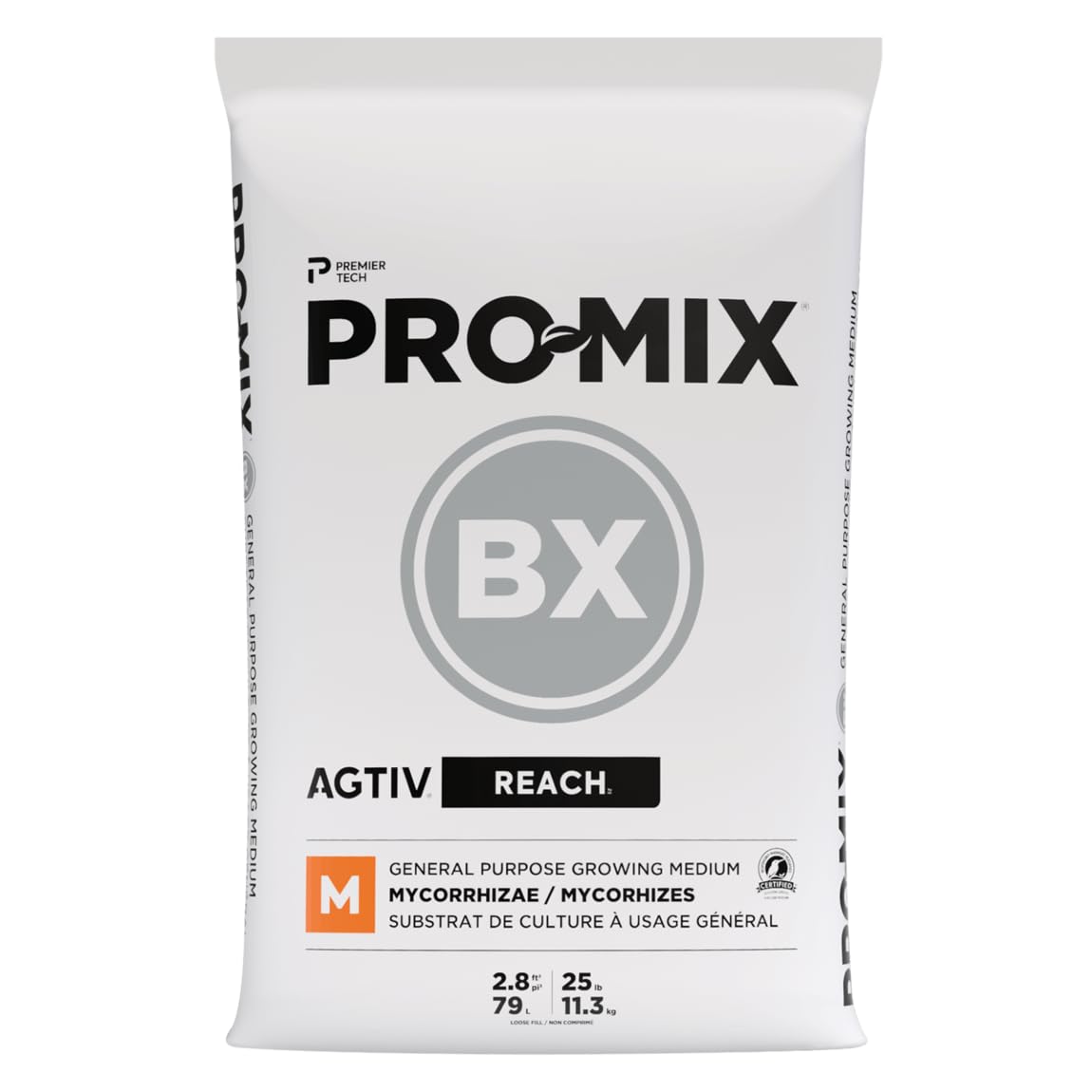
1. Premier B10281RG Pro Mix Loose with Mycorrhizae, 2.8 Cubic Feet
Our pick — over 4.5★ from 200+ verified ratings; the strongest balance of quality and price.
A full 40% more volume than a standard 2-cubic-foot bag, and the mycorrhizae give fine roots a natural boost.
You get the biggest bag on this list at 2.8 cubic feet, which is a full 40% more than the standard 2-cubic-foot bags that most brands sell. This peat-based professional growing medium is designed for greenhouse work and transplanting, and it comes laced with mycorrhizae (beneficial fungi that help roots absorb more water and nutrients). At just 25 pounds for that volume, it is notably light, so hauling it out of the car and around the yard is much easier.
What wins people over here is the soil quality — reviewers mention it far more than any other feature. Owners consistently find it excellent for container plants, seed starting, and fine-rooted plants like African Violets. Many note that germination rates (how many seeds sprout) are better than with regular potting soil. One long-time user points out: “I still think this is the best.” The mix contains perlite for drainage, and its texture is loose enough that seedlings push through without struggle. If you compare it to the heavier Miracle-Gro Moisture Control below, this Premier Pro Mix is far easier to work with for starting seeds.
The honest trade-off is that it is a nutrient-free base. This is actually a bonus for serious growers who want to control their own fertilizer regimen (the schedule of plant food you add). But if you need a mix that feeds your plants out of the bag, you will need to add your own amendments. A few buyers also mention that a past version included an antifungal ingredient (a substance that stops mold) that is no longer present.
Pro-Grade Advantages
- Biggest volume on this list at 2.8 cubic feet — 40% more than standard 2-cu-ft bags
- Peat-based, light at 25 pounds, and easy to carry
- Contains mycorrhizae for improved root growth
- Excellent feedback on quality and seed germination rates
Know Before You Buy
- Completely nutrient-free — you must add your own fertilizer
- No longer includes an antifungal ingredient, which some previous buyers relied on
The grower’s choice: Best for anyone who wants a blank-slate professional mix and prefers to control their own feeding schedule. The mycorrhizae give seedlings a head start that the Espoma AP2 below cannot match.
Think twice if: You want a nutrient-rich soil you can use straight from the bag without adding anything.
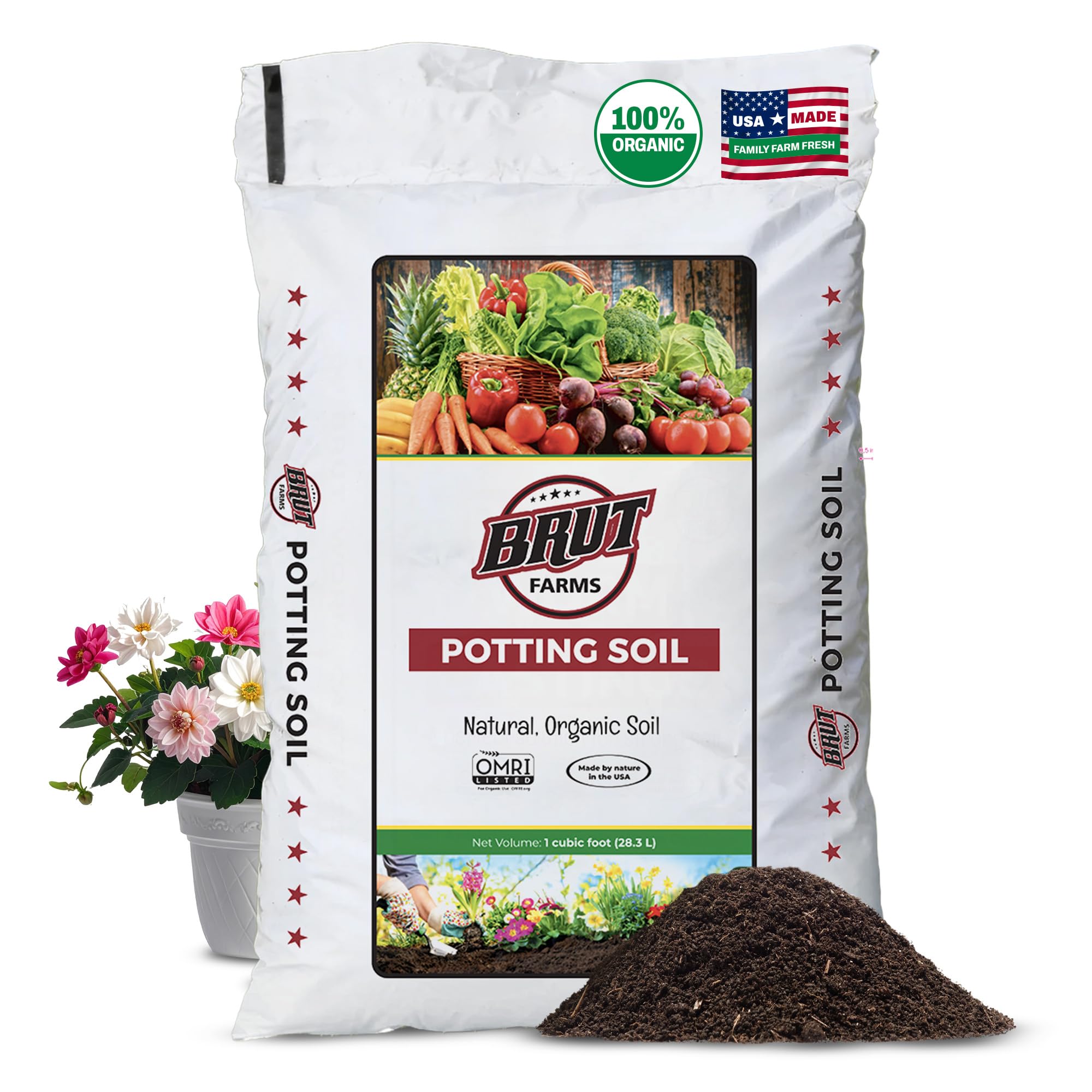
2. Brut Organic Potting Soil 1 CU FT – Premium Plant Soil with Organic Worm Castings
One owner called it “hands down the best potting soil I’ve ever put my hands in” — no sticks, no wood chips, just dark, crumbly organic matter.
Scoop a handful of this mix and you will see what makes it different right away — no sticks, no wood chips, just dark, crumbly soil that smells rich and alive. The secret is the organic ingredient list: microbe-rich worm castings (a nutrient-dense byproduct of earthworms), trace minerals like Azomite (a natural volcanic mineral that provides over 70 minerals), and kelp. It is OMRI listed (certified for use in organic gardening by the Organic Materials Review Institute, meaning no synthetic chemicals). Its pH (acidity level) is naturally balanced between 6.3 and 6.5, which suits most common vegetables, herbs, and flowers — so tomatoes and peppers get the acidity they crave. At 21 quarts per bag, it is on the smaller end of the “large” category, but the nutrient density means a little goes a long way.
The thing owners rave about most is the soil quality. One gardener who grows citrus and cherry trees reported deep greening and new growth within just two days of transplanting. Another describes it as “rich dark green foliage” and notes the color of the soil itself is like “black gold.” There is no filler here — “no wood pieces and my plants love the soil,” one owner says directly. For raised beds and containers, this stuff has convinced many growers to stick with it year after year. This mix gives you richer, more concentrated nutrients than the Espoma AP2, making it ideal for smaller, high-value plantings.
Two things to be honest about. The price per cubic foot is higher than many other options, and the volume is smaller than the 2-cubic-foot bags on this list (like the Premier Pro Mix). The other is the shipping — a few bags arrived damaged or with delays, though the soil itself was never the problem.
The Organic Edge
- Filler-free — no sticks, wood chips, or synthetic ingredients
- Packed with worm castings, Azomite, and kelp for root-level nutrition
- OMRI listed and naturally pH balanced between 6.3 and 6.5
- Buyers report visible growth improvement within days
Small Trade-Offs
- Smaller volume at 21 quarts compared to 2-cu-ft competitors
- Premium cost per cubic foot; shipping damage reported occasionally
Worth the premium: Ideal for smaller projects where you want the best organic mix you can buy and are not counting every penny. Your pick if “filler-free” matters more than getting the biggest bag.
Look elsewhere if: You need maximum volume for the lowest price — the per-cubic-foot cost is higher here.
3. Espoma Organic Potting Soil Mix – All Natural Potting Mix, 2 Cubic Foot

A 2-cubic-foot organic bag packed with worm castings, kelp, and mycorrhizae — and owners say “massive bag for the price.”
This is the bag that owners love watching struggle through delivery — “Wow! Massive bag for the price, was great watching UPS struggle with this box,” is how one owner put it. At 2 cubic feet, it is a true workhorse size, and the blend is rich: sphagnum peat moss, humus (decayed organic matter that improves soil structure), perlite, earthworm castings, alfalfa meal, kelp meal, and feather meal. Espoma also adds its proprietary Myco-Tone blend of endo and ecto mycorrhizae (two types of beneficial fungi that work differently to help roots). That is an impressive set of ingredients for a bag in this price tier. Unlike the Premier Pro Mix which is nutrient-free, this one feeds your plants from the start.
Quality has the most positive mentions by far, and owners consistently say their plants thrive in this mix. One gardener describes it as a “great versatile base” that does not get dense or crusty, making it easy to add extra perlite or bark as needed. The organic ingredients mean no synthetic chemicals, and many owners note they have zero trouble with fungus gnats — a common issue with cheaper soil that is stored damp.
The downside that keeps coming up is the perlite content. Several customers point out that the bag contains very little perlite compared to what they expected, which means drainage is not as good as some professional mixes. If you are growing succulents or cacti, you will want to add extra perlite yourself. A few owners also mention that later in the season the mix can be chunkier.
the balance
- 2 cubic feet of organic soil with worm castings, kelp, and mycorrhizae
- Versatile for indoor and outdoor containers, herbs, and vegetables
- No gnat issues reported; clean, consistent quality batch to batch
- Outstanding value for an organic mix at this volume
What to Add Yourself
- Low perlite content — you may need to add more for drainage
- Later-season bags can have larger chunks than early spring batches
The budget-savvy organic pick: Get this if you want a large organic bag that covers a lot of ground while staying affordable. You get more volume than the Brut Organic for a lower cost per cubic foot, with the same kind of rich ingredients.
Not the one if: You need a high-drainage mix straight from the bag — buy extra perlite alongside it.
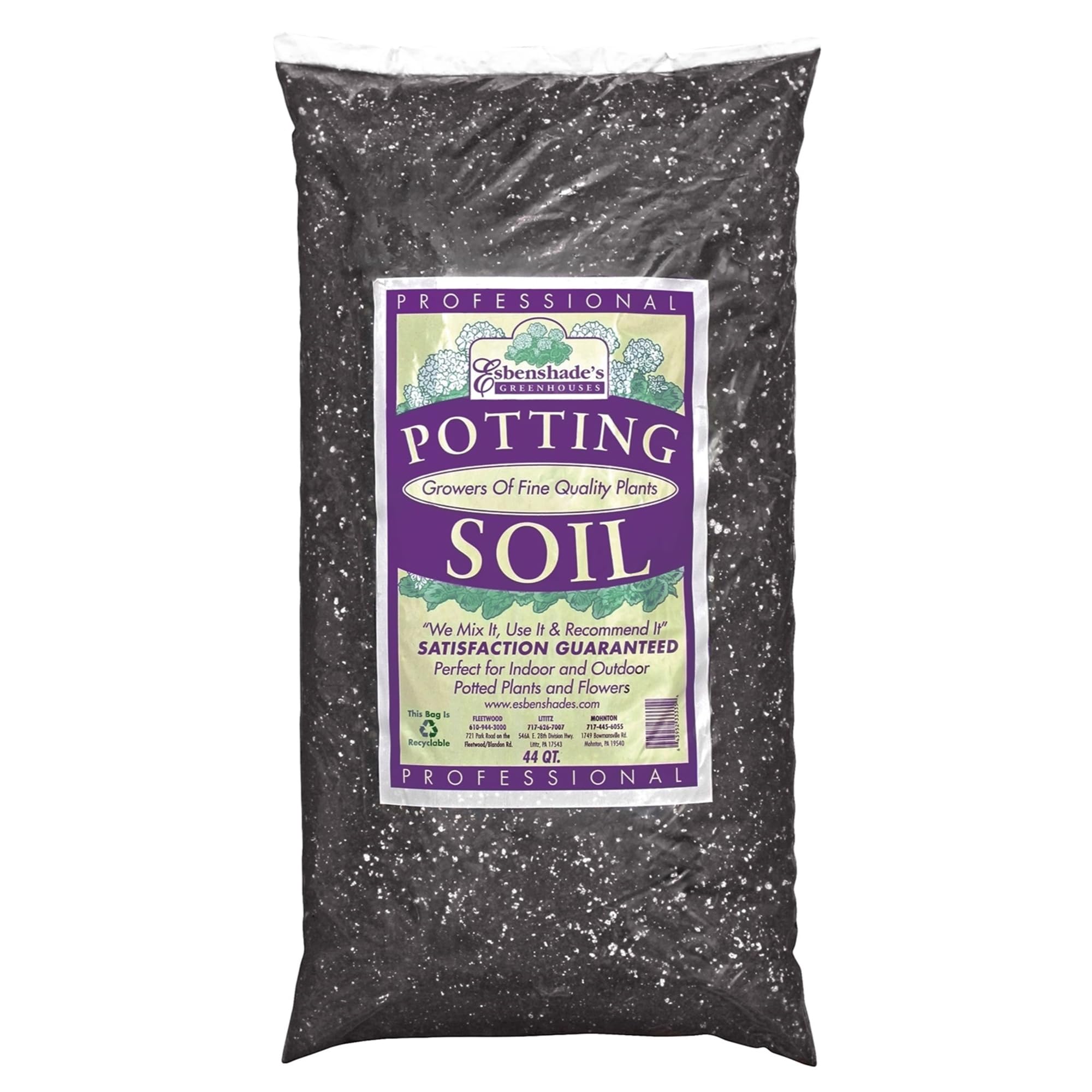
4. Esbenshade’s Professional Lightweight Potting Mix, 44 Quart Bag
A soilless blend so airy that one owner’s peppers, tomatoes, and eggplant outperformed a leading national brand in a side-by-side test.
This mix is built on Canadian sphagnum peat moss, perlite, pine bark, and lime — no topsoil, no heavy dirt. It is a soilless blend (no actual soil) designed for optimal airflow and moisture retention. At 44 quarts (about 1.6 cubic feet), it is one of the larger bags you can get for the price. It weighs only 22 pounds, making it easy to carry and work with, even for someone filling multiple hanging baskets or raised beds. Compared to the 40.5-pound Miracle-Gro Moisture Control bag, this is a relief to lift.
The quality of this mix has the most positive feedback by far, and the real-world results are hard to argue with. One owner ran an accidental side-by-side test with peppers, tomatoes, and eggplant, comparing this against a leading brand and topsoil — the plants in the Esbenshade’s mix outperformed the others noticeably. Another reviewer describes it as “light, compressible texture that is easy to work with” and reports no clumping issues. It stays wettable and does not compact down over time, which means your pot volume stays consistent — so you don’t lose soil to settling and need to top off later.
The main complaint? A few owners say the mix contains more coconut fiber than they prefer. For most gardeners that is not a dealbreaker, but if you specifically avoid coir-based blends (coconut fiber), this is something to note. Also, because it is so lightweight, outdoor containers in windy spots may need a layer of mulch or pebbles on top to keep the soil from blowing away.
Why It Works
- 44 quarts of soilless mix — lightweight at 22 pounds
- Peat, perlite, and pine bark for excellent drainage and aeration
- Outperformed top national brands in owner side-by-side tests
- Stays moist, drains well, and does not compact
Worth Noting
- Contains more coconut coir than some owners prefer
- Very lightweight — outdoor containers may need a top dressing to hold soil in place
Go-to for masses of containers: Perfect for the gardener who fills multiple pots and wants something light, airy, and proven against big brands. You get a proven alternative to the heavier, more expensive mixes.
Pass if: You want a heavy, dense soil that stays put in a breezy spot without extra measures.
5. Espoma Organic Vegetable & Flower Garden Soil, 1 Cubic Foot Bag – Two Pack

Designed to improve your native ground, not just fill a pot — mix it in and watch tomatoes, beans, and flowers take off.
Unlike the container-focused mixes above, this one is made for in-ground use — you mix it directly with your native soil when planting or transplanting vegetables and flowers. The two-pack gives you 2 cubic feet total (two 1-cubic-foot bags), and the blend is enriched with earthworm castings and other organic ingredients. No synthetic chemicals, just a rich, natural mix that helps build healthy soil over time. This is the bag to grab if you are planting into the earth, not into pots — unlike the Espoma AP2 which is a container mix.
Soil quality has the most positive mentions, and the real-world results speak for themselves. One owner has been using it since 2022 and reports excellent growth across tomatoes, beans, corn, garlic, turnips, cabbage, and flowers. Another describes getting “only excellent results” and orders four to six bags at a time for a garden with bold colors and productive plants. The texture gets good marks — it is soft, easy to work into the ground, and one family with peanut-allergic kids specifically appreciates that it is peanut-free.
The honest catch: some owners find it has a lot of wood pieces mixed in, more than they expect from a garden soil. A few others have reported issues with gnats in the bag. Also, if you are strictly a container gardener, this blend is formulated to improve in-ground native soil rather than serve as a standalone potting mix — using it straight in a pot could lead to compaction and poor drainage.
Garden-Approved
- Two 1-cubic-foot bags — designed to be mixed with native in-ground soil
- Enriched with earthworm castings and organic ingredients
- Proven track record with vegetables and flowers since 2022
- Soft texture that is easy to work into the ground
Container Gardener Warning
- Contains wood pieces that some owners find excessive
- Not designed as a standalone container mix — meant for in-ground use
Best for the earth: Great if you have an in-ground garden and want to give your native soil a big organic boost. Your pick if you want something richer than the Premier Pro Mix for amending beds.
Skip for pots: If you only grow in containers, choose a container-specific potting mix instead of this garden soil.
6. Roots Organics Rod Hydroponic Gardening Ready-to-Grow Coco Fiber-Based Potting Soil, 1.5 cu ft

A coco-based (coconut fiber) powerhouse with bat guano, worm castings, and mycorrhizae — and the bag doubles as a grow container.
This is not your average bag of dirt. The base is high-quality coco fiber (coconut coir) that has been repeatedly washed for consistency, and the ingredient list reads like a garden center wish list: bat guano (bat droppings rich in nitrogen and phosphorus), premium earthworm castings, fish bone meal, feather meal, green sand (a marine mineral that provides potassium), mycorrhizae, glacial rock dust (finely ground rock that replenishes trace minerals), soybean meal, and humic acid (a natural compound that helps roots access nutrients). At 1.5 cubic feet (10 gallons), it is a substantial bag, and the camouflage print bag doubles as a grow bag — just poke holes in the bottom, cut off the top, and plant directly. For heavy-feeding plants like tomatoes and peppers, this is a much richer option than the lighter Esbenshade’s mix.
Owners are loyal to this brand — quality has the highest positive count here, and consistency is the second most-mentioned strong point. Many growers specifically switched to Roots Organics from the well-known Ocean Forest brand and report better, more reliable results. One multi-year user says it is “not too hot on nitrogen” (meaning it won’t burn delicate roots with too much nitrogen) and provides perfect slow-release organic amendments that carry plants for over five weeks. Another mentions that plants perk up immediately after transplanting and that the drainage is excellent — water runs through quickly without leaving the soil soggy.
The recurring observation here is that some recent bags have contained an increasing number of small rocks. A long-time user who has bought 10 bags notes that this is a new issue. The other point is that this is a potent mix — it is designed for heavy-feeding plants and may be too strong for very delicate seedlings without some dilution.
Heavy Hitter
- Loaded with organic nutrients including bat guano, worm castings, and glacial rock dust
- Coco fiber base provides excellent drainage and aeration
- Loyal following — many owners consider it better than Ocean Forest
- Camouflage bag doubles as a ready-to-grow container
Watch For
- Some bags now contain small rocks — a growing concern among repeat buyers
- May be too rich for very young or delicate seedlings without mixing
For the serious feeder: Best for heavy-feeding plants like tomatoes, peppers, and cannabis that need a nutrient-packed medium. Your pick if you want to outperform the Espoma AP2 in nutrient density.
Maybe skip if: You want a simple, neutral mix for seed starting — this one feeds aggressively from the start.
7. Miracle-Gro Moisture Control Potting Mix, For Container Plants, 2 cu. ft.

The 2-cubic-foot bag that protects against over-watering and under-watering — one owner calls it a “100% turnaround” for struggling peppers.
This is the bag for anyone who has ever accidentally killed a plant by loving it too much with the watering can. Miracle-Gro’s Moisture Control formula uses their exclusive AquaCoir technology, which absorbs up to 33% more water than basic potting soil (that lacks sphagnum peat moss, coir, and a wetting agent) and releases it slowly. The brand claims it feeds plants for up to six months and grows plants twice as big as unfed plants. At 2 cubic feet, it is a true large bag, and it weighs a hefty 40.5 pounds — that moisture weight adds up. If you compare weight to the Premier Pro Mix at 25 pounds, this bag is much heavier to haul.
Quality has the most positive mentions here, with plant health and value for money close behind. One owner used this mix to revive struggling pepper plants and saw a “100% turnaround” with greener foliage, faster growth, and actual fruit production. A long-time user who has started over 500 seeds annually for ten years swears by this mix for its high germination rate and fast growth. The moisture control is a genuine lifesaver for weekend gardeners who cannot water every day — owners mention the soil stays soaked for up to eight days in some conditions.
The mixed feedback centers on moisture retention — while many love it, some find the mix terribly dry right out of the bag, making it hard to wet evenly on the first watering. A few others have reported bug issues, though most owners find it clean with no flying insects. The weight is also noteworthy: at 40.5 pounds, this is the heaviest bag on the list, so plan accordingly if you have to carry it far.
low-maintenance
- AquaCoir formula absorbs up to 33% more water than basic potting soil, protecting against over- and under-watering
- The brand claims it feeds plants for up to six months
- Excellent for seed starting — high germination rates and fast growth
- Proven track record with thousands of owners
What To Expect
- Can be very dry on delivery — first watering requires patience to wet evenly
- Heavy bag at 40.5 pounds; consider delivery options
Best for busy or forgetful waterers: Ideal if you travel or tend to underwater or overwater — the formula gives you a real margin for error. Your pick if the lighter Esbenshade’s mix dries out too fast for your schedule.
Not ideal if: You want a lightweight bag or prefer to control your own fertilizer schedule — the built-in feeding lasts six months.
Understanding the Specs
Volume: Quarts vs Cubic Feet
This is the spec that tells you how far a bag will go. One cubic foot equals about 29.9 quarts, so a 2-cubic-foot bag holds roughly 60 quarts. A 44-quart bag is around 1.6 cubic feet. When comparing large bags, convert everything to the same unit to avoid being misled by the number on the label. A 2.8-cubic-foot bag like the Premier Pro Mix holds a full 40% more than a standard 2-cubic-foot bag — that can mean two extra 14-inch pots worth of soil.
Mycorrhizae: The Hidden Helper
These are beneficial fungi that attach to plant roots and help them absorb water and nutrients from the soil. Think of them as an extended root system your plant gets for free. Not all potting soils include mycorrhizae, but when they do, it is often listed on the bag. It is especially useful for seedlings and transplants, helping them establish faster with less transplant shock.
FAQ
How much potting soil do I need for a standard 14-inch pot?
Is a soilless potting mix better than one with topsoil?
What does OMRI listed mean on a bag of potting soil?
Why does my new bag of potting soil smell bad or have a strong odor?
Can I use a professional potting mix for houseplants?
How long does an opened bag of potting soil last?
What is the difference between garden soil and potting mix?
Should I add perlite to a big bag of potting soil?
How do I fix potting soil that is too dry and repels water?
Final Thoughts: The Verdict
For most people, the large bags of potting soil winner is the Premier Pro Mix because it gives you the most volume per bag at 2.8 cubic feet and the professional mycorrhizae-enhanced quality that seeds, seedlings, and fine-rooted plants respond to — all while staying light enough at 25 pounds to carry without a second trip. If you want a nutrient-rich organic mix you can use straight from the bag, grab the {“@context”: “https://schema.org”, “@graph”: [{“@type”: “ItemList”, “name”: “7 Best Large Bags Of Potting Soil”, “url”: “https://lawngearlab.com/best-large-bags-of-potting-soil/”, “numberOfItems”: 7, “itemListElement”: [{“@type”: “ListItem”, “position”: 1, “name”: “Premier B10281RG Pro Mix Loose with Mycorrhizae, 2.8 Cubic Feet”, “url”: “https://lawngearlab.com/best-large-bags-of-potting-soil/#product-1”}, {“@type”: “ListItem”, “position”: 2, “name”: “Brut Organic Potting Soil 1 CU FT – Premium Plant Soil with Organic Worm Castings”, “url”: “https://lawngearlab.com/best-large-bags-of-potting-soil/#product-2”}, {“@type”: “ListItem”, “position”: 3, “name”: “Espoma Organic Potting Soil Mix – All Natural Potting Mix, 2 Cubic Foot”, “url”: “https://lawngearlab.com/best-large-bags-of-potting-soil/#product-3”}, {“@type”: “ListItem”, “position”: 4, “name”: “Esbenshade’s Professional Lightweight Potting Mix, 44 Quart Bag”, “url”: “https://lawngearlab.com/best-large-bags-of-potting-soil/#product-4”}, {“@type”: “ListItem”, “position”: 5, “name”: “Espoma Organic Vegetable & Flower Garden Soil, 1 Cubic Foot Bag – Two Pack”, “url”: “https://lawngearlab.com/best-large-bags-of-potting-soil/#product-5”}, {“@type”: “ListItem”, “position”: 6, “name”: “Roots Organics Rod Hydroponic Gardening Ready-to-Grow Coco Fiber-Based Potting Soil, 1.5 cu ft”, “url”: “https://lawngearlab.com/best-large-bags-of-potting-soil/#product-6”}, {“@type”: “ListItem”, “position”: 7, “name”: “Miracle-Gro Moisture Control Potting Mix, For Container Plants, 2 cu. ft.”, “url”: “https://lawngearlab.com/best-large-bags-of-potting-soil/#product-7”}]}, {“@type”: “Product”, “position”: 1, “name”: “Premier B10281RG Pro Mix Loose with Mycorrhizae, 2.8 Cubic Feet”, “image”: “https://m.media-amazon.com/images/I/51u5X4vslwL.jpg”, “brand”: {“@type”: “Brand”, “name”: “Premier”}, “url”: “https://www.amazon.com/dp/B008JSMNGE/”, “offers”: {“@type”: “Offer”, “url”: “https://www.amazon.com/dp/B008JSMNGE/”}}, {“@type”: “Product”, “position”: 2, “name”: “Brut Organic Potting Soil 1 CU FT – Premium Plant Soil with Organic Worm Castings”, “image”: “https://m.media-amazon.com/images/I/81Zcaw-yhgL.jpg”, “brand”: {“@type”: “Brand”, “name”: “Brut”}, “url”: “https://www.amazon.com/dp/B086XKQ9RK/”, “offers”: {“@type”: “Offer”, “url”: “https://www.amazon.com/dp/B086XKQ9RK/”}}, {“@type”: “Product”, “position”: 3, “name”: “Espoma Organic Potting Soil Mix – All Natural Potting Mix, 2 Cubic Foot”, “image”: “https://m.media-amazon.com/images/I/81uE-Q5UgVL.jpg”, “brand”: {“@type”: “Brand”, “name”: “Espoma”}, “url”: “https://www.amazon.com/dp/B00553BLPA/”, “offers”: {“@type”: “Offer”, “url”: “https://www.amazon.com/dp/B00553BLPA/”}}, {“@type”: “Product”, “position”: 4, “name”: “Esbenshade’s Professional Lightweight Potting Mix, 44 Quart Bag”, “image”: “https://m.media-amazon.com/images/I/71hBO3AWGTL.jpg”, “brand”: {“@type”: “Brand”, “name”: “Esbenshade’s”}, “url”: “https://www.amazon.com/dp/B01M3T21UB/”, “offers”: {“@type”: “Offer”, “url”: “https://www.amazon.com/dp/B01M3T21UB/”}}, {“@type”: “Product”, “position”: 5, “name”: “Espoma Organic Vegetable & Flower Garden Soil, 1 Cubic Foot Bag – Two Pack”, “image”: “https://m.media-amazon.com/images/I/71AgA2aZDrL.jpg”, “brand”: {“@type”: “Brand”, “name”: “Espoma”}, “url”: “https://www.amazon.com/dp/B07ZC7NTRV/”, “offers”: {“@type”: “Offer”, “url”: “https://www.amazon.com/dp/B07ZC7NTRV/”}}, {“@type”: “Product”, “position”: 6, “name”: “Roots Organics Rod Hydroponic Gardening Ready-to-Grow Coco Fiber-Based Potting Soil, 1.5 cu ft”, “image”: “https://m.media-amazon.com/images/I/71fm8gVdHnL.jpg”, “brand”: {“@type”: “Brand”, “name”: “Roots”}, “url”: “https://www.amazon.com/dp/B072NB5WLR/”, “offers”: {“@type”: “Offer”, “url”: “https://www.amazon.com/dp/B072NB5WLR/”}}, {“@type”: “Product”, “position”: 7, “name”: “Miracle-Gro Moisture Control Potting Mix, For Container Plants, 2 cu. ft.”, “image”: “https://m.media-amazon.com/images/I/51obpJjfQ0L.jpg”, “brand”: {“@type”: “Brand”, “name”: “Miracle-Gro”}, “url”: “https://www.amazon.com/dp/B00FE1G57M/”, “offers”: {“@type”: “Offer”, “url”: “https://www.amazon.com/dp/B00FE1G57M/”}}, {“@type”: “FAQPage”, “mainEntity”: [{“@type”: “Question”, “name”: “How much potting soil do I need for a standard 14-inch pot?”, “acceptedAnswer”: {“@type”: “Answer”, “text”: “A 14-inch pot typically requires about 1 cubic foot of potting soil. A 2-cubic-foot bag fills roughly two 14-inch containers. The exact amount depends on the depth of the pot and the root ball size, so always have a little extra on hand.”}}, {“@type”: “Question”, “name”: “Is a soilless potting mix better than one with topsoil?”, “acceptedAnswer”: {“@type”: “Answer”, “text”: “For containers, yes. A soilless mix (based on peat moss, coco coir, or perlite) drains better, stays lighter, and allows roots to breathe more easily. A mix containing topsoil or garden dirt can become compacted in a pot, leading to poor drainage and root rot. For in-ground beds, mixing garden soil into the native ground is usually the right approach.”}}, {“@type”: “Question”, “name”: “What does OMRI listed mean on a bag of potting soil?”, “acceptedAnswer”: {“@type”: “Answer”, “text”: “OMRI stands for the Organic Materials Review Institute. When a product is OMRI listed, it means it meets the standards for use in certified organic growing operations. For the home gardener, it is a reliable shorthand that the soil contains no synthetic chemicals, pesticides, or prohibited ingredients.”}}, {“@type”: “Question”, “name”: “Why does my new bag of potting soil smell bad or have a strong odor?”, “acceptedAnswer”: {“@type”: “Answer”, “text”: “A strong, sour, or ammonia-like smell usually means the soil was stored too wet and has gone anaerobic (lacking oxygen, which causes harmful bacteria to grow). Healthy potting soil should smell earthy or like damp peat moss, not pungent. You can spread the soil out to dry for a day, which often reduces the smell. If it smells like rot, return the bag.”}}, {“@type”: “Question”, “name”: “Can I use a professional potting mix for houseplants?”, “acceptedAnswer”: {“@type”: “Answer”, “text”: “Yes, but with one adjustment. Professional mixes like the Premier Pro Mix are often nutrient-free — they are designed for growers who add their own liquid fertilizer. For houseplants, you will need to either mix in a slow-release fertilizer or feed with every watering. A bag like the Espoma AP2 is already enriched and works well straight from the bag for indoor plants.”}}, {“@type”: “Question”, “name”: “How long does an opened bag of potting soil last?”, “acceptedAnswer”: {“@type”: “Answer”, “text”: “An opened bag can last several months if stored properly. Fold the top tightly and keep it in a dry place away from sun and rain. Over time, peat-based mixes can dry out and become difficult to re-wet. If the soil sits for too long, the nutrients in enriched mixes can also degrade. For the best results, use opened bags within three to six months.”}}, {“@type”: “Question”, “name”: “What is the difference between garden soil and potting mix?”, “acceptedAnswer”: {“@type”: “Answer”, “text”: “Garden soil (like the Espoma VFGS1) is designed to be mixed with your native in-ground dirt to improve its texture and nutrient content. It is often heavier and denser. Potting mix is a soilless blend designed for containers, with ingredients like peat moss, perlite, and coir that provide drainage and aeration. Using garden soil in a pot can lead to compaction and poor drainage.”}}, {“@type”: “Question”, “name”: “Should I add perlite to a big bag of potting soil?”, “acceptedAnswer”: {“@type”: “Answer”, “text”: “It depends on what you are growing. If you are potting succulents, cacti, or any plant that likes very well-draining soil, adding extra perlite is a good idea. Many budget-friendly and mid-range mixes come with very little perlite — the Espoma AP2 is a common example where owners consistently add extra. If you are growing water-loving plants like ferns or coles, the existing balance may be fine.”}}, {“@type”: “Question”, “name”: “How do I fix potting soil that is too dry and repels water?”, “acceptedAnswer”: {“@type”: “Answer”, “text”: “Dry peat moss can become hydrophobic (water-repelling) and resist re-wetting. The fix is simple: fill a tub or bucket with warm water and slowly submerge the soil, letting it soak for 15-30 minutes. Drain it thoroughly, then use it. Alternatively, add a few drops of mild liquid soap to your watering can — the soap breaks the surface tension and helps the water absorb into the dry particles.”}}]}]}