
Specs are compiled from manufacturer listings and verified buyer reviews and can change over time — please confirm the key details on the product page before buying.
Choosing a bag of soil for your pots should be simple, but the gardening aisle is packed with bags labeled for raised beds, in-ground use, seed starting, and more. Grab the wrong one, and you get poor drainage, compacted roots, or a surprise batch of weeds. The real goal is a light, nutrient-rich mix that holds enough moisture without turning your container into a swamp.
I’m Rikta — the founder and writer behind Lawn Gear Lab. This guide is built by comparing the manufacturers’ published specifications and the patterns across verified customer reviews, so you get each pick’s real strengths and trade-offs instead of marketing spin.
You need a mix that keeps roots aerated (with air pockets) and feeds them steadily, whether you are planting a single herb pot or a deck full of flowering annuals. The best garden soil for containers prioritizes a light texture, consistent nutrition, and room for roots to spread freely season after season.
Our Picks at a Glance


How To Choose The Best Garden Soil For Containers
Container gardening puts your plants in a small, enclosed world. The soil you choose is the foundation that either gives those roots room to breathe or traps them in soggy trouble. Here is what separates a great mix from a disappointing one.
Texture and Drainage
Your mix needs to be light enough that water flows through freely rather than pooling on top. Look for ingredients like perlite (small white volcanic rocks that create air pockets) or coarse sand that keep the soil fluffy. A fluffy texture means roots can stretch and oxygen can reach them, which matters far more in a pot than it does in open ground.
Nutrient Content
Plants in containers cannot send roots deeper to find food, so the soil itself needs to provide everything from the start. Organic mixes often include earthworm castings (worm manure, rich in nutrients), kelp meal (dried seaweed powder), or composted bark that release nutrients slowly. Some bags also come with a starter fertilizer to give seedlings an early boost without you having to add anything for the first few weeks.
Organic vs. Conventional
Certified organic blends avoid synthetic chemicals, which is a priority for anyone growing herbs or vegetables they plan to eat. Many organic mixes also have higher levels of microbial activity that help break down organic matter into plant food. Conventional mixes usually cost less and often include a timed-release fertilizer that feeds for several months, making them a convenient choice for heavy feeders like tomatoes.
Quick Comparison
| Model | Best For | Volume | Key Ingredient | Weight | Amazon |
|---|---|---|---|---|---|
| Coast of Maine Bar Harbor Blend★ Best Overall | Premium Organic Performance | 16 quarts | Lobster & crab shell meal | 14 lbs | Amazon |
| Midwest Hearth Premium MixSeed Starter Special | Seed Starting & Seedlings | 8 quarts | Peat, perlite, vermiculite | 2.8 lbs | Amazon |
| Michigan Peat BacctoBulk Workhorse | High-Volume Planting | 50 lbs | Reed sedge peat & perlite | 50 lbs | Amazon |
| Espoma Organic Potting Mix | Versatile Organic Base | 2 cu ft | Earthworm castings & myco-tone | — | Amazon |
| Esbenshade’s Professional Mix | Large Container Projects | 44 quarts | Peat, perlite, pine bark | 22 lbs | Amazon |
| Miracle-Gro Potting Mix (3-Pack) | Convenient Monthly Feeding | 8 qt x3 | Fertilizer (feeds 6 months) | — | Amazon |
| Mother Earth Coco + Perlite | Indoor & Hydroponic Style | 50 liters | Coconut coir & perlite | 4 lbs | Amazon |
| Miracle-Gro Moisture Control | Forgetful Waterers | 2 cu ft | AquaCoir formula | 40.5 lbs | Amazon |
| Brut Worm Farms Organic | Maximum Organic Nutrition | 21 quarts | Worm castings, azomite, kelp | — | Amazon |
In‑Depth Reviews
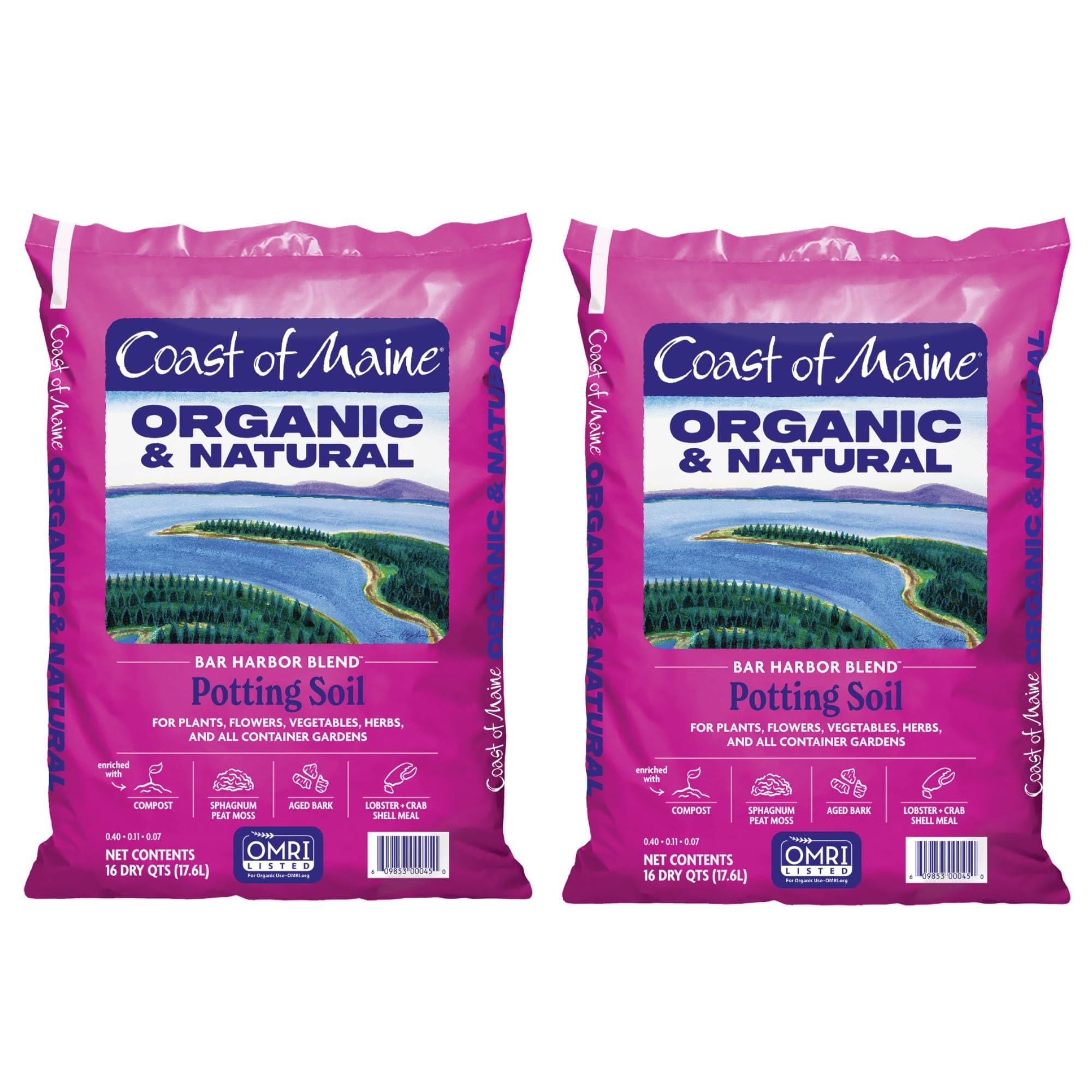
1. Coast of Maine Bar Harbor Blend Potting Soil
Our pick — over 4.5★ from 550+ verified ratings; the strongest balance of quality and price.
The organic heavyweight that turns containers into a thriving, low-fuss garden.
This mix hits a perfect balance between moisture retention and drainage, thanks to a blend of sphagnum peat moss, compost, perlite, and a unique addition of lobster and crab shell meal alongside kelp meal. The result is a nutrient-rich base that feeds plants gently over time without the need for constant fertilizing. Buyers report that flowers flourish and vegetables like tomatoes look better than ever after switching to this brand.
At 14 pounds for 16 quarts, it is a noticeably lighter product than many traditional potting soils, making it easier to haul around the yard. The dark, compost-heavy color signals high organic matter, and owners mention the absence of large sticks or weed seeds that sometimes plague cheaper bags. The crowd favorite — a stellar 4.8 stars across 500+ owners — reflects near-universal satisfaction with how this soil performs in everything from hanging baskets to raised beds.
One seasoned gardener offered a telling real-world example: “Two bags were enough to mound up 8 potato plants, and have extra for 2 more planters.” That kind of coverage, paired with the organic certification, makes this a standout pick for anyone serious about container gardening without synthetic inputs.
Coastal compost blend
- Quality is the most-praised feature, with rich texture and no sticks.
- Pre-mixed nutrients eliminate the guesswork of adding fertilizer.
- Organic ingredients, including crab and kelp meal, provide steady, natural feeding.
Heavy bag weight
- Pest resistance gets mixed feedback, with a small number of owners reporting gnats in the bag; storing it in a sealed bin helps.
- Plant health is generally excellent, though a very few owners experienced poor results.
Organic gardeners: you want a premium organic mix that practically guarantees strong growth in pots, raised beds, and indoor planters without requiring extra additives.
Container growers: you are on a strict budget or need a massive quantity for a large-scale garden — the 16-quart bag goes fast for big projects.
2. Midwest Hearth Premium Potting Soil Mix
A light, fluffy mix designed for delicate roots and perfect moisture control.
This ready-to-use blend combines peat moss, perlite, and vermiculite — the last two ingredients create a texture that drains well while still holding just enough water to keep seedlings happy. The formulation mirrors what professional growers use, so your young plants get a strong start without the risk of drowning or drying out. One buyer growing petunias called it “great for my germinating petunias,” noting the resealable bag and the easy-open spout.
Make no mistake: at 8 dry quarts, this bag is small. At 8 quarts versus the Coast of Maine 16 quarts and better suited for starting seeds, repotting a few houseplants, or filling small patio pots than for a full deck overhaul. The pH is controlled to suit a broad range of plant types, so you do not have to worry about acidity issues that can harm sensitive flowers or herbs.
The downside is purely about volume for the price. Several owners wish the bag were larger, but no one questions the soil’s quality: it stays loose around roots rather than hardening into a dense cake, which means transplants settle in quickly.
Balanced mineral mix: seed starting, germinating fussy annuals, and repotting a handful of indoor plants where you value a clean, predictable mix over bulk quantity.
General potting: you need a small, precisely formulated mix for delicate plants and want the convenience of a resealable bag.
Succulent lovers: you plan to fill multiple large containers — you will need several bags, making a larger volume option better value.
3. Michigan Peat Baccto Premium Potting Soil
The 50-pound giant for serious gardeners who measure success in dozens of flowers.
If you are planting more than 200 dozen flowers each year like one long-time gardener reported, you need soil by the pound — and this bag delivers at 50 pounds. The formula is a proven mix of reed sedge peat, perlite, and sand, with starter and slow-release fertilizers already blended in so you can pour straight from the bag into your pots or raised beds. It is a dense, rich soil that retains moisture well, which is great for thirsty vegetables but means you should check moisture levels carefully because it compacts more than lighter mixes.
The 50-pound bag gives you a massive weight advantage over the 14-pound Coast of Maine bag — at 50 pounds versus the Coast of Maine’s 14 pounds. But that weight is also the trade-off: the soil arrives wet and heavy, and once watered in the pot, it feels quite dense. Some owners love that it stays moist without becoming soggy, while others find it holds too much water for plants that prefer a drier root zone.
Quality is the most-discussed aspect by far — 71 owners single it out — and the consensus is clear: this is “the best potting soil we have found,” as one multi-generation gardener put it.
Peat-rich moisture: high-volume gardeners, vegetable patches in large containers, and anyone who prefers a heavy, moisture-retentive mix over a light, airy one.
Strong initial smell: the density and compaction make it a poor fit for shallow-rooted plants or succulents, and you will want a wheeled cart to move the full bag.
Seed starting: you go through soil by the truckload and value proven, no-nonsense performance over fancy additives.
Sensitive plants: you need a light, fluffy texture for containers that sit on a balcony or if you struggle to lift a full 50-pound bag.
4. Espoma Organic Potting Mix

A loamy, chunky organic mix that serves as a blank canvas for custom blends.
Espoma layers in sphagnum peat moss, humus (decomposed organic matter), perlite, earthworm castings, alfalfa meal, kelp meal, and feather meal to create a nutrient-dense base. The standout addition is Myco-Tone, a proprietary blend of endo and ecto mycorrhizae — beneficial fungi that attach to roots and help them draw more water and nutrients from the soil. For houseplant owners with decades-old sentimental plants, this mix offers the quality to keep them thriving.
The 2-cubic-foot bag is generous, and the soil itself has a chunky, loamy feel that does not get dense or crusty over time. It works well as a versatile base to which you can add extra perlite, bark, or sand depending on your specific plants. Some owners note the mix contains very little perlite compared to other brands, so if you are planting cacti or succulents, you will want to supplement with more drainage material.
Value for money earns mixed opinions: it is undeniably pricier than conventional mixes, but the quality consistently receives high marks, with owners calling it “more effective than other brands for growing my plants and vegetables.”
Mycorrhizae boost: organic gardeners who want a clean, stick-free base with mycorrhizae, and who are willing to pay more for proven results.
Established plants: you repot prized houseplants or want a high-quality organic starting point for custom mixes.
Quick drainage: you need maximum drainage without having to add your own perlite, or if the price per cubic foot is a primary concern.
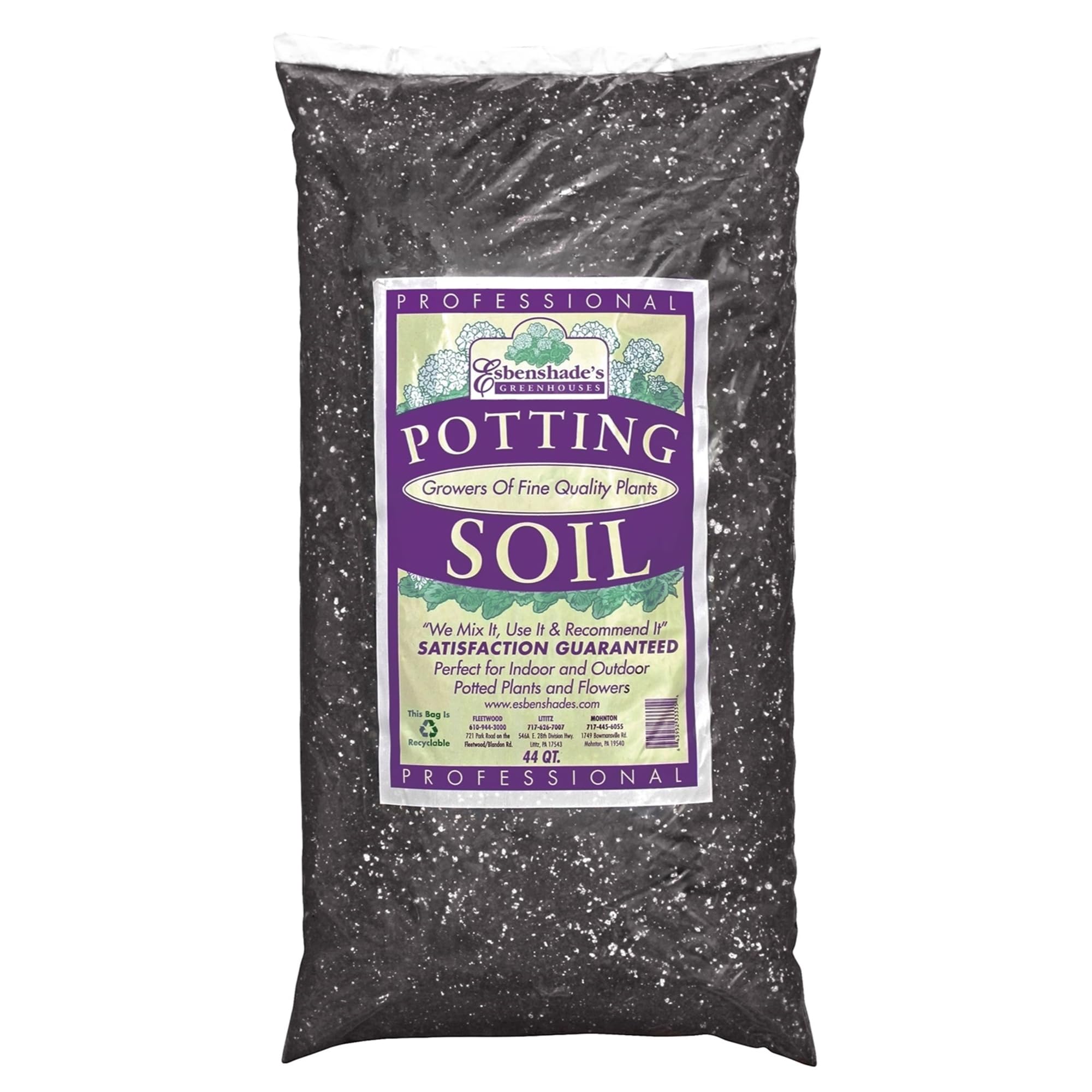
5. Esbenshade’s Professional Lightweight Potting Mix
A professional-grade soilless mix that survived a side-by-side test against the competition.
This mix blends Canadian sphagnum peat moss, perlite, pine bark, and lime into a lightweight, airy medium that resists compaction. One owner ran an accidental side-by-side trial with peppers, tomatoes, and eggplant, and reported that Esbenshade’s visibly outperformed both Miracle-Gro and generic topsoil. The texture is compressible but not clumpy, making it easy to work with on a potting bench.
The 44-quart bag packs a lot of volume for a weight of just 22 pounds The lightness comes from the soilless formula (a blend with no natural soil, just peat and perlite), which is excellent for roof gardens, balconies, or any situation where carrying heavy bags is a problem. The mix does shrink slightly away from the pot sides as it dries, which is actually helpful: the surface color tells you when to water.
A few owners note the presence of more coconut fiber than they prefer, but the consensus paints this as a quality product at a strong value for those with many containers to fill.
Ultra-light texture: container gardeners with serious volume needs who want a light, professional soilless mix that drains well and promotes vigorous growth.
Hanging baskets: you are filling a deck full of annuals or starting a vegetable garden in raised beds and want bulk without breaking your back.
Deep pots: you dislike any coconut fiber in your soil or need a mix heavy on traditional peat content.
6. Miracle-Gro Potting Mix (3-Pack)

The household name that packages convenience in three easy-to-carry bags.
Miracle-Gro’s standard potting mix is among the most recognized solutions for container plants, and for good reason: it includes a fertilizer that feeds continuously for up to 6 months, taking the guesswork out of summer feeding. The 3-pack of 8-quart bags makes it easy to grab one bag at a time rather than wrestle a single giant sack. Each bag fills two 8-inch containers, so the bundle can handle a small patio overhaul.
The texture is well-draining and does not pack down into a hard mass, which means water reaches the roots rather than running off the top. Owners appreciate that it works for both outdoor and indoor planting, and many note their plants grow noticeably larger than with unfed soil. The 3-pack format is particularly popular among apartment dwellers who do not have room to store or lift a 2-cubic-foot bag.
The bag size does bring mixed opinions — some owners find 8 quarts surprisingly small for the price. And while the quality ratings are strong, a few owners mention the cost per quart is higher than buying a single larger bag.
Consistent results: new container gardeners, small-space planters, and anyone who wants a reliable, pre-fertilized mix in a manageable package.
Budget buyers: you value the convenience of a multi-pack and the built-in feeding schedule that eliminates separate fertilizing for half a year.
Organic purists: you are filling a large number of pots and want the best price per quart — a single larger bag will be more economical.
7. Mother Earth Coco + Perlite Mix

The coconut-based alternative that fights compaction and puts gnats out of business.
This mix is a complete departure from traditional peat-based potting soils. It is 70% coconut coir (fibers from ground coconut husks) and 30% perlite, creating a growing medium that is naturally resistant to compaction and lasts longer than peat in containers. Coir rehydrates easily even after drying out completely, which is a lifesaver for plants that you occasionally forget to water. The perlite ensures that air and water move freely through the pot.
Unlike some soil bags that arrive with uninvited guests, this mix has a strong reputation for being clean and free of fungus gnats — a consistent point of praise from owners who switched from other brands. The 50-liter bag is generous and works especially well for plants like monstera and dracaena that thrive on well-draining, airy media. One owner reported excellent results transitioning propagated plants directly into this mix.
Because it has no added nutrients, you will need to provide your own fertilizer from the start. This makes it a blank slate that experienced growers prefer, but it is not an all-in-one solution for beginners.
Coco aeration: indoor plant enthusiasts, hydroponic-style growers, and anyone battling fungus gnats who wants a clean, predictable medium.
Hydroponic setups: you want a lightweight, long-lasting alternative to peat that resists gnats and rehydrates easily.
Direct soil use: you prefer a one-bag solution with built-in fertilizer, or if your plants need heavy, moisture-retentive soil.
8. Miracle-Gro Moisture Control Potting Mix

The moisture-control expert that saves overwaterers and underwaterers alike.
This is the bag to grab if you have ever killed a plant by loving it too much (overwatering) or by neglecting it (underwatering). The exclusive AquaCoir formula absorbs up to 33% more water than basic potting soil and protects against both extremes. In practice, that means the mix holds moisture for up to 8 days in some conditions, giving you a buffer when life gets busy. The included fertilizer feeds plants for up to 6 months.
The 2-cubic-foot bag is a monster at 40.5 pounds, but it fills two 14-inch containers, making it a practical choice for large patio pots. Texture-wise, it has a higher peat content that requires careful initial watering to avoid seed rot if you are starting seeds directly. Once plants are established, the moisture control feature is a genuine advantage: the mix greened up struggling pepper plants so dramatically that one owner plans to switch exclusively to this formula.
Pest resistance gets mixed feedback — some report no bugs, while others experience infestations. The moisture control technology is the real star here, but it is best suited for forgiving container plants rather than cacti or succulents that demand quick-drying soil.
Moisture control: busy or forgetful waterers, heavy feeders like tomatoes and peppers, and anyone who wants a 6-month fertilizer buffer built in.
Busy plant owners: you struggle to maintain a consistent watering schedule or need a big bag that feeds your plants automatically through the growing season.
Cacti growers: you grow succulents, cacti, or any plant that prefers lean, fast-draining soil.
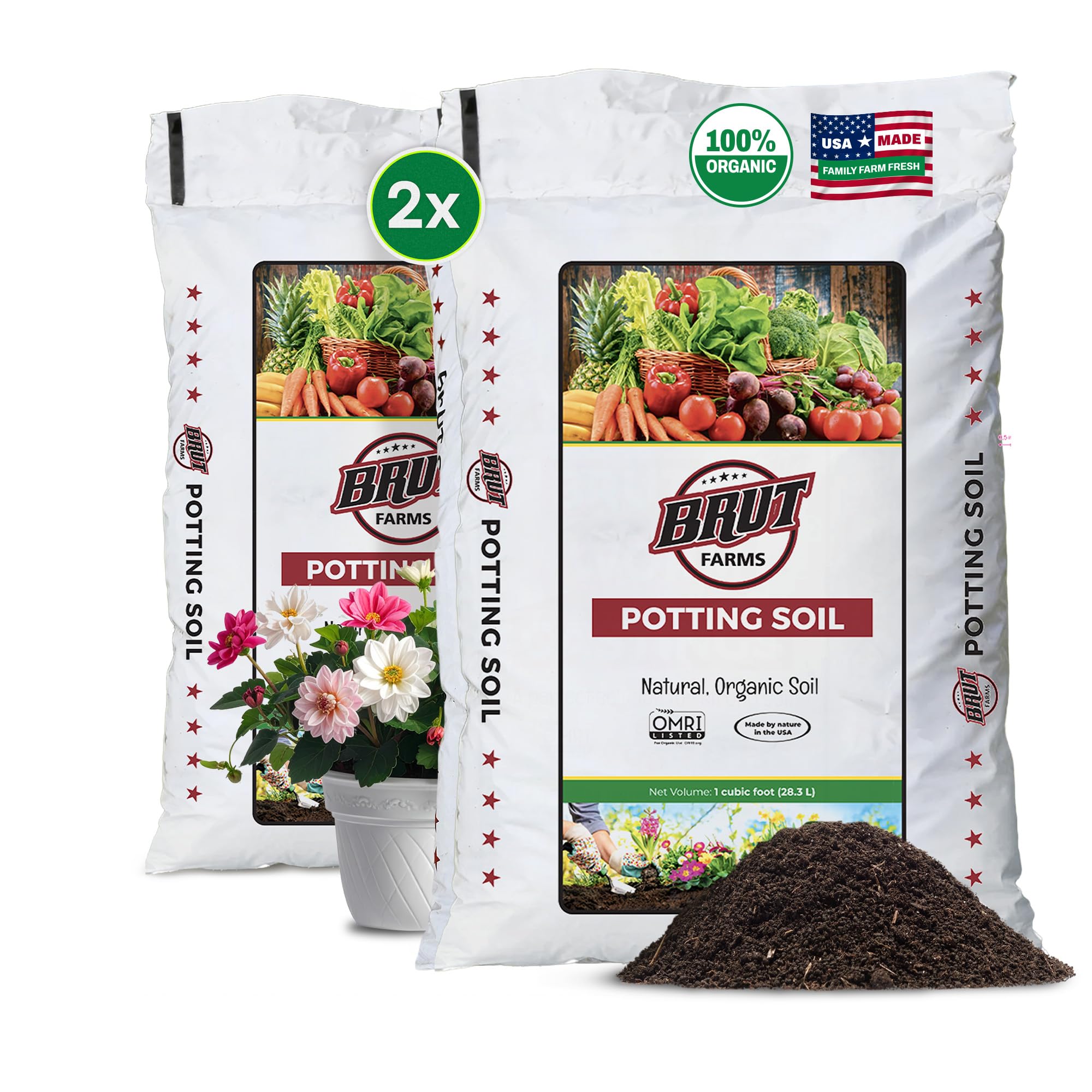
9. Brut Worm Farms Organic Potting Soil
The microbe-rich dark soil that rapidly greens up struggling plants.
This OMRI-listed (approved for organic use) mix packs a serious punch with worm castings, Azomite (a mineral powder that provides trace elements), kelp meal, perlite, and granite dust — a blend that one owner described as “black gold.” The filler-free formula means no sticks, wood chips, or synthetic additives, just pure organic ingredients that feed from the root level. The effects can be dramatic: one owner of citrus and cherry trees reported deep greening and visible new growth within two days of repotting.
The pH is naturally balanced between 6.3 and 6.5, which covers the balance for most vegetables, herbs, and flowers. The high concentration of fish and bone meal in the organic blend is excellent for growth but can attract flies and maggots if the bag is left open outdoors. A layer of sand or gravel on top of the pots is a simple fix that owners recommend to keep pests away without sacrificing the soil’s rich nutrition.
Value for money gets mixed reviews — it is noticeably pricier than conventional options, and some owners feel the cost is hard to justify for larger projects. But those who prioritize organic ingredients and rapid results often find the performance worth the premium.
Worm castings: organic purists, finicky edible plants, and houseplant lovers who want the highest-quality ingredients available for their most prized specimens.
Nutrient boosters: you want the most nutrient-dense organic mix available and are willing to manage the pest-prevention measures that come with it.
Sterile mixes: you need bulk soil at a lower per-quart cost or want a mix that can sit outside without attracting insects.
Understanding the Specs
Perlite & Vermiculite
These are the small white or gold chunks you see in potting mixes. Perlite is a volcanic glass that expands when heated, creating porous air pockets that keep the soil light and improve drainage. Vermiculite is a mica mineral that absorbs water like a sponge, so it holds moisture and releases it slowly. A good container mix balances both: enough perlite for aeration (air circulation to roots), and some vermiculite to prevent the soil from drying out too fast.
Coco Coir vs. Peat Moss
Coconut coir (made from ground coconut husks) is a renewable alternative to sphagnum peat moss. Coir rehydrates easily even after drying out, resists compaction, and has a neutral pH around 6.0. Peat moss is more acidic and holds water slightly better but can become hydrophobic — meaning it repels water — if it dries out completely. Both are excellent base ingredients; your choice often depends on sustainability priorities versus moisture-retention needs.
Organic Matter & Nutrients
Natural ingredients like earthworm castings, kelp meal, alfalfa meal, and composted bark provide a slow-release nutrient supply that feeds plants over weeks rather than all at once. These organic amendments also support beneficial soil microbes that help roots absorb nutrients. Conventional mixes often use synthetic timed-release fertilizer prills (small pellets), which provide a quick burst of growth but do not improve the soil’s long-term structure.
pH Balance
Most container plants prefer a slightly acidic to neutral pH between 6.0 and 7.0. Some mixes include lime or dolomite to buffer the pH, preventing the soil from becoming too acidic as the organic matter breaks down. If a bag specifies its pH range — like Brut’s 6.3 to 6.5 — that tells you the soil is already adjusted for a broad range of flowers, vegetables, and herbs without additional amendments.
FAQ
Can I use regular garden soil from my yard in a container?
What is the difference between potting soil and potting mix?
How often should I replace the soil in my containers?
What does “feeds up to 6 months” mean on a bag of soil?
Will adding perlite to any potting soil improve drainage?
Why does some potting soil have a strong smell?
Can I reuse potting soil from last season?
What size bag should I buy for my container garden?
How do I prevent fungus gnats in my potting soil?
Is organic potting soil worth the higher price?
Final Thoughts: The Verdict
If you want one dependable pick, the best garden soil for containers winner is the Coast of Maine Bar Harbor Blend because it combines premium organic ingredients, excellent drainage, and steady natural nutrition in a bag that consistently earns top marks from thousands of owners. If you want bulk planting power and do not mind a heavier mix, the Michigan Peat Baccto is the workhorse for serious gardeners. And for forgetful waterers who want a generous safety net, the Miracle-Gro Moisture Control is the one to reach for.
How We Picked
We do not accept paid placement. Every pick is matched to a real buyer and a real use-case; we do not hands-on test units.
Sources & Methodology
Specifications: manufacturer listings and product documentation. Review insights: verified customer reviews, as of July 2026. Pricing: not shown on this page (it changes often); check the current price via the retailer link.
As an Amazon Associate, Lawn Gear Lab earns from qualifying purchases. This does not affect which products we feature.