
Specs are compiled from manufacturer listings and verified buyer reviews and can change over time — please confirm the key details on the product page before buying.
A hoop house is your shortcut to a longer growing season, but the wrong one can shred in a spring storm or cave under the first snow. You need a structure that stands up to real weather, gives your plants room to thrive, and doesn’t cost a second mortgage. This guide cuts through the marketing to find the high hoop houses that actually earn their keep.
I’m Rikta — the founder and writer behind Lawn Gear Lab. This guide is built by comparing the manufacturers’ published specifications and the patterns across verified customer reviews, so you get each pick’s real strengths and trade-offs instead of marketing spin.
You’ll learn exactly which models weather the wind, which ones fit a tight budget, and what specs matter most when choosing your best high hoop house.
Our Picks at a Glance


How To Choose The Best High Hoop House
Picking a hoop house isn’t just about size. You need to consider the frame, the cover, and how much wind your backyard usually sees. Here are the three things to get right before you buy.
Frame Material and Thickness
The frame is everything. Most budget models use galvanized steel tubing, but the thickness varies a lot. A 0.02-inch wall is common at the lower end, while a 0.03-inch wall is noticeably sturdier. Look for reinforcements like diagonal braces and crossbars, which stop the frame from twisting and sagging under snow or heavy winds.
Cover Material: PE vs. Polycarbonate
You have two main choices. Polyethylene (PE) covers are lightweight, cheap, and let in around 85% of sunlight. They are the standard for tunnel-style hoop houses. Polycarbonate panels are rigid, offer much better insulation, and block up to 99% of UV rays, but they cost more and add weight. Your climate decides which you need: PE is fine for season extension, while polycarbonate handles real winters.
Ventilation and Doors
Heat builds up fast inside a hoop house, even in spring. Roll-up side walls, mesh windows, and roof vents are essential for keeping temperatures under control. A good zippered door or a rigid door frame makes a big difference in daily use. Look for models with at least two windows or vents, and check that the mesh is fine enough to keep bugs out.
Quick Comparison
| Model | Best For | Frame Material | Cover Material | Size (L x W x H) | Amazon |
|---|---|---|---|---|---|
| Backyard Discovery Zalie 11′ x 7′★ Best Overall | Permanent, all-season structure | Cedar Wood | Polycarbonate | 137.8″L x 86.22″W x 94.1″H | Amazon |
| Outsunny 13′ x 10′ x 6.5′Budget Champion | Budget-friendly quick setup | Alloy Steel | Polyethylene (PE) | 157.5″L x 116.1″W x 77.6″H | Amazon |
| VEVOR 19.4×9.7×6.5 ftMost Spacious | Maximum space on a tight budget | Galvanized Steel | Polyethylene (PE) | 236.22″L x 118.11″W x 78.74″H | Amazon |
| Sylviera 6x4FT | Small spaces and patios | Aluminum | Polycarbonate (PC) | 45″L x 67″W x 77″H | Amazon |
| Cuverc Walk-in Tunnel 19.7 x 7.9 x 6.6 ft | Sturdy mid-range tunnel | Metal | Polyethylene (PE) | 236.4″L x 94.8″W x 78.7″H | Amazon |
| Outsunny 20′ x 10′ x 7′ | Large, easy-assembly tunnel | Alloy Steel | Polyethylene (PE) | 234.3″L x 118.1″W x 82.7″H | Amazon |
| Quictent 20x10x6.6 FT | Heavy-duty tunnel with rigid doors | Metal | Polyethylene (PE) | 236.3″L x 118.2″W x 78.8″H | Amazon |
| YITAHOME 12x6FT Polycarbonate | Rigid panels and sliding door | Aluminum | Polycarbonate (PC) | 144″L x 72″W x 77″H | Amazon |
| Yardenaler 8×16 FT Wooden | A beautiful, permanent wooden greenhouse | Wood | Polycarbonate (PC) | 190.2″L x 96″W x 90.6″H | Amazon |
In‑Depth Reviews
1. Backyard Discovery Zalie 11′ x 7′ Cedar Wood and Polycarbonate Walk-in Greenhouse
Our pick — over 4.5★ from 100+ verified ratings; the strongest balance of quality and price.
The cedar beauty that shrugs off 100 mph winds while looking like a garden centerpiece.
This is the greenhouse you buy when you are done with flimsy plastic. The frame is solid cedar wood, naturally resistant to rot, and it is paired with commercial-grade 4-wall polycarbonate panels that improve heat retention by 30% compared to standard double-wall panels.
What wins people over is the sheer quality. Owners consistently praise the fit and finish, noting that everything lines up as it should and the included hardware is generous. The kit is pre-cut, pre-drilled, and pre-stained, with a BILT app for step-by-step assembly. It took one owner about 21 hours to build solo, but the result is a structure rated to handle up to 4,400 pounds of snow load and winds up to 100 mph (when anchored per the manual). The interior offers 86 square feet with 23 linear feet of staging shelves, plus exterior and interior hose hook-ups and a PowerPort with 3 electrical outlets and 3 USB ports.
The crowning spec is the 5-year warranty, which is rare at this level and backs up the claim that this is a permanent, year-round solution. The Zalie has a higher rating than any other full-size pick here, though the budget Outsunny 13′ x 10′ has more total reviews. It is a significant investment, and it earns its place as the top choice for anyone who wants a greenhouse that doubles as a garden statement.
What wins people over
- Cedar wood frame is naturally strong and rot-resistant — not thin metal tubing.
- 4-wall polycarbonate roof and panels boost heat retention by 30% over standard double-wall.
- Rated for 4,400 lbs of snow load and 100 mph winds.
- Integrated exhaust fan, PowerPort with outlets and USB, plus interior/exterior hose hooks.
The honest trade-off
- Assembly is time-consuming — plan for several days or a full weekend.
- Premium price puts it out of reach for casual or budget-focused gardeners.
Reach for this if: you want a beautiful, permanent greenhouse that can survive heavy snow and high winds without any worry.
Look elsewhere if: you need a quick, inexpensive structure for a single season or have a very tight budget.
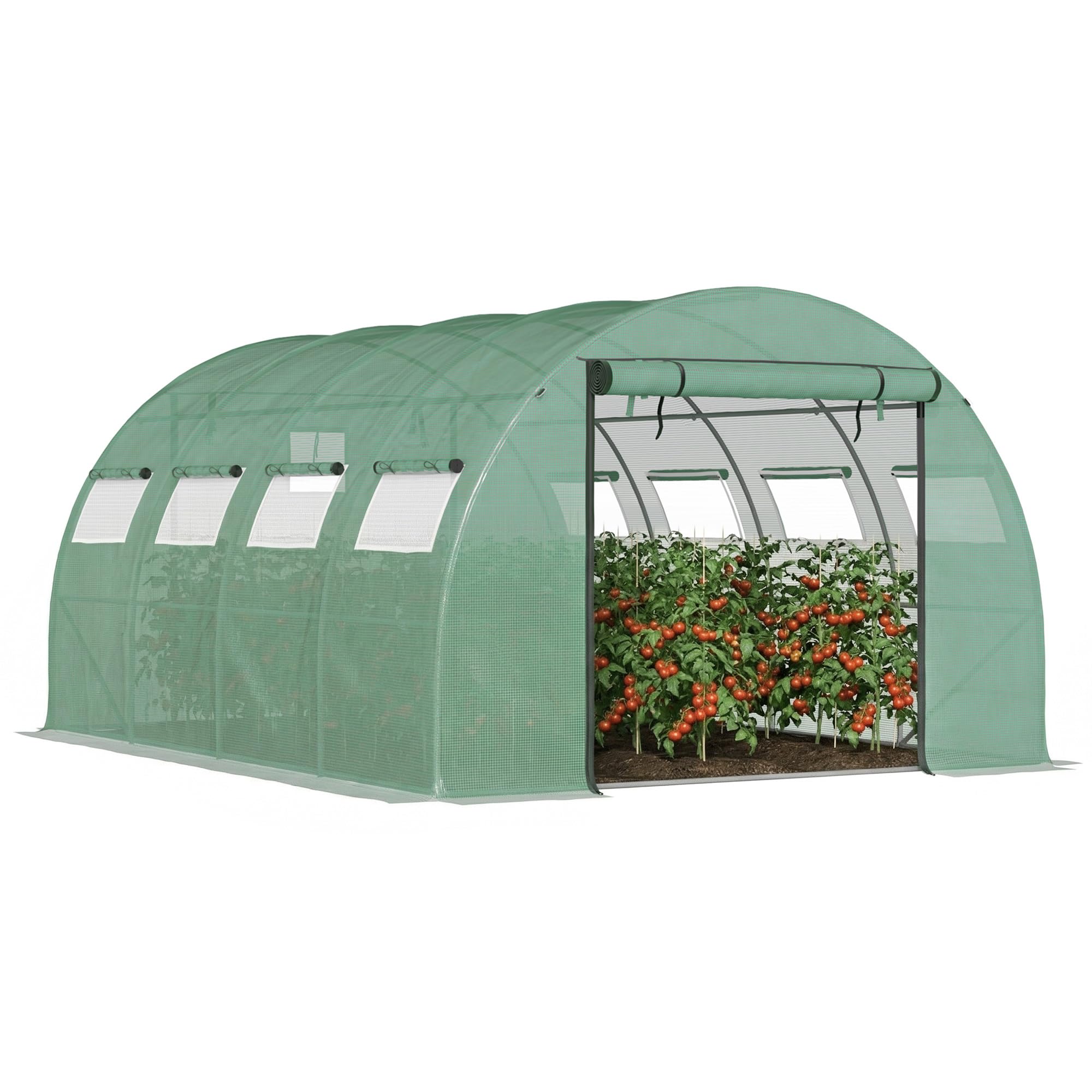
2. Outsunny 13′ x 10′ x 6.5′ Walk-in Tunnel Greenhouse
The wallet-friendly tunnel that gets you growing fast without the heavy price tag.
If you are testing the waters of season extension, this is a low-risk entry point. The Outsunny measures 13 feet long by 10 feet wide, with a peak height of 77.6 inches — enough to walk inside without stooping. The frame is bend-resistant galvanized alloy steel, and the 2-layer 140 GSM PE cover lets in 85% of sunlight while blocking UV. It includes 10 mesh windows and two zippered mesh doors for ventilation.
Assembly is the standout feature here. Owners describe it as easy and quick, with one calling it “terrific investment.” The cover has a reinforcement grid through the middle to resist tearing, and the extended edges can be buried in soil for better wind resistance. That said, this is a lightweight structure. One reviewer noted that on a windy day the cover ripped apart, fasteners tore off, and seams opened after only a few weeks. The manufacturer recommends dismantling it before extreme weather, so this works best for mild climates or as a seasonal shelter you take down.
The package is lighter than the VEVOR by about 8 pounds, making it easier to move and set up solo. It is a functional, budget-friendly way to protect plants from frost and pests, but it demands a realistic expectation of its limits.
Best for beginners: easy to assemble and priced low, making it a safe first greenhouse. Not built for heavy wind or snow, so plan to dismantle or anchor it well in rough weather.
3. VEVOR Walk-in Tunnel Greenhouse, 19.4×9.7×6.5 ft
A massive tunnel at a bargain price, but it arrives with a long to-do list.
At 19.4 feet long and 9.7 feet wide, this VEVOR offers serious square footage for a very low cost. It has 12 windows and a large zipper door for ventilation, plus the reinforced galvanized pipes use a 1-inch diameter with a 0.02-inch wall thickness. The 140g/m² high-density PE cover is double-stitched at the seams for tear resistance. It is also heavier than the Outsunny 13′ x 10′ at 70.6 pounds, giving it a bit more presence.
The honest feedback from owners reveals a pattern: this greenhouse requires significant modification to survive. Buyers report that the tubing is thin, the plastic rubs holes where it contacts the frame, the door hinges are weak, and the included stakes and tie-downs are insufficient. One experienced owner listed extensive reinforcements: a double 2×6 base, 2×4 ridge beam, concrete eye bolts, and ratchet straps. Another noted that even with all vents open, the interior can exceed 120°F on a sunny day. Quality and durability are the most-discussed aspects, and Amazon’s own summary flags durability as a negative.
This is not a low-maintenance greenhouse. It is a spacious shell that can work well if you have the skills and time to reinforce it. If you want a large tunnel on a tight budget and you are handy with modifications, this could be your project. If you prefer a sturdier out-of-the-box experience, look at the Cuverc or Quictent models instead.
It is for: DIY gardeners who want maximum floor space for the lowest entry price and are ready to reinforce the frame.
It is not for: anyone expecting a durable, ready-to-use structure straight from the box.
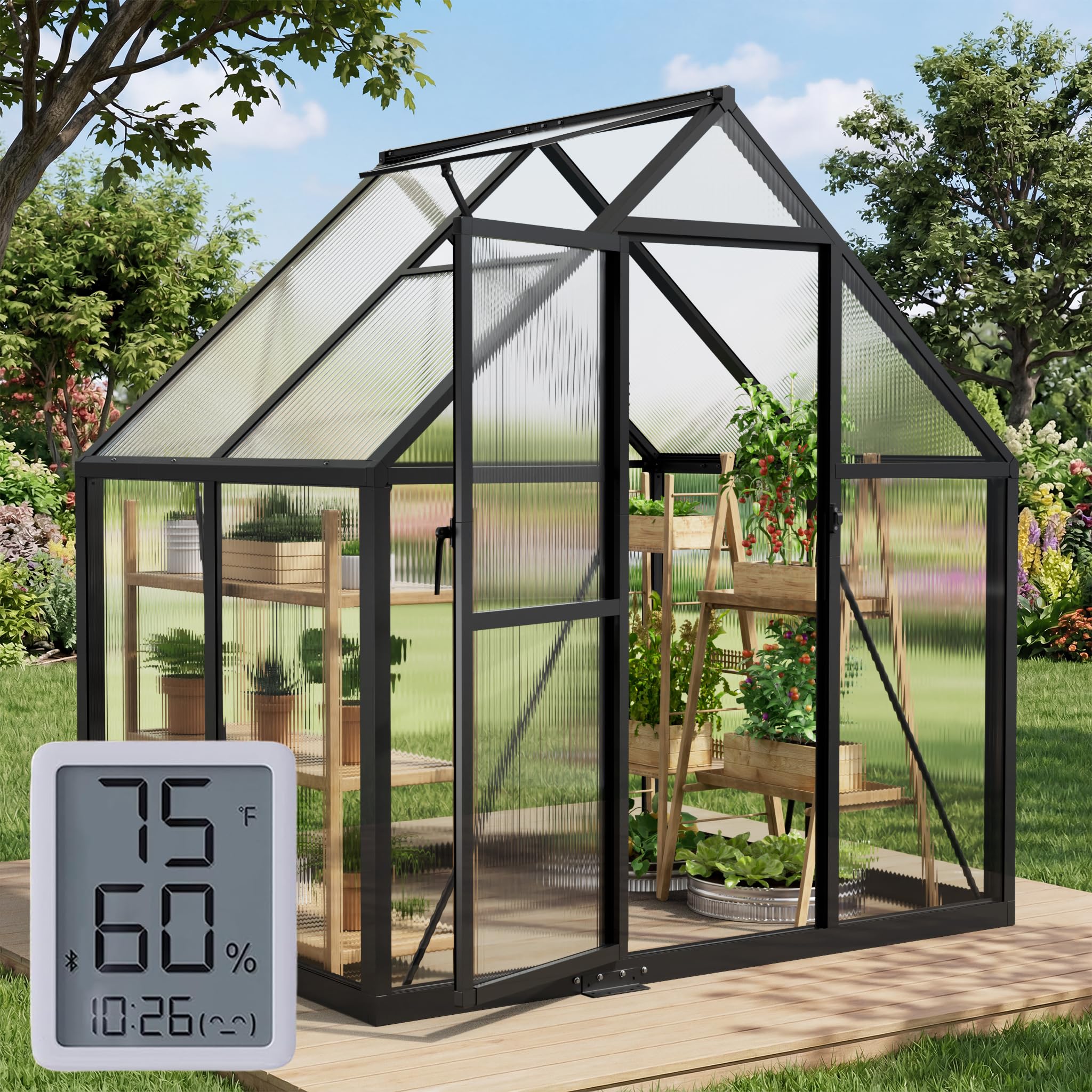
4. Sylviera 6x4FT Greenhouse with Hygrometer
A tiny fortress that packs aluminum strength and polycarbonate clarity into a 6×4 footprint.
This is the oddball in the list — at 45 inches long and 67 inches wide, it is not a walk-around tunnel. But it is a walk-in greenhouse with a 77-inch peak height, and its rigid polycarbonate panels and premium aluminum alloy frame put it in a different class from the budget PE tunnels. The 4mm thick, 580g double-wall panels block harmful UV rays while letting in plenty of light, and the aluminum frame resists rust and corrosion indefinitely.
Owners consistently call it sturdy and well-built. One noted it survived two weeks of nonstop rain without issues. The included hygrometer and adjustable roof vents are thoughtful touches, and the lockable door provides security. Assembly requires removing protective film from both sides of the panels — the manual is not clear about this, but once done, the structure is solid. The obvious trade-off is size: this is best for a patio, small backyard, or dedicated seedling station, not for rows of tomatoes.
The VEVOR offers 12 vents to this one’s 2, but ventilation on the Sylviera is more controlled through the rigid roof vent. It is a completely different product philosophy: durable and compact versus large and disposable. If your space is tight but you want real quality, this is an excellent choice.
A patio star: the aluminum and polycarbonate build means no rust, no tearing, and real insulation. Size is the only limit.
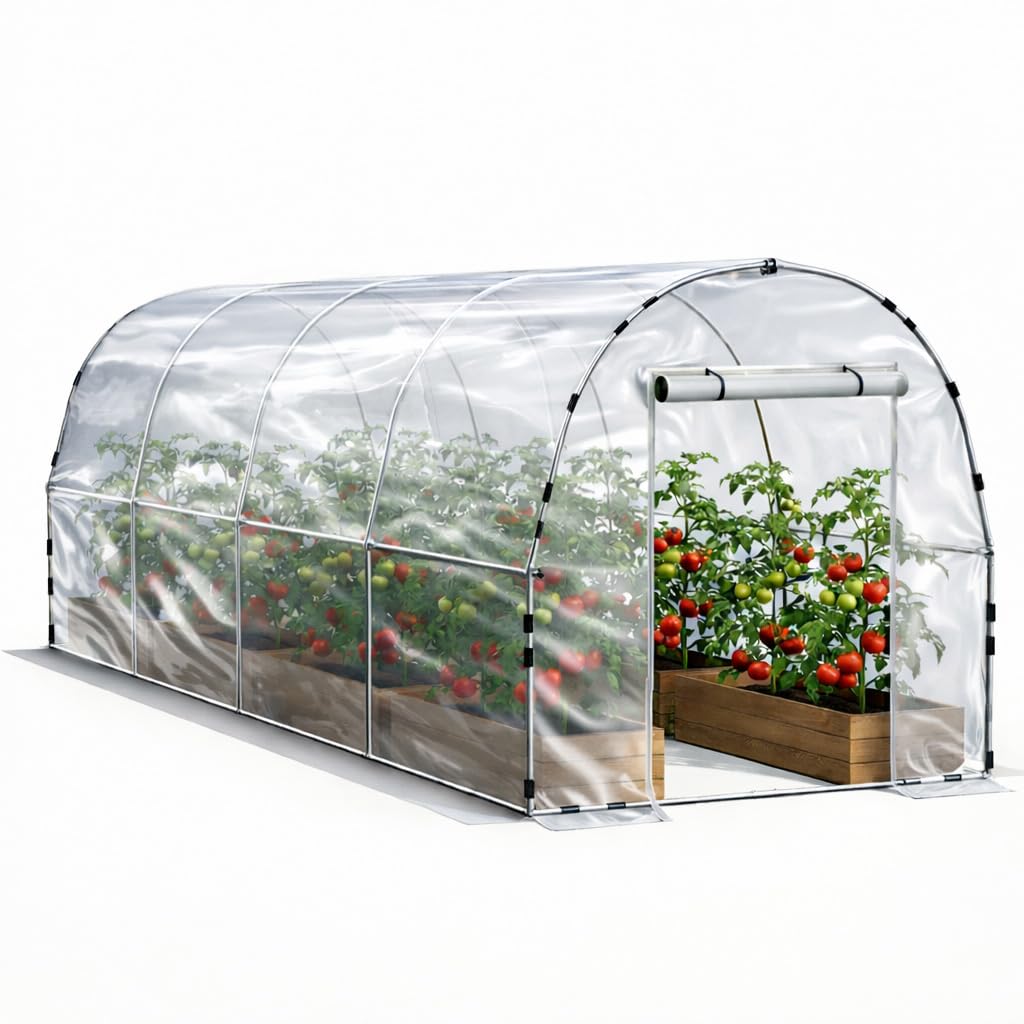
5. Cuverc Walk-in Tunnel Greenhouse 19.7 x 7.9 x 6.6 ft
The middle ground where thicker steel and a reinforced cover meet a fair price.
This Cuverc greenhouse addresses the single biggest complaint about budget tunnels: flimsy frames. It uses a 0.03-inch main frame wall thickness, which is 50% thicker than the typical 0.02-inch tubing found on models like the VEVOR. The frame is reinforced galvanized steel, and it comes with ground stakes plus wind-resistant tie-down ropes that connect directly to the stakes to secure the cover. The 6mil (140 g/m²) PE cover is a one-piece top with reinforced edges for tear resistance.
At 19.69 feet long by 7.87 feet wide, it is slightly narrower than the VEVOR but offers the same generous length. It also includes a PE repair patch film so you can fix small tears without replacing the whole cover. The reviews are positive, with owners noting it is easy to assemble and holds up well. The narrower footprint makes it a better fit for tighter garden spaces without sacrificing walk-in height at 6.56 feet.
This slot sits between the bargain VEVOR and the premium Quictent. It is a solid, no-surprises choice for a mid-range tunnel.
Smart middle ground: thicker steel means better wind resistance without the premium price of a rigid-door model. Best for gardeners who want a reliable tunnel without DIY reinforcement.
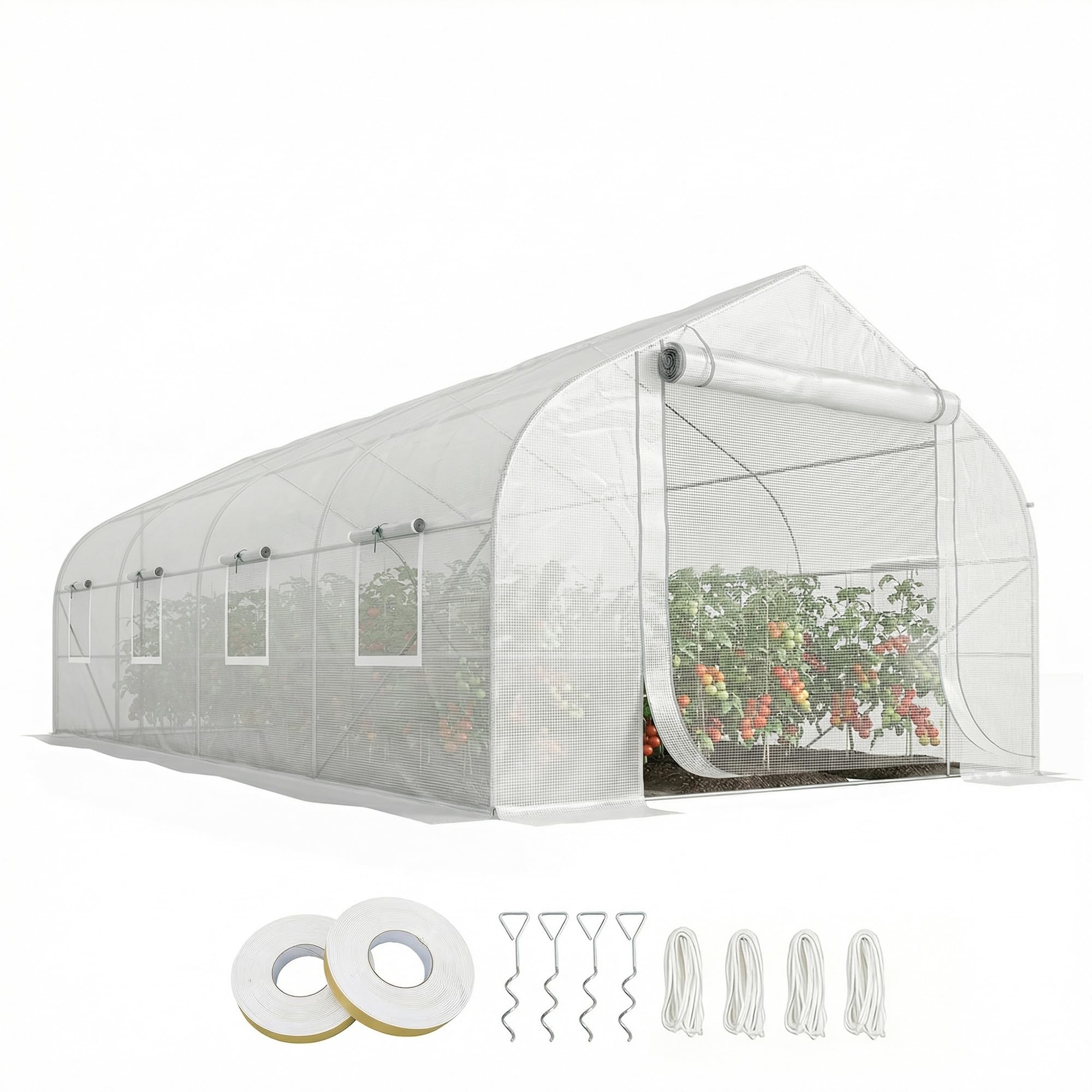
6. Outsunny 20′ x 10′ x 7′ Walk-in Greenhouse Tunnel
A big white tunnel that goes up fast but needs extra muscle to stay upright.
This Outsunny model jumps to 20 feet long by 10 feet wide, with a 7-foot peak height (82.7 inches) that gives you more headroom than the 6.5-foot models. It uses a galvanized alloy steel frame with four slant bracing tubes and middle-reinforced supports, plus a 140 GSM PE cover that allows 85% sunlight transmission. It includes 6 net-protected windows and a zippered roll-up door.
Assembly is the highlight here, with owners calling it easy and fast — one reported a 1.5-hour solo setup. The size gets consistent praise as “very roomy.” However, sturdiness is the most-discussed aspect overall, and Amazon marks it as mixed. A few owners reported that 20-30 mph winds bent the top poles at the connections within days, even with the bottom anchored. One reviewer reinforced the frame with 40 additional tubes and a dirt perimeter after the first storm. The manufacturer advises dismantling it before extreme weather, confirming this is a season-extender, not a permanent fixture.
For the price and size, it is a solid value if you live in a calm area or are willing to add reinforcement. It is easier to assemble than the VEVOR, but the frame is similar in feel.
Why it works
- 20×10 ft gives generous growing room with 7 ft peak height.
- Fast assembly — one owner did it solo in 1.5 hours.
- 6 mesh windows and a roll-up door for solid airflow.
The catch
- Frame poles can bend at connections in moderate winds.
- Not rated for heavy snow or high winds without significant reinforcement.
7. Quictent 20x10x6.6 FT Premium Greenhouse
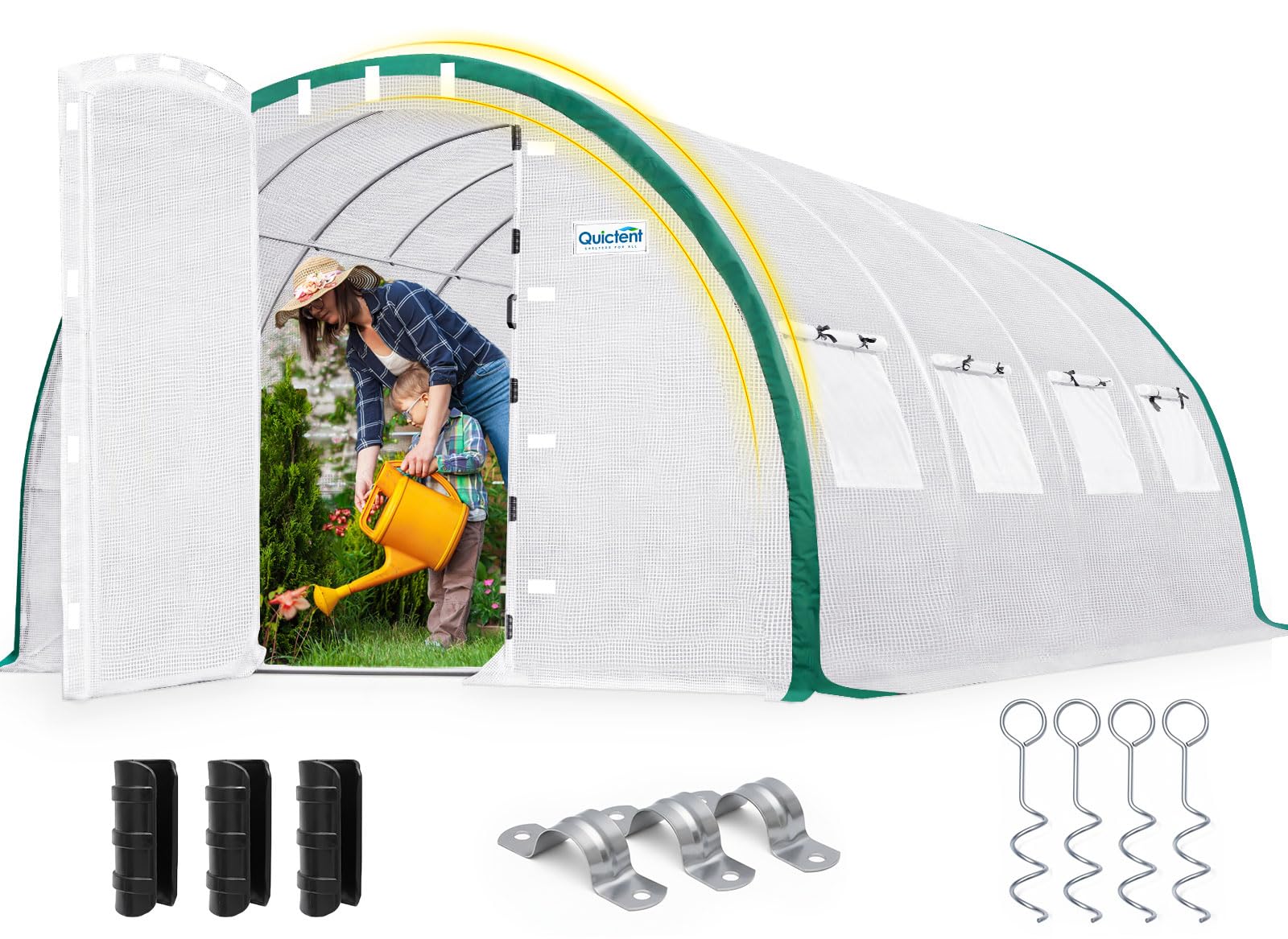
The one that takes a swing at weak zippers by giving you actual door frames.
This Quictent model stands out immediately for its patented dual swing-door frames. Instead of relying on a zippered flap, each rigid door opens 180 degrees, making it much easier to wheel a garden cart in and out. The frame uses upgraded 0.7mm thickened galvanized steel (almost three times the wall thickness of the 0.02-inch tubing on basic tunnels), and the top structure is reinforced with extra crossbars to prevent sagging from snow or water accumulation. The 150 GSM PE cover is thicker than most, with Oxford seam-reinforcement at stress points and an 8-inch overlong bottom that can be buried in soil.
Owners consistently call it sturdy and worth the money. At 92.6 pounds, it is heavier than the VEVOR by about 22 pounds, reflecting the beefier frame. It includes 8 mesh windows, and the full-perimeter velcro seals help retain heat for early spring planting. One experienced user noted the interior can hit 140°F in direct sun, but that dropped to 90°F with proper venting. Quictent backs this with a lifetime parts replacement for connectors and stakes, and a 365-day complimentary component replacement for covers and frames.
This is the tunnel to buy if you want a durable, large greenhouse without moving up to a polycarbonate or wood structure. It is more expensive than a basic tunnel, but the door frames and warranty make it a better long-term value.
Ideal for: serious gardeners who want a large tunnel with real doors, thicker steel, and a strong warranty.
skip it if: your budget is tight and you can live with a zippered door and thinner frame.
8. YITAHOME 12x6FT Polycarbonate Greenhouse
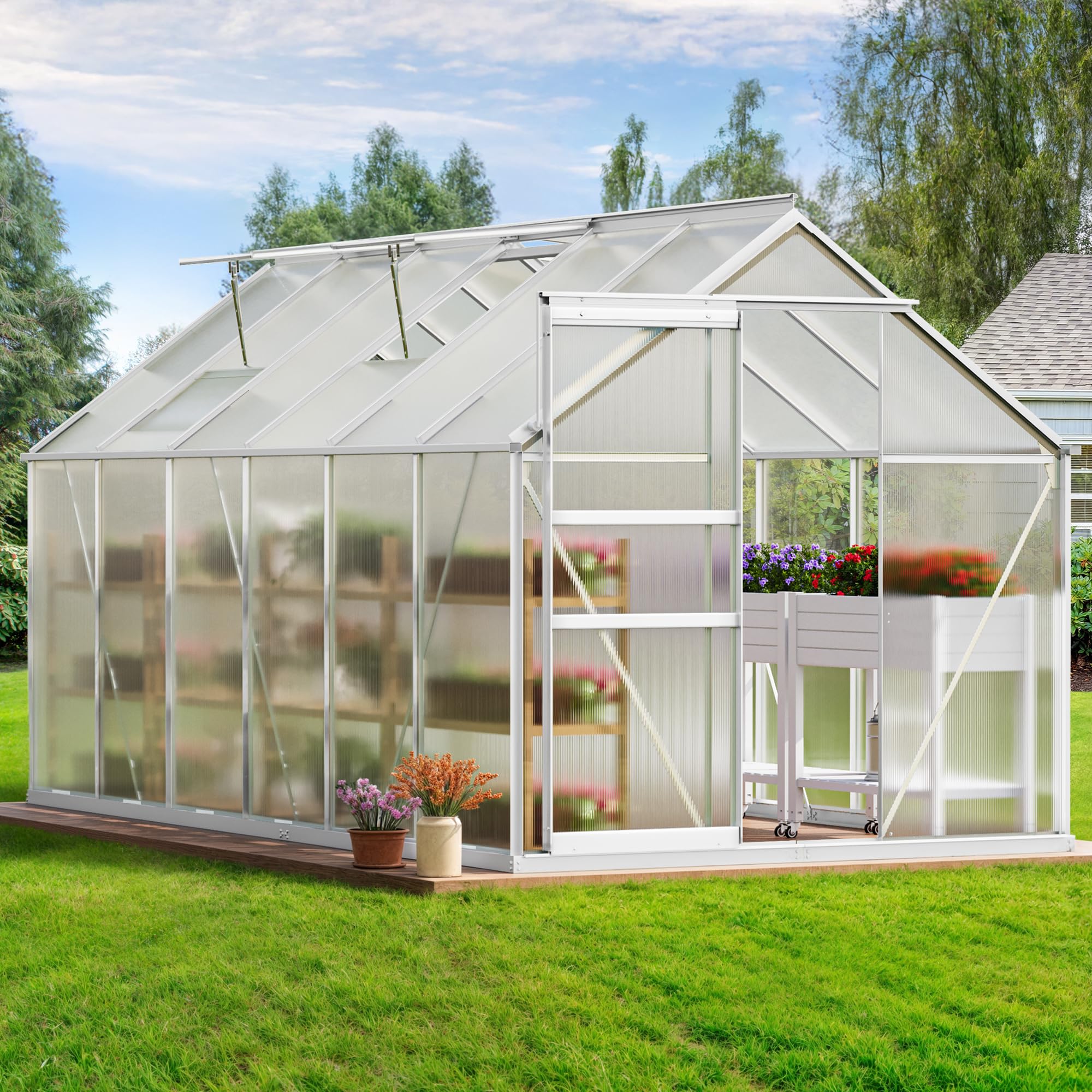
Aluminum rigidity and polycarbonate insulation meet a space-saving sliding door.
This YITAHOME greenhouse is built with a 12×6-foot footprint and a 77-inch peak height. The frame is aluminum alloy with reinforced side rods and diagonal fixation for extra stability. The double-wall polycarbonate boards are 4mm thick and block 99% of UV radiation. Unlike the tunnel-style zipper doors, this uses an innovative sliding door that saves space and operates smoothly. Two adjustable skylights with multiple opening angles provide ventilation.
Owner feedback is generally positive, with many noting it is easy to assemble and functional. One buyer mentioned it survived two years of Virginia storms, including 60+ mph winds, with only minor modifications. The barrel roof design creates a feeling of more space, and the all-aluminum frame means no rust. However, some found the instructions confusing and noted off-center holes on a few pieces. The manufacturer recommends applying glass glue to the PC board connections for better waterproofing.
At 93.7 pounds, it is comparable in weight to the Quictent. This is a good middle-ground option for someone who wants the insulation of polycarbonate and the rust-proofing of aluminum without the cost of a full wooden structure. The sliding door is a real convenience if your garden layout is tight.
Polycarbonate plus practicality: 99% UV blocking, a smooth sliding door, and an aluminum frame that will never rust. Ventilation relies on two skylights rather than roll-up sides.
9. Yardenaler 8×16 FT Wooden Walk-in Greenhouse
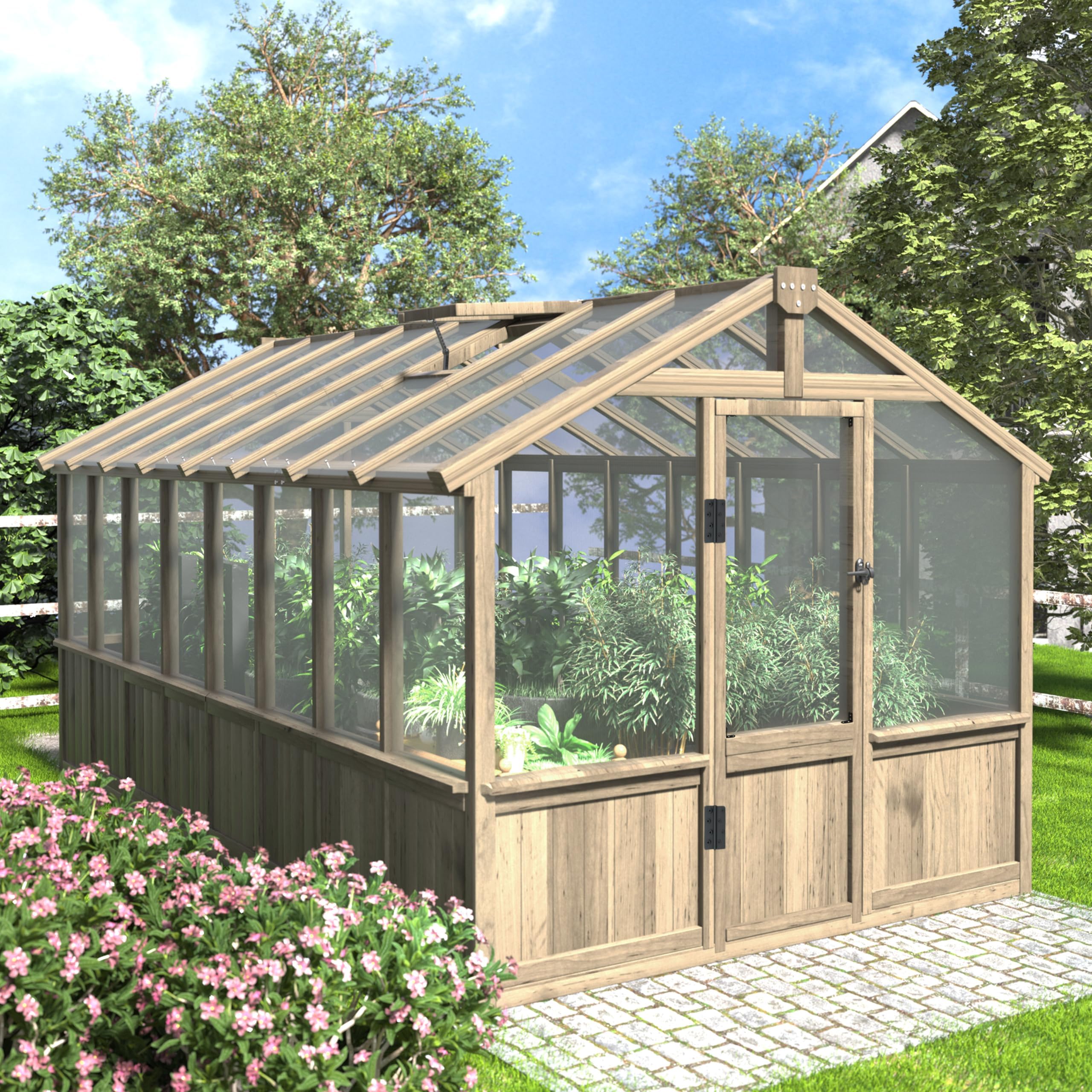
A heavy, handsome wooden frame with 6mm polycarbonate that stands up to blizzards.
This Yardenaler is a substantial structure. The frame is wood in a Light Mocha Brown finish, and it uses 6mm thick multi-layer polycarbonate panels — noticeably thicker than the 4mm panels on the YITAHOME and Sylviera models. The overall size is 96 inches wide by 190.2 inches deep (roughly 8×16 feet), with a peak height of 90.6 inches, which is the tallest of any pick here. The door is a hinged style, and there are two adjustable roof vents that can open up to 45 degrees.
Owner experiences are overwhelmingly positive. One owner reported it survived 60-70 mph winds for a full year when secured to a 4×4 foundation. Another said it held up through blizzards with no snow leaking inside. The quality and appearance are frequently praised, with the cedar wood smell mentioned as a pleasant surprise. Assembly took one user about two days on a wood frame with gravel, and the directions are generally described as clear, though some find them not super clear. The main cautions are that the wood needs to be pre-drilled carefully and that caulking all seams is important for waterproofing.
This is a premium greenhouse designed to be a permanent fixture. It looks far better than any plastic tunnel and offers the best insulation of the group. The trade-off is the weight — 427 pounds — and the price, which puts it in the same conversation as the Backyard Discovery Zalie. If you have the space and the budget, this is a greenhouse you will keep for a decade.
What makes it special
- 6mm thick polycarbonate panels offer superior insulation and durability.
- 90.6-inch peak height gives the most headroom of any pick here.
- Cedar wood frame is naturally strong and beautiful.
- Proven to survive 60+ mph winds and heavy snow when anchored.
The honest downsides
- Heavy at 427 pounds — needs a solid foundation and multiple people to assemble.
- Premium price makes it a serious investment for dedicated gardeners.
Understanding the Specs
Frame Wall Thickness
This is measured in inches or millimeters, and it tells you how much abuse the frame can take. Budget tunnels often use a 0.02-inch wall, which is fine for calm, sheltered spots. A 0.03-inch wall is a 50% jump in strength and is worth the extra money if your yard gets any real wind. The thickest frames here, like the Quictent, use 0.7mm (about 0.028 inches) for a noticeably sturdier feel.
GSM of the PE Cover
GSM stands for grams per square meter, and it measures the density of the polyethylene cover fabric. A higher GSM means a thicker, heavier cover that resists tearing and holds in heat better. Most basic tunnels use 140 GSM. The Quictent steps up to 150 GSM, which is a small but meaningful improvement in durability and light diffusion. A cover with a reinforcement grid in the middle is also a good sign for wind resistance.
Ventilation Count
More windows and vents mean better temperature control, but the type matters too. Roll-up side windows offer the most airflow on tunnel models, while mesh-covered vents keep bugs out. Some greenhouses, like the Quictent, use full-perimeter velcro seals for adjustable ventilation. Roof vents on rigid greenhouses, like the Yardenaler, use a hinge that can be propped open at different angles. Two vents is often enough for a small greenhouse, but a 20-foot tunnel benefits from having 6 to 12 windows.
Walk-in Height
This is the peak height of the greenhouse. Most hoop houses are around 6.5 to 7 feet tall at the center. If you are tall, look for models like the Yardenaler that offer 90.6 inches of headroom. Keep in mind that usable height is less at the edges, so a 6.5-foot peak might mean you can only stand upright in the middle few feet. If you plan to use tall shelving or grow vining plants, extra height is a real advantage.
FAQ
Do hoop houses need a foundation?
Can a PE cover greenhouse survive winter snow?
How do I prevent my hoop house from blowing away?
What is the difference between PE and polycarbonate covers?
How many windows do I need in a hoop house?
Can I assemble a large hoop house by myself?
What does GSM mean for a greenhouse cover?
How long does a PE greenhouse cover last?
Is a hoop house strong enough for high winds?
Can I grow plants year-round in a hoop house?
Final Thoughts: The Verdict
For most buyers, the best high hoop house is the Backyard Discovery Zalie 11′ x 7′ because it combines a beautiful cedar wood frame with commercial-grade polycarbonate panels, a power station, and a 5-year warranty. If you want a huge tunnel while staying affordable, grab the Quictent 20x10x6.6 FT Premium. And for a beautiful, permanent wooden greenhouse that handles snow and wind like a champ, the Yardenaler 8×16 FT is the one to reach for.
How We Picked
We do not accept paid placement. Every pick is matched to a real buyer and a real use-case; we do not hands-on test units.
Sources & Methodology
Specifications: manufacturer listings and product documentation. Review insights: verified customer reviews, as of July 2026. Pricing: not shown on this page (it changes often); check the current price via the retailer link.
As an Amazon Associate, Lawn Gear Lab earns from qualifying purchases. This does not affect which products we feature.