
Specs are compiled from manufacturer listings and verified buyer reviews and can change over time — please confirm the key details on the product page before buying.
A greenhouse without proper airflow is just an expensive oven for your plants. You buy a greenhouse with vents to solve this exact problem — letting hot, humid air escape so your seedlings don’t cook on a sunny afternoon. The challenge is finding one where the vents actually work, the frame doesn’t buckle in a breeze, and assembly doesn’t eat your entire weekend. These picks focus on built-in roof vents, side windows, or adjustable skylights that give you real climate control without having to prop the door open with a brick.
I’m Rikta — the founder and writer behind Lawn Gear Lab. This guide is built by comparing the manufacturers’ published specifications and the patterns across verified customer reviews, so you get each pick’s real strengths and trade-offs instead of marketing spin.
Whether you have a small patio or a serious backyard setup, the right greenhouse with vents creates a stable environment for your plants by managing temperature and humidity through built-in openings you can actually adjust — no duct tape required.
Our Picks at a Glance
How To Choose The Best Greenhouse With Vents
Picking the right greenhouse starts with understanding what “with vents” actually means for your growing season. A single roof vent works fine for mild climates, but if your summers get hot or humid, you’ll want at least two openings — one near the top for hot air to escape and one lower down to draw in cooler air.
Ventilation type and count
Roof vents are the most effective because hot air rises. Adjustable vents let you control airflow, but some designs use simple prop rods while others use sliding or pulley mechanisms. Check how many vents the greenhouse includes and whether they stay open on their own — several buyers report needing rubber bands to keep vents propped up.
Frame and panel durability
Aluminum frames are lightweight and rust-resistant, but the gauge matters. Heavier frames with diagonal braces handle wind and snow better than basic models. Polycarbonate panels come in different weights — 4mm twin-wall is standard, but 720g/m² panels offer more impact resistance. Thinner panels can pop out in strong wind or crack under snow load, so match the build to your local weather.
Assembly reality check
Almost every greenhouse in this category has mixed assembly feedback. The key is whether the manufacturer provides clear instructions and labeled parts. A two-person build is standard for anything above 6×4 feet, and you should budget several hours. Some kits include slide-in panels that speed things up, while others require drilling and aligning bolts.
Quick Comparison
| Model | Best For | Vents | Frame Material | Dimensions | Amazon |
|---|---|---|---|---|---|
| Jocisland 6x12Ft★ Best Overall | Largest growing area | 2 | Aluminum | 6x12Ft | Amazon |
| 6x4FT with HygrometerBest Value | Value with extras | 2 | Aluminum | 45″x67″x77″H | Amazon |
| 8×12 FT Fly by YanTop Performer | Large space, quick setup | 2 | Aluminum | 143″x97″x77″H | Amazon |
| Outsunny 6x6Ft | Square footprint | 1 | Aluminum | 74.75″x75.5″x79.25″H | Amazon |
| YITAHOME 12x6FT | Long narrow beds | 2 | Aluminum | 144″x72″x77″H | Amazon |
| VEIKOU 8x16Ft | Maximum interior space | 2 | Aluminum | 97.3″x189.56″x90.5″H | Amazon |
| Palram Hybrid 4×8 | Lean-to design | 1 | Aluminum | 8″x4.1″x7.5″H | Amazon |
| 6×4 FT Charcoal Black | Compact budget pick | 1 | Aluminum | 66.9″x44.9″x77″H | Amazon |
In‑Depth Reviews
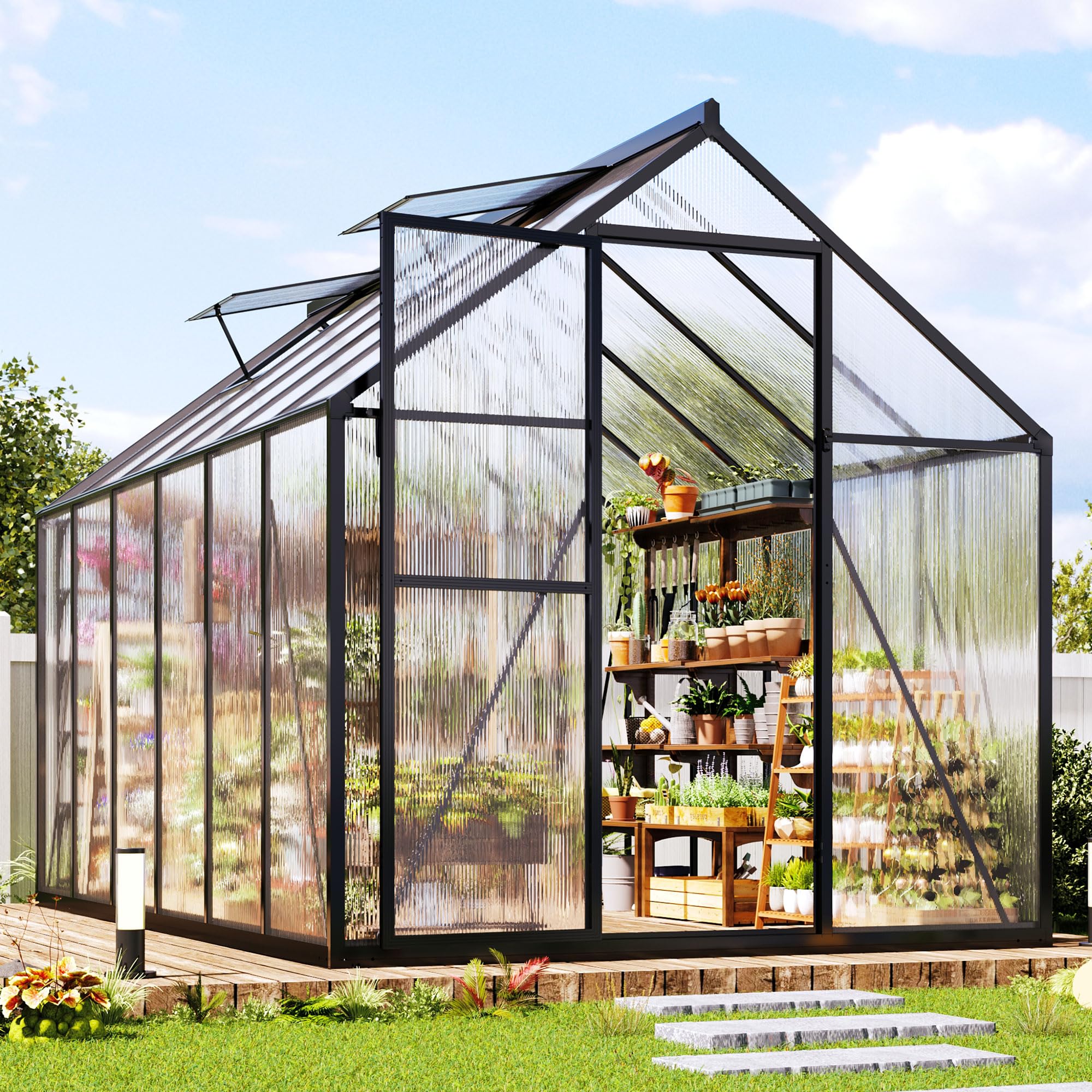
1. Jocisland 6x12Ft Polycarbonate Greenhouse
Our pick — over 4★ from 40+ verified ratings; the strongest balance of quality and price.
Two roof vents on a 6×12 walk-in that holds a steady 80s inside when it is 40s outside.
This is the largest of the bunch at 6×12 feet, giving you serious room for rows of vegetables or a potting bench alongside your plants. The aluminum frame uses side pull braces and ground stakes so it can sit on soil or concrete and resist wind. Two roof vents with support rod holders let you position them at different angles to dial in airflow, which matters because — as owners mention — this greenhouse “maintains 80s inside when low 40s outside.” You will likely need a small heater on freezing nights, but the 4mm polycarbonate panels block 99.99% of UV rays so your seedlings get light without scorching.
Assembly is where the trade-off lives. The quick-connect joints are designed for a 2–3 hour build with two people, but several owners flag the instructions as hard to follow and one describes the vent mechanism as a puzzle that required rubber bands to keep open. The frame itself is sturdy — one buyer had it survive 70mph winds after bolting it to 4x4s — but you should plan for a full morning’s work and maybe some creative problem-solving on the vent rods.
The real selling point is the size-to-value ratio. At this footprint, you get enough space to walk in and work upright, plus vents that actually move hot air. Just do not tighten every bolt until the whole frame is square, and expect to re-read the manual on the vent mechanism before you start.
What wins people over
- Generous 6×12 floor space for serious growing
- Two adjustable roof vents for real temperature control
- Survives high winds when anchored — customers note 70mph with no damage
Where it trips up
- Assembly instructions are confusing; many owners improvise on vent rods
- Needs two people and several hours despite “quick-connect” claims
- Panel fit can be tight; some owners add weather stripping
Reach for this if: you have a large backyard plot and want walk-in space with two functional roof vents for active airflow.
Think twice if: you want a weekend-afternoon assembly — this one demands patience and a helper plus some DIY spirit on the vent hardware.
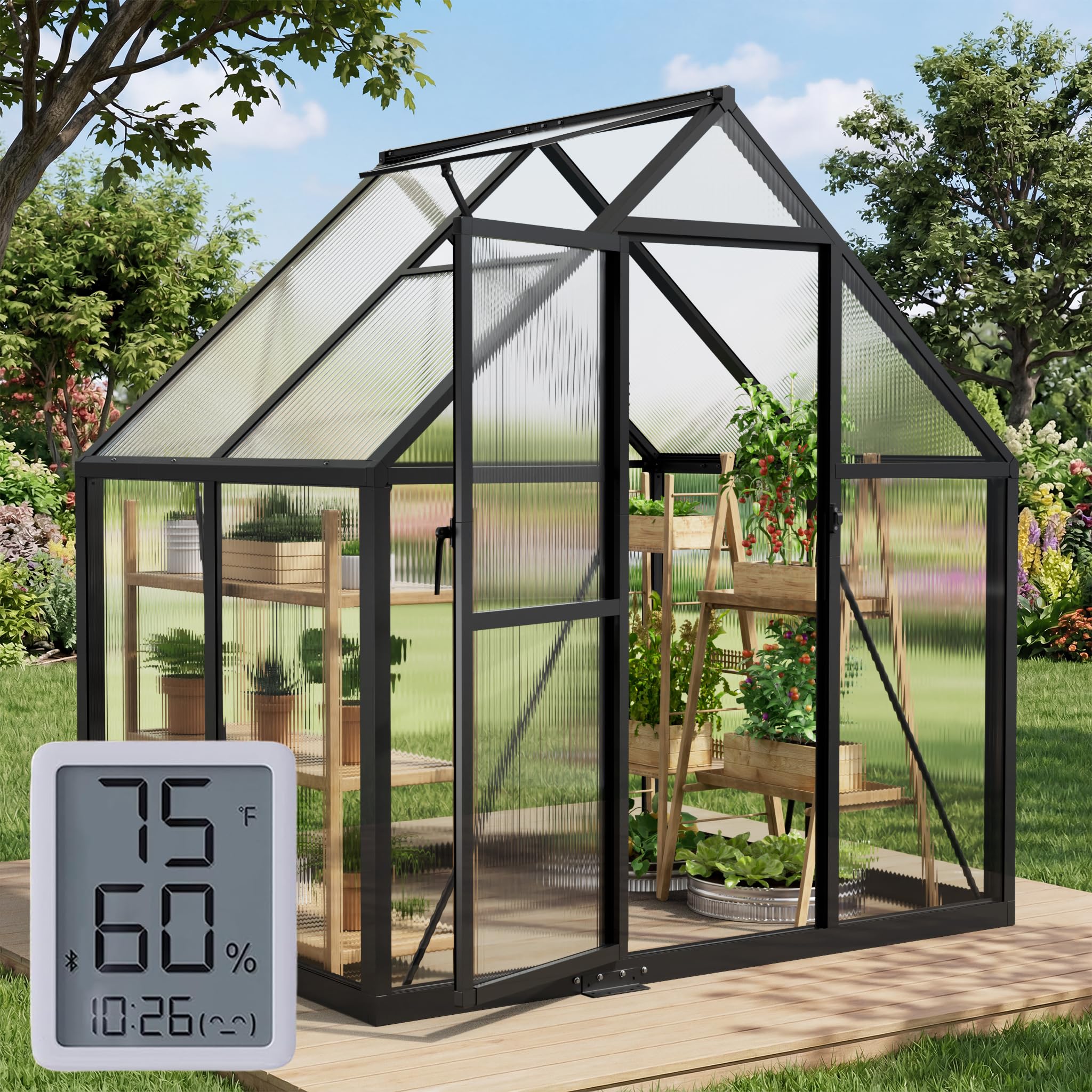
2. 6x4FT Greenhouse with Hygrometer
A 6×4 with two roof vents and an included hygrometer that punches well above its price tier.
This Sylviera greenhouse packs two roof vents into a compact 6×4 footprint — that is twice the vents of some similarly priced rivals. The frame is reinforced aluminum alloy and the panels are 4mm double-wall polycarbonate at 580g weight, which means decent light transmission while blocking UV. It includes a built-in hygrometer so you can actually see humidity levels and adjust the vents accordingly, which is a rare bonus at this price.
Owners say the structure feels sturdy and handles rain well, with one noting it “survived two weeks of nonstop rain.” The adjustable roof vents are appreciated, though several buyers mention the vents need a DIY fix — rubber bands or improvised stays — to stay open at the angle they want. Assembly is manageable with two people, but you must remove the protective film from both sides of the polycarbonate panels before installation, a step the manual often omits.
The catch is the 45x67x77 inch footprint is not huge. This works beautifully for a starter greenhouse or a patio addition, but seasoned gardeners with tall tomato trellises will find the headroom tight. At this value, however, you get a greenhouse that protects plants well and lets you monitor humidity — just budget some extra time for the vent setup.
Smart money move: The 6×4 size keeps the price accessible while dual vents and a hygrometer give you real climate control — just expect to improvise on the vent stays and peel that protective film.
Who it fits: budget-conscious gardeners who want two vents and a humidity gauge without jumping to premium pricing.
Who should pass: anyone who needs tall interior space for mature plants or who wants a truly tool-free assembly.
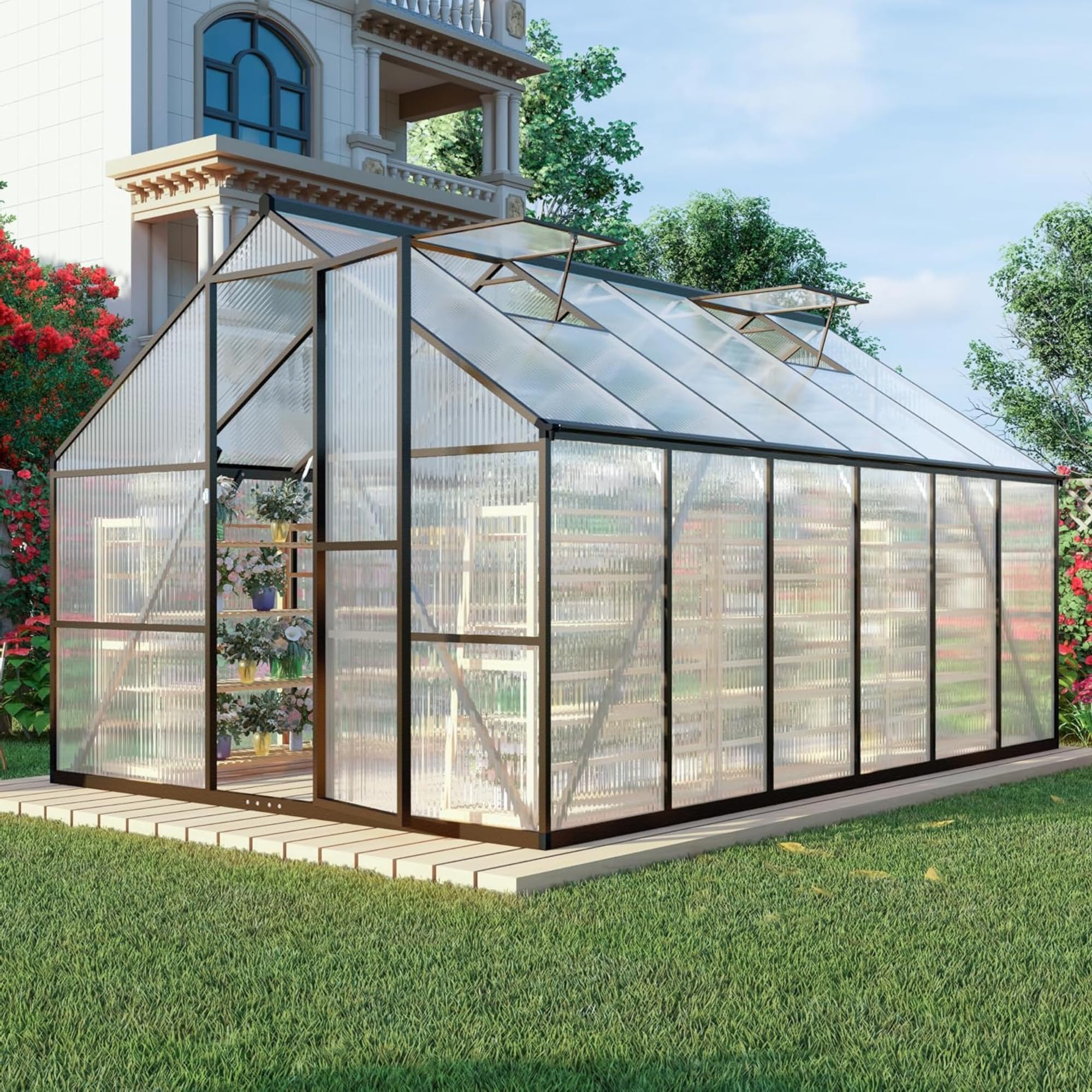
3. Fly by Yan 8×12 FT Polycarbonate Greenhouse
An 8×12 with a slide-in panel system that speeds setup without sacrificing storm toughness.
The Fly by Yan greenhouse uses a quick-install system with slide-in panels, promising a 40% faster build than standard kits. That claim comes from over 500 design tests, and owners generally agree it is one of the easier large greenhouses to assemble — though still a two-to-four-person job over several hours. The 720g/m² polycarbonate panels are heavier and more impact-resistant than the 580g panels on cheaper models, and the reinforced aluminum frame is designed to handle wind and snow.
Sturdiness dominates the owner feedback — 24 buyers single it out as the top positive. One owner reported it survived a violent storm without damage. The two roof vents provide balanced airflow, but some reviewers point out assembly clarity could improve: one owner installed the gutter facing the wrong way and the window above the roof due to unclear instructions. The interior measures roughly 7’8″x13’x8′ tall, which gives you genuine standing room for most gardeners.
Where this model stands out from the Jocisland above is the panel quality — 720g/m² versus 4mm thickness — and the tested slide-in system. It also holds more reviews overall with a strong positive consensus on durability. The trade-off is the same across large kits: budget significant build time and have at least one helper ready.
What owners praise
- 720g/m² polycarbonate panels are noticeably tougher than entry-level kits
- Slide-in panel design speeds assembly versus bolt-heavy alternatives
- Survived a violent storm with no structural issues
What needs attention
- Instructions can cause roof and gutter orientation errors
- Four people recommended for the 8×12 build, not just two
- Gets very hot inside quickly; vents need to be managed actively
Best for: serious gardeners with space for an 8×12 footprint who want durable panels and a faster build without moving up to premium pricing.
skip it if: you cannot wrangle three or four helpers for an afternoon — the assembly demands people power.
4. Outsunny 6×6 Ft Polycarbonate Greenhouse
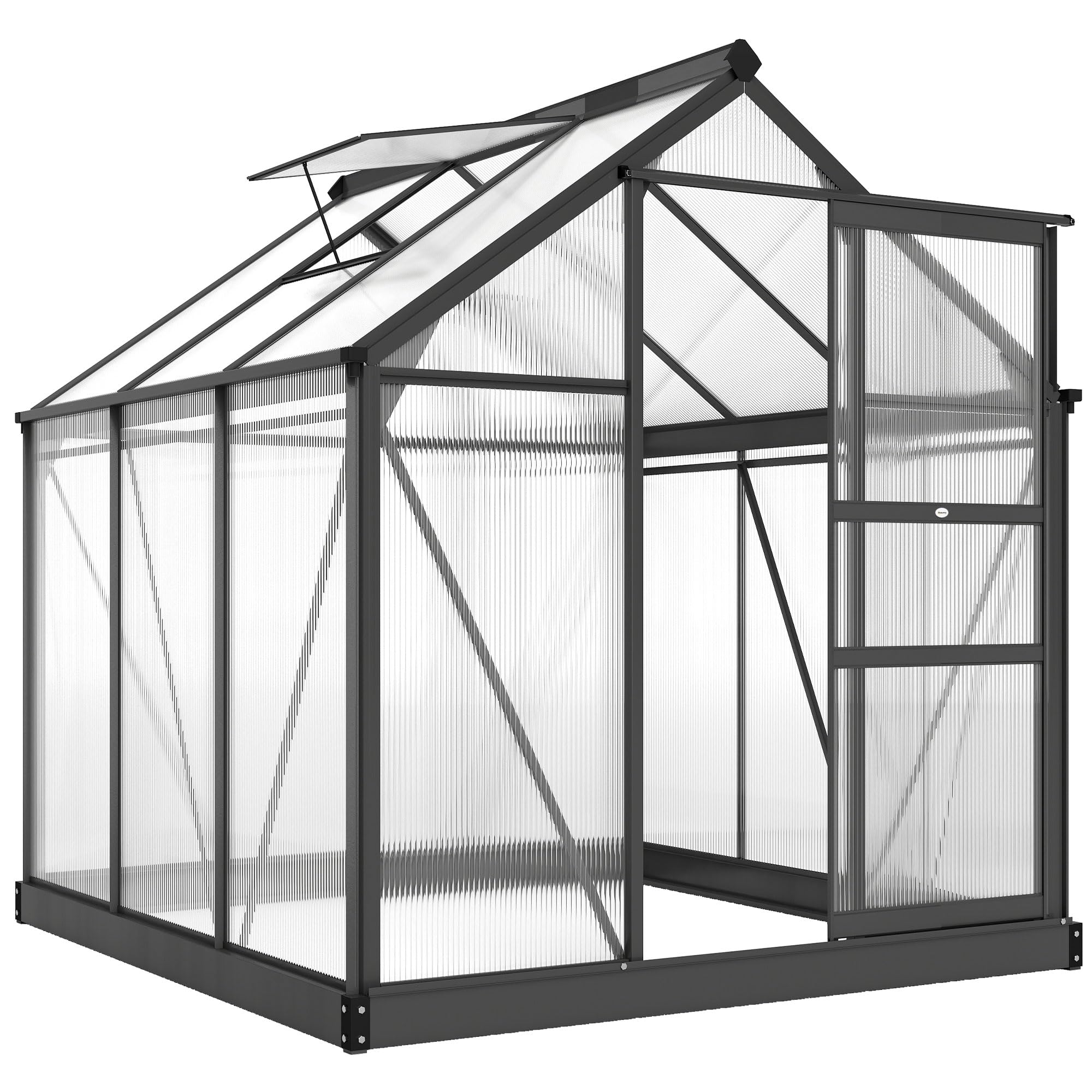
A square-footprint greenhouse with a single roof vent and an integrated rain gutter system.
The Outsunny 6×6 is designed around a square 74.75×75.5 inch footprint, which makes it a good fit for tight spots where a long rectangle would not work. It has one hinged roof vent, a sliding door for easy access, and built-in rain gutters that channel water away from the base. The powder-coated aluminum frame and galvanized steel base add corrosion resistance, and the gray color blends into most garden settings without standing out.
The main downsides are well-documented. Assembly is the most consistently criticized aspect across over 600 ratings — the instructions are picture-only with no written steps, and many shoppers say components that do not align well. The polycarbonate panels are thin enough that several owners had panels blow out in moderate wind. Durability gets mixed marks: some find the greenhouse good for the price after reinforcing it with 4×4 anchors and weather stripping, while others call it flimsy.
This one works best if you are a hands-on gardener who enjoys modifying a kit to make it solid. The rain gutter is genuinely handy for collecting water, and the square shape fits certain yards better than any other option here. But if you want something that goes together cleanly from the start, the 6×4 from Sylviera above is a less frustrating path.
For the tinkerer: The Outsunny rewards extra effort — anchoring, weather stripping, and careful alignment — with a functional square greenhouse that collects rainwater. Plan for a full-day build and bring your own tools.
Choose it if: you have a square patch of ground, want rain collection built in, and are comfortable drilling extra holes and reinforcing the structure yourself.
Look elsewhere if: you want a straightforward assembly with solid panels and clear instructions — the Sylviera or Jocisland are more forgiving builds.
5. YITAHOME 12x6FT Polycarbonate Greenhouse
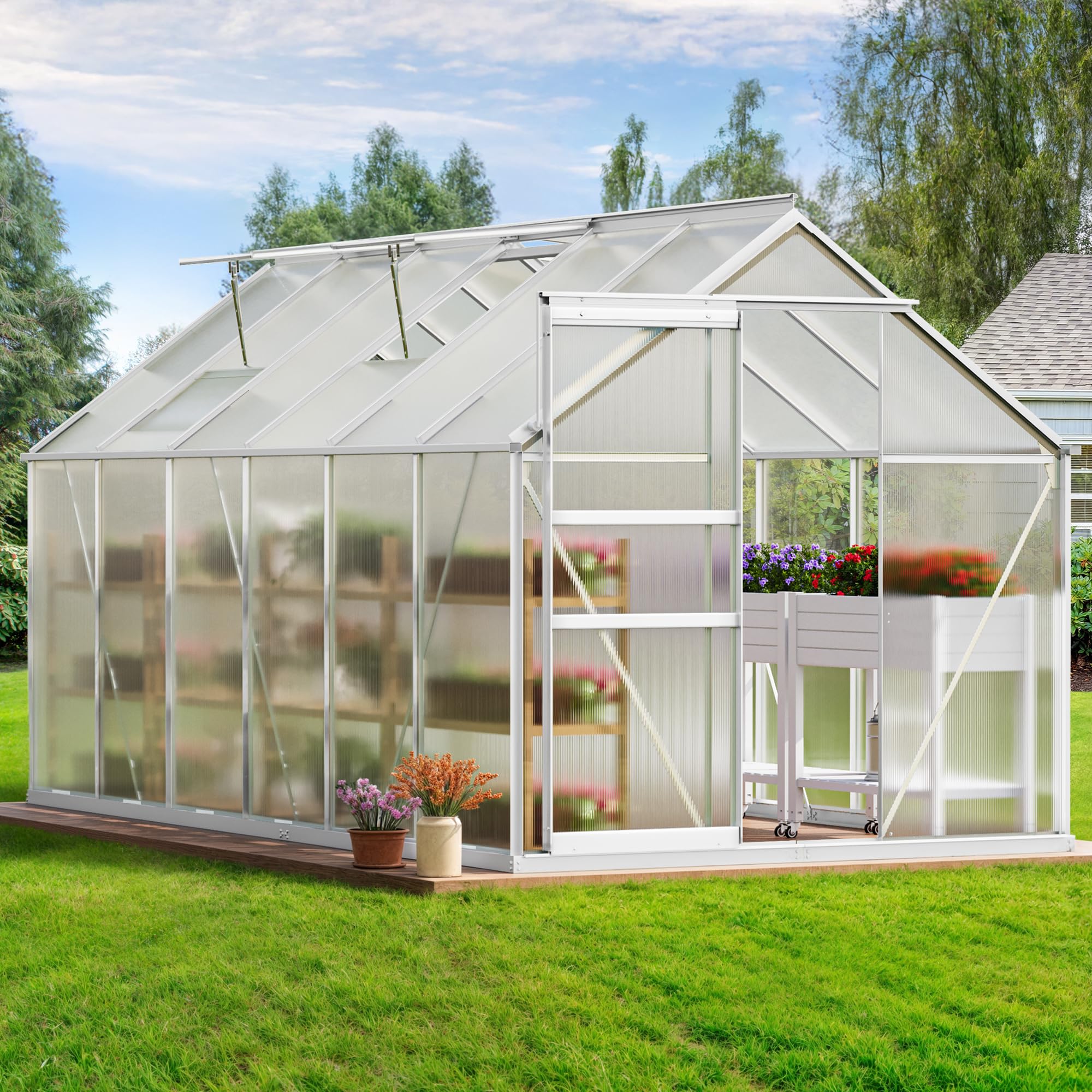
A long 12×6 with two adjustable skylights and a sliding door for tight garden rows.
At 12×6 feet, this YITAHOME greenhouse is built for long, narrow spaces — think raised beds in a row or a strip along a fence. The aluminum alloy frame uses reinforced side rods and diagonal fixation for added stiffness, and the twin-wall polycarbonate panels block 99% of UV radiation. Two adjustable skylights let you open them at various angles, creating a natural chimney effect for hot air to escape. The sliding door saves space compared to a swing door, which matters when you are maneuvering pots and tools inside.
Assembly feedback tilts positive for ease, which is unusual at this size. Owners describe the build as straightforward with clear instructions, though the greenhouse ships in two packages that may arrive on different days. The frame feels solid once assembled, and the aluminum resists rust. A minor irritation several owners note: some pre-drilled holes were slightly off-center, fixed with duct tape or a quick re-drill.
Compared to the Jocisland 6×12 at the same price range, the YITAHOME trades a bit of width for extra length and feels easier to assemble. The 93.7-pound weight makes it a solid unit, but you will want to anchor it — the manual recommends placing the base in a trench and using expansion screws for wind resistance. This is a great pick for dedicated vegetable growers with linear garden layouts.
Strengths
- Two adjustable skylights create effective passive ventilation
- Sliding door saves interior space versus swing doors
- Strong aluminum frame with reinforced side rods
Minor frustrations
- Some pre-drilled holes need reaming or adjustment
- Ships in two boxes that may not arrive together
- We recommend glass glue on PC board gaps for water protection
Perfect for: gardeners with long, narrow plots who want a solid, easy-to-assemble greenhouse with two functional skylights.
Not ideal if: you lack patience for minor hardware adjustments or need a greenhouse that arrives in one box.
6. VEIKOU 8×16 Ft Polycarbonate Greenhouse
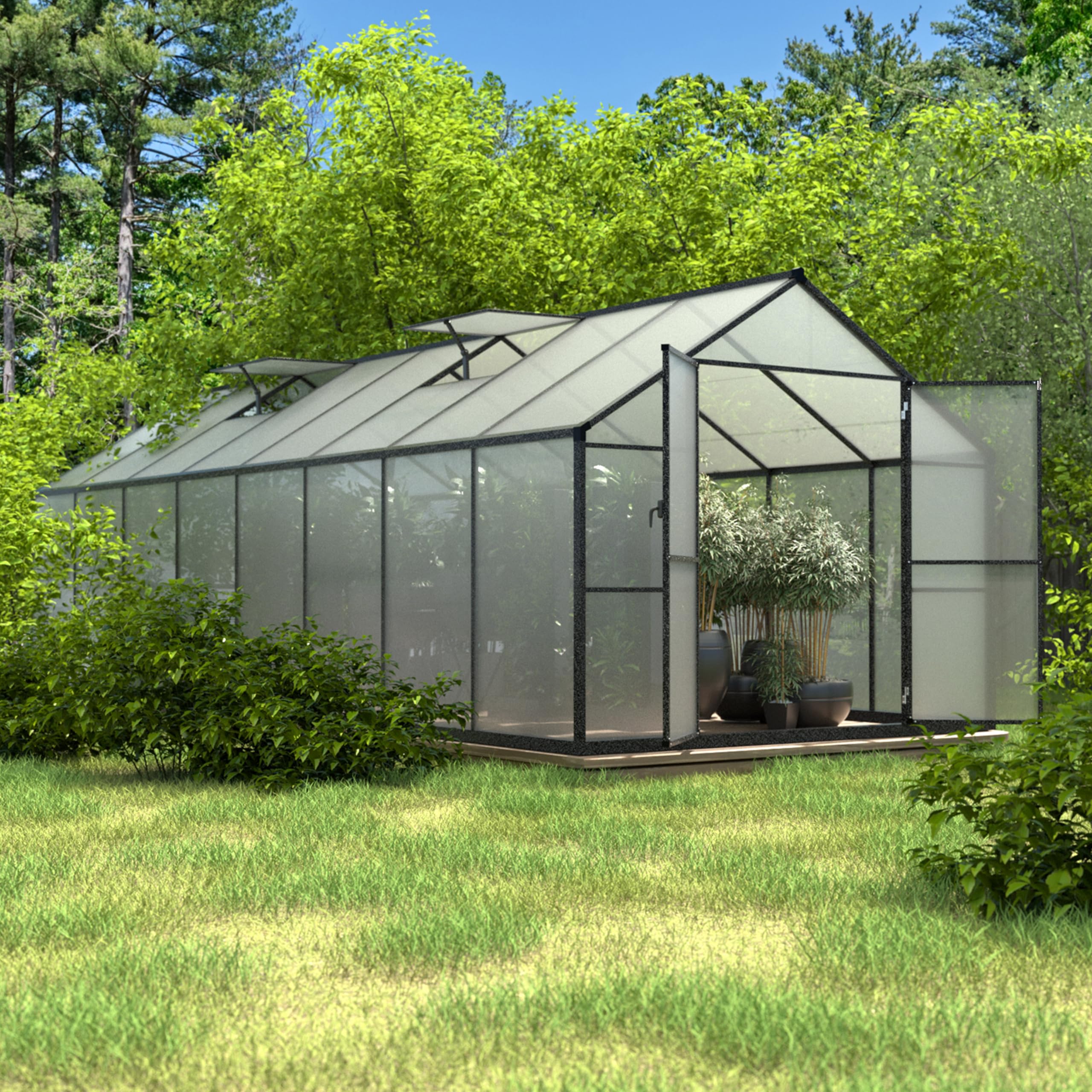
An 8×16 walk-in with pulley-operated roof vents — the biggest interior here.
The VEIKOU greenhouse gives you the largest interior volume of any pick in this list at 97.3 x 189.56 x 90.5 inches. That is over 15 feet of length and 7.5 feet of headroom, so you can walk in fully upright and line up rows of tall plants. The standout feature is the pulley-operated roof vents — instead of a prop rod, you rotate a button to adjust the angle, and the pulleys make it easier to reach. You can also relocate the vents to any panel during assembly, which adds flexibility.
The powder-coated aluminum frame resists rust and corrosion, and the gray finish looks clean. Owners praise the size and appearance, but the assembly is a mixed bag. Some found it “easy to assemble” while others describe it as a “nightmare” with bent pieces and panels that blow out over months. The vent holders specifically get criticism — one owner had to add wood stops to keep them functional. VEIKOU recommends using tie-down kits for wind resistance beyond 15 mph.
This is the greenhouse to pick if interior space is your absolute priority. No other option here matches the 8×16 footprint and the pulley vent system is genuinely innovative. But the mixed assembly feedback and the need for supplemental anchoring mean this is best suited for a patient DIYer who wants to customize the setup.
What justifies the price
- Massive 8×16 interior with 90.5-inch peak height
- Pulley-operated vents are adjustable without props
- Powder-coated aluminum resists rust and corrosion
What to watch out for
- Assembly is tedious; some buyers report bent pieces and panel blowouts
- Vent holders can be ineffective; DIY fixes often needed
- Must anchor well — structure can move in winds over 15 mph
Go for it if: you need the most square footage and headroom possible and are willing to invest time in assembly and anchoring.
pass on it if: you want a quick weekend build with reliable vent hardware from the start.
7. Palram Hybrid Lean-To 4×8 Greenhouse

The lean-to design sits against your house wall, using twin-wall polycarbonate roof panels for balanced heat.
The Palram Hybrid is the only lean-to style in this list — it attaches to an existing wall, saving yard space and potentially drawing heat from your home in cooler months. The twin-wall polycarbonate roof panels are virtually unbreakable while the crisp wall panels provide over 90% light transmission. A single adjustable vent window handles airflow, and the magnetic door catch and lockable handle add convenience. Better Homes and Gardens named it the Best Overall Greenhouse Kit of 2024.
Assembly feedback is the most voluminous of any product here — over 840 ratings — and the picture is nuanced. The instructions are graphic-based (similar to IKEA), and many owners find the build straightforward with good parts alignment. One owner completed it solo in about 7 hours. But the assembly category is rated MIXED by Amazon, and 119 people specifically flag the instructions as NEGATIVE. The panels feel thin to some, and owners stress that the structure must be anchored securely — it feels flimsy until bolted down, then becomes sturdy.
The lean-to design is brilliant for constrained spaces, and the twin-wall roof traps heat effectively. But the mixed assembly feedback and the need for solid anchoring mean this rewards careful, methodical builders. It also sits higher in price than the Sylviera or Outsunny, so make sure the wall-mounted advantage fits your setup.
Unique advantages
- Lean-to design saves yard space and uses house wall for warmth
- Twin-wall roof panels provide excellent insulation versus single-wall
- Magnetic door catch and lockable handle for convenience
Areas of caution
- Instructions are picture-only; some owners find them lacking
- Panels feel thin; long-term durability concerns exist
- Anchoring is critical — structure is not sturdy until bolted down
Ideal for: small yards where a freestanding greenhouse won’t fit, and owners who want a wall-anchored structure with excellent light transmission.
Not for: anyone who hates picture-only instructions or wants a greenhouse that stands solid without extra anchoring effort.
8. 6×4 FT Polycarbonate Greenhouse, Charcoal Black
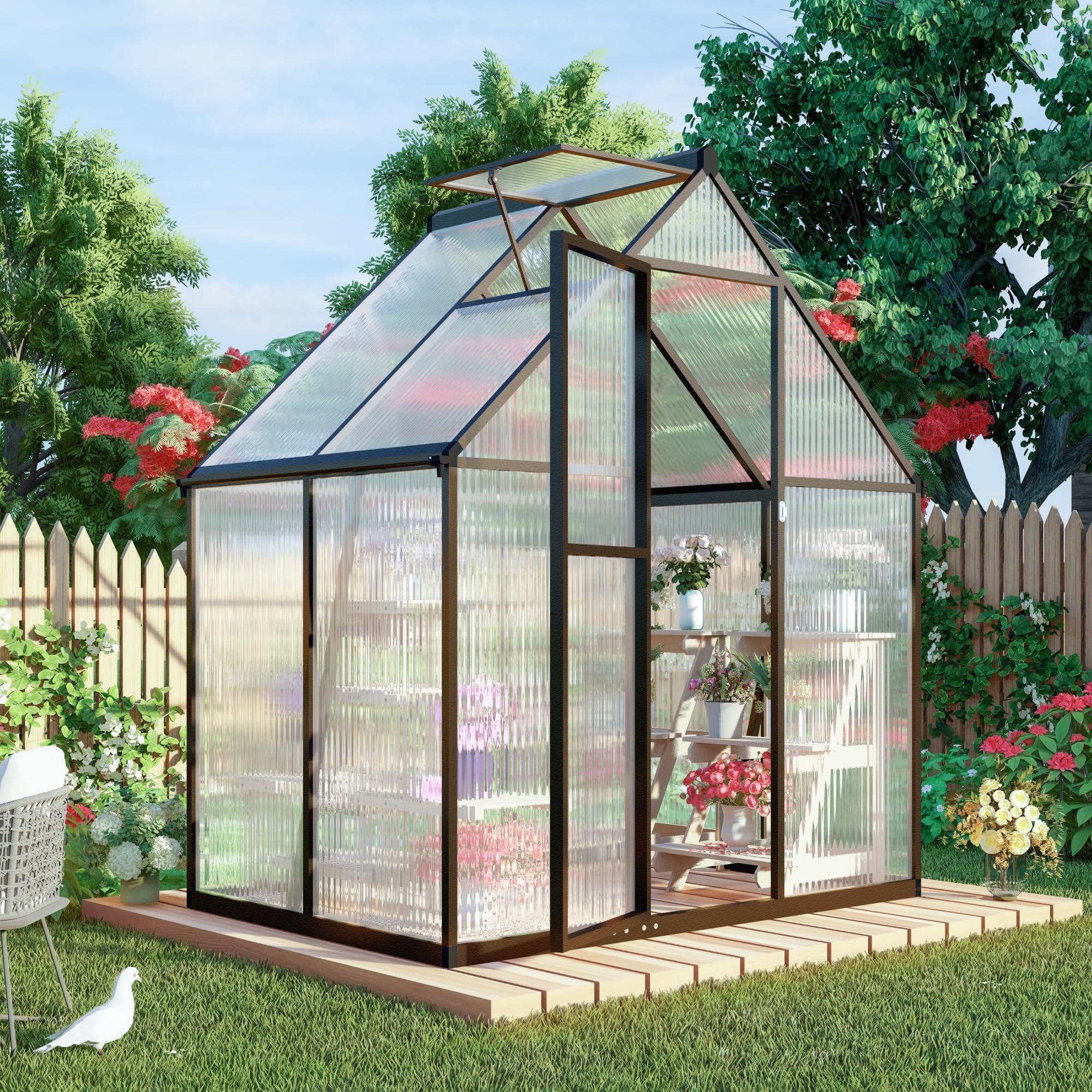
A compact 6×4 with a single roof vent and a slide-in panel system for quick assembly.
This Jiliusure greenhouse is about as straightforward as it gets: a 66.9 x 44.9 x 77 inch box with one adjustable roof vent, one sliding door, and 720g/m² double-wall polycarbonate panels. The slide-in panel system is designed to make assembly faster, and the reinforced aluminum frame includes ground spikes for stability. The charcoal black color looks sharp and modern, and the greenhouse packs down to a manageable footprint for patios or small backyards.
The mixed owner feedback centers on two things. First, the actual interior dimensions are smaller than the title implies — one buyer measured roughly 5.5 x 5.5 feet instead of 6 x 4. Second, and more critically, there is a documented failure in snowy conditions: one owner in NYC reported the roof panels cracked under snow load during winter. The frame itself is durable aluminum, and the polycarbonate insulates well when intact, but the panels are not rated for heavy snow accumulation.
At this price point, you get a functional greenhouse with a working roof vent and decent panels for three-season use in mild climates. If you live where snow happens, you will need to clear the roof regularly or look at the heavier-paneled Sylviera or Fly by Yan options. For warm-weather or cool-season growing, this is a solid entry-level pick.
Low-cost entry point: The single roof vent works well for basic airflow and the slide-in panels speed assembly, but the snow-load issue limits its winter viability. Best as a spring-to-fall greenhouse in moderate climates.
Best for: first-time greenhouse buyers in mild climates who want a small, attractive unit with a functional roof vent at a low entry price.
Not recommended if: you face heavy winter snow or need the full 6×4 interior space the title implies.
Understanding the Specs
Roof Vents
A roof vent is an opening near the top of the greenhouse that lets hot, humid air escape. Because warm air rises, a roof vent creates natural airflow without needing a fan. More vents mean better temperature control — a single vent works for small greenhouses, but two vents (especially one on each side) create cross-ventilation. The vent mechanism matters too: prop rods are simple but can slip, while pulley systems or sliding mechanisms hold their position better. Some greenhouses use adjustable skylights that open to various angles, giving you finer control over how much air escapes.
Polycarbonate Panel Weight
Polycarbonate panels are measured either by thickness (4mm) or by weight (580g/m² vs 720g/m²). Heavier panels are more impact-resistant and provide better insulation because the denser material blocks more heat transfer and UV radiation. Twin-wall panels (two layers with a gap in between) trap air for extra insulation compared to single-wall sheets. Thinner panels can pop out of their frames in strong wind or crack under snow load, so if you live in a stormy or snowy area, look for the higher gram-weight or thicker panels.
Aluminum Frame
Aluminum is the standard frame material for mid-range greenhouses because it is rust-proof, lightweight, and strong enough for polycarbonate panels. The difference between models depends on the profile shape (square tube versus slimmer channels) and reinforcement. Frames with diagonal braces, side pull rods, or corner gussets resist twisting in wind better than basic rectangular frames. Do not confuse aluminum frames with steel frames — aluminum won’t rust, but thinner-gauge aluminum can flex under heavy snow, so check for reinforcement rods in larger greenhouses.
Assembly System
Greenhouse kits use either bolt-together frames or slide-in panel systems. Bolt-together frames require aligning holes and tightening nuts, which takes more time but can be more forgiving if you need to adjust alignment. Slide-in panels are faster in theory — the panels lock into channels on the frame — but they require precise alignment from the start. Most owners with either system report that having a second person cuts assembly time by at least half. Picture-only instructions (no written steps) are a common complaint across many brands; check recent reviews to see if your chosen model has clear directions.
FAQ
How many vents do I actually need in a greenhouse?
What is the difference between single-wall and twin-wall polycarbonate?
Can I leave my greenhouse with vents outside all winter?
How do I keep my greenhouse vents open in wind?
Is a lean-to greenhouse as good as a freestanding one?
What tools do I need to assemble a greenhouse kit?
How do I anchor my greenhouse so it does not blow away?
Will a greenhouse with vents need additional cooling like a fan?
Final Thoughts: The Verdict
For most people, the best greenhouse with vents is the Jocisland 6x