
Specs are compiled from manufacturer listings and verified buyer reviews and can change over time — please confirm the key details on the product page before buying.
Knock Out roses are the workhorses of the garden, but even tough genetics need the right fuel to keep cranking out those clusters of color from spring through the first hard frost. The problem is, picking a fertilizer from a shelf of bags and bottles can feel like a chemistry lesson you did not sign up for. You just want bigger blooms and healthier leaves without feeding a weed or burning the roots.
I’m Rikta — the founder and writer behind Lawn Gear Lab. This guide is built by comparing the manufacturers’ published specifications and the patterns across verified customer reviews, so you get each pick’s real strengths and trade-offs instead of marketing spin.
Whether you are planting a first bush or tending a row that has been there for years, this breakdown of the best fertilizer for knock out roses will help you match the right feed to your specific garden routine and soil type.
Our Picks at a Glance


How To Choose The Best Fertilizer For Knock Out Roses
Knock Out roses are heavy feeders that thrive on consistent nutrition throughout the growing season. The right fertilizer pushes out waves of blooms, while the wrong one can stunt growth or damage the soil biology. Here is what to look for when you scan the label.
NPK Ratio and What It Means
The three numbers on any fertilizer bag stand for nitrogen (N), phosphorus (P), and potassium (K). For repeat-blooming roses like Knock Outs, you want a moderate nitrogen level to fuel leafy growth without sacrificing blooms. A ratio like 4-3-2 or 18-14-10 works well — enough phosphorus to support flower development and potassium for overall plant health.
Slow-Release Granules vs. Liquid Feed
Granular fertilizers like Espoma Rose-Tone break down slowly in the soil, feeding the plant over several weeks with less risk of burn. This is ideal for the “set it and water it in” approach. Liquid fertilizers get absorbed almost immediately through the roots and leaves, making them a strong choice for container roses or for giving a tired mid-summer bush a quick boost.
Organic vs. Synthetic Ingredients
Organic fertilizers feed the soil microbes that in turn feed the rose. They tend to have gentler, longer-lasting effects and reduce the risk of chemical burn. Synthetic fertilizers deliver precise, fast-acting nutrients but can build up salts in the soil over time. For Knock Out roses, a high-quality organic granular option is often the most forgiving and effective choice for beginners and experts alike.
Quick Comparison
| Model | Best For | Form | NPK Ratio | Unit Size | Amazon |
|---|---|---|---|---|---|
| Espoma Organic Rose-Tone★ Best Overall | Best Overall | Granules | 4-3-2 | 128 oz (Pack of 2) | Amazon |
| Nelson Plant Food Rose FoodBest Value | Fast-Acting Granular | Granules | 18-14-10 | 32 oz | Amazon |
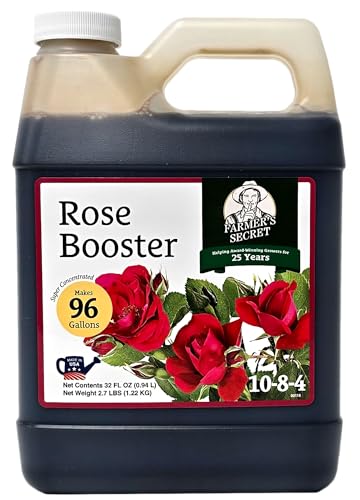
| Farmer’s Secret Rose BoosterTop Performer | Super Concentrated Liquid | Liquid | — | 32 oz | Amazon |
| Perfect Rose Fertilizer | Powder with Kelp | Powder | — | 12 oz | Amazon |
| Heirloom Boost & Bloom Granular | Established In-Ground Roses | Granules | 15-10-10 | 128 oz | Amazon |
| TPS Rose Fertilizer | Liquid for Container Roses | Liquid | — | 32 oz | Amazon |
| Bloom City Rose & Flower Plant Food | Large Liquid Volume | Liquid | — | 128 oz | Amazon |
| Heirloom Roses Founder’s Fish Fertilizer | Organic Liquid for New Roses | Liquid | — | 64 oz (Pack of 2) | Amazon |
| Go Garden Rose King | Budget Organic Powder | Powder | — | 33.5 oz | Amazon |
In‑Depth Reviews
1. Espoma Organic Rose-Tone 4-3-2
Our pick — over 4.5★ from 700+ verified ratings; the strongest balance of quality and price.
The granular organic that turns first-year Knock Outs into leafy, bloom-heavy machines.
This is a 4-pound bag of 4-3-2 analysis granules enhanced with Espoma’s proprietary Bio-tone formula. The magic is not just the NPK, but the 5 percent calcium and the living soil microbes that the organic matter feeds. You sprinkle it around the drip line once a month from May through September and water it in — no mixing, no measuring cups. The bag itself is actually a two-pack, giving you a massive 128 ounces of product, which puts it miles ahead of many specialist blends that come in tiny 12-ounce pouches.
The effectiveness of this feed is the most-discussed trait among owners. Buyers report that the roses respond visibly within the first week: “Great from the first week new sprouts of branches(red) and leaves.” One gardener with around 30 rose bushes noted that after switching to Rose-Tone, their roses were “stellar.” The crowd favorite here is undeniable — with strong positive ratings from nearly a thousand owners, it holds a clear edge in trust.
The trade-off every buyer should know is the odor. While many find the smell of natural organics pleasant, a smaller group describes it as “vile.” It is a smell that comes from the ingredients doing their job, but if you are sensitive to earthy scents, apply it when you are not planning to sit near the bed. Also note that because this is a granular feed, it needs soil moisture and time to break down — it is not a quick-fix rescue for a plant in distress.
Gentle power: The 4-3-2 ratio is low enough that you will not burn your bushes even if you over-apply, yet rich enough that a monthly schedule produces dense green growth and waves of flowers all season.
One honest caution: A small percentage of shipments arrive with the outer bag torn; inspect the box before you toss it.
Reach for this if: you want a set-and-forget granular routine that feeds the soil as much as the plant, and you have a few bushes or a whole bed to cover.
Look elsewhere if: you need an instant green-up for a single potted rose or you are bothered by the natural smell of organic fertilizers.
2. Nelson Plant Food Rose Food 18-14-10
A high-nitrogen granular that rewards you with huge thorns and constant flowers.
The NPK on this one is 18-14-10, a noticeably heavier nitrogen load than the organic options. That extra punch is designed to produce “lush foliage, strong stems and large, colorful blooms,” and it works across every rose type you can name, including Knock Outs, climbers, grandifloras, and miniatures. The application schedule is aggressive — every two weeks at the start of spring, then every 60 days through the growing season — so you are getting a steady stream of that high-powered mix into the soil.
Long-term owners have been using this brand for a full decade and swear by the results. The sentiment is consistent: “My roses love Nelson’s..they react very happy and healthy to the fertilizer and just keep on blooming. Even thorns grow huge!” That last detail is a real-world way to see the nitrogen at work — stronger thorns mean stronger canes, and stronger canes carry more buds. The granules are also reported as fast-acting, meaning you can see the green-up in days, not weeks.
The catch with a higher-nitrogen feed is the burn risk. If you over-apply or spread it on dry soil without watering it in thoroughly, the salt content can damage root tips. This is not a “lightly sprinkle and walk away” product. It demands a careful hand and a watering can. The bag is also smaller — 2 pounds compared to the 4-pound Rose-Tone pack — so if you have a full hedge, you will be reordering sooner.
Immediate payoff: Owners consistently see fast, visible results after one or two applications, which is why it earned a 4.7 rating from its buyer base.
Mind the schedule: The bi-weekly early-season feeding is more hands-on than a monthly granular; skip a dose and the bloom cycle can dip.
Best for the weekend gardener: This works beautifully for someone who enjoys a precise fertilizer regimen and wants to see dramatic leaf and flower growth quickly.
Not the right fit if: you prefer a low-maintenance “sprinkle and forget” routine or you are nervous about measuring doses on young, first-year Knock Outs.
3. Farmer’s Secret Rose Booster Fertilizer 32oz
A super-concentrated liquid that makes a single bottle feel like ten.
This fertilizer comes from Farmer’s Secret, a brand that brings the same scientifically backed formula development process used on large farms to the home garden. The concentration is the highlight here — you dilute just two teaspoons into a full gallon of water and apply weekly during the growing season. A single 32-ounce bottle therefore stretches a long, long way, which is why owners consistently mention the product being cost-effective despite the upfront price.
What wins people over is the speed of the results. “All my flowers and roses took off about 2 weeks earlier than normal this year,” one owner wrote, “and since using Rose Booster my roses look better and are blooming more with bigger flowers than they have in years.” The formula seems to work across a wide range — owners mention using it on mums, Thai basil, and neglected climbing roses with the same new-red-growth response. It also plays well with fungicides, so you do not have to choose between feeding and treating disease.
The catch is baked into the name: it is a booster, not a complete maintenance feed. You are meant to use it as a weekly addition to your existing care routine, not as a replacement for a balanced granular fertilizer. And the smell, as several customers note, is like sulfur — noticeable when mixing, but it dissipates quickly once diluted and watered into the soil.
Why it stands out
- Ultra-concentrated formula — two teaspoons per gallon goes a long way.
- Consistent results on everything from Knock Outs to vegetables.
- Easy to mix and apply with a hose-end sprayer or watering can.
A couple of honest notes
- Intended as a supplemental booster, not a one-stop fertilizer.
- Sulfur-like smell during mixing is off-putting to some.
Grab this if: you want a quick-acting liquid to push your bushes into a second or third bloom cycle mid-summer.
skip it if: you are looking for a single product to handle all your feeding from spring to fall.
4. Perfect Rose Fertilizer by Big Ass Fertilizers
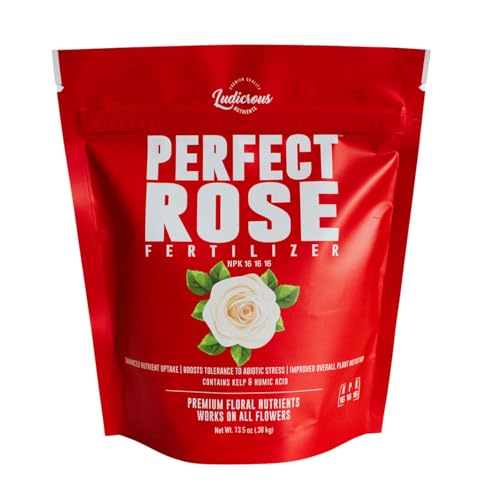
A kelp-enriched powder that brought color back to tired rose bushes.
This water-soluble powder is built around a unique micronutrient blend that includes nitrogen, magnesium, manganese, iron, and copper. The ingredient that gets the most attention is kelp, along with humic acid, which work together to improve the soil’s ability to hold nutrients and water. That is the kind of soil conditioning that pays off long after the single application. The company brings over 40 years of formulation expertise to this mix, and it shows in the results.
The small bag is the first thing you notice — 12 ounces is a modest amount for the price. But owners who used it on their Knock Out and Drift Rose bushes reported improvement after two treatments. One buyer who was on the verge of giving up on their roses wrote: “my roses would not seem to bloom as full as when I first planted. After just one use, my roses began to burst with color!” That is the kind of turnaround story that pops up repeatedly in the feedback.
The elephant in the room is the package size. It is a premium-priced concentrate that works brilliantly, but you may find yourself reordering frequently for a moderate-sized garden.
Color explosion: The micronutrient profile, including kelp and humic acid, is specifically formulated to deepen petal color and extend bloom life.
Portion warning: The 12-ounce bag provides roughly two full treatments for a small rose bed; budget for multiple purchases if you have a full hedge.
Best for the revival project: If you have established Knock Outs that have stopped putting out the big flower clusters they used to, this is the targeted rescue feed.
Not ideal for the big garden: The tiny quantity per dollar makes it a poor choice for a large bed or multiple bushes; look at the Espoma or Heirloom in that case.
5. Heirloom Boost & Bloom Granular Rose Fertilizer 8 lb
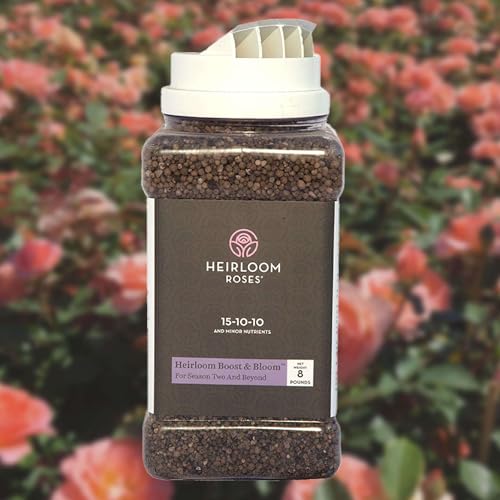
A 15-10-10 granular built for established in-ground roses that are ready to take off.
Heirloom Roses has been growing and breeding roses for over 50 years, so this fertilizer was designed by people who understand the nutritional demands of a mature rose bush. The balanced 15-10-10 blend focuses on stronger bud development and more frequent bloom production rather than just pushing leafy growth. The application is simple: a top dressing in early spring, then half a cup per plant every four weeks through the growing season.
Owners see a shift within the first week. “Within a week my roses showed a positive change,” one reviewer noted, “I look forward to seeing the lovely blooms later in the season.” Another gardener with both new and older bushes reported that the feed pushed the blooming faster than expected. The granular form is easy to spread, and the 8-pound container holds a good amount for a season’s worth of feeding on a modest rose bed.
The non-negotiable caveat is printed on the bag: this is formulated for established in-ground roses only. It is explicitly not recommended for first-year plants or container-grown roses, as the nutrient concentration could stress young root systems or pot-bound soil. If you have a newly planted Knock Out, you will need to wait until its second season before using this feed.
Built for the long haul
- Designed by a trusted rose-specific breeder with five decades of experience.
- Visible results within a week on deep green foliage and bud formation.
- Large 8-pound bag provides multiple seasonal applications.
Know the limits
- Not safe for first-year or potted roses; root burn is a real risk.
- Requires a 4-week repeat schedule, not a one-and-done formula.
Grab this for: mature Knock Out bushes that are two or more years old and planted in the ground, especially if you want to boost flower count for the whole season.
Pass on it if: you are feeding a freshly planted bush or any rose growing in a container.
6. TPS Nutrients Rose Fertilizer 32 oz
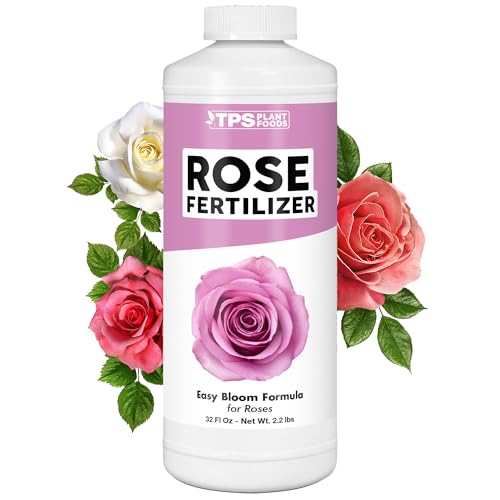
A fast-absorbing liquid that is gentle enough for container roses to love.
This liquid formula is designed to support all types of roses in outdoor settings, but it really shines in containers where granular feeds can concentrate salts and cause burn. You mix 6 teaspoons per gallon of water and apply it directly to the soil — the fast-absorbing liquid formula delivers nutrients immediately. It is made in the USA and formulated specifically to promote fuller, brighter flowers and consistent blooming.
Several owners with potted roses noticed that the liquid feed did not cause the leaf-tip burn they had experienced with granular fertilizers. One buyer summed it up: “I like liquid fertilizer because you can measure it out and it does not seem to be as strong or cause burn like granular ones tend to do.” That is the real value here — precision and control. Another owner reported that their “little rose bush responded really well” to the mix, showing that even small, young plants handle it without stress.
The two biggest downsides are the bottle size and the occasional packaging issue. A 32-ounce container using 2 tablespoons per gallon does not go far if you are feeding multiple bushes weekly. The feedback from buyers suggests that a few bottles arrived with broken seals or leaking caps, which is frustrating for a liquid product. The rating reflects this, sitting just above solidly positive.
Container-safe precision: The liquid formulation reduces the risk of fertilizer burn, which is the top concern for anyone growing roses in pots.
Watch the cap: A handful of shipments have arrived with a broken seal; inspect the bottle immediately upon delivery.
Best for container gardeners: If your Knock Out roses live in pots on a patio or deck, this is the safest reliable liquid feed you can grab.
Not great for volume: With a 32-ounce bottle and a heavy mixing ratio, expect to reorder often for anything beyond a few bushes.
7. Bloom City Rose & Flower Plant Food 1 Gallon
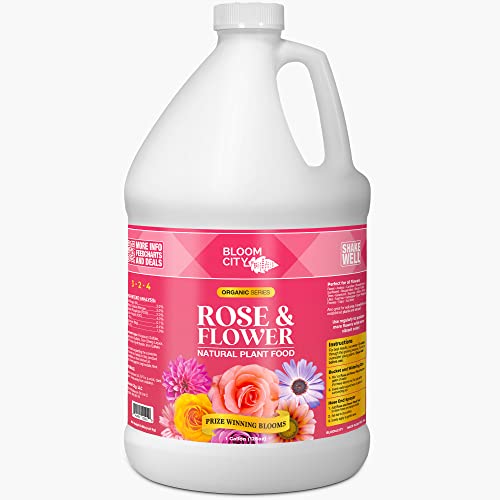
A full-gallon liquid that feeds a whole rose bed from a single jug.
Bloom City offers a 128-fluid-ounce jug of ready-to-mix liquid. You dilute 1 ounce per gallon of water, meaning this single container produces a huge volume of feed over a season. It is designed for roses and flowering ornamentals, and the balanced nutrition supports continuous blooms and healthy foliage from spring through fall. It also works well for container roses and even struggling soil conditions.
One owner living in a hot, sandy area where nutrients typically wash away quickly was impressed: “I use it weekly, and we are starting to see new growth, and they appear much healthier.” Another test garden saw new leaves and buds within a week of the first feeding. The product carries a slight fishy smell, but reviewers point out it is less intense than traditional fish emulsions. The large volume and straightforward mixing ratio earn high marks from people with multiple beds.
The trade-off with any large liquid jug is shelf life. Once opened, the bottle needs to be used within a reasonable window and stored in a cool place. A few owners noted that the smell, while mild, can be noticeable indoors if you are mixing in a utility sink. It is a practical issue, not a dealbreaker, but it is one to plan for if you are storing it in a garage that gets warm.
Massive value per ounce: At 128 ounces, this is among the most cost-effective liquid rose feeds available, especially for big gardens.
Plan your storage: The fish-based scent means you will want to keep the jug in a cool, ventilated spot away from the house.
Buy this if: you are feeding a large rose hedge or multiple flower beds and want the convenience of a single bottle lasting all season.
pass on it if: you only have one or two potted roses and cannot use a full gallon before it degrades.
8. Heirloom Roses Founder’s Fish Fertilizer 64 oz (Pack of 2)

The organic fish emulsion from a trusted rose brand that new bushes thrive on.
This is a true organic liquid emulsion derived from acidulated fish solubles. It is stabilized with phosphoric acid and contains a variety of fish species, which provides a broad spectrum of micronutrients and builds healthy bacteria in the soil. The recommended mix is 4 ounces per gallon of water, and one gallon of solution is enough for two to three roses. It is packaged as a two-pack, giving you 64 ounces total.
The effectiveness of this fertilizer is the most-discussed aspect by a wide margin. Owners say it keeps bushes blooming “from spring through fall,” and the brand’s own reputation — Heirloom Roses has been growing roses for over 50 years — gives buyers confidence. One owner summed up the general sentiment: “The best brand of roses and this fertilizer is the best, my roses love it.” Many also recommend using a liquid feed specifically during the first year, and this product fits that role precisely.
The smell is the unavoidable trade-off. Fish fertilizer has a strong odor that many describe as “unpleasant” or “awful.” The good news is that it dissipates quickly once worked into the soil, but the mixing experience is not a pleasant one. A pair of gloves and a dedicated watering can are strongly recommended. If you are feeding roses near a door or a seating area, you may want to choose a different product.
The rose grower’s choice
- Derived from multiple fish species for diverse soil mineralization.
- Ideal for first-year bushes where gentle, organic nutrition is critical.
- Two-pack provides a season’s worth of feed for a small to medium bed.
The trade-off you need to know
- Strong fishy smell during mixing is a consistent negative; it does fade quickly.
- Relatively small batch size for the price compared to granular options.
Best for the organic gardener: If feeding the soil microbiome is as important as feeding the bush, this is the purest, most trusted choice from a specialist breeder.
Think twice if: you are sensitive to strong odors or you have a large bed that would drain a bottle every two weeks.
9. Go Garden Rose King Special Rose Fertilizer 950 g
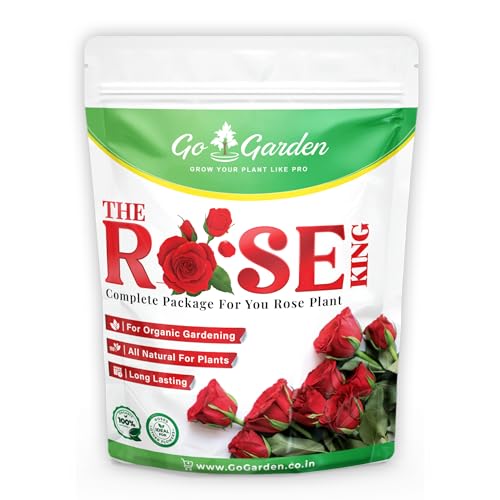
An organic powder that can push a dormant rose into bud in just four days.
This is a powder-form organic mix that comes in a 900-gram (roughly 33.5 ounce) container. The formula is built around organic ingredients, free from harsh chemicals, and designed for long-lasting results through a consistent two-week application schedule. The instructions are specific: apply 40 to 50 grams to the top of the potted soil before watering, ideally in the early morning or late evening, and water immediately. It is a simple enough process that takes just a few minutes.
The most remarkable claim in the reviews comes from a buyer who saw a dormant rose form a bud in just four days after the first application. “Rose food works fast,” that owner reported, noting bigger flowers on all flowering plants within a week. Another owner found it reasonably priced and saw good results. For anyone on a tight budget who still wants an organic product, this hits a low entry point.
The consistency of feedback here is mixed. A buyer who used it for a month “found no difference from home made fertilizer,” and a second reviewer flatly called it a “waste of money.” The rating reflects this split — it is the lowest-rated product in this guide. The product works fast for some and barely registers for others, likely because soil conditions and plant history vary so widely. It is a gamble at this price, but one that pays off for a portion of buyers.
Potential for speed: When it works, the response time is genuinely impressive — a dormant rose budding within four days is rare for any organic product.
Hit-or-miss results: About as many shoppers say no visible improvement as report great results, making this a lower-confidence buy than the picks above it.
Consider this if: you need the cheapest organic option to experiment with on a single bush and you are not expecting guaranteed results.
Spend a little more if: consistent, proven performance matters more than the lowest upfront cost.
Understanding the Specs
NPK Ratio
The three numbers on a fertilizer label — nitrogen (N), phosphorus (P), and potassium (K) — tell you what the plant is getting. For Knock Out roses, nitrogen drives leaf and stem growth, phosphorus encourages strong root development and flower formation, and potassium boosts overall health and disease resistance. A balanced ratio like 4-3-2 is gentle and organic, while a higher ratio like 18-14-10 offers a more concentrated synthetic punch. The right choice depends on whether your soil is rich in organic matter or needs a major nutrient infusion.
Granular vs. Liquid Form
Granular fertilizers are dry pellets or powders that you sprinkle around the base of the plant and water in. They release nutrients slowly over several weeks, making them a low-maintenance option that feeds steadily. Liquid fertilizers are concentrated solutions you mix with water and apply directly to the soil or leaves. They get absorbed almost instantly, which makes them great for correcting a sudden nutrient deficiency or giving a quick boost. For Knock Outs, many gardeners use a granular feed for the main monthly dose and a liquid feed as an occasional mid-cycle supplement.
FAQ
When should I start fertilizing my Knock Out roses in spring?
Can I use a general all-purpose fertilizer on Knock Out roses?
How often should I feed my Knock Out roses?
Is liquid or granular fertilizer better for Knock Out roses?
Can I over-fertilize my Knock Out roses?
Should I fertilize Knock Out roses in their first year?
What does the NPK number on a rose fertilizer mean?
Can I use the same fertilizer for Knock Out roses and other flowers?
Does fish fertilizer really help rose blooms?
Should I stop fertilizing in late summer?
Final Thoughts: The Verdict
For most gardeners, the fertilizer for knock out roses winner is the Espoma Organic Rose-Tone 4-3-2 because it combines proven effectiveness with the safety of an organic, low-burn formula, and the two-pack gives you enough product for a full season of monthly feeding. If you want the fast, visible green-up of a synthetic granular feed, grab the Nelson Plant Food Rose Food 18-14-10. And for a concentrated liquid booster that pushes your mid-summer blooms into a second wind, the Farmer’s Secret Rose Booster is the one to reach for.
How We Picked
We do not accept paid placement. Every pick is matched to a real buyer and a real use-case; we do not hands-on test units.
Sources & Methodology
Specifications: manufacturer listings and product documentation. Review insights: verified customer reviews, as of July 2026. Pricing: not shown on this page (it changes often); check the current price via the retailer link.
As an Amazon Associate, Lawn Gear Lab earns from qualifying purchases. This does not affect which products we feature.