
Specs are compiled from manufacturer listings and verified buyer reviews and can change over time — please confirm the key details on the product page before buying.
Your plants survive winter storms or summer heatwaves based on one thing: the frame. You can patch a torn cover, but a hoop that buckles under the first snow load or twists apart in a gust means starting over from scratch. The right hoops for hoop house aren’t just metal arcs — they are the structure that determines whether your plants survive a winter storm or a summer heatwave. The difference depends on three things: the steel thickness, the galvanization quality (a rust-proof zinc coating), and the reinforcement details most listings hide in the fine print.
I’m Rikta — the founder and writer behind Lawn Gear Lab. This guide is built by comparing the manufacturers’ published specifications and the patterns across verified customer reviews, so you get each pick’s real strengths and trade-offs instead of marketing spin.
These seven frames range from economy kits that get you started to sturdy structures built for years of service. What follows is a no-spin look at each one, anchored in the actual specs that matter when you are choosing your hoops for hoop house.
Our Picks at a Glance
How To Choose The Best Hoops For Hoop House
Selecting a hoop house frame is a decision between upfront savings and long-term durability. The frame is the skeleton of the entire structure, so its construction dictates everything from wind resistance to how easy it is to assemble. Here is what separates a frame that lasts from one that frustrates.
Steel Thickness and Type
The single most important spec is the steel itself. Galvanized steel resists rust far better than standard powder-coated steel, which can chip and expose bare metal. The tube diameter and wall thickness determine the structural strength — thicker walls handle snow loads and wind gusts with less flex. A hoop house with 0.7 mm thickened galvanized steel is significantly more rigid than one using standard 0.6 mm alloy tubing.
Reinforcement and Bracing
A bare set of hoops is not enough. Diagonal braces, crossbars at the top, and a reinforced ground frame prevent the structure from racking side to side in the wind. The best frames include extra crossbars specifically designed to prevent snow or water from pooling on the roof — a common failure point in budget designs.
Cover Material and Ground Sealing
The PE (polyethylene) cover’s weight, measured in GSM (grams per square meter), tells you how tear-resistant it is. A 150 GSM cover is thicker and more durable than a 140 GSM one. Look for extended bottom edges that can be buried in soil or weighted down, which dramatically improves wind resistance and winter insulation by stopping drafts at ground level.
Quick Comparison
| Model | Best For | Steel Gauge | Vents | Cover GSM | Amazon |
|---|---|---|---|---|---|
| Quictent 25x10x6.6 FT★ Best Overall | Heavy-duty full-season growing | 0.7mm galvanized | 10 | 150 GSM | Amazon |
| Outsunny 11.5x10x6.5 FTBest Value | Balanced value with 7 windows | Galvanized steel | 7 | 140 GSM | Amazon |
| Phonjoroo 10x7x7 FT | Budget entry-level hardening off | Standard alloy steel | 6 | 140 GSM | Amazon |
| Morngardo 13x8x7 FT | Mid-size with reinforced frame | Galvanized steel | 6 | 150 GSM | Amazon |
| YardGrow 12x7x7 FT | Budget-friendly frame-only project | 25/25/16mm steel tube | — | — | Amazon |
| Outsunny 13x10x6.5 FT | Large space with good ventilation | 25mm galvanized steel | 2 | 140 GSM | Amazon |
| VEVOR 19.4×9.7×6.5 FT | Budget large-space temporary shelter | 1-inch diameter pipe | 12 | 140 GSM | Amazon |
In‑Depth Reviews
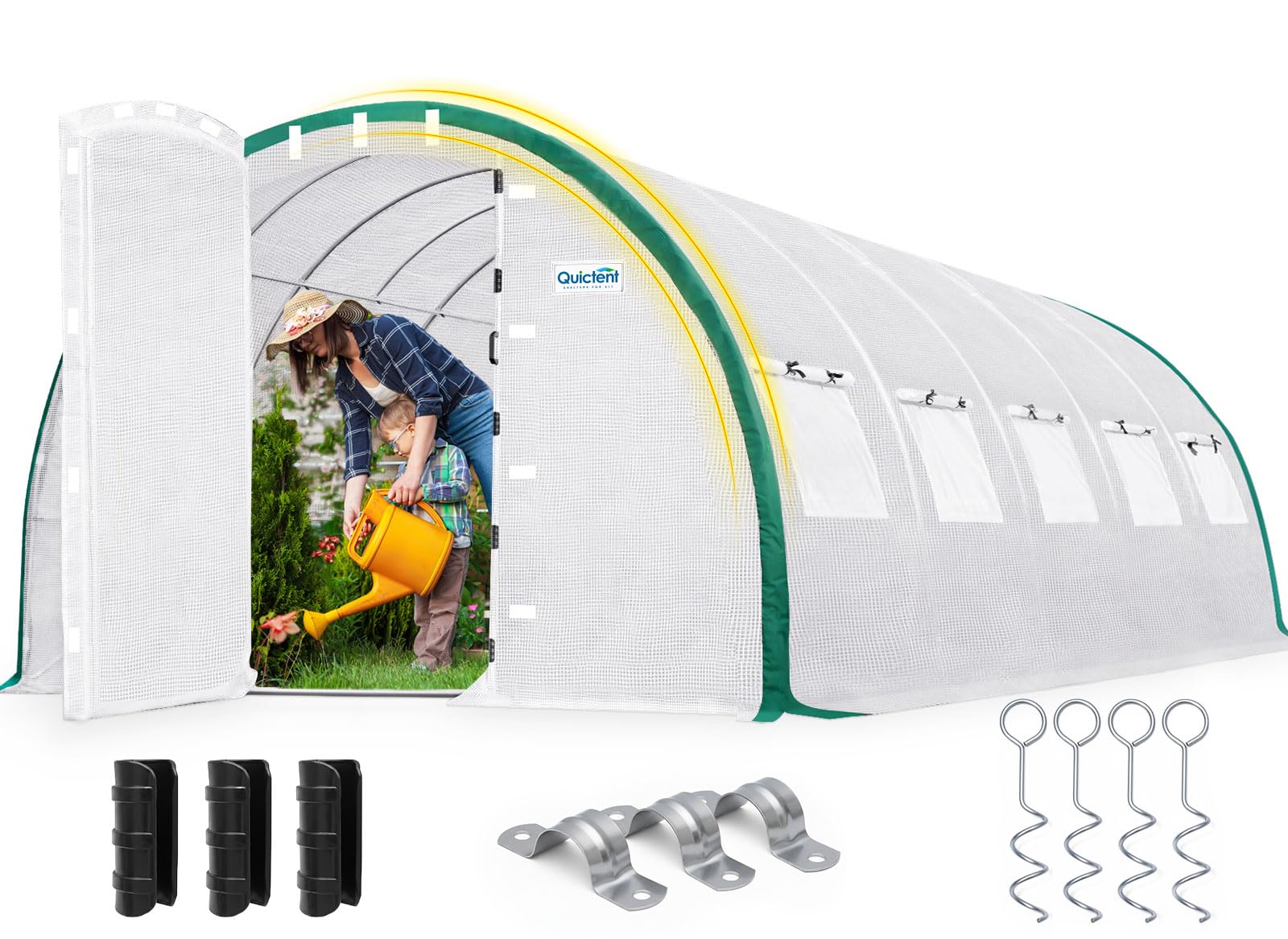
1. Quictent 25x10x6.6 FT Premium Greenhouse
Our pick — over 4★ from 90+ verified ratings; the strongest balance of quality and price.
The frame that handles snow, heat, and wind without breaking a sweat.
This is the only frame in the lineup that goes after the structural issues that wreck cheaper greenhouses. The 0.7mm thickened galvanized steel is noticeably heavier than standard 0.6mm tubing, and the reinforced top structure adds extra crossbars specifically to prevent snow or water pooling.
The 150 GSM PE cover allows 85% sunlight transmission, and the 8-inch extra bottom length can be buried in soil for winter insulation. Buyers report that the interior can hit 140°F on a sunny day — but the 10 mesh-covered windows drop it to a manageable 90°F once opened. Assembly takes two people, and while the instructions are only adequate, the parts come labeled. A single builder put theirs up solo and reported being pleased with the result. The 4.2-star average across dozens of owners makes it the crowd favorite — the top-rated frame among all seven, with praise centering on its value and sturdiness.
What wins people over
- Reinforced top prevents snow and water accumulation
- Dual swing doors open 180 degrees for easy tool and plant access
- Lifetime parts replacement and 365-day coverage on major components
The honest trade-off
- Instructions could be clearer, though parts are labeled
- At 111 pounds, it requires two people for assembly
Reach for this if: you want a long-term structure that can survive winter snow loads and summer heat without feeling flimsy.
Look elsewhere if: you only need a small seasonal shelter for a few raised beds and are on a tight budget.
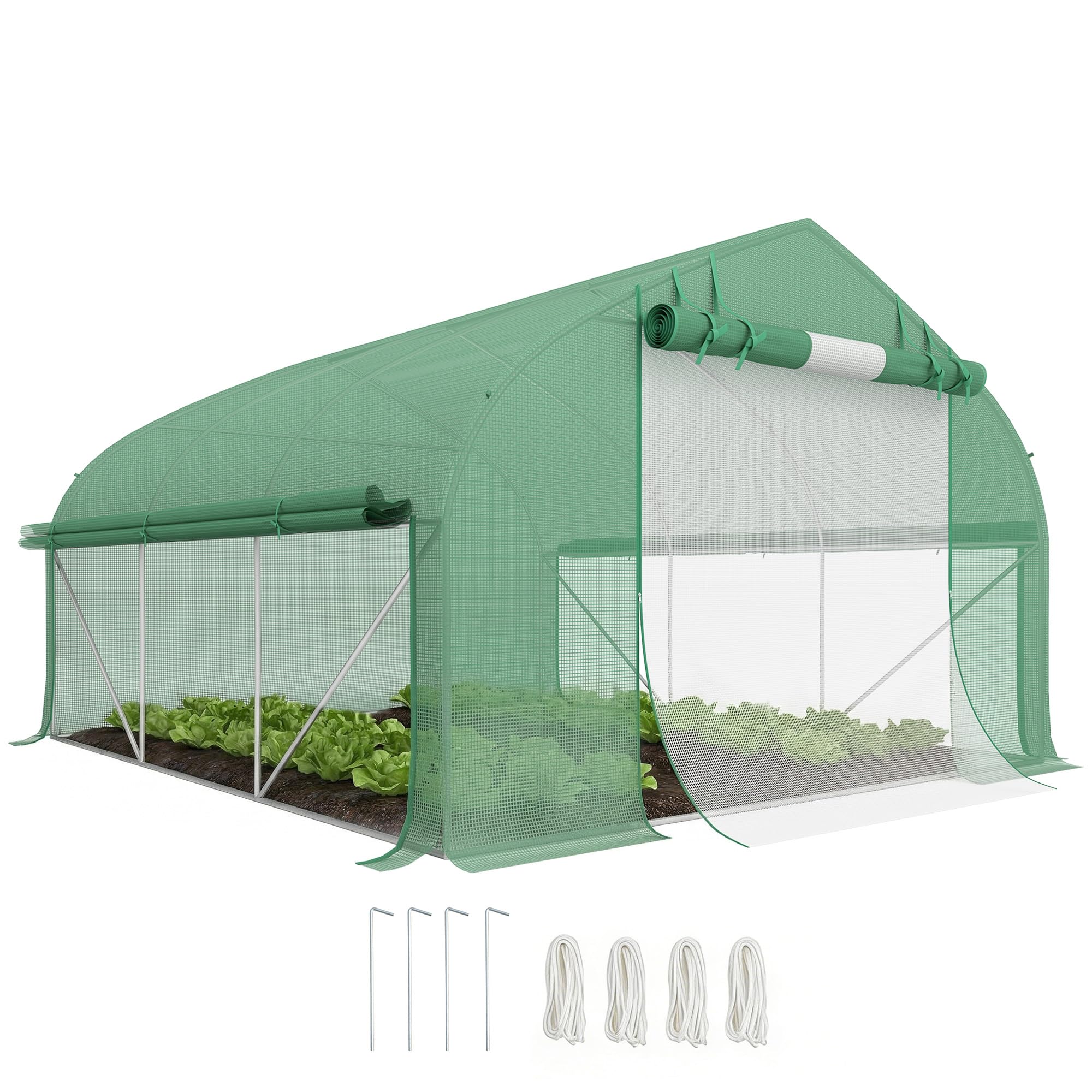
2. Outsunny 11.5x10x6.5 FT Walk-in Tunnel Greenhouse
Spacious enough to move around in, with enough windows to keep air moving.
The thing owners mention most is the value — you get serious interior room (11.4 feet long by 9.8 feet wide with a 6.6-foot peak height) without the premium price tag of the Quictent. The frame uses a reinforcing ground frame, four crossbars, and four diagonal braces to keep the structure square. The sloped top is a smart design choice that prevents sagging when rain or snow lands on the cover. The two-layer 140 GSM PE cover includes a reinforcement grid running through the middle to stop tears from propagating.
The ventilation setup is a head-turner: seven windows plus a roll-up zipper door, all lined with mesh to block insects while letting air and moisture escape. The cover lets 85% of sunlight through while blocking UV damage. Owners describe the fabric as thick and the hardware as heavy duty when it arrives intact. The catch is durability over time — a recurring note in the feedback involves the cover and zippers wearing faster than ideal. The greenhouse carries a Windproof Level rating of 5-6, and the manufacturer explicitly warns it is not suitable for strong wind, heavy rain, or snow without additional anchoring.
What earns its spot
- Seven mesh windows offer excellent cross-ventilation for temperature control
- Reinforcement grid in the cover resists tearing at stress points
- Assembly can be done solo in about 90 minutes
The honest trade-off
- Not designed for heavy snow or high-wind zones without extensive reinforcement
- Some reports of the cover tearing within the first season on a few units
Best suited for: gardeners in mild climates who want a spacious walk-in structure with good airflow and don’t need year-round winter coverage.
Not for: anyone in a region that sees regular snow accumulation or hurricane-strength winds.
3. VEVOR 19.4×9.7×6.5 FT Walk-in Tunnel Greenhouse

Massive growing space that demands ambitious reinforcement.
At nearly 20 feet long, this VEVOR offers the second-largest footprint here and the most windows — 12 screened openings plus the roll-up zipper door. The frame uses 1-inch diameter galvanized pipes with a 0.02-inch wall thickness, reinforced door poles, and diagonal bars. The high-density 140 GSM PE cover includes double-stitched seams to improve tear resistance at the stress points. The extended cover edges can be buried in soil for better sealing. This is a spacious setup for anyone with a large garden who wants walk-in access without the cost of a premium frame.
The honest picture from owners: this structure requires significant modification to be reliable. Owners mention that the plastic is thin, the tubing bends under stress, and the velcro fasteners fail. One owner refreshed by the low price found themselves adding a double 2×6 base, a ridge beam, concrete anchors, and ratchet straps to handle 50 mph winds. Another reported the interior hitting 120°F even with all vents open and a shade cloth deployed, calling it a winter-only shelter. The frame is fine for a temporary season extender (November to April for some owners), but it is not a low-maintenance structure.
Why you might choose it
- Massive 19.4-foot length accommodates multiple raised beds or shelving
- 12 windows provide more ventilation options than any other pick
- Low entry price for the amount of covered growing space
The honest trade-off
- Requires aftermarket reinforcement (wood base, concrete anchors) to survive moderate wind
- Thin tubing and weak velcro fasteners are common complaints
Grab it if: you have a large area to cover, a tight budget, and are comfortable with DIY modifications to make it wind-worthy.
skip it if: you want an out-of-the-box solution that can handle winter weather without upgrades.
4. Morngardo 13x8x7 FT Outdoor Tunnel Greenhouse
A well-built mid-sizer with a cover that matches the Quictent’s weight.
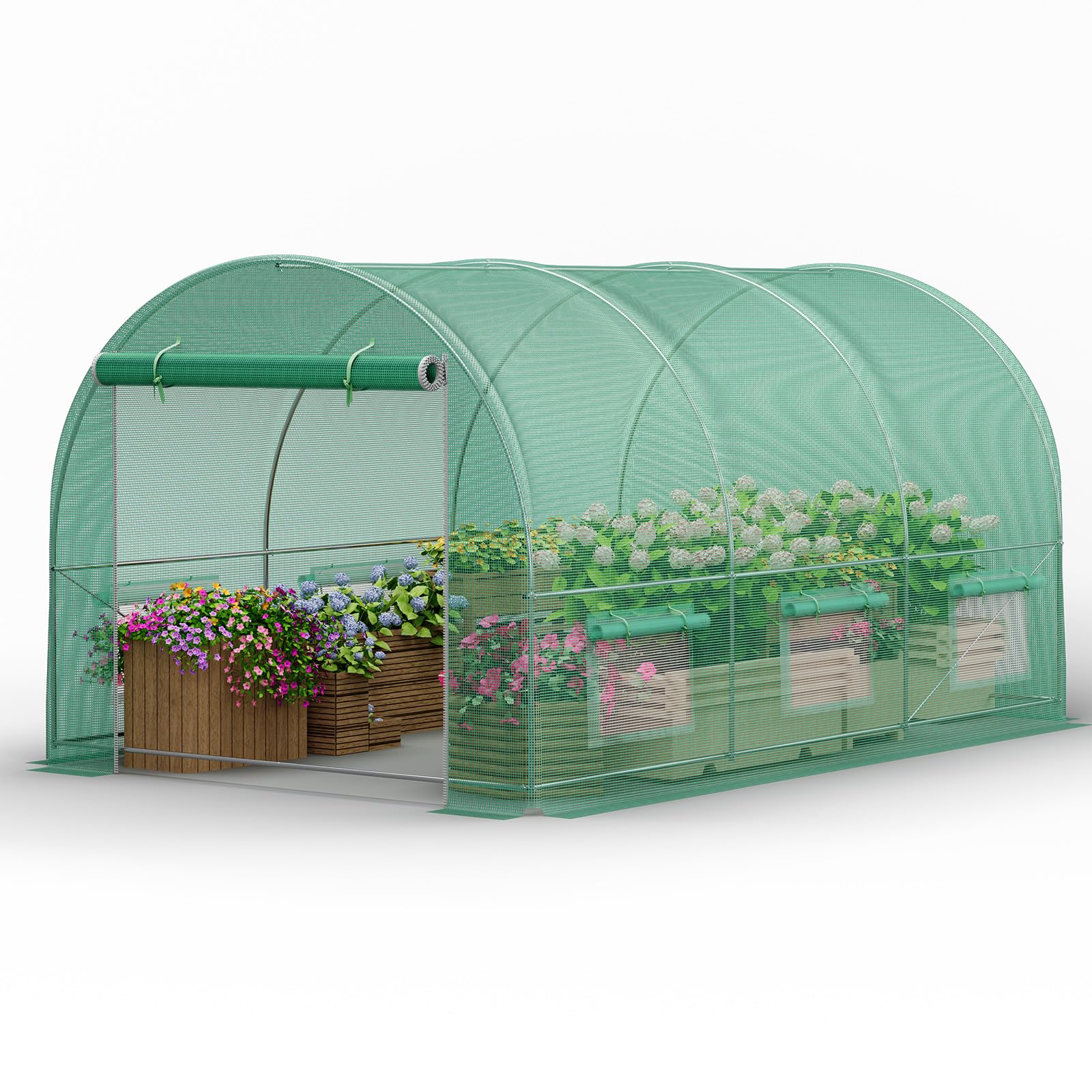
The Morngardo gives you the same 150 GSM cover thickness (grams per square meter, a measure of fabric density) as the top-ranked Quictent, wrapped over a heavy-duty rust-resistant galvanized steel frame (steel coated with zinc to prevent rust). Diagonal braces and U-shaped ground anchors are included from the factory, and the extended cover edges can be buried in soil for better sealing. At 7 feet tall, the peak height lets you stand fully upright, and the 13-foot length and 8-foot width provide generous growing space without dominating your yard. The frame material is metal with a galvanized finish, and the cover is 150 g/m² PE (polyethylene plastic).
The venture setup includes 6 roll-up zipper windows with mesh — 3 on each side — that pair with a large roll-up zipper door for good airflow. Panels are numbered for assembly, and all hardware is included. Owners describe the product as reliable and well-built with a premium feel. The catch is that a small number of units reportedly arrived as used returns with missing assembly numbers and scratched poles. The return process was also a pain point — one owner noted the cost to return was higher than the item’s price. Assembly instructions skip one step (how to fit the cover over the frame), but buyers who pushed through say they “love it” and would “definitely buy another one.”
What stands out
- 150 GSM cover is the same heavy weight as the premium Quictent
- Numbered panels and included hardware simplify assembly
- Galvanized steel with diagonal braces and U-shaped anchors for stability
The honest trade-off
- Instructions lack guidance on installing the cover over the frame
- A few buyers received units that appeared to be used or incomplete returns
Best for: someone who wants Quictent-grade cover weight in a more manageable mid-size package and doesn’t mind a little assembly head-scratching.
Think twice if: you need crisp instructions or a no-hassle return policy for a damaged item.
5. Outsunny 13x10x6.5 FT Hoop House Greenhouse
Big windows and cross ventilation for serious temperature control.
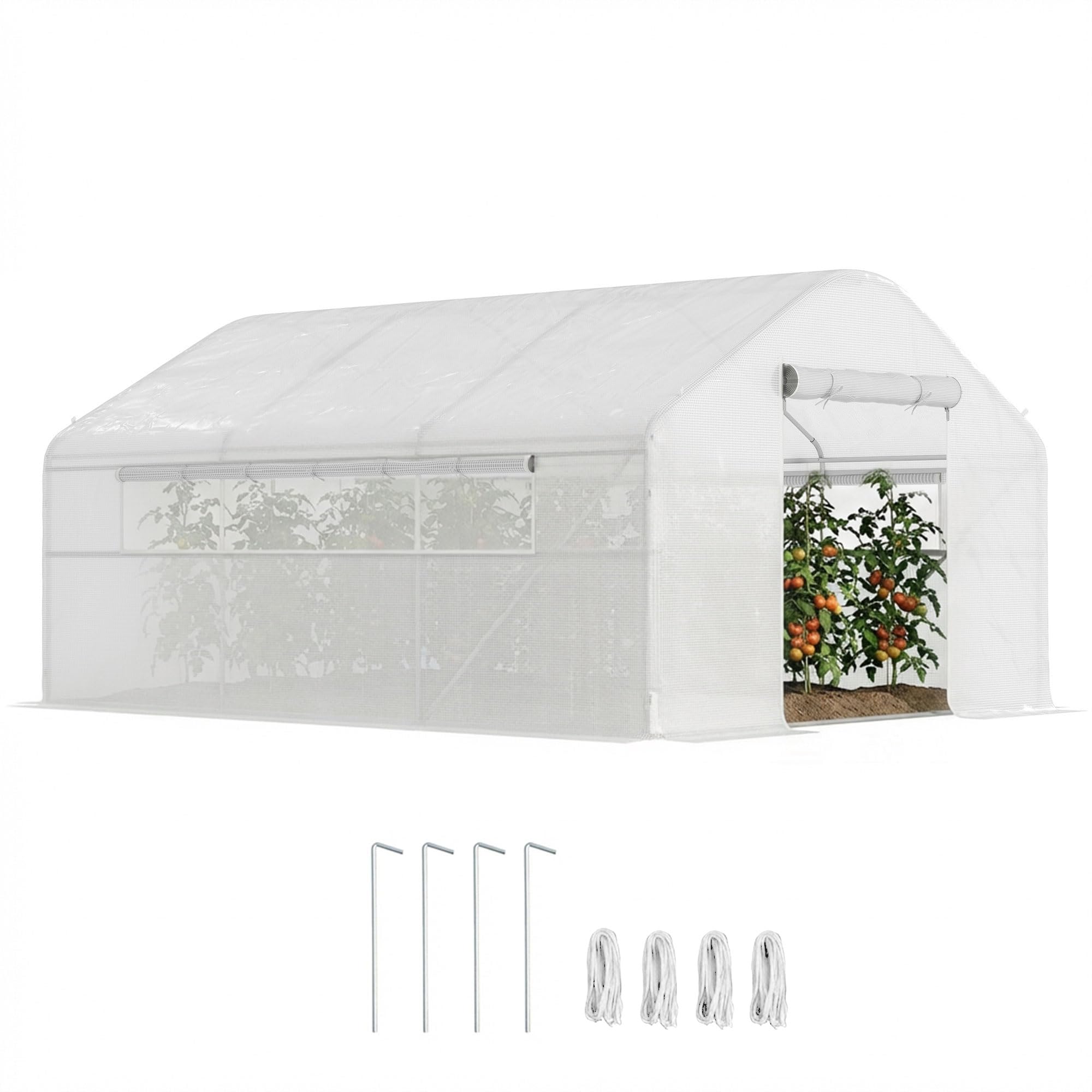
This Outsunny model stands 13 feet long by 10 feet wide, with a 6.5-foot peak and a cover that transmits 85% of sunlight. The frame is built from 25mm galvanized steel tubes with slant bracing bars added for racking resistance — a smarter approach than relying on just the hoops alone. The extended bottom cover improves wind resistance by allowing you to bury the edges. The 40 GSM PE cover has a reinforcement grid to stop tears from spreading. At 45 pounds, it is one of the lighter large frames to move around.
The ventilation story is simple: the roll-up door and large mesh sidewalls create cross-flow that keeps humidity in check. That is critical for anyone growing in warmer months. Some owners say the aluminum frame bends easily during assembly but holds up fine once the cover is tensioned. The honest feedback: this is not a winter structure. One owner reported it collapsed under snow weight in upstate New York. Multiple owners note that the included stakes and tie-downs are insufficient for even moderate wind. A 50 mph gust can snap the frame if it is not lashed down to a porch or concrete anchor. It is a fair-weather tunnel that wants a sheltered backyard.
Why it works
- Large mesh sidewalls and multiple openings provide outstanding cross-ventilation
- 25mm galvanized steel tubes with slant braces resist side-to-side racking
- Extended cover edges can be buried for improved wind resistance
The honest trade-off
- Not rated for snow load — it collapsed under one upstate NY storm
- Included stakes and ropes are inadequate; owners universally recommend aftermarket anchoring
Ideal for: warm-season growers in protected backyards who need a large, well-ventilated space without winter snow concerns.
Not for: anyone in a region that sees regular snow or sustained winds above 20 mph without serious anchoring upgrades.
6. Phonjoroo 10x7x7 FT Walk-in Greenhouse

An affordable entry point that works best for hardening off.
This is the most budget-conscious full kit in the lineup, and it shows in the trade-offs. The 10-foot by 7-foot by 7-foot frame uses standard alloy steel with a 140 GSM PE cover. The double zipper door system includes one mesh screen door to keep out insects and a separate PE door for insulation. The 6 ventilated mesh windows are on the small side but provide enough airflow for seedlings and hardening off plants. The manufacturer recommends placing stones or sandbags on the extended bottom edges for stability, which is a clue that the included stake set (4 L-shaped spikes, 6 U-shaped spikes, and 4 wind ropes) is the bare minimum.
The feedback from owners is divided. Assembly gets positive marks — the instructions are described as simple, and one owner had their 13-year-old grandson put it together as a fun project. The value proposition gets a thumbs up. But durability is a recurring concern. The most direct owner quote sums it up: the frame is weak, rusts after reassembly, and blows away in strong wind. Another buyer noted the zipper handles broke quickly and the cover is not very sturdy, calling it adequate for hardening off but not for long-term use. If you treat this as a seasonal shelter that you take down before winter, it can work. Expecting it to stand year-round will lead to disappointment.
What it does well
- Easy assembly with clear instructions — a teenager can put it up
- Double zipper system with separate mesh and PE doors works well
- Low entry price for a complete walk-in greenhouse kit
The honest trade-off
- Frame is not strong enough to withstand snow or sustained wind without reinforcement
- Zipper handles and cover durability fall short of long-term expectations
Reach for it when: you need a quick, cheap shelter for spring hardening off or keeping animals out of a small garden patch.
Avoid if: you want a greenhouse that stays up year-round or faces any winter weather.
7. YardGrow Greenhouse Frames 12x7x7 FT
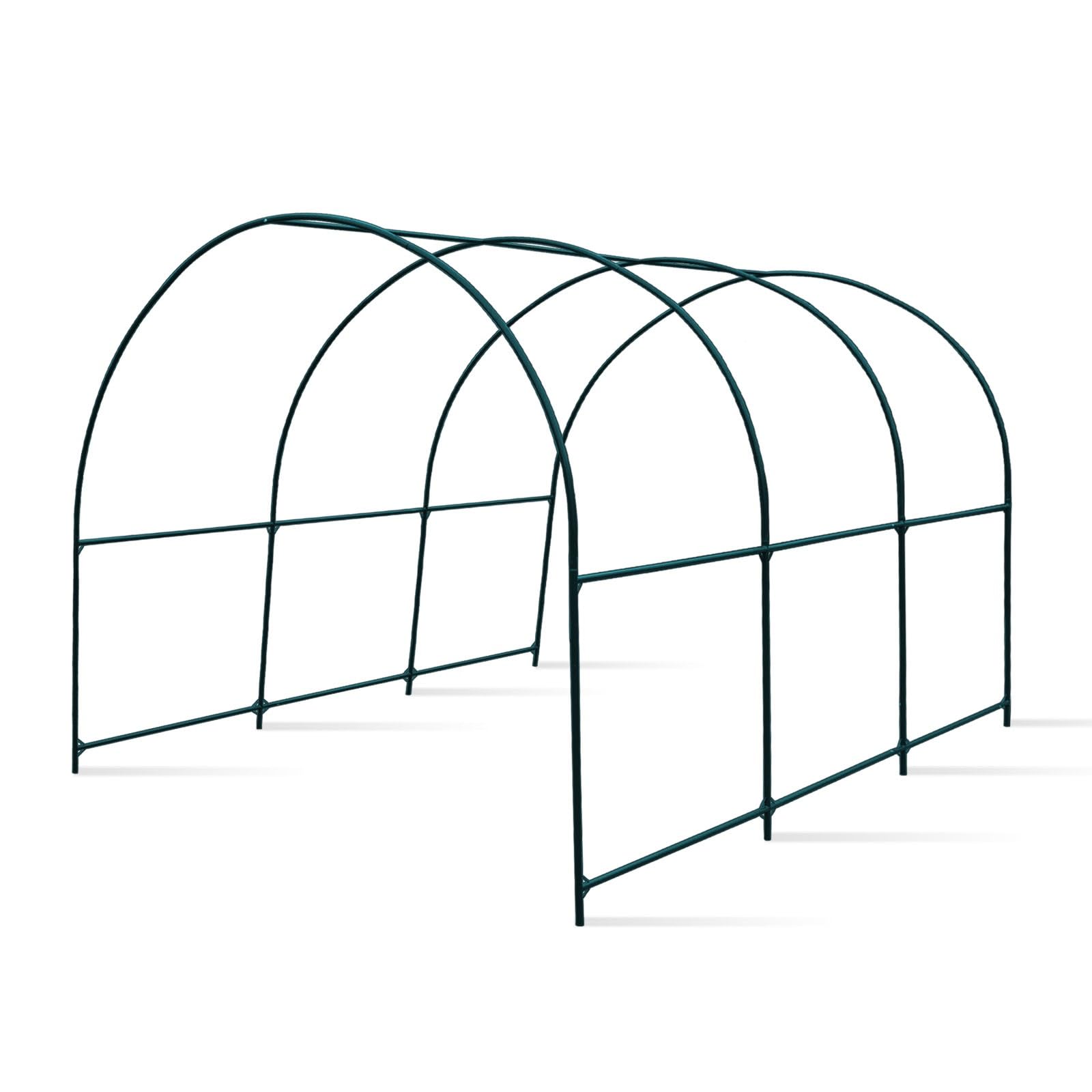
A bare-bones frame for experienced DIYers who want to supply their own cover.
This is a frame-only product — no cover, no stakes, no instructions beyond the basics. The steel tube specs are 25/25/16mm with a 0.6mm wall thickness and a green powder-coated finish. The frame measures 12 feet by 7 feet by 7 feet and is sold as a support structure for climbing plants, a chicken run, or a walk-through tunnel. Owners mention using black gorilla tape to secure the joints and adding a shade cloth on top. It is a multipurpose frame, not a greenhouse kit.
Assembly is the clear strength — buyers call it “easy to assemble” and “easy to put together.” The frame looks flimsy when you first see the tubes, but once assembled and staked with aftermarket ground anchors (anchors you buy separately), it holds up. One owner reports it survived “a number of windstorms” after cementing one corner. Another who added duck tape and a shade cloth calls it “very stable” and loves the look. The honest split: about as many reviews call it flimsy as call it sturdy. This is a budget frame that needs your own reinforcement and cover to become a functional greenhouse.
Where it shines
- Very fast and simple assembly — tubes connect easily
- Multipurpose design works as a trellis, tunnel, or chicken run
- Low cost for the coverage area if you already have a cover material
The honest trade-off
- No cover included — you must supply your own PE sheet or shade cloth
- Sturdiness varies; some owners find it flimsy without significant reinforcement
Best for: a DIYer who has a cover or shade cloth ready and wants a simple, inexpensive frame to support it.
pass on it if: you want a complete greenhouse kit with a cover, stakes, and full wind protection from the start.
Understanding the Specs
Steel Gauge and Galvanization
The thickness of the steel tube and whether it is galvanized determines how long your frame lasts outdoors. Galvanized steel has a protective zinc coating that resists rust far better than a simple powder coat, which can chip and allow moisture to reach the bare metal. Tube diameter and wall thickness (measured in millimeters or inches) directly affect the structural rigidity — thicker tubes bend less under snow load and flex less in wind. A 0.7mm wall thickness is a meaningful step up from the standard 0.6mm commonly found in budget frames.
Cover GSM (Grams Per Square Meter)
This number tells you how dense and tear-resistant the polyethylene (PE) cover is. A higher GSM means a thicker, tougher fabric that blocks more UV light and resists tearing at stress points. The two most common weights in this category are 140 GSM and 150 GSM. The 150 GSM cover is heavier and generally more durable, while 140 GSM is standard for budget kits. Extended cover edges that can be buried or weighted down also improve wind resistance and winter insulation.
Ventilation and Window Count
More windows do not automatically mean better airflow — but in a hoop house, mesh-covered roll-up windows are critical for preventing overheating. A greenhouse in full sun can easily hit 140°F inside without ventilation. The number of windows, their placement (on both sides for cross-breeze), and whether the door also rolls up all affect your ability to manage temperature and humidity. Look for at least 6 windows on a mid-size house and mesh screens on all of them to block insects.
Ground Anchoring System
A hoop house is a large sail in the wind. The included anchoring components — ground spikes, spiral stakes, wind ropes — determine whether your frame stays put or ends up in a neighbor’s yard. Budget frames often include minimal stakes that do not hold in soft soil. U-shaped anchors and wider L-shaped spikes provide better grip. Some owners replace them with rebar stakes or concrete anchors for permanent installations. The extended cover edges are another anchoring tool: burying them in soil or weighing them with pavers dramatically increases stability.
FAQ
How thick should the steel be for a hoop house frame?
Can I leave my hoop house up all winter?
What is the difference between a frame-only kit and a complete greenhouse?
How many windows do I really need for good ventilation?
What does the GSM number on the cover mean?
How do I anchor a hoop house so it does not blow away?
Is a galvanized steel frame better than a powder-coated one?
How much does a good hoop house frame weigh?
Can a single person assemble a hoop house frame?
What is the best way to seal the bottom of a hoop house cover?
Final Thoughts: The Verdict
For most people, the hoops for hoop house winner is the Quictent 25x10x6.6 FT Premium Greenhouse because its 0.7mm galvanized steel, reinforced top against snow, and 150 GSM cover deliver the strongest foundation for year-round growing. If you want more space than budget, the Outsunny 11.5x10x6.5 FT gives you a roomy walk-in with seven windows at a fair price. And for a pure frame-only project you build yourself, the YardGrow 12x7x7 FT is a practical, quick-to-assemble starting point if you already have a cover plan in mind.
How We Picked
We do not accept paid placement. Every pick is matched to a real buyer and a real use-case; we do not hands-on test units.
Sources & Methodology
Specifications: manufacturer listings and product documentation. Review insights: verified customer reviews, as of July 2026. Pricing: not shown on this page (it changes often); check the current price via the retailer link.
As an Amazon Associate, Lawn Gear Lab earns from qualifying purchases. This does not affect which products we feature.