
Specs are compiled from manufacturer listings and verified buyer reviews and can change over time — please confirm the key details on the product page before buying.
The single biggest mistake new bonsai owners make is picking a pot that fights the tree’s roots instead of helping them grow. A pot that is too deep drowns delicate root systems, while a pot with poor drainage rots the whole thing from the bottom up. The good news is you don’t need to spend a fortune to get a proper home for your tree.
I’m Rikta — the founder and writer behind Lawn Gear Lab. This guide is built by comparing the manufacturers’ published specifications and the patterns across verified customer reviews, so you get each pick’s real strengths and trade-offs instead of marketing spin.
Whether you are starting your first seedling or moving a mature juniper into a permanent display pot, the right vessel keeps your plant healthy without emptying your wallet. That is exactly where a strong list of inexpensive bonsai pots makes the difference between a happy tree and a frustrating setback.
Our Picks at a Glance
How To Choose The Best Inexpensive Bonsai Pots
Every budget-friendly bonsai pot sits somewhere on a line between function and looks. Training pots focus on root growth and drainage, while ceramic display pots put the tree on show. The key is matching the pot to where your tree is right now.
Material First — Plastic vs Ceramic
Plastic pots are light, cheap, and nearly impossible to break. They hold moisture well, which is handy for young trees that dry out fast. Ceramic pots feel substantial, breathe better through unglazed clay, and look the part on a shelf. The trade-off is weight and price — ceramic costs more and can chip if dropped.
Drainage Holes Are Non-Negotiable
Bonsai roots rot in standing water. Any pot worth buying must have drainage holes in the bottom. Many good pots also come with a mesh screen built in or included to keep soil from washing out. A matching tray (or “humidity tray”) catches the runoff so you can water freely without making a mess.
Size and Depth Matter
A bonsai pot should be shallow — typically 2 to 4 inches deep for most species. The wide, open shape spreads the roots horizontally, which is how bonsai growers train the tree into its compact form. A pot that is too deep encourages downward root growth, which fights the whole point of bonsai training.
Quick Comparison
| Model | Best For | Material | Dimensions | Drainage | Amazon |
|---|---|---|---|---|---|
| Eightpot Ceramic 8 Inch★ Best Overall | Display-ready ceramic beauty | Ceramic | 8.07 x 8.07 x 3.86″ | Hole + Mesh + Saucer | Amazon |
| MUZHI Retro Plastic 3-PackBest Value | Budget-friendly training trio | Plastic | 6.4 x 4.7 x 2.35″ | 4 Screened Holes + 16 Wiring Holes | Amazon |
| Plastic Bonsai Training Pots 3-PackTraining Trio | Large 9-inch training pots | Polypropylene Plastic | 9 x 6.7 x 3″ | Multiple Holes + Built-in Mesh | Amazon |
| MUZHI 6-Pack Retro Plastic | Multi-pack for seedlings | Polypropylene (PP) | 6.4 x 4.75 x 2.36″ | Drainage Holes + Feet for Ventilation | Amazon |
| SQOWL Ceramic 6 Inch | Compact glazed ceramic pot | Ceramic | 6.1 x 6.1 x 2.76″ | Drainage Hole + Saucer + Mesh Pad | Amazon |
| Yesland Training Pots 6-Pack | Deep 9-inch heavy-duty training | Plastic | 9 x 6.5 x 3″ | Built-in Mesh + Drainage Holes | Amazon |
| Tinyroots Poly-Resin Set | Mixed-size training set | Poly-Resin Plastic | 6″ & 8″ combo | Built-in Mesh + Drainage Holes | Amazon |
| EPFamily Ceramic 8 Inch | Textured modern ceramic display | Ceramic | 8.07 x 8.07 x 3.86″ | Drainage Hole + Mesh + Saucer | Amazon |
| MUZHI Terracotta Rectangular | Breathable unglazed clay | Zisha Clay | 8.5 x 6.7 x 2.7″ | 5 Drainage Holes + 4 Wiring Holes | Amazon |
In-Depth Reviews
1. Eightpot Bonsai Pots 8 Inch – Ceramic Succulent Pots for Indoor Plants
Our pick — over 4.5★ from 600+ verified ratings; the strongest balance of quality and price.
A ceramic beauty that earns the top spot with flawless craftsmanship and near-perfect owner satisfaction.
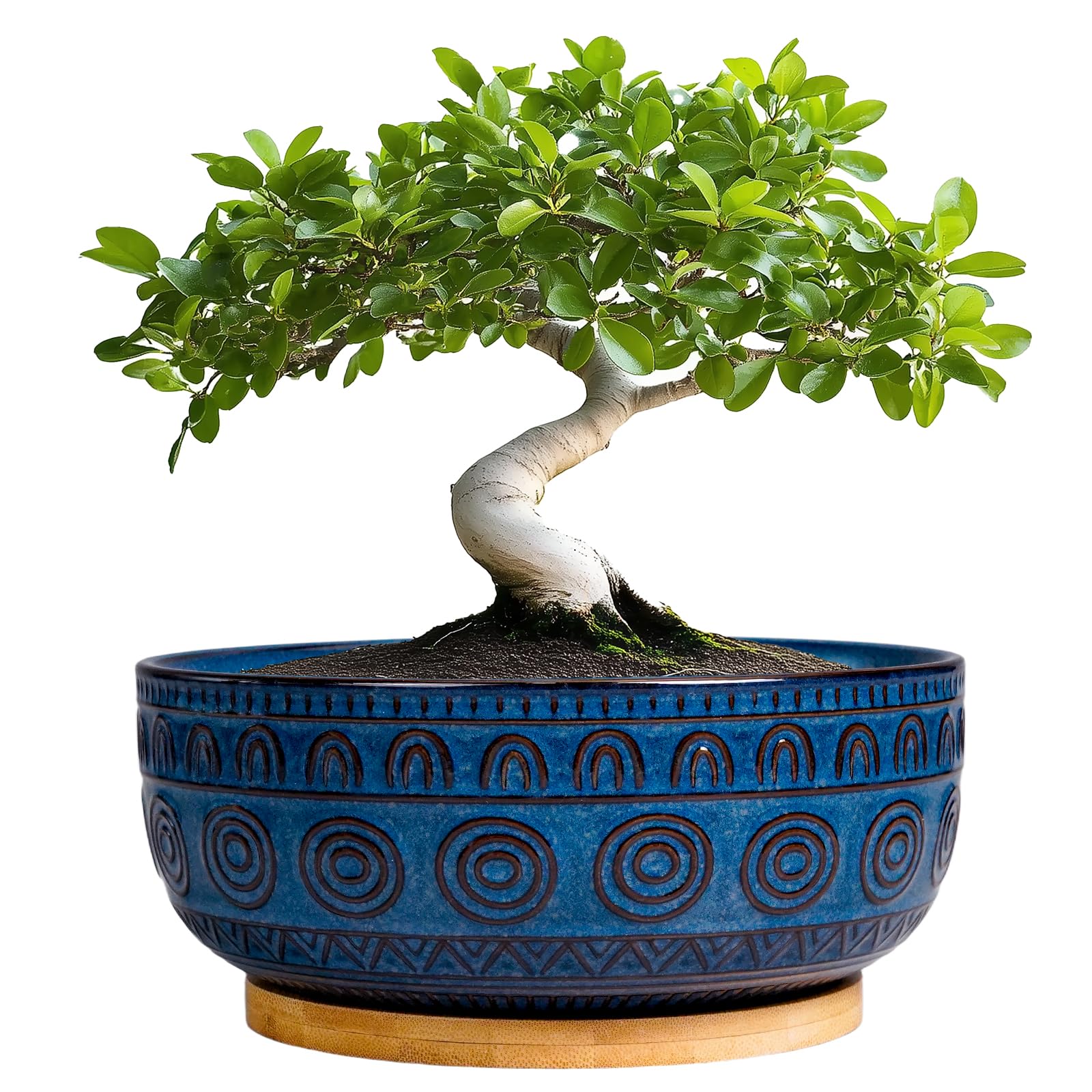
The Eightpot is the pick for anyone who wants their tree to sit in something that looks like it cost three times as much. It is made from durable ceramic, measuring 8.07 x 8.07 x 3.86 inches, which gives shallow-rooted plants like bonsai, succulents, and cacti plenty of horizontal spread without burying them too deep. The dark blue geometric pattern and spiral relief give it a boho look that stands out on a windowsill or desk. Buyers report that the pot is heavy and solid — you can feel the quality when you pick it up.
The shallow 3.3-inch interior depth is ideal for bonsai, and the included saucer and mesh pad handle drainage. However, the review pages note that the saucer is only glazed on its edge, meaning water can seep through the bare clay if you let it sit too long. A owners mention sums it up well: “Perfect for my pothos in depth and width!” — though they suggest letting the pot drain completely before placing it back on the wooden base. The only real trade-off is that a few owners have raised concerns about mold resistance over time, so keeping the saucer dry between waterings matters.
The thing everyone raves about is the appearance — that textured glaze and bold pattern win people over immediately. If you want a single, display-ready ceramic pot that blends art with function, this is the one.
What wins people over
- Heavy, durable ceramic with a beautiful raised pattern that looks premium
- Shallow 3.3-inch depth is exactly right for bonsai and succulent roots
- Includes both a mesh pad and a saucer for clean watering
The honest trade-offs
- Saucer is only glazed on the edge — water can seep through and mark surfaces
- Mold resistance is a mixed point in owner feedback over time
- Single pot only, so not ideal if you need multiples for training
Grab it for: The owner who wants a single, gorgeous ceramic pot that makes a statement while staying affordable.
Think twice if: You need a multi-pack for training cuttings or you want a pot that can sit directly on wood without a protective mat underneath.
2. MUZHI 3PCS Retro Style Small Rectangular Garden Pots Bonsai Planters with Tray
A three-pack that looks like ceramic for a fraction of the cost and weight.
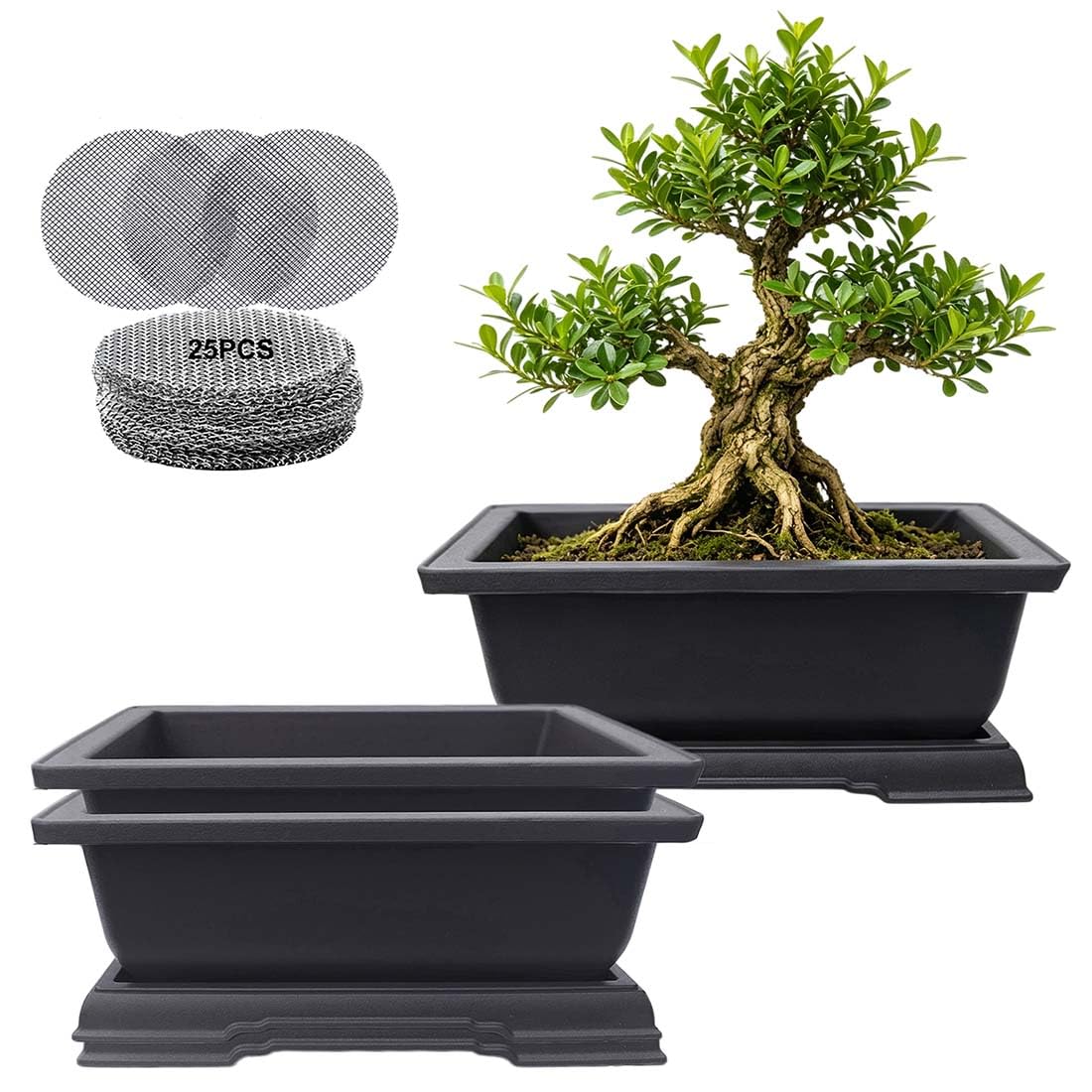
The MUZHI retro pots solve a common problem: you want the look of a traditional bonsai container but you need a few of them for training or display without spending ceramic money. Each pot measures 4.7 x 6.4 x 2.35 inches, making them noticeably smaller than the Eightpot above — about half the width and quite a bit shallower. That compact size is perfect for starters, cuttings, and small succulents. One owner called them a “cheap, lightweight plastic alternative to expensive ceramic bonsai pots,” which sums up the value pitch perfectly.
Made from environmentally friendly PP plastic with a matte mocha finish, they feel sturdier than typical nursery pots. The base includes four screened drainage holes plus sixteen wiring holes, giving you plenty of options for anchoring the tree. The included trays catch runoff neatly. A few owners note that the plastic can look a bit light compared to heavier materials, but the consensus is clear: these are durable, reusable, and weather-resistant for both indoor and outdoor use. The top thing owners praise is the appearance — the retro shape and color fool most people into thinking they are looking at ceramic.
The main difference versus the Crystal Lemon 9-inch pack below is size and depth. At 11.2 ounces for all three pots and trays, they are a full 43% lighter than that larger set, which makes them easier to move around but less substantial for bigger trees.
Why owners love them
- Matte finish and mocha color look convincingly like ceramic at a plastic price
- Four drainage holes plus sixteen wiring holes give you great root management options
- Lightweight at 11.2 ounces for the whole set — easy to move and rearrange
What to keep in mind
- Plastic won’t breathe like unglazed ceramic; moisture retention is higher
- Some owners add extra screen over the holes to prevent fine soil from washing out
- Dimensions are compact (6.4″ long) — not suited for larger trees
Reach for these if: You want three good-looking, functional pots for starters or succulents without spending ceramic money.
Look elsewhere if: Your bonsai has outgrown the 6-inch size range or you prefer the weight and feel of fired clay.
3. Plastic Bonsai Training Pots 3 Pack 9 Inch with Humidity Trays
These are the workhorse pots that a huge crowd of owners trusts to get the job done.
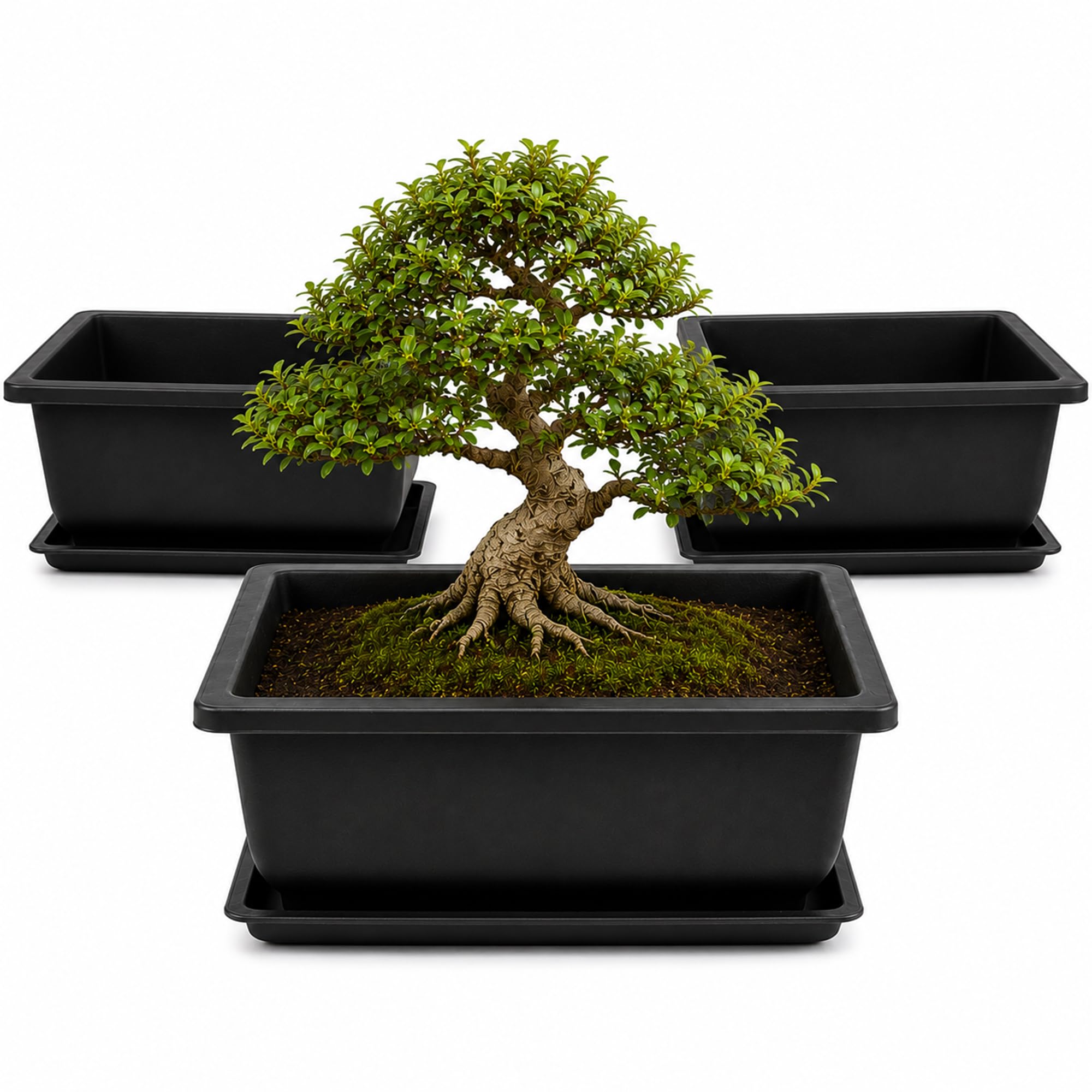
If you need room for root development, this 3-pack delivers the largest footprint of any training set here. Each pot measures 9 x 6.7 x 3 inches, giving young trees plenty of horizontal space without going too deep. The polypropylene plastic is lightweight but strong — customers note it handles daily watering without warping. One owner said: “I use these for several bonsi cuttings I have. Doesn’t trap water, drainage is superb and the look is sleek. Even though they are plastic most people didn’t notice until they touched it.”
The built-in mesh over the drainage holes is a smart design choice — it saves you from cutting and fitting your own screen, and it reduces soil loss during watering. The three matching humidity trays keep your surfaces clean. Owners consistently praise the quality (the most-mentioned positive aspect by far), followed by the clean, simple appearance and the excellent drainage. At 16 ounces per pot, they are noticeably heavier than the MUZHI 3-pack, giving them a more planted feel on the shelf.
The main knock against them is that they are plastic — they don’t breathe like clay, and some owners wish the sidewalls were slightly taller for deeper root training. But for the price and the sheer number of positive experiences, these are the safest bet for anyone starting multiple trees at once.
What owners trust most
- Large 9-inch footprint gives roots room to spread without being too deep
- Built-in mesh over drainage holes saves you the extra step of adding screen
- Strong plastic construction that owners say looks more expensive than it is
One real limitation
- Plastic material holds more moisture than ceramic or terracotta
- A few owners wish the pots were a couple inches taller for deeper root training
Pick these if: You are training multiple trees and want the largest practical pot size with built-in drainage convenience.
Skip them if: You need a display-quality ceramic pot or you prefer unglazed clay for maximum breathability.
4. MUZHI 6PCS/Pack Retro Style Basin Plastic Flower Pot 6.5 Inch

Half a dozen pots that look great and cost less than most people spend on lunch.
You get six pots for barely more than the 3-pack costs, so the MUZHI 6-pack is the best value if you are training multiple trees. Each pot measures 6.4 x 4.75 x 2.36 inches — nearly identical to the 3-pack version above, but you get twice as many for only a small step up in budget. They are made from high-quality PP plastic (polypropylene, a durable plastic) with a matte finish that owners consistently say “doesn’t look like plastic.” The “emulational purple sands” brown color gives them a natural, earthy appearance that blends in on any shelf.
What owners love most is the build quality — it is the most-mentioned positive aspect. The pots have rolled edges that make them easy to carry, four supporting feet that create airflow under the pot, and drainage holes that work well for succulent and bonsai root systems. Each pot comes with a matching tray, but note that the trays have a guide lip that can make moving them a bit cumbersome since they don’t snap in place. One owner noted they are “perfect for growing cat grass” alongside bonsai — proof of their versatility.
The obvious trade-off is that you are getting plastic, not ceramic. At roughly half a kilogram for the whole set (about 17.6 ounces), they are very light. If weight and heft matter to you, the ceramic options above will feel more substantial. But for starting seeds, rooting cuttings, or rotating a collection of small succulents, this pack delivers unbeatable value.
Volume done right: Six pots with trays at a price that makes ceramic look extravagant. The matte finish fools the eye, and the build quality tops the list of what owners appreciate.
Best for: Anyone starting a small bonsai nursery or succulent collection who needs quantity without sacrificing how the pots look on the shelf.
Not ideal if: You prefer the weight and breathability of ceramic, or you only need a single larger pot for a mature tree.
5. SQOWL Small Bonsai Pots – 6 Inch Ceramic Plant Pots for Succulents
A small, beautifully glazed pot that punches far above its weight class in looks.
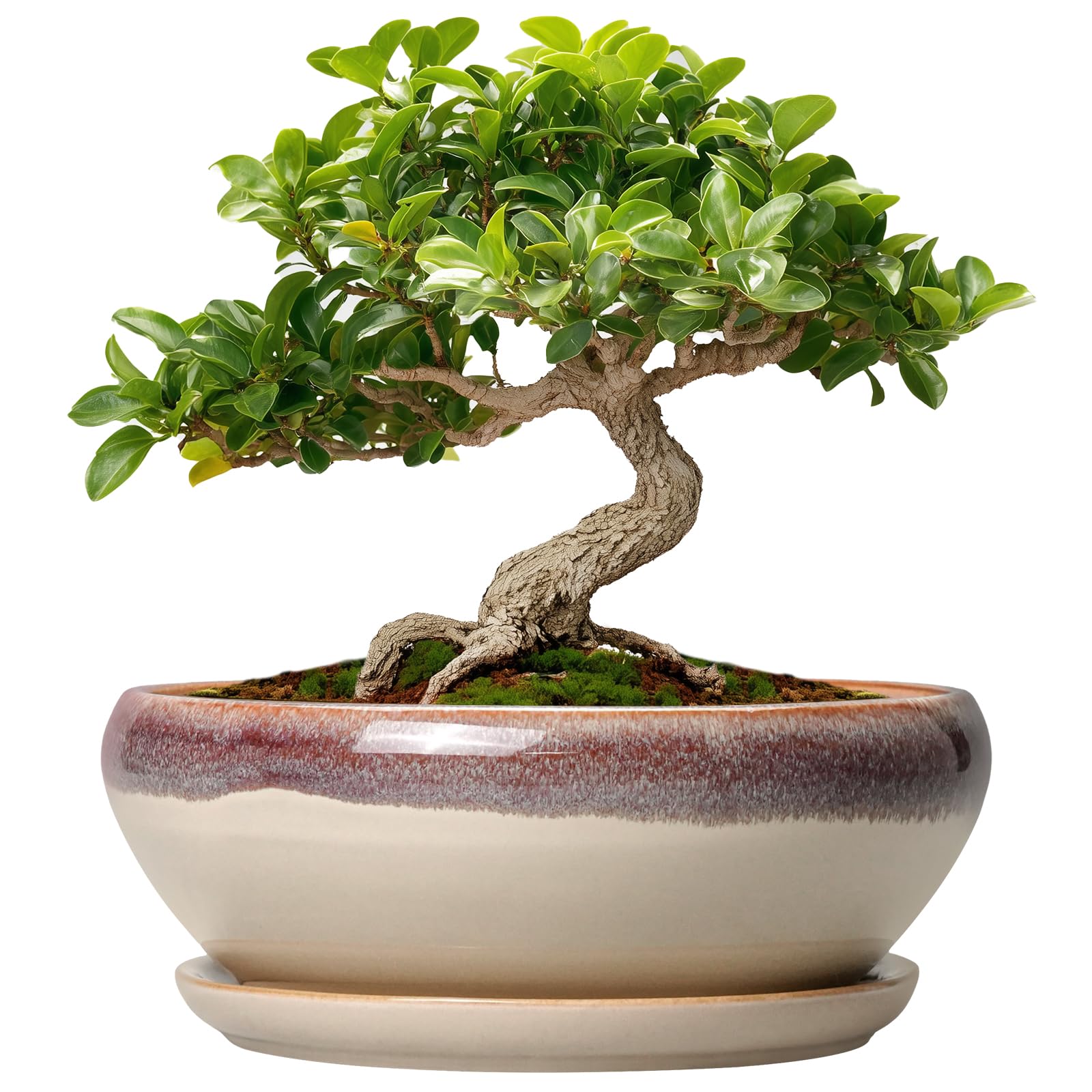
The SQOWL is a compact ceramic pot with a smooth, glazed beige finish that looks elegant on a desk or windowsill. The top outer diameter is 5.6 inches, widening to 6.1 inches at the waist, with a total height of 2.76 inches including the tray. That makes it one of the smaller options on this list, and it is best suited for a single small bonsai, a succulent arrangement, or an aloe plant. The high-temperature fired ceramic is durable and resists fading and peeling.
Owners love how it looks — the even glaze and color accuracy get consistent praise. The pot includes both a removable ceramic saucer and a mesh pad for drainage. However, there is a notable quirk: the saucer is only glazed on its edge, so bare clay on the bottom can seep water onto surfaces if you water heavily. Several owners recommend using a protective mat underneath. The drainage itself gets mixed feedback — some say it works well, while others report water seeping through the pot itself.
Compared to the larger Eightpot above, this is a smaller, more affordable entry into ceramic. It lacks the bold geometric pattern but makes up for it with a clean, minimalist look that fits any decor. If you want a single, good-looking pot for a small plant and you are careful about where you set it, this is a solid pick.
Beautiful but fragile: The glazed finish is gorgeous and the price is right, but the saucer’s unfinished bottom means you will want a mat or drip tray underneath to protect surfaces.
Reach for this if: You want an attractive, compact ceramic pot for a small bonsai or succulent and you don’t mind putting a mat under the saucer.
Think twice if: You need a larger pot or you prefer a saucer that is fully waterproof on the inside.
6. Yesland 6 Pack Bonsai Training Pots – 9 Inches Classic Deep Humidity Trays

Six large, durable pots built for serious training without the serious price tag.
The Yesland pack gives you six pots at 9 x 6.5 x 3 inches each, making it the best value proposition for anyone who needs quantity and size. The heavy-duty poly-resin plastic is built to handle weather — owners say it retains its color through rain, snow, and sun without shattering or cracking if dropped. The rolled edges make them easy to carry, and the four supporting feet underneath create airflow that helps prevent root rot.
Each pot has a built-in mesh at the bottom with small holes that prevent soil from falling through during watering. Owners appreciate the quality and value for money — those are the two most-praised aspects. The size is frequently called “perfect for starting bonsai,” and the simple brown color is unobtrusive. One owner who bought them for rooted bonsai shoots was extremely satisfied with the dirt drainage and overall appearance.
The only downside noted by a few owners is that the pots are not as tall as some would like for deeper root development. At 3 inches deep, they are standard training depth, but if you want something closer to 4 or 5 inches for larger root systems, you will need to look at deeper specialty pots. For most bonsai training, though, these are a proven, crowd-favorite solution.
The training workhorse: Six large pots with built-in mesh and weather-resistant plastic. Owners praise the value and quality more than anything else. If you are training multiple trees outdoors, this is the pack to grab.
Best for: Outdoor training of multiple bonsai trees where durability and drainage matter more than looks.
Skip if: You need deeper pots for advanced root development or you want a ceramic display pot for a finished tree.
7. Tinyroots Bonsai Training Pots with Humidity Trays – 6″ and 8″ Large Planter Combo Pack

A mixed-size training set from a brand that specializes in bonsai, not just planters.
Bonsai Outlet’s Tinyroots pots come in a combo pack with both 6-inch and 8-inch pots, which is a genuinely useful feature for anyone whose trees are at different stages of development. The poly-resin plastic is thick and heavy-duty — the set weighs 4 pounds total — and owners say it holds up well in full sun without fading. The built-in mesh and drainage holes are designed specifically for bonsai training, with holes large enough to accommodate tie-down wire for anchoring the tree.
Owners consistently note that these pots feel sturdy and are a good alternative to ceramic for training. The quality and value for money are the most-praised aspects. One experienced owner who bought them twice said the pots from a year ago faded a bit and one cracked along the edge, but still considered them a good option for the price. The fact that humidity trays come included is a nice bonus, saving you the extra expense of buying them separately.
Compared to the Yesland pack above, this set is slightly more expensive but offers two distinct pot sizes in one purchase — a real advantage if you are training trees of different ages. The main downside is that the plastic can fade over time if left in direct sun year-round, and the occasional crack along an edge has been reported. For most users, though, the durability and smart design outweigh those rare issues.
Smart training combo: Having both 6-inch and 8-inch pots in one set means you can move trees up as they grow without buying a whole new set. Owners say the quality holds up well even in full sun.
Grab this for: A training set that grows with your trees — start in the 6-inch and move up to the 8-inch as roots develop.
Think twice if: You only need one size, or you want a pot that will never show any fading after a year outdoors.
8. Bonsai Pots – 8 Inch Ceramic Pots for Succulent Plants & Bonsai Tree

A modern ceramic pot with a raised dot texture that looks like it belongs in an art gallery.
The EPFamily ceramic pot measures 8.07 x 8.07 x 3.86 inches — the same dimensions as the Eightpot at the top of this list — but with a completely different aesthetic. Instead of a boho geometric pattern, this one features a raised dot texture across the surface, giving it a modern, almost sculptural feel. The blue color is deep and rich, and owners say it looks even better in person than in the photos. At 1.27 kg (about 2.8 pounds), it is noticeably heavy and sturdy — one owner said it “honestly looks better than one I was looking at that cost hundreds.”
The design gets the most praise by a wide margin, followed by the overall quality. It includes a drainage hole, a mesh pad, and a matching saucer. However, the color receives mixed feedback — some love the blue while others expected a different shade. The drainage also gets mixed notes, with one owner pointing out that the single drainage hole can be slow. Despite those minor complaints, the value for money is strong, and most owners are delighted with the purchase.
Compared to the Eightpot, this one leans more modern than boho. If you prefer clean, contemporary lines over ornate patterns, this pot is a fantastic alternative that offers the same quality ceramic construction at a similar price point.
What makes it special
- Raised dot texture creates a unique modern look that owners say beats pots costing hundreds
- Heavy, sturdy ceramic that feels substantial and resists tipping
- Includes mesh pad, saucer, and drainage hole for complete setup
What to know
- Color in person can differ from the product photos for some buyers
- Single drainage hole can be slow; heavy watering may pool briefly
Best for: The owner who values modern design and wants a statement piece that looks far more expensive than it is.
Not ideal if: You prefer traditional ceramic looks or need faster drainage from multiple holes.
9. MUZHI Decorative Ceramic Bonsai Planter Pot 8.5 Inch with Tray

The closest thing to traditional Yixing clay at a budget-friendly price.
This MUZHI planter is made from unglazed Zisha clay, which is the same type of clay used in traditional Chinese Yixing teaware and bonsai pots. The unglazed surface allows the pot to breathe — moisture evaporates through the walls, which helps prevent root rot and keeps the soil from staying too wet. It measures 8.5 x 6.7 x 2.7 inches, making it one of the larger rectangular options on this list, with a nice shallow depth that bonsai roots love.
Owners praise the quality and appearance most of all. The terracotta color gradient gives it a natural, rustic look that fits perfectly with a bonsai aesthetic. The pot includes five drainage holes and four small wiring holes for anchoring the tree, plus four raised feet that improve airflow underneath. It also comes with a saucer, a mesh pad, and a small garden tool set — a nice bonus.
The only recurring issue is the plastic saucer — owners say it looks cheap compared to the beautiful clay pot above it, and the material feels mismatched. The clay itself is also handmade, so there can be slight variations in color and size between units. If those small imperfections don’t bother you, this is the best breathable clay option at this price point.
What owners praise most
- Unglazed Zisha clay breathes naturally, reducing the risk of overwatering
- Five drainage holes plus four wiring holes give excellent root management
- Includes a bonus garden tool set and mesh pad — nice extra value
The honest trade-off
- Plastic saucer looks out of place next to the quality clay pot
- Handmade variations mean color and size can differ slightly from the photos
Perfect for: The bonsai enthusiast who wants the natural breathability of unglazed clay without spending Yixing prices.
Skip if: The plastic saucer will bother you, or you need a pot with a fully glazed interior for maximum moisture retention.
Understanding the Specs
Material — Plastic vs Ceramic
Plastic pots (polypropylene or poly-resin) are lightweight, durable, and won’t break if dropped. They hold moisture longer, which can be good for beginners but may require careful watering. Ceramic pots (glazed or unglazed) are heavier, more expensive, and breathe better through unglazed clay. Glazed ceramic looks best for display but traps moisture inside. Unglazed clay (like Zisha or terracotta) lets the pot walls breathe, which helps prevent overwatering.
Drainage Holes and Mesh
Every proper bonsai pot must have drainage holes in the bottom — without them, roots sit in water and rot quickly. Good pots include a mesh screen (either built-in or separate) that stops soil from washing out through the holes while still letting water pass. Wiring holes are an extra bonus: small side holes near the base where you thread wire to anchor the tree in place.
Depth and Root Space
Bonsai pots are intentionally shallow. Most trees need pots between 2 and 4 inches deep so the roots spread horizontally rather than growing straight down. A pot that is too deep encourages vertical root growth, which works against the bonsai training method. Width is more flexible — match the pot width to roughly two-thirds the height of the tree for a balanced visual.
Humidity Trays and Saucers
A humidity tray (or saucer) sits under the pot and catches excess water that drains out. This protects your furniture and also creates a humid microclimate around the tree, which many bonsai species appreciate. Some trays are simple plastic catch-basins; others are designed to match the pot aesthetically. Always check whether a tray is included before you buy.
FAQ
Can I use a regular flower pot for bonsai?
Do I need a humidity tray under my bonsai pot?
Is plastic or ceramic better for a bonsai pot?
How many drainage holes should a bonsai pot have?
What size pot does my bonsai tree need?
Can I leave a plastic bonsai pot outside in winter?
What is the difference between a training pot and a display pot?
Do I need to add extra mesh over the drainage holes?
Final Thoughts: The Verdict
For the majority of shoppers, the inexpensive bonsai pots winner is the Eightpot ceramic 8-inch because it combines the look of a premium display pot with functional drainage and a shallow depth that bonsai roots need — all at a price that beats what most pottery studios charge. If you want the best value for training multiple plants, grab the MUZHI 3-pack plastic retro pots. And for anyone who needs sheer quantity and size for outdoor training, the 9-inch Crystal Lemon training trio is the one to reach for.
How We Picked
We do not accept paid placement. Every pick is matched to a real buyer and a real use-case; we do not hands-on test units.
Sources & Methodology
Specifications: manufacturer listings and product documentation. Review insights: verified customer reviews, as of July 2026. Pricing: not shown on this page (it changes often); check the current price via the retailer link.
As an Amazon Associate, Lawn Gear Lab earns from qualifying purchases. This does not affect which products we feature.