
Specs are compiled from manufacturer listings and verified buyer reviews and can change over time — please confirm the key details on the product page before buying.
Fire blight and late blight move fast. You notice a blackened branch on your pear tree, a dark spot on a tomato leaf, and within days the infection is spreading. Applied early, the right fungicide stops damage and saves your crop. This guide cuts through chemical names and label claims to highlight products that actually stop blight.
I’m Rikta — the founder and writer behind Lawn Gear Lab. This guide is built by comparing the manufacturers’ published specifications and the patterns across verified customer reviews, so you get each pick’s real strengths and trade-offs instead of marketing spin.
Matching the formula to your specific blight type determines whether your plants recover or the season is lost. That is exactly what this guide to the best fungicide for blight delivers.
Our Picks at a Glance


How To Choose The Best Fungicide For Blight
Fire blight is a bacterial disease that attacks fruit trees like pears and apples. Late blight is a fungal disease that destroys tomatoes and potatoes. Match the active ingredient to your specific plant and blight type.
Active Ingredient: Match It to the Disease
Form: Concentrate vs. Ready-to-Use
Concentrates are more economical for treating a large garden or multiple trees, but you have to mix them accurately with water. Ready-to-use sprays are easier to grab and apply on a single infected plant, though you pay more per ounce. For blight, which often requires repeated sprays every 7 to 10 days, a concentrate tends to be the better value.
Application Method: Foliar Spray vs. Soil Drench
Most blight fungicides are applied as a foliar spray — you cover the leaves, stems, and new shoots until the liquid runs off. This works for active infections on visible plant parts. A soil drench, where you pour the diluted product around the root zone, allows the plant to absorb the treatment through its roots for internal protection. Some products, like the Bonide Revitalize Biofungicide, can be used both ways for top-to-bottom disease control.
Quick Comparison
| Model | Best For | Active Ingredient | Size | Form | Amazon |
|---|---|---|---|---|---|
| Bonide Revitalize Biofungicide★ Best Overall | Fruit tree fire blight & houseplants | Bacillus subtilis | 16 oz | Concentrate | Amazon |
| Fertilome Fire Blight SprayTop Performer | Fire blight on apple & pear trees | Streptomycin Sulfate | 2 oz | Powder | Amazon |
| Fertilome Fire Blight (Streptomycin)Precision Pick | Fire blight on crabapple & rose | Streptomycin Sulfate | 2 oz | Liquid | Amazon |
| Neudorff Copper Soap Spray | Late blight on tomatoes & potatoes | Copper Soap | 32 oz | Ready-to-Use | Amazon |
| Earth’s Ally Disease Control | General garden blight & leaf spot | Citric Acid | 32 oz | Concentrate | Amazon |
| Bonide Fung-onil Concentrate | Vegetable & ornamental blight | Chlorothalonil | 16 oz | Concentrate | Amazon |
| Monterey Complete Disease Control | Leaf blight & root protection | Bacillus subtilis | 32 oz | Ready-to-Use | Amazon |
| Atticus Gunner 14.3 MEC | Lawn blight & brown patch | Propiconazole | 32 oz | Concentrate | Amazon |
| Hi-Yield Captan 50W | Fruit tree scab & blight | Captan | 12 oz | Wettable Powder | Amazon |
In‑Depth Reviews
1. Bonide Revitalize Biofungicide, 16 oz Concentrate
Our pick — over 4.5★ from 700+ verified ratings; the strongest balance of quality and price.
A biofungicide that triggers the plant’s own defenses instead of blasting it with harsh chemicals.
This is a crowd favorite with a very high approval rating among thousands of owners, and it earns the top spot for its versatility. The active ingredient, Bacillus subtilis, triggers an immune response in the plant that helps it control and prevent listed diseases, including blight, powdery mildew, and black spot. You can use it as a foliar spray or as a soil drench, which gives you two ways to fight the infection.
The thing owners rave about most is how well it works on fire blight in fruit trees. After applying every 3 to 4 days as a soil drench for about a month, the trees show signs of rebounding — new leaves, no more black leaves, and renewed overall health. It is approved for organic gardening and can be used up until the day of harvest on vegetables, fruits, nuts, and ornamentals. The 16 oz concentrate mixes with water for multiple applications, making it a solid value for a garden with several plants under threat.
One honest trade-off is that plant health results can be mixed — while many see thriving recovery, a few buyers report that their plants continued to decline if the infection was too advanced. This works best as a preventive or early-stage treatment.
Why owners reach for it
- Triggers plant’s natural immune response for top-to-bottom protection
- Approved for organic gardening and safe until day of harvest
- Works as both a foliar spray and a soil drench
The honest limit
- Results can be mixed on already-struggling plants
- Requires consistent weekly or bi-weekly applications for best results
Reach for this if: you want an organic, immune-boosting treatment that works on fruit trees, vegetables, and houseplants alike.
2. Fertilome Fire Blight Spray – 10363
The specific cure for fire blight that has saved countless apple, pear, and crabapple trees.
The effectiveness here is what draws owners in, with many reporting that they have successfully cured young trees that were actively infected. One owner reported that after pruning the badly affected branches and spraying the rest of the tree, the blight was successfully contained. The key is timing — apply in spring just before blooms open and weekly until the blossoms finish, and always wipe your pruning shears with alcohol between cuts to avoid spreading the bacteria.
The catch is that this is a disease-specific treatment. It works brilliantly on fire blight but is not a general garden fungicide. And it requires careful application during the bloom window — if you miss that timing, the treatment is less effective.
Precision hitter: It is class-leading for fire blight on apple, pear, crabapple, and pyracantha trees when you apply it at the right bloom window.
3. Fertilome (10363) Fire Blight Spray, 2 oz
The streptomycin liquid that owners swear by for preventing fire blight on pears and apples.
This is the liquid version of the same active ingredient — 22.4% streptomycin sulfate — and it offers a slightly different application experience. It is designed for use on a variety of plants, including crabapples, pears, pyracantha, chrysanthemums, and roses. The label instructs spray applications every 3 to 4 days during bloom and every 5 to 7 days after the blossom period, with one important warning: do not apply when fruit is visible. Just one tablespoon makes 2.5 gallons of spray, so the 2 oz bottle goes very far for a homeowner with a few trees.
Customers note it works great for preventing fire blight, with one describing it as “pretty much the only thing that really will prevent fireblight.” The treatment lasts a long time because the small amount covers a huge area. A key detail from experienced users: keep the product dry — store it tightly sealed in plastic bags with a desiccant to stop humidity from turning the powder into a solid lump. Like the powder version, it partially worked for a few owners while others saw the disease hold on, so pruning infected branches alongside spraying is crucial.
Fire blight specialist: the liquid formulation mixes easily and covers a large area with a small amount of product.
One-year shelf life: the streptomycin degrades quickly — mix only what you need for the current season and store the remainder perfectly dry.
4. Neudorff Copper Soap Fungicide Spray, 32 oz
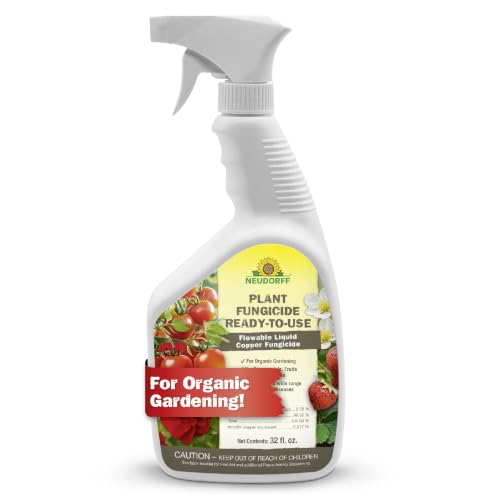
A ready-to-use copper spray that stops late blight on tomatoes and potatoes without mixing.
For vegetable gardeners fighting late blight on tomatoes and potatoes, this is the grab-and-go solution. The active ingredient is copper soap, a low-concentration fungicide that decomposes into soluble copper and fatty acid — both can be used by the soil microbes and the plants themselves. It is ready to spray straight from the bottle, and the 32 oz container covers a good number of plants without needing to measure or mix anything. The spray performance earns positive feedback — owners mention that a little goes a long way and the sprayer works smoothly.
What wins owners over is how fast it acts. One report describes a decades-old gardenia that was almost killed by fungus — the copper spray brought it back to green and even produced flowers. Another owner had black fungus spots on tomatoes and after spraying, the fruit was defect-free. It is safe for use up to the day of harvest and is suitable for organic gardening. The spray is odorless and easy to apply, though note that one owner found it burned the leaves on hostas, so a spot test on a single leaf is wise before a full application.
Tomato and potato specialist: specifically effective for early and late blight on these common garden crops with less chemical load than synthetic options.
Leaf sensitivity risk: can burn the foliage of certain ornamental plants — always test a single leaf and wait 48 hours before treating the whole plant.
5. Earth’s Ally Disease Control Concentrate, 32 oz
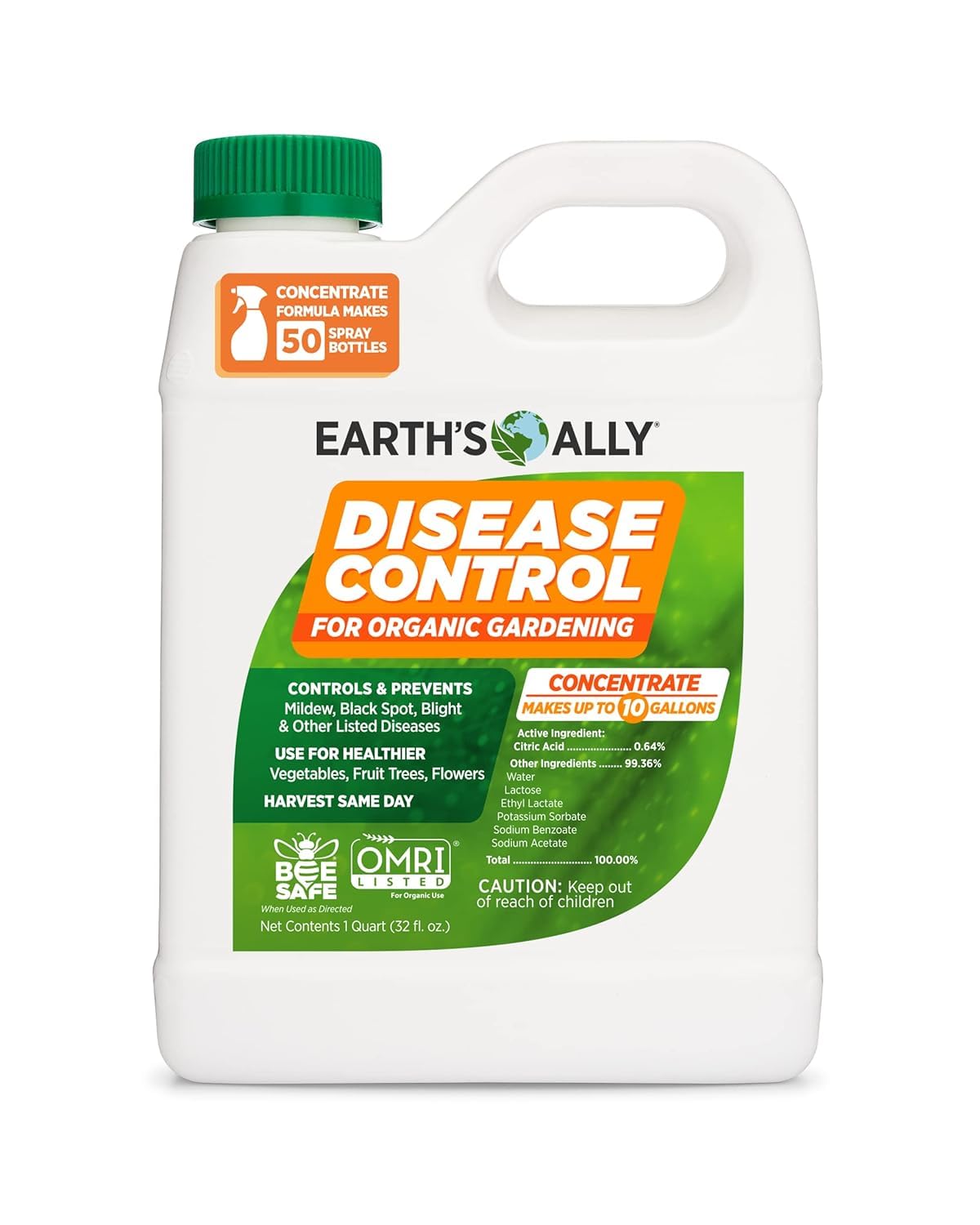
A natural, OMRI-listed fungicide that uses citric acid to control blight without harsh residues.
This is a top pick if you want a natural fungicide that is truly effective. The active ingredient is citric acid, and the concentrated formula makes 10 gallons of ready-to-use product when you mix 6 tablespoons per gallon of water. It treats and controls common plant diseases including powdery mildew, downy mildew, blight, canker, black spot, and leaf spot. Because it leaves behind no harmful residues, it is safe to use on fruits, vegetables, flowers, and ornamentals up until the day of harvest.
Reviewers point out that effectiveness is noticeable after the first application, particularly for mango trees, roses with black spot, and crepe myrtle. One owner dealing with Black Rot on grapes — which had destroyed their crop for years — called it “a noticeable improvement” after treatment. It is easy to mix and apply, and it is OMRI Listed for use in organic gardening. Very few downsides appear in the feedback, though a small number of owners felt the mixing instructions could be clearer.
Why it stands out
- Safe for people, pets, and the planet — no harsh chemical residues
- OMRI Listed for organic gardening and usable until day of harvest
- Concentrated formula makes 10 gallons, excellent value for coverage
The small catch
- Some owners found the mixing instructions could be more detailed
Best for: organic gardeners who want a single all-rounder for blight, black spot, and powdery mildew on a wide variety of plants.
skip it if: you need a heavy-duty synthetic chemical for a fast-spreading, severe blight outbreak — consider a chlorothalonil-based product instead.
6. Bonide Fung-onil Multi-Purpose Fungicide, 16 oz
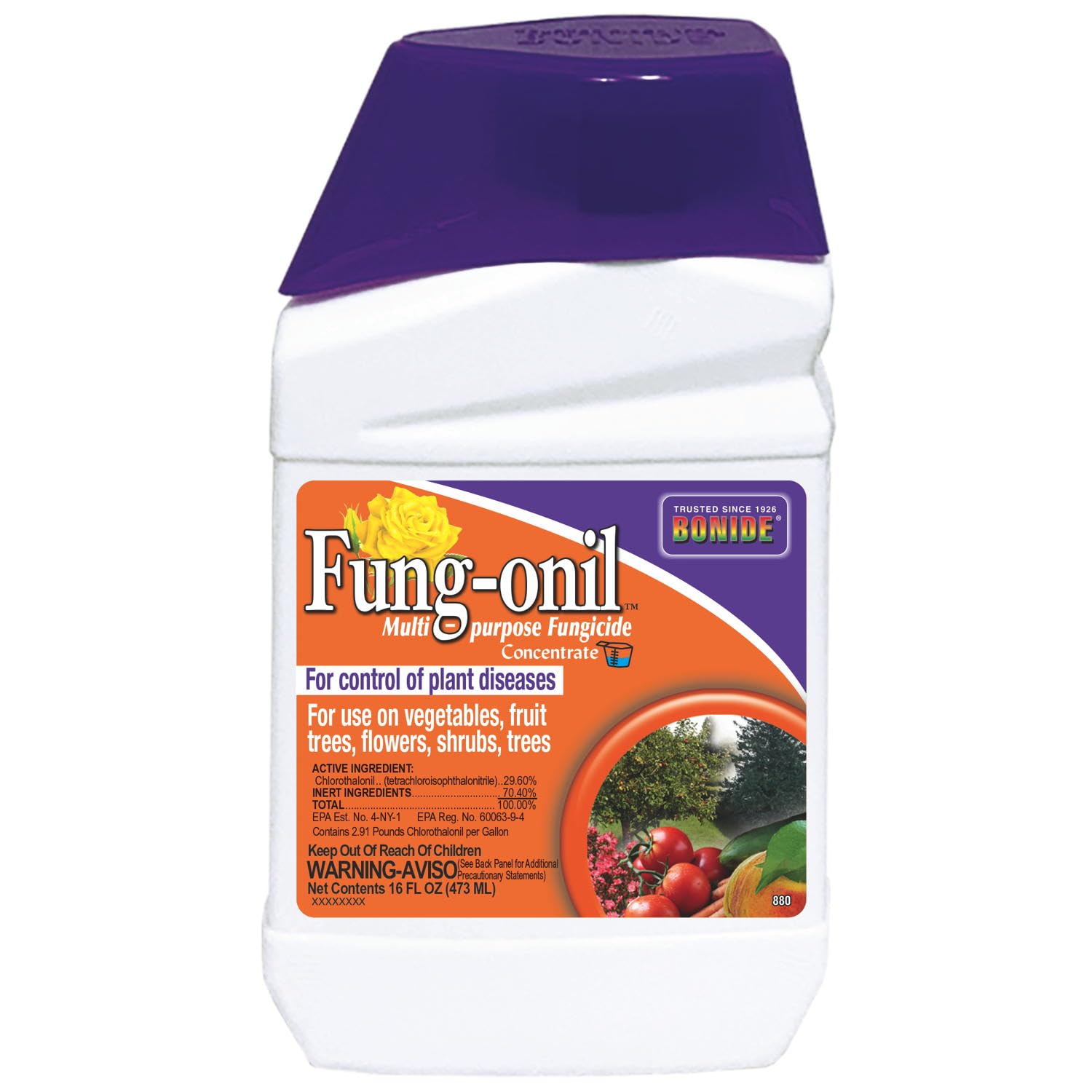
A synthetic heavy-hitter for when blight has already taken hold and you need it stopped.
This is the product to reach for when you are past the preventive stage and need a proven broad-spectrum cure. The active ingredient is chlorothalonil, a well-known fungicide that controls leaf spot, rust, blight, mildew, scab, and more. It is a concentrate that mixes with water, and it is labeled for use on beans, vegetables, fruits, ornamentals, shrubs, and trees. The milky, soapy texture clings well to the leaves and doesn’t wash off easily, giving the fungicide time to work.
Shoppers say strong results on tomato plants that were already infected with black spot fungus and on perennials suffering from early blight — one owner saw improvement on shrubs after 21 days of weekly spraying. The concentrate is more economical than many ready-to-use alternatives, and it does not burn the plants when used at the correct dilution. The main downsides are that the instructions on the bottle could be clearer about refilling, and a small number of owners noted leaf curling issues on certain plants, though this was inconsistent across different species.
Tomato defender: particularly effective on tomato plants already showing signs of blight and black spot when applied weekly.
Read the fine print: the concentrate looks like white latex paint — shake thoroughly and follow the dilution chart on the label carefully to avoid burning plants.
7. Monterey Complete Disease Control Spray, 32 oz RTU
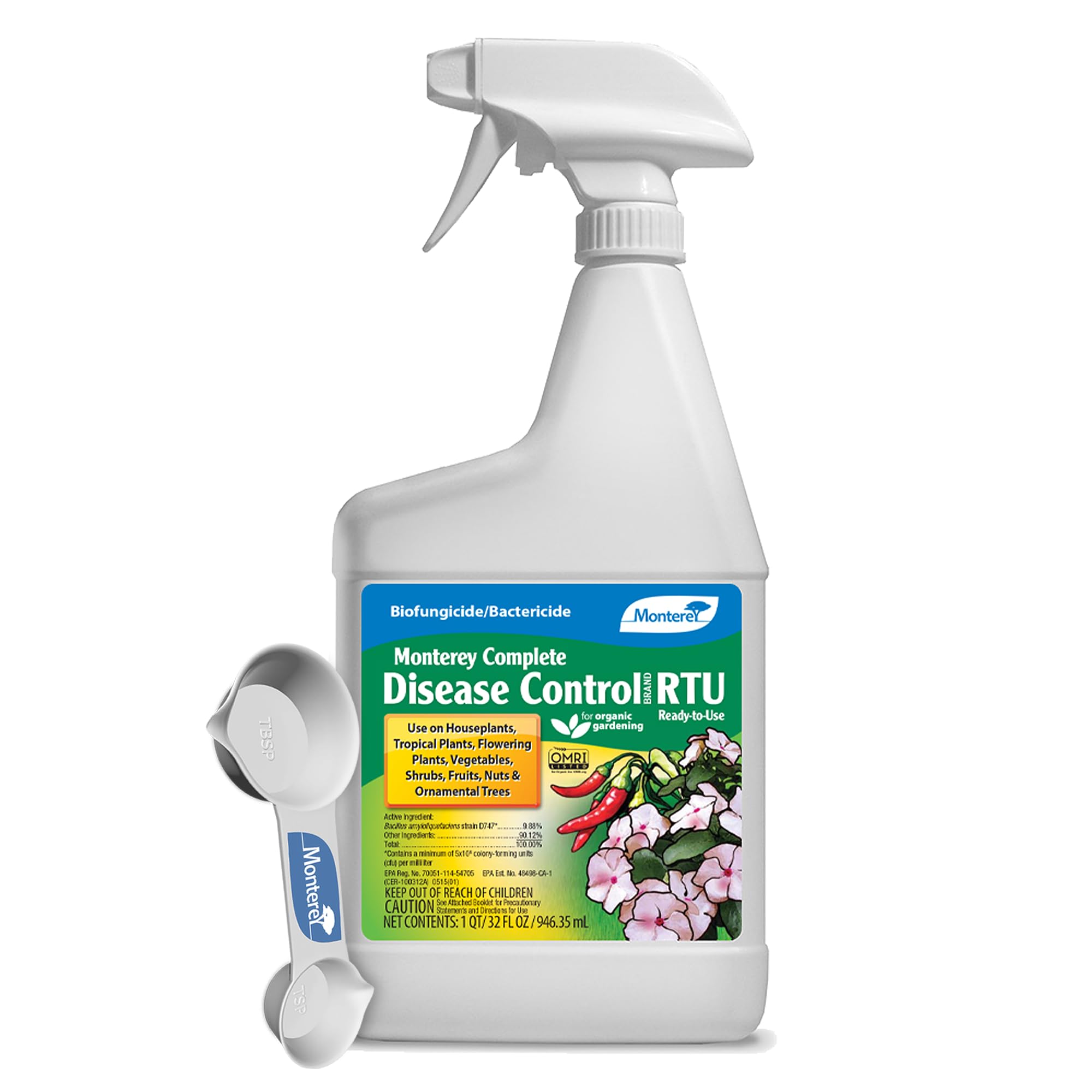
A ready-to-use biofungicide that colonizes root hairs to prevent blight from the ground up.
This product stands out because it does more than just coat the leaves. It is a biofungicide that contains Bacillus subtilis, which colonizes the root hairs of the plant to help prevent the establishment of disease-causing fungi and bacteria. It prevents and stops powdery mildews, rust, leaf blight, brown rot, leaf spots, and gray mold. The spray nozzle makes it easy to apply directly onto the leaves, stems, and new shoots until the liquid runs off. It is OMRI Listed for organic gardening and can be used up to the day of harvest.
Owners in hot, humid climates appreciate this as a go-to product. One Florida gardener reported that it is a staple for treating brown spot on garden bushes and palms because it contains both a bactericide and a fungicide, and has helped save numerous plants. It works well on powdery mildew on squash plants after a couple of applications — just make sure to soak both the tops and the undersides of the leaves for full coverage.
Warm climate weapon: the dual bactericide-fungicide action makes it a reliable choice for humid areas where both blights and spots thrive on palms and ornamentals.
Needs repeat applications: a couple of sprays are usually needed for visible results — it is not a one-and-done treatment.
8. Atticus Gunner 14.3 MEC Propiconazole Fungicide, 32 oz
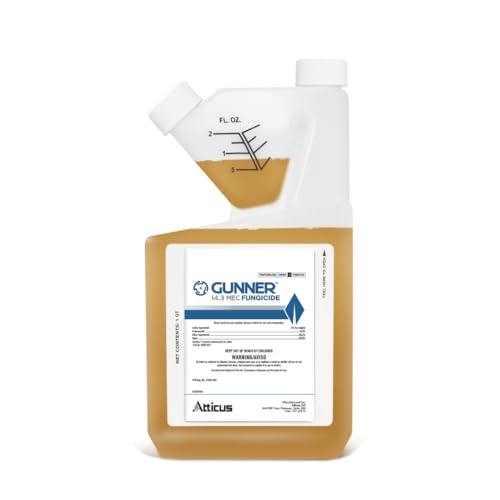
A long-lasting systemic fungicide for lawns that keeps working for up to 28 days.
If your blight problem is on the lawn instead of in the vegetable bed, this is the product to focus on. The active ingredient is 14.3% propiconazole — the same active ingredient as Banner Maxx, a turf-industry standard. It controls more than 20 plant fungi including brown patch, dollar spot, blights, powdery mildew, anthracnose, and rust. The MEC formulation uses incredibly small particles that mix easily and stay mixed in the sprayer, so you do not have to agitate it constantly.
Owners fighting brown patch and dollar spot on their lawns report that this product really aids in recovery and keeps lawns healthier. It enters the plant quickly through both root uptake and stem absorption, and once the spray dries, it resists washing away in the rain or irrigation. The low-odor formula means you do not have to smell chemical fumes while treating the lawn. The protection lasts up to 28 days, reducing how often you need to reapply. A small number of owners note that the mixing instructions are printed in very small text on the label.
What lawn owners love
- Same active ingredient used by golf course pros — trusted broad-spectrum control
- Low-odor formula that mixes easily and stays mixed in the tank
- Rainfast once dry and provides up to 28 days of protection
The practical limit
- Not labeled for vegetable or fruit tree use — strictly for turf and ornamentals
- Not for sale in Alaska, DC, Hawaii, Puerto Rico, or Vermont
Reach for this if: you need a powerful, long-lasting lawn fungicide to stop blight and brown patch with fewer reapplications.
Think twice if: you are treating blight on vegetable or fruit crops — choose a product labeled for edible plants instead.
9. Hi-Yield Captan 50W Fungicide, 12 oz

A gentle but effective powder fungicide that has rescued apple and pear trees from scab and blight.
Captan has been a garden standby for decades, and this version is a 50% wettable powder specifically formulated for fruit and nut trees as well as ornamental plants. It controls black rot, botrytis rot, brown rot, leaf spot, and blight. The powder mixes with water and is applied as a spray using standard equipment. It can also be applied dry if needed, though spraying gives more even coverage. A single 12 oz container will last many growing seasons for a homeowner with a few fruit trees.
Apple and pear favorite: the go-to for fighting fungal diseases like scab alongside blight on these core fruit trees.
Waiting period matters: skip all other pest treatments for a full week after applying Captan to avoid plant stress.
Understanding the Specs
Active Ingredient
This is the chemical or biological substance that does the actual disease control. For blight, you will typically see streptomycin sulfate for bacterial fire blight on fruit trees, copper soap for general fungal and bacterial blight on vegetables, chlorothalonil for broad-spectrum fungal control on ornamentals, and propiconazole for lawn and turf blights. A biofungicide like Bacillus subtilis triggers the plant’s immune system instead of directly attacking the pathogen. Always match the active ingredient to your specific blight type for the best results.
Form: Concentrate vs. Ready-to-Use
A concentrate must be mixed with water before spraying — you measure the product into your tank and fill the rest with water. This is more economical and lets you customize the strength for different diseases. Ready-to-use products come pre-diluted in a spray bottle. They cost more per ounce and generate more plastic waste, but they are convenient for spot-treating a single infected plant and require no measuring. If you are treating several plants or trees, a concentrate usually makes more sense.
Application Method
Organic Certification
Several fungicides carry approval for organic gardening, meaning they are made with naturally derived ingredients and meet USDA National Organic Program standards. OMRI (Organic Materials Review Institute) Listed products like the Earth’s Ally and Monterey sprays are verified to comply with these standards. These products leave fewer residues and are generally safer for beneficial insects, but they may require more frequent applications than synthetic alternatives and may not be as effective on severe infections.
FAQ
Can I use a general fungicide for blight on my fruit trees?
How often should I spray a fungicide for blight?
Is a copper fungicide safe to use on vegetables up to harvest?
What is the difference between a biofungicide and a traditional chemical fungicide?
Can I mix fungicides together for better blight control?
How do I know if my plant has blight and not another disease?
Will a blight fungicide also treat powdery mildew?
How long does a blight fungicide last on the plant?
Is it safe to use a blight fungicide on houseplants?
Final Thoughts: The Verdict
For the majority of shoppers, the fungicide for blight winner is the Bonide Revitalize Biofungicide because it blends immune-boosting prevention with organic safety and works on everything from fruit trees to houseplants. If you are specifically fighting fire blight on apple or pear trees during bloom, grab the Fertilome Fire Blight Spray — it is the precision tool for that single disease. And for vegetable gardeners dealing with late blight on tomatoes and potatoes, the Neudorff Copper Soap Spray is the ready-to-use solution that keeps your harvest safe right up to picking time.
How We Picked
We do not accept paid placement. Every pick is matched to a real buyer and a real use-case; we do not hands-on test units.
Sources & Methodology
Specifications: manufacturer listings and product documentation. Review insights: verified customer reviews, as of July 2026. Pricing: not shown on this page (it changes often); check the current price via the retailer link.
As an Amazon Associate, Lawn Gear Lab earns from qualifying purchases. This does not affect which products we feature.