
Specs are compiled from manufacturer listings and verified buyer reviews and can change over time — please confirm the key details on the product page before buying.
That white, dusty coating on your prize roses, squash leaves, or young citrus isn’t just ugly — powdery mildew steals your plant’s energy, stunts growth, and spreads fast if you don’t hit it with the right treatment. The trick is picking a fungicide that actually kills the mildew without scorching your leaves or leaving residues you don’t want on your food plants. You need a product that matches your garden size, your preferred application method (concentrate or ready-to-spray), and your tolerance for mixing and reapplication schedules. The lineup here spans premium bio-fungicides that trigger the plant’s own defenses, concentrated multi-purpose sprays that tackle insects and fungus in one go, and budget-friendly organic options that get the job done without harsh chemistry.
I’m Rikta — the founder and writer behind Lawn Gear Lab. This guide is built by comparing the manufacturers’ published specifications and the patterns across verified customer reviews, so you get each pick’s real strengths and trade-offs instead of marketing spin.
Don’t let a dusting of spores ruin your harvest. This roundup of the best fungicide for powdery mildew on plants breaks down exactly what each product handles, how easy it is to apply, and what owners actually discover after a season of use.
Our Picks at a Glance


How To Choose The Best Fungicide For Powdery Mildew On Plants
Powdery mildew is a fast-spreading fungus that thrives in warm, dry days and cool, humid nights. Your first decision is if you want a synthetic multi-purpose product that also kills insects or a gentler organic formula you can use up to the day of harvest. The second big choice is between a concentrate (you mix with water, more mileage per bottle) and a ready-to-use spray (grab and go, but runs out faster). Finally, check the ingredient: contact fungicides coat the leaf surface and stop new spores, while systemic bio-fungicides like Bonide Revitalize trigger the plant’s own immune response from the inside out.
The Ingredient Matters More Than the Name
Some fungicides rely on sulfur or copper salts to scorch fungal growth on contact. Others, like citric acid in Earth’s Ally or the botanical oil blend in Grower’s Ally, smother mildew without harsh residues. If you are growing food, look for a formula labeled for use up to the day of harvest — that tells you the breakdown time is short enough to be safe.
Coverage and Schedule
Most concentrates make between 6 and 10 gallons of finished spray. A small backyard with a few fruit trees needs less than a sprawling vegetable patch. The standard schedule is a treatment every 7 to 14 days and always after heavy rain, because water washes the protective coating off the leaves.
Quick Comparison
| Model | Best For | Active Ingredient | Size (oz) | Finished Spray (gal) | Amazon |
|---|---|---|---|---|---|
| Bonide Captain Jack’s Orchard Spray★ Best Overall | Big fruit-tree orchards | Sulfur-based multi-purpose | 32 | 6.4 | Amazon |
| Grower’s Ally Crop Defender 3Top Performer | Organic indoor/outdoor | Botanical oils | 24 | Many (concentrate) | Amazon |
| Fertilome Triple Action PlusBest Value | Fast-acting rose rescue | Pyrethrin + Neem oil | 32 | Many (concentrate) | Amazon |
| Neudorff Copper Soap Fungicide | Ready-to-use convenience | Copper soap | 16 | RTU | Amazon |
| Earth’s Ally Disease Control | Citric acid safe spray | Citric acid | 32 | 10 | Amazon |
| Bonide Revitalize Biofungicide | Systemic plant immunity | Bacillus (bio) | 16 | Many (concentrate) | Amazon |
| BioAdvanced 3-in-1 Fruit Spray | Hose-end simplicity | Multi-insect/disease | 32 | RTU with hose | Amazon |
| Arber Organic Combo | Indoor + outdoor precision | Bio-based concentrate | 16 | 8 per bottle | Amazon |
In‑Depth Reviews
1. Bonide Captain Jack’s Citrus, Fruit & Nut Orchard Spray, 32 oz Concentrate
Our pick — over 4.5★ from 950+ verified ratings; the strongest balance of quality and price.
The workhorse concentrate that protects fruit trees, veggies, and ornamentals from mildew plus the bugs that follow.
You get one bottle that handles three jobs at once — a fungicide, insecticide, and miticide (a product that kills mites) all mixed together. That means it covers powdery mildew, rust, blight, brown rot, and leaf spots while also killing beetles, caterpillars, mealybugs, spider mites, and thrips. Over 900 owners give it a 4.6 out of 5 stars, with effectiveness the most-praised trait. One pint of the 32-ounce concentrate makes up to 6.4 gallons of finished spray, so a single bottle goes a long way on a small orchard or a large vegetable patch. You can apply it up to the day before harvest, which matters if you are treating apples, avocados, citrus, or leafy greens like broccoli and lettuce. Buyers report a visible turnaround: leaf spots on apple trees disappearing and foliage turning greener after a few treatments. Over four months of consistent use, owners say it reduces powdery mildew and deters earwigs and moths on both fruit trees and vegetables. The 2.3-pound bottle is heavier than the Fertilome Triple Action Plus (2 pounds), and that small weight difference reflects the wider spectrum of pests it covers — 15% more mass for a broader job.
If you only have a few houseplants, this is overkill. The concentrate volume and mixing step feel like too much for small pots; a ready-to-use spray is simpler there. But for a mixed garden where both fungus and insects show up, this single bottle does the work of three separate products.
Why it owns the top spot
- Three-in-one: kills fungus, insects, and mites with a single mix
- Generous 32-oz concentrate makes 6.4 gallons of spray
- Registered for use on a massive list: fruit trees, citrus, vegetables, roses, lawns
The honest trade-offs
- Concentrate runs faster than you expect on a large orchard (4-5 applications per bottle)
- Needs reapplication after rain, which adds cost over a wet season
- Can clog a sprayer if left sitting; best used fresh
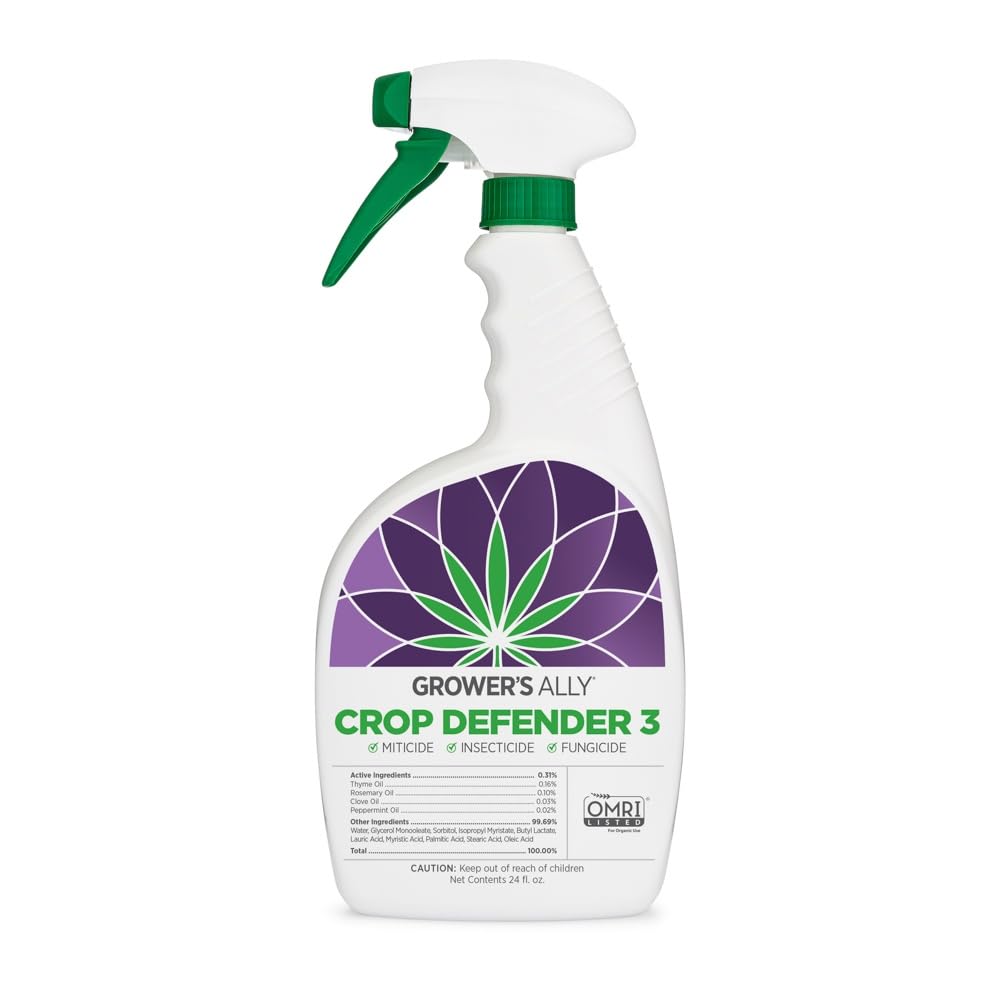
2. Grower’s Ally Crop Defender 3 Concentrate, 24 Oz
An organic, OMRI-listed concentrate that kills mildew, spider mites, and aphids on contact without burning leaves.
This is the go-to for growers who want zero synthetic residues and the ability to harvest the same day they spray. The triple-action formula combines botanical oils with a built-in surfactant (a substance that helps the spray spread and stick to leaf surfaces). It is FIFRA 25(b) exempt and OMRI-listed (Organic Materials Review Institute, meaning it meets organic gardening standards) and contains no residual solvents, synthetic pesticides, or heavy metals. The concentrate is formulated for weekly use and works on indoor, outdoor, greenhouse, and hydroponic setups. What wins people over is the effectiveness — it is the most-discussed aspect by a wide margin. Owners mention that one application at the elimination concentration eradicated spider mites for over two weeks. People also love that it does not burn leaves, even on tender seedlings. The scent divides opinion (some find it pleasant, others do not), but the core job — killing powdery mildew, spider mites, russet mites, thrips, and aphids — is where this product earns its keep.
Unlike the Fertilome Triple Action Plus, which contains pyrethrin and degrades quickly outdoors, Grower’s Ally uses only botanical oils so it is safe for use right up to harvest. If you are sensitive to botanical oil smells or need a product that handles tough blight, this is a preventive contact spray, not a systemic cure.
Standout feature: You can spray at full strength and the leaves stay healthy, which is a real advantage for delicate ornamental plants and young transplants.
The catch: The fragrance is a mixed bag — some owners love the clove-like smell, others find it strong.
3. Fertilome (10251) Triple Action Plus Insecticide Fungicide, 32 oz
A rose-saver with a powerful pyrethrin punch that stops leaf-eating fungus and insects in one spray.
This 32-ounce concentrate combines pyrethrin (a fast-acting insecticide derived from chrysanthemums that breaks down into CO2 and water) with piperonyl butoxide (which boosts the pyrethrin’s effectiveness by slowing the insect’s ability to neutralize it) and neem oil (a natural repellent). It is a true three-in-one: fungicide, insecticide, and miticide for fruits, herbs, nuts, vegetables, roses, flowers, and shrubs. The formula hits powdery mildew, rust, leaf spot, and a long list of insects including aphids, spider mites, leafminers, and armyworms. The standout anecdote is a rose rescue: one owner sprayed roses that were defoliating from fungus, and after a single treatment the progression stopped and the plants produced “great roses.” Another owner used it on lime trees and confirmed the liquid works once on the tree. Buyers also praise it for killing tent caterpillars and whiteflies on herbs. At 2 pounds, it is slightly lighter than the Bonide Captain Jack’s (2.3 pounds), which means a bit less active mass per bottle, but the pyrethrin-based formula delivers a faster knockdown on active insect infestations.
If you are strictly organic, note that pyrethrin is plant-derived but not every gardener considers it “natural.” For rescuing roses from active fungal defoliation plus a concurrent insect problem, this is the fastest option in the lineup.
Speed advantage: Pyrethrin works in minutes on contact, then degrades quickly, so beneficial insects are safer than with longer-lasting synthetics.
Downside: A few owners find the sprayer nozzle stiff to operate, and the product must be used outdoors.
4. Neudorff Plant Fungicide Spray Copper Soap Fungicide, 32 OZ
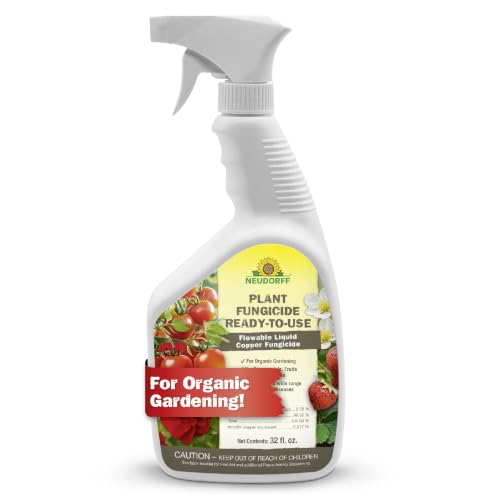
A ready-to-use copper spray that rescues gardenias and tomatoes from fungus without requiring any mixing.
This is the grab-and-go option for anyone who wants to skip the measuring and mixing. The active ingredient is copper soap, which decomposes into soluble copper and fatty acid that plants and soil microbes can actually use. It controls powdery mildew, rusts, black spot, downy mildew, late blight, peach leaf curl, and more. You start treatment two weeks before disease normally appears, or at the first sign of infection, and reapply every 7 to 10 days — and always after rain. Reliability is the theme here. One owner saved a decades-old gardenia that was nearly killed by fungus — the plant got its green back and even flowered. Another had black fungus spots on tomatoes and after using this spray the fruit came in defect-free. The product is OMRI-listed for organic gardening and can be used up to the day of harvest on fruits, vegetables, roses, and ornamentals. At 16 ounces, the bottle is smaller than many concentrates, but for a small garden or a handful of houseplants it is a perfect no-fuss option. Be cautious on sensitive hostas — a few owners saw leaf burn, so test a small patch first on delicate foliage.
For large orchards or vegetable beds, the ready-to-use format runs out fast at scale and costs more per gallon than a concentrate like Bonide Captain Jack’s. For container gardeners treating a specific plant crisis, this is the simplest trigger-pull solution.
Biggest plus: No mixing, no measuring, no cleanup — just point and spray.
Worth noting: A few owners on sensitive hostas saw leaf burn, so test a small patch first on delicate foliage.
5. Earth’s Ally Disease Control Fungicide, 32 Oz Concentrate
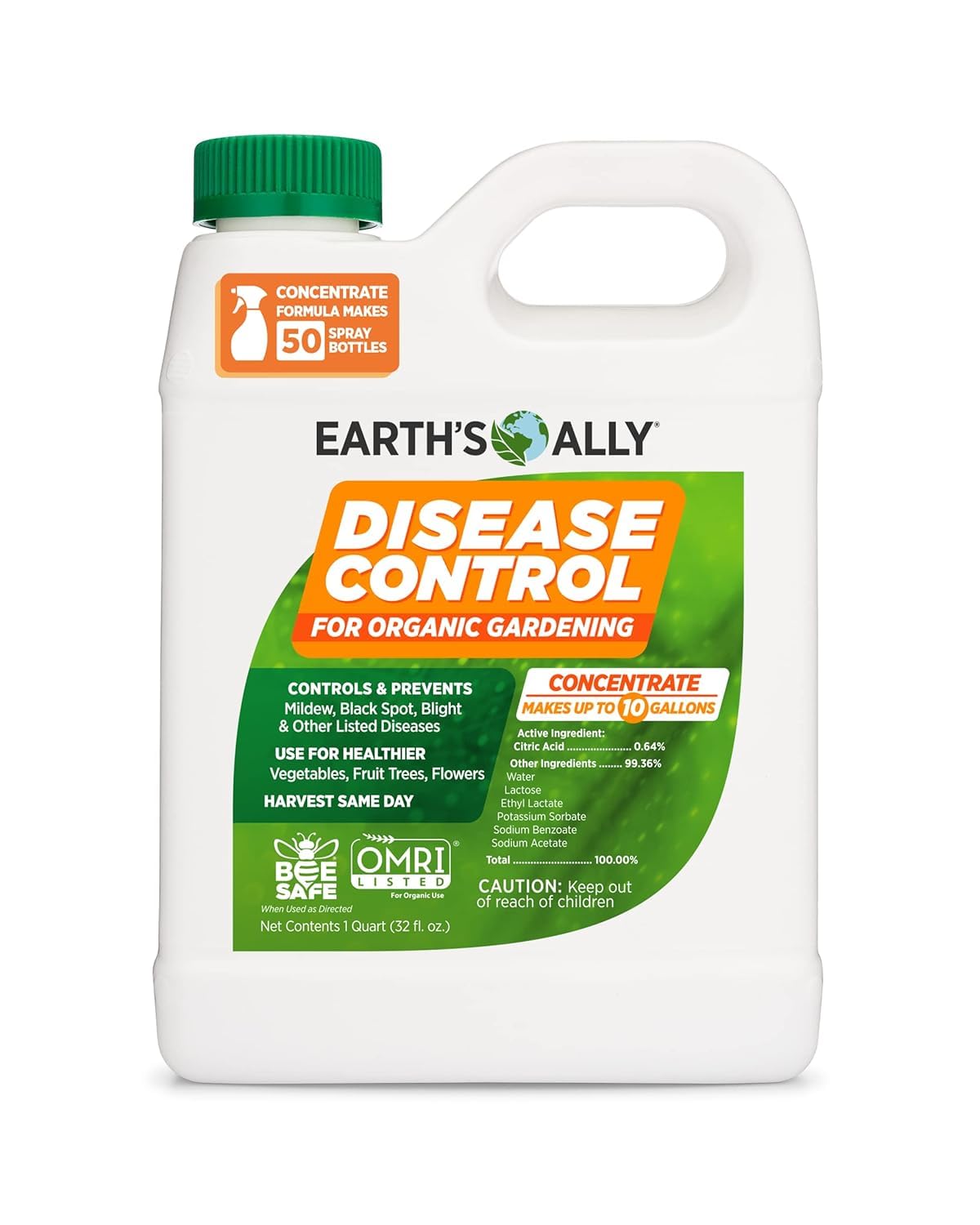
A citric-acid concentrate that knocks out powdery mildew, black spot, and blight with a gentle, food-safe formula.
If you want a natural fungicide that still packs real punch, this 32-ounce concentrate makes an impressive 10 gallons of ready-to-use spray by mixing just 6 tablespoons per gallon of water. The active ingredient is citric acid — the same compound found in citrus fruit — which means no harsh chemical residues and no worries about spraying right up to harvest day. It is OMRI-listed for organic gardening and works on fruits, vegetables, flowers, ornamentals, trees, and shrubs. The most-praised feature is the effectiveness, with owners reporting visible improvement after a single application. One gardener resolved “powdery mildew madness” on their plants, while another noted a big improvement on grape Black Rot that had destroyed their crop for years. The ease of use is also a standout — people find it simple to mix with water in a standard sprayer. It is also effective on crepe myrtle, citrus trees, and roses with black spot. Some buyers found the instructions a bit unclear on mixing rates, and a few wanted a stronger dilution for severe outbreaks.
For severe, entrenched fungal infections that demand a stronger systemic fungicide, consider Bonide Revitalize instead. But for fruits or vegetables where you want an organic spray you can apply the day before picking without a second thought, this is the cleanest option.
Why it stands out: Clean, edible-grade chemistry that even skeptical organic gardeners trust — the “people are always shocked it is Earth Friendly” feedback sums it up well.
The occasional issue: Some buyers found the instructions a bit unclear on mixing rates, and a few wanted a stronger dilution for severe outbreaks.
6. Bonide Revitalize Biofungicide, 16 oz Concentrate

A bio-fungicide that triggers the plant’s own immune system instead of just coating the leaves with a kill spray.
If you need a fast knockdown of an active, widespread mildew outbreak on the same day, a contact spray like Earth’s Ally works faster. But for long-term preventive power on fruit trees and ornamentals, the plant builds resistance so you are not just chasing symptoms.
Biggest advantage: Long-term preventive power — the plant builds resistance, so you are not just chasing symptoms.
7. BioAdvanced 3-in-1 Fruit, Citrus, and Nut Tree Spray, 32 oz
A hose-end, ready-to-spray formula that covers tall fruit trees and big vines without lifting a pump sprayer.
This is the product for gardeners who want to mix nothing and still treat a whole orchard. The 32-ounce bottle screws onto a standard garden hose and the spray reaches up to 8 feet — perfect for getting on top of peach, apple, and citrus trees. The triple-action formula controls listed insects (caterpillars, aphids, mites), diseases (black spot, powdery mildew, rust), and mites all in one pass. It is safe to use up to the day before harvest on fruit, nut, and citrus trees as well as vegetables and vine plants. Ease of use is the top praise — owners like that it attaches directly to the hose for quick, even coverage. One owner used it on a blood orange tree for mealybugs after other products failed, and the BioAdvanced worked on the first try. Another noticed less rust on apples and a big reduction in wasps after treatment. The effectiveness is the most discussed aspect overall, but it leans mixed — some owners say it did not work on their specific pest or apple variety, so success may depend on the strain of mildew or pest pressure. The spray head can be finicky with water pressure, and some users found coverage tricky, requiring separate spot treatment of infested leaves.
If you have a small garden with two plants, the hose-end design delivers more volume than you need and the spray head may be over-engineered for spot treatment. But for anyone with several tall fruit trees who wants to treat the whole canopy quickly without climbing a ladder or mixing concentrate, this is the easiest option available.
The convenience win: No mixing, no sprayer cleaning — just attach the bottle to the hose and spray.
The weak link: The spray head can be finicky with water pressure, and some users found coverage tricky, requiring separate spot treatment of infested leaves.
8. Arber Organic Insecticide & Fungicide for Plants, 16oz

A separate insecticide and fungicide in one pack — mix them together or use alone for precise pest control.
This is a two-bottle system: an 8-ounce insecticide concentrate and an 8-ounce fungicide concentrate, each making up to 8 gallons of finished spray. You can mix them in the same sprayer for a dual-action treatment or use each alone when you only need one mode. The bio-based formula targets powdery mildew, spider mites, aphids, whiteflies, thrips, and fungus gnats. It is safe for pollinators when used as directed and suitable for houseplants, vegetables, roses, shrubs, and lawns. The combination of speed and safety is the standout. Customers note the insecticide kills bugs within 5-10 seconds on contact — a 10-drop dose in 32 ounces of water was enough for immediate results on indoor plants. The fungicide promotes lush green growth without leaf burn. One nightly spray routine in a raised bed significantly reduced aphids, caterpillars, and gnats over time. The only real limitation is that it does not handle Japanese beetles, so if those are your primary pest, this is not the right kit. The fungicide concentrate is thicker and smellier than the insecticide, so mixing them takes an extra minute of shaking.
If you only need a fungicide and have no insect pressure, you can buy a single-purpose product like Earth’s Ally for less. But for indoor plant parents and raised-bed gardeners who want a gentle, organic option that works fast on contact without harming the plant, this two-pack lets you tailor the dose precisely.
Why it is clever: Two separate concentrates let you tailor the dose — use the fungicide alone for mildew prevention, then add the insecticide only when pests appear.
One drawback: The fungicide concentrate is thicker and smellier than the insecticide, so mixing them takes an extra minute of shaking.
Understanding the Specs
Active Ingredient Type
The ingredient determines how the fungicide works. Sulfur and copper salts are contact killers — they scorch fungal spores on the leaf surface. Botanical oils (neem, clove) smother spores and insects. Citric acid alters leaf pH so fungus cannot grow. Bio-fungicides like Bacillus trigger the plant’s own immune response. Match the ingredient to your plant type (delicate houseplants prefer gentle formulas) and your comfort with residue on food crops.
Concentrate vs Ready-to-Use (RTU)
A concentrate you mix with water gives you more total spray volume per dollar and lets you adjust strength for different outbreaks. The trade-off is measuring and mixing time. A ready-to-use spray is grab-and-go but costs more per gallon and runs out faster on large gardens. For a single rose bush or a few houseplants, RTU is fine. For a vegetable patch or orchard trees, concentrate is the smarter buy.
Reapplication Schedule
Most fungicides require a 7-to-14-day spray cycle because rain and UV light break down the protective coating after a week or two. If your area gets frequent rain, you need a formula that specifically says “reapply after rain” or you will lose protection between storms. Organic and bio-fungicides often need more frequent application than synthetic ones because they degrade faster in the environment.
Harvest Interval (PHI)
The pre-harvest interval is the number of days you must wait between spraying and eating the crop. A product labeled “use up to day of harvest” has a zero-day PHI — spray today, pick tomorrow. This matters enormously for vegetable gardeners who harvest continuously (tomatoes, peppers, greens). If you are growing ornamentals only, the harvest interval does not apply, but it is still a good indicator of how fast the product breaks down.
FAQ
Can I use these fungicides on vegetable plants that I will eat?
How often do I need to spray for powdery mildew?
What is the difference between a contact and a systemic fungicide?
Will these sprays burn my plants?
Can I mix a fungicide with an insecticide in the same sprayer?
How do I know if the fungus on my plant is actually powdery mildew?
Are these products safe for bees and other pollinators?
Which fungicide works best on fruit trees?
How long does a bottle of concentrate typically last?
Can I use these fungicides indoors on houseplants?
Final Thoughts: The Verdict
For most gardeners, the winner is the Bonide Captain Jack’s Orchard Spray because one concentrate handles powdery mildew, black spot, blight, and most insect pests on fruit trees, vegetables, and ornamentals. If you want an organic, harvest-day-safe spray, grab the Earth’s Ally Disease Control — citric acid is gentle on plants and tough on mildew. And for a no-mix, hose-end solution that covers tall trees without a ladder, the BioAdvanced 3-in-1 Fruit Spray is the one to reach for. The common thread across every pick: start treatment early, stick to the schedule, and reapply after rain, and your garden will beat powdery mildew all season long.
How We Picked
We do not accept paid placement. Every pick is matched to a real buyer and a real use-case; we do not hands-on test units.
Sources & Methodology
Specifications: manufacturer listings and product documentation. Review insights: verified customer reviews, as of July 2026. Pricing: not shown on this page (it changes often); check the current price via the retailer link.
As an Amazon Associate, Lawn Gear Lab earns from qualifying purchases. This does not affect which products we feature.