
Specs are compiled from manufacturer listings and verified buyer reviews and can change over time — please confirm the key details on the product page before buying.
The single biggest mistake in container gardening is grabbing a bag of dirt that looks like soil but acts like a brick—compacting around roots, holding water until rot sets in, or arriving full of weed seeds and gnats. A genuinely high quality potting soil feels different in your hands: dark, crumbly, alive with texture from perlite and compost, not wood chips or dust. That texture is the difference between a plant that merely survives and one that explodes with growth, and the nine picks here earned their spot because they deliver exactly that real-world performance, not just a pretty label.
I’m Rikta — the founder and writer behind Lawn Gear Lab. This guide is built by comparing the manufacturers’ published specifications and the patterns across verified customer reviews, so you get each pick’s real strengths and trade-offs instead of marketing spin.
Whether you are filling raised beds, repotting a fussy Monstera, or starting tomatoes from seed, the right mix determines everything from root health to your weekend watering schedule. Here are the nine best bags of high quality potting soil that actual owners swear by, ranked by what they do best.
Our Picks at a Glance


How To Choose The Best High Quality Potting Soil
Not every bag that says “potting mix” is a good home for your plant’s roots. Many mass-market products are heavy, low on nutrients, or prone to harboring pests. To find a mix that truly performs, you need to look past the marketing and focus on a few key traits that directly impact plant health.
The Three Core Ingredients: Aeration, Moisture, and Food
A first-rate potting soil is a balanced recipe, not just dirt. You want a base like sphagnum peat moss or coco coir for moisture retention, combined with aeration agents like perlite (those little white rocks) or pumice to keep the soil fluffy so roots can breathe. The third piece is the nutrient source—compost, worm castings, kelp meal, or a slow-release organic fertilizer that feeds your plant over time. A bag that lists just “peat moss” and “perlite” might be sterile, but it also offers zero nutrition, meaning you will have to fertilize immediately.
The “No-Filler” Test
Open a bag and look. If you see large chunks of bark, twigs, or a lot of fine dust, the soil is bulked up with cheap filler. Good potting soil should look like a uniform, dark, crumbly blend. The ingredient list is your defense: if “forest products” or “screened bark” appear far ahead of compost or peat, expect a mix that dries out fast and offers little structure for roots.
pH Balance and Target Plants
Most vegetables, herbs, and flowers prefer a slightly acidic to neutral pH, roughly between 6.0 and 7.0. Some mixes, especially those designed for acid-loving plants like blueberries or azaleas, will be formulated lower. A bag that states its pH range—like the Brut Organic at 6.3-6.5—gives you a reliable starting point. For general use, a pH-balanced mix with added lime is a safe bet.
Quick Comparison
| Model | Best For | Volume | Key Ingredient | Key Feature | Amazon |
|---|---|---|---|---|---|
| Coast of Maine Bar Harbor★ Best Overall | Best Overall | 16 qt (2-pack) | Compost, Lobster Meal | 4.8 stars, 550+ ratings | Amazon |
| Perfect Plants IndoorPremium Indoor | Premium Indoor | 4 qt | Coco Coir, Pine Bark | Bug-free guarantee | Amazon |
| Coast of Maine Veg & TomatoPremium Veggie | Premium Veggie | 20 qt | Composted Manure, Peat | OMRI listed organic | Amazon |
| Noot Potting Mix | Premium Aroids | 1 gal | Coco Chips, Perlite | Pre-soaked, rapid roots | Amazon |
| Midwest Hearth Premium Mix | Pro Grower Formula | 8 qt | Peat, Vermiculite, Perlite | pH controlled, USA made | Amazon |
| Black Gold All Organic | Value Organic | 8 qt (2-pack) | Organic Compost | No fungus gnats reported | Amazon |
| Espoma Organic Potting Mix | Indoor & Outdoor | 8 qt (2-pack) | Peat, Earthworm Castings | Myco-Tone added | Amazon |
| Brut Organic Potting Soil | Filler-Free Premium | 21 qt | Worm Castings, Azomite | pH 6.3-6.5, OMRI listed | Amazon |
| Miracle-Gro Moisture Control | Budget Champion | 2 cu. ft. | Peat, Coir | 33% more water absorption | Amazon |
In‑Depth Reviews
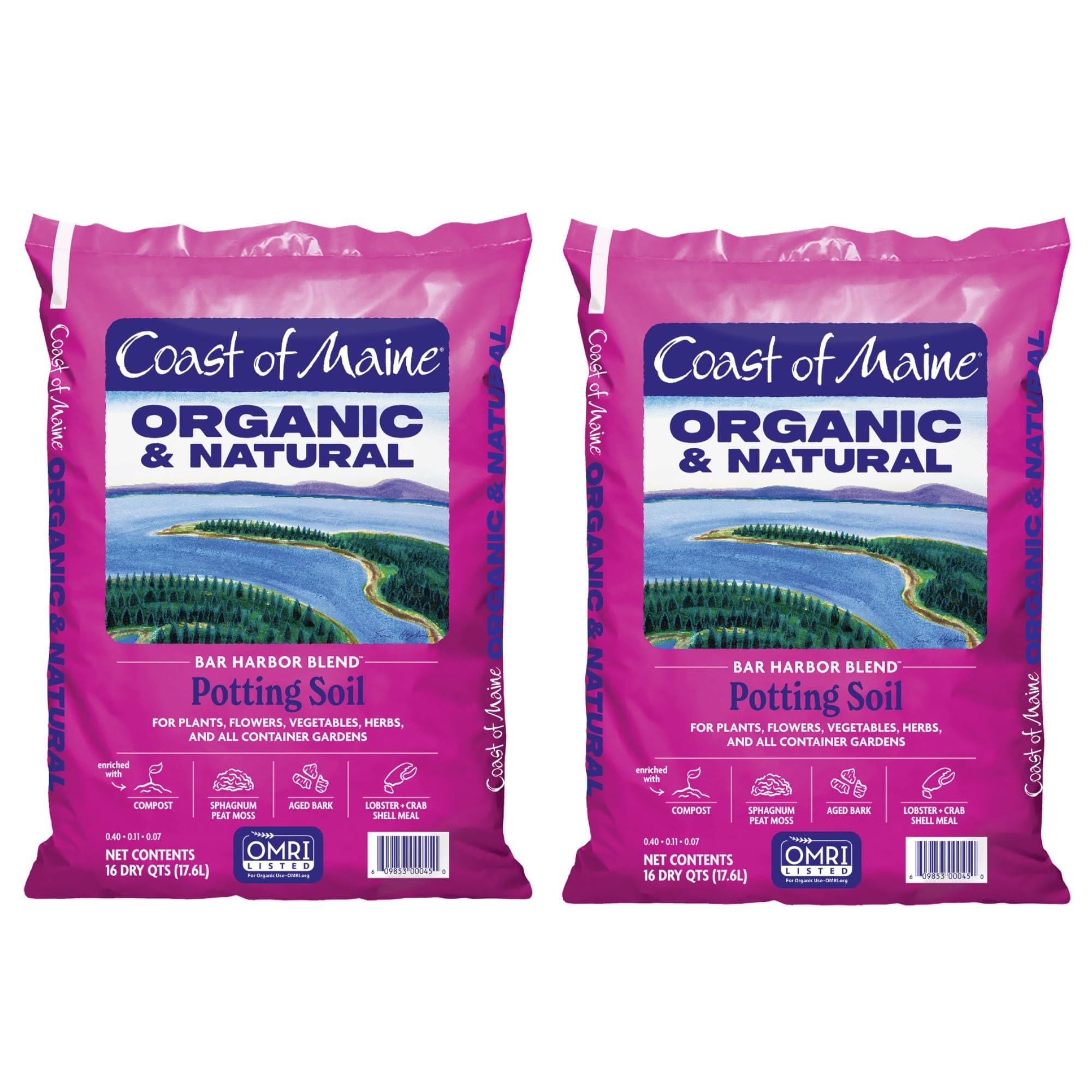
1. Coast of Maine Bar Harbor Blend Potting Soil
Our pick — over 4.5★ from 550+ verified ratings; the strongest balance of quality and price.
The dark, nutrient-rich blend that made one gardener swear off the “top brand” forever.
This is the crowd favorite for a reason. The Bar Harbor Blend uses lobster and crab shell meal alongside kelp meal and compost to create a mix that is packed with slow-release nitrogen, so your containers get steady food without you having to mix in fertilizer every two weeks. Buyers report that “two bags were enough to mound up 8 potato plants, and have extra for 2 more planters,” which is proof of its volume-to-value ratio—you get a 16-quart 2-pack here. The texture is what wins people over: rich, dark, and crumbly with good perlite content, not full of the sticks and wood chips that plague cheaper bags. At a 4.8-star score across a very substantial number of owners, it is the most consistently praised mix in this lineup. The one honest caveat is that like any rich organic soil, an occasional owner has mentioned needing to manage moisture carefully, but the overwhelming consensus is that this is “the best soil” for raised beds, pots, and even indoor use.
Secret to the hype: The lobster and crab shell meal is a unique source of chitin, which naturally feeds beneficial soil bacteria and can help suppress certain root-damaging fungi, giving your plants a biological boost most other mixes lack.
Reach for this if: You want a single bag that handles vegetables, herbs, flowers, and houseplants with equal vigor—a true all-star for the mixed container gardener. The 2-pack offers serious volume for serious planters.
Think twice if: You only need a tiny batch for a single window box; consider the Brut Organic or Perfect Plants for a smaller, equally premium option.
2. Perfect Plants Indoor Plant Soil
The bug-free, lightweight mix that one owner called their “happy plants happy life” discovery.
If you have ever opened a bag of potting soil only to find it swarming with fungus gnats, you will appreciate the story here. The Perfect Plants mix uses pine bark, coco coir, perlite, sand, and garden lime in a formulation that drains quickly and, according to countless owners, arrives completely free of pests. As the review pages sum it up: “At last I found a good soil in Amazon.!!! My plants look very healthy and happy since I transplanted them to it.” That is the core promise—a clean, reliable substrate for fussy houseplants like Monstera, Aloe, and African Violets. The 4-quart size is compact, making it ideal for repotting a few containers, and the resealable bag is a thoughtful touch for storing leftovers. While it is pricier per quart than the bulk bags, the value is in the confidence: no gnats, no weeds, just consistent performance.
Why owners love it
- Completely bug-free—a huge relief for indoor plant collectors
- Light and airy texture that roots love; excellent drainage
- Versatile across many indoor species, from ivy to aglaonema
The honest trade-off
- Small bag (4 quarts) goes fast if you have many plants
- Considered pricey by some, but the value is in the quality and lack of pests
Best for: Indoor-only gardeners who prioritize a sterile, pest-free medium for their beloved houseplants. The 4-quart size is perfect for 2-3 medium pots.
Look elsewhere if: You are filling large raised beds or outdoor containers where volume matters more than a bug-free guarantee.
3. Coast of Maine Organic & Natural Planting Soil for Vegetables & Tomatoes
The heavy bag that growers say makes their heirloom tomatoes thrive indoors.
This is the dedicated grow-bag for your edible garden. The formula combines composted manure with sphagnum peat moss to create a lightweight yet nutrient-dense environment specifically for tomatoes and vegetables. What stands out in the feedback is the texture—owners describe it as “black earthy soil” with minimal settling after rain, and importantly, “not a lot of wood bits.” At 20 quarts, it has the volume to fill a couple of large planters or top off an in-ground bed. The catch, mentioned by a few owners, is that this rich organic mix can sometimes harbor fungus gnats (one grower controlled them with weekly neem oil spray). It is a common trade-off with any highly organic, compost-based soil, and not a dealbreaker—more a sign to let the soil dry out a bit between waterings. This bag has 4.5 stars from a large pool of buyers, and one “wife approval factor” review sums it up: “Wife said this is the best soil she’s tried thus far.”
The defining detail: It is OMRI listed (approved for organic use), meaning you can confidently use it in an organic vegetable garden without worrying about synthetic chemicals leaching into your food.
Grab this for: An early-season tomato repotting or any ambitious vegetable container garden where you want a nutrient-rich head start.
Be aware that: The organic matter can attract gnats if the soil stays wet; let containers dry out between waterings.
4. Noot Potting Soil Mix for Indoor & House Plants
The chunky, pre-soaked blend that one Monstera owner says produced four huge leaves and strong roots.
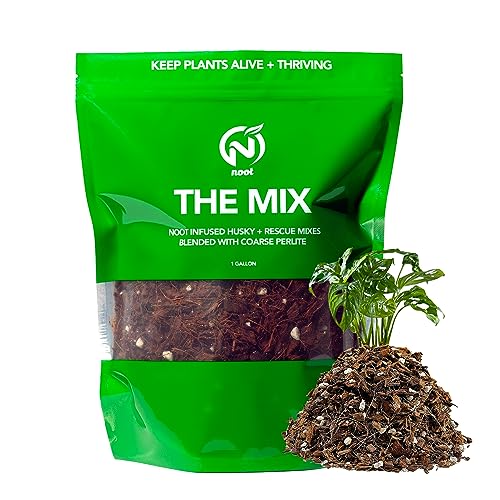
This is a completely different approach to potting soil. Instead of a traditional peat-based mix, Noot uses large coconut chips, fibers, and coarse perlite to create an incredibly airy substrate that is pre-soaked with organic nutrients (NPK.10/.15/.12). The goal is maximum oxygenation to prevent root rot and encourage rapid root expansion—a specific need for aroids like Monstera, philodendrons, and orchids. The feedback from owners is clear: it works brilliantly. One owner noted their Monstera “loves this stuff,” and another said it solved their fungus gnat and root rot issues after switching from standard soil. The downsides are fair: the bag is small (1 gallon), and it carries a premium price per volume. The main trade-off is that the mix has a noticeable odor from its organic nutrients, and a few owners have reported gnats emerging, likely because the pre-moistened environment is attractive to them. This is a specialist tool for the collector who wants to give their most prized plants a high-performance home.
What makes it exceptional
- Pre-soaked and ready to use—no need to amend or wet it first
- Exceptional aeration for roots; designed to prevent rot
- Fortified with 16 strains of beneficial bacteria and fungi
What to consider
- Small bag and high cost per gallon; not for bulk projects
- Pre-moistened state can attract gnats; use a top layer of sand as a precaution
Perfect if: You have a collection of rare aroids, orchids, or other sensitive houseplants that demand perfect drainage and a rich microbial life. Use it as a premium repotting medium for your most expensive plants.
skip it if: You are on a budget or need to fill a dozen standard pots on a regular schedule.
5. Midwest Hearth Premium Potting Soil Mix

The same formulation that professional growers use, in a bag that one seed-starter says is “well worth the price.”
Midwest Hearth takes a no-frills approach: a classic trio of peat moss, vermiculite, and perlite, pH-balanced for a wide range of plants. It shares the same three-ingredient “holy grail” structure that many commercial greenhouses rely on for seed starting and potted perennials. What owners love is the texture—”light, fluffy,” with perfect moisture retention that doesn’t get soggy. One grower used it to germinate petunias with great success and praised the resealable bag. It is Made in the USA, which adds a layer of trust. The main point of honest feedback is that the 8-quart bag feels small for the price to some, but those who have used it agree that its consistent quality saves them from the headache of poorer soils. This is a straight-ahead, reliable workhorse.
Who this is for: The gardener who wants a simple, proven recipe without any exotic additives or potential pest risks from heavy compost. It is a clean slate that you can amend yourself.
Choose this if: You want a reliable, sterile-feeling base mix for starting seeds or growing potted perennials, and you appreciate a product made in the USA with professional-grade consistency.
Consider another if: You need a soil that already has a high nutrient charge; this is a fine starting point, but you will need to add fertilizer for heavy feeders.
6. Black Gold 1302040 All Organic Potting Soil (2 Pack)

The rich, moist organic mix that one houseplant owner says “didn’t introduce a single fungus gnat.”
For many indoor gardeners, the fear of bringing home a bag of soil that unleashes a plague of gnats is real. Black Gold’s All Organic Potting Soil is the answer that a notable number of relieved owners have found. The soil arrives “rich and moist,” and multiple owners confirm it promotes growth without the pest problem. It is a simple, effective organic blend that plants seem to love. The 2-pack (8 quarts total) is a smart offering for the price, giving you a little more volume than a single bag for roughly the same cost. The size of the individual bags is the main point of mixed feedback—some find them smaller than they imagined—but the plant results speak for themselves. This is a solid, low-maintenance organic choice for the container vegetable or houseplant grower.
The standout feedback: “Not one fungus gnat!” is repeated across several owner experiences, which is a powerful endorsement for anyone who has battled those tiny pests before.
Best for: The risk-averse indoor gardener who wants organic performance without the gnat gamble. The 2-pack gives you a good amount of soil for multiple repots.
One thing to know: Bag sizes are on the smaller side, so compare total volume before buying for a large project.
7. Espoma Organic Potting Mix (2 Pack)

The trusted organic brand that adds a living ingredient—mycorrhizae—directly into the bag.
Espoma is a well-known name in organic gardening, and their AP8-2 formula lives up to it. This mix is a rich blend of sphagnum peat moss, humus, perlite, and a suite of organic meals (earthworm castings, alfalfa, kelp, and feather meal) that provide a slow-release feed. The distinguishing feature is “Myco-Tone,” a proprietary blend of endo and ecto mycorrhizae—beneficial fungi that form a symbiotic relationship with plant roots, dramatically improving nutrient and water uptake. Owners consistently report plants “growing tall and green” and establishing quickly after transplant. The bag is a 2-pack of 8 quarts each, which is a great value for the quality. The most common piece of honest feedback is that the soil can arrive very dry and needs to be thoroughly moistened before use to absorb water properly. A few owners have also noted fungus gnat issues, a potential side effect of any rich, organic mix.
Why it stands out
- Contains Myco-Tone for enhanced root development and nutrient uptake
- Versatile for both indoor and outdoor container plants, including vegetables
- Rich, natural ingredients appeal to organic purists
Be mindful of
- Can arrive very dry and needs initial rehydration
- Moisture management is key; overwatering can lead to gnats
Use this for: A mixed bag of indoor and outdoor containers where you want to give your plants a biological boost right from the start, especially if you’re transplanting something you value highly.
Consider your approach if: You are very sensitive to gnat risk—pre-water the soil outside and let it drain before bringing it inside.
8. Brut Organic Potting Soil
The “black gold” that one citrus grower says caused rapid deep greening in just two days, but shipping tried to ruin the party.
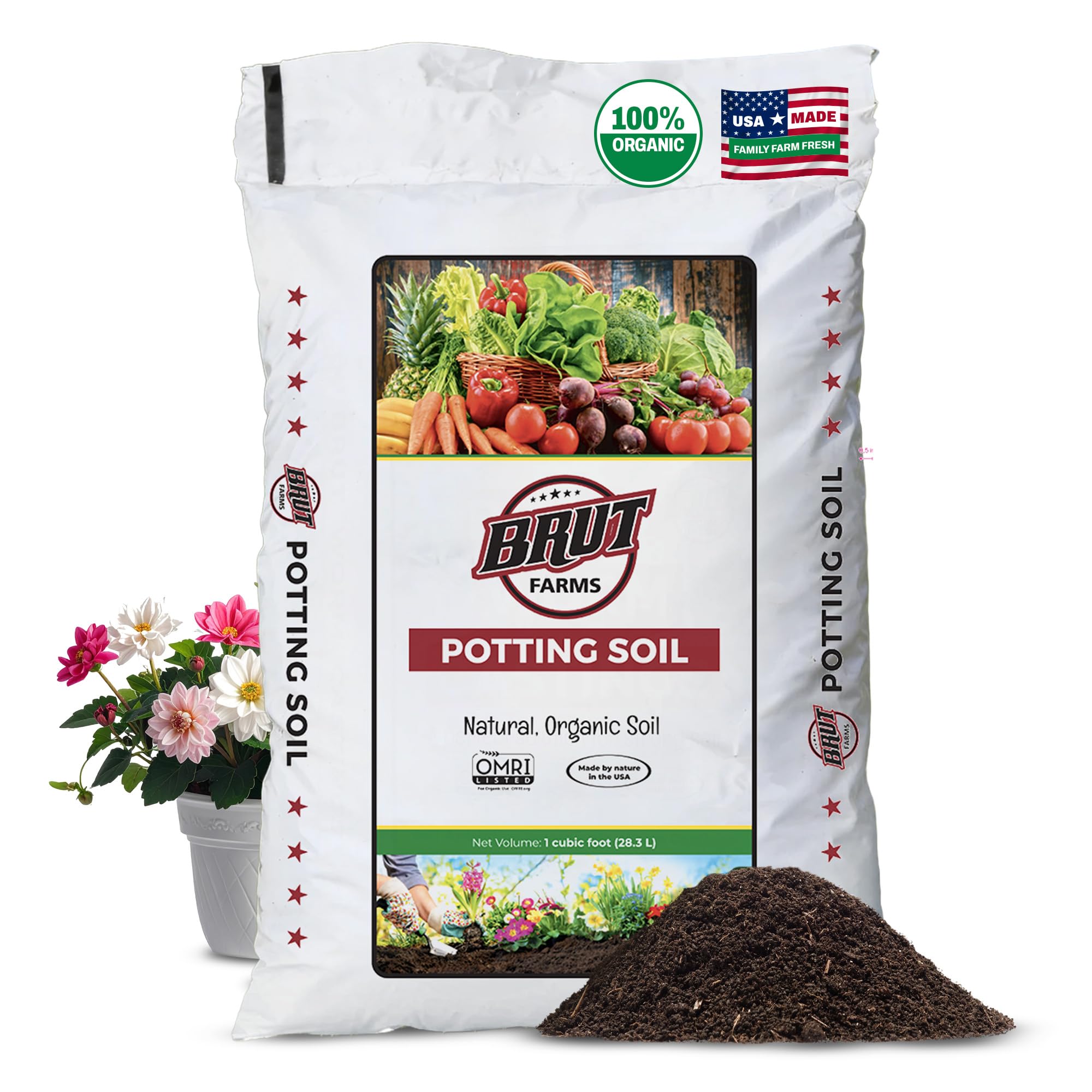
Brut Organic is the soil that ingredients-obsessed gardeners dream about. It combines microbe-rich worm castings with trace minerals from Azomite and kelp meal, all in a filler-free formula that contains no sticks, wood chips, or artificial additives. It is OMRI listed and has a naturally balanced pH between 6.3 and 6.5. The result is soil that owners describe as “hands down the best potting soil I’ve ever put my hands in.” The results are fast: one reviewer noted a citrus tree greened up and put on new growth within two days of repotting. At 21 quarts, it offers solid volume for the premium tier. The biggest recurring story is about shipping delays and bag damage during transit, which is a logistics issue, not a product flaw. The main product-specific caveat relates to its richness: the fish and bone meal content can attract flies if the soil is left exposed outdoors, though this is generally an owner-management issue. This is a top-tier organic performer.
The honest trade-off: The very richness that makes this soil so powerful (the worm castings and meals) can also attract gnats or flies if the bag is left open in warm conditions. A layer of sand or gravel on top of the pot solves this.
Ideal for: The serious organic grower who demands a completely filler-free, microbe-rich medium for raised beds, large containers, and valuable plants. The pH lock of 6.3-6.5 is a strong safety net.
Be prepared for: The price is higher than most, and the shipping experience has been inconsistent for some; order with a buffer on your planting schedule.
9. Miracle-Gro Moisture Control Potting Mix

The 2-cubic-foot workhorse that has been starting 500-700 seeds a year for one grower, for a decade.
Miracle-Gro’s Moisture Control formula is the volume king here, and its reputation is built on one thing: massive scale at a good price point. The bag holds 2 cubic feet of soil, enough to fill two 14-inch containers or start hundreds of seeds. The key feature is the AquaCoir Formula, which includes coir (coconut fiber) and a wetting agent to absorb up to 33% more water than basic potting soil and protect against both over- and under-watering. The results from thousands of owners are predictable: plants grow well, and the soil is fine-textured with few sticks. It feeds plants for up to 6 months. The honest downsides are the moisture control, which is a paradox: some owners find the soil stays “soaked for up to 8 days,” while others find it “terribly dry” on arrival. And despite the brand’s name, it is not an organic product; it contains synthetic fertilizers. If you are a budget-conscious grower who needs to fill a lot of pots, this is the most efficient way to do it.
The big advantages
- Absolutely massive bag—the best price per cubic foot in this lineup
- Moisture control works for busy gardeners who sometimes miss a watering day
- Fine, consistent texture good for seed starting
What to know
- Contains synthetic fertilizer; not suitable for strict organic gardening
- Moisture control can be too effective in plastic pots, increasing rot risk; use with well-draining containers
- Bag is very heavy (40.5 lbs) and can be a chore to move
Grab this for: Massive container gardens, landscaping projects, or high-volume seed starting where cost per quart is the primary driver. The 2 cu. ft. bag is a serious value.
Look elsewhere if: You need an organic, chemical-free mix for your vegetable garden or want a soil with more premium, natural ingredients.
Understanding the Specs
Drainage vs. Moisture Retention
This is the scale between two extremes that determines a soil’s personality. Drainage refers to how fast water flows through the pot, preventing roots from sitting in moisture that leads to rot—perlite, pumice, and sand all promote drainage. Moisture retention is the soil’s ability to hold onto water so the plant can drink over time, which is the job of sphagnum peat moss, coco coir, and vermiculite. A good mix finds a balance for your specific plant: succulents and cacti need a sharp drainage bias, while ferns and moisture-loving vegetables need a bias towards retention. A bag that is all one or the other will kill your plants—either through rot or dehydration.
Organic vs. Synthetic Nutrients
Organic mixes use composted plant and animal matter (compost, worm castings, alfalfa meal, kelp meal, bone meal) to provide a slow-release food source for the plant. These feeds rely on soil microbes to break them down into plant-available forms, which creates a healthier living soil ecosystem. Synthetic mixes, like the Miracle-Gro formula, use water-soluble chemical salts that the plant can absorb immediately. This gives faster, more predictable results for many growers, but it does not feed the soil biology and can potentially build up salts that damage roots over time. Your choice depends on whether you prioritize a living, organic system or immediate, measurable growth.
The Role of Perlite, Pumice, and Vermiculite
These are the little “ingredients” you can see in a bag of potting mix, and each does a specific job. Perlite is the white, popcorn-like volcanic glass that physically opens up the soil, creating air pockets for roots to breathe and water to drain. It is lightweight and stays put in the mix. Pumice serves the same drainage role as perlite but is heavier and less prone to floating to the top of the pot. Vermiculite is the shiny, accordion-like brown mineral that acts like a sponge, holding water and nutrients for the plant to access later. A mix with all three (like the Midwest Hearth) is unusually well-rounded, offering both drainage from perlite and moisture storage from vermiculite.
pH: The Plant’s Sense of Taste
pH measures how acidic or alkaline the soil is. Most container plants and vegetables thrive in a slightly acidic range of 6.0 to 7.0, where key nutrients like nitrogen, phosphorus, and potassium are most soluble and available to the roots. When the pH is too low (acidic) or too high (alkaline), the plant effectively can’t “taste” its food, even if the fertilizer is present in the soil. Premium mixes like the Brut Organic state a precise pH range (6.3-6.5) on the bag, taking the guesswork out of the equation. Cheaper soils often omit this information, meaning you are buying a bag of “maybe.”
FAQ
What is the difference between potting soil and garden soil?
How do I prevent fungus gnats from a new bag of potting soil?
Is “high quality” potting soil worth the extra money compared to budget brands?
What does “OMRI listed” mean on a bag of potting soil?
Can I reuse potting soil from last year?
Which potting soil is best for starting seeds?
What does “filler-free” mean in potting soil, and why does it matter?
The bag says “feeds for 6 months.” Do I still need to fertilize?
Final Thoughts: The Verdict
For most container gardeners, the best bag of high quality potting soil you can buy is the Coast of Maine Bar Harbor Blend. Its blend of lobster meal and kelp meal provides a unique, slow-release nutrient profile that plants clearly love, and its consistent 4.8-star rating from a large pool of owners speaks volumes about its performance across vegetables, flowers, and houseplants. If your priority is a completely bug-free, reliable indoor mix, the Perfect Plants Indoor Soil is the clear winner. And for massive volume while staying affordable, the Miracle-Gro Moisture Control in a 2 cu. ft. bag is the most efficient tool for the job, especially for high-volume seed starting or landscaping. Your plants’ roots will know the difference.
How We Picked
We do not accept paid placement. Every pick is matched to a real buyer and a real use-case; we do not hands-on test units.
Sources & Methodology
Specifications: manufacturer listings and product documentation. Review insights: verified customer reviews, as of July 2026. Pricing: not shown on this page (it changes often); check the current price via the retailer link.
As an Amazon Associate, Lawn Gear Lab earns from qualifying purchases. This does not affect which products we feature.