
Specs are compiled from manufacturer listings and verified buyer reviews and can change over time — please confirm the key details on the product page before buying.
Throwing down plain grass seed on a slope is like tossing money into the wind. A heavy rain or a strong gust can send every seed into a puddle or a gutter before the roots ever get a foothold. A lawn grow mat acts like a protective blanket that locks seed, soil, and moisture together while the grass establishes itself.
I’m Rikta — the founder and writer behind Lawn Gear Lab. This guide is built by comparing the manufacturers’ published specifications and the patterns across verified customer reviews, so you get each pick’s real strengths and trade-offs instead of marketing spin.
Whether you are patching a bare spot on a flat lawn or armoring a 2:1 slope against erosion, the right lawn grow mat delivers reliable grass without the guessing game.
Our Picks at a Glance


How To Choose The Best Lawn Grow Mat
A lawn grow mat is not just a piece of fabric. It is a temporary soil armor that must match your terrain, seed type, and access to water. Get these three things right and your grass will establish itself with almost no daily effort.
Check Mat Material and Biodegradability
Jute, excelsior wood fiber, and straw are the most common natural options. Jute is a woven burlap-like fabric that holds up for a full growing season and then rots into the soil. Excelsior (aspen or wood fiber) is a curly fiber blanket held together by a plastic net that degrades later. If you want zero plastic removal, look for 100% biodegradable jute.
Match the Mat to the Slope
A gentle slope (3:1) can get away with a lightweight jute blanket. Steeper ground, like a 1.5:1 grade or a drainage channel, needs a double-netted excelsior mat built for high water flow. Check the manufacturer’s slope rating so the mat does not lift under a heavy storm.
Seed-Included vs. Blank Cover Mats
Some mats come with seed and fertilizer baked in. These are convenient for quick patches but restrict you to the grass blend in the roll — usually a warm-season or cool-season mix. A blank erosion blanket lets you choose your own seed blend, which matters if your yard gets deep shade or heavy foot traffic.
Quick Comparison
| Model | Best For | Material | Coverage | Slope Rating | Amazon |
|---|---|---|---|---|---|
| AK TRADING CO. Jute Mesh★ Best Overall | General slopes + erosion control | 100% Natural Jute | 120 sq ft | Gentle to moderate | Amazon |
| Jonathan Green SeedRollBest All-In-One | Cool-season bare spot repair | Seed + Fertilizer + Mulch | 50 sq ft | Gentle | Amazon |
| Dalen Grass Fast CoverBudget Champion | Seed protection on flat ground | Natural Fiber Fabric | ~166 sq ft | Gentle | Amazon |
| Petramax ReadyRoll Bermuda | Quick warm-season patches | Seed + Mulch + Fertilizer | 54 sq ft | Gentle | Amazon |
| American Excelsior QuickGrass Pro | Seed protection on slopes | Green Wood Fiber + Plastic Net | 200 sq ft | Moderate | Amazon |
| Growtrax Tall Fescue Mat | Large-area grass establishment | Seed + Fertilizer + Bio Fabric | 200 sq ft | Moderate | Amazon |
| Curlex II Erosion Fabric | Steep slopes + high water flow | Excelsior + Plastic Net (both sides) | 450 sq ft | Up to 1.5:1 | Amazon |
| Dewitt Aspen Fiber Blanket | Large slope coverage + seed retention | Aspen Wood Fiber + Plastic Net | 450 sq ft | Moderate | Amazon |
| Mutual Industries Jute Mesh | Steep bank erosion control | 100% Jute | 900 sq ft | Up to ~2:1 | Amazon |
In‑Depth Reviews
1. AK TRADING CO. SoilSaver Jute Mesh Blanket (10 Yards)
Our pick — 4.5★ from 200+ verified ratings; the strongest balance of quality and price.
The workhorse jute blanket that keeps soil put on steep banks for a full season and then vanishes.
This is the purest form of a lawn grow mat: a roll of 100% natural jute fibers that is 48 inches wide and 10 yards (30 feet) long, giving you 120 sq ft of coverage. Because there is no seed or fertilizer built in, you get full control over what you sow — and the mat acts purely as armor. The loose weave leaves roughly 2-inch holes that let rain and sunlight through while the jute fibers trap any loose soil particles underneath. Buyers report pulling this over a repaired culvert and a steep eroding hillside with heavy rain results that kept both the blanket and the bare soil locked in place.
The most-discussed trait is the material itself. The jute construction earns consistent praise for toughness — owners mention that after a full year of chicken scratching and weather, the blanket does not tear. It does carry a temporary kerosene-like smell right out of the package, though that fades after the first few waterings. The real appeal is the honesty of the design: jute is meant to break down over 2 to 3 seasons, and as one owner put it, that is exactly what it should do once your ground cover is established.
What owners trust most
- Jute weave survives a full year of weather and chickens without tearing
- Natural and organic material degrades on schedule after grass establishes
- Easy to install with 6-inch pins every 12 to 18 inches on steep sections
The honest trade-off
- Noticeable kerosene smell when first unrolled (fades with water)
- Loose 2-inch holes mean fine sand or silt can still wash through on extreme grades
- Price feels high to some for what is essentially woven plant fiber
The slope stabilizer: Reach for this when you need a tough, natural blanket that holds soil on a moderate grade and biodegrades without a trace.
Not ideal for: Anyone who wants a pre-seeded mat or expects immediate germination — you must supply your own seed and watering schedule.
2. Jonathan Green Black Beauty SeedRoll (50 Sq Ft)
A cool-season grass seed mat that handles bare spots and hills with zero guesswork.
The SeedRoll is an all-in-one system: Black Beauty Ultra grass seed (a blend of tall fescue, perennial rye, and Kentucky bluegrass), a starter fertilizer, and a biodegradable mulch layer all pressed into a single 50-square-foot roll. The mat is thin enough to cut with scissors or tear by hand, so shaping it around an irregular patch takes seconds. The manufacturer says it works best when laid in mid-August to mid-October or mid-March through mid-May, which matches the cool-season growth window. Owners who followed the watering instructions (a delicate spray to keep it moist) report successful germination on hillsides where loose seed had always washed away.
The catch is that this mat demands perfect moisture management. Several owners found that the paper-like fabric tears up quickly if it dries out even once, and the germination rate plummets if the soil underneath was too compacted. The negative feedback centers on the fabric dissolving before the roots have a chance to anchor — one buyer described it as “a weak product” that left bare patches. For the price, the SeedRoll is a solid bet for small cool-season patches, but a scorching week or a missed watering session can wipe out your investment.
What it does right
- Conceals seed from birds and prevents washout on gentle slopes
- Contains drought-tolerant Black Beauty Ultra seed blend for sun or shade
- Easy to cut and shape without tools
Where it falls short
- Mat dissolves quickly if moisture is inconsistent
- Only 50 sq ft of coverage — not enough for large lawn projects
- Germination is hit or miss on compacted or sloped soil
The patch-first solution: Choose this for small bare spots in a cool-season lawn where you want seed and fertilizer in one step.
Better to skip if: Your ground has heavy clay compaction, or you cannot commit to twice-daily watering for the first couple of weeks.
3. Dalen Grass Fast Lawn Seeding Cover 40×50 ft
A lightweight, reusable fabric cover that traps heat and moisture without any seed commitment.
Unlike the jute and wood-fiber mats that degrade into the soil, the Dalen Grass Fast cover is a woven fabric designed to be removed after germination. At 40 inches by 50 feet, it gives you roughly 166 square feet of protective coverage over freshly sown seed. The key job here is trapping heat and moisture underneath to speed up germination while shielding seed from birds and wind. Owners mention that it works well for starting fescue in difficult, shady spots and that the fabric is light enough to handle easily yet durable enough to be reused for multiple seasons.
The recurring advice from owners is that removal requires two people — one to lift the fabric and another to avoid uprooting tender seedlings. A smaller number of buyers experienced no germination at all, describing a scenario where the fabric seemed to block water from reaching the soil after a week. That one-way water issue seems to be the main reason some patches failed. If you choose this cover, the trick is to remove it before the fabric forms a dry barrier and to keep the soil consistently damp underneath.
A reusable workhorse: Best for flat or gently sloped areas where you want a temporary, reusable seed blanket rather than a biodegradable mat. The lightweight fabric is easy to handle but demands careful removal.
4. Curlex II Erosion Control Fabric (4ft x 112.5ft)

The double-netted excelsior blanket built to withstand high-water channels and the steepest residential grades.
Curlex II is an excelsior (wood fiber) blanket with extruded plastic netting on both sides, making it one of the toughest lawn grow mats you can buy without heavy equipment. The manufacturer rates it for slopes up to 1.5:1 and channels with flow velocities up to 9 fps — that is serious water management. The 4 x 112.5-foot roll covers 450 square feet and weighs roughly 0.73 pounds per square yard, so while it is dense, it is still manageable for two people to unroll. Owners consistently mention that the mat stays put during heavy rain on steep slopes without shifting or tearing.
What owners appreciate most is grass growth that emerges right through the blanket. The curled excelsior fibers trap moisture and shade the seed, and the double netting prevents birds from scratching up the soil. The downside? It is expensive for a single-use blanket. The same owners who praise its durability also note the cost as a con. You will also need a lot of staples — several buyers recommend steel staples every few feet along the edges to keep the mat flush against the ground. For a steep ditch bank or a hillside that takes the full force of a storm, this is the one that does not budge.
High-slope insurance: Perfect for grades of 2:1 or steeper where lightweight jute would lift. The double netting is overkill for a flat lawn but genuinely useful for a drainage swale or a steep bank.
5. Mutual Industries Jute Mesh Blanket (225ft x 4ft)

A 900-square-foot jute blanket that delivers the lowest cost per square foot among natural-fiber options.
At 225 feet long and 4 feet wide, the Mutual Industries jute mesh blanket covers 900 square feet — more than seven times the coverage of the AK TRADING jute mat. The material is 100% jute, fully biodegradable, and lightweight enough for one person to unroll if you take it slowly. Customers note using it on steep driveway banks with slopes in the 20 to 25 percent range. They scatter seed and a light layer of straw underneath, pin the jute down with 6-inch landscape staples every 24 inches, and see grass emerge within a couple of weeks.
The weave is strong but flexible — you can shift individual strands to plant without cutting and compromising the blanket’s integrity. Buyers also note the lack of any strong smell, unlike some other jute rolls. The trade-off is that you need to supply your own seed, fertilizer, and pins. This is a blank canvas for large-scale projects: patching a long roadside bank or covering a new build pad where erosion is a concern. If you are working with a budget and a big slope, this is the most square footage per dollar.
Why owners pick it
- 900 sq ft of coverage at a reasonable per-foot cost
- Fully biodegradable jute with no plastic netting to remove
- Flexible weave lets you plant through it without cutting structural integrity
The catch
- No seed, fertilizer, or pins included — a separate purchase
- Jute breaks down in 2-3 seasons; not for permanent ground coverage
- Heavier to transport than smaller rolls
The large-area solution: Best when you are seeding a long driveway bank or a sloped lot and want to cover a lot of ground without a high per-roll price.
Not for: Small patch repairs or anyone who needs a pre-seeded mat — plan on buying seed and staples separately.
6. Dewitt Aspen Wood Fiber Blanket (4 x 112.5 ft)
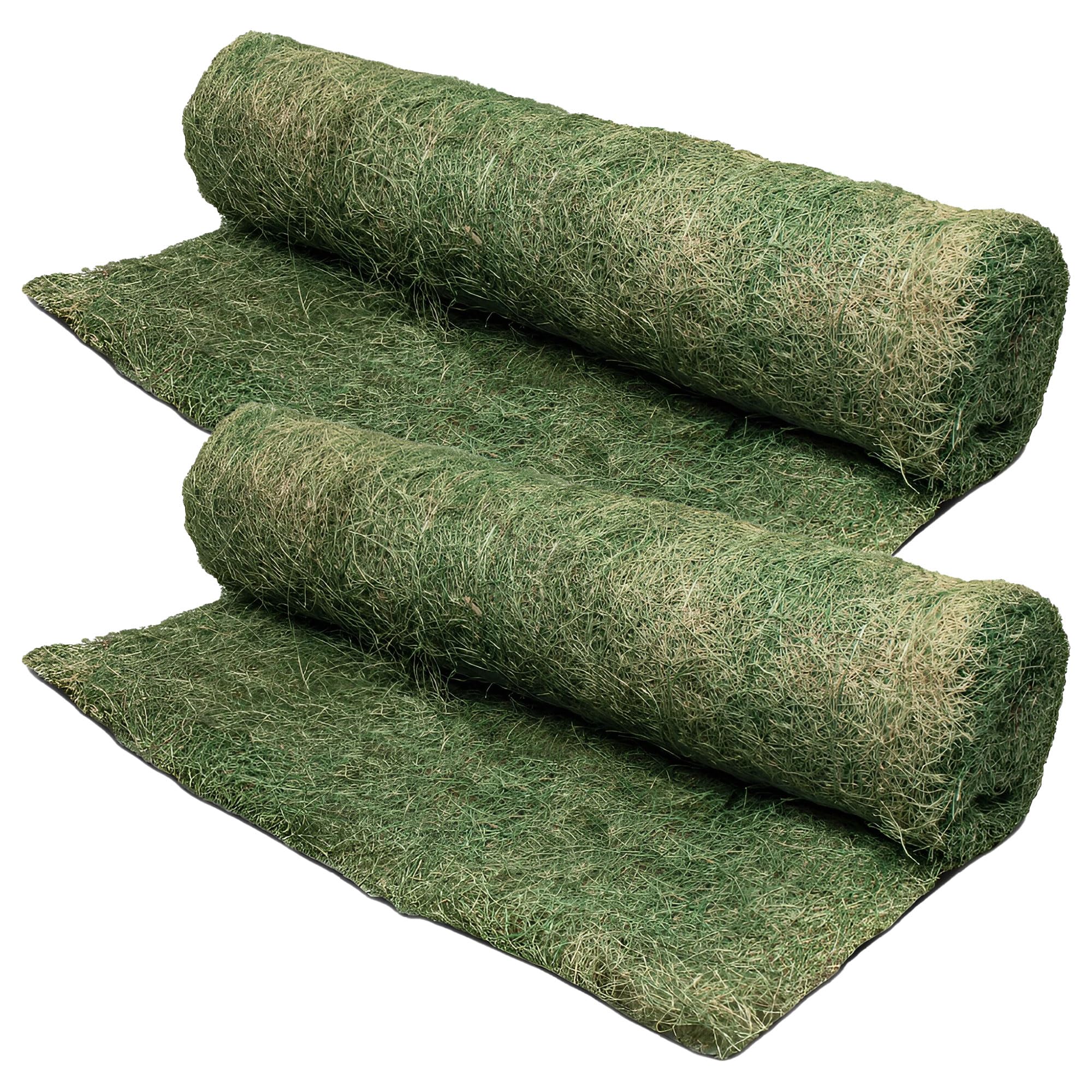
A thick aspen excelsior blanket dyed green for instant cosmetic appeal on new construction slopes.
The Dewitt blanket is made from natural curled aspen wood fibers held together by a photodegradable single top net. Each roll is 4 feet by 112.5 feet (450 square feet), and the green dye gives it a finished, landscaped look the moment you unroll it — a nice touch if the mat will be visible from the house for a few weeks. Owners consistently say it excels on sloped lawns and knolls where bare seed had always failed. The thick fiber layer holds moisture so effectively that one owner reported dropping watering from two 20-minute sessions to a single 15-minute daily soak.
The aspen fibers are breathable, so grass and even hostas push through without issue. The criticism depends on two things: the photodegradable top net does not always break down completely, and the rolling quality varies between rolls in the same pack. One roll might unroll in seconds while the next is tangled and requires cutting. For the price, the Dewitt performs well on moderate slopes and large patches, but the variability in manufacturing means you might wrestle with a second roll.
Slope-friendly fiber blanket: A strong pick for a sloped front yard where you need erosion control and an attractive green appearance while the seed establishes. The net might not biodegrade fully, so plan to remove it after the grass is up.
7. American Excelsior QuickGrass Pro (4×50 ft)

A weed-seed-free erosion blanket that lets you use your own custom seed blend on slopes and channels.
The QuickGrass Pro is a green-dyed wood fiber blanket with a single plastic net, covering 200 square feet at 4 feet by 50 feet. The standout feature is that it contains no grass or weed seed at all — it is purely a protective cover. That is a big advantage if you have a specific seed blend in mind or need to match an existing lawn variety. The blanket enhances germination by holding moisture close to the soil and shielding seed from birds and direct sun. Buyers who used it on a hill after a yard crew stripped the topsoil report solid grass growth that held the hillside.
The plastic netting is the main durability component, but it also creates the biggest headaches. Owners describe unrolling as tricky — the end folds can tangle, and one buyer found a second roll wound so tight it was unusable. The plastic fibers also shed small straw-like pieces that stick to shoes and get tracked indoors. On the plus side, the blanket controls mud effectively, keeps dogs and kids from tracking dirt into the house, and works as both a temporary erosion cover and a permanent seed germination aid. Just budget time for the unrolling process.
What it delivers
- Weed-seed-free — no unwanted grass or weed species introduced
- Good water retention that supports seed germination in summer heat
- Can be used as temporary mud control before planting
The hassle
- Plastic netting unrolling can be a nightmare on some rolls
- Sheds small plastic straw pieces that stick to shoes and pets
- Must buy seed separately
Custom-blend friendly: Ideal for anyone who wants a blank, seed-free blanket to use with their own high-quality grass seed. The unrolling struggles and plastic shedding make it a patient DIYer’s tool.
8. Petramax ReadyRoll Bermuda Grass Seed Mat (54 Sq Ft)
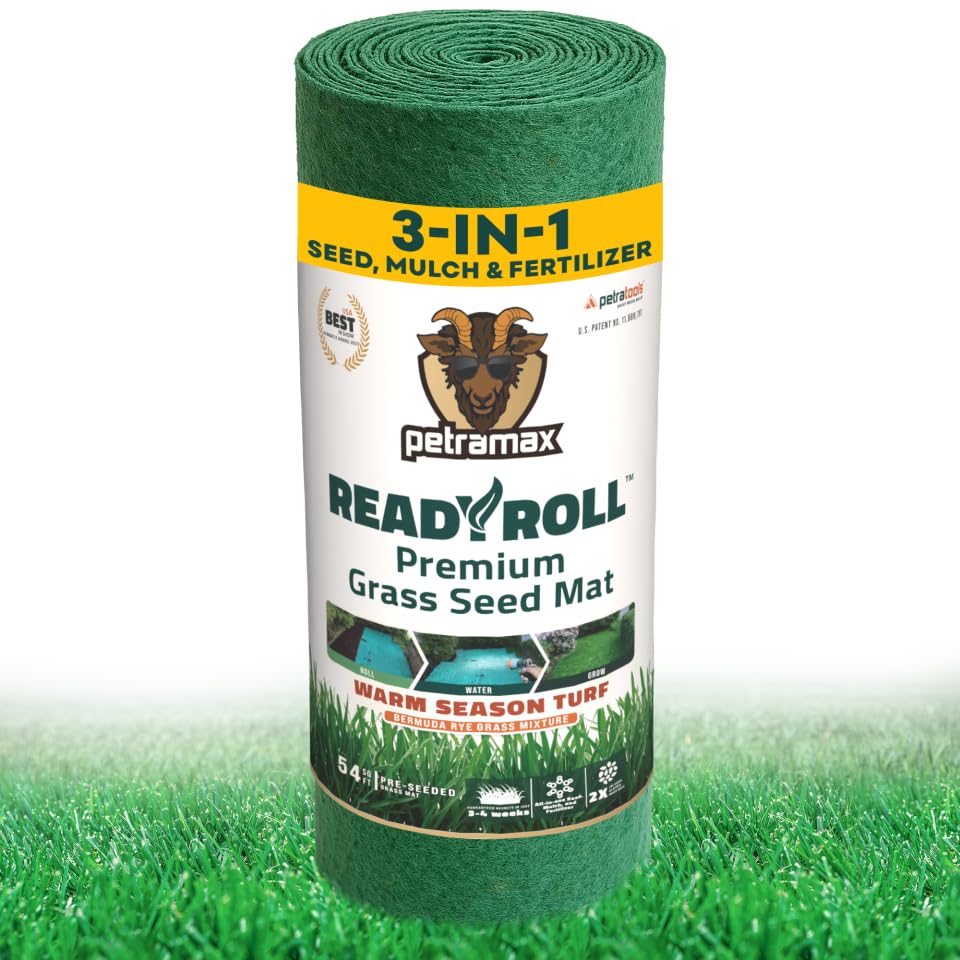
A pre-seeded Bermuda and perennial rye blend that claims double seed density for warm-season yards.
Petramax ReadyRoll combines Bermuda grass seed, mulch, and a starter fertilizer in a single biodegradable fiber mesh. The manufacturer packs in double the seed density compared to standard rolls, aiming for thicker coverage in less time. The mat is designed for full sun and the warm-season growing window (spring through fall). Owners who followed the extremely high watering recommendation — the instructions call for 3 to 4 waterings per day for the first 3 weeks — did see germination, with one buyer praising it for finally growing grass on sandy soil that had defeated every other method.
However, the customer consensus is clear that germination is unreliable. Several reviewers point out that after a month of twice-daily watering, nothing sprouted at all. One buyer described seeds stuck in the green material, failing to grow even after three days of continuous rain. The mat also seems to be sensitive to how the fabric breaks down — if the fiber mesh does not dissolve quickly enough, the seed stays trapped. This mat works only under ideal conditions: full sun, sandy or loamy soil, and a near-obsessive watering routine. For any less, the risk of failure is significant.
High-risk, high-water warm-season option: This mat can work on sandy, hot slopes if you are ready to water three times daily. Inconsistent germination reports make it a gamble for the average homeowner.
9. Growtrax Biodegradable Tall Fescue Seed Mat (200 Sq Ft)
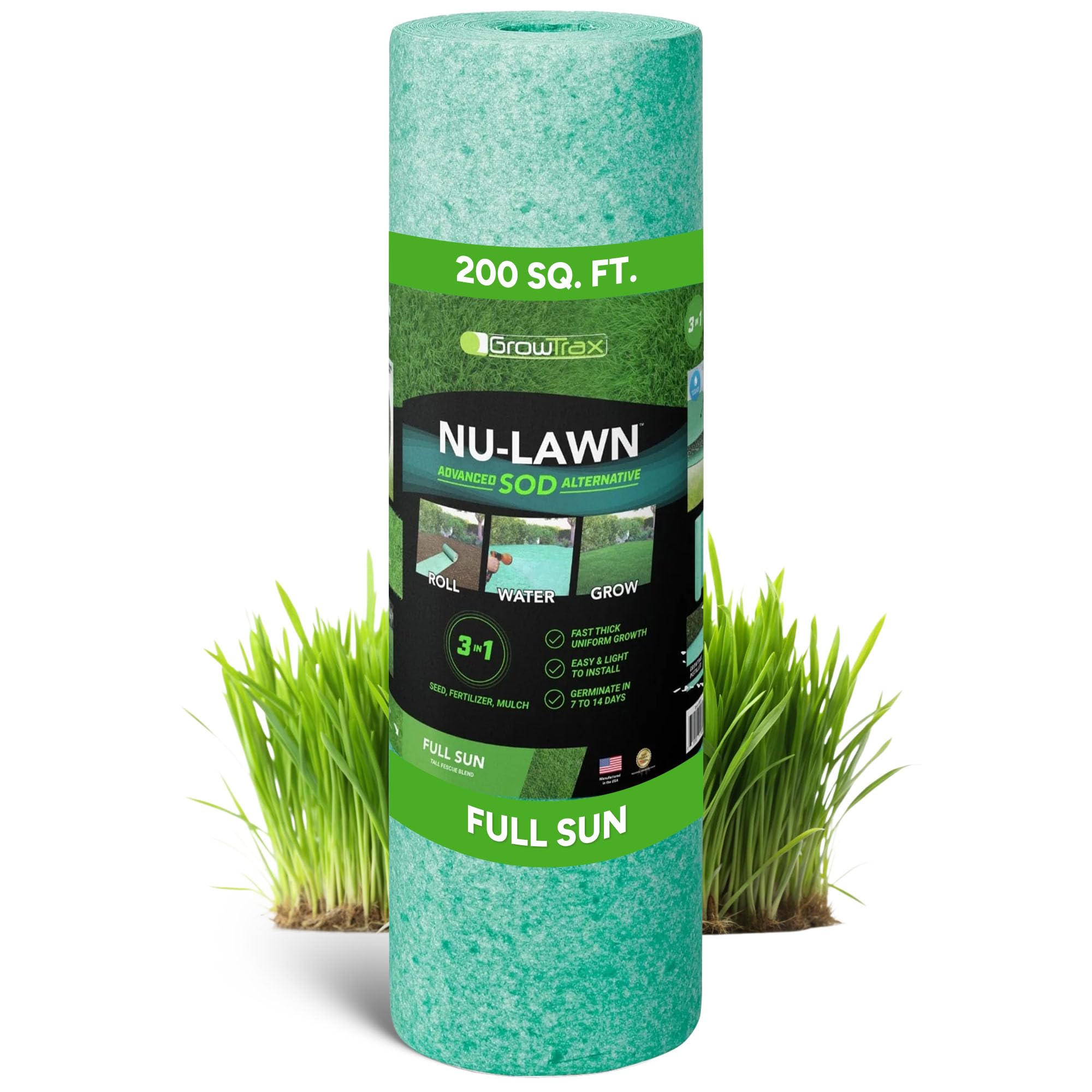
A large-format tall fescue mat that promises a whole-lawn solution but delivers mixed results.
Growtrax covers 200 square feet with a tall fescue blend (Stingray, Naturally Green, and Titanium 2LS) embedded in a bio-fabric that the maker claims holds up to six times its weight in water. The idea is you roll it out over a prepared area, water it, and the built-in nutrients and moisture retention give you a full lawn without loose seed. The blend is suited to warm and transition zones and is described as wear-resistant and drought-tolerant. Some owners saw germination in as little as 9 days, producing lush coverage on a 15-degree slope that survived 90°F heat and a month-long drought.
The flip side is that a large number of shoppers say zero germination, even with consistent sprinkler watering. The mat tears easily in wind, and its lightweight construction means it can blow away if not pinned down well. Several owners who had initial success found that the following season the Growtrax areas produced more weeds than the rest of the yard combined. The value proposition is also questioned — at this price point, the inconsistent germination rate makes it a risky bet. It works beautifully in some conditions and fails completely in others, with no middle ground.
When it works
- Germination can occur in 9 days with good moisture management
- Drought-tolerant tall fescue blend suitable for transition zones
- Full 200 sq ft coverage in a single roll
When it fails
- Many buyers report zero germination despite proper preparation
- Lightweight mat tears easily in wind and requires heavy pinning
- Some users saw heavy weed growth the following season
The gamble: Growtrax can deliver a fast, lush lawn under ideal conditions — but it is an inconsistent product. If you try it, pin it down thoroughly and never let the mat dry out during the first few weeks.
Understanding the Specs
Mat Material: Jute vs. Excelsior vs. Synthetic
The material determines how long the mat lasts and how it behaves. Jute is a woven natural fiber that is soft and flexible, fully biodegradable within 2-3 seasons. Excelsior (curled wood fiber) is thicker, holds more moisture, but often uses a plastic net that needs removal. Synthetic fabrics (like the Dalen cover) are reusable but must be pulled up after germination. Choose jute for gentle slopes where you want zero cleanup, excelsior for steep or high-flow areas, and synthetic for temporary seed protection.
Seed-Embedded vs. Blank Mats
Some mats come with seed and fertilizer baked into the fabric (like Jonathan Green and Growtrax). That saves you a step but locks you into the included grass blend. Blank mats (like AK TRADING jute or Curlex II) let you seed whatever variety your climate and usage demands — tall fescue for shade, Bermuda for sun, or a custom mix. If you are patching an existing lawn, a blank mat gives you the best chance of a smooth match.
Slope Rating and Flow Velocity
Not all mats are rated for steep ground. A lightweight jute blanket works fine on a gentle 3:1 slope but can lift on a steeper grade. Curlex II is rated for slopes up to 1.5:1 and water flow up to 9 fps. If your project involves a drainage channel or an embankment that channels runoff, choose a mat with a certified slope rating. On flat ground or a mild grade, almost any blanket will work.
Coverage Area and Roll Dimensions
Coverage is the real decider on cost. A 50 sq ft mat is fine for a single bare spot. A 450 or 900 sq ft roll suits a full slope or a large new-lawn area. Check the roll width — 4 feet is standard for most blankets — and think about how you will transport it. An 80 to 100-pound roll like Curlex II fits in a pickup truck, while a 900 sq ft jute roll is lighter but bulky.
FAQ
Do I need to remove a lawn grow mat after the grass grows?
How often should I water a lawn grow mat?
Will a lawn grow mat prevent all weeds?
Can I use a lawn grow mat on a 2:1 slope?
How long does a biodegradable lawn mat take to break down?
Should I use a seed-embedded mat or a blank mat and seed separately?
Can a lawn grow mat stop birds from eating my grass seed?
What size staples should I use to pin down a lawn grow mat?
Final Thoughts: The Verdict
For the majority of shoppers, the lawn grow mat winner is the AK TRADING Jute Mesh Blanket because it combines proven erosion control with an all-natural material that vanishes after the grass establishes. If you want a pre-seeded cool-season mat for a small bare patch, grab the Jonathan Green SeedRoll. And for large, steep slopes or drainage channels where water flow threatens to wash everything away, the Curlex II is the one to reach for.
How We Picked
We do not accept paid placement. Every pick is matched to a real buyer and a real use-case; we do not hands-on test units.
Sources & Methodology
Specifications: manufacturer listings and product documentation. Review insights: verified customer reviews, as of July 2026. Pricing: not shown on this page (it changes often); check the current price via the retailer link.
As an Amazon Associate, Lawn Gear Lab earns from qualifying purchases. This does not affect which products we feature.