
Specs are compiled from manufacturer listings and verified buyer reviews and can change over time — please confirm the key details on the product page before buying.
If your lawn feels spongy underfoot or water puddles instead of soaking in, the soil is telling you it is suffocating. A lawn aerator rake is the tool that punches through that hard layer so air, water, and fertilizer can actually reach the roots where they matter. The right pick turns a back-aching chore into a straightforward weekend job — the wrong one leaves you wrestling with bent spikes or clogged tines halfway through the yard.
I’m Rikta — the founder and writer behind Lawn Gear Lab. This guide is built by comparing the manufacturers’ published specifications and the patterns across verified customer reviews, so you get each pick’s real strengths and trade-offs instead of marketing spin.
Whether you are fixing a patch of compacted clay by the driveway or giving the whole lawn a seasonal refresh, the best lawn aerator rake is the one that matches your soil type, your yard size, and your willingness to put a foot down.
Our Picks at a Glance

How To Choose The Best Lawn Aerator Rake
Every manual aerator does the same basic job — it pokes holes in the soil — but the difference between a tool that feels easy and one that leaves you exhausted depends on three things: the type of tine, the build quality, and the ergonomics. Here is what to look for.
Core Aerators vs Spike Aerators
The biggest fork in the road is whether the tool removes a plug of soil (core aeration) or simply pushes the soil aside (spike aeration). Core aerators use hollow tines that pull out a finger-sized plug, creating actual space for roots to spread and relieving compaction. Spike aerators use solid tines that punch a hole, but they can actually press the soil tighter around the hole — which works against your goal. If your soil is heavily compacted clay, a core aerator is almost always the better choice. Spike aerators are best for light maintenance on soil that is already in decent shape.
Tine Length and Thickness
You want tines long enough to reach below the thatch layer and into the root zone. Look for a tine length of at least 2.75 inches; 3.5 inches is better for hard or dry soil. Thicker tines (around 0.5 inches in diameter) create larger holes that stay open longer, letting more air and water through. Thinner tines punch a smaller hole that might seal back up faster in heavy clay.
Foot Plate and Handle Comfort
Your body weight does the hard work, so a wide, non-slip foot plate lets you drive the tines in without your foot slipping off. A handle height around 36 to 42 inches lets you stand upright while you work, saving your lower back from bending. Padded or rubberized grips prevent blisters when you are doing a whole lawn in one session.
Quick Comparison
| Model | Best For | Tine Type | Tine Length | Tine Count | Amazon |
|---|---|---|---|---|---|
| Manual Core Aerator (LawnVigor)★ Best Overall | Best Overall / Core Aeration | Hollow (Core) | 3 in | 3 | Amazon |
| Landzie Hollow & Spike Tine SetMost Versatile | Most Versatile / Dual-Purpose | Interchangeable Hollow & Spike | — | 3+3 | Amazon |
| Colwelt Grass Spike AeratorDeep Reach | Longest Tines for Compacted Soil | Spike (Solid) | 3.5 in | 4 | Amazon |
| Jardineer Updated Spike Aerator | Best Value for Small Lawns | Spike (Solid) | 2.75 in | 12 | Amazon |
| Dolibest Coring Aerator (4 Corer) | Best Premium Core Aerator | Hollow (Core) | 3.5 in | 4 | Amazon |
| Dolibest Coring Aerator with Tray | Built-in Core Collection | Hollow (Core) | — | 4 | Amazon |
| Lawn Aerator with Core Tray (MEIIOFS) | Handy Core Storage Tray | Hollow (Core) | — | — | Amazon |
| seasky Spring-Loaded Aerator | Unique Spring Ejection | Spike (Solid) | 3 in | 15 | Amazon |
| Coopvivi Rolling Spike Aerator | Lightweight Spike Option | Spike (Solid) | — | 15 | Amazon |
In‑Depth Reviews
1. Manual Core Aerator Lawn Tool (LawnVigor)
Our pick — 4.5★ from 250+ verified ratings; the strongest balance of quality and price.
The core aerator that actually pulls 3-inch plugs without a fight.
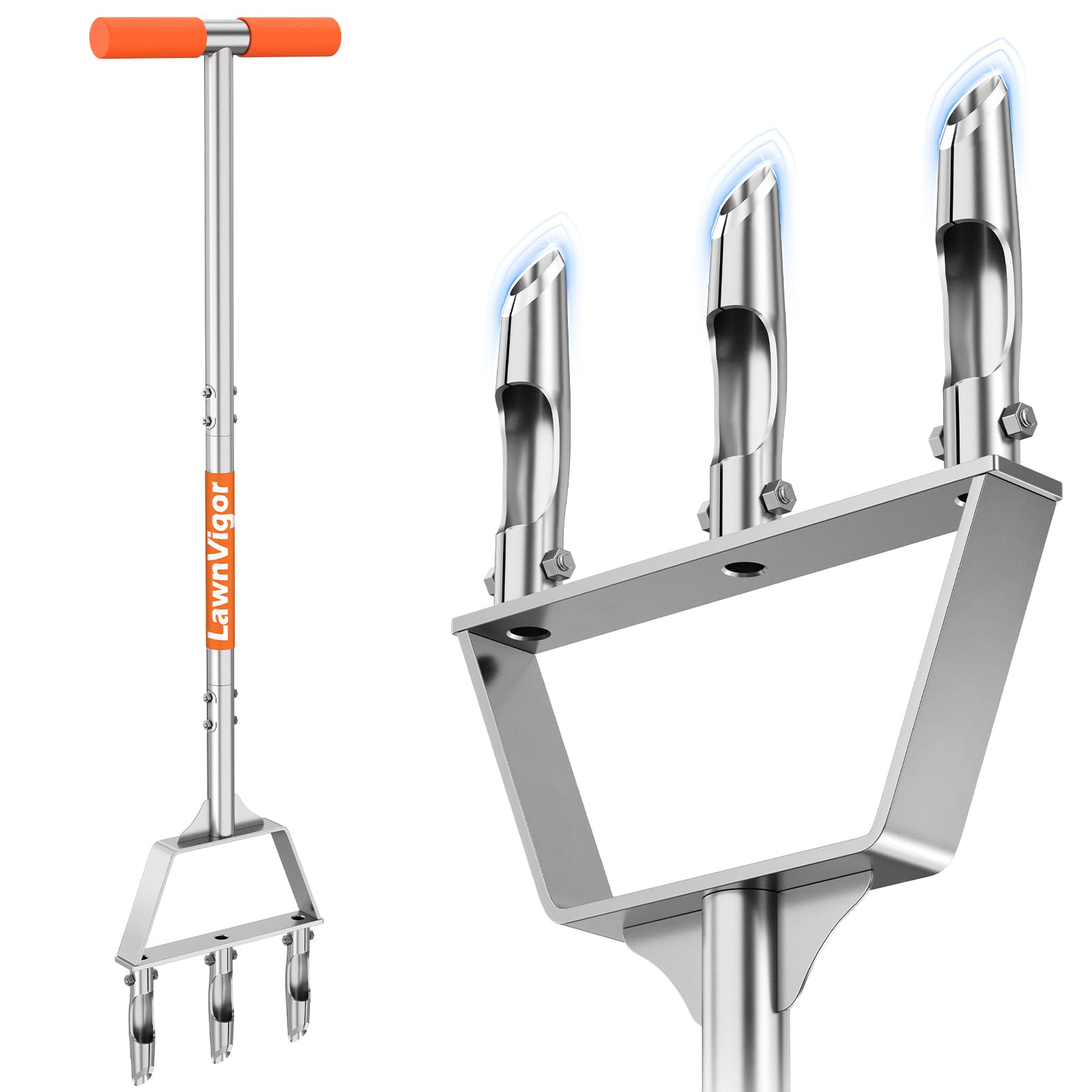
If you have compacted soil — the kind where water just sits on top — you want a tool that removes a plug, not one that just pokes a hole. This LawnVigor aerator uses three heat-treated hollow tines that cut into the ground and lift out a finger of soil, giving roots the actual breathing room they need. A buyer on compacted Bermuda grass called the results immediate.
The semi-assembled setup takes about five minutes, and the foot bar provides enough leverage that most people do not struggle to drive the tines in. At 3.52 pounds, it is light enough to carry from spot to spot but heavy enough to feel solid underfoot. The hang-up mentioned most is that the handle covers can loosen — a dab of adhesive solves it. A few owners note that the grip can cause blisters even with gloves, so vary your hand position as you work.
Manual core puller
- Pulls 3-inch plugs consistently without the tines clogging — buyers report it outperforms cheaper versions handily.
- Easy assembly (about 5 minutes) and the built quality feels sturdy for years of use.
Requires arm strength
- Not a tool for a massive lawn; ideal for small to medium areas where you want to do the job right.
- Handle covers can shift during use — a quick fix with adhesive keeps them in place.
Reach for it if: you need to actually relieve soil compaction in a small-to-medium yard and want a core aerator that does not clog.
Look elsewhere if: you are covering a half-acre or more — a gas-powered rental will save your arms and your weekend.
2. Landzie Hollow & Spike Tine Lawn Aerator Set
Two aerators in one with a build that feels like a family heirloom.
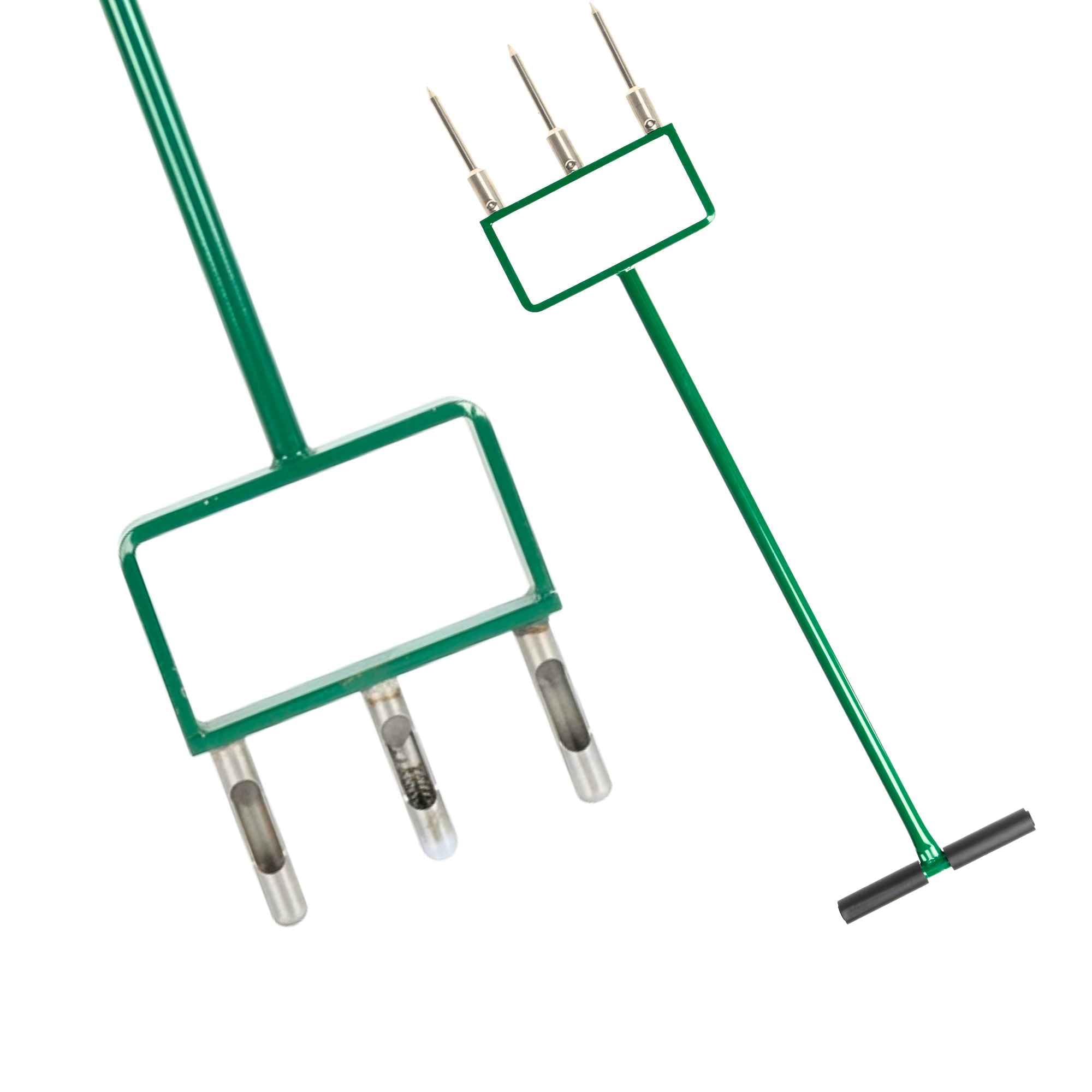
The Landzie is the only pick on this list that comes with both hollow core tines and solid spike tines in the box, and switching between them takes just a few screws. Use the hollow tines to pull plugs from compacted soil, then swap to the spike tines for lighter aeration or for breaking up the surface before the coring pass. Owners describe the build as “built like an absolute tank” — the 42-inch frame is powder-coated steel with a one-piece feel that does not wobble.
The crowd favorite detail is the sturdiness — the top aspect owners call out. One buyer used it on clay soil through a hail storm and said the holes remained after rain, proof of how deep the tines reach. At 6.3 pounds it is heavier than most manual aerators, but that weight helps it sink into tough ground without you bouncing off. The honest caveat: some find the price steep for a manual tool, and a few units have had tine durability issues, though the company replaced those quickly. It is not ideal for a full acre of lawn, but for targeted spot-aeration it is a standout.
Hollow and spike combo
- Interchangeable tines mean you get core and spike aeration in one tool — the combo approach gets better results on heavy soil.
- Build quality is exceptional; buyers describe it as a tool that will last a lifetime.
Heavy to maneuver
- Premium price point puts it well above other manual aerators; not a budget impulse buy.
- Heavier build (6.3 lbs) means it is more of a workout; not the lightest tool for quick touch-ups.
Best suited for: the lawn enthusiast who wants one do-it-all tool that can handle both coring and spiking without buying two separate implements.
Think twice if: you are on a strict budget or need the lightest tool possible for a very large area — the Landzie is an investment in quality, not in speed.
3. Colwelt Grass Spike Aerator
The spike aerator that sinks deeper than anything else in its class.
Most spike aerators ship with tines around 2.3 inches long and a skinny 1/5-inch diameter — fine for loose soil, laughable on hard clay. The Colwelt steps up with four spikes that measure 3.5 inches long and 2/5 inches in diameter, creating noticeably bigger holes with each push. For heavily compacted areas that a standard tool would just skid across, this extra reach makes the difference between productive aeration and frustrating bouncing.
The owners’ consensus is that it is practical for a 1,000-square-foot lawn, with one buyer finishing that size in about 90 minutes. The 38-inch height keeps your back straight, and the anti-slip foot plate (6 inches wide) accommodates boots or sneakers without slipping. A few people mention that the foot plate could be wider for better stability on very soft ground, but the overwhelming take is that the tool is sturdy, easy to assemble, and does the job well for a small to medium yard.
Spike design simplicity
- Longer, thicker spikes (3.5 in length, 2/5 in dia) create bigger holes than typical spike aerators, making it effective on tougher soil.
- Solid steel construction with a rust-resistant finish feels heavy-duty and well-built for years of use.
Compacts soil
- It is a spike aerator, not a core aerator — it pushes soil aside rather than removing a plug, which is less effective for severe compaction.
- Best on already-moist soil; dry, hard ground still takes significant effort to penetrate.
Choose this if: your lawn is small to medium and you want the longest, thickest spikes available in a manual tool for tackling compacted clay.
Pass on it if: you need actual core removal — for real soil relief, a hollow-tine aerator is the more effective route.
4. Jardineer Updated Spike Aerator
Twelve spikes working together for a fast pass over a small lawn.
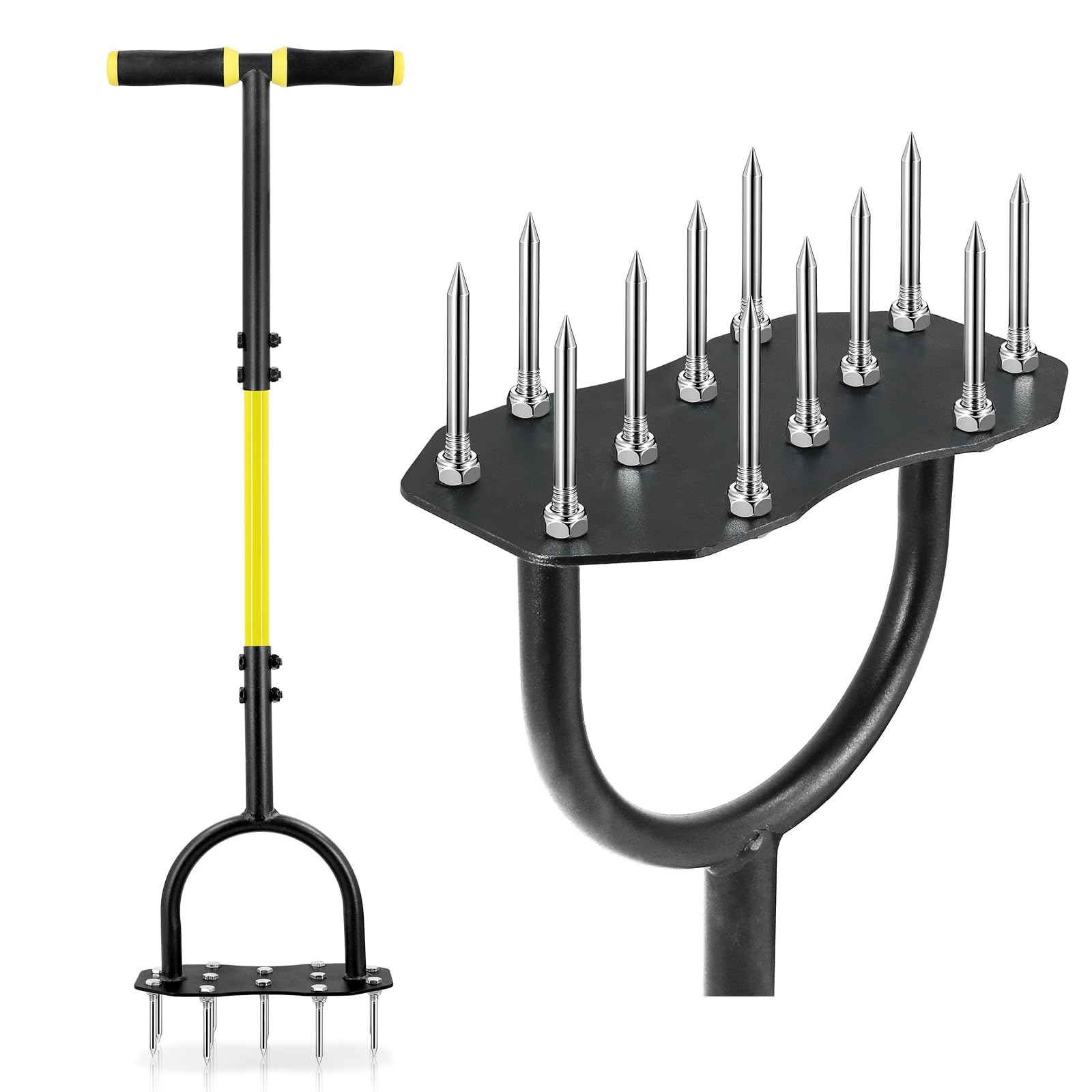
Instead of stepping on just three or four tines at a time, the Jardineer spreads your weight across 12 heat-treated steel spikes, each 2.75 inches long. That means a single push covers more ground, so a small yard gets done faster. The 36-inch handle keeps you upright, and the comfortable rubber grip is a real help if you have a few sections to do. It ships pre-assembled — you just attach the head and you are ready to go.
The most-discussed upside is how well it works for spot-seeding and light maintenance on clay, sand, and loam. Buyers like that spare spikes come included, because on the first use some people hit a rock and bent a tine — the replacements are there for exactly that reason. The recurring note is to water the lawn first; dry soil makes the job much harder and raises the chance of bending spikes. For a tool at this price point, the balance of coverage and ease is hard to fault.
Updated spike tines
- Pre-assembled design gets you aerating within minutes, no puzzling over instructions or digging for tools.
- 12 spikes at once means faster coverage on small lawns compared to 3- or 4-tine tools.
Shallow aeration
- Spikes can bend if they strike rocks or buried plumbing — the included spares are a welcome safety net.
- Not meant for large areas; the effort ramps up quickly beyond a small yard or spot-treatment.
Reach for it if: you want a budget-friendly spike aerator that covers ground quickly on a small lawn and you like having spare parts included.
Look elsewhere if: your soil has lots of hidden rocks or you need a core aerator for serious compaction relief.
5. Dolibest Lawn Coring Aerator (4 Corer)
Four stainless steel corers that chew through clay without rusting.
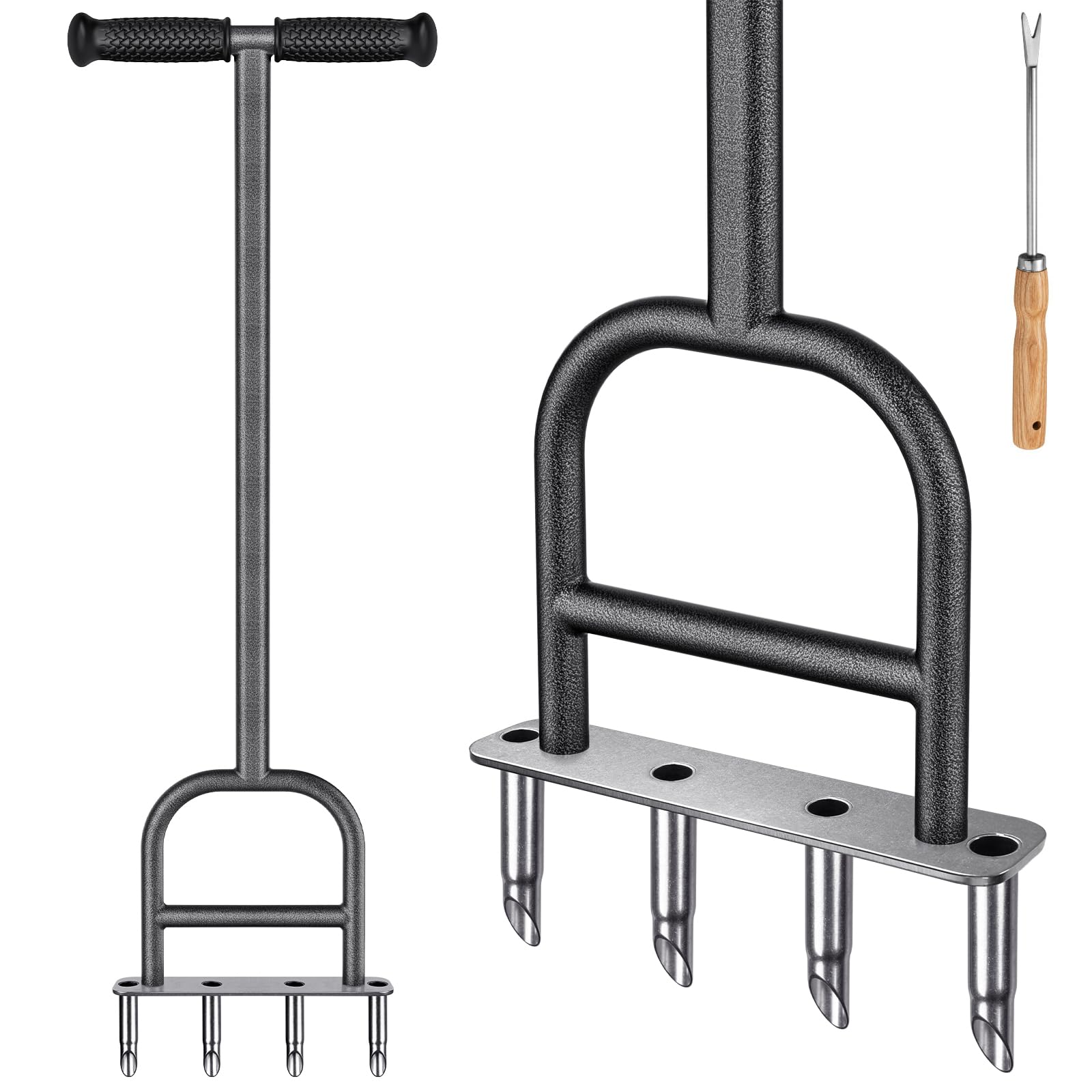
Where budget core aerators often use painted steel that chips and rusts, the Dolibest uses stainless steel for the bottom corer plugs — a real upgrade if you plan to own this tool for more than one season. Each of the four hollow tubes measures 3.5 inches long and 0.5 inches in diameter, pulling out deep, narrow plugs that give roots room to spread. The soft rubber grip on the T-handle is a welcome feature for longer sessions, and the improve foot bar keeps your shoes from mashing the ejected cores back into the ground.
The most-praised aspect by owners is the single welded construction, which means no wobble at the joints. It handles heavy clay well when the soil is moist, though it does require some body weight to get the tines fully buried. The trade-off mentioned most often is clogging — in wet, sticky clay the barrels can fill up and need clearing with the included 12-inch weeder tool. Keep the soil on the drier side of moist, and this tool punches well above its price tier.
Four coring heads
- Stainless steel corer plugs resist rust far better than painted steel, so the tines stay sharp and clean.
- Single welded construction and soft rubber grip earn high marks for build quality and comfort.
Core plugs messy
- Clogging can be an issue in wet clay — the included cleaning tool is essential, not optional.
- Requires a firm push and body weight; not the easiest tool for someone with limited leg strength.
Best for: the homeowner who wants a rust-resistant core aerator for small-to-medium lawns and is willing to work the soil moisture for best results.
Skip if: you have very sticky clay that stays wet for days at a time — clogging will slow you down significantly.
6. Dolibest Coring Aerator with Storage Tray
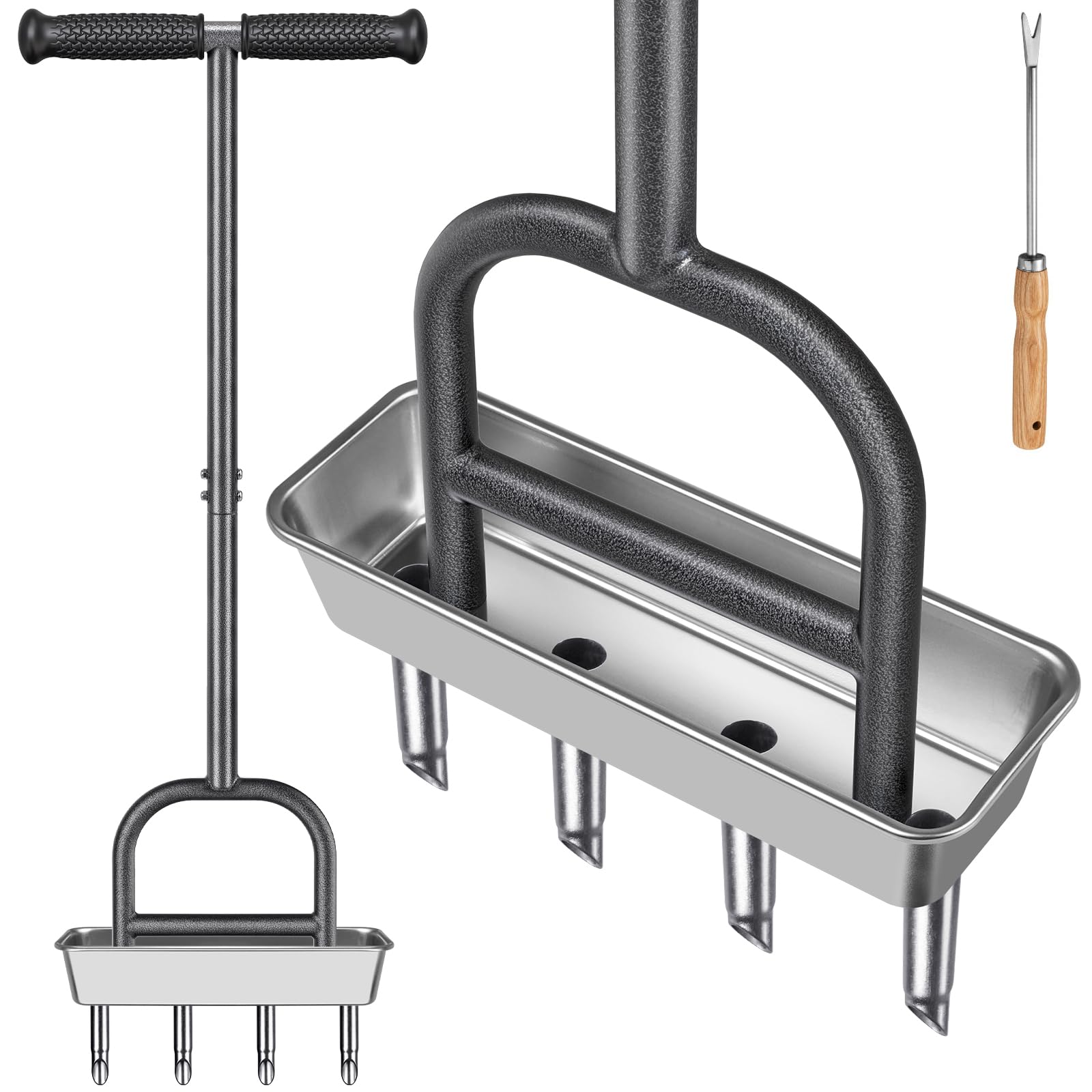
Same coring power as the standard Dolibest, but with a built-in way to catch the mess.
This is essentially the same 4-plug manual core aerator as the previous Dolibest pick, but with a stainless steel storage tray added just below the corers. As you push down and pull up, the ejected soil cores drop into the tray instead of scattering across the lawn. That saves you a cleanup pass and keeps your grass looking neat immediately after aeration. The tray is SUS 304 stainless steel, so it resists rust as well as the corers themselves.
Owners consistently call the tray a “convenient” addition, especially for spot-treating areas where you want to collect the cores and move them off the grass. The soft rubber grip and improve crossbar carry over from the original, so comfort is the same. The common downside? The collection tray adds a bit of weight and bulk, and soil can still get stuck in the barrels, requiring the included cleaning tool to clear. A few owners mention that the tool has a slight wobble after repeated use, but for the price it remains a solid choice for small-lawn aeration.
Coring with storage tray
- The stainless steel storage tray catches ejected plugs automatically, cutting down on post-aeration cleanup.
- Sturdy SUS 304 stainless steel corers and tray mean this tool will not rust out after a season.
Tray fills quickly
- Soil still clogs the barrels in wet conditions — the cleaning tool is essential to keep working smoothly.
- The added tray and hardware make it slightly heavier and bulkier than the standard version.
Reach for it if: you hate raking up soil cores after aeration and want a tidy, self-contained coring tool for a small lawn.
Look elsewhere if: you do not mind cores lying on the grass and prefer a lighter, simpler coring tool without extra parts.
7. Lawn Aerator with Soil Core Storage Tray (MEIIOFS)

A core aerator with a tray that collects plugs as you go, keeping your lawn tidy.
This MEIIOFS aerator works on the same principle as the Dolibest tray version — hollow tines pull out soil plugs, and a storage tray catches them so they do not scatter across the grass. The high-density alloy construction is rust-proof and built to handle most soil types. A buyer with a 2,000-square-foot lawn used it over three days and noted the grass grew back lush and quick after fertilizing, calling it a good workout.
The tool is relatively small — that is the most common first impression in the reviews. It takes deliberate effort to cover a large area, but for fixing dead spots, patching thin sections, or spot-aerating before overseeding, it is a capable choice. The biggest point of feedback is size: customers note the pictures make it look bigger than it is. If you know going in that this is a compact tool for targeted work, the core-pulling performance is solid and the integrated tray is genuinely useful.
Core storage tray
- The storage tray prevents soil plugs from littering the lawn, so you get clean aeration without extra raking.
- Rust-proof alloy construction means the tool holds up well in damp storage conditions.
Tray may spill
- Compact size means it takes a while to cover a full yard — better suited for spot-treatment than whole-lawn aeration.
- Some buyers find it smaller than expected based on listing photos; check the dimensions before buying.
Reach for it if: you need a compact core aerator for patches and dead spots, and you value the clean-up convenience of the built-in tray.
skip it if: you want to aerate a large lawn in one session — this is a spot-fixer, not a high-speed tool.
8. seasky Spring-Loaded Lawn Aerator
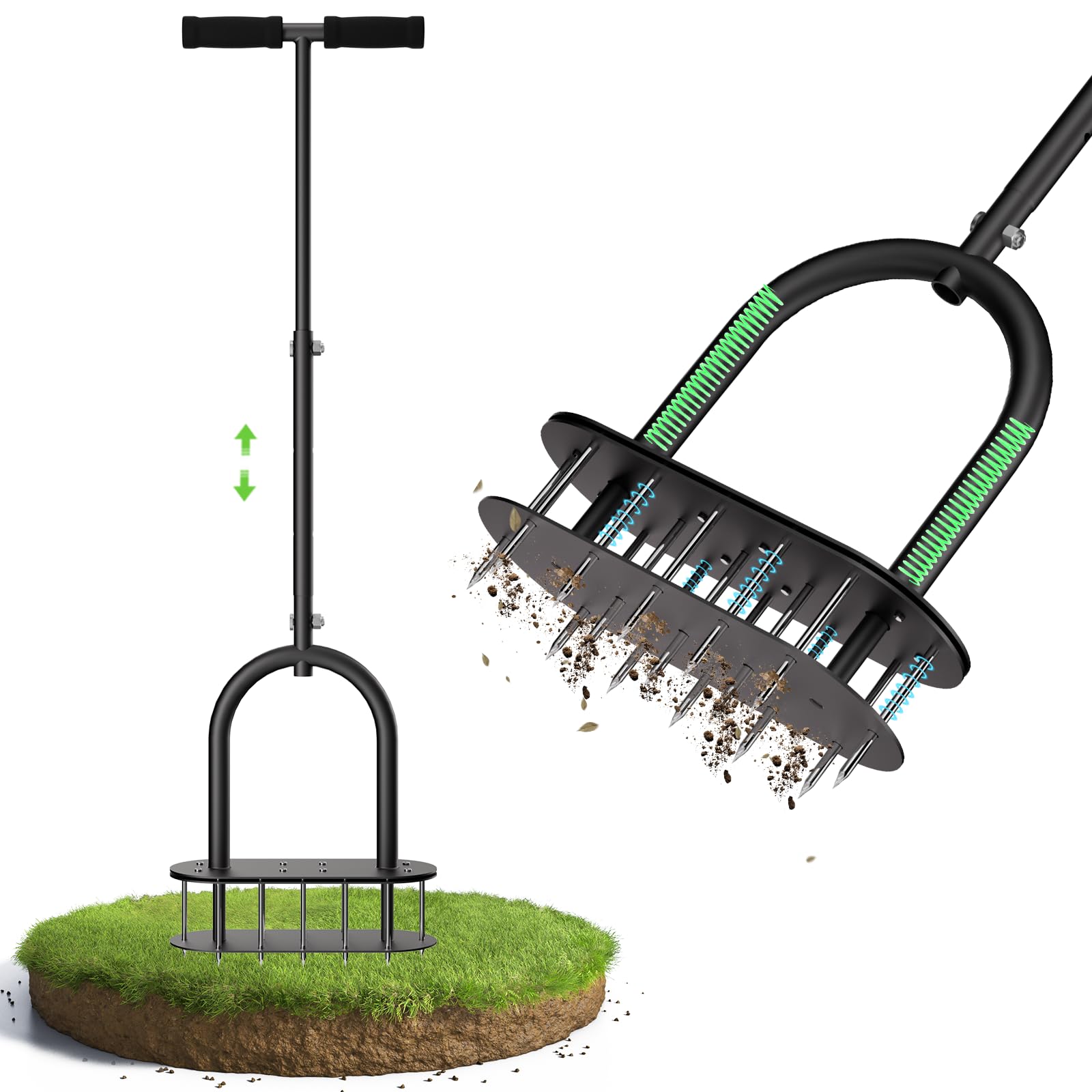
The spike aerator with a built-in spring that knocks soil off the tines for you.
Most spike aerators leave clumps of mud stuck between the tines that you have to kick off or scrape clean. The seasky solves this with a dual-layer spring design that pushes the soil and debris off automatically as you lift the tool. Owners who have used it say the spring works great — just keep your foot on the foot plate when you move to the next spot and it functions faster. The 15 spikes are each 3 inches long, and the spikes retract into the body when not in use for safer storage.
The adjustable handle ranges from 28 to 38 inches, so you can set it to a comfortable height whether you are tall or short. The padded T-handle gets positive marks for comfort, especially on longer sessions. The trade-off is that the handle assembly wobbles slightly on some units — a few owners flag the build quality as adequate rather than premium. It is also a spike aerator, not a core aerator, so it is best for light-to-moderate compaction on soil that is already in fair condition.
Spring-loaded action
- The built-in dual-layer spring self-cleans the tines, saving you the hassle of scraping off mud by hand — “the spring part works great,” reviewers point out.
- Adjustable handle height (28 to 38 inches) accommodates different user heights and reduces back strain.
Springs may wear
- Some units have a slightly wobbly handle assembly; it is functional but does not feel as solid as a single-piece design.
- As a spike aerator, it is not effective for severe compaction — it pushes soil instead of removing it.
Best for: the gardener who wants a self-cleaning spike aerator for small areas and hates stopping to unclog tines.
Think twice if: you need to tackle hard, compacted clay or you prefer the feel of a fully rigid, non-adjustable tool.
9. Coopvivi Rolling Spike Aerator
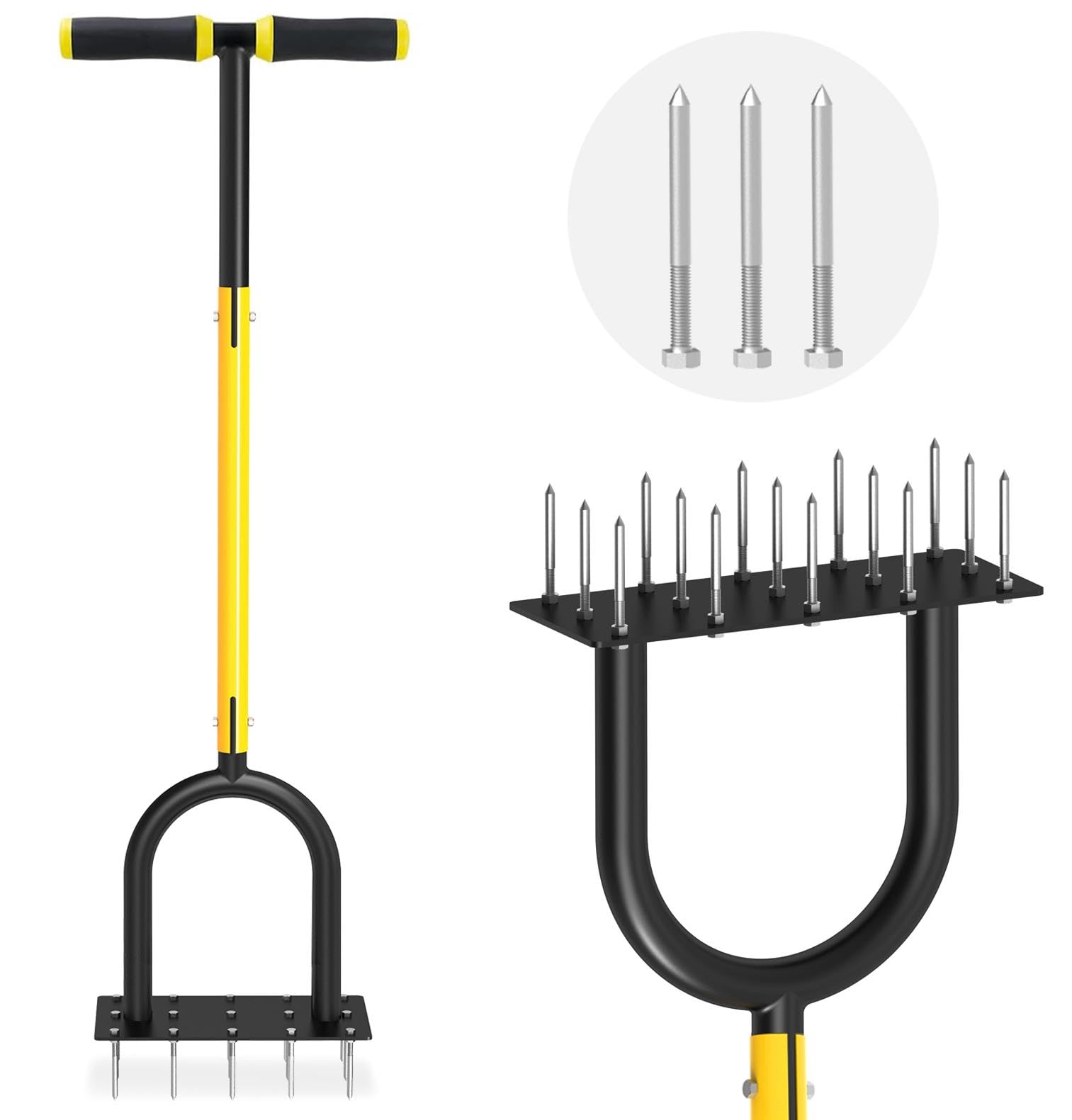
A rolling spike aerator that covers ground faster because you do not lift it.
Instead of the traditional step-and-pull motion, the Coopvivi uses a smooth rolling mechanism — you push it forward and the 15 sharp spikes penetrate the soil as the drum rotates. That eliminates the back-and-forth lifting that makes other manual aerators tiring. At 3.85 pounds it is one of the lightest tools here, and the stand-up design means you never bend over. Owners say it is easy to assemble, easy to store, and works well for improving soil drainage on bald spots.
The most common positive take is that it is lightweight and gets the job done for basic lawn maintenance. The mixed feedback is on durability — some users report the frame getting rickety after several uses, and the spikes create smaller holes that may not relieve heavy compaction as effectively as core aeration. A few owners note that the holes are more about loosening the surface than deep aeration. For a small yard with light soil issues, this is a fast, low-effort tool that beats stepping on dozens of individual spots.
Rolling spike coverage
- Rolling action means no lifting or pulling — just push it along for fast coverage on bare spots or small lawns.
- Light at 3.85 lbs and easy to put together, with a rust-resistant coating that holds up in storage.
No core removal
- The frame can develop a rickety feel after several uses; not a heavy-duty tool for frequent or large-scale aeration.
- Small spike holes are more about surface loosening than deep compaction relief — not a substitute for core aeration on hard soil.
Choose it if: you want the easiest, most easy way to spike-aerate a small yard without bending or lifting.
Pass on it if: your soil is heavily compacted and needs real core removal, or you plan to use it for more than a light seasonal touch-up.
Understanding the Specs
Hollow Tines vs Solid Spikes
The single most important decision you make: hollow tines (core aerators) cut out a plug of soil and lift it to the surface, creating an open channel for air, water, and roots. Solid spikes (spike aerators) push the soil aside, which can actually compact the edges of the hole. For heavy clay or soil that has not been aerated in years, choose hollow tines. For light annual maintenance on healthy soil, spikes are fine and usually faster.
Tine Length and Diameter
Tine length determines how deep you aerate. Most manual tools offer between 2.75 and 3.5 inches of penetration. Deeper is generally better for reaching the root zone, but it also requires more force to drive the tines in. Tine diameter matters too: thicker tines (around 0.5 inches) create larger holes that stay open longer, while thinner ones seal up faster. Match the length and thickness to how compacted your soil actually is.
Foot Plate Width
A wide foot plate (5 inches or more) lets you transfer your full body weight into the tool without your foot slipping off. This is the difference between a tool that sinks in smoothly and one you have to jump on. Look for a non-slip surface and enough width to accommodate the boots or shoes you actually wear for yard work.
Handle Height
A handle between 36 and 42 inches lets you stand upright while you work, keeping your back straight. Shorter handles force you to hunch, which leads to fatigue and soreness long before your lawn is done. Adjustable handles are a bonus if multiple people in the house will use the tool.
FAQ
How often should I use a lawn aerator rake?
Should I water the lawn before aerating?
Is a spike aerator as good as a core aerator?
How long does a manual lawn aerator rake last?
Can I use a lawn aerator rake on wet soil?
How many tines do I need — 3, 4, or 12?
What is the difference between a lawn aerator rake and a dethatcher?
Do I need to remove the soil plugs after core aeration?
Final Thoughts: The Verdict
For the majority of shoppers, the lawn aerator rake winner is the Manual Core Aerator Lawn Tool (LawnVigor) because it pulls 3-inch plugs without clogging and costs a fraction of what a gas-powered rental would — the crowd favorite with over a thousand owners giving it 4.5 stars. If you want the versatility of both core and spike aeration in one premium build, grab the Landzie Hollow & Spike Tine Set. And for budget-friendly spike aeration that covers a small lawn fast, the Jardineer Updated Spike Aerator is the one to reach for.
How We Picked
We do not accept paid placement. Every pick is matched to a real buyer and a real use-case; we do not hands-on test units.
Sources & Methodology
Specifications: manufacturer listings and product documentation. Review insights: verified customer reviews, as of July 2026. Pricing: not shown on this page (it changes often); check the current price via the retailer link.
As an Amazon Associate, Lawn Gear Lab earns from qualifying purchases. This does not affect which products we feature.